
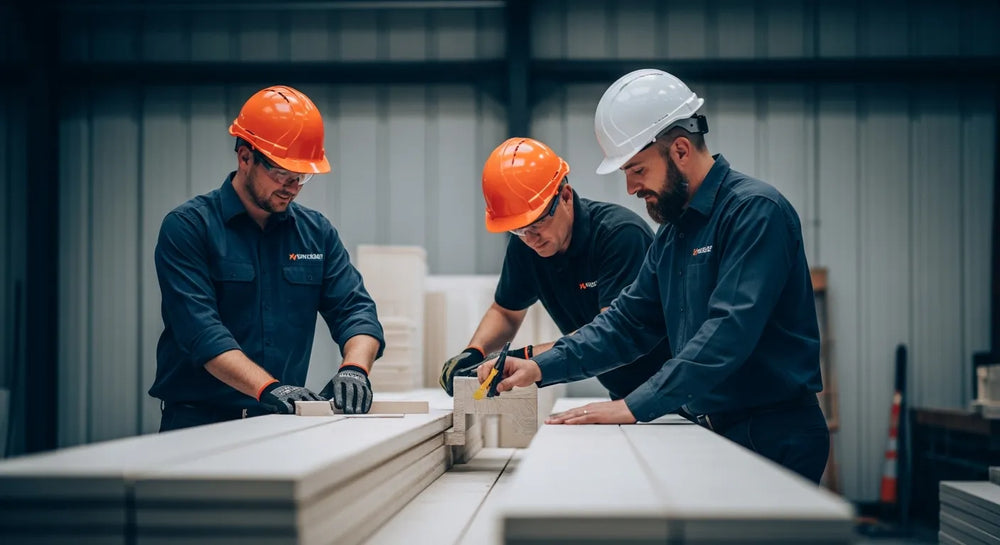
Accurate Cost to Build a 2 Bedroom House
Table of Contents
- Introduction
- The Economic Landscape of Residential Construction
- Breaking Down the Cost to Build a 2 Bedroom House
- The Hidden Costs of Traditional Procurement
- Strategic Sourcing and the U.S. Manufacturing Revival
- Financing Your Project with Maden Pay
- Tax Incentives and Capital Expenditure Strategy
- Managing Total Cost of Ownership (TCO)
- Procurement Scenarios: Efficiency in Action
- Navigating Material Volatility
- Conclusion
- FAQ
Introduction
Imagine a project manager at a mid-sized construction firm who has just secured a contract for a dozen worker-housing units. The blueprints are finalized, the site is cleared, and the labor is scheduled. However, as they begin the procurement process, they realize that the lead times for essential structural components have doubled, and the traditional credit application with a new lumber supplier is expected to take three weeks. In the high-stakes world of industrial and residential construction, these three weeks represent more than just a delay; they represent a significant drain on liquidity, a potential breach of contract, and a direct hit to the project's bottom line. The volatility of material markets means that the price quoted today might not be the price available when the credit line is finally approved.
The purpose of this guide is to provide a comprehensive analysis of the cost to build a 2 bedroom house, moving beyond simple surface-level estimates to explore the technical, logistical, and financial variables that define modern construction. We will examine the breakdown of hard and soft costs, the impact of material selection on long-term value, and the critical role of supply chain resilience. More importantly, we will discuss how strategic procurement and modern financing solutions can mitigate the "time-to-terms" friction that so often plagues American builders.
At Maden.co, we believe that building efficiently requires more than just a list of materials. It requires a strategic partnership that prioritizes transparency, American quality, and financial agility. By the end of this article, you will understand not only the line-item expenses of a two-bedroom build but also how to leverage embedded financing and domestic sourcing to ensure your project remains profitable and on schedule. The U.S. manufacturing revival is here, and it is transforming how we approach the built environment.
The Economic Landscape of Residential Construction
Determining the cost to build a 2 bedroom house is an exercise in managing variables. While national averages provide a baseline, the actual expenditure is dictated by regional labor rates, local building codes, and the fluctuating price of commodities. For the B2B buyer—whether a developer, a modular home manufacturer, or a facility manager—understanding these costs through the lens of Total Cost of Ownership (TCO) is essential.
In recent years, the construction industry has faced a structural liquidity challenge. Small-to-medium enterprises (SMEs) in the manufacturing and construction sectors often operate on thin margins and long payment cycles, typically ranging from net-30 to net-90 days. When traditional bank credit tightens, the ability to secure materials at the right time becomes a competitive disadvantage. This is why we focus on democratizing access to the tools needed for industrial excellence.
When calculating costs, one must distinguish between "hard costs" (the physical materials and labor required to erect the structure) and "soft costs" (permits, architectural fees, inspections, and financing costs). For a standard two-bedroom home, hard costs typically account for 60% to 70% of the total budget. However, the efficiency with which those materials are procured can significantly influence the remaining 30%.
Breaking Down the Cost to Build a 2 Bedroom House
A two-bedroom home, typically ranging from 900 to 1,300 square feet, offers a balance of utility and affordability. To arrive at an accurate cost, we must dissect the construction process into its core components.
Site Preparation and Foundation Costs
Before a single stud is raised, the land must be prepared. This phase includes clearing, grading, and excavation. In many regions, the cost of the foundation is the first major hurdle. Whether you are opting for a slab-on-grade, a crawl space, or a full basement, the price of concrete and reinforcement steel is a primary driver.
Using American-made rebar and concrete forms ensures that the structural integrity of the build meets or exceeds domestic standards. Sourcing these heavy materials through a reliable network reduces the risk of project delays. For firms managing multiple builds, the initial capital outlay for site prep can be intensive. This is where specialized tools like Maden Pay become invaluable, allowing businesses to maintain cash flow while securing the necessary materials for the groundwork.
Framing and Structural Materials
Framing is the skeleton of the house. The cost to build a 2 bedroom house is heavily influenced by whether you choose traditional stick-framing with lumber or modern light-gauge steel framing. While lumber has historically been the standard, its price volatility has led many builders to consider steel for its durability and fire resistance.
The framing stage also involves the procurement of trusses, sheathing, and house wrap. When sourcing these components, it is vital to verify that they meet specific industry certifications. For example, ensuring that fasteners and connectors comply with relevant ASTM standards prevents costly rework during the inspection phase. We are committed to Supply Chain Transparency, ensuring that every component in your framing package is verified and reliable.
Mechanical, Electrical, and Plumbing (MEP)
The MEP phase is often where procurement complexity peaks. This stage requires a vast array of specialized parts, from HVAC units and ductwork to electrical panels, wiring, and plumbing fixtures.
- Plumbing: This involves more than just pipes; it requires valves, fittings (often requiring NPT—National Pipe Tapered—threading for domestic compatibility), and water heating systems.
- Electrical: The cost includes the main service panel, sub-panels for a two-bedroom layout, and the linear footage of copper or aluminum wiring.
- HVAC: A two-bedroom home typically requires a 1.5 to 2.5-ton unit. Choosing high-efficiency, U.S.-manufactured units can improve the home’s energy rating and reduce long-term maintenance costs for the end-user.
For a procurement manager, managing dozens of vendors for MEP supplies is a logistical nightmare. Centralizing this through a marketplace allows for a more streamlined approach. You can browse all categories of industrial and construction supplies to find exactly what is needed for a full MEP install without the friction of multiple credit applications.
Exterior and Interior Finishes
The "finish" phase determines the aesthetic and functional quality of the home. This includes:
- Roofing: Asphalt shingles remain the most cost-effective, but metal roofing offers superior longevity.
- Siding: Options range from vinyl and fiber cement to engineered wood.
- Windows and Doors: High-performance, double-pane windows are essential for meeting modern energy codes.
- Interior: Drywall, flooring (LVP, hardwood, or tile), cabinetry, and countertops.
The cost to build a 2 bedroom house can swing by tens of thousands of dollars based on finish selections. However, by sourcing these materials from verified American manufacturers, builders can ensure consistency in quality and color matching, which is often a challenge with imported goods.
The Hidden Costs of Traditional Procurement
One of the most significant yet overlooked factors in construction costs is the "time-to-terms" friction. In a traditional procurement model, when a builder wants to establish a relationship with a new supplier to secure better pricing or a specific American-made product, they must undergo a grueling onboarding process. This involves submitting credit references, financial statements, and waiting days or weeks for a credit department to manually review the application and set a limit.
During this waiting period, the project stalls. Labor sits idle, or worse, moves to another job site. The price of the materials may rise, or the inventory may be sold to a competitor who already has established terms. This delay is a hidden tax on American construction.
We solve this by embedding credit directly at the point of transaction. Instead of waiting weeks, businesses can check eligibility for financing in as little as 60 seconds. This speed allows procurement managers to act decisively, locking in prices and ensuring that the materials are on-site when the crew is ready to work. Disclaimer: All financing approvals, credit limits, and terms are subject to individual business eligibility and underwriting criteria.
Strategic Sourcing and the U.S. Manufacturing Revival
Choosing American-made products is not just a matter of pride; it is a strategic business decision. When calculating the cost to build a 2 bedroom house, the "landed cost" of imported materials often ignores the risks of port delays, international shipping fluctuations, and the lack of recourse if the product arrives damaged or off-spec.
By focusing on domestic manufacturing, builders gain:
- Reduced Lead Times: Shorter shipping distances mean materials arrive faster.
- Quality Assurance: U.S. manufacturers adhere to stringent safety and quality standards (e.g., UL, ANSI, ASME).
- Technical Support: Access to domestic engineering and customer service teams simplifies the resolution of technical issues.
Our mission at Maden.co is to bridge the gap between these high-quality manufacturers and the buyers who need them. We are not just a catalog; we are a strategic partner in building a resilient, U.S.-based supply chain. If you are a manufacturer of building materials, we invite you to join our mission through our vendor registration portal to connect with buyers looking for domestic excellence.
Financing Your Project with Maden Pay
Cash flow is the lifeblood of any construction project. The gap between purchasing materials and receiving payment upon a project milestone or sale can create a liquidity crunch. Maden Pay is designed to bridge this gap, acting as a strategic operational tool rather than a simple loan.
Speed and Capacity
Traditional bank loans or construction draws can be slow and administratively heavy. With our embedded solution, qualified businesses can access credit lines ranging from $5,000 to over $250,000. This capacity allows a builder to fund the entire material list for a two-bedroom house—from the foundation to the roof—on a single line of credit.
Alignment with Cash Cycles
We offer Net 30, 60, and 90-day payment options. This alignment is crucial for B2B cash conversion cycles. If a builder knows that a project will be ready for a progress payment in 60 days, they can select Net 60 terms at checkout, effectively using the materials to build the value before the bill comes due.
A Single Approval for the Entire Marketplace
One of the greatest efficiencies is that a single approval works across our entire marketplace. You don't need to renegotiate terms with the lumber yard, the electrical wholesaler, and the plumbing distributor separately. This reduces administrative overhead and allows your procurement team to focus on building, not paperwork. You can check eligibility today to see how your purchasing power can be expanded. Disclaimer: Terms and credit limits depend on business eligibility.
Tax Incentives and Capital Expenditure Strategy
When analyzing the cost to build a 2 bedroom house for business purposes—such as rental property development or worker housing—it is important to consider the impact of tax strategies on your Capital Expenditure (CapEx).
One powerful tool for businesses is the 100% bonus depreciation. Under certain tax codes, businesses may be able to deduct the full cost of qualifying equipment and certain building components in the first year they are placed in service, rather than depreciating them over several decades. This can significantly lower the net cost of the build by providing immediate tax relief.
Furthermore, Section 179 deductions can be applied to many of the industrial tools and materials purchased through our platform. For instance, if you are purchasing specialized HVAC systems or heavy machinery for your construction fleet, these may qualify for immediate expensing.
Important Disclaimer: Tax laws are subject to change and vary based on jurisdiction and business structure. You should always consult with a qualified tax professional or CPA to determine how these strategies apply to your specific situation and to ensure compliance with the latest IRS regulations.
Managing Total Cost of Ownership (TCO)
The initial cost to build a 2 bedroom house is only one part of the equation. To truly understand the value, a buyer must look at the TCO. This includes maintenance, energy efficiency, and the lifespan of the materials used.
- Durability: Using high-grade American steel and treated lumber reduces the likelihood of structural issues and pest infestations, which can be costly to remediate.
- Efficiency: Investing in superior insulation and high-efficiency windows through Maden.co may increase the initial "hard cost" but will vastly decrease the operating costs of the home, increasing its market value and appeal to tenants or buyers.
- Compliance: Using parts that adhere to domestic standards (like NPT for plumbing or specific AWG for wiring) ensures that future repairs are straightforward. Sourcing "off-brand" or non-standard components often leads to difficulty in finding replacement parts years down the line.
By prioritizing industrial excellence and transparency, you are building an asset that holds its value. Our commitment to these values is what drives the manufacturing revival and supports the businesses that are the backbone of the American economy.
Procurement Scenarios: Efficiency in Action
To illustrate the importance of rapid procurement and financing, consider these practical scenarios:
Scenario A: The Custom Builder A custom builder is constructing a 2-bedroom accessory dwelling unit (ADU) for a client. Mid-project, the client decides to upgrade the kitchen and bathroom fixtures to premium, American-made brass hardware. The builder needs to source these immediately to keep the sub-contractors on schedule. Rather than draining the company's operating cash or waiting for a change-order payment from the client, the builder uses Maden Pay to purchase the fixtures on Net 30 terms. The project continues without a hitch, and the builder pays the invoice once the client’s final milestone payment clears.
Scenario B: The Facility Manager An industrial facility needs to build a small, 2-bedroom on-site residence for an overnight security team or specialized technicians. The budget is fixed, and the timeline is tight. By sourcing the entire building envelope—from the metal siding to the interior partitions—through a single marketplace, the manager reduces the time spent on vendor vetting. They leverage their existing credit line on the platform to secure all materials at once, ensuring color and specification consistency across the entire build.
These scenarios highlight that the "cost" of a project is as much about time and liquidity as it is about the price of the materials themselves.
Navigating Material Volatility
The cost to build a 2 bedroom house is never static. Global supply chain disruptions can cause the price of copper, lumber, and steel to fluctuate weekly. For B2B buyers, this volatility requires a proactive approach.
One strategy is "bulk staging." If you have multiple 2-bedroom units planned for the year, it may be more cost-effective to purchase bulk quantities of common items—such as electrical boxes, plumbing fittings, and fasteners—when prices are favorable. However, bulk purchasing requires significant upfront capital. This is another area where embedded financing shines, allowing you to take advantage of volume pricing without depleting your cash reserves.
Furthermore, by sourcing from U.S. manufacturers, you are insulated from many of the geopolitical risks that cause sudden price spikes in imported goods. Domestic production offers a level of predictability that is essential for accurate budgeting and long-term planning.
Conclusion
The cost to build a 2 bedroom house is a multifaceted calculation that involves far more than just adding up the price of wood and nails. It is a complex interplay of material quality, labor efficiency, and financial strategy. For the professional buyer, success lies in reducing the friction of procurement and ensuring that every dollar spent contributes to the long-term value and resilience of the structure.
At Maden.co, we are dedicated to supporting the U.S. manufacturing revival by providing a platform where transparency and excellence are the standards. We understand the liquidity challenges faced by American businesses and have built solutions like Maden Pay to ensure that capital is never the bottleneck to growth. By choosing American-made products and leveraging modern financing, you are not just building a house; you are investing in the strength of our domestic supply chain.
We invite you to explore our extensive catalog and experience a new standard in B2B procurement. Whether you are in the planning stages of a single build or managing a large-scale development, our team is here to support your mission with the tools, materials, and financing you need to succeed.
Take the first step toward a more efficient build today. Browse our categories to source your next project, or if you are ready to expand your purchasing power, check your eligibility for Maden Pay. Together, we are building a more resilient future for American industry.
FAQ
1. What is the average square footage for a 2 bedroom house?
A standard 2 bedroom house typically ranges between 900 and 1,300 square feet. This size allows for comfortable living spaces and two full bedrooms while remaining cost-effective for developers and industrial housing needs. The exact square footage will influence the quantity of materials required, from the volume of concrete in the foundation to the total linear footage of electrical wiring.
2. How does Maden Pay differ from a traditional construction loan?
Maden Pay is an embedded financing solution designed specifically for the point of transaction. Unlike traditional construction loans, which can take weeks to approve and often involve heavy administrative oversight and draw schedules, Maden Pay offers near-instant eligibility decisions. It provides credit lines (typically $5K to $250K+) that can be used across the entire marketplace, allowing for Net 30, 60, or 90-day terms that better align with a business's cash conversion cycle.
3. Why should I prioritize American-made materials for my build?
Sourcing American-made materials ensures that products meet strict domestic quality and safety certifications (such as ASTM or UL). It also significantly reduces supply chain risks, such as international shipping delays and port congestion. Furthermore, buying domestic supports the U.S. manufacturing revival and provides easier access to technical support and replacement parts, lowering the Total Cost of Ownership (TCO) over the life of the building.
4. Can I use bonus depreciation for my building project?
Yes, in many cases, businesses can use 100% bonus depreciation or Section 179 deductions for qualifying building components and equipment (such as HVAC systems, specialized lighting, or industrial machinery). This allows for an immediate tax deduction of the full purchase price, which can significantly improve first-year cash flow. However, because tax laws are complex and vary, you must consult with a qualified tax professional to determine your specific eligibility and maximize your benefits.


