
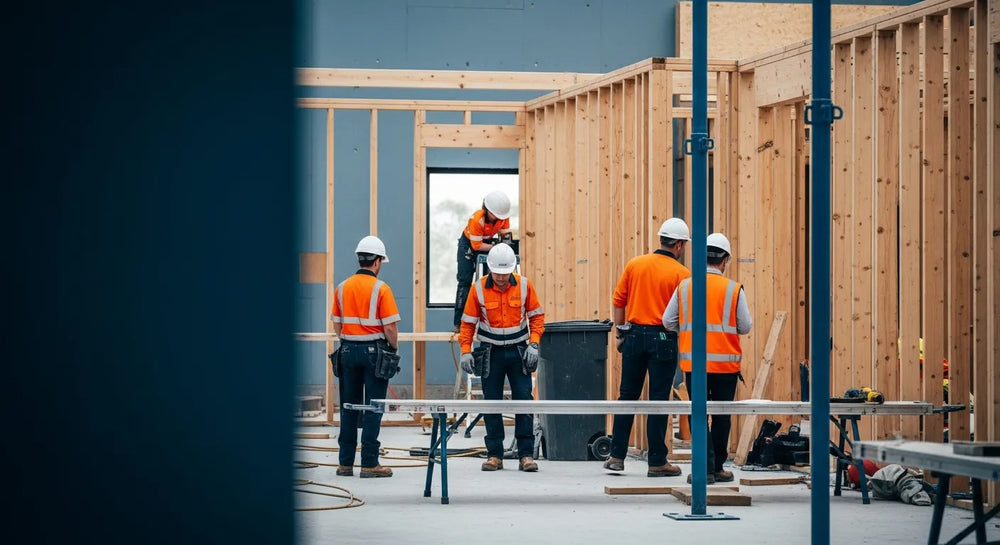
Analyzing the Average Cost to Build a 3000 Sq Ft House
Table of Contents
- Introduction
- The Macro View: Market Dynamics and the U.S. Manufacturing Revival
- Phase 1: Pre-Construction and Site Development
- Phase 2: Foundation and Structural Integrity
- Phase 3: The Building Envelope (Framing and Roofing)
- Phase 4: Mechanical, Electrical, and Plumbing (MEP)
- The Liquidity Challenge in U.S. Manufacturing and Construction
- Strategic Operational Tool: Maden Pay
- Phase 5: Interior Finishes and Aesthetics
- CapEx Timing and 100% Bonus Depreciation
- Solving the "Time-to-Terms" Problem
- Why U.S.-Made Materials Matter for Your TCO
- Estimating the Total: A Summary Table
- Procurement Scenarios: Efficiency in Action
- Industrial Excellence and the Future of Construction
- Conclusion
- Frequently Asked Questions
Introduction
When a project manager or a professional developer evaluates the average cost to build a 3000 sq ft house, the initial estimate is rarely just about the price of lumber or the cost of a foundation. In the current industrial landscape, the real question is: How much does a three-week delay in material procurement actually cost your bottom line? For many in the construction and development sectors, the "cost" of a build is inextricably linked to supply chain reliability and the speed of capital. A bottleneck in sourcing American-made HVAC components or high-quality electrical supplies can quickly turn a profitable project into a logistical nightmare, especially when traditional financing hurdles prevent agile decision-making.
The purpose of this article is to provide an authoritative breakdown of the average cost to build a 3000 sq ft house, moving beyond simple per-square-foot estimates to examine the underlying drivers of expense, from site preparation and structural materials to the integration of mechanical, electrical, and plumbing (MEP) systems. We will explore how sourcing through Maden.co can streamline these processes. More importantly, we will address the strategic role of procurement efficiency and financing speed. By utilizing modern solutions like Maden Pay, builders and procurement managers can bridge the liquidity gap that often stalls U.S.-based manufacturing and construction projects. Our thesis is clear: understanding the true cost of construction requires a dual focus on high-quality American materials and the elimination of "time-to-terms" friction in the procurement cycle.
The Macro View: Market Dynamics and the U.S. Manufacturing Revival
Before diving into specific line items, we must acknowledge the broader economic context. The average cost to build a 3000 sq ft house has shifted significantly over the last several years due to fluctuating material costs, labor shortages, and a renewed emphasis on domestic supply chain resilience. At Maden.co, our mission is to democratize access to American manufacturing, ensuring that industrial buyers can find the verified products they need to keep projects on schedule.
The "U.S. Manufacturing Revival Is Here," and it is driven by a need for transparency and excellence. When you source domestically, you aren't just buying a product; you are investing in a shorter supply chain that is less susceptible to global port congestion and geopolitical volatility. This transparency is vital when calculating construction costs, as it allows for more predictable lead times and more accurate Total Cost of Ownership (TCO) models.
Phase 1: Pre-Construction and Site Development
The average cost to build a 3000 sq ft house begins long before the first shovel hits the ground. Pre-construction expenses can vary wildly depending on the location and the condition of the land.
Land Acquisition and Closing Costs
While land costs are highly regional, for a 3000 sq ft home, you typically need a lot that can support a footprint of at least 1,500 to 2,000 square feet (assuming a two-story structure). In industrial or mixed-use developments, land costs also include zoning assessments and environmental impact studies.
Site Preparation and Excavation
Clearing the lot, grading the soil, and ensuring proper drainage are critical steps. For a structure of this size, excavation costs can range from $5,000 to $15,000. If the site requires blasting through rock or extensive hauling of dirt, these costs can escalate.
Permits and Impact Fees
Professional builders must account for building permits, sewer tap fees, and school impact fees. Depending on the municipality, these administrative costs can add $10,000 to $30,000 to the project. Utilizing a platform where you can browse all categories for site safety and signage equipment ensures that you remain compliant with local regulations from day one.
Phase 2: Foundation and Structural Integrity
The foundation is the most literal part of your investment. For a 3000 sq ft home, the foundation choice—slab, crawl space, or full basement—is the primary cost driver here.
Concrete and Reinforcement
A standard concrete slab for a 3000 sq ft home (assuming a single-story layout) or a 1500 sq ft footprint (for a two-story) requires significant volumes of ready-mix concrete and rebar. With American-made steel prices stabilizing, sourcing domestic reinforcement ensures compliance with structural standards. The average cost for a slab foundation usually falls between $6 and $12 per square foot.
Basement Considerations
If the design calls for a full basement, the costs will double or triple. This involves deeper excavation, thicker walls, and critical waterproofing measures. For developers, this added square footage can increase the property value, but it requires careful cash flow management to cover the upfront labor and material surge. To manage these spikes in CapEx, savvy procurement managers often check eligibility for extended net terms early in the planning phase.
Phase 3: The Building Envelope (Framing and Roofing)
Framing is traditionally the most expensive phase of a residential or light commercial build. It is also the phase most vulnerable to market volatility.
Lumber and Engineered Wood
The average cost to build a 3000 sq ft house includes a massive amount of dimensional lumber, OSB (oriented strand board), and engineered trusses. For a 3000 sq ft structure, framing materials and labor can easily exceed $50,000 to $80,000.
Roofing Systems
Whether using asphalt shingles, standing seam metal, or clay tiles, the roof is a high-stakes component. Metal roofing, often manufactured in the U.S., offers superior longevity and can be a strategic choice for lowering long-term maintenance costs. The installation of a high-quality roof on a 3000 sq ft home typically costs between $12,000 and $30,000.
Windows and Doors
The exterior envelope is completed with windows and doors. High-efficiency, dual-pane windows are standard for modern builds to meet energy codes. Sourcing these from verified U.S. manufacturers through our marketplace ensures that you meet specific U-factor and Solar Heat Gain Coefficient (SHGC) requirements.
Phase 4: Mechanical, Electrical, and Plumbing (MEP)
This is where technical expertise meets procurement strategy. The MEP phase is critical for operational efficiency and compliance.
Plumbing Systems
A 3000 sq ft house typically features 3 to 4 bathrooms, a kitchen, and a laundry room. This requires extensive PEX or copper piping, drainage lines, and a robust water heating system. When selecting fittings, engineers must ensure they are using the correct threads, such as NPT (National Pipe Thread), to maintain system integrity. The average cost for a full plumbing rough-in and finish for a home this size ranges from $15,000 to $25,000.
Electrical and Smart Home Integration
The electrical system must handle modern loads, including EV chargers and smart home hubs. This involves a 200-amp or 400-amp service panel, hundreds of feet of Romex or conduit, and high-quality switchgear. Using domestic electrical components reduces the risk of sub-standard alloys that can lead to fire hazards.
HVAC and Ventilation
For a 3000 sq ft home, a multi-zone HVAC system is often required to maintain comfort and efficiency. High-SEER (Seasonal Energy Efficiency Ratio) units are preferred. The cost of a full HVAC installation, including ductwork, typically falls between $15,000 and $20,000. For facility managers or builders, ensuring these systems are sourced from reliable manufacturers is paramount. If you are a manufacturer of these critical components, we encourage you to register as a vendor on our platform to reach a wider audience of professional buyers.
The Liquidity Challenge in U.S. Manufacturing and Construction
One of the greatest hurdles in the U.S. manufacturing revival is the structural liquidity challenge. Traditional procurement is often bogged down by "time-to-terms" friction. In a standard scenario, a builder needs to order $50,000 worth of electrical supplies. To get net-30 or net-60 terms, they might have to spend weeks filling out credit applications, providing tax returns, and waiting for a manual review from a single supplier's credit department.
By the time the terms are approved, the material costs may have risen, or the project schedule may have slipped. At Maden.co, we address this by embedding credit directly at the point of transaction. With Maden Pay, buyers can receive instant eligibility decisions, often in under 60 seconds, via a soft credit check that doesn't impact their score. This liquidity allows builders to lock in prices and maintain momentum without the administrative drag of traditional credit cycles.
Strategic Operational Tool: Maden Pay
We do not view financing simply as a "loan." Instead, we frame it as a strategic operational tool designed to align with the B2B cash conversion cycle. When building a 3000 sq ft house, the outlays for materials often occur months before a construction draw or a final sale.
Capacity and Speed
For qualified businesses, credit lines through our platform commonly range from $5,000 to over $250,000. This capacity is essential for purchasing high-ticket items like HVAC systems or structural steel in bulk.
Efficiency Across the Marketplace
Perhaps the greatest advantage of using Maden Pay is its universality. A single approval works across our entire marketplace. You don't need to renegotiate terms with an electrical supplier, then a plumbing wholesaler, and then a flooring manufacturer. This unified approach reduces procurement friction and allows for a more cohesive supply chain strategy.
Disclaimer: Approvals, credit limits, and specific terms depend on business eligibility and are subject to review.
Phase 5: Interior Finishes and Aesthetics
The final 25% of the average cost to build a 3000 sq ft house is often found in the finishes. This is where the budget can fluctuate most based on the quality of materials.
Insulation and Drywall
Proper insulation is essential for meeting modern R-value requirements. For a 3000 sq ft home, insulation and drywall installation (including hanging, taping, and finishing) usually cost between $15,000 and $30,000.
Flooring and Cabinetry
Hardwood, tile, and high-end carpeting choices define the interior. Custom cabinetry for a large kitchen and several bathrooms can easily reach $20,000 to $40,000. Sourcing these items from American artisans and manufacturers ensures high-quality craftsmanship and supports the domestic economy.
Interior Trim and Painting
The "fit and finish" phase includes baseboards, crown molding, and doors. Professional painting for a 3000 sq ft home typically costs between $8,000 and $15,000, depending on the number of colors and the complexity of the trim work.
CapEx Timing and 100% Bonus Depreciation
For business owners and developers building 3000 sq ft residential units as part of a rental portfolio or a mixed-use commercial project, the timing of these expenditures is a critical tax strategy.
One of the most powerful tools for asset acquisition is 100% bonus depreciation. This allows businesses to deduct a large percentage (and in some cases, the full amount) of the cost of qualifying assets in the year they are placed in service. This can apply to various components of a building project, such as specialized equipment, furniture, and certain building improvements.
By strategically timing the procurement of materials and equipment, a business can significantly reduce its taxable income for the year. For example, purchasing and installing $100,000 worth of American-made industrial HVAC equipment before the end of the fiscal year could lead to a substantial immediate deduction.
Disclaimer: Tax laws are complex and subject to change. You should always consult your tax professional or CPA to understand how bonus depreciation and other tax strategies apply to your specific business situation.
Solving the "Time-to-Terms" Problem
In traditional procurement, getting terms is a slow, manual process. This "time-to-terms" friction is a silent killer of project profitability. When a facility manager needs a replacement motor for a critical system or a contractor needs an emergency shipment of conduit, waiting 14 days for a credit limit increase is unacceptable.
We have built our platform to eliminate this bottleneck. By integrating financial technology with our industrial marketplace, we provide a seamless "buy now, pay later" experience tailored for the B2B world. You can check eligibility for your business today and be ready to purchase whenever a project requirement arises. This speed is what allows American businesses to compete on a global scale—it’s about being faster, more transparent, and more reliable than the competition.
Why U.S.-Made Materials Matter for Your TCO
When calculating the average cost to build a 3000 sq ft house, it is tempting to look for the cheapest possible components. However, a "low price" on a foreign-made valve or a generic electrical panel often leads to a higher Total Cost of Ownership (TCO).
Quality and Compliance
American-made products are manufactured to rigorous standards (such as ANSI, ASTM, and UL). This means fewer failures during the inspection phase and a lower likelihood of costly callbacks after the house is occupied.
Supply Chain Transparency
Knowing exactly where your materials come from allows you to manage risks more effectively. At Maden.co, we prioritize transparency, connecting you directly with verified U.S. manufacturers. This proximity reduces shipping costs and environmental impact while supporting local jobs.
Resilience
A resilient supply chain is one that can adapt to disruptions. By building relationships with domestic vendors, you ensure that your business isn't left stranded when international shipping lanes are compromised. We are more than just a catalog; we are your strategic partner in building a resilient, U.S.-based supply chain.
Estimating the Total: A Summary Table
While every project is unique, here is a rough estimate for the average cost to build a 3000 sq ft house using professional-grade, American-sourced materials:
| Category | Estimated Cost Range |
|---|---|
| Site Prep & Permits | $20,000 - $45,000 |
| Foundation | $15,000 - $35,000 |
| Framing & Sheathing | $60,000 - $90,000 |
| Exterior (Roof, Siding, Windows) | $40,000 - $70,000 |
| MEP (Plumbing, HVAC, Electrical) | $50,000 - $80,000 |
| Interior Finishes (Drywall, Paint) | $30,000 - $50,000 |
| Fixtures & Flooring | $40,000 - $80,000 |
| Total Estimated Construction Cost | $255,000 - $450,000+ |
Note: These figures do not include land costs, landscaping, or high-end luxury customizations. Costs are based on current industrial averages and are subject to regional variation.
Procurement Scenarios: Efficiency in Action
Consider a scenario where a general contractor is overseeing the construction of a 3000 sq ft modular office space. The project is 75% complete when the electrical subcontractor identifies a need for additional high-spec circuit breakers that weren't in the initial order.
In a traditional model, the contractor might have to:
- Contact their local distributor.
- Wait for a quote.
- Submit a new purchase order.
- Wait for the distributor's credit department to approve the over-limit purchase.
- Receive the goods in 7-10 days.
Using Maden.co, the contractor can search for the specific American-made breakers, see live availability, and use their existing Maden Pay credit line to check out instantly. The breakers are shipped immediately, and the project stays on track. This is the power of digital innovation in industrial excellence.
Industrial Excellence and the Future of Construction
The U.S. manufacturing revival isn't just about bringing jobs back; it’s about modernizing how we build. By integrating digital procurement tools with a marketplace of millions of verified products, we are making it easier for American businesses to scale. Whether you are building a single 3000 sq ft house or a 50-unit development, the principles of supply chain transparency and financial agility remain the same.
We believe that every procurement manager deserves a platform that understands their needs—one that offers not just products, but solutions for cash flow and compliance. This is why we continue to expand our categories and refine our financing options. We are committed to helping you build better, faster, and more efficiently.
Conclusion
Building a 3000 sq ft house is a complex undertaking that requires a deep understanding of material costs, labor dynamics, and financial strategy. While the average cost can range from $250,000 to well over $450,000, the true measure of success lies in how effectively you manage the procurement process.
By focusing on high-quality American-made materials, you ensure a superior end product and a more resilient supply chain. By utilizing Maden Pay, you solve the liquidity challenges that so often hinder growth, allowing you to move from "quote to construction" with unprecedented speed.
The U.S. Manufacturing Revival Is Here, and we are proud to be your partner in this journey. We invite you to explore our vast catalog, connect with our network of verified vendors, and take control of your next project’s financial and logistical success.
Ready to streamline your procurement and boost your purchasing power? Check eligibility for Maden Pay today and experience a faster, more efficient way to build.
Frequently Asked Questions
1. How does the square footage layout impact the average cost to build?
A 3000 sq ft home built as a single story (ranch style) is generally more expensive than a two-story home of the same total square footage. This is because a single-story home requires a larger foundation and a larger roof—two of the most expensive components of a build. By building upward, you double the square footage while keeping the footprint smaller, which can significantly reduce the cost per square foot.
2. Why should I prioritize U.S.-manufactured products for my construction project?
Prioritizing American-made products offers several strategic advantages: shorter lead times, easier communication with manufacturers, and assurance that products meet domestic safety and quality standards (like NPT for plumbing or UL for electrical). Furthermore, domestic sourcing reduces the risk of project delays caused by international shipping disruptions, helping you maintain a tighter construction schedule and improve your Total Cost of Ownership.
3. What is the difference between "time-to-terms" and traditional bank financing?
Traditional bank financing or establishing lines of credit with individual suppliers often takes weeks of paperwork and manual review. "Time-to-terms" refers to the friction and delay inherent in this process. Maden.co eliminates this by offering embedded financing. With Maden Pay, the credit decision is made almost instantly at the point of sale, allowing you to secure materials and start work immediately without waiting for traditional credit approvals.
4. Can I use bonus depreciation for my building's MEP systems?
Yes, in many cases, mechanical, electrical, and plumbing (MEP) systems can qualify for bonus depreciation, especially if they are part of a commercial or rental property project. This allows you to accelerate the tax deduction for these assets rather than depreciating them over a standard 27.5 or 39-year schedule. However, tax laws are nuanced regarding "qualified improvement property," so you must consult your tax professional to ensure compliance with the latest IRS guidelines.


