
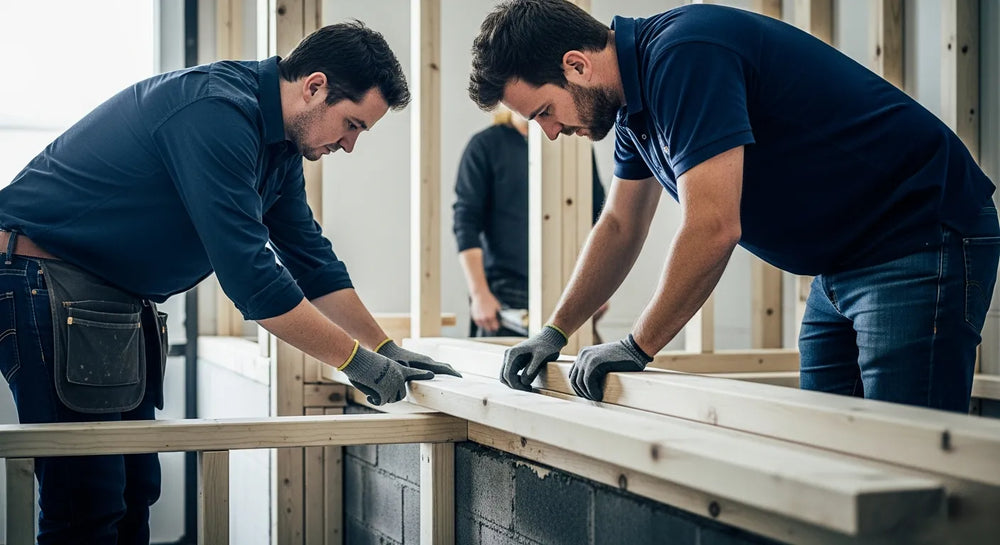
Average Cost to Build a 900 Sq Ft House
Table of Contents
- Introduction
- The Financial Landscape of Small-Scale Construction
- A Detailed Breakdown of Material Costs
- The Liquidity Challenge in U.S. Manufacturing
- Tax Strategy and Capital Expenditures
- Strategic Sourcing: Why American-Made Matters
- Practical Scenario: The Quick-Ship Modular Project
- Breaking Down Labor and Contractor Costs
- The Role of Technology in Modern Construction
- Future-Proofing Your 900 Sq Ft Build
- Conclusion
- Frequently Asked Questions
Introduction
If a facility manager is tasked with installing three new on-site modular offices to accommodate a growing engineering team, but the structural steel components are backordered for twelve weeks and the local bank requires a thirty-day window just to review a line of credit application, the project is effectively stalled before the first shovel hits the ground. This scenario is a daily reality for procurement professionals across the United States. Whether you are looking at a 900 square foot Accessory Dwelling Unit (ADU) for workforce housing or a specialized small-scale industrial structure, the financial and logistical hurdles of sourcing domestic materials can be daunting.
The purpose of this article is to dissect the average cost to build a 900 sq ft house through the lens of modern industrial procurement and American manufacturing. We will cover the granular breakdown of material expenses, the hidden costs of labor and site preparation, and the strategic advantages of sourcing through a verified domestic supply chain. Furthermore, we will explore how innovative financing models can eliminate the "time-to-terms" friction that traditionally slows down capital expenditures.
At Maden.co, we believe that the U.S. manufacturing revival is here, and it is built on a foundation of supply chain transparency and digital innovation. By the end of this analysis, you will understand not only the raw numbers behind a 900 square foot project but also how to optimize your procurement strategy to improve your Total Cost of Ownership (TCO) and accelerate your project timeline.
The Financial Landscape of Small-Scale Construction
When calculating the average cost to build a 900 sq ft house, business owners and procurement managers must look beyond the price per square foot. In the current economic climate, the national average typically ranges from $100,000 to $200,000, depending on the region, materials, and complexity of the build. However, for industrial or commercial-grade structures intended for long-term use, these costs can shift significantly based on compliance with specific industry standards and the quality of the components.
Hard Costs vs. Soft Costs
In any construction project, costs are divided into two primary categories: hard costs and soft costs. Hard costs include the tangible materials and labor required to physically erect the structure. This includes the foundation, framing, roofing, and mechanical systems. Soft costs encompass the intangible expenses such as architectural fees, permits, land acquisition, and inspections.
For a 900 square foot project, soft costs can represent 15% to 30% of the total budget. Navigating local zoning laws and building codes is often the first bottleneck. If you are integrating a structure into an existing industrial site, the engineering requirements for utility hookups and environmental impact assessments can add thousands to the initial estimate.
Regional Variations and the Domestic Advantage
Construction costs are not uniform across the United States. Labor rates in the Midwest may be significantly lower than those on the West Coast, yet the cost of shipping heavy materials like structural steel or specialized insulation can offset those savings if the supply chain is not optimized.
By prioritizing American-made products, procurement managers can often reduce the volatility associated with international shipping and tariffs. At Maden.co, our mission is to democratize access to American manufacturing, ensuring that whether your project is in Ohio or Oregon, you have access to a resilient, U.S.-based supply chain that minimizes logistical delays.
A Detailed Breakdown of Material Costs
To accurately estimate the average cost to build a 900 sq ft house, we must break the structure down into its core components. For a B2B buyer, the focus is often on durability, maintenance-free operation, and compliance with standards such as NPT (National Pipe Thread) for plumbing or specific DIN standards for mechanical components.
Foundation and Site Preparation
The foundation is the most critical element for structural integrity. For a 900 square foot footprint, a concrete slab is the most common choice, typically costing between $5,000 and $10,000. However, if the site requires extensive grading, clearing, or the installation of a crawl space or basement, these costs can double.
Industrial buyers must also consider the load-bearing requirements of the floor. If the 900 square foot space will house heavy machinery or high-density storage, a standard residential slab will not suffice. Increasing the thickness of the concrete and reinforcing it with American-made rebar is a necessary investment to ensure long-term viability.
Framing and the Envelope
The "envelope" of the building includes the framing, siding, and roofing. Traditionally, wood framing has been the standard, but many modern industrial projects are turning to cold-formed steel for its fire resistance and precision.
- Framing: Costs for framing a 900 sq ft structure typically range from $10,000 to $25,000.
- Roofing: High-quality asphalt shingles are the baseline, but metal roofing—sourced from domestic mills—offers a much higher ROI due to its 50-year lifespan and energy efficiency.
- Insulation: With rising energy costs, investing in superior spray foam or mineral wool insulation is a strategic move to lower the TCO.
Mechanical, Electrical, and Plumbing (MEP)
The MEP systems represent the highest cost per square foot within the interior of the build. For a 900 square foot unit, these systems are often condensed but must still meet rigorous safety codes.
- Electrical: Wiring, panels, and lighting fixtures for a small unit can range from $4,000 to $8,000. Industrial-grade LED lighting and smart panels are increasingly common to facilitate future automation.
- Plumbing: Sourcing U.S.-made copper or PEX piping and high-efficiency water heaters ensures that maintenance requirements remain low. Expect to budget $5,000 to $10,000 for a standard setup.
- HVAC: A 900 square foot space is ideal for high-efficiency mini-split systems or small-scale packaged terminal air conditioners (PTAC).
When these systems fail, every hour of downtime costs the business money. This is why we emphasize partnering with verified U.S. manufacturers through the Maden.co homepage. Domestic support and readily available replacement parts are essential for operational continuity.
The Liquidity Challenge in U.S. Manufacturing
One of the most significant hurdles in American construction and manufacturing is the structural liquidity challenge. Many small to mid-sized manufacturers and builders operate on tight margins and long payment cycles. It is common to see net-30, net-60, or even net-90 terms, which can create a massive cash flow gap when a business needs to purchase materials upfront for a 900 square foot build.
Traditional bank credit is tightening, and for many businesses, the process of securing a loan for a capital expenditure (CapEx) project is too slow. When a project manager needs to order $50,000 worth of American-made lumber and steel, they cannot afford to wait weeks for a credit committee's decision.
This "time-to-terms" friction is exactly what we aim to solve. In traditional procurement, getting net terms requires exhaustive supplier onboarding, multiple credit applications, and prolonged negotiations. At Maden.co, we have reimagined this process by embedding credit directly into the transaction.
Solving Friction with Maden Pay
To address the liquidity needs of our partners, we offer Maden Pay, an embedded financing solution designed specifically for the B2B industrial market. This tool is not just about providing "loans"; it is a strategic operational tool that allows businesses to align their purchasing with their cash conversion cycles.
The advantages of this approach include:
- Speed: Eligibility decisions are often made in under 60 seconds through a soft credit check that does not impact your credit score.
- Capacity: We provide credit lines that commonly range from $5,000 to $250,000 or more for qualified businesses, which is more than enough to cover the material costs for a 900 square foot project.
- Efficiency: A single approval works across our entire marketplace. You don't need to apply for credit separately with a lumber mill, an electrical wholesaler, and a plumbing distributor.
For procurement managers looking to move quickly, the ability to check eligibility immediately changes the math of the project. It transforms a "we'll see if we can afford it this quarter" conversation into a "we can start construction on Monday" reality. Note: Approvals, limits, and terms are dependent on business eligibility.
Tax Strategy and Capital Expenditures
When calculating the average cost to build a 900 sq ft house for business purposes—such as employee housing, an on-site lab, or a remote office—it is essential to consider the tax implications. One of the most powerful tools currently available to U.S. businesses is 100% bonus depreciation.
Under Section 168(k) of the Internal Revenue Code, businesses may be able to deduct the full cost of certain qualifying assets in the first year they are placed in service, rather than depreciating them over several years. This can significantly reduce the net cost of the build by providing an immediate tax shield.
For example, if the materials and equipment for your 900 square foot structure cost $150,000, being able to deduct that entire amount in year one can provide a massive boost to your cash flow. However, tax laws are complex and subject to change. You should always consult with a qualified tax professional to understand how bonus depreciation applies to your specific business situation and geographic location.
By timing your CapEx spending to coincide with these tax incentives and using Maden Pay to manage the upfront costs, you can maximize your internal rate of return (IRR) on the project.
Strategic Sourcing: Why American-Made Matters
At the heart of every 900 square foot build is a list of thousands of individual parts. In a globalized world, it is tempting to chase the lowest nominal price by sourcing components from overseas. However, the true "Total Cost of Ownership" often tells a different story.
Reducing Procurement Friction
When you source through domestic manufacturers, you eliminate many of the variables that lead to "procurement friction." These include:
- Communication Barriers: Direct access to the engineers and plant managers who made your products.
- Quality Assurance: U.S. manufacturing standards are among the highest in the world, ensuring that the electrical components or structural fasteners you buy today won't fail in five years.
- Lead Time Reliability: Shipping a pallet of HVAC components from a factory in the Midwest to a job site in the South takes days, not months.
We invite you to browse all categories on our marketplace to see the depth of American-made options available for your next project. From industrial fasteners to complex MEP systems, our platform connects you with verified vendors who take pride in "Made in USA" excellence.
Building a Resilient Supply Chain
The recent disruptions in global logistics have highlighted the fragility of "just-in-time" manufacturing that relies on long-distance shipping. By building your 900 square foot project using domestic materials, you are not just completing a building; you are participating in the U.S. manufacturing revival.
This resilience has a tangible business value. If a storm disrupts international shipping lanes, your project stays on schedule because your suppliers are local. This reliability is a core value of About Us at Maden.co. We are committed to supply chain transparency and helping our partners build businesses that can withstand global volatility.
Practical Scenario: The Quick-Ship Modular Project
Consider a business owner who needs to add a 900 square foot quality control lab to their manufacturing facility. The local contractor provides an estimate of $160,000 for a traditional stick-built structure, with a six-month completion timeline.
Alternatively, the owner looks into a modular 900 sq ft unit where the components are pre-fabricated by a U.S. manufacturer. By using the Maden.co marketplace, they find a vendor for the structural steel frame, another for the commercial-grade HVAC, and a third for the specialized laboratory flooring.
Instead of waiting for a traditional bank loan, the owner uses Maden Pay to secure a $100,000 credit line with net-60 terms. This allows them to order all the long-lead items immediately. Because the items are American-made, they arrive on-site within three weeks. The project is completed in two months instead of six, allowing the quality control lab to become operational and generate value for the company four months ahead of schedule.
This is the power of combining American manufacturing excellence with modern financial technology.
Breaking Down Labor and Contractor Costs
While materials are a huge part of the average cost to build a 900 sq ft house, labor remains a significant and often volatile variable. In many parts of the country, there is a severe shortage of skilled tradespeople, including electricians, plumbers, and HVAC technicians.
The Impact of Skilled Labor Shortages
For a 900 square foot build, you can expect labor to account for roughly 30% to 50% of the total budget. If you are acting as your own general contractor, you might save on the 10% to 20% markup a GC typically charges, but you take on the substantial risk of coordinating schedules and ensuring work meets code.
To mitigate labor costs, many industrial buyers are looking toward "plug-and-play" components. These are U.S.-manufactured assemblies that come pre-wired or pre-plumbed, reducing the amount of time a high-priced specialist needs to spend on-site. When you check eligibility for financing, you can also consider how that liquidity allows you to pay for premium, faster labor that might otherwise be outside of your immediate cash-on-hand budget.
Compliance and Industrial Standards
A 900 square foot structure on an industrial site must often meet higher compliance standards than a residential home. This might include:
- OSHA Requirements: Ensuring the workspace is safe for employees.
- ADA Compliance: Providing accessible entries and restrooms.
- Fire Suppression: Installing sprinkler systems or fire-rated walls.
Sourcing verified products that already meet these certifications is the best way to avoid expensive rework. Our team is always available to assist with sourcing questions through our Contact Us page, helping you find the exact specs required for your industrial application.
The Role of Technology in Modern Construction
The construction industry is often criticized for being slow to adopt technology, but that is changing. From 3D modeling to digital procurement platforms, technology is driving down the average cost to build a 900 sq ft house by eliminating waste and improving communication.
Digital Procurement and Transparency
In the past, a procurement manager would have to call a dozen different local suppliers to find the best price on American-made windows or steel doors. This process was opaque and time-consuming. Maden.co brings the entire U.S. manufacturing catalog into a single, searchable interface.
This transparency allows for better price discovery and more accurate budgeting. When you know exactly what a product costs and when it will arrive, you can plan your labor schedule with precision, avoiding the "dead days" where workers are on-site but have no materials to install.
Strengthening the Industrial Ecosystem
For the manufacturers themselves, being part of a digital marketplace is a game-changer. It allows small, highly specialized American shops to find buyers across the country. If you are a U.S. manufacturer of high-quality building materials, we encourage you to join our movement by visiting our vendor registration page. By listing your products on Maden.co, you become part of a strategic network dedicated to industrial excellence and the American manufacturing revival.
Future-Proofing Your 900 Sq Ft Build
When investing in a new structure, you must think about its utility over the next twenty years. A 900 square foot space is versatile, but only if it is built with high-quality, adaptable components.
Energy Efficiency and Sustainability
Building with domestic materials often means a lower carbon footprint due to reduced transportation distances. Furthermore, American-made insulation and HVAC systems are often at the forefront of energy-efficient technology. Investing more upfront in a high-efficiency envelope can lead to thousands of dollars in savings on utility bills over the life of the building.
Scalability and Modularity
If your business continues to grow, will your 900 square foot structure be able to adapt? Using modular framing systems and standardized electrical components allows for easier renovations or expansions in the future. This "future-proofing" is a key part of improving your TCO.
Conclusion
Calculating the average cost to build a 900 sq ft house is more than an exercise in basic arithmetic. For the modern business and industrial buyer, it is a complex strategic decision that involves sourcing the right materials, navigating the liquidity challenge, and leveraging tax incentives like bonus depreciation.
At Maden.co, we are more than just a marketplace; we are your strategic partner in building a resilient, U.S.-based supply chain. By prioritizing American-made products and utilizing innovative tools like Maden Pay, you can overcome the traditional hurdles of procurement friction and "time-to-terms" delays.
The U.S. manufacturing revival is here, and it is powered by businesses like yours that choose quality, transparency, and domestic excellence. We invite you to explore our vast catalog and take the first step toward a more efficient, cost-effective build. Whether you are a procurement manager, a design engineer, or a business owner, we have the tools and the network to help you succeed.
Ready to transform your procurement process? Check eligibility for Maden Pay today and see how easy it is to fund your next 900 square foot project. Note: All approvals, limits, and terms depend on business eligibility.
Frequently Asked Questions
1. How long does it typically take to secure financing for construction materials through Maden.co? Traditional procurement often involves weeks of credit applications and manual onboarding. With Maden Pay, eligibility decisions are typically provided in under 60 seconds through a streamlined digital process. This allows you to move from budgeting to purchasing almost instantly, provided your business meets the eligibility criteria.
2. Why should I prioritize American-made materials for a 900 sq ft house? Sourcing domestically reduces lead times, minimizes the risk of international supply chain disruptions, and ensures compliance with high-quality U.S. standards. Additionally, it supports the domestic economy and provides you with direct access to manufacturer support, which is critical for long-term maintenance and reducing the Total Cost of Ownership (TCO).
3. Can I use 100% bonus depreciation for a 900 square foot industrial structure? Under Section 168(k), many businesses can deduct 100% of the cost of qualifying capital assets in the first year they are placed in service. This often applies to the equipment and materials used in construction. However, tax laws vary and are subject to change, so it is mandatory to consult with a professional tax advisor to confirm how these rules apply to your specific project.
4. What is the average credit limit available through Maden Pay for business buyers? While every business is evaluated individually, we commonly provide credit lines ranging from $5,000 to over $250,000 for qualified businesses. This capacity is designed to align with the significant capital requirements of industrial procurement and construction projects, allowing you to manage cash flow effectively with net 30, 60, or 90-day terms. Approvals, limits, and terms depend on business eligibility.


