
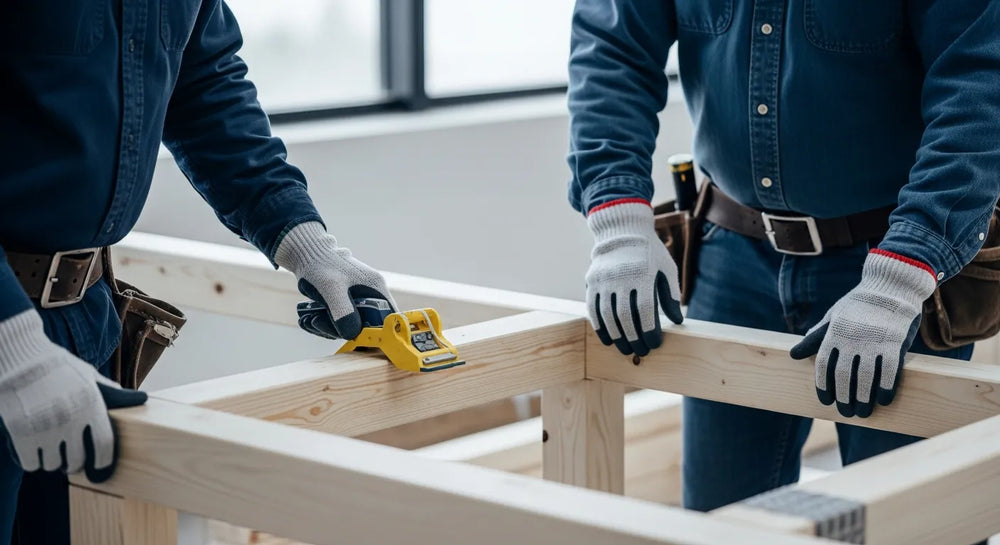
Budgeting the Average Cost to Build a Frame House
Table of Contents
- Introduction
- Defining the Scope of Frame House Construction
- National Averages and Regional Variables
- The Raw Material Breakdown: Lumber and Sheathing
- Structural Hardware and Fasteners
- The Liquidity Challenge in U.S. Construction
- Solving the "Time-to-Terms" Friction
- Labor Costs and Project Management
- Site Preparation and Foundation Costs
- Mechanical, Electrical, and Plumbing (MEP) Rough-In
- CapEx Timing and 100% Bonus Depreciation
- Ensuring Compliance and Quality Standards
- The Role of Digital Innovation in Procurement
- Building a Resilient, U.S.-Based Supply Chain
- Practical Scenario: Scaling Workforce Housing
- Total Cost of Ownership (TCO) in Framing
- Conclusion
Introduction
Imagine a commercial developer who has just secured a contract for a thirty-unit workforce housing project. The blueprints are finalized, the site is cleared, and the construction schedule is aggressive. However, as the procurement manager begins sourcing the massive quantities of structural lumber, fasteners, and sheathing required, they hit a wall. Their traditional suppliers are quoting a six-week lead time just to process a new credit application for the necessary net terms. In the construction world, a six-week delay in procurement translates to tens of thousands of dollars in idling labor costs and pushed-back delivery dates. This "time-to-terms" friction is the silent killer of project profitability.
Understanding the average cost to build a frame house is not merely an exercise in calculating board feet and labor hours; it is a complex strategic endeavor that involves navigating volatile commodity markets, assessing supply chain resilience, and managing industrial liquidity. For B2B buyers and project managers, the goal is to balance high-quality American-made materials with a financing structure that keeps the project moving without draining immediate cash reserves.
In this detailed analysis, we will break down the multi-faceted components that dictate the average cost to build a frame house in the current economic climate. We will explore everything from raw material procurement and specialized structural hardware to the strategic financial tools—like embedded financing and tax incentives—that allow businesses to scale. At Maden.co, our mission is to simplify this process by providing a direct line to verified American manufacturers, ensuring that your supply chain is as robust as the structures you build.
Defining the Scope of Frame House Construction
Before diving into the specific numbers, it is essential to define what we mean by a "frame house" in a professional and industrial context. While residential consumers often look at this through the lens of a single-family home, B2B procurement often involves "stick-built" wood framing for multi-family developments, light commercial structures, or modular employee housing.
A frame house utilizes a skeleton of structural members—typically wood or light-gauge steel—to support the loads of the building. Wood framing remains the dominant method in the United States due to the abundance of domestic timber and the efficiency of the construction method. The average cost to build a frame house is heavily influenced by the "framing stage" itself, which usually accounts for about 15% to 20% of the total construction budget. However, this percentage can fluctuate based on the complexity of the architectural design and the current market price of lumber.
National Averages and Regional Variables
On a national scale, the average cost to build a frame house typically ranges from $150 to $300 per square foot for a standard professional build. For a 2,000-square-foot structure, this puts the total investment between $300,000 and $600,000. However, these figures are "all-in" costs. If we isolate the framing component—the lumber, the labor to erect the skeleton, and the structural sheathing—the cost usually lands between $15 and $30 per square foot.
Regional Labor and Material Disparities
Regionality plays a massive role in these calculations. In the Pacific Northwest or the Southeast, proximity to major timber mills can reduce transportation costs for structural lumber. Conversely, in dense urban markets or areas with stringent seismic or hurricane-zone building codes (such as California or Florida), the requirement for specialized structural connectors and reinforced framing can drive the average cost to build a frame house significantly higher.
Procurement managers must also account for the "soft costs" that vary by municipality. Impact fees, permit costs, and local environmental regulations can add 5% to 10% to the total project cost before the first stud is ever nailed into place. At Maden.co, we believe that our mission to democratize access to American manufacturing helps mitigate some of these regional stresses by providing a transparent marketplace where buyers can source from a diverse range of U.S.-based vendors regardless of their project's location.
The Raw Material Breakdown: Lumber and Sheathing
The single largest variable in the average cost to build a frame house is the price of lumber. For a B2B buyer, sourcing lumber is not about visiting a local retail yard; it is about securing bulk shipments of high-grade dimensional lumber (such as Douglas Fir or Southern Yellow Pine) and engineered wood products.
Dimensional Lumber
Dimensional lumber (2x4s, 2x6s, etc.) forms the vertical studs and horizontal plates of the frame. The quality of this lumber is graded by agencies like the West Coast Lumber Inspection Bureau (WCLIB) or the Southern Pine Inspection Bureau (SPIB). For structural integrity, engineers often specify "No. 2 and Better" or "Machine Stress Rated" (MSR) lumber. The price of these materials is subject to the liquidity and volatility of the global commodities market, making fixed-price contracts difficult to secure without a strong financial partner.
Sheathing and Subflooring
Once the skeleton is erected, it must be "skinned" with sheathing. Oriented Strand Board (OSB) and plywood are the primary materials used here. While OSB is often more cost-effective, plywood offers superior moisture resistance and structural rigidity in certain applications. For an industrial-scale project, the difference of a few dollars per sheet can translate into thousands of dollars in total project variance.
When you browse all categories on our marketplace, you gain access to a wide array of structural materials that meet these rigorous industry standards. This transparency allows procurement teams to accurately forecast the average cost to build a frame house based on current, verified American manufacturing data.
Structural Hardware and Fasteners
A frame house is only as strong as its connections. In modern construction, the average cost to build a frame house includes a significant line item for structural hardware. This includes:
- Joist Hangers: Vital for connecting floor joists to headers.
- Hurricane Ties and Seismic Anchors: Required in many jurisdictions to ensure the structure remains attached to the foundation during extreme weather events.
- Post Bases and Caps: Used to secure vertical support columns.
- Fasteners: This encompasses everything from common nails used in pneumatic nailers to heavy-duty structural screws and bolts.
For B2B buyers, the specification of these parts is critical. Using the wrong grade of fastener can lead to inspection failures and costly rework. We emphasize the importance of sourcing through verified U.S. manufacturers who provide full documentation on material grades and compliance with standards such as ASTM or DIN where applicable. Using high-quality, domestic hardware ensures that the "Total Cost of Ownership" (TCO) remains low by avoiding the structural failures often associated with sub-standard, imported components.
The Liquidity Challenge in U.S. Construction
One of the primary hurdles in calculating and managing the average cost to build a frame house is the structural liquidity challenge inherent in American manufacturing and construction. Many small-to-mid-sized manufacturers and construction firms operate on net-30, net-60, or even net-90 payment cycles.
A framing contractor might have to pay for a massive shipment of lumber upfront, yet they won't receive payment from the developer until a specific construction milestone—like the "roof-on" stage—is reached. This creates a massive cash flow gap. In an environment where traditional bank credit is tightening, this gap can stifle a company's ability to take on new projects or finish existing ones.
This is where Maden Pay becomes a strategic operational tool. By embedding financing directly at the point of transaction, we help businesses bridge that liquidity gap. Instead of depleting their working capital on a single lumber order, buyers can use embedded financing to spread the cost over a timeframe that aligns with their project's cash conversion cycle.
Solving the "Time-to-Terms" Friction
In traditional procurement, establishing net terms with a new vendor is an arduous process. It involves submitting multi-page credit applications, providing bank references, and waiting weeks for a credit manager to perform a manual review. If a project manager needs to source specialized trusses from a new manufacturer to keep a project on schedule, they simply don't have three weeks to wait for an approval.
Maden.co eliminates this friction. When you use our platform, you can check eligibility for financing in as little as 60 seconds. This "instant" decision-making process is a game-changer for industrial procurement. A single approval on our marketplace works across our entire network of verified U.S. suppliers.
Approvals, limits, and terms depend on business eligibility. However, for qualified businesses, credit lines can range from $5,000 to over $250,000. This capacity allows procurement managers to secure all the materials needed to impact the average cost to build a frame house without the administrative headache of renegotiating terms with every single vendor.
Labor Costs and Project Management
While materials are a tangible expense, labor is the most volatile component of the average cost to build a frame house. Framing is a labor-intensive process that requires a skilled crew. In the current market, the shortage of skilled tradespeople has driven labor rates higher.
A typical framing crew consists of a lead carpenter (foreman), several journey-level framers, and laborers. The efficiency of this crew is dictated by the quality of the materials provided. If a procurement manager sources low-grade, warped lumber to save on material costs, the framing crew will spend twice as much time "culling" the wood and forcing boards into alignment. This is a classic example of how a lower purchase price can lead to a higher Total Cost of Ownership.
By sourcing consistent, high-quality materials through Maden.co, you ensure that your labor force remains productive. Furthermore, using Maden Pay solutions to ensure materials arrive exactly when needed prevents "labor bleed"—the cost of a crew sitting idle because a lumber delivery was delayed due to payment processing issues.
Site Preparation and Foundation Costs
You cannot build a frame house without a solid foundation. Site preparation and foundation work are the precursors to framing and significantly influence the overall budget.
Earthwork and Clearing
Before the frame can go up, the land must be cleared, graded, and excavated. For industrial sites, this might involve complex soil stabilization or the installation of extensive drainage systems. If the site has a high water table or poor soil bearing capacity, the foundation requirements become more complex (e.g., thickened slabs or pilings), which increases the average cost to build a frame house.
Foundation Types
- Slab-on-Grade: Generally the most cost-effective option, common in warmer climates.
- Crawl Space: Provides access to utilities and is often used in areas with expansive soils.
- Full Basement: The most expensive option but provides significant additional square footage and structural stability in northern climates.
The transition from the foundation to the frame is a critical procurement point. This is where anchor bolts, sill sealers, and pressure-treated "sill plates" are required. Ensuring these specialized materials are on-site and meet code requirements is essential for a smooth handover from the concrete crew to the framing crew.
Mechanical, Electrical, and Plumbing (MEP) Rough-In
Once the frame is standing, the "rough-in" phase begins. This is where the average cost to build a frame house expands to include the internal systems. The frame must be designed and constructed to accommodate these systems without compromising structural integrity.
- Plumbing: Sourcing American-made piping and fittings ensures compatibility with domestic standards (like NPT threading).
- Electrical: This includes the wiring, junction boxes, and main panels.
- HVAC: The ductwork and air handling units.
Procuring these items through a centralized marketplace like ours reduces the friction of managing dozens of different invoices and delivery schedules. Our platform allows you to keep your supply chain transparent and your project on track.
CapEx Timing and 100% Bonus Depreciation
For business owners and real estate developers, the timing of building a frame house is often driven by tax strategy. One significant tool is 100% bonus depreciation. Under current tax laws, businesses may be able to deduct the full cost of certain eligible assets in the first year they are placed in service, rather than depreciating them over several decades.
While residential "real property" typically has a long depreciation schedule (27.5 years), certain components of a commercial or industrial build—such as specialized equipment, modular offices, or land improvements—may qualify for accelerated depreciation.
Disclaimer: You must consult your tax professional to determine how bonus depreciation applies to your specific project and to understand the current percentage limits and phase-out schedules.
Strategically timing your CapEx (Capital Expenditure) to align with tax benefits can effectively lower the net average cost to build a frame house. By using Maden Pay to finance the acquisition of these assets, you can preserve your cash flow while still capturing the tax advantages of the investment.
Ensuring Compliance and Quality Standards
When building a frame house for industrial or commercial use, compliance is non-negotiable. This extends beyond the lumber grade to the very components that hold the building together.
For example, when sourcing plumbing or gas line components to be integrated into the frame, understanding the difference between NPT (National Pipe Tapered) and other thread standards is vital. American-made products found on Maden.co are manufactured to these specific U.S. standards, ensuring that when your subcontractors go to install the fixtures, everything fits perfectly. This reduces the risk of leaks, failures, and the astronomical costs of "opening up" a finished frame to repair a faulty internal connection.
Our commitment to Supply Chain Transparency means that we prioritize vendors who can provide the necessary certifications and data sheets. This level of detail is what separates a strategic procurement partner from a simple catalog.
The Role of Digital Innovation in Procurement
The U.S. manufacturing revival is not just about bringing factories back; it is about applying Digital Innovation to the way we buy and sell industrial goods. The traditional method of sourcing for a frame house—calling multiple local yards, faxing purchase orders, and waiting for paper invoices—is obsolete.
At Maden.co, we provide a modern interface that allows you to:
- Search for specific structural components from verified American vendors.
- Compare pricing and lead times in real-time.
- Access embedded financing at checkout to maintain liquidity.
- Track orders and manage documentation in one centralized location.
By digitizing the procurement of the materials that drive the average cost to build a frame house, we empower businesses to be more agile and competitive. Whether you are a small contractor or a large-scale developer, these tools level the playing field.
Building a Resilient, U.S.-Based Supply Chain
Recent global events have highlighted the fragility of international supply chains. For those looking at the average cost to build a frame house, "cheap" imported materials often come with the hidden costs of long lead times, shipping delays, and inconsistent quality.
Choosing to source American-made products is a strategic decision to build a more resilient business. When you source from a U.S. manufacturer, you are operating within the same regulatory environment, the same time zones, and the same legal system. This proximity reduces risk.
Our tagline, "The U.S. Manufacturing Revival Is Here," is a call to action for businesses to reinvest in domestic capability. We are proud to support American manufacturers by providing them with a platform to reach a national audience of buyers. If you are a manufacturer of structural components, we encourage you to explore our vendor registration to join our growing ecosystem.
Practical Scenario: Scaling Workforce Housing
Consider a construction firm tasked with building temporary housing for a new manufacturing facility in the Midwest. The project requires ten identical frame houses to be completed in four months. The average cost to build a frame house for this project is estimated at $220,000 per unit.
The total material cost for the framing phase across all ten units is roughly $350,000. For a mid-sized firm, tying up $350,000 in cash for three months while waiting for the first progress payment is impossible.
By using Maden.co, the firm can:
- Source the lumber, trusses, and hardware from three different U.S.-based manufacturers found on the marketplace.
- Apply for Maden Pay and receive a credit line that covers the entire $350,000.
- Select a Net-90 payment option that aligns with their billing cycle to the facility owner.
- Break ground immediately without waiting for a traditional bank loan.
In this scenario, the "cost" of the financing is a small fraction of the profit generated by finishing the project on time and securing the next contract. This is how smart financing transforms the way we look at construction costs.
Total Cost of Ownership (TCO) in Framing
When evaluating the average cost to build a frame house, the savvy procurement manager looks beyond the initial invoice. TCO includes:
- Purchase Price: The cost of the material.
- Acquisition Cost: The time and labor spent sourcing, vetting vendors, and processing payments.
- Logistics Cost: Shipping and handling.
- Quality Cost: The price of rework or failures due to inferior materials.
- Opportunity Cost: The profit lost if capital is tied up in inventory rather than being used to grow the business.
Maden.co is designed to lower the TCO across all these categories. By streamlining the sourcing and financing process, we reduce acquisition costs. By focusing on verified American manufacturers, we reduce quality costs. And by providing flexible financing, we eliminate the opportunity cost of tied-up capital.
Conclusion
Determining the average cost to build a frame house is a vital step for any business involved in construction, development, or industrial expansion. While material prices and labor rates will always fluctuate, the way you manage your procurement and financing can be a constant source of competitive advantage.
By prioritizing American-made materials, you ensure a higher standard of quality and contribute to a more resilient domestic economy. At Maden.co, we are committed to being your strategic partner in this journey. We provide the platform, the products, and the financial tools necessary to turn your blueprints into reality without the traditional bottlenecks of the industrial supply chain.
We invite you to explore our extensive catalog and see how we can help you streamline your next project. Whether you need structural lumber, specialized fasteners, or the liquidity to scale your operations, we have the solutions to move your business forward.
Ready to optimize your procurement? Visit our homepage to begin your search, or if you have specific sourcing needs, feel free to contact us today. To see if your business qualifies for our strategic financing options, check eligibility now and take the first step toward a more efficient construction cycle.
Frequently Asked Questions
1. How long does it take to get financing for building materials through Maden.co? Traditional bank financing or vendor credit applications can take weeks. However, with our embedded financing solution, qualified businesses can often receive an eligibility decision in under 60 seconds. This allows you to secure the materials you need and keep your construction schedule on track without the typical "time-to-terms" delays.
2. Why should I prioritize American-made materials for a frame house? Sourcing American-made products ensures that your materials meet strict domestic building codes and quality standards (such as NPT threading for plumbing or specific lumber grading). It also reduces lead times and shipping risks associated with international supply chains, while supporting the U.S. manufacturing revival.
3. Does Maden Pay offer different terms based on project length? Yes, Maden Pay is designed to align with B2B cash conversion cycles. Depending on eligibility, businesses can choose from Net 30, 60, or 90-day terms. This flexibility is ideal for construction projects where there is a significant gap between purchasing materials and receiving milestone payments from clients.
4. Can I use a single credit line to purchase from multiple manufacturers on the Maden.co marketplace? Absolutely. One of the greatest efficiencies of our platform is that once you are approved for a credit line, you can use it across our entire network of verified U.S. vendors. You don't need to re-apply or negotiate separate terms for every new supplier you find on the marketplace.


