
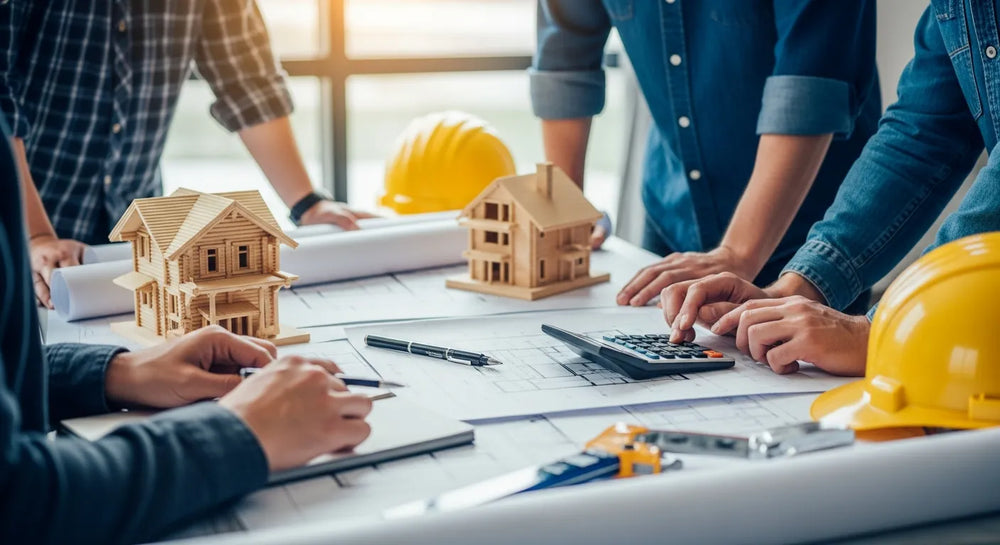
Calculating the True Cost to Build Log House Units
Table of Contents
- Introduction
- The Commercial Landscape of Log Construction
- Breaking Down the Cost to Build Log House Facilities
- The Liquidity Challenge in the Log Supply Chain
- Capital Expenditures and Tax Strategies
- Detailed Labor Analysis: The Hidden Cost
- Strategic Sourcing and Total Cost of Ownership (TCO)
- Case Scenario: The Cost of Procurement Delay
- Maintenance: Protecting Your Investment
- Logistics and Delivery Considerations
- Building a Resilient Supply Chain with Maden.co
- Final Economic Considerations
- Summary of Key Takeaways
- FAQ
Introduction
Imagine a facilities director for a growing regional outdoor hospitality group tasked with expanding a cabin resort before the peak summer season begins. The project is approved, the site is cleared, and the design is finalized. However, when it comes time to source the specialized timber, industrial-grade sealants, and custom architectural hardware, the procurement process hits a wall. Traditional suppliers demand a 50% down payment upfront, and the credit application process for net-30 terms is expected to take three to four weeks. In the world of industrial construction, these three weeks aren't just a delay; they represent lost seasonal revenue, idling labor costs, and a stalled supply chain.
The purpose of this guide is to provide a comprehensive analysis of the cost to build log house structures within a B2B and commercial context. We will move beyond simple "price per square foot" estimates to explore the variables that dictate total project expenditure—from site preparation and material sourcing to the strategic financing that keeps projects on schedule. We will examine how modern procurement platforms and embedded financing solutions are revolutionizing the way American businesses approach heavy timber construction.
Ultimately, we believe that understanding the cost to build log house facilities requires more than a spreadsheet; it requires a strategic partnership with a transparent supply chain. By the end of this article, you will understand how to optimize your CapEx, leverage domestic manufacturing, and use innovative financing tools to ensure your industrial or commercial log project is completed on time and within budget. At Maden.co, our mission is to facilitate this process by connecting you with high-quality American-made components while removing the friction of traditional procurement cycles.
The Commercial Landscape of Log Construction
Log structures are no longer relegated to the realm of private residential retreats. Today, we see an increasing number of businesses—from park services and corporate retreat centers to agricultural facilities and boutique hospitality brands—investing in log-based architecture. The appeal lies in the inherent durability, energy efficiency, and aesthetic distinction of solid timber. However, for a procurement manager, these benefits come with unique supply chain considerations.
Unlike standard stick-frame construction, which relies on ubiquitous materials available at any local lumber yard, log construction requires specialized, often custom-milled components. This specialization introduces complexity into the "cost to build log house" equation. When we discuss costs in a B2B environment, we must account for the specialized labor, technical certifications, and the logistical challenges of transporting heavy, oversized timber.
The U.S. Manufacturing Revival in Timber
At Maden.co, we are proud to state that the U.S. manufacturing revival is here, particularly in the timber and wood products sector. Sourcing domestically isn't just a matter of pride; it is a strategic decision to reduce lead times and ensure supply chain transparency. When you source American-made logs and hardware, you are bypassing the volatility of international shipping and the ambiguity of foreign quality standards. We are dedicated to providing industrial buyers with access to verified American-made products that meet the rigorous demands of commercial construction.
Breaking Down the Cost to Build Log House Facilities
To accurately estimate the cost to build log house structures, we must categorize expenditures into five primary phases: Pre-construction, Materials (The Shell), Systems and Infrastructure, Finishing and Interior, and Long-term Operations.
Pre-construction and Site Development
Before the first log is delivered, a significant portion of the budget is consumed by site-specific factors. For a commercial project, these costs are often higher due to regulatory requirements and larger scale.
- Land Clearing and Grading: Removing obstacles and ensuring proper drainage is critical for log structures, which are susceptible to moisture if not elevated correctly.
- Foundation Work: Log buildings are incredibly heavy. Whether you are using a slab-on-grade, a crawl space, or a full basement, the foundation must be engineered to support the concentrated loads of solid timber walls.
- Utility Integration: Bringing power, water, and sewage to the site can cost anywhere from $5,000 to $30,000 depending on the distance from existing infrastructure.
The Log Shell: The Core Investment
The shell is where the "cost to build log house" fluctuates most significantly. This includes the logs themselves, the roof system, and the exterior doors and windows.
- Log Species and Profiles: Different woods offer different performance metrics. Cedar is naturally rot-resistant but more expensive, while Pine is economical but requires more diligent maintenance. The profile—whether it’s a handcrafted round log, a milled "D-log," or a square timber—will dictate both the aesthetic and the labor cost of assembly.
- Milled Kits vs. Handcrafted Logs: Many commercial buyers prefer milled kits because they are precut and numbered, significantly reducing on-site labor. Handcrafted logs, while visually stunning, require specialized artisans and longer assembly times, which can increase the shell cost by 30% or more.
- Fasteners and Hardware: It is vital to use industrial-grade fasteners designed for log movement. This includes heavy-duty lag screws, through-bolts, and specialized tensioning systems that allow the building to settle naturally over the first few years. You can browse our full catalog to find the American-made hardware required for these technical applications.
Technical Systems: HVAC, Plumbing, and Electrical
Integrating modern systems into a solid timber wall requires meticulous planning. Unlike a framed wall, you cannot simply cut into a log to run wires or pipes without careful engineering.
- Electrical Routing: Most logs are pre-drilled or "chased" during the milling process to accommodate wiring. If this is not done correctly at the factory, the on-site labor costs for electricians will skyrocket.
- HVAC Efficiency: Log walls provide excellent thermal mass, meaning they can store heat and release it slowly. However, the HVAC system must be sized appropriately to capitalize on this property, often requiring specialized thermostats and zoned heating.
- Compliance and Standards: Commercial log buildings must adhere to strict fire codes and accessibility standards (ADA). Ensuring your components meet these certifications is a non-negotiable part of the procurement process.
The Liquidity Challenge in the Log Supply Chain
One of the most significant hurdles in calculating and managing the cost to build log house units is the structural liquidity challenge inherent in U.S. manufacturing. Many of the specialized mills and component manufacturers that produce high-quality log kits are small-to-medium-sized enterprises (SMEs). These businesses often operate on tight margins and face tightening bank credit.
For the buyer, this creates a "time-to-terms" friction. In a traditional procurement environment, a buyer might want net-60 terms to align with their cash conversion cycle—especially on a project where the building won't be generating revenue for several months. However, the manufacturer may require a significant deposit to purchase the raw timber. Getting a new supplier approved for credit terms usually involves a weeks-long process of exchanging financial statements, bank references, and manual credit checks.
Eliminating Procurement Friction with Maden Pay
We recognized that this friction is a primary barrier to the manufacturing revival. To solve this, we have integrated Maden Pay directly into our marketplace. Instead of waiting weeks for a credit department to review your application, Maden Pay provides instant eligibility decisions.
For a procurement manager, this means you can secure the materials for your log house project immediately. By embedding financing at the point of transaction, we eliminate the need to renegotiate terms with every new vendor. Whether you are buying the logs from one supplier and the roofing materials from another, your single approval works across the entire marketplace.
Strategic Tool: Maden Pay offers credit lines ranging from $5,000 to over $250,000 for qualified businesses. This allows you to preserve your existing bank lines for other operational needs while leveraging net 30, 60, or 90-day options to align with your project’s milestones.
To see how much purchasing power your business can access, you can Check eligibility in under 60 seconds through a soft credit check that does not impact your credit score. Note: Approvals, limits, and terms are dependent on business eligibility.
Capital Expenditures and Tax Strategies
When a business calculates the cost to build log house facilities, it is essential to look at the project through the lens of Capital Expenditure (CapEx). Because these structures are long-term assets, the timing of the build and the procurement of equipment can have significant tax implications.
100% Bonus Depreciation
Under current tax laws, businesses may be able to take advantage of bonus depreciation for certain components of their construction project. While the structure itself is typically depreciated over a longer period, many of the internal systems, equipment, and non-structural components may qualify for accelerated depreciation.
In some cases, 100% bonus depreciation allows a business to deduct the full cost of eligible assets in the first year they are placed in service. This can drastically reduce the "net" cost to build log house units by providing an immediate tax benefit. However, tax laws are subject to change and vary by jurisdiction. Always consult with your tax professional to understand how bonus depreciation applies to your specific project and business structure.
By using Maden Pay to acquire these assets before the end of the fiscal year, you can potentially lock in these tax advantages even if you are utilizing net terms to pay for the equipment over several months.
Detailed Labor Analysis: The Hidden Cost
In log construction, labor often accounts for a higher percentage of the total budget than in standard construction. You are not just hiring general carpenters; you are often hiring specialists who understand the nuances of wood shrinkage and settling.
- The Settling Factor: A solid log wall will settle as the wood dries and the weight of the structure compresses the joints. This means that every window, door, and interior partition must be installed with "settling spaces" or "slip joints." If a crew lacks experience in this area, the cost to build log house structures will eventually include the cost of expensive repairs to buckled window frames or cracked drywall.
- Chinking and Sealing: This is the process of applying a flexible sealant between the log courses. It is a labor-intensive task that is vital for the energy efficiency and longevity of the building. For a commercial facility, using high-quality, American-made chinking is essential to minimize future maintenance.
- Project Management: Because of the specialized nature of the materials, lead times must be managed perfectly. A delay in the delivery of a specific log can halt the entire project. Using a strategic partner like Maden.co allows you to track your supply chain more effectively, ensuring that all components—from the foundation bolts to the final roof trusses—arrive when needed.
Strategic Sourcing and Total Cost of Ownership (TCO)
When evaluating the cost to build log house facilities, procurement professionals must look beyond the initial purchase price and consider the Total Cost of Ownership (TCO). A lower-cost log kit sourced from an unverified or overseas vendor may seem attractive on paper, but the long-term costs of inferior wood or non-standard hardware can be devastating.
Why Verified U.S. Manufacturers Matter
At Maden.co, we focus on Supply Chain Transparency. We connect you with verified U.S. manufacturers who stand behind their products. When you buy through our platform, you are ensuring:
- Compliance with Industry Standards: Whether it’s NPT (National Pipe Thread) for your plumbing fixtures or specific DIN standards for hardware, domestic manufacturers are aligned with the regulations your engineers require.
- Reduced Freight Costs: Shipping heavy logs across oceans is prohibitively expensive and prone to delays. Domestic shipping is more predictable and often more cost-effective.
- Support for the Manufacturing Revival: Every dollar spent on American-made goods reinforces the domestic industrial base, creating a more resilient economy for all of us. You can learn more about our commitment to this mission on our About Us page.
If you are a manufacturer of log home components or related industrial supplies, we invite you to register as a vendor and join our marketplace to reach a broader network of commercial buyers.
Case Scenario: The Cost of Procurement Delay
Consider a facility manager who needs to replace the industrial HVAC unit in a large log-built visitor center. The specific unit required is manufactured in the U.S. but costs $45,000. Under traditional procurement, the manager would have to:
- Request a quote.
- Submit a credit application to the manufacturer.
- Wait 10-14 business days for approval.
- Issuance of a Purchase Order (PO).
- Wait for the unit to be scheduled for production.
During those two weeks of credit approval, the temperature in the visitor center becomes uncomfortable, impacting guest experience and revenue. By using Maden Pay, that same manager could have the credit approved in 60 seconds at the point of checkout, allowing the order to enter the production queue immediately. The "cost" in this scenario isn't just the $45,000 for the unit; it's the opportunity cost of the two-week delay. This is why we prioritize "Time-to-Terms" as a critical metric for business success.
Maintenance: Protecting Your Investment
The cost to build log house units doesn't end when the keys are handed over. Because wood is a natural material, it requires ongoing care to maintain its structural integrity and aesthetic appeal.
- Staining and UV Protection: Log structures should be restained every 3 to 5 years, depending on sun exposure. High-quality UV-resistant stains are an essential MRO (Maintenance, Repair, and Operations) expense.
- Moisture Management: Ensuring that gutters are clear and that vegetation is kept away from the logs is the most cost-effective way to prevent rot.
- Periodic Inspections: Checking for "checks" (natural cracks in the wood) and ensuring they aren't trapping water is a vital part of the maintenance cycle.
By planning for these costs upfront, businesses can ensure that their log facility remains an asset rather than a liability. Procurement managers can use Maden.co to source these ongoing MRO supplies, keeping the entire lifecycle of the building within a streamlined, American-based supply chain.
Logistics and Delivery Considerations
The logistics of log construction are significantly different from traditional building projects. When calculating the cost to build log house facilities, you must account for "last-mile" delivery.
- Access Requirements: Log deliveries typically arrive on 53-foot flatbed trailers. If the project site is in a remote area or has restricted access, the logs may need to be "trans-loaded" onto smaller trucks, which adds to the cost.
- Unloading Equipment: Unlike a pallet of shingles, logs require heavy machinery—such as a large forklift or a crane—to be unloaded. This equipment usually needs to be rented and on-site the moment the truck arrives to avoid standby fees.
- Staging: Logs must be stored off the ground and covered to protect them from the elements until they are ready to be stacked. Proper staging saves time during the build but requires a clear, dry area on the job site.
Building a Resilient Supply Chain with Maden.co
Our goal is to be more than just a marketplace; we want to be your strategic partner in building a resilient, U.S.-based supply chain. The cost to build log house structures is influenced by a myriad of factors, but the most controllable factors are where you source and how you pay.
By choosing Maden.co, you are choosing:
- Digital Innovation: A modern interface that makes finding industrial products as easy as any consumer experience.
- Industrial Excellence: Products that meet the specifications and tolerances required by engineers and architects.
- Financial Flexibility: Tools like Maden Pay that empower you to manage your cash flow effectively.
If you have specific sourcing needs or require assistance with a large-scale project, our team is ready to help. You can reach out to us through our Contact Us page for personalized support.
Final Economic Considerations
The decision to invest in a log structure is an investment in longevity. While the initial cost to build log house facilities may be higher than some alternative materials, the durability and energy performance often result in a lower TCO over thirty years. Furthermore, in an era of supply chain uncertainty, the ability to source your primary building materials from domestic forests and mills provides a level of security that imported materials simply cannot match.
We encourage you to look at your procurement process not just as a series of transactions, but as a strategic function that can drive growth. By reducing the time it takes to get terms, by ensuring the quality of American-made components, and by leveraging modern tax strategies, you can turn a complex construction project into a streamlined success.
Summary of Key Takeaways
Building a commercial log house is a significant undertaking that requires a deep understanding of material costs, labor specialties, and financial strategies. The total expenditure is influenced by site prep, log shell quality, and the integration of technical systems. However, the most successful projects are those that address the liquidity and procurement frictions head-on.
- Sourcing Matters: Domestically made logs and hardware reduce lead times and ensure quality.
- Financing is Strategic: Embedded financing via Maden Pay eliminates the weeks-long "time-to-terms" delay, allowing for faster project starts and better cash flow management.
- Tax Benefits: Utilizing bonus depreciation can significantly offset the initial CapEx of your construction project (consult your tax professional).
- Long-Term Vision: Consider the TCO and maintenance requirements to protect your investment over its entire lifespan.
The U.S. manufacturing revival is here, and it is being built one project at a time. We invite you to Check eligibility today and see how Maden.co can help you realize your next commercial construction goal with efficiency and pride.
FAQ
1. What is the average cost to build log house facilities per square foot in a B2B context?
For commercial or industrial-grade log structures, costs typically range from $200 to $350 per square foot. This includes site preparation, a high-quality log shell, professional labor, and the integration of commercial-spec HVAC, electrical, and plumbing systems. Prices can vary significantly based on the timber species selected and the complexity of the architectural design.
2. How does Maden Pay help manage the cost to build log house projects?
Maden Pay provides embedded financing that eliminates the traditional "time-to-terms" friction. Instead of waiting weeks for supplier credit approval, businesses can receive instant eligibility decisions for credit lines up to $250K+. This allows procurement managers to secure materials immediately, align payments with their cash flow through net 30/60/90 options, and keep construction schedules on track.
3. Can I claim bonus depreciation on a new log building for my business?
While the main structure of a building is usually depreciated over a standard 39-year schedule, certain components such as specialized equipment, furniture, and some internal systems may qualify for 100% bonus depreciation or Section 179 deductions. This can significantly lower the net cost of the project in the first year. You must consult your tax professional to determine which parts of your project qualify.
4. Why should I prioritize American-made materials for my log project?
Sourcing American-made products through Maden.co ensures higher supply chain transparency and adherence to domestic industrial standards (like NPT or DIN). It also reduces the risks associated with international shipping delays and high freight costs. Furthermore, supporting U.S. manufacturing contributes to a more resilient domestic economy and aligns with the current revival of American industrial excellence.


