
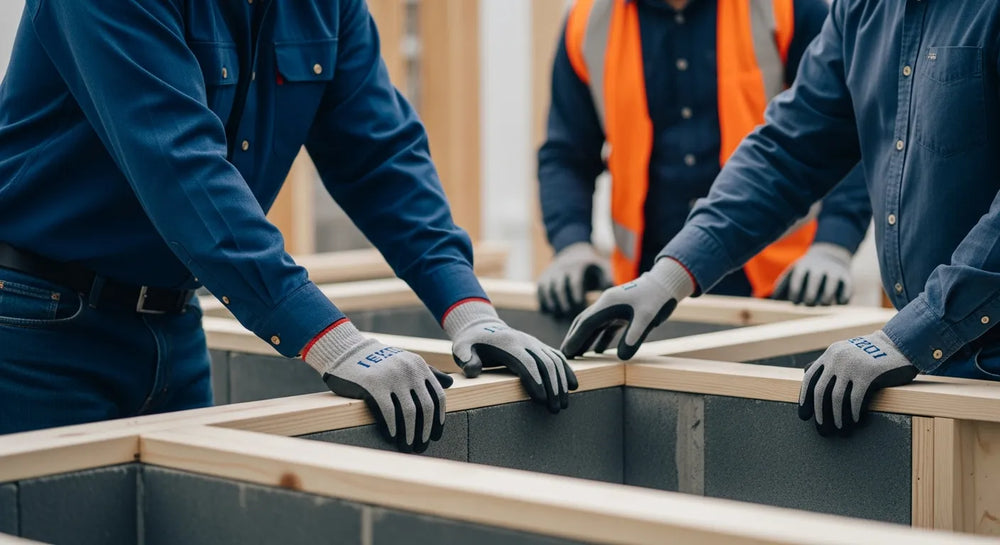
Cost to Build a Small House in Indianapolis City, Indiana
Table of Contents
- Introduction
- The Indianapolis Construction Landscape in 2026
- Breaking Down the Hard Costs of Construction
- Navigating Soft Costs and Local Regulations
- The Liquidity Challenge: Why "Time-to-Terms" Matters
- Tactical CapEx: Leveraging 100% Bonus Depreciation
- Sourcing American-Made: Quality and Compliance
- Estimating the Total Project Cost
- Procurement Strategies for Modern Builders
- The Role of Digital Innovation in Construction
- Building a Resilient Indianapolis Supply Chain
- Practical Scenario: The "Indy Infill" Project
- Conclusion
Introduction
Imagine a project manager at a mid-sized construction firm in Indianapolis standing on a vacant lot in the Near Eastside. The permits are pulled, the crew is ready, but the specialized American-made structural fasteners required for the foundation won't arrive for another three weeks because the traditional supplier is still "processing" the credit application. In the high-stakes world of urban development, where the cost of capital is as significant as the cost of lumber, these administrative bottlenecks are more than an inconvenience—they are a threat to project viability. Whether you are a developer looking to maximize a small urban infill lot or a business owner investing in workforce housing, understanding the cost to build a small house in Indianapolis city, Indiana, requires looking beyond simple square-foot estimates.
At Maden.co, we recognize that the true cost of construction is inextricably linked to supply chain efficiency and the speed of financing. The purpose of this analysis is to provide a comprehensive breakdown of the financial and logistical components involved in building a small residential structure within the Indianapolis metropolitan area in 2026. We will explore the hard costs of materials, the soft costs of permitting, and the strategic advantages of sourcing American-made components through a digitally-integrated marketplace. We believe that the U.S. manufacturing revival is driven by the ability of local builders to access high-quality products without the friction of outdated procurement cycles. By the end of this article, you will have a clear roadmap for navigating the Indianapolis construction landscape, underpinned by a strategy that prioritizes supply chain transparency and rapid liquidity.
The Indianapolis Construction Landscape in 2026
The Indianapolis market continues to be a focal point for regional growth, offering a unique blend of affordability and industrial strength. However, building in the city limits involves navigating a complex ecosystem of zoning requirements, labor availability, and material sourcing. A "small house" in this context generally refers to a structure between 800 and 1,200 square feet—often designed as an Accessory Dwelling Unit (ADU), a tiny home on a permanent foundation, or a compact single-family residence.
As we look at the current economic climate, several factors are shaping the Indianapolis construction sector:
- Zoning Modernization: The city has continued to update its ordinances to encourage higher-density infill, making it easier to utilize smaller lots in established neighborhoods.
- Labor Market Dynamics: Skilled trades in the Midwest remain in high demand. Efficient procurement is essential to ensure that when you have a crew on-site, they have the materials they need to keep moving.
- Industrial Resilience: With its deep roots in manufacturing, Indiana is a hub for the very products used in home construction, from steel components to advanced HVAC systems.
At Maden.co, our mission is to democratize access to American manufacturing. We connect industrial buyers and developers with millions of verified American-made products, ensuring that your Indianapolis project supports the domestic economy while benefiting from the quality and reliability of U.S. standards.
Breaking Down the Hard Costs of Construction
When calculating the cost to build a small house in Indianapolis city, Indiana, hard costs—the physical materials and labor—typically represent 60% to 70% of the total budget. In 2026, these costs are influenced by both local labor rates and the global pricing of raw materials.
Site Preparation and Foundation
Indianapolis soil varies significantly, but most urban lots require at least some remediation or leveling.
- Excavation: For a small footprint, excavation costs are manageable but can spike if old foundations or utility lines are discovered during the dig.
- Concrete and Footings: Using high-quality, U.S.-manufactured concrete forms and reinforcement steel ensures long-term structural integrity. In Indy, where the freeze-thaw cycle is a factor, the depth of footings is a critical compliance point.
- Estimated Cost: $15,000 to $25,000 depending on soil conditions and basement requirements.
Framing and Building Envelope
The "bones" of the house are where quality sourcing pays off. While lumber prices fluctuate, the trend toward pre-fabricated or modular components is increasing efficiency.
- Lumber and Steel: Sourcing U.S.-made steel for structural reinforcements or lightweight steel framing can provide better fire resistance and longevity.
- Insulation and Vapor Barriers: Modern Indianapolis energy codes require high R-values. Investing in superior insulation reduces the Total Cost of Ownership (TCO) by lowering long-term utility expenses for the occupant.
- Windows and Doors: American-made, energy-efficient windows are a staple of resilient construction.
- Estimated Cost: $35,000 to $60,000.
Mechanical, Electrical, and Plumbing (MEP)
This is where the technical precision of American manufacturing shines. From NPT-compliant piping to high-efficiency HVAC units, the internal systems of a house are its most complex components.
- HVAC: Given the Indianapolis climate—hot summers and cold winters—a properly sized, American-made heat pump or furnace is vital.
- Plumbing: Utilizing standardized fittings ensures that future maintenance is straightforward.
- Electrical: Smart home integration and high-quality circuitry are now standard expectations even in small-scale builds.
- Estimated Cost: $20,000 to $35,000.
Navigating Soft Costs and Local Regulations
Soft costs often catch developers off guard. In Indianapolis, these include everything that isn't a physical material or direct labor.
Permits and Impact Fees
The City of Indianapolis Department of Business and Neighborhood Services oversees the permitting process. For a small house, you must account for:
- Structural Permits: Based on the valuation of the work.
- Drainage Permits: Critical for managing Indiana’s rainfall and protecting the local watershed.
- Utility Hookups: Connecting to Citizens Energy Group and Indianapolis Power & Light (IPL) can involve significant tapping fees.
Architecture and Engineering
Even for a small house, professional stamps are often required to ensure compliance with Indiana Building Code. Designing for modularity can save costs here, allowing for repeatable designs that take advantage of standardized U.S. manufacturing specs.
Total Soft Cost Estimate
Typically, you should budget 10% to 15% of your total project cost for these items. In Indianapolis, this often equates to $10,000 to $20,000 for a small, single-unit build.
The Liquidity Challenge: Why "Time-to-Terms" Matters
In the construction and industrial sectors, cash flow is the lifeblood of operations. However, U.S. manufacturing and construction face a structural liquidity challenge. Many small-to-medium manufacturers and local contractors operate on Net-30 to Net-90 payment cycles. While you wait for a draw from a construction loan or payment from a client, you still need to pay for materials and labor.
Traditional bank credit is tightening, and the "time-to-terms" friction is a significant hurdle. In a conventional scenario, getting net terms from a new supplier requires weeks of onboarding, extensive credit applications, and manual negotiations. This delay can stall a project in its tracks.
We solve this through Maden Pay, our embedded financing solution. Instead of waiting weeks, qualified businesses can access credit directly at the point of transaction.
- Speed: Instant eligibility decisions are often made in under 60 seconds via a soft credit check.
- Capacity: We offer credit lines typically ranging from $5,000 to over $250,000 for qualified businesses.
- Efficiency: A single approval works across our entire marketplace. You don't need to renegotiate terms every time you source from a different U.S. manufacturer.
For a contractor building a small house in Indianapolis, this means you can check eligibility today and have the purchasing power to order your MEP supplies or framing materials tomorrow, aligning your cash conversion cycle with your project milestones.
Note: Approvals, limits, and terms depend on business eligibility. Please check eligibility to see what options are available for your specific business.
Tactical CapEx: Leveraging 100% Bonus Depreciation
For business owners and developers building small houses as part of a rental portfolio or worker housing initiative, the timing of capital expenditures (CapEx) is a powerful tax strategy. In 2026, the tax landscape continues to offer opportunities for those investing in tangible property.
The 100% bonus depreciation allows businesses to deduct a significant portion of the cost of qualifying assets in the year they are placed in service. This can include:
- Manufacturing equipment used on-site.
- Certain structural components that qualify as personal property rather than real property (often determined through a cost segregation study).
- Heavy machinery purchased for site preparation.
By accelerating these deductions, you can significantly improve your immediate cash flow, providing more capital to reinvest in your next Indianapolis project.
Disclaimer: Tax laws are complex and subject to change. Always consult with a qualified tax professional or CPA to determine how bonus depreciation applies to your specific situation and assets.
Sourcing American-Made: Quality and Compliance
One of the most significant advantages of building in Indianapolis is the proximity to U.S. manufacturing hubs. When you source through Maden.co, you are not just buying a product; you are ensuring that every component of your small house meets rigorous American standards.
Why U.S. Manufacturing Matters
- Standards Compliance: Whether it's the threading on a pipe or the load-bearing capacity of a steel beam, American-made products adhere to known standards like DIN, NPT, and ASTM. This reduces the risk of failed inspections and costly rework.
- Supply Chain Transparency: We prioritize transparency, allowing you to know exactly where your materials are coming from. This reduces the geopolitical risk associated with overseas shipping and international trade volatility.
- Industrial Excellence: Our marketplace focuses on About Us and our commitment to the U.S. manufacturing revival. We believe that by supporting domestic producers, we build a more resilient infrastructure for everyone.
For manufacturers based in the Midwest who are interested in reaching developers and industrial buyers, we encourage you to explore our Vendor Registration page. Joining our marketplace puts your products in front of the professionals who are rebuilding America’s urban landscapes.
Estimating the Total Project Cost
To arrive at a realistic figure for the cost to build a small house in Indianapolis city, Indiana, we must aggregate all the factors discussed. For a high-quality, 1,000-square-foot home built with American-made materials in 2026, a reasonable breakdown looks like this:
- Land Acquisition: $20,000 - $50,000 (highly variable by neighborhood).
- Site Prep & Foundation: $20,000.
- Framing & Exterior: $50,000.
- MEP Systems: $30,000.
- Interior Finishes: $30,000 - $45,000.
- Permits & Soft Costs: $15,000.
- Contingency (10%): $18,000.
Total Estimated Cost: $183,000 – $228,000 (excluding land).
This equates to approximately $183 to $228 per square foot. While it is possible to build for less by using lower-grade materials or doing much of the labor yourself, professionals focusing on durability and compliance should expect these ranges. By using Maden Pay, builders can manage these six-figure outlays more effectively, spreading payments over Net 30, 60, or 90 days to better match their revenue streams.
Procurement Strategies for Modern Builders
Efficiency in procurement isn't just about finding the lowest price; it’s about reducing the Total Cost of Ownership (TCO). For an Indianapolis builder, this means minimizing the time spent on administrative tasks and maximizing the time spent on-site.
Centralized Sourcing
Instead of managing thirty different vendor accounts, modern developers use Maden.co to browse all categories from a single interface. This centralization simplifies:
- Invoicing: One platform for all your American-made industrial and construction supplies.
- Logistics: Coordinated shipping reduces the number of small deliveries to the job site.
- Accountability: Dealing with verified U.S. manufacturers means you have recourse and support when technical questions arise.
Building for Longevity
A "small house" shouldn't mean a "cheap house." By utilizing industrial-grade components—such as heavy-duty electrical panels or high-performance insulation—you create a structure that will stand the test of time. This is particularly important for MRO buyers who may be responsible for the long-term maintenance of these properties. Using standardized, domestic parts means that ten years from now, when a repair is needed, the replacement part will be readily available in the U.S. market.
The Role of Digital Innovation in Construction
The construction industry has historically been slow to adopt digital tools, but that is changing. Digital innovation is at the core of what we do. From our intuitive search tools to our embedded financing, we are bringing the efficiency of modern e-commerce to the industrial supply chain.
For a business owner in Indianapolis, this means:
- Real-time Availability: No more calling ten different warehouses to see if they have a specific motor or valve in stock.
- Transparent Pricing: Clear, upfront costs that allow for more accurate project bidding.
- Seamless Financing: As mentioned, Maden Pay integrates directly into the checkout process, making the transition from "cart" to "construction site" as fast as possible.
Building a Resilient Indianapolis Supply Chain
The "U.S. Manufacturing Revival" is not just a tagline; it is a strategic necessity. By choosing to build with American-made products, you are contributing to a circular economy that strengthens our national security and economic independence. Indianapolis, with its strategic location as the "Crossroads of America," is perfectly positioned to lead this movement.
When you source local materials for your small house project, you reduce the carbon footprint associated with long-distance shipping. You also ensure that your investment stays within the community, supporting the very workers who might one day live in the homes you are building.
At Maden.co, we are proud to be a strategic partner in this journey. We aren't just a catalog; we are a platform designed to solve the real-world problems of procurement and financing. Whether you are a facility manager whose conveyor belt motor failed or a developer breaking ground on a new ADU in Broad Ripple, we provide the tools you need to succeed.
Practical Scenario: The "Indy Infill" Project
Let’s look at a practical scenario. A developer is building three small houses on a split lot in the Fountain Square neighborhood. The project requires a massive amount of coordination:
- Phase 1: Foundation and site work require reinforced steel and drainage components.
- Phase 2: Framing requires thousands of board feet of lumber and structural fasteners.
- Phase 3: MEP installation requires specialized HVAC units and copper piping.
In a traditional setup, the developer would spend dozens of hours filling out credit applications for the steel yard, the lumber yard, and the plumbing supply house. With Maden.co, the developer applies once for a credit line and uses it to purchase materials across all three phases. When a mid-project change order requires an immediate shipment of different electrical fittings, they don't have to worry about cash flow—they simply order what they need and use their existing terms. This agility is what separates successful projects from those that languish in "permitting and procurement hell."
Conclusion
Building a small house in Indianapolis city, Indiana, is a significant undertaking that requires a blend of local knowledge and strategic procurement. While the hard costs of materials and labor are the most visible expenses, the hidden costs of procurement friction and capital delays can be just as impactful.
By focusing on high-quality, American-made products and leveraging modern financing tools like Maden Pay, you can build more efficiently, reduce your Total Cost of Ownership, and contribute to the domestic manufacturing revival. We invite you to browse all categories of our marketplace to see the depth of U.S.-made products available for your next project.
Our commitment to American manufacturing pride, digital innovation, and supply chain transparency ensures that when you partner with us, you are building more than just a house—you are building a resilient future for your business and the city of Indianapolis.
If you have questions about sourcing specific products or how to integrate our platform into your procurement workflow, please do not hesitate to Contact Us. Together, we can drive the manufacturing revival and create the housing infrastructure our communities need.
Frequently Asked Questions
1. How long does it take to get financing for construction materials on Maden.co? Through our embedded financing solution, Maden Pay, eligibility decisions are typically made in under 60 seconds. This allows you to secure the credit you need for your project without the weeks of waiting associated with traditional bank credit or individual supplier credit applications.
2. Are all the products on your marketplace manufactured in the United States? Yes, our mission is to democratize access to American manufacturing. We exclusively list verified American-made products, ensuring that our buyers receive high-quality goods that meet domestic standards while supporting the U.S. economy and the "U.S. Manufacturing Revival."
3. Can I use Maden Pay for large-scale industrial orders? Absolutely. We offer credit lines that commonly range from $5,000 to over $250,000 for qualified businesses. This capacity is designed to align with the cash conversion cycles of B2B and industrial projects, providing the liquidity needed for both small house builds and large-scale manufacturing operations. You can check eligibility easily to see your potential limit.
4. What are the benefits of sourcing American-made components for an Indianapolis project? Sourcing American-made products ensures compliance with critical industry standards (like NPT and ASTM), reduces lead times associated with international shipping, and provides greater supply chain transparency. Furthermore, it supports local jobs and ensures that replacement parts are readily available for future maintenance, reducing the long-term Total Cost of Ownership.


