
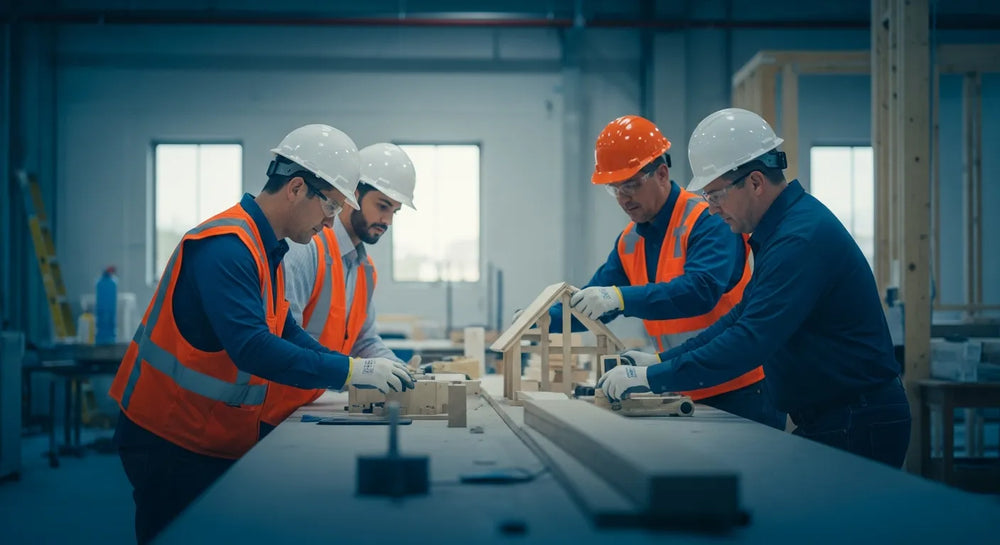
Factors Impacting the Cost to Build a House in Virginia
Table of Contents
- Introduction
- Analyzing the Market Dynamics of Virginia Construction
- Regional Price Disparities Across the Commonwealth
- The Components of Construction: Materials and Labor
- The "Time-to-Terms" Bottleneck in Traditional Procurement
- Leveraging Maden Pay for Operational Excellence
- Tax Strategies: Bonus Depreciation and CapEx Timing
- The Strategic Importance of U.S.-Based Supply Chains
- Site Preparation and Infrastructure Costs
- Building for the Future: Energy Efficiency and Sustainability
- Overcoming the Labor Challenge
- Total Cost of Ownership (TCO) in Procurement
- Streamlining the Procurement Workflow
- Resilience Through Diversity
- Conclusion
Introduction
For a residential developer or general contractor in Virginia, the difference between a profitable project and a stalled site often hinges on a single factor: the speed of liquidity. Imagine a scenario where a site supervisor identifies a critical shortage of structural fasteners or electrical components midway through a build in Loudoun County. In the traditional procurement model, securing the necessary credit terms to fulfill that order could take weeks of paperwork and manual approvals. By the time the line of credit is established, the project timeline has slipped, labor costs have ballooned, and the overall cost to build a house in Virginia has risen significantly.
The purpose of this article is to provide an authoritative analysis of the current financial and logistical landscape for residential construction in the Commonwealth. We will examine the fluctuating prices of raw materials, the impact of regional labor shortages, and the hidden regulatory costs that vary from the Tidewater region to the Appalachian highlands. More importantly, we will address the structural liquidity challenges that plague the industry and demonstrate how modern financing tools can compress the procurement cycle. At Maden.co, we believe that the U.S. manufacturing revival is here, and our mission is to provide the strategic partnership necessary to build a resilient, domestic supply chain. By eliminating the friction of "time-to-terms," we empower Virginia builders to maintain momentum and optimize their total cost of ownership (TCO).
Analyzing the Market Dynamics of Virginia Construction
Understanding the cost to build a house in Virginia requires a nuanced look at a state that serves as a microcosm of the American economy. Virginia offers a diverse range of environments, from the high-density, high-cost urban centers of Northern Virginia (NOVA) to the rapidly growing suburbs of Richmond and the more rural, mountainous regions in the west. Each of these areas presents unique challenges in terms of land acquisition, site preparation, and material logistics.
The current market is defined by a tension between high demand for housing and a tightening credit environment. While traditional banks have become increasingly conservative with construction lending, the need for new housing inventory remains at historic highs. This has shifted the burden of financing onto the procurement process itself. Builders are no longer just managing hammers and nails; they are managing cash conversion cycles. We recognize that the liquidity challenge is a primary hurdle for small and mid-sized firms. When a builder operates on a net-30 or net-90 cycle, any delay in material delivery or a snag in credit onboarding can create a ripple effect that threatens the entire project’s viability.
Regional Price Disparities Across the Commonwealth
Geography is perhaps the most significant variable when calculating the cost to build a house in Virginia. The price per square foot can vary by as much as 40% depending on the county.
Northern Virginia (NOVA)
In counties like Fairfax, Arlington, and Loudoun, costs are driven primarily by land prices and a highly competitive labor market. The proximity to Washington D.C. ensures steady demand, but it also means that contractors must pay a premium for skilled tradespeople. Furthermore, the regulatory environment in NOVA is often more complex, with stringent environmental impact studies and high permitting fees that add thousands to the baseline cost.
Central Virginia and the Richmond Metro
The Richmond and Charlottesville areas offer a middle ground. While land is more affordable than in the north, the influx of residents from other states has driven up the cost of local materials and services. Builders here are increasingly looking to optimize their supply chains to maintain margins. This is where sourcing through a platform like Maden.co becomes a strategic advantage, as it allows for the discovery of verified U.S. manufacturers that can provide consistent pricing without the volatility associated with international shipping.
The Tidewater and Coastal Regions
In the Hampton Roads area, the cost to build a house in Virginia must account for specialized construction requirements. Flood zone regulations, hurricane-resistant roofing, and corrosion-resistant hardware for coastal air significantly increase the material specifications. Procurement managers in these areas must be diligent about compliance with industry standards, ensuring that every bolt and beam meets the necessary safety codes.
The Components of Construction: Materials and Labor
The raw cost of materials continues to be a volatile factor. From structural steel to the intricate components of an HVAC system, every line item in a Bill of Materials (BOM) impacts the final bottom line.
Structural Materials: Lumber and Steel
While lumber prices have stabilized somewhat from their 2021 peaks, they remain higher than historical averages. Steel, used extensively in modern Virginia residential designs and multi-family units, is subject to global trade pressures. By choosing to source American-made steel and lumber, builders can often bypass the delays of port congestion. Our commitment to American manufacturing pride means we prioritize transparency in the supply chain, allowing you to see exactly where your materials are coming from.
Mechanical, Electrical, and Plumbing (MEP)
The MEP phase is often where projects face the most significant procurement friction. Sourcing specialized items like NPT-threaded pipe fittings or DIN-compliant electrical components requires a reliable partner. In traditional procurement, getting net terms for these specialized parts requires individual credit applications with multiple vendors. This is where Maden Pay provides a distinct advantage, offering a single credit line that can be used across our entire marketplace.
The "Time-to-Terms" Bottleneck in Traditional Procurement
One of the most overlooked costs in Virginia construction is the "cost of waiting." In the traditional model, when a procurement manager identifies a new supplier for critical infrastructure components, the onboarding process is grueling. It involves:
- Requesting a credit application.
- Providing financial statements and trade references.
- Waiting for a credit manager to manually review the file.
- Negotiating terms (which often start as "cash on delivery" for new accounts).
This process can take two to four weeks. During that time, the project site may be idle. The "time-to-terms" friction is a hidden tax on Virginia businesses. We have solved this by embedding financing directly into the point of transaction. Instead of waiting weeks, businesses can check eligibility in under 60 seconds. This instant decision-making capability transforms procurement from a hurdle into a competitive advantage. (Note: Approvals, limits, and terms depend on business eligibility.)
Leveraging Maden Pay for Operational Excellence
We designed Maden Pay to be more than just a payment option; it is a strategic tool for managing the cost to build a house in Virginia. By providing credit lines that typically range from $5,000 to $250,000 for qualified businesses, we allow contractors to bridge the gap between material purchase and client draws.
Alignment with Cash Conversion Cycles
B2B transactions in the construction industry are rarely settled instantly. Most subcontractors and suppliers expect terms. However, traditional credit is tightening. Maden Pay offers net 30, 60, or 90-day options that are designed to align with your project’s milestones. This means you can secure your windows, siding, and roofing materials today, and pay for them once the next phase of your construction loan is disbursed.
Simplicity and Scalability
Perhaps the greatest efficiency gain comes from the "one-and-done" nature of our approval process. Once you are approved for a credit line on our platform, you can use those terms with any of the millions of verified American-made products in our catalog. You no longer need to negotiate credit with a dozen different suppliers. This reduction in administrative overhead significantly lowers your Total Cost of Ownership (TCO) and allows your procurement team to focus on high-value tasks rather than paperwork. If you are a manufacturer looking to offer these benefits to your customers, we invite you to register as a vendor and join the U.S. manufacturing revival.
Tax Strategies: Bonus Depreciation and CapEx Timing
When considering the cost to build a house in Virginia for investment purposes or as part of a commercial residential development, tax strategy is a vital component of the financial model. One of the most powerful tools available to businesses is 100% bonus depreciation.
Under current tax laws, businesses may be able to deduct the full cost of certain qualifying assets—such as heavy equipment used on-site, modular components, or specific building systems—in the first year they are placed in service. This front-loading of depreciation can provide a massive cash flow injection by reducing your tax liability for the year.
However, timing is everything. To take advantage of bonus depreciation, assets must be acquired and placed in service within the tax year. This is where the speed of Maden Pay becomes essential. If you need to make a year-end equipment purchase to qualify for a deduction, waiting for traditional bank financing could push you past the December 31st deadline. By choosing to check eligibility through our platform, you can move at the speed of the modern market.
Disclaimer: Maden.co does not provide tax or legal advice. Always consult your tax professional to determine how bonus depreciation applies to your specific business situation.
The Strategic Importance of U.S.-Based Supply Chains
The global supply chain disruptions of the past several years have highlighted a critical vulnerability in the construction industry. Relying on overseas manufacturers for essential components can lead to unpredictable delays and cost overruns. At Maden.co, we are dedicated to democratizing access to American manufacturing.
Reliability and Transparency
When you source from verified U.S. manufacturers, you gain a level of transparency that is impossible with international brokers. You can track the production of your HVAC units, your custom cabinetry, or your structural components with greater accuracy. This transparency reduces the risk premium that many contractors build into their bids for the cost to build a house in Virginia.
Quality and Compliance
American manufacturing is synonymous with industrial excellence. Whether it’s ensuring that plumbing fixtures meet Lead-Free requirements or that electrical panels are UL-listed, U.S. manufacturers adhere to some of the highest standards in the world. This focus on quality reduces the likelihood of failed inspections and costly rework, both of which can devastate a project’s budget. You can browse our categories to see the breadth of high-quality, compliant products available for your next build.
Site Preparation and Infrastructure Costs
Before a single stud is nailed, the site must be prepared. In Virginia, this phase can be particularly expensive due to the state's diverse topography and soil composition.
Excavation and Grading
In the Piedmont region, builders often encounter heavy clay or even bedrock, requiring specialized excavation equipment. In the Tidewater region, high water tables may necessitate extensive drainage systems and pilings. Procurement managers must secure reliable, heavy-duty equipment for these tasks. Using embedded financing to lease or purchase this equipment ensures that site prep doesn't deplete the cash reserves needed for the rest of the build.
Utilities and Permitting
Connecting to Virginia's utility grid involves coordination with companies like Dominion Energy or Appalachian Power. Each locality has its own set of hookup fees and impact fees. In some Virginia counties, these "soft costs" can exceed $20,000 before construction even begins. Navigating these requirements requires a strategic partner who understands the local landscape. If you have questions about sourcing specific utility-grade components, our team is always ready to assist; feel free to contact us for personalized sourcing support.
Building for the Future: Energy Efficiency and Sustainability
Modern homebuyers in Virginia are increasingly prioritizing energy efficiency. From high-performance insulation to smart home integration, these features add to the initial cost to build a house in Virginia but provide long-term value and lower operating costs.
High-Performance Envelopes
Virginia's climate is characterized by hot, humid summers and cold winters. This makes high-quality insulation and vapor barriers essential. Sourcing these materials from American manufacturers ensures they are designed specifically for the North American climate and building codes.
Smart HVAC and Renewables
The integration of air-source heat pumps and solar-ready electrical systems is becoming standard in many Virginia developments. These systems involve sophisticated sensors and controllers. By utilizing our marketplace, procurement managers can find the exact specifications required by design engineers, ensuring that every component of the energy system is compatible and optimized for performance.
Overcoming the Labor Challenge
The cost to build a house in Virginia is inextricably linked to the availability of skilled labor. Virginia, like much of the country, is facing a shortage of electricians, plumbers, and carpenters.
To mitigate this, many builders are turning to industrialized construction methods, such as panelized walls or modular components. These methods require a high degree of coordination with the manufacturer. By fostering a direct relationship between the builder and the U.S. manufacturer, we help bridge the gap between design and delivery. This collaborative approach reduces on-site labor hours and helps control the total project cost.
Total Cost of Ownership (TCO) in Procurement
When calculating the cost to build a house in Virginia, a short-sighted focus on the lowest initial price can be a fatal mistake. True procurement excellence focuses on the Total Cost of Ownership. This includes:
- Acquisition Cost: The price of the material and shipping.
- Operating Cost: The energy efficiency and maintenance requirements of the product.
- Opportunity Cost: The cost of project delays caused by poor quality or late deliveries.
Our platform is designed to improve TCO by providing a transparent marketplace of durable, high-quality American products. When you buy a pump or a motor through us, you aren't just buying a part; you are buying the reliability of a verified U.S. manufacturer. This reduces the risk of premature failure and the associated costs of emergency repairs and downtime.
Streamlining the Procurement Workflow
The traditional B2B purchasing workflow is often fragmented. A buyer might use one platform for discovery, another for communication, and a third for payment. We have unified this experience.
From the moment you start searching for materials to the moment you finalize your net-terms payment through Maden Pay, the process is seamless. This integration eliminates the data silos that lead to ordering errors and shipping delays. For a procurement manager overseeing multiple sites across Virginia, this centralized control is invaluable. It provides a single point of truth for all industrial sourcing needs.
Resilience Through Diversity
A resilient supply chain is a diversified one. By connecting with millions of products through our marketplace, Virginia builders can diversify their supplier base. If one manufacturer is facing a localized delay, our platform allows you to quickly identify alternative U.S.-based sources. This agility is the key to maintaining a steady construction pace and keeping the cost to build a house in Virginia within budget.
Our commitment to digital innovation ensures that our marketplace is constantly evolving to meet the needs of modern builders. We are not just a catalog; we are a strategic partner in your growth. We invite you to explore our mission and see how we are driving the manufacturing revival by visiting our About Us page.
Conclusion
The cost to build a house in Virginia is influenced by a complex web of geographic, regulatory, and financial factors. From the high-stakes market of Northern Virginia to the growing communities in the Shenandoah Valley, success requires more than just construction expertise—it requires strategic procurement and financial agility.
By acknowledging the liquidity challenges facing the industry and adopting modern solutions like Maden Pay, builders can overcome the traditional "time-to-terms" friction. Sourcing American-made products through a transparent, verified marketplace not only supports the domestic economy but also ensures higher quality, better compliance, and a lower total cost of ownership.
At Maden.co, we are proud to be at the forefront of the U.S. manufacturing revival. We provide the tools, the terms, and the transparency needed to build the future of Virginia. We encourage you to register today, check eligibility for our embedded financing, and discover how a partnership with us can streamline your next project.
Frequently Asked Questions
1. How does regional location within Virginia affect the total construction budget? Regional location is a primary cost driver due to variances in land prices, labor rates, and local regulations. Northern Virginia (NOVA) typically has the highest costs due to land scarcity and high demand, whereas rural areas in Southside or Southwest Virginia may offer significantly lower costs for both land and labor. Additionally, coastal regions require extra expenditures for floodproofing and wind-resistant materials.
2. What is the advantage of using embedded financing for construction materials? Embedded financing, such as Maden Pay, eliminates the weeks-long delay of traditional credit applications. It allows procurement managers to secure net terms (30, 60, or 90 days) nearly instantly at the point of sale. This improves cash flow, aligns payments with project milestones, and ensures that construction doesn't stop while waiting for a credit department's approval.
3. Why should Virginia builders prioritize U.S.-manufactured products? Sourcing American-made products provides several strategic benefits: reduced shipping times, greater supply chain transparency, and easier compliance with U.S. building codes and standards (such as NPT or UL). Furthermore, it avoids the volatility of international trade and supports the domestic manufacturing revival, leading to a more resilient local economy.
4. How does bonus depreciation benefit companies building residential properties? For qualifying businesses, 100% bonus depreciation allows for the full deduction of the cost of certain capital assets in the first year they are put into service. This can significantly reduce taxable income and provide immediate cash flow. Because this strategy depends on timely acquisition and service placement, using a fast financing tool like Maden Pay can be crucial for meeting tax-year deadlines. Always consult a tax professional for specific eligibility.


