
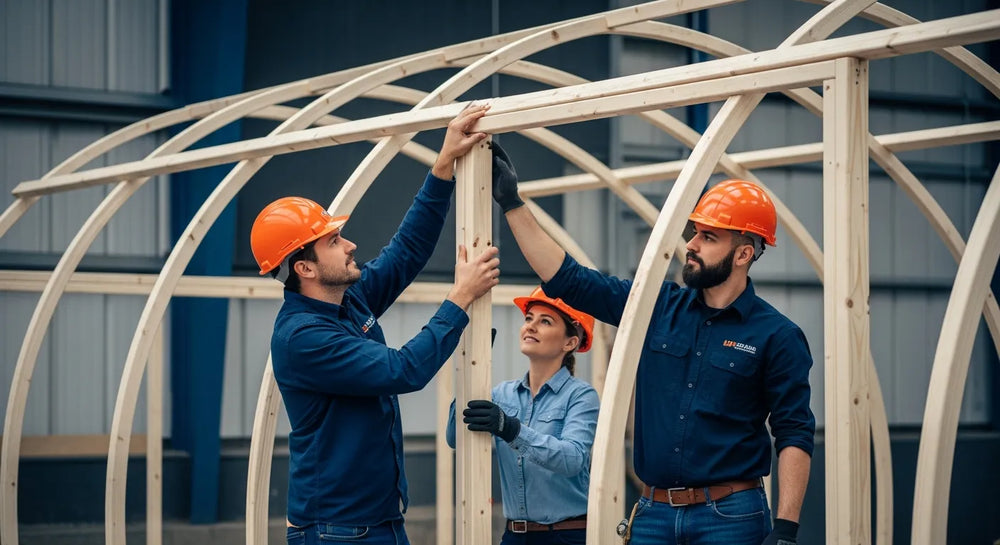
How Much Does It Cost to Build a Hoop House?
Table of Contents
- Introduction
- Understanding the Hoop House Value Proposition
- Direct Material Costs: Breaking Down the Components
- Labor and Site Preparation Costs
- Total Cost Per Square Foot: A Comparison
- Sourcing American-Made Quality
- The Liquidity Challenge and "Time-to-Terms"
- CapEx Strategy: 100% Bonus Depreciation
- Technical Specifications: What to Look For
- Practical Procurement Scenario: The "Emergency Storage" Need
- Comparing DIY vs. Professional Kits
- Maintenance: The Long-Term Cost of Ownership
- Building a Resilient Supply Chain
- Summary: Key Takeaways for Buyers
- FAQ
Introduction
For a facility manager whose inventory has suddenly outpaced their warehouse capacity, or an operations director facing a three-month lead time for a permanent steel building, waiting is rarely a viable strategy. When storage bottlenecks occur or seasonal production spikes, the immediate need for protected square footage becomes a critical operational priority. In these scenarios, the "time-to-terms" friction of traditional procurement—where applying for a line of credit or onboarding a new vendor can take weeks—often creates a secondary bottleneck that is just as damaging as the lack of physical space.
Determining how much it cost to build a hoop house is the first step in addressing these logistical hurdles with a cost-effective, American-made solution. Whether you are expanding a commercial nursery, creating a temporary staging area for industrial equipment, or building a year-round growing environment, the financial commitment involves far more than just the price of the kit. It encompasses site preparation, material quality, specialized hardware, and the strategic financing required to move from planning to assembly without depleting your working capital.
At Maden.co, we believe that building a resilient, U.S.-based supply chain requires not just access to quality products, but the financial tools to acquire them exactly when they are needed. This guide will provide a comprehensive breakdown of the costs associated with hoop house construction, ranging from raw material specifications to labor and long-term maintenance. We will also explore how leveraging modern financing tools like Maden Pay can eliminate traditional procurement friction, allowing you to secure the infrastructure you need to drive the manufacturing revival forward.
Understanding the Hoop House Value Proposition
A hoop house, often referred to as a high tunnel or polytunnel, is a versatile structure consisting of a frame—usually made of galvanized steel—covered in heavy-duty polyethylene film. Unlike a traditional glass greenhouse, a hoop house is typically unheated and relies on passive solar gain. However, for industrial and commercial users, its value lies in its flexibility and lower capital expenditure (CapEx) compared to permanent structures.
In the context of American manufacturing and industrial operations, hoop houses serve several critical functions:
- Inventory Overflow: Protecting raw materials or finished goods from UV damage and precipitation.
- MRO Staging: Providing a sheltered environment for maintenance, repair, and operations tasks that cannot fit inside the main facility.
- Extended Growing Seasons: Allowing agricultural businesses to start earlier and end later, increasing annual yield and revenue.
By sourcing these structures through a domestic marketplace, businesses ensure they are getting materials designed for North American climate loads while supporting the regional economy. Our mission at Maden.co is to democratize access to these essential tools, ensuring that every business, from small-scale farms to large manufacturing hubs, can scale efficiently.
Direct Material Costs: Breaking Down the Components
The primary driver of how much it cost to build a hoop house is the quality and gauge of the materials used. For industrial-grade applications, "off-the-shelf" hobbyist kits are rarely sufficient. Professional structures require high-tensile, U.S.-manufactured steel and UV-stabilized films.
The Steel Frame (The Skeleton)
The frame is the most significant investment. In the United States, most commercial hoop houses use G90 galvanized steel tubing. This material is coated with zinc to prevent rust, which is essential given the high humidity often found inside these structures.
- Tubing Diameter and Gauge: For a standard 20-foot to 30-foot wide structure, you will typically see 1.315" to 2.375" outer diameter (OD) tubing. The "gauge" refers to the thickness; 14-gauge is standard for heavy snow loads, while 16-gauge may suffice for milder climates.
- Cost Estimate: Expect to pay between $2.50 and $6.00 per linear foot for high-quality American steel tubing. For a complete 30'x96' frame, the steel alone can range from $3,000 to $7,000.
The Polyethylene Covering (The Skin)
Not all plastic is created equal. Using standard construction-grade plastic will result in failure within months due to UV degradation. Commercial hoop houses require 6-mil or 8-mil polyethylene film that is UV-stabilized.
- Specialty Coatings: Some films include anti-condensate additives to prevent water droplets from dripping on equipment or plants, or infrared (IR) additives to help retain heat during the night.
- Cost Estimate: A roll of high-quality, 4-year rated 6-mil poly for a 30'x96' house typically costs between $600 and $1,200, depending on the additives.
Hardware and Fasteners
The integrity of the structure depends on how it is held together. This includes:
- Ground Stakes: Heavy-duty stakes driven 3 to 4 feet into the ground.
- Purlins: Horizontal bars that connect the ribs and provide longitudinal stability.
- Wiggle Wire and Lock Channel: The gold standard for attaching poly film to the frame. This system allows for easy tensioning and replacement.
- Cost Estimate: Budget approximately $500 to $1,500 for a full hardware suite for a medium-to-large structure.
Labor and Site Preparation Costs
While the materials are the most visible expense, labor and site prep often surprise procurement managers. If you are a facility manager overseeing a project, you must decide between a DIY installation using internal MRO staff or hiring a specialized contractor.
Site Preparation
A hoop house must be built on level ground with excellent drainage.
- Grading: If the site isn't level, professional grading can cost between $1,000 and $5,000.
- Ground Cover: Many industrial users choose to lay down a heavy-duty weed barrier followed by several inches of crushed stone or gravel to provide a stable floor. This can add $1.50 to $3.00 per square foot.
Assembly Labor
A standard 30'x96' hoop house takes an experienced four-person crew about 2 to 3 days to assemble, excluding the end walls.
- Internal Labor: If using your own team, consider the "opportunity cost" of pulling them away from other maintenance tasks.
- Contracted Labor: Professional installers typically charge by the square foot or a flat project fee. National averages suggest labor costs for hoop house assembly range from $2.00 to $5.00 per square foot.
Total Cost Per Square Foot: A Comparison
To give you a clearer picture of how much it cost to build a hoop house, let's look at the price per square foot based on the level of durability and features:
| Structure Type | Estimated Cost/Sq. Ft. (Materials) | Estimated Total Cost (Inc. Labor/Prep) |
|---|---|---|
| Basic/DIY Low Tunnel | $1.50 - $3.00 | $3.00 - $5.00 |
| Standard Commercial High Tunnel | $4.00 - $8.00 | $7.00 - $12.00 |
| Heavy-Duty Industrial/Snow Load | $9.00 - $15.00 | $15.00 - $25.00+ |
For a standard 2,880 square foot structure (30'x96'), a mid-range, high-quality U.S.-made kit will likely require an all-in investment of $20,000 to $35,000.
Sourcing American-Made Quality
When budgeting for a hoop house, the temptation to source cheaper, imported components can be strong. However, in the industrial sector, the cost of failure is much higher than the initial savings. Imported steel may lack the consistent tensile strength required to meet local building codes or survive a heavy snow event. Furthermore, shipping large bundles of steel internationally is fraught with delays and skyrocketing freight costs.
At Maden.co, our About Us page outlines our dedication to the manufacturing revival. By connecting buyers with verified American manufacturers, we ensure that the steel in your hoop house is produced to domestic standards. This transparency in the supply chain reduces the risk of project delays and ensures that replacement parts—like a damaged purlin or a torn end wall—are readily available from a local source.
If you are a manufacturer of these components, we invite you to join our network. You can begin the process through our Vendor registration portal to help us continue providing industrial excellence to buyers nationwide.
The Liquidity Challenge and "Time-to-Terms"
One of the greatest hurdles in industrial procurement is not the cost of the item itself, but the friction of the transaction. In traditional models, if a business needs a $30,000 hoop house to store overflow inventory, they often face a "Liquidity Challenge."
Most small-to-mid-sized manufacturers operate on net-30 to net-90 cycles. When an urgent need arises, they may not have the liquid cash on hand to pay 100% upfront for a new structure. Traditional bank credit is tightening, and applying for a new equipment loan can take weeks of paperwork and manual underwriting. This is the "time-to-terms" friction: the gap between identifying a need and having the credit terms available to solve it.
We solve this by embedding financing directly into the point of purchase. With Maden Pay, the "time-to-terms" is reduced from weeks to seconds. This allows a procurement manager to select the necessary hoop house components and secure financing immediately, keeping the project on schedule.
Strategic Financing with Maden Pay
Instead of viewing a hoop house as a massive upfront drain on cash flow, Maden Pay allows businesses to treat it as a strategic operational tool.
- Speed: Instant eligibility decisions are often made in under 60 seconds via a soft credit check.
- Capacity: We offer credit lines typically ranging from $5,000 to over $250,000 for qualified businesses, covering the entire cost of even the largest industrial hoop houses.
- Alignment: By choosing net 30, 60, or 90-day options, you can align the payment for your new structure with your own cash conversion cycles.
To see how much purchasing power your business currently has, you can Check eligibility today. Please note: Approvals, limits, and terms depend on business eligibility.
CapEx Strategy: 100% Bonus Depreciation
For business owners and CFOs, the cost of a hoop house is also a tax strategy consideration. Under current tax laws, certain capital expenditures may qualify for bonus depreciation.
What is Bonus Depreciation?
Bonus depreciation allows businesses to immediately deduct a large percentage (or 100%, depending on the current tax year's regulations) of the purchase price of eligible business assets. Because a hoop house is often classified as a temporary or "portable" structure rather than a permanent real estate improvement, it may qualify for accelerated depreciation schedules.
Strategic Note: Utilizing 100% bonus depreciation can significantly lower the "real" cost of the structure by reducing your taxable income in the year of purchase. However, tax laws are subject to change and vary by jurisdiction. Always consult your tax professional before making major CapEx decisions based on depreciation.
By combining the immediate tax benefits of bonus depreciation with the deferred payment terms of Maden Pay, the net impact on your company's liquidity is minimized, while your operational capacity is maximized.
Technical Specifications: What to Look For
When you Browse all categories on our marketplace, you will find various components and kits. To ensure you are getting a structure that justifies its cost, pay attention to these technical specifications:
1. Wind and Snow Loads
If your facility is in the Midwest or the Northeast, a "standard" hoop house might not cut it. Look for structures rated for at least 30-50 lbs per square foot of snow load and 90 mph wind gusts. This often requires closer "rib spacing" (e.g., 4 feet apart instead of 6 feet).
2. End Wall Construction
The ends of the hoop house (end walls) are usually not included in the "base" price of a kit. You can build these out of pressure-treated lumber or steel.
- Steel End Walls: More expensive but offer better durability and can support large roll-up doors for forklifts.
- Lumber End Walls: More affordable and easier to customize for fans and vents.
3. Ventilation Systems
Without airflow, a hoop house can reach temperatures 30-40 degrees higher than the outside air, which can damage stored goods or stress plants.
- Roll-Up Sides: A cost-effective way to provide passive ventilation.
- Exhaust Fans: Essential for industrial use where moisture control is vital. Adding a professional fan system can add $1,500 to $4,000 to your total cost.
Practical Procurement Scenario: The "Emergency Storage" Need
Consider a logistics manager at an Ohio-based manufacturing plant. A major client doubled their order, but the plant's finished goods warehouse is full. They have 100 pallets of product that cannot be exposed to rain.
A permanent warehouse expansion would cost $200,000 and take six months for permits and construction. A rental tent costs $5,000 a month with no equity.
By sourcing a 40'x100' industrial hoop house for $45,000 through Maden.co, the manager secures a permanent asset. They use Maden Pay to get 90-day terms, meaning they don't have to pay for the structure until the client has paid for the extra inventory. They Check eligibility on a Monday, order the American-made steel on a Tuesday, and have the structure standing by the following weekend. This is how speed and liquidity create a competitive advantage.
Comparing DIY vs. Professional Kits
When calculating how much it cost to build a hoop house, you must decide between a fully engineered kit or a "bent-pipe" DIY approach.
The DIY "Bent-Pipe" Approach
Using a pipe bender to shape electrical metallic tubing (EMT) or fence piping.
- Pros: Lowest initial cost (as low as $2 per square foot).
- Cons: No engineered load ratings. High risk of failure in storms. Labor-intensive. Finding replacement parts that fit your custom bends can be difficult.
The Professional Engineered Kit
Purchasing a pre-designed structure from an American manufacturer.
- Pros: Guaranteed load ratings. All hardware included. Designed for easy assembly. Higher resale value.
- Cons: Higher upfront material cost.
For business and industrial use, the engineered kit is almost always the better investment. The liability of a DIY structure collapsing on expensive inventory or, worse, employees, far outweighs the initial savings.
Maintenance: The Long-Term Cost of Ownership
A hoop house is not a "set it and forget it" structure. To protect your investment, you must budget for ongoing maintenance:
- Poly Replacement: Even the best 6-mil plastic will eventually break down due to UV exposure. Budget to replace the skin every 4 to 6 years. Cost: $1,000 - $2,000 for materials and labor.
- Tensioning: Wind will cause the plastic to stretch. Regularly tightening the wiggle wire and lock channels prevents "flapping," which can lead to tears.
- Structure Inspection: After heavy snow or wind, inspect the purlins and ground stakes for shifting.
By choosing high-quality components initially, you reduce the frequency of these maintenance tasks and extend the total lifespan of the structure.
Building a Resilient Supply Chain
The decision of how much it cost to build a hoop house is ultimately a decision about how you value your company's flexibility. In a global economy where supply chains are increasingly volatile, having the ability to quickly and affordably expand your footprint is a massive asset.
At Maden.co, we are more than just a marketplace; we are a strategic partner in your growth. We believe "The U.S. Manufacturing Revival Is Here," and it is being built one structure at a time. By prioritizing American-made steel and innovative financing, we help you bypass the traditional hurdles of procurement.
If you have questions about specific components or need assistance finding a manufacturer for a custom size, our team is ready to help. You can reach out through our Contact Us page for personalized support.
Summary: Key Takeaways for Buyers
- Material Quality Matters: G90 galvanized steel and 6-mil UV-stabilized poly are the industrial standards. Don't settle for less if you need the structure to last.
- Budget Beyond the Kit: Remember to include site prep (grading/gravel), labor, end walls, and ventilation in your total cost calculation.
- Leverage Financing: Use Maden Pay to overcome the liquidity challenge. Getting instant terms allows you to start your project today without tying up your cash flow.
- Think Long-Term: Consider the tax advantages of bonus depreciation and the reliability of a U.S.-based supply chain for replacement parts and support.
The cost to build a hoop house is an investment in your company’s future capacity. By sourcing through Maden.co, you are ensuring that your investment supports American workers while providing your business with a world-class industrial solution.
FAQ
1. Is a hoop house considered a permanent or temporary structure for building permits? In many jurisdictions, hoop houses are classified as temporary structures because they do not have a permanent foundation (like a concrete slab) and the covering can be removed. This often means they are exempt from certain property tax increases and have a simpler permitting process. However, requirements vary significantly by county and municipality. You should always check with your local building department before beginning construction to ensure compliance with local codes.
2. How long does a typical American-made hoop house last? The galvanized steel frame of a high-quality hoop house can last 20 to 30 years or more with proper maintenance. The polyethylene film "skin" typically lasts between 4 and 6 years before the UV stabilizers break down and the plastic becomes brittle. Other components, like wiggle wire and roll-up side mechanisms, may need minor repairs every few years, but the core structure is a long-term asset.
3. Can I install a hoop house on a concrete pad? Yes, while most hoop houses are installed with ground stakes driven into the soil, they can be adapted for concrete. This usually involves using base plates that are bolted into the concrete with expansion anchors. Installing on concrete increases the "site prep" portion of your budget but provides a much cleaner and more stable environment for industrial storage or MRO tasks.
4. What is the biggest mistake people make when budgeting for a hoop house? The most common mistake is underestimating the cost of the end walls and doors. Many kits are sold as "open-ended" frames. To make the structure functional for year-round storage or climate-controlled growing, you must build or buy end walls. Adding large barn doors or roll-up garage doors can easily add $2,000 to $5,000 to the total project cost, so it is vital to include these in your initial procurement plan.
Ready to expand your facility's capacity? Browse all categories to find the components you need, and Check eligibility for Maden Pay to secure your terms in seconds. Approvals, limits, and terms depend on business eligibility.


