
How Much Is Labor Cost to Build a House?
Table of Contents
- Introduction
- The Structural Breakdown of Labor Costs
- The Regional Variable: Geography and the Labor Market
- The Liquidity Challenge in Construction Procurement
- Transforming Procurement with Maden Pay
- The Indirect Impact of Material Quality on Labor
- CapEx Timing and Bonus Depreciation
- Practical Procurement Scenarios: Labor Efficiency in Action
- Supporting the U.S. Manufacturing Revival
- Managing "Soft Costs" Associated with Labor
- Technical Specifications and Their Impact on Labor
- The Future of Construction Labor and Technology
- Strategic Cash Flow: Net 30, 60, and 90 Options
- Conclusion
- Frequently Asked Questions (FAQ)
Introduction
Imagine a construction site where a crew of twenty skilled tradespeople—framers, electricians, and plumbers—stands idle at 7:00 AM. The specialized structural fasteners required to secure the secondary floor joists haven't arrived because the supplier’s credit department is still "processing" a net-30 application submitted two weeks ago. In this scenario, the business owner isn't just losing time; they are hemorrhaging capital. Labor is the most volatile and significant variable in any construction project. When we ask, "how much is labor cost to build a house," we aren't just looking for a single number; we are analyzing a complex ecosystem of wages, efficiency, procurement speed, and supply chain reliability.
The purpose of this guide is to break down the specific components of labor costs in modern construction, from the initial site prep to the final finishing touches. We will explore how regional economic shifts, the specialized nature of various trades, and the strategic sourcing of American-made materials impact your bottom line. Crucially, we will examine how the "time-to-terms" friction in traditional procurement often inflates labor costs by creating avoidable downtime. At Maden.co, we believe that building a resilient, U.S.-based supply chain is the key to managing these costs effectively. By integrating digital innovation with industrial excellence, we provide the tools necessary to move from "bid" to "build" without the traditional financial bottlenecks that plague the industry.
The Structural Breakdown of Labor Costs
In the current market, labor typically accounts for 30% to 50% of the total cost of building a house. However, this percentage can fluctuate significantly based on the complexity of the design, the materials chosen, and the availability of local skilled workers. For a B2B procurement manager or a developer, understanding this breakdown is essential for accurate forecasting.
Skilled vs. Unskilled Labor
The construction of a modern home requires a tiered labor force. Unskilled labor is generally utilized for site cleanup, material hauling, and basic assistance. While these roles have lower hourly rates, their efficiency impacts the overall timeline. Skilled labor, including licensed electricians, plumbers, and HVAC technicians, commands a premium. When calculating how much is labor cost to build a house, the ratio of skilled to unskilled hours is a primary driver of the Total Cost of Ownership (TCO) for the project.
Specialized Trades and Hourly Rates
Each phase of construction brings its own labor pricing structure. For instance:
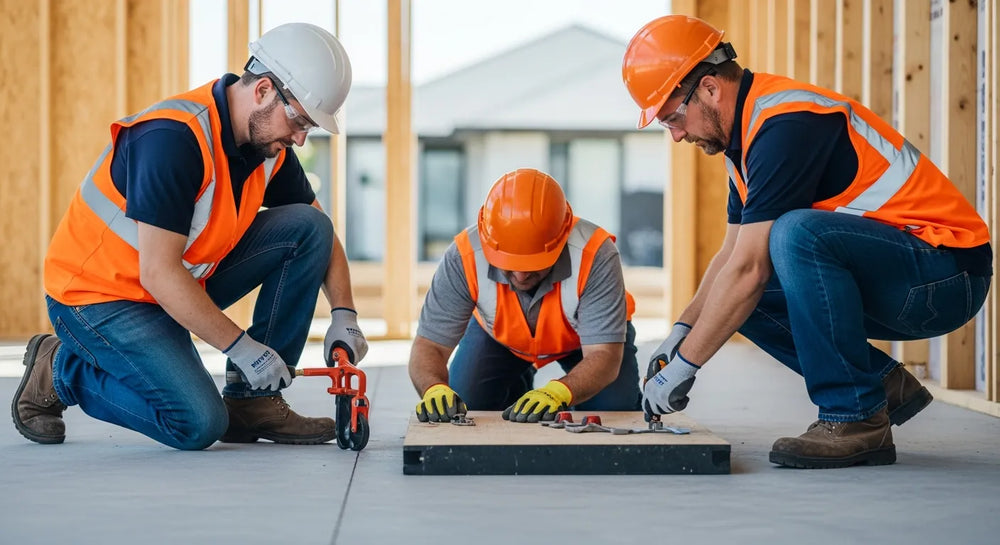
- Framing: Often billed by the square foot, framing is labor-intensive and requires a high degree of precision to ensure the structural integrity of the home.
- Electrical and Plumbing: These trades often operate on a "per-drop" or "per-fixture" basis, but hourly rates for licensed masters in these fields can range from $50 to $150 depending on the region.
- Finishing Trades: Drywall installation, painting, and flooring require meticulous attention to detail. While the material cost for paint might be low, the labor cost to achieve a professional finish is substantial.
At Maden.co, we recognize that these trades depend on the timely arrival of high-quality components. Our mission is to democratize access to American manufacturing, ensuring that the materials your labor force needs—from NPT-threaded pipes to industrial-grade fasteners—are available when they are needed most.
The Regional Variable: Geography and the Labor Market
Geography is perhaps the most significant factor in determining labor costs. A project in a high-density urban center will face different labor challenges than one in a rural area.
Urban vs. Rural Wage Gaps
In major metropolitan areas, the cost of living drives up the prevailing wage. Union requirements may also play a role in commercial-residential projects, adding layers of complexity to the labor budget. Conversely, in rural areas, while hourly rates might be lower, the "scarcity tax" comes into play. If there are only two certified HVAC contractors within a fifty-mile radius, their pricing will reflect that lack of competition.
The Impact of Local Building Codes
Different regions have varying requirements for structural resilience, particularly in areas prone to hurricanes, earthquakes, or heavy snow loads. These codes dictate not only the materials used but also the level of specialized labor required to install them. Ensuring compliance with these standards is non-negotiable, and it requires a labor force that is well-versed in local regulations. Sourcing products that meet or exceed these standards is a core value of Industrial Excellence that we champion at Maden.co.
The Liquidity Challenge in Construction Procurement
U.S. manufacturing and construction face a structural liquidity challenge that directly impacts labor costs. Most small-to-medium-sized builders and contractors operate on cash conversion cycles that are misaligned with their outgoing expenses. They often have to pay their crews weekly or bi-weekly, yet they might be waiting 60 or 90 days for a draw from a construction loan or payment from a client.
This "liquidity gap" often forces businesses to slow down projects, leading to "start-stop" labor cycles that are incredibly inefficient. When a crew is pulled off a job because materials haven't been paid for, the momentum is lost. Re-mobilizing that crew a week later involves additional costs that aren't always captured in the initial estimate of how much is labor cost to build a house.
The Friction of Traditional Net Terms
In the traditional procurement model, obtaining "net terms" is a bureaucratic nightmare. A buyer identifies a U.S. manufacturer, reaches out for a quote, and then must undergo a weeks-long onboarding process. This involves exchanging credit references, financial statements, and waiting for a manual review by a credit manager. During these three weeks, the project sits idle, but the fixed costs of the business—and the risk of losing skilled labor to other projects—remain.
At Maden.co, we are solving this by embedding financing directly into the point of transaction. We believe that the "U.S. Manufacturing Revival Is Here," and it is being powered by digital innovation that eliminates these archaic bottlenecks.
Transforming Procurement with Maden Pay
To address the liquidity challenge and the "time-to-terms" friction, we have introduced Maden Pay. This is not just a payment method; it is a strategic operational tool designed to align with the B2B cash conversion cycle.
Speed as a Competitive Advantage
Instead of waiting weeks for a credit decision, Maden Pay offers instant eligibility decisions, often in under 60 seconds, via a soft credit check that does not impact your credit score. This allows procurement managers to secure the materials they need immediately, keeping their labor force active and productive.
For a construction business, this speed means the difference between finishing a phase on time or falling behind. When you check eligibility, you are opening the door to credit lines that commonly range from $5,000 to over $250,000 for qualified businesses. This capacity ensures that even large-scale material orders can be handled with ease.
Note: Approvals, limits, and terms depend on business eligibility.
Efficiency Across the Marketplace
One of the most significant advantages of Maden Pay is its universality within our marketplace. A single approval works across our entire catalog of millions of verified American-made products. You don't need to renegotiate terms with an electrical supplier, then a plumbing wholesaler, and then a fastener manufacturer. This unified approach reduces procurement friction and allows your team to focus on what they do best: building.
The Indirect Impact of Material Quality on Labor
One often overlooked aspect of calculating how much is labor cost to build a house is the quality of the materials themselves. Lower-quality, imported components often have higher defect rates or inconsistent tolerances.
Reducing Rework and Call-Backs
When a plumber uses a sub-standard fitting that doesn't meet strict DIN or NPT specifications, the risk of a leak increases. If that leak occurs after the drywall is up, the labor cost to repair the damage far exceeds the "savings" from the cheaper part. By sourcing through Maden.co, you are choosing verified U.S. manufacturers who prioritize industrial excellence. American-made products are often engineered to tighter tolerances, which means they "fit" the first time. This reduces rework, minimizes call-backs, and keeps your labor costs predictable.
Supply Chain Transparency
Knowing exactly where your materials come from allows for better project scheduling. Our commitment to supply chain transparency means you aren't guessing when a shipment will arrive. When you can trust your delivery dates, you can schedule your labor crews with precision, avoiding the "dead time" that occurs when workers show up to a site with no materials to install. You can browse all categories on our platform to find the specific U.S.-made components your project requires.
CapEx Timing and Bonus Depreciation
For business owners and developers, the timing of material and equipment purchases can have significant tax implications. While we always advise that you consult your tax professional, it is worth noting the strategic use of 100% bonus depreciation.
Asset Acquisition Strategies
Under current tax laws, businesses may be able to immediately deduct a large percentage of the purchase price of eligible assets (such as construction equipment or certain building components) in the year they are placed in service. This can provide a powerful incentive to invest in high-quality U.S.-manufactured assets.
By using Maden Pay to facilitate these purchases, you can manage your cash flow while still positioning your business to take advantage of these tax benefits. This strategic approach to capital expenditure (CapEx) allows you to reinvest those tax savings back into your labor force or future projects, further driving the growth of your business.
Practical Procurement Scenarios: Labor Efficiency in Action
Let’s look at a practical scenario that many MRO buyers face. A large-scale residential development project in the Midwest requires a specific type of industrial-grade electrical conduit and specialized mounting brackets.
Scenario A: The Traditional Route
The buyer contacts three different suppliers. Two are out of stock of the domestic version and try to substitute with an import. The third has the stock but requires a full credit application. The buyer spends four days gathering financial documents. The credit department takes another seven days to respond. By the time the order is placed, the electrical crew has moved on to another project, and the developer has to wait two weeks for them to return. The "cost" of that delay, in terms of project interest and lost productivity, is staggering.
Scenario B: The Maden.co Way
The buyer logs onto Maden.co and finds the verified American-made conduit and brackets. They check eligibility for Maden Pay and are approved for a $50,000 credit line instantly. They select Net-60 terms to align with their next project draw. The materials are shipped immediately. The electrical crew arrives as scheduled, completes the work, and the project stays on track.
In Scenario B, the business hasn't just managed their "labor cost"; they have optimized their entire operational cycle. This is what we mean when we say we are a strategic partner in building a resilient supply chain.
Supporting the U.S. Manufacturing Revival
Every time you choose a U.S.-made product, you are contributing to the manufacturing revival. This isn't just about pride; it's about economic common sense. A strong domestic manufacturing base ensures that we are less vulnerable to global shipping disruptions and geopolitical instability.
For manufacturers reading this, we invite you to join our mission. By completing our vendor registration, you can connect with a vast network of industrial buyers who are specifically looking for American excellence. We provide the digital platform that allows you to showcase your products to the people who need them most, without the hurdles of traditional distribution networks.
Managing "Soft Costs" Associated with Labor
When calculating how much is labor cost to build a house, one must also account for "soft costs" that are directly tied to the labor force. These include:
- Insurance and Workers' Comp: These rates are often a percentage of total payroll and can be quite high in the construction industry.
- Permitting and Inspections: While these are administrative, they require the presence of skilled labor to "walk" the inspector through the site. Delays in inspections lead to idle labor.
- Project Management: The labor required to coordinate all the different trades is a significant expense. The more complex the supply chain, the more project management "hours" are required.
By simplifying the procurement process, we help reduce the administrative burden on your project managers. When sourcing is streamlined, they can spend less time on the phone with suppliers and more time on the job site ensuring that labor is being utilized efficiently.
Technical Specifications and Their Impact on Labor
We often talk about "Industrial Excellence" at Maden.co, but what does that mean in a practical sense? It means that the products in our catalog adhere to the highest industry standards.
Whether it’s ensuring that fasteners meet specific grade requirements for shear strength or that electrical components are UL-listed and compliant with the National Electrical Code (NEC), these technical details matter. When a worker is handed a part that they know will fit and perform as expected, their morale and efficiency increase. There is nothing more frustrating for a skilled craftsman than being forced to work with inferior tools or materials. By providing access to high-quality U.S. products, you are respecting the craft of your labor force.
The Future of Construction Labor and Technology
As we look forward, the integration of technology in construction will continue to shift the labor landscape. From modular construction techniques—where parts of a house are built in a factory and assembled on-site—to the use of advanced project management software, the goal is always the same: to increase the value of each labor hour.
At Maden.co, we see ourselves as a vital part of this technological evolution. Our marketplace is designed for the modern buyer who expects a B2C-like shopping experience in a B2B environment. We are removing the friction that has historically slowed down the construction industry.
Strategic Cash Flow: Net 30, 60, and 90 Options
The flexibility offered by Maden Pay is specifically designed to match the "lumpy" cash flow of the construction world.
- Net 30: Ideal for smaller MRO purchases or quick-turnaround repairs.
- Net 60/90: Perfect for major material buys where you need to bridge the gap between the start of a phase and the final inspection/payment.
This alignment of financing with the physical reality of building a house is a core differentiator for our platform. We are not just selling products; we are providing the financial fuel that keeps the American construction engine running.
Conclusion
Determining how much is labor cost to build a house is an exercise in managing variables. While you cannot control the global price of copper or the prevailing wage in your state, you can control your procurement efficiency and your supply chain resilience. By choosing to source American-made products through a marketplace that prioritizes speed, transparency, and industrial excellence, you are giving your business a significant competitive advantage.
The U.S. Manufacturing Revival Is Here, and it is being built one house at a time. At Maden.co, we are proud to be your partner in this journey. We invite you to explore our vast catalog, connect with our team of experts, and experience the difference that modern, embedded financing can make for your next project.
Ready to streamline your procurement and protect your bottom line? Check eligibility for Maden Pay today and take the first step toward a more resilient, efficient, and profitable construction process.
Disclaimer: Approvals, limits, and terms depend on business eligibility. For tax-related strategies such as bonus depreciation, always consult your tax professional.
Frequently Asked Questions (FAQ)
1. How do labor costs compare to material costs when building a house?
Generally, labor costs account for approximately 30% to 50% of the total build cost, while materials make up the remaining 50% to 70%. However, this ratio can shift significantly based on the complexity of the design and the specific trades involved. High-end custom homes often see a higher percentage of labor cost due to the detailed craftsmanship required. Conversely, using prefabricated or modular components can reduce the labor percentage while increasing the material cost.
2. Does sourcing U.S.-made products really affect labor efficiency?
Absolutely. U.S.-made products often adhere to stricter quality control and technical standards (like NPT for threading or specific ASTM standards for steel). This leads to fewer defects and better consistency. When materials fit correctly the first time, labor "rework" is minimized. Furthermore, domestic sourcing reduces the risk of long-lead-time delays that leave crews idle, which is one of the most significant hidden drivers of labor costs.
3. How can embedded financing like Maden Pay speed up my construction timeline?
Traditional credit applications can take weeks, during which your project may be stalled. Maden Pay provides instant eligibility decisions, allowing you to secure materials immediately. This eliminates the "time-to-terms" friction. By aligning your payment terms (Net 30/60/90) with your project’s cash flow draws, you can keep your labor force working continuously without having to pause for liquidity reasons.
4. What is the impact of regionality on the labor cost to build a house?
Regionality impacts labor in two ways: prevailing wages and code requirements. High-cost-of-living areas naturally have higher hourly rates for skilled trades. Additionally, certain regions require specialized labor for earthquake-proofing, hurricane-strapping, or extreme insulation, all of which add to the total man-hours required for a project. Sourcing through a national marketplace like Maden.co helps you find the specific components needed to meet these varied regional codes efficiently.
For more information on our mission and how we support American businesses, visit our About Us page or Contact Us directly for assistance with your procurement needs.


