
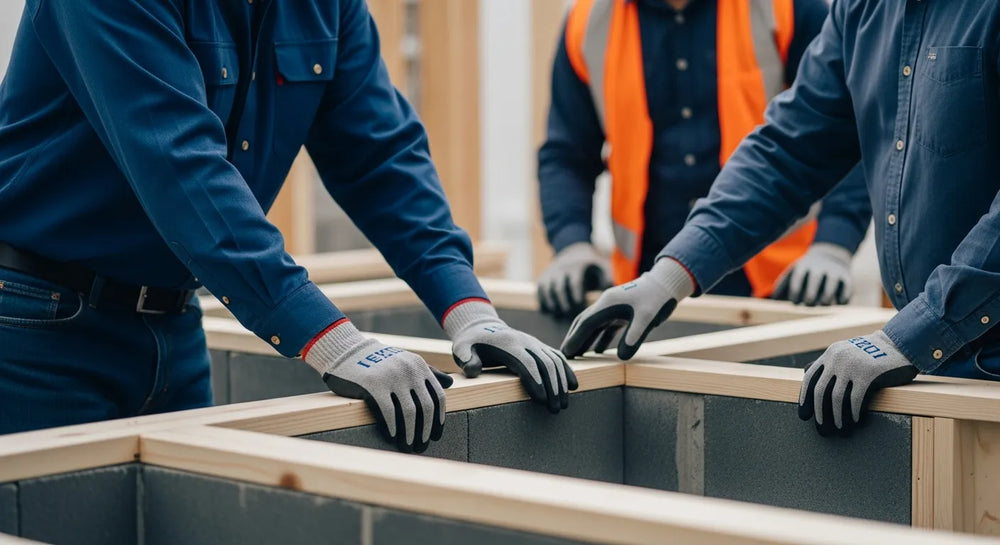
Is Home Building Cost Going Down? 2026 Market Trends
Table of Contents
- Introduction
- The 2026 Landscape: Assessing the "Is Home Building Cost Going Down" Question
- The Liquidity Challenge: A Structural Hurdle in 2026
- Financing as a Strategic Tool: Beyond Simple Loans
- CapEx Strategies: 100% Bonus Depreciation in 2026
- Sourcing for Resilience: The Maden.co Commitment
- Labor Shortages and the Role of Pre-Fabrication
- Enhancing Total Cost of Ownership (TCO)
- For the Manufacturers: Joining the Revival
- Sourcing the "Invisible" Building Blocks
- The Role of Supply Chain Transparency in 2026
- Bridging the Gap: The Future of Construction Procurement
- Conclusion
- Frequently Asked Questions
Introduction
If you are a procurement manager overseeing a multi-unit residential development or a business owner managing an industrial construction project in 2026, you have likely asked one question more than any other: is home building cost going down? After several years of historic volatility in the supply chain, the construction industry is at a critical crossroads. While some commodity prices have stabilized, the structural costs of labor, compliance, and capital remain stubbornly high. For many firms, the difference between a profitable project and a financial shortfall isn't just the price of lumber or steel—it is the speed at which they can secure terms and the reliability of their domestic supply chain.
At Maden.co, we believe that the answer to rising costs isn't just finding a cheaper alternative; it is about building a more resilient, transparent, and efficient procurement process. We are committed to the idea that the U.S. manufacturing revival is here, and by connecting industrial buyers with millions of verified American-made products, we are helping businesses navigate the complexities of the 2026 market. This post will examine the current trajectory of building costs, analyze the persistent liquidity challenges facing the industry, and explain how strategic financing can transform procurement from a bottleneck into a competitive advantage.
Our thesis is simple: while the sticker price of materials may fluctuate, the real path to reducing the total cost of ownership (TCO) lies in eliminating procurement friction and leveraging modern financing tools. By moving away from slow, traditional credit models and embracing embedded solutions like Maden Pay, American businesses can secure the materials they need precisely when they need them, ensuring that project timelines remain intact even when the market shifts.
The 2026 Landscape: Assessing the "Is Home Building Cost Going Down" Question
To answer whether home building costs are going down in 2026, we must first look at the broader economic environment. As we move through the middle of the decade, the construction industry is no longer dealing with the acute "black swan" disruptions of the early 2020s. However, it has entered a period of "sticky" inflation. While the extreme spikes in lumber prices have subsided, the floor for material costs has fundamentally shifted higher.
In 2026, we are seeing a decoupling of commodity prices and finished goods prices. For example, while raw iron ore prices may remain stable, the cost of a finished, American-made structural beam includes the rising costs of industrial electricity, skilled domestic labor, and transportation. Therefore, the answer to "is home building cost going down" is nuanced: raw materials are stabilizing, but the cost of the "value-add" in manufacturing remains high.
Material Prices: A Mixed Bag for Residential Construction
For procurement officers, the 2026 material market requires a surgical approach. Generalizing about "building costs" is no longer effective; one must look at specific categories:
- Steel and Metal Components: Domestic steel production has reached new levels of efficiency, yet the demand for high-grade structural components in multi-family housing remains robust. Prices are not necessarily falling, but they are becoming more predictable, allowing for better long-term budgeting.
- Lumber and Engineered Wood: We have seen a return to seasonal pricing cycles. However, engineered wood products (EWPs), which are increasingly favored for their strength and sustainability, carry a premium.
- Concrete and Aggregates: These remain localized costs. Due to the weight and transportation logistics, sourcing concrete products from verified U.S. manufacturers near the job site is the only way to mitigate the rising cost of diesel and logistics.
The American Manufacturing Edge
At Maden.co, our mission is to democratize access to American manufacturing. When you source through our platform, you aren't just buying a product; you are investing in a supply chain that is less susceptible to the geopolitical shocks that often drive up the costs of imported materials. By browsing all categories on our marketplace, buyers can find domestic alternatives that offer superior quality and lower lead times, which directly impacts the bottom line.
The Liquidity Challenge: A Structural Hurdle in 2026
One of the most significant factors preventing building costs from decreasing is the "liquidity challenge." U.S. manufacturing and construction traditionally operate on net-30 to net-90 payment cycles. However, in 2026, traditional bank credit has remained tight. Small to mid-sized manufacturers and builders often find themselves in a "cash flow squeeze."
Imagine a facility manager who needs to source specialized electrical switchgear for a new residential complex. The manufacturer requires payment to begin production, but the builder’s capital is tied up in other phases of the project. If the builder has to wait three to four weeks for a traditional bank to approve a line of credit, the project stalls. In construction, time is quite literally money. Every day of delay increases the overhead, interest carry, and labor costs.
Time-to-Terms Friction
In the traditional procurement world, "time-to-terms" is a major friction point. Getting net terms usually involves:
- Identifying a new vendor.
- Filling out a multi-page credit application.
- Providing three to five trade references.
- Waiting for a credit manager to manually review the application.
- Negotiating terms that might only apply to that single vendor.
This process is repeated for every new supplier. In a market where buyers are constantly looking for the best price and availability, this administrative overhead is a hidden cost that keeps home building expenses high. This is why we have integrated Maden Pay directly into our marketplace. We believe that securing credit should be as fast as the digital economy demands.
Financing as a Strategic Tool: Beyond Simple Loans
To combat the liquidity challenge, forward-thinking businesses are no longer looking at financing as a "last resort" for when cash is low. Instead, they are using it as a strategic operational tool to hedge against price increases and secure inventory.
Why Embedded Financing Matters
Embedded financing, like the solutions we offer at Maden.co, allows a single credit approval to work across our entire marketplace. This means you don't have to renegotiate terms with every individual manufacturer you find in our catalog. This efficiency is a core part of our mission to drive industrial excellence.
By using Maden Pay, businesses can access credit lines that commonly range from $5,000 to $250,000 or more for qualified applicants. The most significant advantage is the speed: eligibility decisions are often made in under 60 seconds via a soft credit check that does not impact your credit score.
Disclaimer: Approvals, credit limits, and specific payment terms are subject to business eligibility and underwriting criteria.
When you can check eligibility instantly, you gain the ability to act on market opportunities. If a U.S. manufacturer has a surplus of HVAC units at a 20% discount but requires immediate commitment, the ability to deploy a net-60 or net-90 payment structure allows you to lock in those savings without depleting your operating cash.
CapEx Strategies: 100% Bonus Depreciation in 2026
For those managing large-scale residential or commercial projects, 2026 presents a unique opportunity for asset acquisition through tax strategy. Under current tax laws, 100% bonus depreciation is a powerful lever for businesses looking to upgrade their equipment or invest in significant capital expenditures (CapEx).
This means that for certain qualified assets—such as heavy machinery, specialized manufacturing equipment, or even certain building systems—businesses may be able to deduct the full cost of the asset in the first year it is placed in service.
- Strategic Timing: If you are asking "is home building cost going down," you must factor in the after-tax cost. A piece of equipment that costs $100,000 has a significantly lower "real" cost when you factor in the immediate tax savings provided by 100% bonus depreciation.
- Operational Efficiency: Using Maden Pay to finance these CapEx purchases allows you to align your cash conversion cycle with your tax strategy. You can acquire the equipment now, preserve your cash for payroll and materials, and still reap the full depreciation benefits.
Consult Your Tax Professional: Tax laws are complex and subject to change. Always consult with a qualified tax advisor or CPA to understand how bonus depreciation and Section 179 deductions apply to your specific business situation.
Sourcing for Resilience: The Maden.co Commitment
The question of whether building costs are decreasing cannot be answered without looking at supply chain transparency. A "cheap" product sourced from halfway around the world often carries hidden costs: port delays, customs fees, and the risk of non-compliance with U.S. standards like NPT (National Pipe Thread) or specific DIN specifications.
At Maden.co, we are not just a catalog; we are your strategic partner in building a resilient, U.S.-based supply chain. Our focus on Supply Chain Transparency means you know exactly where your products are coming from. By prioritizing American Manufacturing Pride, we help you find vendors who stand by their craftsmanship and meet the rigorous industrial excellence standards required for modern home building.
Practical Procurement Scenario: The HVAC Crisis
Consider a mechanical contractor working on a 50-unit townhome project. The scheduled HVAC units are delayed by two months due to an international shipping backlog. The contractor's capital is tied up, and the project is at a standstill.
In this scenario, "cost" is no longer about the price of the unit; it's about the cost of the delay. By turning to the Maden.co homepage, the contractor can quickly source alternative, American-made units from a verified vendor. By choosing to check eligibility for financing on the spot, they can secure the new units on net-60 terms. This keeps the project moving, avoids late-delivery penalties, and ensures the homes are ready for sale on schedule. This is how digital innovation in procurement directly impacts the "is home building cost going down" equation—by reducing the cost of friction and delay.
Labor Shortages and the Role of Pre-Fabrication
We cannot discuss home building costs without addressing the elephant in the room: labor. In 2026, the shortage of skilled trades—plumbers, electricians, and carpenters—continues to drive up wages. To counter this, there is a massive shift toward pre-fabricated and modular components manufactured off-site.
This is where the Maden.co marketplace excels. We connect buyers with U.S. manufacturers who specialize in high-efficiency, ready-to-install components.
- Pre-assembled plumbing manifolds
- Modular electrical panels
- Custom-cut structural steel
By shifting the "labor" from the job site (where it is expensive and subject to weather delays) to a controlled manufacturing environment, builders can significantly reduce the overall cost of a project. When you source these components domestically, you also ensure they meet all local building codes, reducing the risk of costly inspection failures.
Enhancing Total Cost of Ownership (TCO)
When builders ask if costs are going down, they are often looking at the "Initial Purchase Price." However, the sophisticated buyer looks at the Total Cost of Ownership (TCO). TCO includes:
- Acquisition Cost: The price of the material and shipping.
- Procurement Cost: The time spent sourcing, vetting, and setting up terms.
- Risk Cost: The potential for delays or sub-standard quality.
- Operational Cost: How well the product performs over its lifecycle.
Our platform is designed to lower the TCO across all four pillars. Through our commitment to Digital Innovation, we provide a streamlined interface that makes sourcing as easy as consumer e-commerce but with the technical depth required for B2B industrial sales. Whether you need to contact us for a bulk quote or are looking for a specific technical specification, our team is dedicated to reducing your procurement overhead.
For the Manufacturers: Joining the Revival
While much of the focus is on the buyer, the "is home building cost going down" question is also vital for the manufacturers themselves. To keep costs competitive, American manufacturers need a steady stream of reliable buyers and efficient ways to manage their own cash flow.
If you are a U.S.-based manufacturer of construction materials, industrial supplies, or MRO goods, we invite you to be part of the solution. By completing our vendor registration, you can list your products on a marketplace dedicated to the American manufacturing revival. We provide the platform and the financing tools (like Maden Pay) that allow you to offer net terms to your customers without taking on the credit risk yourself. This liquidity allows you to reinvest in your facility, hire more workers, and ultimately produce more efficiently—which is the only long-term way to drive building costs down.
Sourcing the "Invisible" Building Blocks
Often, the most significant costs in home building aren't the bricks and mortar, but the "invisible" components: fasteners, valves, fittings, and maintenance supplies. These MRO (Maintenance, Repair, and Operations) items can account for a surprising percentage of a project's budget if not managed correctly.
In 2026, we see a trend toward "just-in-case" inventory management replacing the "just-in-time" model of the past decade. Buyers are willing to hold slightly more inventory if it means avoiding a project-stopping shortage. Maden Pay is particularly effective here. Instead of using high-interest corporate credit cards to stock up on essential fittings and fasteners, procurement managers can use a dedicated line of credit with terms that match their project's milestones.
The Role of Supply Chain Transparency in 2026
Transparency is no longer a luxury; it is a regulatory and operational requirement. In 2026, builders are under more pressure than ever to prove the provenance of their materials, whether for "Buy American" compliance on government-subsidized housing or for sustainability certifications.
At Maden.co, we take the guesswork out of the process. You can learn more about us and our commitment to transparency. Every vendor on our platform is vetted, ensuring that when we say a product is U.S.-manufactured, it truly is. This reduces the legal and financial risks for procurement managers, which is another way to prevent "cost creep" in large-scale projects.
Bridging the Gap: The Future of Construction Procurement
As we look toward the remainder of 2026 and into 2027, the answer to "is home building cost going down" will depend on how quickly the industry adopts new technology. Those who continue to rely on manual spreadsheets, phone-call-based quoting, and 30-day bank credit approvals will find their costs rising due to inefficiency.
Conversely, those who embrace marketplaces like Maden.co will benefit from:
- Aggregated Sourcing: Finding everything from structural steel to janitorial supplies in one place.
- Instant Terms: Moving from "credit application" to "order placed" in minutes.
- Domestic Reliability: Shorter shipping distances and higher quality standards.
The U.S. manufacturing revival is not just a slogan; it is a practical response to the challenges of the modern global economy. By focusing on industrial excellence and digital innovation, we are helping to create a future where building a home in America is more efficient, more predictable, and more sustainable.
Conclusion
Is home building cost going down? While the macro-economic factors are complex, the tools available to manage those costs have never been better. By focusing on American-made products, leveraging the 100% bonus depreciation available in 2026, and utilizing embedded financing to solve the liquidity challenge, businesses can successfully navigate this environment.
The most successful procurement managers in 2026 are those who realize that the lowest price is often not the lowest cost. The value of a resilient, transparent, and domestic supply chain far outweighs the temporary savings of overseas sourcing. We invite you to join us in this manufacturing revival.
Take control of your supply chain today. Browse our categories to discover the best in American-made industrial supplies, and when you're ready to optimize your cash flow, check eligibility for Maden Pay. Together, we can build a more resilient and prosperous future for U.S. manufacturing and construction.
Frequently Asked Questions
1. Is home building cost going down in 2026 compared to previous years?
In 2026, we are seeing a stabilization of building costs rather than a dramatic decrease. While commodity prices like lumber have leveled off, the cost of labor and specialized American-made components remains higher than pre-2020 levels. However, builders can lower their "Total Cost of Ownership" by reducing procurement delays and using efficient financing tools like Maden Pay to lock in pricing and avoid project stalls.
2. How does sourcing American-made products help control construction costs?
Sourcing domestically through Maden.co reduces the risk of expensive international shipping delays, customs duties, and currency fluctuations. Furthermore, U.S.-manufactured goods often adhere to stricter quality standards, which reduces the cost of replacements and long-term maintenance. Sourcing locally also allows for smaller, more frequent deliveries, which helps in managing on-site inventory costs.
3. What is the fastest way to get net terms for construction materials?
Traditional bank credit applications can take weeks. The fastest way to secure terms in 2026 is through embedded financing at the point of sale. With Maden Pay, businesses can often get an eligibility decision in under 60 seconds. Once approved, that credit line can be used across our entire marketplace of U.S. manufacturers, eliminating the need to apply for credit with each individual vendor.
4. Can businesses still claim 100% bonus depreciation in 2026?
Yes, under current tax guidelines for 2026, 100% bonus depreciation is a viable strategy for businesses to deduct the full cost of qualifying capital expenditures in the year they are placed in service. This is an excellent way to offset the cost of new equipment or building systems. We recommend you consult with your tax professional to ensure your specific purchases qualify and to maximize your business's financial health.


