
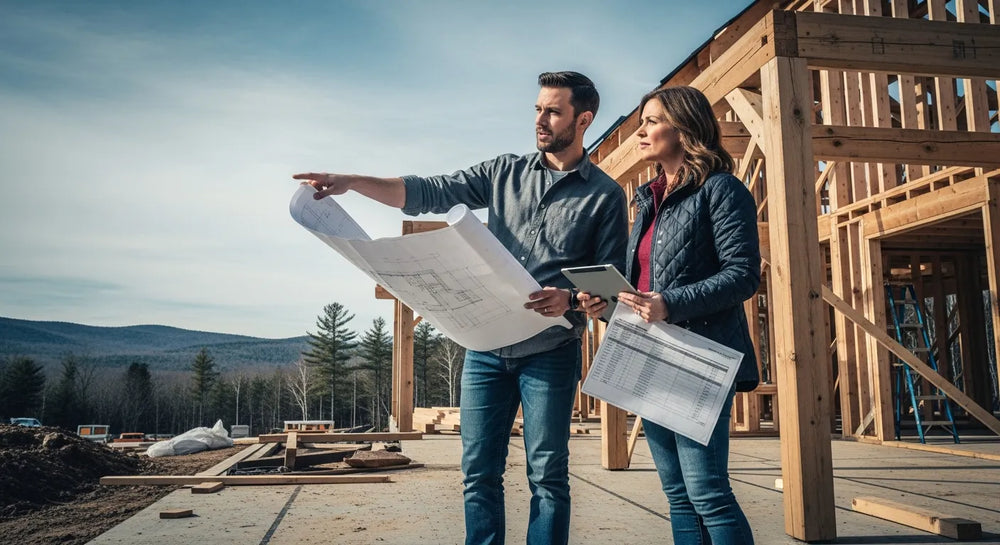
Managing the Cost of Building a House New Hampshire
Table of Contents
- Introduction
- The Economic Landscape of New Hampshire Construction
- Breaking Down the Hard Costs per Square Foot
- Soft Costs: Permits, Fees, and Design
- The Liquidity Challenge in Modern Construction
- Strategic Sourcing and Total Cost of Ownership (TCO)
- Capital Expenditure (CapEx) and Tax Strategy
- Sourcing American: The Maden.co Mission
- Regional Cost Variations within New Hampshire
- Practical Scenario: The MRO Buyer’s Dilemma
- Future Trends in NH Residential Construction
- Conclusion
- Frequently Asked Questions (FAQ)
Introduction
When a commercial developer in the Lakes Region faces a sudden six-week lead time for specialized electrical panels, the interest on their construction loan does not pause. In the high-stakes world of New England construction, delays are not merely inconveniences; they are capital-draining events that can jeopardize the viability of an entire project. Navigating the cost of building a house New Hampshire requires more than just a rough estimate of square footage prices; it demands a sophisticated understanding of localized variables, from the "Granite State’s" notorious subterranean ledge to the complexities of the Shoreland Water Quality Protection Act.
At Maden.co, we recognize that the primary friction in American construction isn't just a lack of skilled labor—it is a lack of supply chain transparency and accessible liquidity. For a general contractor or an industrial buyer, the ability to source high-quality, U.S.-manufactured components while maintaining a healthy cash conversion cycle is the difference between a profitable delivery and a stalled job site. This article serves as an authoritative resource on the economic realities of New Hampshire residential construction, providing procurement managers and business owners with the data needed to forecast expenses accurately. We will explore the breakdown of hard and soft costs, the logistical challenges unique to the region, and how modern procurement strategies can eliminate the "time-to-terms" friction that often slows down progress. Our thesis is simple: by combining American-made industrial excellence with digital-first financing, builders can mitigate the rising costs of construction and contribute to the ongoing U.S. manufacturing revival.
The Economic Landscape of New Hampshire Construction
New Hampshire presents a unique paradox for the construction industry. While it offers a business-friendly environment with no broad-based sales or personal income tax, the logistical and regulatory landscape can drive up the cost of building a house New Hampshire significantly compared to neighboring states. The demand for housing remains at historic highs, yet the supply of developed land and available labor remains constrained.
For the professional buyer, understanding these macro-economic pressures is the first step in project planning. We have seen a shift in how projects are capitalized, with a greater emphasis on "just-in-case" inventory and domestic sourcing to avoid the volatility of international shipping lanes. At Maden.co, our mission is to democratize access to American manufacturing, ensuring that builders in the Northeast have a direct line to the verified products they need to keep their projects on schedule.
Labor Shortages and Regional Wage Pressures
New Hampshire competes directly with the Greater Boston labor market. This proximity means that skilled trades—electricians, plumbers, and HVAC technicians—often command premium rates that align with Massachusetts standards, even when working on projects in the Monadnock or North Country regions. For a procurement manager, this means that labor-intensive phases of construction must be scheduled with precision. Any delay in material delivery doesn't just push the timeline; it risks losing a specialized crew to another project, leading to "remobilization fees" that can add thousands to the bottom line.
Material Volatility and the Case for Domestic Sourcing
The global supply chain disruptions of recent years have highlighted the fragility of relying on overseas components. Whether it is structural steel, specialized fasteners, or MRO supplies for heavy machinery, the cost of building a house New Hampshire is heavily influenced by the reliability of the supply chain. By prioritizing U.S.-manufactured goods, businesses can ensure greater transparency and quality control. This is a core tenet of our work at Maden.co; we believe that Supply Chain Transparency is not just a buzzword, but a strategic necessity for modern industrial excellence.
Breaking Down the Hard Costs per Square Foot
In New Hampshire, the average cost to build a custom home typically ranges from $200 to $400 per square foot, though high-end luxury builds in coastal towns like Rye or lakeside properties in Winnipesaukee can easily exceed $600 per square foot. These "hard costs" cover the tangible materials and the labor required to assemble them.
Site Preparation: The Granite State Challenge
The nickname "The Granite State" is not a marketing slogan; it is a geological reality. One of the most significant variables in the cost of building a house New Hampshire is site preparation.
- Ledge Removal: If your site survey reveals significant granite ledge, you may face blasting costs ranging from $5,000 to $30,000 or more.
- Septic Systems: Since much of rural New Hampshire lacks municipal sewer access, a private septic system is often required. Depending on the soil's percolation rate, a raised bed or "Everflow" system can cost between $15,000 and $25,000.
- Well Drilling: Access to potable water often requires drilling deep into the bedrock. In New Hampshire, wells are typically 200 to 500 feet deep, with costs averaging $8,000 to $15,000 including the pump and pressure tank.
Foundation and Framing
Foundation costs in the Northeast are influenced by the frost line. Foundations must be dug at least 48 inches deep to prevent shifting during the intense freeze-thaw cycles of a New Hampshire winter.
- Poured Concrete vs. Block: Poured concrete is the standard for its durability and moisture resistance, typically costing $20,000 to $40,000 for a standard residential footprint.
- Lumber and Framing: This is often the most volatile cost category. A standard 2,500-square-foot home may require $40,000 to $60,000 in framing materials alone. Using U.S.-made engineered wood products can provide better dimensional stability, reducing long-term maintenance costs.
Exterior Enclosure and Roofing
New Hampshire's climate demands high-performance building envelopes.
- Roofing: Asphalt shingles remain the budget-conscious choice, but standing-seam metal roofs are increasingly popular for their ability to shed heavy snow loads and their 50-year lifespan.
- Windows and Doors: Energy Star-rated windows are essential for managing heating costs during the long winter months. Sourcing these from domestic manufacturers ensures that replacements and warranties are handled within the same time zone, reducing procurement friction.
Soft Costs: Permits, Fees, and Design
Beyond the physical materials, "soft costs" represent a significant portion of the total investment. These are the administrative and professional services required to bring a project from concept to completion.
Architectural and Engineering Fees
For a custom residential project, architectural fees typically range from 8% to 15% of the total construction cost. Engineering is equally critical, especially when dealing with steep slopes or waterfront property. Civil engineers must design drainage plans that comply with local "Alteration of Terrain" regulations, which are strictly enforced by the New Hampshire Department of Environmental Services (NHDES).
Impact Fees and Building Permits
New Hampshire is a "home rule" state, meaning each of the 234 municipalities sets its own building codes and fee structures. Some high-growth towns impose "Impact Fees" to offset the cost of new infrastructure, schools, and emergency services. These fees can range from a few thousand dollars to over $20,000 per dwelling unit.
Shoreland Protection Act Compliance
Building near New Hampshire’s many lakes or the seacoast triggers the Shoreland Water Quality Protection Act. This regulation limits the amount of impervious surface (pavement, rooflines) on a lot and requires specific vegetative buffers. Navigating these permits requires specialized environmental consulting, adding to the soft cost of building a house New Hampshire.
The Liquidity Challenge in Modern Construction
A structural hurdle that many small-to-mid-sized manufacturers and builders face is the liquidity challenge. In traditional procurement, getting net terms requires weeks of supplier onboarding, credit applications, and exhaustive negotiations. While the builder is waiting for credit approval, the price of copper or lumber continues to fluctuate, and the project timeline slips.
Traditional bank credit is tightening, and the "time-to-terms" friction is a major bottleneck for the U.S. manufacturing revival. This is why we have integrated Maden Pay directly into our marketplace. Instead of the traditional net-30 dance, we offer embedded financing at the point of transaction.
How Embedded Financing Solves Procurement Friction
Imagine a facility manager whose heavy equipment requires a specialized American-made motor to continue site prep. They cannot wait three weeks for a credit department to review their tax returns. With Maden Pay, businesses can often receive instant eligibility decisions via a soft credit check that does not impact their credit score. This allows for:
- Speed: Getting the materials on-site now, not next month.
- Capacity: Accessing credit lines commonly ranging from $5,000 to $250,000+ for qualified businesses.
- Efficiency: A single approval works across our entire marketplace, from heavy machinery to MRO supplies.
For businesses looking to optimize their cash conversion cycle, you can Check eligibility in under 60 seconds. (Note: Approvals, limits, and terms depend on business eligibility).
Strategic Sourcing and Total Cost of Ownership (TCO)
When calculating the cost of building a house New Hampshire, many buyers make the mistake of looking only at the "sticker price" of materials. A more sophisticated approach involves analyzing the Total Cost of Ownership (TCO).
Quality vs. Price
A cheap, imported valve might save $50 today, but if it fails in two years and causes water damage in a new build, the cost of that failure far outweighs the initial savings. At Maden.co, we focus on connecting industrial buyers with millions of verified American-made products that meet rigorous standards such as NPT or DIN. We are not just a catalog; we are a strategic partner in building a resilient, U.S.-based supply chain.
Reducing Procurement Friction
Procurement friction includes the time spent searching for vendors, verifying their certifications, and managing multiple invoices. By using a centralized B2B marketplace, buyers can Browse all categories in one place. This consolidation reduces administrative overhead and allows procurement managers to focus on high-level strategy rather than chasing down individual shipping tracking numbers.
Capital Expenditure (CapEx) and Tax Strategy
For business owners and developers, the cost of building a house New Hampshire is often a significant capital expenditure. Maximizing the tax benefits of these investments is crucial for maintaining project liquidity.
100% Bonus Depreciation
One of the most powerful tools in a builder’s financial arsenal is bonus depreciation. This allows businesses to immediately deduct a large percentage of the purchase price of eligible assets (such as construction equipment, certain building components, and machinery) in the first year they are placed in service. This front-loads the tax benefits, providing a significant cash flow boost that can be reinvested into the project.
Disclaimer: Tax laws are subject to change and vary by jurisdiction. Always consult your tax professional to understand how bonus depreciation applies to your specific business situation.
Aligning Cash Cycles with Maden Pay
By utilizing Maden Pay, businesses can align their purchasing with their cash conversion cycles. If a project has a net-60 payment schedule from the end client, using our net-60 financing option ensures that the business isn't out-of-pocket for materials before they receive payment for the work. This strategic alignment is a hallmark of industrial excellence. To see how these terms can fit your next project, you can Check eligibility today. (Note: Approvals, limits, and terms depend on business eligibility).
Sourcing American: The Maden.co Mission
The U.S. Manufacturing Revival Is Here, and New Hampshire is at the heart of it. From precision machining shops in the Seacoast to timber operations in the North Country, domestic production is the backbone of our economy. At Maden.co, we are dedicated to supporting this ecosystem.
For Manufacturers: Joining the Marketplace
If you are a U.S.-based manufacturer producing the components that build America, we invite you to join our platform. We provide the digital infrastructure to reach a national audience of verified industrial buyers, helping you overcome the liquidity challenges of traditional distribution. You can start the process by visiting our Vendor Registration page.
For Buyers: The Maden.co Advantage
When you source through Maden.co, you are doing more than just buying a product; you are investing in American jobs and supply chain resilience. We vet our suppliers to ensure that when we say a product is American-made, it meets the standards of quality and transparency our customers expect.
Regional Cost Variations within New Hampshire
While we have discussed state-wide averages, the cost of building a house New Hampshire varies significantly by county.
The Seacoast (Rockingham County)
High land costs and strict zoning make this the most expensive region. Proximity to Portsmouth and the Massachusetts border keeps demand—and prices—extremely high. Expect site costs to be at the top of the range.
The Lakes Region (Belknap and Carroll Counties)
Construction here is often complicated by environmental regulations and seasonal labor availability. Building a "four-season" home that can withstand lakefront winds and humidity requires premium materials and specialized engineering.
The North Country (Coos County)
While land is more affordable here, the "logistics tax" is higher. Shipping materials to remote locations adds to the cost, and the pool of available subcontractors is smaller, often requiring builders to pay for travel and lodging for specialized trades.
Practical Scenario: The MRO Buyer’s Dilemma
Consider a scenario where a New Hampshire-based construction firm is in the middle of a foundation pour for a 10-unit residential complex. Suddenly, the hydraulic pump on their primary excavator fails.
- The Traditional Way: The firm calls three local dealers. One has the part but requires a new credit application because the firm hasn't purchased there in two years. The credit department is out for the weekend. The project stops. The concrete sub-contractor charges a "standby" fee of $1,500.
- The Maden.co Way: The procurement manager logs onto Maden.co, finds the verified U.S.-made replacement pump, and uses their existing Maden Pay credit line. The transaction is approved in seconds. The part is shipped overnight. The project stays on track, and the firm preserves its cash for the upcoming payroll.
This scenario illustrates why embedded financing is not just about "loans"—it is an operational tool that ensures industrial excellence and reduces the overall cost of building a house New Hampshire.
Future Trends in NH Residential Construction
The landscape of New Hampshire construction is evolving. We are seeing a move toward "High-Performance" homes that prioritize energy efficiency, which is essential given the state's high electricity and heating fuel costs.
Pre-Fabrication and Modular Components
To combat labor shortages, more developers are turning to panelized or modular construction. These components are manufactured in controlled factory environments—many of them right here in the U.S.—and then shipped to the site. This reduces the time spent on-site and can lower the cost of building a house New Hampshire by up to 15% through reduced waste and improved labor efficiency.
Sustainable and Smart Materials
There is a growing demand for smart home integration and sustainable materials, such as cross-laminated timber (CLT) and recycled steel framing. Sourcing these through a transparent supply chain like Maden.co allows builders to meet the specific requirements of modern homeowners who value both domestic production and environmental stewardship.
Conclusion
Building a home or a residential development in New Hampshire is a complex undertaking that requires a blend of geological awareness, regulatory savvy, and strategic financial management. While the cost of building a house New Hampshire is influenced by many factors beyond a builder's control—such as the presence of granite ledge or the nuances of the Shoreland Protection Act—the procurement of materials and the management of liquidity are variables that can be optimized.
At Maden.co, we are proud to be a strategic partner in this process. By offering a comprehensive marketplace of verified American-made products and the innovative financing of Maden Pay, we are removing the traditional barriers to construction efficiency. We believe that by supporting the U.S. manufacturing revival, we can build a more resilient and prosperous future for the Granite State and beyond.
Whether you are a procurement manager looking to streamline your MRO supplies or a business owner planning your next major project, we invite you to explore what is possible when technology meets industrial excellence.
Take the next step in optimizing your construction supply chain:
- Browse all categories to find the U.S.-made products your project requires.
- Ensure your business has the liquidity it needs by Checking eligibility for Maden Pay.
- Join us in our mission to revitalize American manufacturing by visiting our About Us page.
Frequently Asked Questions (FAQ)
What is the average cost per square foot to build a house in New Hampshire?
The cost generally ranges from $200 to $400 per square foot for standard custom builds. However, this can vary significantly based on the region, the complexity of the site (e.g., granite ledge or septic requirements), and the quality of finishes. High-end luxury properties in the Seacoast or Lakes Region can exceed $600 per square foot.
How does "The Granite State's" geography affect construction costs?
The primary geographical cost driver is site preparation. New Hampshire often requires extensive ledge removal (blasting), deep-well drilling for water, and specialized septic systems for rural lots. These factors can add $30,000 to $60,000 to the initial project cost before the foundation is even poured.
Why should I prioritize U.S.-manufactured materials for my NH build?
Prioritizing domestic products reduces supply chain volatility, ensures compliance with high industry standards (like NPT or DIN), and provides better transparency. Furthermore, sourcing through Maden.co supports the U.S. manufacturing revival and often allows for faster access to replacement parts and warranty support compared to international alternatives.
How does Maden Pay help manage construction cash flow?
Maden Pay provides embedded financing at the point of sale, allowing businesses to secure net 30/60/90 terms almost instantly. This eliminates the "time-to-terms" friction of traditional credit applications, allowing builders to acquire materials when needed without exhausting their immediate cash reserves. (Note: Approvals, limits, and terms depend on business eligibility).


