
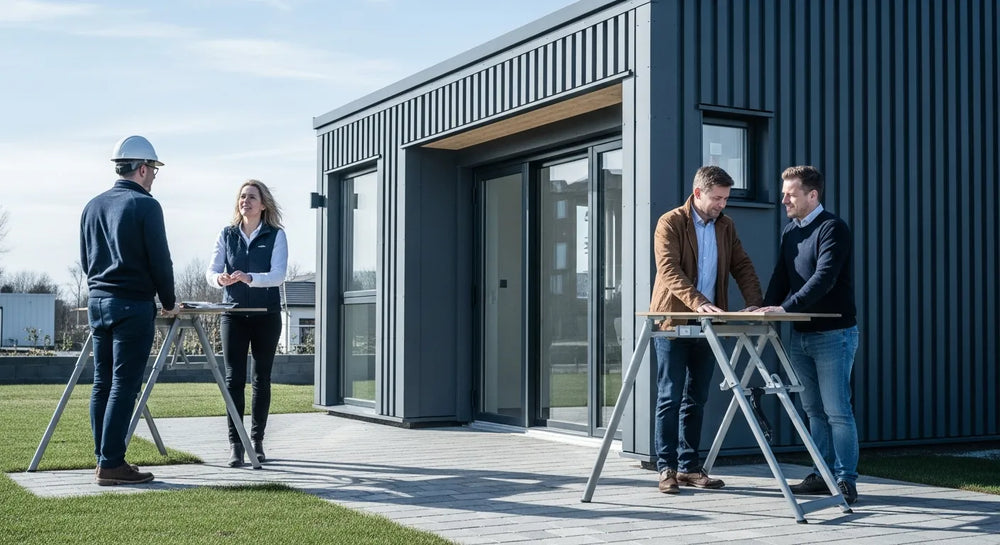
The Cost to Build a 30x40 House for Your Business
Table of Contents
- Introduction
- The Business Utility of a 1,200-Square-Foot Structure
- Estimating the Foundation and Site Preparation Costs
- Framing and External Shell Expenses
- Mechanical, Electrical, and Plumbing (MEP) Costs
- Interior Finishes and Labor
- The Liquidity Challenge in Industrial Construction
- Maden Pay: Eliminating Time-to-Terms Friction
- Leveraging 100% Bonus Depreciation for Your Build
- Reducing Procurement Friction with U.S. Manufacturers
- Total Cost of Ownership (TCO) vs. Initial Sticker Price
- Real-World Procurement Scenario: The Field Office Build
- Summary of Estimated Costs for a 30x40 Build
- Conclusion
Introduction
When a growing industrial operation needs to expand its footprint—whether for on-site employee housing, a dedicated field office, or specialized MRO storage—the question isn't just "how much space do we need?" but "how fast can we get it operational?" In a climate where supply chain bottlenecks can stall projects for months and traditional bank credit for small-scale construction is tightening, a 30x40 footprint has emerged as a strategic "sweet spot." This 1,200-square-foot dimensions provides enough versatility for a variety of commercial and industrial applications without the logistical nightmare of a massive footprint. However, understanding the cost to build a 30x40 house or structure requires more than a simple price-per-square-foot estimate. It requires a deep dive into procurement efficiency, material quality, and financial strategy.
At Maden.co, our mission is to democratize access to American manufacturing by connecting industrial buyers with millions of verified U.S.-made products. We believe that the U.S. Manufacturing Revival Is Here, and it is built on the backs of resilient, domestic supply chains. For a procurement manager or business owner, the "cost" of a project includes not just the price of the lumber or steel, but the total cost of ownership (TCO), the reliability of the vendors, and the speed at which capital can be deployed.
In this article, we will break down the comprehensive costs associated with a 30x40 build, from site preparation and foundation work to interior finishes and mechanical systems. We will also explore how modern procurement platforms and embedded financing solutions can eliminate the traditional "time-to-terms" friction that often slows down these essential capital expenditures. By the end of this guide, you will have a clear roadmap for budgeting your next 1,200-square-foot project while maximizing your business's cash flow and supporting American industrial excellence.
The Business Utility of a 1,200-Square-Foot Structure
The 30x40 house or utility building is a staple of American industrial and rural property management. For a business, this size is highly efficient. It is large enough to house multiple workstations, a kitchen, and a restroom for workers in remote locations, yet small enough to be built quickly using standardized materials.
In the context of the about us mission at Maden.co, we see these structures as vital components of a resilient domestic infrastructure. Whether you are building a residence for farm laborers, a guest house for visiting engineers, or a control center for a manufacturing plant, the 30x40 dimensions allow for a variety of floor plans. You could opt for a spacious two-bedroom layout or a high-density office configuration.
Understanding the cost to build a 30x40 house starts with recognizing that you aren't just buying shelter; you are investing in a business asset. The quality of the materials—sourced from verified U.S. manufacturers—ensures that the building will stand the test of time, reducing long-term maintenance costs and providing a better return on investment.
Estimating the Foundation and Site Preparation Costs
Before a single stud is raised or a steel beam is bolted into place, the site must be prepared. This is often the most variable part of the total cost. Site preparation includes clearing land, grading for drainage, and ensuring utility access (water, power, septic/sewer).
Clearing and Grading
If your 30x40 project is located on a raw industrial plot, you may face costs ranging from $1,500 to $5,000 for clearing trees and debris. Grading is essential to prevent water from pooling around the structure. Proper drainage is a critical component of industrial excellence, as moisture ingress can lead to structural decay and expensive repairs down the line.
Foundation Types
For a 30x40 structure, there are generally three types of foundations:
- Slab-on-Grade: This is the most common and cost-effective for commercial utility. A 1,200-square-foot slab typically costs between $6,000 and $12,000, depending on the thickness of the concrete and the reinforcement required.
- Crawl Space: This provides access to plumbing and electrical systems under the floor, which can be beneficial for MRO (Maintenance, Repair, and Operations) accessibility. This typically costs $10,000 to $18,000.
- Full Basement: While it doubles your square footage, it also significantly increases your cost, often adding $25,000 to $40,000 to the project.
When sourcing materials for your foundation—such as vapor barriers, rebar, and anchor bolts—procuring through a centralized marketplace like Maden.co ensures you are getting American-made quality that meets strict industry standards.
Framing and External Shell Expenses
The "shell" of the building includes the framing, sheathing, roofing, siding, windows, and doors. For a 30x40 house, you have two primary options: traditional wood framing (stick-built) or a pre-engineered metal building (PEMB).
Traditional Wood Framing
Stick-built structures offer the most flexibility for residential-style interiors. For a 30x40 home, the framing lumber alone can cost between $10,000 and $20,000, depending on the current market rates for domestic timber. Labor for framing is typically a significant portion of the budget, as it requires a skilled crew.
Metal Building Systems
Many industrial buyers prefer steel framing for its durability and speed of assembly. A 30x40 metal building kit can range from $15,000 to $30,000 for the materials. These systems are often easier to insulate to high R-values using modern spray foam or rigid board insulation, which can lead to significant energy savings—a key factor in optimizing the Total Cost of Ownership (TCO).
Roofing and Siding
The choice of roofing (asphalt shingles, metal panels, or rubber membrane) and siding (vinyl, fiber cement, or metal) will impact both the initial cost to build a 30x40 house and its long-term durability. Metal roofing, while more expensive upfront, often lasts 40 to 60 years, aligning with our commitment to long-term industrial excellence. You can browse all categories on our platform to find roofing and siding solutions manufactured right here in the U.S.
Mechanical, Electrical, and Plumbing (MEP) Costs
The "guts" of the house are where technical precision is paramount. For a business-driven build, these systems must be reliable and easy to maintain.
- Plumbing: For a standard 1,200-square-foot home with two bathrooms and a kitchen, plumbing costs (including fixtures and water heater) typically range from $8,000 to $12,000.
- Electrical: Wiring a 30x40 structure for commercial or residential use involves panels, outlets, lighting, and specialized circuits. Expect to budget between $5,000 and $10,000.
- HVAC: Heating and cooling are essential for both occupant comfort and equipment protection. A high-efficiency heat pump or furnace system for a space this size will cost between $6,000 and $12,000.
In traditional procurement, a facility manager might spend weeks contacting multiple vendors to source plumbing pipes, electrical conduit, and HVAC units, often waiting for credit approval from each one. This is what we call "time-to-terms" friction. By using Maden Pay, buyers can access a single line of credit that works across our entire marketplace, allowing them to secure all MEP components without the repetitive administrative burden.
Interior Finishes and Labor
The interior of a 30x40 house is where the budget can either be kept lean or expanded for premium aesthetics.
- Drywall and Paint: Hanging and finishing drywall for a 1,200-square-foot space usually costs between $5,000 and $9,000.
- Flooring: Options like polished concrete (ideal for industrial use), luxury vinyl plank (LVP), or tile will range from $3 to $10 per square foot installed.
- Cabinetry and Countertops: For an on-site kitchen or breakroom, these can cost anywhere from $5,000 to $15,000.
Labor costs typically account for 30% to 50% of the total cost to build a 30x40 house. In the current labor market, finding and retaining skilled tradespeople is a challenge. One way to mitigate this is by ensuring that materials are delivered on time and are of high quality, preventing rework. We pride ourselves on supply chain transparency, so you know exactly where your materials are coming from and when they will arrive.
The Liquidity Challenge in Industrial Construction
U.S. manufacturing and industrial construction face a structural liquidity challenge. Small to mid-sized firms often operate on net-30 to net-90 cycles. When you are building a 30x40 structure, you are often required to pay for materials upfront or within a very short window, while your own revenue might be tied up in outstanding invoices.
Traditional bank credit is not always a viable solution for these mid-range projects. Banks often require mountains of paperwork and weeks of processing time for a simple line of credit or construction loan. For a project manager whose timeline depends on getting a roof on before the winter sets in, waiting 21 days for a credit committee's decision isn't an option.
This is where the Maden.co ecosystem changes the game. We understand that liquidity is the lifeblood of the manufacturing revival. By providing modern financial tools, we help businesses bridge the gap between their cash conversion cycles and their immediate procurement needs.
Maden Pay: Eliminating Time-to-Terms Friction
In traditional procurement, "getting terms" with a new supplier is a grueling process. You find a manufacturer of high-quality U.S. steel studs, but then you have to fill out a three-page credit application, provide references, and wait for their accounting department to vet your business. If you need ten different suppliers for your 30x40 house, you have to do this ten times.
We have solved this through Maden Pay. Instead of individual credit applications, we offer embedded financing directly at the point of transaction.
- Speed: You can receive an instant eligibility decision—often in under 60 seconds—via a soft credit check that doesn't impact your business credit score.
- Capacity: We provide credit lines that commonly range from $5,000 to over $250,000 for qualified businesses, which is more than enough to cover the material costs for a 30x40 build.
- Alignment: With Net 30, 60, or 90-day options, you can align your payments with your actual business cash flow.
If you are ready to see how much purchasing power your business can unlock, you can check eligibility today. Please note: approvals, limits, and terms depend on business eligibility.
Leveraging 100% Bonus Depreciation for Your Build
For business owners and CFOs, the cost to build a 30x40 house is not just an expense; it is a capital expenditure (CapEx). Under current U.S. tax laws, specifically Section 168(k), certain types of business property may qualify for 100% bonus depreciation in the year they are placed in service.
This means you could potentially deduct the entire cost of the structure's qualified components—such as specialized equipment housing or modular office units—from your taxable income in a single year, rather than depreciating it over 27.5 or 39 years. This creates a massive cash flow advantage that can be reinvested into more inventory, better equipment, or further expansion.
However, tax laws are complex and subject to change. For example, the percentage of bonus depreciation may phase down in coming years. Therefore, you should always consult your tax professional to determine how bonus depreciation applies to your specific building project and business structure.
Reducing Procurement Friction with U.S. Manufacturers
One of the hidden costs in construction is "procurement friction"—the time and money lost searching for parts, managing multiple shipments, and dealing with substandard international imports that don't meet American specs (like NPT threading or specific DIN standards).
When you build with American-made products, you are investing in a higher standard of quality control. At Maden.co, we focus on supply chain transparency. We make it easy to find everything from the foundation bolts to the final light fixtures from verified domestic sources. This doesn't just feel good; it makes business sense. Domestic sourcing reduces the risk of long-lead-time delays caused by international shipping crises and ensures that replacement parts for future MRO needs are readily available.
For those on the other side of the equation—the manufacturers themselves—we invite you to join our platform. By completing your vendor registration, you can connect with a growing base of industrial buyers who prioritize quality and domestic reliability.
Total Cost of Ownership (TCO) vs. Initial Sticker Price
When calculating the cost to build a 30x40 house, it is tempting to focus solely on the initial quote. But as any experienced facility manager knows, the cheapest option is often the most expensive over time.
Consider the "cheap" imported faucet versus a high-quality, U.S.-manufactured industrial fixture. The imported one might save you $50 today, but if it fails and floods the office in two years, the cost of the damage, the downtime, and the replacement far exceeds that initial $50 saving.
By focusing on TCO, you consider:
- Durability: How long will the materials last in an industrial environment?
- Maintenance: Are replacement parts available locally?
- Efficiency: Will high-quality insulation and windows save on monthly utility bills?
- Compliance: Does the material meet all local and national building codes?
We are here to help you optimize that TCO. If you have specific questions about sourcing technical components or need assistance with a bulk order for a multi-unit project, you can always contact us for personalized support.
Real-World Procurement Scenario: The Field Office Build
Imagine a construction firm that just secured a contract for a new renewable energy site. They need a 30x40 field office set up within six weeks to house their management team and engineers.
In a traditional scenario:
- The procurement officer spends a week calling local lumber yards and steel suppliers.
- They spend another week filling out credit apps for the HVAC, electrical, and plumbing wholesalers.
- They wait for the credit checks to clear while the ground team is already on-site, idling and burning through the budget.
- Shipping delays from an overseas window supplier push the move-in date back another three weeks.
In the Maden.co scenario:
- The officer logs onto the marketplace and finds verified U.S. manufacturers for all core materials.
- They use Maden Pay to secure financing for the entire order in minutes.
- The embedded financing allows them to choose Net-60 terms, keeping their cash available for labor and fuel.
- All materials are sourced domestically, arriving on a predictable schedule that keeps the project on track.
This is how digital innovation drives industrial excellence. By streamlining the "time-to-terms," we allow you to focus on building, not on paperwork.
Summary of Estimated Costs for a 30x40 Build
To give you a clearer picture, here is a breakdown of the typical costs for a mid-range, 1,200-square-foot structure built with quality U.S. materials:
| Category | Estimated Cost Range | Notes |
|---|---|---|
| Site Prep & Foundation | $8,000 – $15,000 | Slab-on-grade; includes basic clearing. |
| Building Shell (Materials) | $20,000 – $40,000 | Framing, roofing, siding, windows, doors. |
| MEP Systems | $20,000 – $35,000 | Plumbing, Electrical, HVAC. |
| Interior Finishes | $15,000 – $30,000 | Drywall, flooring, paint, basic cabinetry. |
| Labor | $40,000 – $70,000 | Highly dependent on local market rates. |
| Total Estimated Build | $103,000 – $190,000 | ~$85 – $160 per square foot. |
Note: These are estimates for a standard build. High-end finishes, complex site conditions, or specialized industrial requirements can increase these figures.
The key to keeping these costs under control is a streamlined procurement process. When you check eligibility for financing, you gain the agility to buy materials when prices are favorable, rather than waiting for your next revenue milestone. Approvals and limits depend on business eligibility.
Conclusion
Building a 30x40 house or utility structure is a significant undertaking that represents a major step in the growth of a business. Whether it is providing housing for the workforce that drives our manufacturing revival or creating a specialized environment for industrial operations, the success of the project hinges on the quality of the materials and the efficiency of the procurement process.
By choosing American-made products, you are not only ensuring the longevity and compliance of your build but also supporting the domestic manufacturers who form the backbone of our economy. At Maden.co, we are proud to be your strategic partner in this journey. We provide the platform, the transparency, and the financial tools necessary to turn a set of blueprints into a functional, value-generating asset without the traditional delays of the construction industry.
We encourage you to explore our extensive catalog and see how we can simplify your supply chain. The U.S. Manufacturing Revival is here, and your next project is a part of it.
Frequently Asked Questions (FAQ)
1. How long does it typically take to build a 30x40 house for industrial or commercial use? A 30x40 structure can typically be completed in 3 to 6 months, depending on the complexity of the project and the building method (stick-built vs. pre-engineered metal). Sourcing materials domestically through a marketplace like Maden.co can often shorten lead times by avoiding international shipping delays.
2. Is a 30x40 building large enough for a two-bedroom living space? Yes, 1,200 square feet is the standard size for a very comfortable two-bedroom, two-bathroom home. In a business context, this is also sufficient space for a medium-sized office suite with a lobby, three to four private offices, and a breakroom.
3. Why should I choose U.S.-made materials over cheaper international alternatives? Beyond the patriotic value, U.S.-made products often adhere to stricter quality and safety standards, such as specific ASTM or UL certifications. This results in a lower Total Cost of Ownership (TCO) because the materials are more durable and replacement parts for maintenance (MRO) are easier to source within the domestic supply chain.
4. Can I use Maden Pay to finance the labor costs of my building project? Maden Pay is designed for the purchase of products and materials within our marketplace. While it doesn't directly pay for external labor crews, by financing your materials with Net 30/60/90 terms, you free up your business’s cash flow to cover labor costs and other operational expenses. Note: approvals, limits, and terms depend on business eligibility.


