
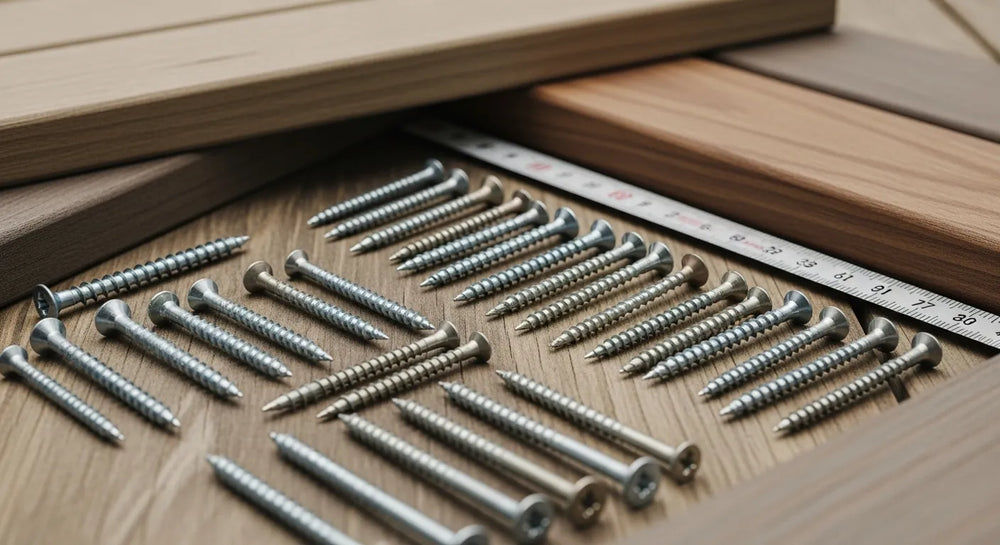
Achieving a Perfectly Flush Wood Screw Finish
Table of Contents
- Introduction
- The Importance of Flushness: More Than Just Aesthetics
- Understanding Wood Screw Types and Their Heads
- Essential Tools for Precision Flush Mounting
- Step-by-Step Guide: How to Make Wood Screws Flush
- Advanced Tips for Superior Flush Mounting
- The Maden.co Advantage in Precision Sourcing
- Conclusion
- Frequently Asked Questions
Introduction
In the intricate world of manufacturing and meticulous craftsmanship, the smallest details often dictate the overall quality, longevity, and aesthetic appeal of a finished product. Consider the subtle yet profound impact of a screw head that isn't quite flush: it can snag fabrics, compromise structural integrity, hinder subsequent assembly steps, or simply detract from the professional appearance of an item. For design engineers specifying components, MRO buyers sourcing critical fasteners, or business owners overseeing production, the precision of every element, down to the seating of a wood screw, is paramount. Such seemingly minor imperfections can lead to costly rework, customer dissatisfaction, and even operational delays, underscoring the vital role of meticulous execution in every stage of a project.
This blog post delves into the essential techniques and best practices for achieving a perfectly flush finish when working with wood screws. We will explore the critical steps, necessary tools, and expert tips that ensure fasteners are seated precisely, enhancing both the functionality and aesthetics of your assemblies. Beyond the technical know-how, we'll also connect these precise requirements with the broader need for high-quality, consistently manufactured components, highlighting how a reliable supply chain—backed by American manufacturing—is foundational to achieving such exacting standards. Our aim is to provide a comprehensive guide that not only teaches you how to make wood screws flush but also emphasizes the strategic advantage of sourcing components that inherently support superior craftsmanship and long-term performance.
The Importance of Flushness: More Than Just Aesthetics
While a smooth, unblemished surface is often the primary motivation for flush-mounting screws, the benefits extend far beyond visual appeal. In industrial applications, precise screw seating can be critical for safety, structural integrity, and the efficiency of subsequent processes.
Aesthetic Excellence and Professional Finish
From cabinetry and fine furniture to intricate electronic housings and custom machinery enclosures, an exposed or protruding screw head can immediately signal a lack of attention to detail. A flush finish creates a sleek, professional appearance that speaks volumes about the quality of the workmanship. This is particularly important for products where surface continuity is essential for branding, user interaction, or integration into a larger system. For instance, in consumer-facing products, a flush screw prevents snags, provides a smoother touch, and conveys a higher perceived value.
Enhancing Safety and Preventing Damage
Protruding screw heads can be a safety hazard, leading to cuts, scrapes, or snags on clothing or other materials. In operational environments, they can interfere with moving parts, scratch sensitive surfaces, or impede the proper function of adjacent components. Ensuring screws are flush mitigates these risks, protecting both personnel and the integrity of the product itself. Consider a piece of equipment where operators frequently interact with a panel; flush screws reduce the risk of injury and extend the lifespan of uniforms or protective gear.
Structural Integrity and Load Distribution
While less intuitive, a properly seated screw contributes to the overall structural integrity of a joint. When a screw head protrudes, it may not be fully engaging the material as intended, potentially leaving a slight gap or uneven pressure distribution around the head. A flush screw, especially a countersunk one, ensures that the head fully contacts the surrounding material, distributing the load more evenly and reducing stress concentrations that could lead to cracking or loosening over time. This is particularly vital in applications subject to vibration, shear forces, or significant tensile loads, where even small imperfections can propagate into larger failures.
Facilitating Subsequent Processes and Assemblies
In complex manufacturing workflows, flush screws are often a prerequisite for subsequent steps. They allow for the seamless application of veneers, laminates, overlays, or paint finishes without creating bumps or inconsistencies. They also ensure that mating components, such as covers, panels, or additional assemblies, can sit perfectly flat and tight against the surface, eliminating gaps and ensuring a precise fit. This level of precision is paramount in ensuring the smooth and efficient flow of production, preventing bottlenecks and rework that can arise from misaligned or poorly seated components. For a procurement manager under pressure to source a specific fastener for an assembly that demands exact tolerances, or a design engineer needing specific material certifications for a new prototype, the ability to quickly find and finance a verified, U.S.-made part is a game-changer for maintaining project timelines and quality. Our mission at Maden.co is to democratize access to American manufacturing, ensuring such critical components are readily available.
Understanding Wood Screw Types and Their Heads
The choice of wood screw is fundamental to achieving a flush finish. Different screw head types are designed for specific applications and necessitate distinct preparation techniques. Understanding these differences is the first step towards precision.
Flat Head Screws
Flat head screws are perhaps the most common choice for flush applications. Their conical underside is designed to seat into a countersunk hole, pulling the top surface of the head perfectly level with the material. This creates a smooth, uninterrupted surface, ideal for applications where aesthetics and material overlays are paramount. Flat head screws are excellent for fastening hinges, mounting hardware, or any application where the screw head must disappear completely. For procurement managers and design engineers seeking robust, versatile flat head fasteners, a high-quality option like the Flat Slot Drive Brass Wood Screw provides both performance and a reliable American-made origin.
Oval Head Screws
Oval head screws feature a decorative, slightly domed top surface combined with a conical underside, similar to a flat head. While the conical portion allows for countersinking to create a strong seat, the domed top remains slightly proud of the surface, offering a more decorative or finished look than a completely flush flat head. These are often used in applications where a subtle, elegant appearance is desired, such as in visible hardware on furniture or decorative paneling. They offer a refined aesthetic without the sharp edges of a flat head. For projects requiring this distinct finish, exploring options such as the Oval Slot Drive Silicon Bronze Wood Screw can provide the desired blend of aesthetics and structural integrity.
Round Head Screws
Round head screws have a fully domed, rounded top that sits completely above the surface of the material. They are generally not used when a flush finish is desired, as their design inherently prevents them from being seated level with the surface. However, they are invaluable for applications where maximum bearing surface is needed, or when a decorative, exposed head is part of the design. While not ideal for flush mounting, understanding their purpose helps in making the correct screw selection. For instances where a round head is specifically required for its load-bearing properties or aesthetic contribution, but not for flush seating, components like the Round Slot Drive Brass Wood Screw offer reliable performance. Sourcing through Maden.co connects you with a vast catalog of hard-to-find, U.S.-made components, ensuring you always have the right fastener for the job.
Essential Tools for Precision Flush Mounting
Achieving a perfectly flush screw finish relies not just on technique, but also on having the right tools. Investing in quality tools designed for precision can significantly improve efficiency and the final outcome.
Drilling and Driving Tools
Power Drills and Drivers
A quality power drill or impact driver is indispensable. Variable speed control is crucial for delicate tasks, allowing slow starts to prevent splitting and precise control during driving. Ensure your drill has a clutch setting to prevent over-tightening and stripping the screw head or the wood itself. For heavier industrial applications, robust cordless drills designed for continuous use are preferred, offering consistent torque and durability.
Countersink Bits
These are the most critical tools for achieving a flush finish with flat and oval head screws. Countersink bits create a conical recess perfectly matched to the angle of the screw head. They come in various sizes to match different screw head diameters. Combination drill/countersink bits are highly recommended as they drill the pilot hole and the countersink in one pass, ensuring perfect alignment and depth.
Counterbore Bits
When the screw head needs to be completely hidden beneath the surface, a counterbore bit is used. This bit creates a flat-bottomed cylindrical hole, larger than the screw head, above the pilot hole. The screw is then driven into the pilot hole, and its head sits entirely within the counterbored recess. This technique allows for the use of plugs or fillers to completely conceal the fastener.
Pilot Hole Drill Bits
Properly sized pilot holes are essential to prevent wood splitting and reduce driving friction, especially in hardwoods. The pilot hole should be slightly smaller than the screw's shank diameter for hardwoods and often slightly larger for softwoods, or specifically sized for the core diameter of the screw threads. A set of precision drill bits is a must-have.
Screw Driving Bits (Driver Bits)
Using the correct driver bit (Phillips, Pozi, Torx, Slot, Square/Robertson) that precisely fits the screw head is crucial to prevent cam-out (slipping out of the screw head) and stripping. Magnetic bit holders are a convenient addition, preventing screws from falling off during driving.
Measuring and Marking Tools
Tape Measure and Ruler
Accurate layout is key. A reliable tape measure or steel rule ensures consistent spacing and positioning of screws.
Marking Pencil or Awl
Precisely mark the exact center point for each screw before drilling. An awl creates a small divot, helping to keep the drill bit from wandering.
Depth Stop Collar
For consistent pilot hole and countersink depths, a depth stop collar attached to your drill bit prevents over-drilling. Some countersink bits come with integrated adjustable depth stops.
Calipers
For precise measurement of screw diameters and head angles to match with appropriate drill and countersink bit sizes. This level of precision ensures that you are effectively matching the fastener to the preparation, leading to superior outcomes.
Step-by-Step Guide: How to Make Wood Screws Flush
Achieving a flush finish is a systematic process requiring attention to detail at each stage. This guide outlines the key steps, from preparation to final finishing.
1. Planning and Material Assessment
Before drilling, assess your materials:
- Wood Type: Hardwoods (oak, maple) are denser and more prone to splitting, requiring more precise pilot holes and slower driving speeds. Softwoods (pine, cedar) are more forgiving but can strip easily.
- Screw Type and Material: Choose the correct screw head type (flat or oval for flush applications). Consider the screw material (brass, steel, stainless steel) based on the wood and environmental conditions (e.g., moisture, chemicals). Sourcing from verified U.S. manufacturers through Maden.co ensures you receive materials that meet rigorous standards, crucial for both durability and compliance. Our platform connects industrial buyers with over 2.5 million American-made products from our network of 800+ verified U.S. manufacturers.
- Desired Finish: Decide if the screw head will be merely flush (countersunk) or completely concealed (counterbored and plugged/filled).
2. Marking and Layout
Precision begins with accurate marking:
- Locate Screw Positions: Use a tape measure and a marking pencil or awl to precisely mark the center point for each screw. For symmetrical layouts, ensure consistent spacing. An awl helps create a small indentation, preventing the drill bit from wandering.
- Check Clearance: Ensure there's sufficient wood thickness for the screw length and that the screw will not interfere with other components or drill through to the other side unintentionally.
3. Drilling the Pilot Hole
The pilot hole is foundational for a secure, split-free joint:
- Select the Correct Bit Size: The pilot hole diameter should be slightly smaller than the screw's shank (unthreaded) diameter for hardwoods to prevent splitting, and often the same size as the core diameter of the screw for softwoods. Test on scrap wood if unsure.
- Set Drill Depth: Use a depth stop collar or mark your drill bit with tape to ensure consistent depth. The pilot hole should extend slightly beyond the length of the threaded portion of the screw to give the threads maximum bite without bottoming out prematurely.
- Drill Straight: Hold the drill perpendicular to the wood surface. A drill guide or drill press can be invaluable for maintaining perfect perpendicularity, especially on critical assemblies.
4. Creating the Recess: Countersinking or Counterboring
This is the step that makes the screw head flush or concealed.
For Flush Finish (Flat and Oval Heads): Countersinking
- Select the Correct Countersink Bit: Choose a countersink bit with an angle matching your screw head (typically 82° or 90°). Ensure the diameter of the countersink is appropriate for the screw head.
-
Set Depth: The goal is to create a conical recess where the top surface of the screw head sits perfectly level with the wood surface.
- Start slowly, applying light pressure.
- Test depth on a scrap piece with an actual screw until the head is perfectly flush.
- For consistent results across multiple screws, especially in industrial settings, an adjustable depth stop on the countersink bit or drill is crucial.
- Avoid Over-Countersinking: Going too deep weakens the wood around the screw head and can cause the screw to pull through. The critical balance is achieving full contact without excess material removal.
- Drill Cleanly: Allow the countersink bit to do the work. A clean, smooth countersink is essential for the screw head to seat properly. Remove any sawdust or debris from the hole.
For Concealed Finish (Flat Heads, then Plugged): Counterboring
- Select the Correct Counterbore Bit: Choose a counterbore bit that creates a flat-bottomed hole slightly larger in diameter than the screw head. The pilot drill on the counterbore bit should be the same size as your screw's pilot hole.
- Set Depth: The counterbore depth should allow the entire screw head to sit below the surface, plus a small allowance for a plug or filler. Typically, this means the depth is equal to or slightly greater than the height of the screw head.
- Drill Accurately: Again, ensure the drill is perpendicular. The flat bottom of the counterbore hole provides a stable seating surface for the screw head.
5. Driving the Screw
This step requires control to prevent damage.
- Use the Correct Driver Bit: Select a driver bit that fits snugly into the screw head to prevent cam-out.
- Start Slowly: Begin driving the screw at a low speed to ensure it bites into the pilot hole correctly and doesn't strip the threads.
- Apply Consistent Pressure: Maintain firm, steady pressure directly in line with the screw to prevent the bit from slipping.
- Control Torque: For power drills, use the clutch setting to prevent over-tightening, especially in softer woods. Over-tightening can strip the wood, break the screw, or cause bulging around the head. The screw should be snug and fully seated without straining the material.
- Final Seating (Countersink): Drive the screw until its head is precisely flush with the surface. For oval heads, drive until the conical part is fully seated, leaving the decorative dome slightly proud.
- Final Seating (Counterbore): Drive the screw until its head rests firmly on the bottom of the counterbored hole.
6. Finishing and Concealment (Counterbored applications)
If you've counterbored, the next step is concealment:
-
Wood Plugs:
- Use a plug cutter to create plugs from matching scrap wood, ensuring grain direction aligns for a seamless finish.
- Apply a small amount of wood glue to the plug and tap it gently into the counterbored hole.
- Once the glue dries, carefully trim the plug flush with the surface using a sharp chisel or a flush-cut saw.
- Sand the area smooth.
-
Wood Filler/Putty:
- Select a wood filler that matches the wood color when dry, or one that can be stained.
- Apply the filler firmly into the counterbored hole, overfilling slightly.
- Allow it to dry completely according to manufacturer instructions.
- Sand the excess flush with the surface. This method is generally faster but may be less aesthetically pleasing than a perfectly matched wood plug, especially on clear finishes.
7. Final Inspection and Refinement
- Run Hand Over Surface: After all screws are seated, run your hand over the surface to detect any subtle protrusions or dips.
- Adjust if Necessary: If a screw is slightly proud, carefully drive it a fraction of a turn more. If too deep, it may need to be backed out and the hole repaired, or a new screw used. Precision in sourcing components is critical here; using consistent, high-quality screws from verified U.S. manufacturers reduces the likelihood of such issues. This reflects our core value of Industrial Excellence at Maden.co.
Advanced Tips for Superior Flush Mounting
Beyond the fundamental steps, several nuanced techniques can elevate your flush mounting results, especially in demanding applications.
Managing Different Wood Densities
Working with hardwoods versus softwoods presents distinct challenges. Hardwoods like oak, maple, or exotic species require impeccably sized pilot holes to prevent splitting. Even a slightly undersized pilot can lead to significant issues. Consider drilling a two-stage pilot hole: a smaller diameter for the initial penetration, followed by a slightly larger diameter for the main shank to reduce friction. For softer woods, be wary of over-tightening, as threads can strip easily, leading to a loose screw. Using screws with coarser threads in softwoods can provide better grip.
The Role of Lubrication
For particularly dense hardwoods, a small amount of lubricant (like wax or soap) on the screw threads can significantly reduce driving friction, making the screw easier to drive and reducing the risk of stripping or breaking the screw, or splitting the wood. However, use sparingly to avoid affecting glue adhesion if the screw passes through a joint, or staining the wood.
Power vs. Manual Driving Techniques
While power drills offer speed and efficiency, manual screwdrivers provide unparalleled control and tactile feedback. For critical applications, especially when seating the final turns of a screw into a countersunk hole, switching to a manual driver can prevent over-tightening and ensure the screw head seats perfectly flush without marring the surface or stripping the head. This method allows for subtle adjustments, feeling the resistance as the screw head draws perfectly into the countersink.
Choosing the Right Screw Material for Longevity
The material of your wood screw impacts not only its strength but also its long-term performance and compatibility with different woods. Brass screws, like the Flat Slot Drive Brass Wood Screw or the Round Slot Drive Brass Wood Screw, are aesthetically pleasing and corrosion-resistant, but softer than steel, requiring greater care during driving. Silicon bronze, exemplified by the Oval Slot Drive Silicon Bronze Wood Screw, offers excellent corrosion resistance and strength, making it suitable for marine or outdoor applications. Steel screws, often zinc-plated, are strong but can rust if the plating is compromised. Stainless steel offers superior corrosion resistance and strength, making it ideal for outdoor or damp environments. Considering the environment and material compatibility upfront prevents premature failure and costly replacements. Our vision at Maden.co is to become the definitive platform that proves American-made components are as accessible and convenient as any global alternative, driving the manufacturing revival with our tagline: "America's manufacturing revival is here."
Avoiding Common Pitfalls
- Splitting Wood: Always drill pilot holes. For very thin stock or close to edges, consider clamping sacrificial wood blocks to prevent blow-out or splitting.
- Stripping Screw Heads: Use the correct driver bit size and type, maintain firm pressure, and ensure the drill is perfectly aligned. Avoid worn-out bits.
- Over-Tightening: Use a drill with an adjustable clutch or finish with a manual screwdriver. Over-tightening can strip the wood, break the screw, or damage the surface.
- Wandering Drill Bits: Use an awl to create a dimple for the drill bit to start, or use a drill guide.
These advanced considerations are particularly relevant for businesses that rely on the consistent quality and durability of their products. Sourcing precision-manufactured fasteners from our network of verified U.S. manufacturers through Maden.co is a strategic choice that enhances supply chain resilience and reduces procurement friction. We emphasize our core values of American Manufacturing Pride, Digital Innovation, Supply Chain Transparency, Industrial Excellence, and Customer Empowerment in every interaction.
The Maden.co Advantage in Precision Sourcing
Achieving a perfect flush finish with wood screws is a testament to meticulous craftsmanship, but that craftsmanship is only as good as the components it employs. This is where Maden.co steps in as a strategic partner for procurement managers, MRO buyers, and design engineers.
Our mission at Maden.co is to democratize access to American manufacturing, connecting industrial buyers with an unparalleled selection of over 2.5 million U.S.-made products from our network of 800+ verified U.S. manufacturers. When you source fasteners, bits, and tools for precision work through Maden.co, you're not just buying a product; you're investing in quality, reliability, and the resurgence of American industrial excellence.
Why Quality Components Matter for Flush Mounting
The consistency of a screw's head angle, thread quality, and material composition directly impacts the ease and success of achieving a flush finish. Inferior screws can have inconsistent head angles, making it impossible for a countersink to seat perfectly. They might strip easily, or their material might be brittle, leading to breakage during driving. By choosing U.S.-made products from Maden.co, you benefit from:
- Consistent Quality: Our verified manufacturers adhere to stringent quality control standards, ensuring every screw meets precise specifications. This consistency means your countersinks and counterbores will reliably receive the screw heads as intended.
- Material Integrity: Access to high-grade materials, whether it's brass for its aesthetic and corrosion resistance, or specialized alloys for demanding applications. This reduces the risk of material failure during installation or in service.
- Supply Chain Transparency: We provide clear visibility into the origin of your products, helping you meet compliance requirements and build a robust, resilient supply chain less susceptible to global disruptions. You can learn more about our mission to champion American manufacturing here: About Us.
Streamlining Your Procurement Process
Beyond product quality, Maden.co is designed to simplify and optimize your procurement workflow. For a business owner needing to quickly equip a new production line, or a purchasing manager needing to replace critical components without delay, the efficiency of sourcing is paramount. Our platform offers:
- Vast Selection: Access a comprehensive catalog of industrial products, making it easier to find the specific fasteners, drill bits, and tools required for any precision application. From standard industrial fasteners to specialized components, our marketplace is built to serve diverse needs. We believe America's manufacturing revival is here, and we're building the definitive platform to prove it.
- Verified Manufacturers: Every manufacturer on our platform is carefully vetted, ensuring you partner with reliable, high-quality American suppliers. This reduces the risk associated with unknown vendors and ensures you get authentic, durable products.
- Reduced Friction: Our intuitive interface and powerful search capabilities minimize the time and effort spent on sourcing, allowing your team to focus on production and innovation rather than procurement hurdles. You can start exploring our extensive catalog of American-made products today at Maden.co.
Strategic Financial Solutions: Instant Financing
We understand that large-volume purchases or capital-intensive projects require flexible financial solutions. That's why Maden.co offers "Instant Financing" as a key differentiator. This isn't just a payment method; it's a strategic tool designed to empower businesses by improving cash flow management and facilitating larger investments in high-quality American-made components. For procurement managers and business owners, this means:
- Optimized Cash Flow: Preserve working capital by financing your purchases, allowing you to allocate resources to other critical areas of your operation.
- Unlock Larger Projects: Make necessary bulk purchases of fasteners, machinery, or raw materials without upfront capital constraints, enabling you to take on larger, more profitable projects.
- Seamless Integration: The application process for Instant Financing is integrated directly into the checkout flow, making it convenient and quick to access when you need it most. You can apply for Instant Financing at checkout to streamline your capital-intensive projects and ensure your operations are consistently supplied with top-tier American-made goods.
By combining superior product quality with innovative financial tools and a commitment to American manufacturing, Maden.co empowers businesses to achieve precision, resilience, and efficiency in their procurement processes. Are you a U.S. manufacturer? Register as a vendor and join the American manufacturing revival to connect with buyers who value quality and domestic production: Vendor Registration.
Conclusion
Mastering the art of flush-mounting wood screws is a fundamental skill that significantly impacts the quality, safety, and longevity of any project, from intricate prototypes to large-scale industrial assemblies. It's a detail that, while seemingly small, embodies the meticulous precision required for industrial excellence. By carefully selecting the right screws, utilizing appropriate tools, and diligently following the steps for pilot drilling, countersinking or counterboring, and driving, you can achieve results that not only look professional but also contribute to the structural integrity and functional reliability of your creations.
The success of these techniques, however, is inextricably linked to the quality of the components you employ. At Maden.co, we believe that America's manufacturing revival is here, and we are committed to providing the definitive platform for accessing the highest caliber of U.S.-made products. Sourcing through our marketplace ensures that every fastener, every tool, and every component you use meets stringent quality standards, contributing to a resilient supply chain and superior end products.
We invite you to explore the vast selection of American-made industrial components on Maden.co. Discover how our commitment to American Manufacturing Pride, Digital Innovation, and Supply Chain Transparency can empower your business. Whether you need a specific type of wood screw, a precision drill bit, or specialized hardware, our platform connects you directly with verified U.S. manufacturers. For those larger projects requiring significant investment, remember that you can leverage our Instant Financing option during checkout to manage your cash flow effectively and ensure you never compromise on the quality of your American-made components. Partner with us to build a more reliable, efficient, and excellent procurement process, and bring your projects to life with confidence and precision. If you have specific sourcing questions or need assistance, our team is ready to help; feel free to Contact Us.
Frequently Asked Questions
Q1: What is the primary difference between countersinking and counterboring?
A1: Countersinking creates a conical (V-shaped) recess that allows the tapered head of a flat or oval screw to sit flush with the surface. Counterboring, on the other hand, creates a flat-bottomed cylindrical hole, larger than the screw head, above the pilot hole. This allows the entire screw head to sit below the surface, enabling it to be completely concealed with a plug or filler.
Q2: How do I determine the correct pilot hole size for a wood screw?
A2: The correct pilot hole size depends on the screw's diameter, its thread type, and the density of the wood. Generally, the pilot hole should be slightly smaller than the screw's shank (unthreaded) diameter for hardwoods to prevent splitting, and roughly the same size as the core diameter of the screw threads for softer woods. It's always advisable to test on a scrap piece of the same material to find the optimal bit size that allows the screw to drive in firmly without undue resistance or splitting the wood.
Q3: Can I achieve a flush finish without a dedicated countersink bit?
A3: While not ideal, it is sometimes possible to create a shallow countersink using a drill bit that is larger than the screw head, by carefully wiggling it or using a very light touch. However, this method is imprecise, often results in a jagged or inconsistent recess, and significantly increases the risk of damaging the wood or not achieving a perfectly flush finish. For reliable and professional results, a dedicated countersink bit specifically designed to match the screw head angle is highly recommended.
Q4: How can Maden.co help procurement managers source components for precise applications like flush-mounted screws?
A4: Maden.co provides a streamlined platform to source high-quality, consistently manufactured American-made components from verified U.S. manufacturers. For precise applications like flush-mounted screws, this means access to fasteners with consistent head angles, reliable thread quality, and appropriate material compositions. By ensuring product consistency and offering transparency in the supply chain, Maden.co helps procurement managers reduce risks, enhance project quality, and minimize rework associated with inferior components. Additionally, features like Instant Financing allow for strategic purchasing, supporting projects that require immediate access to premium materials without compromising cash flow.


