
Are Concrete Screws Good? A Professional Buyer's Guide
Table of Contents
- Introduction
- Understanding the Mechanics: What Makes a Concrete Screw Work?
- The Tangible Benefits: Why Professionals Choose Concrete Screws
- Selecting the Right Concrete Screw: A Buyer's Checklist
- Limitations and Proper Installation: Where Concrete Screws Fall Short
- Streamlining Procurement: Beyond the Part Number
- Conclusion
Introduction
A project's timeline hangs in the balance. The facility's new safety railing system needs to be installed, but the expansion anchors specified are proving problematic. The concrete floor, aged and dense, is prone to spalling around the drilled holes when the anchors are set, creating a weak point and a potential safety hazard. Each failed anchor means lost time, wasted material, and a growing sense of frustration for the MRO team. This scenario, all too common in industrial and commercial settings, highlights a critical truth: the success of a major installation can hinge on the performance of its smallest components. The choice of fastener is not a trivial detail; it's a foundational decision with direct impacts on project efficiency, structural integrity, and total cost of ownership.
This is where the concrete screw enters the conversation. Often seen as a modern alternative to traditional anchors, it raises a crucial question for procurement managers, design engineers, and maintenance professionals: are concrete screws any good? The answer is far more nuanced than a simple yes or no. They are not a universal replacement for all anchoring systems, but in their proper application, they represent a significant advancement in fastening technology.
This article provides an in-depth analysis for the industrial buyer. We will dissect the mechanics behind their holding power, explore their distinct advantages in speed and versatility, and provide a detailed guide for selecting the right screw based on head style, material, and coating. Furthermore, we will address their limitations and critical installation procedures to ensure you can specify them with confidence. The goal is to move beyond surface-level knowledge and equip you with the expertise to leverage these fasteners effectively, ensuring your projects are built on a foundation of reliability and efficiency, supported by a resilient, American-made supply chain.
Understanding the Mechanics: What Makes a Concrete Screw Work?
Unlike traditional expansion anchors that rely on friction and outward force to grip the inside of a pilot hole, a concrete screw functions on a much more direct and elegant principle: mechanical interlock. It is, in essence, a self-tapping fastener specifically hardened and engineered to cut its own threads into dense, brittle materials like concrete, brick, and block. This fundamental difference is the source of its unique performance characteristics.
The Science of the Thread
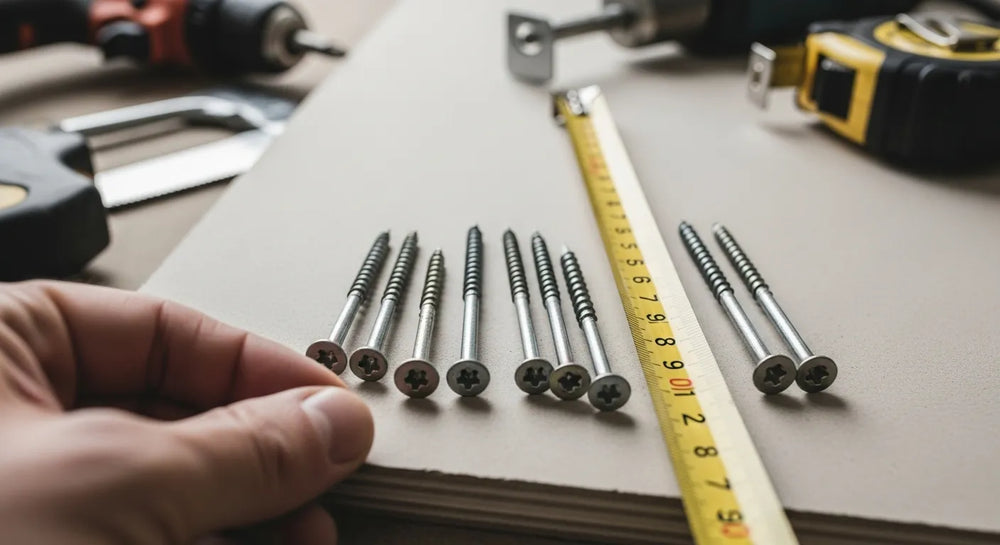
The magic lies in the specialized thread design. If you look closely at a concrete screw, you'll notice a distinct "high-low" or serrated thread pattern. This is not an arbitrary design choice; it is a finely tuned cutting and clearing system.
- The High Thread: This is the primary cutting edge. Made from case-hardened steel, it's sharp and durable enough to slice into the aggregate and cement paste of the base material as the screw is driven. It creates a clean, precise female thread within the pilot hole.
- The Low Thread: This secondary thread works in concert with the high thread to stabilize the screw during installation and, crucially, to help clear debris. As the high thread cuts, it generates fine concrete dust. The low thread helps channel this dust away from the primary engagement surfaces, reducing installation torque and preventing the screw from binding.
This self-tapping action creates a continuous, 360-degree engagement along the entire embedded length of the fastener. There are no expansion forces pushing outward on the concrete, which minimizes internal stress on the base material. This is a critical advantage, particularly when working with older concrete or near the edge of a slab.
Contrast with Traditional Anchors
To fully appreciate the concrete screw, it's helpful to compare its mechanism to older technologies:
- Wedge Anchors: These rely on a clip or sleeve at the bottom that is forced outward when a nut is tightened, wedging the anchor into the hole. This creates immense localized stress, making them unsuitable for close-to-edge applications.
- Sleeve Anchors: Similar to wedge anchors, a sleeve expands along the length of the anchor body. While the stress is distributed over a larger area, it is still an expansion-based system with the same inherent limitations.
- Adhesive Anchors: These chemical systems create an incredibly strong bond by using epoxy or other resins to secure a threaded rod. While they offer the highest load capacities, they require precise hole preparation, are sensitive to temperature, and have significant cure times, adding complexity and delay to the installation process.
The concrete screw's direct mechanical interlock offers a "best of both worlds" solution for many applications—the simplicity of a mechanical fastener without the base material stress of an expansion anchor.
The Tangible Benefits: Why Professionals Choose Concrete Screws
The engineering behind the concrete screw directly translates into practical, measurable benefits on the job site and on the balance sheet. For procurement professionals and MRO buyers looking to optimize the total cost of ownership, these advantages are compelling.
Installation Speed and Efficiency
Time is money, and nowhere is this more true than in construction and facility maintenance. The installation process for a concrete screw is a model of efficiency:
- Drill: A pilot hole is drilled to the specified diameter and depth using a carbide-tipped masonry bit.
- Clean: The hole is cleared of all dust and debris using compressed air or a brush and vacuum.
- Drive: The screw is driven directly into the hole using an impact driver or wrench.
Compare this to a typical wedge anchor, which requires drilling, cleaning, carefully tapping the anchor into place, and then tightening the nut to a specific torque value. The streamlined drill-and-drive process of a concrete screw can cut installation time by more than half, which translates directly into lower labor costs and accelerated project schedules.
Removability and Adjustability
One of the most significant advantages of concrete screws is that they are removable. This provides a level of flexibility that permanent anchors cannot match. Consider the needs of a trade show coordinator setting up temporary displays, an engineer prototyping a new equipment layout, or a maintenance team needing to service a wall-mounted panel. With concrete screws, fixtures can be installed, removed, and even repositioned with minimal damage to the base material. While reusing the same hole is not recommended for load-bearing applications, the ability to remove the fastener cleanly is a massive operational benefit.
Close-to-Edge and Close-to-Anchor Spacing
Because concrete screws cut threads rather than expanding, they impart very little stress on the surrounding concrete. This allows them to be installed much closer to the edge of a concrete slab or closer to one another without the risk of cracking or spalling the base material. For a design engineer laying out connection points, this provides far greater design freedom and can solve complex mounting challenges in tight spaces.
This reduced stress characteristic is a game-changer for retrofitting applications in older buildings or for projects with crowded anchoring patterns, preventing costly damage to existing concrete structures.
Reliable Holding Power
For the light to medium-duty applications they are designed for, concrete screws offer excellent and predictable tensile (pull-out) and shear (side-load) strength. They are an ideal solution for securing a vast range of common fixtures, including:
- Electrical conduit straps and junction boxes
- HVAC and plumbing supports
- Warehouse racking and shelving
- Wall framing and furring strips
- Signage and safety equipment
When sourced from a reputable manufacturer with clear technical data, these screws provide a secure and reliable connection that professionals can trust.
Selecting the Right Concrete Screw: A Buyer's Checklist
Not all concrete screws are created equal. Choosing the correct screw is essential for ensuring safety, performance, and longevity. This requires a careful evaluation of the application, environment, and load requirements. As a marketplace dedicated to connecting buyers with America's best manufacturers, we believe in empowering our customers with the knowledge to make informed procurement decisions. At Maden.co, our entire platform is built on the values of Industrial Excellence and Supply Chain Transparency.
Head Style: Matching the Screw to the Application
The head style determines how the screw is driven and how it sits on the surface of the fixture.
- Hex Head: The most common style, featuring a built-in washer for a large bearing surface. It is ideal for applications where high installation torque is needed and a protruding head is acceptable. For MRO buyers needing a versatile, high-strength fastener for general-purpose anchoring, a U.S.-made option like these Hex Head Concrete Screws offers the durability and ease of installation required for routine maintenance and repair tasks.
- Flat Head (Countersunk): Designed to sit flush with the surface of the material being fastened, this style provides a clean, finished appearance. It is the preferred choice for installing door frames, window assemblies, and architectural elements where aesthetics are important. A design engineer specifying fasteners for a high-end commercial interior would select a product like these 1/4" x 2-3/4" Flat Head Concrete Screws to achieve a secure mounting without a visually intrusive fastener head.
Material and Coating: Fighting Corrosion and Environmental Factors
The operational environment is a primary driver of fastener selection. A screw used in a dry, climate-controlled office will have very different material requirements from one used in a coastal chemical processing plant.
- Standard Blue Coating: Most standard concrete screws feature a proprietary blue coating that provides a baseline level of corrosion resistance. This is sufficient for most dry, interior applications.
- Ceramic Coatings: For superior performance in damp, humid, or exterior environments, ceramic-coated screws are the answer. Coatings like Ruspert provide multiple layers of protection, including metallic zinc and a non-organic ceramic topcoat, offering thousands of hours of salt spray resistance. For a facility manager tasked with mounting equipment in a food processing wash-down area, a fastener like this Steel Blue Ruspert Ceramic Coating Flat Phillips® Drive Concrete Screw is a critical specification. Sourcing such a specialized, high-performance component through a transparent supply chain ensures you receive exactly what you ordered, with the material certifications to back it up.
- Stainless Steel: For the most extreme environments—marine applications, chemical exposure, or wastewater treatment facilities—stainless steel (typically Types 304 or 316) offers the ultimate in corrosion resistance.
Diameter and Length: Engineering the Right Fit
Sizing a concrete screw is a straightforward process but requires attention to detail.
-
Diameter: The diameter of the screw (commonly 3/16", 1/4", 3/8", and larger) is directly related to its load-carrying capacity. A larger diameter provides greater shear and tensile strength. Always consult the manufacturer's technical data sheets for specific load ratings.
-
Length: To determine the correct length, you need two pieces of information: the thickness of the material you are fastening and the required minimum embedment depth into the base material. The formula is simple:
- Fixture Thickness + Minimum Embedment Depth = Required Screw Length
Always choose a screw that meets or exceeds this calculated length to ensure proper engagement and holding power.
Sourcing with Confidence: The U.S. Manufacturing Advantage
In today's global supply chains, the risk of receiving counterfeit or substandard fasteners is real. An improperly heat-treated screw can snap during installation, and a poorly applied coating can lead to premature failure from corrosion. These failures can result in costly rework, equipment damage, or even safety incidents.
This is why we founded Maden.co. Our mission is to democratize access to American manufacturing, making it simple for industrial buyers to connect with a network of over 800+ verified U.S. manufacturers. We are proving that American-made components are as accessible and convenient as any global alternative. When you source through our platform, you gain confidence from a transparent supply chain. You know where your parts are coming from and that they meet the stringent quality standards that define American industrial excellence. You can learn more about our commitment and our mission to champion American manufacturing here.
Limitations and Proper Installation: Where Concrete Screws Fall Short
To use any tool effectively, one must understand not only its strengths but also its limitations. An authoritative approach requires transparency about where a product is not the right fit.
Not for Heavy-Duty Structural Loads
While excellent for light and medium-duty tasks, standard concrete screws are not a substitute for heavy-duty anchoring systems required for critical structural connections. Applications like securing heavy industrial machinery, structural steel columns, or life-safety systems typically require engineered solutions like large-diameter adhesive anchors or cast-in-place anchor bolts.
Base Material Condition is Key
The performance of a concrete screw is entirely dependent on the quality of the base material. They work best in solid, dense concrete with a compressive strength of at least 2,000 psi. They are not recommended for use in lightweight, "green" (uncured), or low-quality concrete, or in brittle materials like slate or old brick, which may crack or provide insufficient holding power.
The Critical Role of the Pilot Hole
More installation failures are caused by improper pilot hole preparation than by any other factor. The integrity of the entire connection depends on these three steps:
- Use the Correct Bit: Always use a hammer drill and a carbide-tipped masonry bit that meets ANSI standards. Using a standard drill or a worn-out bit will result in an undersized or out-of-round hole.
- Drill to the Correct Diameter and Depth: This is non-negotiable. The screw manufacturer will specify the exact bit diameter required. A hole that is too large will result in no thread engagement; a hole that is too small will cause the screw to bind or snap. The hole must also be drilled deeper than the screw's intended embedment to provide a space for any remaining dust to settle.
- Clean the Hole Thoroughly: This is the most commonly skipped step and the most critical. After drilling, the hole must be cleaned of all dust and debris using a wire brush, compressed air, or a vacuum. Any dust left in the hole will be compacted by the screw, preventing the threads from fully engaging with the concrete and drastically reducing pull-out strength.
Streamlining Procurement: Beyond the Part Number
For the modern procurement manager, the job is about more than just finding the lowest price on a part. It's about managing risk, ensuring compliance, and reducing the "procurement friction" that slows down operations. The hidden costs of sourcing—time spent vetting suppliers, managing dozens of purchase orders, tracking shipments, and dealing with quality issues—can quickly eclipse any per-unit savings.
This is the challenge Maden.co was built to solve. We provide a single, streamlined platform where you can access over 2.5 million U.S.-made products from a vetted network of American manufacturers. This digital innovation empowers our customers to consolidate their sourcing, reduce administrative overhead, and build a more resilient and transparent supply chain.
Consider an MRO manager for a national logistics company. They are responsible for outfitting new distribution centers and maintaining existing ones. This involves purchasing thousands of fasteners for shelving, conveyor systems, and safety barriers. Instead of managing relationships and purchase orders with countless regional suppliers, they can use our platform to source everything from a single point of contact, ensuring consistent quality and simplified logistics across all their sites. If they have specific sourcing questions or need help finding a hard-to-source component, our team is ready to help.
Furthermore, we understand that large-scale projects and bulk purchases can impact cash flow. That's why we offer a strategic tool to help businesses manage their capital effectively. For that MRO manager placing a significant order for a new facility, the ability to manage that expenditure is key. You can apply for Instant Financing at checkout to streamline your capital-intensive projects, allowing you to acquire the materials you need now without disrupting your operational budget.
Conclusion
So, are concrete screws any good? The answer is an emphatic yes. When specified for the correct light to medium-duty applications, sourced from a quality manufacturer, and installed with precision, they are a superior fastening solution. They offer an unparalleled combination of installation speed, versatility, and reliable holding power that can significantly reduce labor costs and accelerate project timelines.
By understanding their mechanics, head styles, coatings, and critical installation requirements, you can leverage them to their full potential. The key is to move beyond a commodity mindset and view fasteners as the engineered components they are. Partnering with a platform that values American Manufacturing Pride and Industrial Excellence ensures that you are not just buying a screw; you are investing in a reliable, transparent, and resilient supply chain.
Stop wasting time searching for reliable fasteners and dealing with supply chain uncertainty. Explore our extensive catalog of U.S.-made concrete screws and millions of other industrial components today. Empower your next project with the quality of American manufacturing, and streamline your budget by applying for Instant Financing directly at checkout.
For American manufacturers who share our commitment to quality and innovation, America's manufacturing revival is here. Register as a vendor and join us in building a stronger domestic supply chain.
Frequently Asked Questions
1. Can I reuse concrete screws? Generally, it is not recommended to reuse concrete screws in structural or load-bearing applications. The process of installing and removing the screw can damage the cutting threads and can also compromise the integrity of the threads formed in the base material, leading to a significant reduction in holding power. For temporary, non-critical applications, they may be reused with caution, but for any application involving safety or load, a new screw should always be used.
2. What is the most common mistake when installing concrete screws? The most common and critical mistake is improper preparation of the pilot hole. This includes two primary errors: using the wrong diameter drill bit and, most frequently, failing to adequately clean the dust and debris from the hole before driving the screw. Dust left in the hole prevents the screw's threads from fully engaging with the concrete, which can reduce the fastener's load capacity by over 50%.
3. How do I know what size concrete screw to use? The appropriate size (diameter and length) depends entirely on your specific application. You must consider the weight of the object being fastened (load requirement), the thickness of that object (fixture thickness), and the quality of the base material. Always refer to the technical data sheet provided by the manufacturer for the specific screw you are using. This document will provide detailed load charts and specify the required minimum embedment depth needed to achieve those load ratings.
4. Are concrete screws waterproof? The screw itself is not waterproof, but its resistance to moisture and corrosion is determined by its material and coating. A standard blue-coated screw is suitable for dry, interior conditions only. For applications exposed to moisture, high humidity, or outdoor weather, you must choose a screw with a high-performance coating, such as a multi-layer ceramic finish like Ruspert, or a screw made from stainless steel for maximum protection against rust and corrosion.


