
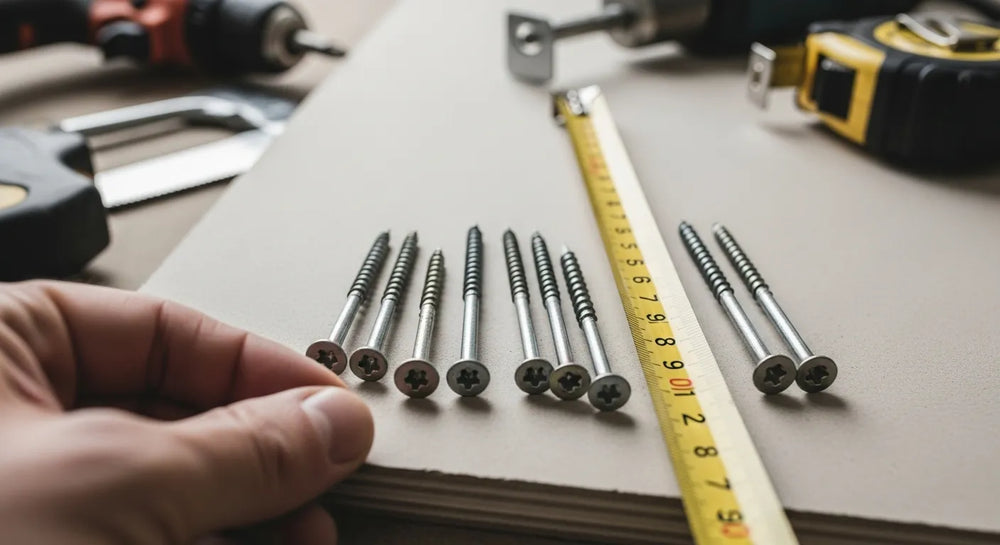
Can Concrete Screws Be Used in Brick? An Expert Analysis
Table of Contents
- Introduction
- Understanding the Mechanics: How Concrete Screws Create a Secure Hold
- The Critical Differences: Brick vs. Concrete for Fastening
- Not All Bricks Are Created Equal: A Buyer's Guide
- Selecting the Right Concrete Screw for Your Brick Application
- The Art of Installation: A Step-by-Step Protocol for Brick
- Avoiding Common Pitfalls: Why Fasteners Fail in Brick
- The Procurement Manager’s Advantage: Building Resilient Supply Chains
- Managing Capital for Large-Scale Projects
- Conclusion
- Frequently Asked Questions (FAQ)
Introduction
Imagine a critical facility upgrade project grinding to a halt. The installation of new conduit, safety railings, or heavy-duty shelving is behind schedule, all because a seemingly simple component—the fastener—is failing. Pull-out tests are not meeting spec, bricks are cracking, and the project manager is facing costly delays and rework. This scenario is all too common when assumptions are made about fastening into masonry. The question, "Will concrete screws work in brick?" seems straightforward, but a simple yes or no answer fails to capture the engineering, material science, and procedural nuance required for a secure and lasting installation.
This article will provide a definitive, in-depth answer for procurement managers, design engineers, and MRO buyers who rely on facts, not guesswork. We will move beyond the surface-level discussion to explore the fundamental mechanics of how these fasteners work, the critical differences between brick and concrete as base materials, and how to select the precise screw for your application. We will detail a rigorous installation protocol designed to maximize holding power and minimize failure, a protocol that begins with sourcing from a reliable domestic supply chain.
Our thesis is clear: While concrete screws can be an exceptionally effective and efficient solution for fastening into brick, their success is not automatic. It is contingent upon a deep understanding of the brick's characteristics, a methodical approach to screw selection, and an unwavering adherence to a precise installation process. For American businesses, achieving this level of industrial excellence starts with a transparent and robust procurement strategy, which is the core mission of our B2B marketplace at Maden.co.
Understanding the Mechanics: How Concrete Screws Create a Secure Hold
Before we can confidently apply concrete screws to brick, we must first understand the principle that gives them their remarkable holding power in concrete. Unlike expansion anchors that rely on outward force or epoxy anchors that use chemical adhesion, a concrete screw functions through a process of mechanical interlock.
When installed correctly, the screw's specialized, hardened threads tap into the base material, cutting their own mating threads directly into the walls of a pre-drilled pilot hole. This creates a tight, vibration-resistant connection without inducing the high expansion stresses that can crack or weaken the surrounding masonry—a particularly important feature when working with more brittle materials like brick.
Key to this function is the screw's thread design, which often features a "hi-lo" or alternating thread pattern.
- The High Thread: This is sharp and hardened to cut into the masonry material effectively.
- The Low Thread: This provides a gap for the displaced material (dust and debris) to collect, preventing the screw from binding during installation and maximizing the engagement of the high thread.
This elegant design means the screw's entire performance relies on its ability to create a perfect, interlocking connection with the base material. The integrity, strength, and consistency of that base material are, therefore, paramount to the fastener's success. This is the central reason why the transition from using these screws in concrete to using them in brick requires careful consideration.
The Critical Differences: Brick vs. Concrete for Fastening
While often grouped under the general term "masonry," brick and concrete present vastly different challenges as substrates for mechanical fasteners. A procurement manager specifying fasteners for a new build with poured concrete walls versus a retrofitting project in a century-old brick building must account for these fundamental distinctions.
Composition and Density
Concrete is an engineered composite material, typically consisting of cement, water, and aggregates like sand and gravel. When cured, it forms a dense, relatively non-porous, and homogenous mass. Brick, on the other hand, is made from fired clay or shale. Its composition can vary significantly, and it is inherently more porous. This porosity means there is less solid material for the screw's threads to engage, which can directly impact its ultimate pull-out strength.
Compressive Strength
Poured concrete used in commercial construction typically has a specified compressive strength, often ranging from 3,000 to 5,000 psi or higher. This provides a consistent and predictable base for fastener performance. Brick is far more variable. The compressive strength of an individual brick can range from as low as 1,500 psi for some common types to over 10,000 psi for engineering bricks. This variability makes it impossible to apply a one-size-fits-all approach to fastening.
Brittleness and Spalling
Spalling occurs when a material chips, fragments, or breaks away from the main body. Due to its fired-clay composition, brick is generally more brittle than concrete and more susceptible to spalling, especially near edges or under stress. An incorrectly installed or over-torqued concrete screw can easily crack a brick, completely compromising the connection and the structural integrity of the surrounding area.
Consistency and Mortar Joints
A poured concrete wall is a monolithic structure. A brick wall is a system of individual units held together by mortar. These mortar joints are a significant point of weakness. Fastening directly into a mortar joint is never recommended, as mortar has very low compressive and tensile strength and will not provide a secure hold. The installer must always target the body of the brick, which adds a layer of complexity not present with concrete.
Key Takeaway: The variability, porosity, and brittleness of brick demand a more meticulous approach to fastener selection and installation than is required for standard concrete. Assuming the same performance and procedures will lead to failure.
Not All Bricks Are Created Equal: A Buyer's Guide
To effectively specify a concrete screw for a brick application, you must first identify the type of brick you are working with. The performance of the fastener is directly tied to the quality and form of the substrate.
Solid Bricks
These are the ideal candidates for concrete screws. Solid clay or shale bricks offer a consistent, dense material for the screw's threads to tap into, providing the highest potential holding power. Most older, historic buildings were constructed with solid bricks.
Hollow or Cored Bricks
Modern construction often utilizes hollow or cored bricks to reduce weight, improve insulation, and lower material costs. These present a significant challenge. If a screw's embedment depth is not carefully calculated, its threads may end up in a void, providing zero holding power. For these applications, selecting a screw with sufficient length to pass through the void and anchor securely into the far wall of the brick is absolutely critical.
Soft vs. Hard Bricks
The firing process determines a brick's hardness. Older, handmade, or "salmon" bricks are often much softer and more porous. They offer lower holding values and are more prone to crumbling. Modern, machine-made bricks are fired at higher temperatures, resulting in a harder, denser product (often called "hard-fired" or "engineering" brick) that provides a much better substrate for fastening. A simple test is to try and scratch the surface with a nail; a soft brick will mark easily.
Understanding these distinctions is foundational. At Maden.co, we believe in empowering our customers with the knowledge to make informed procurement decisions. This principle of Customer Empowerment is woven into our mission to not only provide parts but to provide solutions. You can learn more about our mission to champion American manufacturing here.
Selecting the Right Concrete Screw for Your Brick Application
Once you have assessed the brick, the next step is to choose the correct fastener. This involves analyzing the material, head style, and dimensions of the screw to match the specific demands of the application and environment. Sourcing high-quality, American-made fasteners ensures that the product you receive meets its stated specifications—a cornerstone of supply chain transparency.
Material and Coating for Durability
The vast majority of concrete screws are made from case-hardened carbon steel, providing the necessary strength to tap into masonry. However, the real differentiator for longevity, especially in damp or corrosive environments, is the coating. A standard zinc plating might be sufficient for dry, indoor applications. But for exterior installations, high-humidity areas, or exposure to chemicals, a more robust coating is non-negotiable.
For example, an MRO manager at a food processing plant needs to mount stainless steel panels in a washdown area with a brick wall. The constant exposure to moisture and cleaning agents would quickly degrade a standard fastener. For this scenario, a product like the Steel Blue Ruspert Ceramic Coating Flat Phillips® Drive Concrete Screw is an ideal choice. Its multi-layer ceramic coating provides superior corrosion resistance, far exceeding that of simple zinc plating and ensuring the long-term integrity of the installation.
Head Style: Matching the Fastener to the Fixture
The head style should be chosen based on the object being fastened and the desired finish.
-
Hex Head: This is the workhorse for most MRO and construction applications. The external hex head allows for high installation torque using a standard socket wrench or nut driver, making it perfect for securing heavy items like machinery brackets, support beams, or industrial shelving. The U.S.-made Hex Head Concrete Screws 3/16 x 1-3/4 are an excellent example of a robust, reliable fastener designed for high-load applications where ease of installation and strength are top priorities.
-
Flat Head (Countersunk): When a flush, clean finish is required, a flat head screw is the only choice. The head is designed to sit level with or slightly below the surface of the fixture. This is essential for installing items like door frames, window casings, signage, and decorative elements where a protruding head would be unacceptable or unsafe. For these applications, a product like the 1/4 x 2-3/4 Flat Head Concrete Screws ensures a secure hold with a professional, finished appearance.
Diameter and Length: The Keys to Holding Power
The final, and perhaps most critical, selection criteria are the screw's dimensions.
-
Diameter: As a general rule, a larger diameter screw provides greater shear and tensile strength. A 1/4" screw will have significantly more holding power than a 3/16" screw. The choice should be based on the weight of the object being fastened and the engineering specifications of the project.
-
Length: The screw's length must be sufficient to pass through the fixture being mounted and achieve the required minimum embedment into the brick. For solid brick, a minimum embedment of 1" is common, with 1-1/2" or more providing substantially better holding power.
Embedment Calculation: (Thickness of Fixture) + (Minimum Embedment Depth) = Required Screw Length
For hollow brick, you must ensure the screw is long enough to embed fully into the solid portions of the brick, potentially spanning an internal void. Always err on the side of deeper embedment when the brick's quality is uncertain.
The Art of Installation: A Step-by-Step Protocol for Brick
A premium, American-made screw can still fail if installed improperly. The following protocol, when followed precisely, will maximize the fastener's performance in brick and minimize the risk of substrate failure.
Step 1: Choose the Right Drill Bit and Drill Use a high-quality, ANSI-compliant carbide-tipped drill bit designed for masonry. The bit diameter must match the manufacturer's specification for the screw you are using precisely. For hard brick, a rotary hammer drill set to "hammer" mode is most effective for creating the pilot hole.
Step 2: Drill the Pilot Hole to the Correct Depth The hole must be drilled at least 1/2" deeper than the intended screw embedment. This extra space provides a reservoir for any dust or debris that isn't fully cleaned out, preventing the screw from bottoming out before it is fully tightened. Use a depth stop on your drill or wrap a piece of tape around the bit to ensure consistency.
Step 3: Clean the Hole Thoroughly This is the most frequently overlooked step and a primary cause of fastener failure. Debris left in the hole will interfere with the screw's ability to cut threads, dramatically reducing its pull-out value. Clean the hole by alternating between blowing it out with compressed air (wear safety glasses) and scrubbing it with a narrow wire brush. Repeat this cycle at least twice until no more dust emerges.
Step 4: Drive the Screw Correctly Set your drill to the "rotary only" setting (never hammer mode for installation). Using a standard drill or a low-torque impact driver, drive the screw steadily into the hole. Do not over-speed. You should feel the threads engage and cut into the brick. Stop as soon as the head of the fastener is seated snugly against the fixture. Do not over-tighten. Over-torquing is the leading cause of stripped threads within the brick or cracking the brick itself.
Avoiding Common Pitfalls: Why Fasteners Fail in Brick
Understanding potential failure modes is key to prevention. Here are the most common mistakes MRO teams and installers make:
- Incorrect Pilot Hole Diameter: A hole that is too large will provide no thread engagement. A hole that is too small will cause the screw to bind, potentially snapping it or cracking the brick from excessive stress. There is no room for error here.
- Over-Tightening: The torque required to seat a concrete screw in brick is significantly less than in concrete. The installer must develop a feel for when the screw is tight and resist the urge to give it an extra turn.
- Using a Low-Quality Screw: In our digitally connected world, sourcing the cheapest fastener from an anonymous online seller is a risky proposition. Inconsistent heat treatment, poorly formed threads, and inferior steel can all lead to catastrophic failure. This is why our model at Maden.co is built on Industrial Excellence and Supply Chain Transparency. We connect you directly with over 800 verified U.S. manufacturers, ensuring you receive a product that meets rigorous quality standards.
- Improper Spacing: Fasteners should be installed with sufficient distance from the edge of a brick (typically at least 10 fastener diameters) and from each other to avoid concentrating stress and causing the brick to fail.
The Procurement Manager’s Advantage: Building Resilient Supply Chains
Let's move from the job site to the procurement office. A facility manager is tasked with a plant-wide safety upgrade requiring 10,000 specific hex-head fasteners for mounting machine guards to brick walls. Their primary supplier quotes a 12-week lead time due to overseas shipping delays. This is not just an inconvenience; it's a direct threat to project timelines, budgets, and operational safety.
This is where the power of a dedicated B2B marketplace for domestic manufacturing becomes a strategic asset. By leveraging our platform, that manager can instantly access millions of products from a network of American suppliers. This is the essence of Digital Innovation driving the manufacturing revival. They can find the exact part, verify its specifications, compare options from multiple U.S. factories, and secure their order in minutes, not months. This drastically reduces procurement friction, improves the Total Cost of Ownership (TCO) by eliminating costly delays, and directly supports the U.S. industrial base. This is our vision in action: proving that American-made components are as accessible and convenient as any global alternative. We believe America's manufacturing revival is here, and it's being built one secure supply chain at a time.
If you are a U.S. manufacturer producing high-quality industrial components, you are a vital part of this revival. We invite you to join our network and connect with thousands of industrial buyers. Register as a vendor and help us democratize access to American manufacturing.
Managing Capital for Large-Scale Projects
We understand that industrial procurement often involves significant capital outlay. A large-scale retrofitting project could require tens of thousands of dollars in fasteners and components alone. To support the operational agility of our customers, we offer a strategic financial tool directly within our platform. When sourcing materials for your next project, you can apply for Instant Financing at checkout to streamline your capital-intensive projects. This allows you to secure all necessary components at once, manage cash flow effectively, and keep your projects on track without impacting your operating budget.
If you have specific sourcing needs or questions about large-volume orders, our team of experts is ready to assist. We are committed to being a partner in your success. Please Contact Us to discuss your requirements.
Conclusion
So, will concrete screws work in brick? The definitive answer is a confident yes, but with critical qualifications. Success is not found in the screw alone, but in the synergy of a well-chosen, high-quality product and a precise, knowledgeable installation process. It requires respecting the inherent variability of brick and abandoning the one-size-fits-all mentality that works for concrete.
The key takeaways are clear:
- Assess Your Substrate: Identify the type and condition of the brick before you begin.
- Select the Right Fastener: Match the screw's material, coating, head style, and dimensions to the specific application.
- Follow a Rigorous Installation Protocol: Use the correct bit, drill to the proper depth, clean the hole meticulously, and drive the screw with control.
For American businesses, the foundation of any successful project—from a simple repair to a full-scale industrial build-out—is a reliable supply chain. By choosing to source verified, U.S.-made fasteners from Maden.co, you are not just buying a part; you are investing in quality, transparency, and the resilience of our domestic industrial base. Explore our catalog today to find the components you need, and leverage our Instant Financing option at checkout to empower your next project.
Frequently Asked Questions (FAQ)
Q1: What size pilot hole do I need for a concrete screw in brick? The pilot hole diameter is absolutely critical and must match the manufacturer's specifications for the specific screw you are using. This information is typically printed on the product packaging or available on the technical data sheet. As a general rule, the ANSI-standard bit required will be slightly smaller than the stated diameter of the screw to allow the threads to engage the material properly.
Q2: Can I reuse a concrete screw in brick? No, a concrete screw should never be reused in any masonry application. During the initial installation, the hardened threads cut a unique, precise mating thread into the brick. Removing and re-inserting the screw, even in the same hole, will damage these delicate threads and severely compromise the fastener's holding power, leading to a high risk of failure.
Q3: Should I use a hammer drill or a regular drill for brick? For drilling the initial pilot hole into hard brick, a rotary hammer drill set to "hammer and rotation" mode is the most efficient tool. However, for the actual installation of the screw, you must switch to a standard rotary drill or an impact driver on a low-torque setting. Using the hammer function while driving the screw will destroy the threads being formed in the brick and will result in a failed connection.
Q4: How do I know if the brick is solid or hollow without drilling? While not foolproof, you can get a clue by tapping the surface of the brick with a hammer or the handle of a screwdriver. A solid brick will produce a dull, high-pitched "thud," while a hollow brick will often create a more resonant, hollow sound. The only certain method, however, is to drill a small test hole. As you drill, you will feel a significant and sudden drop in resistance if the bit passes through the face of the brick into a void.


