
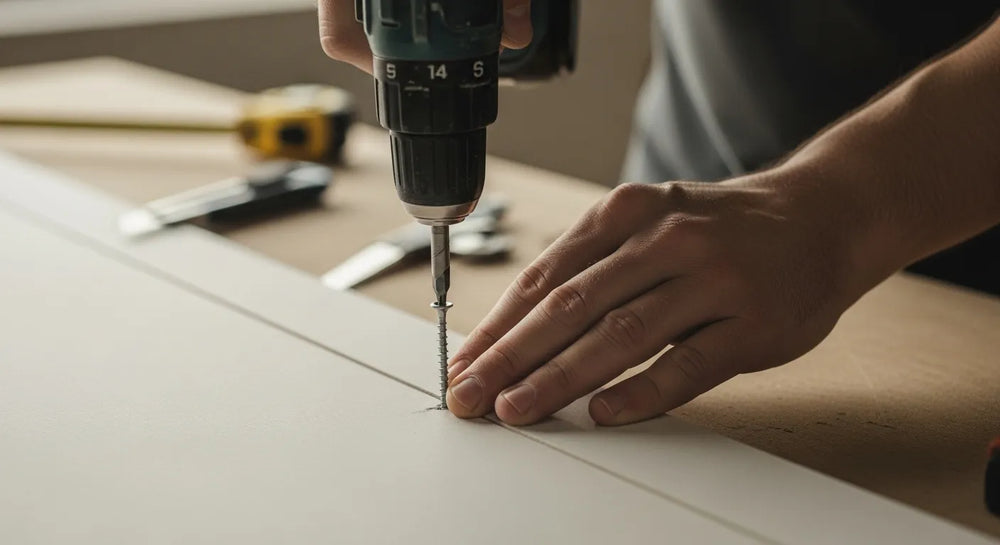
Can You Screw Into Drywall Without a Stud? Practical Solutions for Industrial Buyers
Table of Contents
- Introduction
- The Drywall Dilemma: Understanding the Challenge
- Strategic Solutions for Drywall Fastening Without a Stud
- Selecting the Right Fastener for the Job: A Procurement Perspective
- The Maden.co Advantage: Sourcing American-Made Fasteners
- Best Practices for Drywall Installation and Fastening
- Beyond Fasteners: The Broader Impact on Project Success
- Conclusion
- FAQ
In the realm of industrial maintenance and facility management, a seemingly simple task like hanging a heavy piece of equipment or securely mounting a critical component can quickly turn into a complex challenge. Imagine an MRO buyer needing to install a new control panel in a facility, or a procurement manager overseeing the setup of a temporary workspace. Encountering a wall where studs are elusive, the immediate question arises: can you screw into drywall without a stud? The answer, while nuanced, is crucial for ensuring safety, structural integrity, and project longevity. This post aims to demystify the science behind drywall's limitations and provide a comprehensive guide to reliable, U.S.-made fastening solutions, enabling industrial professionals to make informed decisions that enhance operational efficiency and maintain the highest standards of safety and compliance. We’ll explore various anchoring methods, delve into their applications and limitations, and highlight how sourcing through Maden.co offers a strategic advantage in securing the right American-made fasteners for any challenge.
Introduction
The pervasive nature of drywall in modern commercial and industrial buildings often presents a fundamental dilemma for procurement managers, MRO buyers, and design engineers: how to securely fasten objects when a structural stud isn't conveniently located. The common perception is that drywall, a relatively soft and brittle material, offers minimal load-bearing capacity on its own. Attempting to drive a standard screw directly into drywall without reinforcement can lead to immediate failure, crumbled plaster, and potential damage to valuable equipment or property. This isn't just an aesthetic concern; in industrial environments, a failed fastening can lead to production downtime, safety hazards, or non-compliance with critical standards.
This blog post is designed to equip you with the knowledge and practical solutions needed to overcome this common hurdle. We will dissect the structural properties of drywall, explain why direct screwing is ill-advised, and then meticulously detail the various types of drywall anchors and fastening systems specifically engineered to provide secure attachment points in the absence of a stud. Furthermore, we will explore the critical considerations for selecting the appropriate fastener, from load capacity to material compatibility, ensuring that your procurement decisions are robust and informed. Our goal is to empower you to confidently source and deploy the correct U.S.-made solutions, upholding the highest standards of industrial excellence and contributing to the resilience of your operations. You can learn more about our commitment to these values and our mission to champion American manufacturing here: About Us.
The Drywall Dilemma: Understanding the Challenge
Drywall, also known as plasterboard or gypsum board, is a construction material made of gypsum plaster pressed between two thick sheets of paper. While it forms the vast majority of interior walls and ceilings in modern construction due to its ease of installation, fire resistance, and relatively low cost, its inherent structural weakness is a significant consideration when attaching objects. Unlike wood or metal studs, which are designed to bear structural loads, drywall itself is not engineered for direct load bearing.
Why You Can't Just Screw Into Bare Drywall
Attempting to drive a standard screw directly into drywall without a stud is akin to trying to anchor a heavy shelf into a sponge. The gypsum core is soft and crumbly, offering very little resistance to pull-out forces. The screw threads have nothing substantial to grip onto, and any weight or tension applied will quickly cause the screw to strip out, leaving a damaged hole and an unsecured object. This failure is not just an inconvenience; in an industrial setting, it can lead to dropped tools, fallen safety equipment, or even catastrophic failure of machinery that relies on secure wall mounting.
For a procurement manager under pressure to source a specific component for a critical installation, understanding this fundamental limitation is paramount. The immediate cost savings of using a standard screw over a specialized anchor are quickly eclipsed by the potential costs of rework, material damage, or, worse, safety incidents. This highlights the importance of strategic sourcing and selecting fit-for-purpose components, a core tenet of industrial excellence.
The Science Behind Drywall's Limitations
At a microscopic level, gypsum is a crystalline material that, when compressed into a board, forms a relatively brittle matrix. The paper facing provides some surface integrity but does not significantly contribute to its shear or tensile strength. When a screw is inserted, it displaces and crushes this gypsum core rather than creating a strong, interlocking thread. The moment a load is applied, the localized pressure around the screw head exceeds the material's compressive strength, leading to the gypsum breaking apart. This creates an enlarged, irregular hole that cannot effectively hold the screw.
Factors such as humidity and age can further degrade drywall's already limited strength. In environments with fluctuating moisture levels, drywall can soften, making it even more susceptible to fastener pull-out. This scientific understanding underscores why relying on the drywall itself for secure fastening is a gamble that no professional industrial operation should take. Instead, specialized solutions are required to distribute the load and create a robust anchor point within or behind the drywall.
Strategic Solutions for Drywall Fastening Without a Stud
When a stud is out of reach, a variety of engineered solutions come into play, each designed to create a secure attachment point by expanding, gripping, or bridging the gap behind the drywall. Choosing the right anchor depends on the weight of the object, the thickness of the drywall, and the nature of the forces it will encounter.
Drywall Anchors: A Comprehensive Overview
Drywall anchors are specifically designed to distribute the load across a larger surface area of the drywall or to create a robust connection behind it. They are indispensable tools in any MRO toolkit or procurement catalog.
Plastic Expansion Anchors
These are perhaps the most common and versatile type of drywall anchor, suitable for light to medium-duty applications. They typically consist of a plastic sleeve that expands when a screw is driven into it.
- How they work: A pilot hole is drilled, the plastic anchor is inserted flush with the wall surface, and then a screw is driven into the anchor. As the screw advances, it forces the anchor to expand, pressing against the inside of the drywall hole and creating friction and a secure grip.
- Applications: Ideal for hanging small pictures, lightweight shelving, curtain rods, and small electrical fixtures.
- Limitations: Load capacity is limited, generally unsuitable for heavy items or objects subject to significant dynamic loads. Over-tightening can strip the anchor or damage the drywall.
- Key Considerations: Match anchor size to screw size and object weight. Ensure the pilot hole is correctly sized for the anchor.
Self-Drilling/Threaded Anchors
These innovative anchors simplify installation by eliminating the need for a separate pilot hole in many cases. They are often made of plastic or metal and feature a sharp, auger-like tip that allows them to be screwed directly into the drywall.
- How they work: The anchor is placed on the wall, and using a screwdriver (or sometimes a drill with a low-speed setting), it is rotated and threaded directly into the drywall until it sits flush. A screw is then driven into the center of the anchor. The external threads of the anchor provide a strong grip within the gypsum, distributing the load.
- Applications: Medium-duty tasks such as mounting wall sconces, small mirrors, or light-duty shelving. For applications requiring a robust, reliable hold for items like medium-weight shelving units or large fixtures, an MRO buyer might consider an 8 x 4 Drywall Screw, which offers enhanced load-bearing capabilities when paired with a suitable anchor. This demonstrates our commitment to providing a diverse range of American-made components suitable for varied industrial applications.
- Limitations: While convenient, their holding power can still be less than toggle bolts for very heavy items. They are also prone to stripping if over-tightened during installation.
- Key Considerations: Verify the anchor's material (plastic for lighter loads, metal for heavier) and ensure the screw provided or chosen is compatible. For projects where precision and robust fastening are paramount, particularly for items that demand fine-thread engagement, the U.S.-made 6 x 1 Fine Thread Drywall Screw can be an excellent choice, ensuring a secure and lasting installation.
Toggle Bolts and Molly Bolts (Heavy Duty)
For heavy-duty applications where maximum holding power is required without hitting a stud, toggle bolts and molly bolts are the go-to solutions.
-
Toggle Bolts:
- How they work: A large hole is drilled, and a bolt with spring-loaded wings (a toggle) is pushed through. Once past the drywall, the wings spring open behind the wall. As the bolt is tightened, the wings pull against the inside surface of the drywall, clamping it securely.
- Applications: Mounting televisions, large shelves, heavy cabinets, and grab bars. They are designed for significant loads.
- Limitations: Require a larger hole in the drywall, and the toggle can be tricky to retrieve if it falls into the wall cavity. Once installed, if the bolt is removed, the toggle often falls into the wall and cannot be reused.
-
Molly Bolts (Expansion Anchors):
- How they work: A pilot hole is drilled, and the molly bolt (a metal sleeve with a pointed end) is inserted. A screw is then driven into the molly, causing the sleeve to collapse and expand behind the drywall, creating a strong, mushroom-shaped grip. Some molly bolts have pointed ends for self-drilling, while others require a pre-drilled hole.
- Applications: Medium to heavy loads, similar to toggle bolts but often easier to install. Ideal for items that may need to be removed and reattached, as the sleeve remains in the wall.
- Limitations: Still requires a larger hole than plastic anchors. Can be susceptible to over-tightening.
- Key Considerations for both: Always check the manufacturer's specified load capacity. For heavy-duty applications where secure fastening is critical, an MRO buyer seeking reliable, American-made components might turn to our selection, including robust options like the 6 x 1-1/4 Coarse Thread Drywall Screws which, when used with appropriate anchors, provide exceptional holding power.
Winged Plastic Anchors
These anchors are a variation of the plastic expansion anchor, designed with larger wings that provide a broader contact surface behind the drywall for enhanced holding power.
- How they work: A pilot hole is drilled, the anchor is inserted, and a screw is driven in. As the screw enters, it forces the anchor to expand, and the wings flare out behind the drywall, distributing the load over a wider area.
- Applications: Medium-duty items such as mirrors, small shelving units, and picture frames that are slightly heavier than those suited for basic plastic anchors.
- Limitations: Still not for extremely heavy items, and susceptible to over-tightening.
- Key Considerations: Ensure the wings fully deploy behind the drywall for maximum effectiveness.
Adhesive Solutions (Brief Mention)
While not a direct screw-in solution, construction adhesives can be used in conjunction with mechanical fasteners or for very light, non-critical items. For example, some molding or trim might be primarily held by adhesive with a few brad nails. However, for anything bearing significant weight or subject to industrial conditions, mechanical anchors are always superior and necessary for safety and reliability. They do not offer the same structural integrity as a well-chosen American-made fastener and anchor system.
Selecting the Right Fastener for the Job: A Procurement Perspective
For procurement managers and MRO buyers, selecting the correct fastening solution goes beyond simply choosing an anchor. It involves a strategic assessment of several factors to ensure optimal performance, safety, and compliance. Our mission at Maden.co is to democratize access to American manufacturing, providing a transparent marketplace where these critical choices can be made with confidence. We offer over 2.5 million American-made products from our network of 800+ verified U.S. manufacturers, ensuring you have access to the exact components you need for industrial excellence.
Understanding Load-Bearing Capacity
This is the most critical factor. Every anchor type has a specified maximum weight it can safely hold. This capacity is usually given in terms of shear strength (resistance to forces parallel to the wall) and pull-out strength (resistance to forces perpendicular to the wall).
- Static vs. Dynamic Loads: Consider whether the object will bear a constant, static load (e.g., a fixed shelf) or a dynamic load (e.g., a swinging door, a frequently accessed cabinet). Dynamic loads require significantly higher safety factors.
- Weight Distribution: A single anchor's capacity might be less than two anchors used in conjunction, as the load is distributed. Always factor in the total weight of the item plus any contents it will hold.
Material Compatibility
While primarily dealing with drywall, consider the material of the object being mounted. Certain fasteners are better suited for wood, metal, or plastic components. For example, a heavy metal bracket might require a metal-bodied molly bolt for maximum rigidity, while a plastic enclosure might be fine with a high-quality plastic expansion anchor.
Installation Considerations
- Drywall Thickness: Standard drywall is typically 1/2 inch or 5/8 inch thick. Most anchors are designed for these common thicknesses, but always verify compatibility. Using an anchor too long for thin drywall, or too short for thick drywall, can compromise its effectiveness.
- Wall Cavity Obstructions: Before drilling, especially for toggle bolts that require space behind the wall, use a stud finder or probe to check for electrical wires, plumbing, or insulation that could interfere with installation or pose a hazard.
- Tools Required: Ensure your team has the appropriate tools for installation, whether it's a standard screwdriver, a drill, or a specialized setting tool for some anchor types.
When to Opt for a Stud
Despite the effectiveness of drywall anchors, the most secure method of attaching anything to a wall remains fastening it directly into a structural stud. For extremely heavy objects, critical safety equipment, or items that will experience significant vibrations or impacts, finding and utilizing a stud is always the preferred, safest, and most robust solution. This reinforces the core principle of industrial excellence: always prioritize safety and long-term reliability.
The Maden.co Advantage: Sourcing American-Made Fasteners
At Maden.co, we understand that successful procurement in industrial and MRO settings hinges on reliability, quality, and efficiency. Our platform is specifically designed to address these needs by democratizing access to American manufacturing. We connect industrial buyers with an extensive catalog of over 2.5 million American-made products from our network of 800+ verified U.S. manufacturers. This means that whether you're sourcing drywall screws, heavy-duty anchors, or specialized industrial fasteners, you can do so with confidence in their origin and quality.
Our vision is to become the definitive platform that proves American-made components are as accessible and convenient as any global alternative. We believe America's manufacturing revival is here, and we're actively driving it by simplifying the procurement process for high-quality, domestically produced goods. This commitment is deeply embedded in our core values: American Manufacturing Pride, Digital Innovation, Supply Chain Transparency, Industrial Excellence, and Customer Empowerment.
By sourcing through Maden.co, you're not just buying a product; you're investing in:
- Enhanced Supply Chain Resilience: Reducing reliance on distant, potentially unstable global supply chains by opting for U.S.-made products.
- Assured Quality and Compliance: Accessing fasteners manufactured to stringent American standards, ensuring reliability and compliance with critical industry specifications.
- Reduced Procurement Friction: Our intuitive platform and detailed product listings simplify the search and selection process for hard-to-find components.
- Supporting American Jobs: Contributing directly to the growth and stability of the U.S. manufacturing sector.
For example, when an MRO buyer needs to quickly procure robust fasteners for a critical repair, navigating our extensive catalog allows them to quickly locate specific drywall screws, such as the 6 x 1-1/4 Coarse Thread Drywall Screws, ensuring a fast and reliable solution. Similarly, for applications demanding a more refined hold, perhaps for interior finishing or lighter-duty equipment mounting, the 6 x 1 Fine Thread Drywall Screw provides precision and secure engagement. Our platform simplifies finding these specific, high-quality, U.S.-made products, ensuring that projects proceed without unnecessary delays due to sourcing challenges. And for those broader applications requiring versatility, the 8 x 4 Drywall Screw stands ready to meet general fastening needs with dependable American craftsmanship.
We empower industrial buyers by providing supply chain transparency, allowing you to trace the origin and specifications of your components. This level of detail is invaluable for maintaining quality control and adherence to regulatory requirements. Should you have specific sourcing questions, our team is ready to help; reach out to us here: Contact Us.
Best Practices for Drywall Installation and Fastening
Even with the right anchors, proper installation techniques are crucial to maximizing holding power and preventing damage. Adhering to these best practices will contribute significantly to the longevity and safety of your installations.
Measuring and Marking
- Precision is Key: Always accurately measure and mark the exact locations for your anchors. Use a level to ensure items are straight and evenly spaced.
- Pilot Hole Location: For items requiring multiple anchors, mark all pilot hole locations before drilling to ensure they align correctly with the object's mounting points.
Drilling Pilot Holes
- Correct Drill Bit Size: This is paramount. An undersized hole can cause the anchor to bind or damage the drywall during insertion, while an oversized hole will prevent the anchor from gripping properly. Always consult the anchor manufacturer's instructions for the recommended drill bit size.
- Controlled Drilling: Use a low-speed drill setting and apply steady, even pressure. Avoid pushing too hard, which can splinter the drywall. For self-drilling anchors, a slow, controlled rotation is essential.
Proper Anchor Installation
- Flush Insertion: Most anchors should sit flush with the drywall surface. Avoid recessing them too deeply or leaving them protruding.
- Full Expansion/Engagement: For expansion anchors, ensure the screw fully expands the anchor. For toggle or molly bolts, confirm that the wings or sleeve have fully engaged behind the drywall. Listen for tactile feedback or consult the anchor's specific instructions.
- Drywall Thickness Matching: Ensure your chosen anchor is rated for your specific drywall thickness (e.g., 1/2" or 5/8").
Avoiding Over-Tightening
- The Silent Killer: Over-tightening is a common mistake. For plastic anchors, it can strip the threads or cause the anchor to spin uselessly in the wall. For molly or toggle bolts, it can crush the drywall itself, leading to immediate failure or a weakened hold over time.
- Hand-Tighten Final Turns: Once the object is mounted and the screw feels snug, finish tightening by hand to get a feel for the resistance. Stop when the screw is firm and the object is secure, without excessive force. The goal is a firm hold, not brute force.
Beyond Fasteners: The Broader Impact on Project Success
The thoughtful selection and installation of drywall fasteners might seem like a small detail, but in the context of industrial operations, it has a ripple effect on overall project success, Total Cost of Ownership (TCO), and supply chain resilience. When MRO buyers prioritize high-quality, American-made fasteners, they contribute to more robust installations that stand the test of time, reducing the need for costly rework, unexpected maintenance, and potential safety incidents. This proactive approach directly lowers TCO by minimizing lifecycle costs associated with repairs, replacements, and downtime.
Furthermore, by choosing verified U.S. manufacturers through Maden.co, procurement managers enhance their supply chain resilience. They gain greater visibility into product origin, quality control processes, and lead times, mitigating risks associated with geopolitical instability, shipping delays, or inconsistent quality from international sources. This strategic partnership with American manufacturers reinforces our values of Supply Chain Transparency and Industrial Excellence. Our platform facilitates a seamless connection between industrial buyers and the robust capabilities of U.S. manufacturing, enabling smarter, more resilient procurement strategies.
A key differentiator for businesses looking to optimize their procurement process is our "Instant Financing" option. This isn't just a payment method; it's a strategic tool designed to empower procurement managers and business owners to manage cash flow effectively and make larger-volume purchases without immediate capital strain. This feature allows you to secure the critical components you need, precisely when you need them, maintaining project timelines and operational continuity. You can apply for Instant Financing at checkout to streamline your capital-intensive projects, ensuring that vital installations are never delayed by financing constraints.
Conclusion
The question of whether you can screw into drywall without a stud is best answered with a resounding "yes, with the right strategy and the right U.S.-made fasteners." By understanding the inherent limitations of drywall and leveraging the diverse array of specialized anchors available, industrial professionals can confidently secure a wide range of objects, from lightweight signage to heavy-duty equipment. The critical takeaway is that direct screwing into bare drywall is almost always an inappropriate and unsafe solution for industrial applications. Instead, rely on engineered solutions like plastic expansion anchors, self-drilling anchors, toggle bolts, and molly bolts, each carefully selected based on the object's weight, intended use, and the specific environmental conditions.
At Maden.co, our mission is to simplify this complex procurement landscape. We are dedicated to providing industrial buyers like you with unparalleled access to over 2.5 million American-made products from our network of 800+ verified U.S. manufacturers. Our platform embodies American Manufacturing Pride, Digital Innovation, Supply Chain Transparency, Industrial Excellence, and Customer Empowerment, ensuring that you can source the highest quality fasteners and components that contribute to the safety, efficiency, and resilience of your operations.
Don't let the absence of a stud derail your projects or compromise safety. Explore our extensive catalog on Maden.co today, and discover the strategic advantage of sourcing U.S.-made fasteners for every application. Whether you need the robust grip of a coarse-thread option or the precise hold of a fine-thread variant, we have the American-made solutions you can trust. Elevate your procurement strategy and champion American manufacturing by visiting Maden.co to find the exact American-made products your business needs. You can also leverage our Instant Financing option at checkout to manage your capital effectively and streamline your larger purchases. For qualified U.S. manufacturers who share our vision, we invite you to join our growing network and become a part of America's manufacturing revival. Register as a vendor and join the American manufacturing revival here: Vendor Registration.
FAQ
Q1: What is the maximum weight I can hang on drywall without a stud?
A1: The maximum weight you can hang on drywall without a stud varies significantly depending on the type and quality of the drywall anchor used, the thickness of the drywall, and the installation method. Small plastic expansion anchors might hold 5-10 pounds, while self-drilling anchors can support 25-50 pounds. Heavy-duty options like toggle bolts or molly bolts can often hold 50-100 pounds or more per anchor, sometimes up to 200 pounds for a well-installed pair. Always consult the manufacturer's specifications for the specific anchor you are using and factor in a significant safety margin, especially for dynamic loads or critical installations. For the most secure and heavy-duty applications, attaching to a stud is always recommended.
Q2: Can I use super glue or construction adhesive to hang items on drywall without screws or anchors?
A2: While super glue or construction adhesive can provide some adhesion, they are generally not suitable for securely hanging items of significant weight or importance on drywall, particularly in industrial settings. Adhesives rely on surface bond strength, and drywall's paper face can tear, or the gypsum core can crumble under sustained load, leading to failure. For very lightweight decorative items (less than a few pounds) that pose no safety risk if they fall, adhesives might suffice, but for anything critical, weighted, or subject to any stress, mechanical fasteners with appropriate anchors are essential for safety and longevity.
Q3: How do I find studs if I want to avoid using drywall anchors?
A3: To locate studs, which provide the most secure fastening points, you can use several methods:
- Electronic Stud Finder: This is the most common and accurate method. Move the device slowly across the wall; it will beep or light up when it detects changes in density indicative of a stud.
- Tapping Method: Tap the wall with your knuckle or a hammer. Studs will produce a solid sound, while hollow areas indicate the space between studs.
- Visual Cues: Look for electrical outlets, light switches, or window/door trim. These are almost always attached to studs, which typically run vertically at 16 or 24-inch intervals from the center of these fixtures.
- Magnet Stud Finder: A strong magnet can detect the metal screws or nails used to attach the drywall to the studs.
Q4: Are American-made drywall fasteners and anchors truly superior to international alternatives?
A4: While quality can vary across all manufacturing regions, American-made drywall fasteners and anchors often adhere to stricter quality control standards and material specifications. This typically results in more consistent performance, greater durability, and reliable load capacities. Sourcing from verified U.S. manufacturers through platforms like Maden.co also provides benefits such as increased supply chain transparency, reduced lead times, and assurance of compliance with domestic regulations. This commitment to quality and consistency helps industrial buyers improve their Total Cost of Ownership by reducing failures, rework, and associated downtime, reinforcing the value of American Manufacturing Pride.


