
Can You Use Drywall Anchors in Ceilings Safely?
Table of Contents
- Introduction
- The Critical Difference: Shear Force vs. Tensile Force
- A Technical Review of Drywall Anchor Types for Ceiling Use
- The Gold Standard: Anchoring Directly to Ceiling Joists
- Strategic Sourcing: Beyond the Anchor to the Supply Chain
- Managing Large-Scale Procurement and Capital Projects
- Conclusion: A Foundation of Safety and Quality
- Frequently Asked Questions (FAQ)
Introduction
Imagine a critical safety sign, newly installed, suddenly crashing down onto a busy warehouse floor. The cause wasn't a faulty sign or an earthquake, but a simple, quarter-sized piece of plastic that failed under the constant, unforgiving pull of gravity. This scenario, a significant liability and safety hazard, often begins with a seemingly simple question: can you use drywall anchors in the ceiling? For procurement managers, MRO buyers, and facility operators, the answer is far more complex than a simple yes or no—it involves physics, material science, and a fundamental understanding of risk management.
The temptation to use a standard drywall anchor for a ceiling application is understandable. It seems fast, easy, and efficient. However, the forces at play on a horizontal surface are profoundly different from those on a vertical wall. This guide will provide a definitive, technically grounded answer to this critical question. We will explore the physics of ceiling loads versus wall loads, conduct a detailed analysis of different anchor types and their suitability (or lack thereof) for overhead applications, and outline the professional standards for safely mounting objects to a ceiling. Ultimately, this isn't just about choosing the right fastener; it's about building a safer, more reliable operational environment and understanding how strategic sourcing of high-quality components is central to that mission.
The Critical Difference: Shear Force vs. Tensile Force
Before we can evaluate any specific hardware, we must understand the fundamental physics that govern how fasteners interact with their environment. The failure to grasp this concept is the primary reason for ceiling-mounted fixtures falling. An anchor in a wall and an anchor in a ceiling experience entirely different types of stress.
Shear Force on Walls
When you hang a picture frame, a tool board, or a small cabinet on a wall using a drywall anchor, the primary force exerted on the fastener is shear force. Gravity pulls the object straight down, parallel to the surface of the wall. The screw in the anchor acts like a tiny, embedded ledge. The force is attempting to slice or shear the screw off. The anchor's role is to expand and grip the surrounding drywall, creating a stable base that resists this downward drag. In this orientation, the drywall itself is reasonably strong and provides significant support against the load.
Tensile (Pull-Out) Force on Ceilings
When you hang an object from the ceiling, the dynamic changes completely. Gravity is now pulling the object directly away from the ceiling, perpendicular to the surface. This creates a tensile force, also known as pull-out or tension force. The entire weight of the object is constantly trying to rip the anchor straight out of the drywall.
This is the crucial distinction. Drywall, which is essentially gypsum plaster pressed between two sheets of thick paper, has very poor tensile strength. It crumbles and gives way easily when pulled apart. While an anchor can grip it, the material it’s gripping is inherently weak against this type of force.
Key Takeaway: A wall-mounted anchor primarily fights against being sheared off. A ceiling-mounted anchor must fight against being pulled straight out of a material that is not designed to resist that force. This is why weight ratings for anchors are almost always specified for wall use and should not be applied directly to ceiling installations.
A Technical Review of Drywall Anchor Types for Ceiling Use
With the physics established, let's analyze the common types of drywall anchors and their viability for overhead applications. This analysis is critical for any MRO buyer or engineer responsible for facility safety and maintenance. The short answer is that most common anchors are unsuitable and dangerous for ceiling use. The long answer requires a closer look at their mechanics.
Ribbed Plastic Expansion Anchors: The Unsafe Choice
These are perhaps the most common type of light-duty anchor. A hole is drilled, the plastic sleeve is inserted, and as a screw is driven in, the sleeve expands to press against the sides of the hole.
- How They Work: Their holding power comes entirely from friction. The expanded plastic pushes outward, creating a tight fit.
- Ceiling Suitability: Extremely Poor. The frictional force they generate is minimal and wholly inadequate to resist a sustained tensile load. The constant pull of gravity, combined with potential vibrations in a building, can easily cause the anchor to loosen and slip out. The integrity of the surrounding drywall is the only thing preventing failure, and as we've established, it's not strong enough for that task.
While a high-quality, U.S.-manufactured anchor like a ribbed plastic anchor is a reliable choice for its intended purpose—hanging very light items like smoke detectors or small thermometers on a vertical wall—it should never be considered for a ceiling application.
Self-Drilling / Threaded Anchors: A Deceptive Solution
Often made of nylon or a soft metal like zinc, these anchors feature wide, aggressive threads that screw directly into the drywall, creating their own hole. They offer a more secure hold than basic plastic anchors for wall applications.
- How They Work: These anchors function like a large, coarse screw, gripping the drywall with their threads. This provides a better hold than simple friction.
- Ceiling Suitability: Very Risky. While their pull-out resistance is superior to that of a plastic expansion anchor, it is still entirely dependent on the crumbly core of the drywall panel. Over time, micro-vibrations, changes in humidity, or the slow creep of material fatigue can cause the gypsum around the threads to break down, leading to a catastrophic failure without warning.
For MRO tasks like mounting control panels or small conduits to a wall, a robust product like a medium-duty self-drilling drywall anchor provides excellent efficiency and holding power. However, that holding power is designed for shear loads. Using it in a ceiling for anything beyond the most trivially light, non-essential object (like a small foam ceiling tile) is inviting risk.
Sleeve-Type (Molly Bolts) and Winged (Toggle Bolts) Anchors: The Only Viable Drywall-Only Options
If you absolutely cannot locate a ceiling joist and must hang a very light object from the drywall itself, these are the only anchor types that should even be considered.
-
How They Work: Unlike anchors that rely on friction or threads, these mechanical anchors function by expanding behind the drywall.
- Molly Bolts: A metal sleeve is inserted into a hole. As the screw is tightened, the sleeve crumples and expands, creating metal legs that brace against the back of the drywall.
- Toggle Bolts: A spring-loaded set of "wings" is attached to a bolt. The wings are folded, pushed through a hole, and then spring open in the hollow space behind the drywall. As you tighten the bolt, the wings are pulled tight against the back of the panel.
- Ceiling Suitability: Use with Extreme Caution. The key advantage of these anchors is that they distribute the load over a much larger surface area on the back of the drywall panel. This dramatically increases their pull-out resistance compared to other types. However, they are still limited by the strength of the drywall itself. A heavy enough load can still pull a chunk of drywall out of the ceiling.
Crucial De-Rating for Ceilings: It is imperative to understand that any weight rating provided by a manufacturer for a toggle or molly bolt is for vertical wall installation. For ceiling applications, you must significantly de-rate this value. A common rule of thumb in maintenance circles is to divide the wall rating by at least four, and even that may not be conservative enough depending on the application and potential for vibration.
The Gold Standard: Anchoring Directly to Ceiling Joists
While toggle bolts can work for very light loads in a pinch, the only truly safe, reliable, and professional method for hanging anything of consequence from a ceiling is to bypass the drywall entirely and anchor directly into a ceiling joist.
Ceiling joists are the structural wood or metal beams that frame the ceiling. They are designed to bear weight and provide the structural integrity of the floor above or the roof assembly. Anchoring into a joist means your fastener is secured into a solid piece of lumber or steel, not a fragile sheet of gypsum.
How to Locate Ceiling Joists
For any facility manager or maintenance professional, locating joists is a fundamental skill.
- Use a High-Quality Stud Finder: An electronic stud finder is the most efficient tool. It detects changes in density behind the drywall to locate the edges of the joists. Run it slowly across the ceiling in several spots to confirm the joist's path.
- Look for Visual Cues: Sometimes, you can spot a line of "popped" nails or screws, which indicates where the drywall sheets are fastened to the joists. Subtle seams or dips in the ceiling can also be clues.
- The Tap Test: Gently tap the ceiling with your knuckle. The sound will be hollow between joists and will change to a solid, dull thud when you are over a joist. This method takes practice but can be quite effective.
- Use a Magnetic Stud Finder: This simple tool uses a powerful magnet to locate the metal screws or nails that attach the drywall to the joists.
- Drill a Small Pilot Hole: If you are confident you are near a joist but can't pinpoint it, drill a tiny 1/16" pilot hole. If you feel the drill bit "bite" into solid wood after passing through the drywall, you've found it. If it pushes through into empty space, you've missed.
The Right Fasteners for Joists
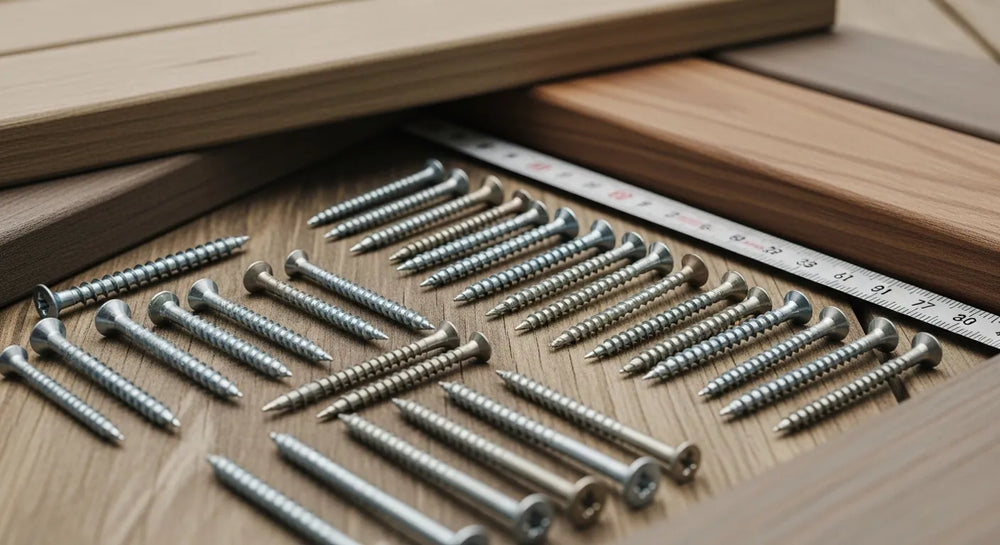
Once a joist is located, you need to use the right screw. For most applications, a sufficiently long wood screw or lag screw is appropriate. The screw must be long enough to pass through the drywall and penetrate at least 1 to 1.5 inches into the solid wood of the joist. This ensures a secure, powerful hold capable of supporting significant weight, from industrial lighting to cable trays and safety equipment.
Strategic Sourcing: Beyond the Anchor to the Supply Chain
The decision to use a joist instead of a drywall-only anchor is a microcosm of a larger principle in professional procurement and MRO management: prioritizing reliability, safety, and long-term value over short-term convenience. A procurement manager under pressure to complete a facility-wide signage installation isn't just buying fasteners; they are acquiring components that directly impact workplace safety and operational integrity.
This is where a strategic approach to sourcing becomes paramount. Sourcing components from a verified marketplace ensures that the products you receive meet stated specifications and quality standards. Here at Maden.co, our entire platform is built on this principle of trust and transparency. We connect industrial buyers with a vast network of over 800 verified U.S. manufacturers, offering more than 2.5 million American-made products. Our mission is to democratize access to this industrial base, proving that sourcing domestically is as convenient and reliable as any global alternative. This commitment to American Manufacturing Pride means that when you source a fastener like a Medium Duty Nylon Wall Anchor #8 from our platform, you're getting a component with a transparent origin and reliable performance for its specified, on-wall applications.
For MRO buyers, this Supply Chain Transparency is not a luxury; it is a critical tool for risk mitigation. Knowing where your components come from and that they are produced in facilities that adhere to high standards eliminates the uncertainty that often comes with anonymous global supply chains. It reduces the risk of receiving substandard or counterfeit parts that could lead to failures like the one described at the start of this article. Our vision is to be the definitive platform that powers America's manufacturing revival, and we invite you to learn more about our mission to champion American manufacturing here.
Managing Large-Scale Procurement and Capital Projects
Expanding this perspective, consider the challenges of outfitting an entire new facility or executing a large-scale renovation. The project might require tens of thousands of fasteners, electrical components, plumbing fittings, and other MRO supplies. The logistical and financial complexities can be immense.
This is where our commitment to Digital Innovation and Customer Empowerment provides tangible value. Our platform streamlines the procurement process, allowing engineers and buyers to quickly search, filter, and compare millions of parts from hundreds of vendors in one place. This drastically reduces the time and friction associated with sourcing from multiple disparate suppliers.
Furthermore, we understand that large-scale purchases represent a significant capital outlay. To help businesses manage cash flow and execute projects without delay, we offer a powerful tool directly within our platform. When purchasing materials for a capital-intensive project, you can apply for Instant Financing at checkout to streamline your procurement process. This feature transforms a major expenditure into a manageable operating expense, allowing companies to acquire the high-quality components they need to grow without tying up critical working capital.
We believe in supporting the entire American industrial ecosystem. For domestic manufacturers of quality components who are looking to expand their reach and connect with a dedicated market of industrial buyers, we offer a direct path to growth. Are you a U.S. manufacturer? Register as a vendor and join the American manufacturing revival. And if you are a buyer with complex sourcing needs or questions about large-volume orders, our expert team is here to provide support. Our team is ready to help you navigate any procurement challenge.
Conclusion: A Foundation of Safety and Quality
So, can you use drywall anchors in the ceiling? The professional, safety-conscious answer is no, with the rare exception of using a toggle or molly bolt for an extremely light, non-critical object where no joist is available. The gold standard, and the only method that should be used for anything of consequence, is to anchor directly into a ceiling joist.
This conclusion transcends simple hardware choice. It speaks to a core principle of industrial excellence: using the right component for the right application, every time. A chain is only as strong as its weakest link, and in a commercial or industrial facility, a poorly chosen fastener can be that weak link, with significant consequences for safety and liability.
Building a resilient and reliable operation starts with a foundation of quality components. We encourage you to solve your procurement challenges by exploring the vast catalog of verified, U.S.-made industrial products on Maden.co. From fasteners to fittings, empower your team with the parts they need to do the job safely and effectively. Streamline your next major project by taking advantage of Instant Financing, available right at checkout.
Frequently Asked Questions (FAQ)
1. What is the absolute maximum weight a drywall anchor can hold in a ceiling? There is no single, safe answer because it depends on the anchor type, the condition and thickness of the drywall, and dynamic factors like vibration. Even the strongest drywall-only anchors, like toggle bolts, should be limited to very light loads such as a smoke detector or a small, lightweight decorative item (under 5-10 pounds as a conservative estimate). For anything heavier, you must anchor into a joist.
2. How do I know for sure if I've hit a ceiling joist? The most reliable confirmation is the feedback from your drill. After your drill bit passes through the 1/2-inch or 5/8-inch of drywall, you should feel it engage with solid wood. The drill will meet significant resistance and begin to pull up wood shavings. If the bit pushes through into empty air after clearing the drywall, you have missed the joist.
3. Are toggle bolts or molly bolts completely safe for ceilings? They are safer than any other drywall-only anchor but are not completely foolproof. Their safety is still limited by the structural integrity of the drywall panel itself. A heavy enough load or a sudden shock can still cause them to fail by pulling a large section of drywall out. They should only be used as a last resort for very light loads when a joist is not an option.
4. Why is it important to use U.S.-made fasteners for industrial applications? Sourcing U.S.-made fasteners from a verified platform like Maden.co provides multiple business advantages. It ensures supply chain transparency, reducing the risk of receiving counterfeit or low-quality parts. It guarantees that the components meet rigorous industry standards and material specifications, which is critical for safety and liability. Finally, it supports the domestic industrial base, contributing to a more resilient and reliable national supply chain for your business.


