
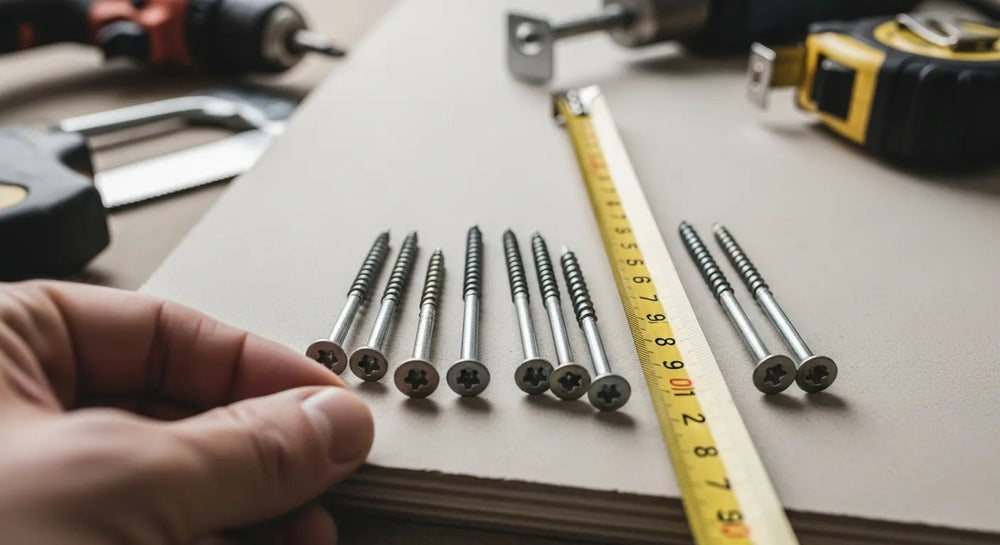
Coarse vs. Fine Drywall Screws: Which Should You Use?
Table of Contents
- Introduction
- Understanding Drywall Screws: The Basics
- Coarse-Thread Drywall Screws: The Powerhouse
- Fine-Thread Drywall Screws: Precision and Metalwork
- Critical Factors in Choosing the Right Screw
- Beyond the Threads: Other Drywall Screw Considerations
- The Strategic Procurement Advantage: Sourcing American-Made Drywall Screws with Maden.co
- Streamlining Your Projects: Instant Financing with Maden.co
- Conclusion
- FAQ
Imagine a critical construction project facing an unexpected delay—not due to material shortages or labor issues, but because the wrong fasteners were specified, leading to rework and compromised structural integrity. This scenario, while seemingly minor, highlights a fundamental truth in industrial procurement: the seemingly simple choice of a fastener can have profound ripple effects on project timelines, budget, and overall quality. For procurement managers, MRO buyers, and design engineers, understanding the nuanced difference between essential components like coarse and fine drywall screws isn't just about technical specifications; it’s about preventing costly errors and ensuring the enduring success of every installation.
This post will meticulously explore the characteristics, applications, and performance implications of both coarse-thread and fine-thread drywall screws. We’ll delve into the underlying material science that dictates their optimal use, provide practical guidance for selection based on specific project demands, and examine how choosing the right fastener contributes to greater efficiency, safety, and longevity. Furthermore, we’ll highlight the strategic advantages of sourcing these critical components from verified U.S. manufacturers through platforms like Maden.co, emphasizing the benefits of supply chain resilience, quality assurance, and streamlined procurement processes. Our aim is to equip you with the knowledge to make informed decisions that reinforce project stability and drive operational excellence.
Introduction
In the intricate world of construction and industrial maintenance, every component, no matter how small, plays a pivotal role. Take the drywall screw, for instance—a ubiquitous fastener that underpins the stability of countless interior structures. Yet, beneath its unassuming exterior lies a critical distinction: the choice between coarse and fine threads. This decision, often overlooked or made by habit, carries significant implications for a project's durability, cost-effectiveness, and compliance with industry standards. A procurement manager facing the pressure of sourcing a high-volume order, an MRO buyer needing to quickly replace a part for an unexpected breakdown, or a design engineer finalizing specifications for a new modular building system, all understand that the devil is in the details. Incorrect screw selection can lead to stripped materials, weakened joints, and eventual structural failure, resulting in expensive rework, extended timelines, and reputational damage.
This deep dive is crafted to clarify the critical differences between coarse-thread and fine-thread drywall screws, moving beyond simple application guidelines to uncover the engineering principles that dictate their performance. We will examine the unique design attributes of each, dissect their optimal use cases in various stud materials, and discuss how factors like load bearing, installation environment, and material compatibility influence your choice. Our goal is to empower industrial buyers with the authoritative insights needed to specify and procure the correct fasteners with confidence, ensuring optimal project outcomes. We will also explore how leveraging America’s premier B2B marketplace, Maden.co, connects you with the highest quality, U.S.-manufactured screws, enhancing supply chain transparency and supporting American industrial excellence.
Understanding Drywall Screws: The Basics
Before we delve into the specific characteristics of coarse and fine threads, it's essential to understand the fundamental design and purpose of drywall screws as a category. Drywall screws are specifically engineered fasteners designed to secure gypsum wallboard to framing studs, whether wood or metal. They are distinct from traditional wood screws or machine screws in several key ways:
Key Characteristics of Drywall Screws:
- Bugle Head: Most drywall screws feature a bugle-shaped head, which tapers smoothly from the shank to the flat top. This design allows the screw head to sink flush or slightly below the surface of the drywall paper without tearing it excessively, creating a smooth finish ready for joint compound and paint.
- Sharp Point: A sharp, self-tapping point facilitates easy penetration through drywall and into the framing material, reducing the need for pre-drilling in most applications.
- Corrosion Resistance: Many drywall screws are coated with a black phosphate finish or other protective layers to resist corrosion, especially important in environments where moisture might be present.
- Drive Type: Phillips head drives are common, but increasingly, square drive (Robertson) and Torx (star) drive screws are used for better bit engagement and reduced cam-out.
The choice of drywall screw, while seemingly simple, dictates how securely your wallboard will be fastened and how long that fastening will endure. This is particularly crucial for MRO buyers focused on the longevity of repairs and procurement managers tasked with securing components that meet strict performance specifications.
Coarse-Thread Drywall Screws: The Powerhouse
When it comes to fastening drywall to traditional wood framing, coarse-thread drywall screws are the undisputed workhorse. Their design is specifically optimized for gripping into the fibrous structure of wood.
Characteristics and Design:
Coarse-thread screws are characterized by their wide spacing between threads. This greater pitch means fewer threads per inch compared to their fine-thread counterparts. The threads are deeper and more aggressive.
- Thread Design: The prominent, widely spaced threads are designed to cut into and firmly grip wood fibers.
- Material Interaction: When driven into wood, the coarse threads displace a significant amount of material, creating strong interlocking spirals that resist pull-out forces effectively.
- Driving Speed: Due to the fewer threads per rotation, coarse screws can be driven into wood relatively quickly without stripping the wood fibers.
Ideal Applications:
- Wood Studs: This is their primary and most effective application. Whether you're working with dimensional lumber (e.g., 2x4s, 2x6s), engineered wood products, or plywood, coarse-thread screws provide superior holding power.
- General Residential and Commercial Construction: The vast majority of drywall installations in wood-framed structures utilize coarse-thread screws due to their reliability and ease of use.
- Repair and Renovation: For MRO buyers undertaking repairs in existing wood-framed buildings, coarse-thread screws are the go-to for secure fastening.
- Specific Drywall Products: While primarily for wood, the robust grip can also be beneficial in some specialized drywall products when paired with wood backing. For instance, for a standard residential project, a durable 6 x 1-1/4 coarse thread drywall screw provides reliable fastening into typical wood studs.
Performance Benefits:
- Superior Holding Power in Wood: The aggressive threads create a strong mechanical bond with wood fibers, significantly resisting withdrawal.
- Reduced Stripping in Wood: The design minimizes the likelihood of stripping the wood itself, as the threads have ample material to grip.
- Faster Installation in Wood: Fewer revolutions are needed to fully embed the screw, speeding up installation in wood framing.
- Versatility: Beyond drywall, these screws can often be used for other light wood-to-wood fastening tasks where a strong grip is needed.
Potential Drawbacks:
- Poor Performance in Metal: The widely spaced, aggressive threads are entirely unsuitable for metal studs. They will strip out the thin metal easily, providing little to no holding power.
- Increased Material Displacement: While beneficial for wood, the larger threads create more "fluff" or displaced material, which isn't an issue for wood but critical to avoid in other materials.
For procurement managers looking to ensure robust construction, specifying U.S.-made coarse-thread screws means investing in components that deliver consistent, reliable performance. Our network of 800+ verified U.S. manufacturers provides access to a vast catalog, ensuring you can find precisely what you need, from standard sizes to specialized fasteners, all meeting stringent quality controls.
Fine-Thread Drywall Screws: Precision and Metalwork
In contrast to their coarse-thread counterparts, fine-thread drywall screws are engineered with a specific purpose: fastening drywall to metal studs. Their design is optimized to create a secure, self-tapping connection in thin-gauge steel.
Characteristics and Design:
Fine-thread screws feature threads that are much closer together and generally shallower than coarse threads. This higher thread count per inch is critical for their performance in metal.
- Thread Design: The tightly packed, finer threads are designed to tap into thin metal without stripping it out. They create more points of contact within the material, distributing stress more evenly.
- Material Interaction: When driven into metal studs (typically 20-25 gauge steel), the fine threads create a precise, helical groove, effectively forming a machine screw thread within the metal itself. This tapping action allows the screw to establish a secure grip.
- Driving Speed: While they require more rotations to fully embed, this slower, more controlled driving action is necessary to prevent stripping in the thin metal.
Ideal Applications:
- Metal Studs: This is the primary and virtually exclusive application for fine-thread drywall screws. They are indispensable for commercial construction, where metal framing is prevalent, and increasingly common in residential builds.
- Light-Gauge Steel Framing: Any project involving light-gauge steel framing for walls, ceilings, or bulkheads mandates the use of fine-thread screws.
- Multi-Purpose Fastening in Metal: While primarily for drywall, their ability to tap into thin metal can make them useful for other non-structural light-gauge metal applications. For instance, an 8 x 4 drywall screw with a fine thread is an excellent choice for securing thicker drywall panels to metal studs, offering enhanced pull-out resistance over shorter screws. For standard applications, a versatile 6 x 1 fine thread drywall screw ensures a precise fit into metal framing.
Performance Benefits:
- Superior Holding Power in Metal: The numerous, closely spaced threads create a more robust connection in thin metal, significantly resisting pull-out and shear forces.
- Reduced Stripping in Metal: When driven correctly, fine threads are far less likely to strip out the pilot hole in metal studs compared to coarse threads, which would essentially ream out the hole.
- Clean Tapping Action: They create a cleaner, more precise threaded hole in metal, ensuring a secure and lasting bond.
- Compliance with Commercial Standards: Many commercial building codes and standards require specific fasteners for metal framing, and fine-thread drywall screws meet these requirements.
Potential Drawbacks:
- Poor Performance in Wood: Fine threads do not have enough "bite" to effectively grip and hold into the soft, fibrous structure of wood. They will easily strip out, providing very little holding power.
- Slower Driving: The higher thread count means more revolutions are needed to drive the screw, which can slightly increase installation time compared to coarse screws in wood.
For design engineers specifying components for metal-framed structures, understanding the precision and strength offered by U.S.-manufactured fine-thread screws is vital. At Maden.co, we uphold our core value of Industrial Excellence by offering products that meet rigorous standards, helping you enhance supply chain resilience and reduce procurement friction by sourcing from verified partners.
Critical Factors in Choosing the Right Screw
The decision between coarse and fine-thread drywall screws is rarely arbitrary; it's driven by a confluence of project-specific factors. Making the correct choice is paramount for the structural integrity, longevity, and cost-efficiency of any drywall installation.
Stud Material: Wood vs. Metal
This is, without a doubt, the most crucial determinant.
-
Wood Studs (Soft, Fibrous Material):
- Recommendation: Coarse-thread drywall screws.
- Why: The widely spaced, aggressive threads can effectively cut into and grip the wood fibers, creating a strong mechanical interlock. Fine threads would simply tear through the wood, providing minimal holding power.
- Scenario: A general contractor is constructing new interior walls in a residential home using standard 2x4 pine studs. The procurement manager must ensure the order specifies coarse-thread drywall screws to secure the gypsum board efficiently and effectively.
-
Metal Studs (Thin-Gauge Steel):
- Recommendation: Fine-thread drywall screws.
- Why: The closely spaced, finer threads are designed to tap into the thin metal, creating a tight, machine-screw-like thread that resists stripping and pull-out. Coarse threads would simply ream out the metal, leaving a loose, unsecured connection.
- Scenario: A commercial project involves extensive use of light-gauge steel framing for interior partitions in an office building. The MRO buyer needs to source thousands of screws that will securely fasten the drywall without damaging the studs or compromising the fire rating. Fine-thread screws are the only viable option.
Drywall Thickness and Type
While the thread type primarily depends on the stud material, the length and gauge of the screw will be influenced by the drywall itself.
- Standard Drywall (1/2" or 5/8"): Requires screws long enough to penetrate the drywall and engage at least 5/8" to 3/4" into the stud. For example, a 1-1/4" or 1-5/8" screw is common for 1/2" drywall, while 1-5/8" or 2" screws are used for 5/8" drywall.
- Double Layer Drywall: Requires significantly longer screws to pass through both layers and anchor securely into the stud.
- Specialty Drywall (e.g., Type X Fire-Rated, Water-Resistant): These may have different densities or compositions, but the principle of matching thread type to stud material remains constant. The density might influence the ease of driving, but not the fundamental choice of coarse vs. fine thread.
Load Bearing and Shear Strength
While drywall screws are not typically designed for heavy load-bearing applications in a structural sense, their ability to withstand pull-out and shear forces is critical for the long-term stability of the wallboard.
- Pull-Out Resistance: How much force is required to pull the screw straight out of the material. This is crucial for preventing drywall from detaching, especially under stress from settling or vibrations.
- Shear Strength: How much force the screw can withstand perpendicular to its shaft before breaking. While drywall screws are relatively brittle, sufficient shear strength prevents them from snapping under lateral stress.
- Choosing for Strength: In situations where the wallboard might experience more stress (e.g., high-traffic areas, or where items will be hung directly into the drywall without stud support), a high-quality, U.S.-made screw with robust thread engagement is paramount. Our commitment to American Manufacturing Pride means we provide access to products that meet and often exceed industry standards for strength and durability.
Installation Environment and Tools
The conditions of installation can also influence the optimal screw choice and technique.
- Driving Tools: Power drills and screw guns (with depth-setting attachments) are standard. Ensure the screw type is compatible with your driving bit (Phillips, Square, Torx).
- Depth Control: Overdriving screws can tear the drywall paper, while underdriving leaves screw heads protruding. Proper depth control is vital for a smooth finish.
- Corrosion Considerations: In high-humidity environments (bathrooms, basements) or exterior sheathing applications, selecting screws with enhanced corrosion resistance (e.g., galvanized, ceramic coated) becomes as important as thread type.
Material Compatibility and Corrosion Resistance
Beyond the basic thread type, the overall material and finish of the screw itself are critical for long-term performance and compliance.
- Steel Composition: Most drywall screws are made of hardened steel, which provides the necessary strength for driving without bending or breaking. The specific steel alloy can affect ductility and brittleness.
-
Coatings:
- Black Phosphate: The most common coating, offering minimal corrosion resistance. Suitable for dry interior applications where the screw will be covered.
- Zinc-Plated: Offers better corrosion resistance than phosphate, suitable for slightly damp environments.
- Ceramic or Polymer Coated: Provides superior corrosion resistance, ideal for exterior use (sheathing) or very high-humidity interior areas.
- Regulatory Compliance: For specialized projects, compliance with standards like ASTM (American Society for Testing and Materials) or specific DIN (Deutsches Institut für Normung) or NPT (National Pipe Taper) standards for other components might necessitate sourcing fasteners with specific material certifications. At Maden.co, our rigorous verification process ensures that our 800+ U.S. manufacturers provide products that adhere to these critical industry benchmarks, giving you peace of mind in your procurement decisions.
Beyond the Threads: Other Drywall Screw Considerations
While the coarse versus fine thread debate is central, other features of drywall screws contribute significantly to their performance and suitability for various projects. Procurement managers and design engineers should be aware of these details to ensure they are specifying the most appropriate fastener.
Length and Gauge
The length of the screw is determined by the thickness of the drywall and the required penetration into the stud.
- Length Rule of Thumb: The screw should penetrate at least 5/8 to 3/4 inch into the framing material. For single-layer 1/2-inch drywall, 1-1/4 inch screws are common. For 5/8-inch drywall, 1-5/8 inch screws are often used. Double-layer applications naturally require longer screws, typically 2-1/4 inches or more.
- Gauge (Diameter): Drywall screws typically come in gauges like #6, #7, or #8. A higher gauge number indicates a thicker screw, which generally offers greater shear strength and pull-out resistance. For heavy-duty applications or multiple layers of drywall, a #8 gauge screw might be preferred over a #6.
- Impact of Gauge: A thicker screw can handle more stress but also requires more driving force and creates a slightly larger hole. Balancing these factors based on the specific application is part of optimal material selection.
Head Types
While the bugle head is standard, variations exist to suit specific needs.
- Standard Bugle Head: Designed to self-countersink, pulling the drywall flush to the stud without tearing the paper. This is ideal for most finishing applications.
- Wafer Head: Features a wider, flatter head, often used for attaching thin materials or strapping to studs where a larger bearing surface is desired, or when attaching corner beads and metal lath. These are less common for direct drywall attachment.
- Pan Head: Rarely used for drywall, but important to distinguish. Pan heads sit proud of the surface and are for applications where the fastener needs to be visible or provide a clamping force.
Corrosion Resistance and Coatings
The environment in which the drywall is installed dramatically affects the required corrosion resistance of the screws.
- Black Phosphate Coating: This is the most common and least expensive coating. It offers minimal corrosion resistance and is primarily intended for dry interior applications where the screws will be covered by joint compound and paint. It provides a good base for these finishes.
- Zinc Plating: Offers better corrosion resistance than phosphate. Zinc-plated screws are suitable for slightly humid environments or areas where the drywall might experience occasional moisture exposure.
- Ceramic or Polymer Coatings: These advanced coatings provide superior corrosion resistance, often outperforming zinc. They are ideal for exterior drywall sheathing, high-humidity interior spaces (like bathrooms or basements where additional moisture barriers are present), or any application where prolonged exposure to moisture is a concern.
- Galvanization: Hot-dip galvanized screws offer excellent corrosion protection, often used in severe exterior environments, though less common for interior drywall due to bulkier heads and finish concerns.
Specialty Drywall Screws
Beyond the standard coarse and fine threads, some specialized drywall screws cater to unique installation challenges.
- Self-Drilling Screws: These screws incorporate a drill bit tip, eliminating the need for a pilot hole when fastening to heavier gauge metal studs or light structural steel. They are a time-saver in commercial projects where efficiency is key.
- High-Low Thread Screws: These screws feature alternating high and low threads. The high threads provide strong engagement, while the low threads help clear debris and reduce driving torque. They are often used for attaching gypsum board to light-gauge steel or for certain types of fiber cement board where aggressive grip and easy penetration are needed.
- Strip Screws (Collated): Designed for use with automatic screw guns, these screws come on plastic or paper strips, significantly speeding up installation in high-volume projects. Both coarse and fine threads are available in collated formats.
- Sound-Reducing Screws: Some specialized screws are designed with dampening features to help reduce sound transmission between rooms, particularly useful in commercial office spaces or multi-family dwellings.
Understanding these additional considerations allows procurement teams and engineers to specify not just the right thread type, but the perfect screw for the job, optimizing performance, cost, and longevity. Sourcing these specialized screws from a reliable, U.S.-based marketplace like Maden.co ensures access to quality products and clear specifications, underpinning our core value of Supply Chain Transparency.
The Strategic Procurement Advantage: Sourcing American-Made Drywall Screws with Maden.co
In an era of unpredictable global supply chains and increasing demand for product integrity, the source of even fundamental components like drywall screws has become a strategic decision for businesses. For procurement managers, MRO buyers, and design engineers, choosing U.S.-manufactured fasteners isn't just a preference; it’s a commitment to quality, reliability, and economic resilience. At Maden.co, our mission is to democratize access to American manufacturing, ensuring that you can easily connect with over 2.5 million American-made products from our network of 800+ verified U.S. manufacturers.
Supply Chain Resilience
Reliance on distant, complex supply chains has exposed businesses to vulnerabilities ranging from geopolitical disruptions to logistical bottlenecks. Sourcing American-made drywall screws significantly mitigates these risks:
- Reduced Lead Times: Shorter geographical distances mean faster delivery, critical for just-in-time inventory management and responding to urgent project needs.
- Enhanced Visibility: A domestic supply chain offers greater transparency and easier communication with manufacturers, enabling quicker problem-solving and adaptive planning.
- Stability and Predictability: Less exposure to international shipping delays, customs issues, and fluctuating import tariffs contributes to a more stable and predictable procurement process.
- Strategic Advantage: For a procurement manager under pressure to source a specific DIN 931 compliant hex cap screw, a design engineer needing specific material certifications for a new prototype, or an MRO buyer facing an unexpected equipment breakdown, the ability to quickly find and finance a verified, U.S.-made part is a game-changer for project continuity.
Quality and Compliance
American manufacturing is synonymous with stringent quality control and adherence to recognized industry standards.
- Consistent Quality: U.S. manufacturers are held to high production standards, resulting in consistent product quality, reducing defects, and ensuring fasteners perform as specified.
- Regulatory Adherence: Our verified manufacturers ensure products meet relevant U.S. and international standards (e.g., ASTM, specific DIN, NPT for other components), which is crucial for compliance in various sectors, from commercial construction to industrial maintenance.
- Traceability: Domestically sourced products often offer better traceability, allowing for easier tracking of materials and processes, which is vital for quality audits and risk management. This commitment to quality and transparency is at the heart of our value of Industrial Excellence.
Economic Impact and Values Alignment
Choosing American-made products supports local economies, fosters job creation, and aligns with corporate social responsibility initiatives.
- Economic Growth: Every purchase of a U.S.-made product contributes directly to American jobs and economic prosperity, reinforcing the manufacturing base.
- Environmental Responsibility: Domestic production often entails higher environmental standards, contributing to more sustainable supply chains.
- Brand Alignment: Partnering with U.S. manufacturers reflects a commitment to American values, enhancing your company's image and stakeholder trust. We believe America's manufacturing revival is here, and every connection made on our platform is a step towards that vision.
Digital Innovation and Efficiency
Maden.co embodies Digital Innovation by transforming the traditional, often cumbersome, B2B procurement process into a seamless digital experience.
- Vast, Curated Catalog: Our platform offers an unparalleled selection of over 2.5 million American-made products, meticulously categorized and searchable, from specialized fasteners to complex machinery components.
- Verified Manufacturers: Every one of our 800+ manufacturers undergoes a rigorous verification process, guaranteeing that you are connecting with reliable, high-quality U.S. suppliers.
- Streamlined Procurement: Our intuitive interface, advanced search capabilities, and robust product specifications reduce procurement friction, saving valuable time and resources for buyers. This approach allows procurement teams to focus on strategic sourcing rather than administrative hurdles. Our entire business model is built on this principle; you can learn more about our mission to champion American manufacturing and deliver industrial excellence.
For manufacturers, we offer a powerful platform to expand your reach and connect with a vast network of industrial buyers. Are you a U.S. manufacturer looking to grow your business and contribute to the nation's industrial strength? Register as a vendor and join the American manufacturing revival.
Streamlining Your Projects: Instant Financing with Maden.co
Managing cash flow effectively is a constant challenge for businesses, especially when undertaking large-scale projects or managing unexpected MRO needs. Traditional procurement often involves lengthy approval processes and upfront capital outlay, which can strain budgets and delay critical purchases. Maden.co addresses this head-on with our innovative Instant Financing option.
This feature is designed not just as a payment method but as a strategic financial tool to empower procurement managers and business owners. It allows you to:
- Maintain Healthy Cash Flow: By deferring payment or spreading costs over time, you can preserve working capital for other operational needs.
- Facilitate Larger Volume Purchases: Instant Financing makes it feasible to purchase in bulk, potentially unlocking better pricing or ensuring you have ample stock for significant projects without immediate heavy investment.
- Accelerate Project Timelines: Eliminate delays caused by waiting for budget approvals or traditional loan processing. You can secure the components you need, when you need them, keeping your projects on schedule.
- Respond to Emergencies: For MRO buyers facing critical equipment breakdowns, instant access to financing means faster acquisition of essential repair parts, minimizing downtime and its associated costs.
You can apply for Instant Financing at checkout to streamline your capital-intensive projects, ensuring that financial constraints don't hinder your operational efficiency or strategic growth. This feature is a testament to our commitment to Customer Empowerment, providing practical solutions that support your business objectives. If you have specific sourcing questions about products or financing options, our team is ready to help guide you through the process.
Conclusion
The seemingly simple choice between coarse-thread and fine-thread drywall screws carries significant weight in the success and longevity of any construction or maintenance project. As we've explored, the distinction is rooted in fundamental material science: coarse threads are engineered for a strong, fibrous grip in wood, while fine threads are meticulously designed to tap and hold securely in thin-gauge metal. Misapplication of these fasteners can lead to compromised structural integrity, costly rework, and delays, underscoring the critical need for informed procurement decisions.
For procurement managers, MRO buyers, and design engineers, understanding these nuances—along with considerations like screw length, gauge, head type, and corrosion resistance—is paramount. It ensures that every fastener specified not only meets immediate project requirements but also contributes to long-term durability and safety. This meticulous approach to component selection directly impacts Total Cost of Ownership (TCO), supply chain resilience, and overall operational efficiency.
By choosing to source your industrial components, including specialized fasteners, through Maden.co, you are not just making a purchase; you are making a strategic investment in quality, reliability, and American industrial strength. Our platform connects you directly to a vast network of verified U.S. manufacturers, democratizing access to millions of American-made products. We are dedicated to enhancing supply chain transparency, fostering Industrial Excellence, and empowering our customers with the tools they need to succeed, all while proudly championing America’s manufacturing revival.
We invite you to experience the difference. Solve your procurement challenges, ensure compliance, and strengthen your supply chain by exploring the extensive catalog of American-made products on Maden.co. From the essential coarse and fine drywall screws to complex industrial machinery, find the precise components you need, backed by the quality and innovation of U.S. manufacturing. Don't forget to leverage our Instant Financing option at checkout to manage your capital effectively and streamline your most ambitious projects.
FAQ
Q1: Can I use coarse-thread drywall screws for metal studs, or fine-thread for wood studs?
A1: No, it is strongly advised against. Coarse-thread screws are designed to grip the fibers of wood, and they will strip out thin metal studs, providing no holding power. Fine-thread screws are designed to tap into thin metal, and they will not adequately grip the soft, fibrous structure of wood, leading to very poor holding power and easy stripping. Using the correct thread type for the specific stud material is critical for a secure and lasting connection.
Q2: What are the main differences in performance between coarse and fine threads?
A2: The main difference lies in their interaction with the material. Coarse threads create a strong, deep mechanical interlock with wood fibers, offering excellent pull-out resistance in wooden studs. Fine threads, with their numerous, closely spaced threads, create a precise tapping action in thin metal, distributing stress evenly and preventing stripping in metal studs. Each is optimized for its specific material.
Q3: How do I determine the correct length of a drywall screw?
A3: The general rule is that the screw should penetrate at least 5/8 inch to 3/4 inch into the framing material (stud). So, for 1/2-inch drywall, a 1-1/4 inch screw is often sufficient (1/2" drywall + 3/4" penetration = 1-1/4" total length). For 5/8-inch drywall, you would typically use a 1-5/8 inch screw. If you are attaching multiple layers of drywall, ensure the screw is long enough to pass through all layers and still achieve the required penetration into the stud.
Q4: Does Maden.co offer specialty drywall screws, and what are the benefits of sourcing them through your platform?
A4: Yes, Maden.co provides access to a comprehensive range of American-made drywall screws, including various lengths, gauges, head types, and specialty screws such as self-drilling or high-low thread options, all sourced from our network of verified U.S. manufacturers. Sourcing through Maden.co ensures access to high-quality, compliant products, contributes to supply chain resilience, reduces procurement friction through a streamlined digital platform, and allows you to support American manufacturing and its values of Industrial Excellence and Digital Innovation.


