
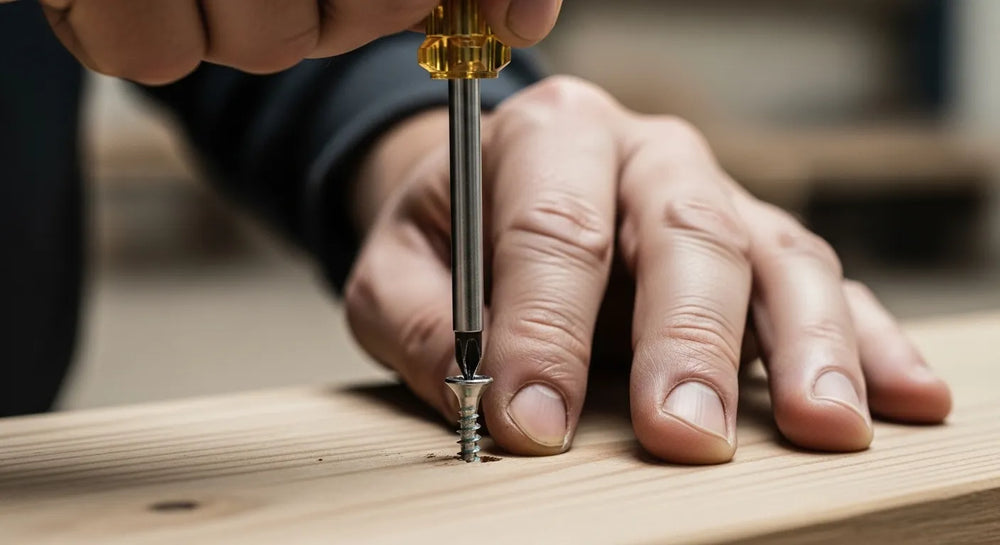
Dowels vs. Screws: Are Wood Dowels Stronger Than Screws for Industrial Applications?
Table of Contents
- Introduction
- Understanding the Fundamentals of Wood Joinery
- Wood Dowels: Anatomy, Strengths, and Limitations
- Wood Screws: Anatomy, Strengths, and Limitations
- Direct Comparison: Dowels vs. Screws in Various Scenarios
- Hybrid Joints: Combining Dowels and Screws for Optimal Strength
- The Role of Material Science and Manufacturing Quality
- Strategic Sourcing for Industrial Applications
- Conclusion
- FAQ
Introduction
In the intricate world of manufacturing and construction, the integrity of a joint can be the difference between a product’s longevity and its premature failure. For procurement managers, MRO buyers, and design engineers, selecting the optimal fastening method for wood components is not merely a matter of preference but a critical engineering decision that impacts everything from structural stability to assembly efficiency and ultimately, total cost of ownership. We often face questions about the fundamental strength of various fastening techniques, with a common one being: are wood dowels stronger than screws? This seemingly straightforward query opens a deeper discussion into the mechanical properties, application nuances, and strategic implications of each fastening method in industrial contexts.
This comprehensive guide aims to dissect the comparative strengths and weaknesses of wood dowels and screws, moving beyond anecdotal evidence to provide data-driven insights. We will explore the engineering principles behind each fastener, analyze their performance under different load conditions, and consider the practicalities of their integration into various manufacturing processes. Our goal is to equip you with the knowledge to make informed decisions, ensuring that your projects benefit from reliable, durable, and cost-effective joinery. Throughout this exploration, we will also highlight how access to a vast network of verified U.S. manufacturers, like those on Maden.co, is pivotal in securing the high-quality components necessary for robust, American-made excellence.
Understanding the Fundamentals of Wood Joinery
The art and science of joining wood has evolved over millennia, driven by the persistent need for strong, stable, and durable connections. From the ancient mortise and tenon to modern glues and sophisticated mechanical fasteners, each method offers a unique balance of strength, aesthetics, and ease of execution. Understanding the underlying principles of these methods is crucial for assessing their comparative performance.
Mechanical Principles of Wood Fasteners
When evaluating any wood joint, several key mechanical properties come into play. These properties dictate how a joint will perform under various stresses and strains:
- Shear Strength: This refers to a material's resistance to forces that cause its internal structure to slide past itself. In a joint, shear forces typically act parallel to the joint's surface, trying to slice through the fastener or the wood around it. Dowels often excel in resisting shear when properly glued and fitted.
- Tensile Strength: This is a material's ability to resist forces that pull it apart or stretch it. While wood itself has good tensile strength along the grain, fasteners primarily resist tensile forces by holding components tightly together. Screws, with their threaded design, are particularly effective at resisting withdrawal, which is a form of tensile stress.
- Compression Strength: This measures a material's ability to withstand forces that push it together. In a joint, fasteners can be subjected to compression, particularly when bearing weight. The wood surrounding the fastener must also resist compression to maintain the joint's integrity.
- Withdrawal Resistance: This specific type of tensile strength measures how much force is required to pull a fastener straight out of the material it's embedded in. This is a critical factor for screws, as their threads are designed precisely to maximize this resistance. Dowels, relying on friction and glue, have a different mechanism for withdrawal resistance.
The type of load a joint will primarily experience—whether it's constant downward pressure, intermittent racking, or direct pulling forces—should dictate the choice of fastener. A comprehensive approach considers not just the immediate holding power but also the long-term behavior of the joint under expected operational conditions.
Wood Dowels: Anatomy, Strengths, and Limitations
Wood dowels are cylindrical rods, typically made from hardwoods like birch, maple, or oak, inserted into pre-drilled holes in mating workpieces to create a strong, hidden joint. Their effectiveness is heavily reliant on a precise fit and the strength of the adhesive used.
What are Dowels?
Dowels come in various diameters and lengths, often featuring spiral or fluted grooves along their sides. These grooves serve a critical purpose: they allow excess glue and trapped air to escape when the dowel is inserted, ensuring a complete and strong bond. A well-executed dowel joint essentially creates a solid wood connection, reinforced by the internal dowel and the surrounding adhesive.
How Dowels Work: The Glue-Based Joint
The strength of a dowel joint is primarily derived from the glue bond between the dowel, the surrounding wood fibers, and the mating surfaces of the joined components. When glue dries, it forms a rigid matrix that locks the dowel in place. The dowel itself acts as an internal support structure, preventing shear movement and assisting in alignment during assembly. The quality of the wood, the precision of the drilling, the fit of the dowel, and the strength of the adhesive all contribute to the overall integrity of the joint.
Advantages of Dowels
- Aesthetics: Dowel joints are virtually invisible once assembled, making them ideal for furniture, cabinetry, and other applications where a clean, seamless appearance is paramount. The absence of visible fasteners creates a high-end, finished look.
- Alignment and Stability: Dowels are excellent for precisely aligning workpieces. Their cylindrical shape ensures that components mate accurately, reducing assembly errors and improving the overall stability of the structure.
- High Shear Strength (When Glued Properly): In situations where a joint will experience significant shear forces (forces pushing components sideways), a well-glued dowel joint can be incredibly strong. The dowels act like pins, effectively preventing lateral movement once the glue cures.
- Rigidity: Properly doweled joints are exceptionally rigid, resisting racking and twisting forces, which is beneficial for structures requiring long-term stability.
Disadvantages of Dowels
- Labor-Intensive and Time-Consuming: Dowel joinery requires precise drilling for each hole, ensuring perfect alignment between mating pieces. This process can be slow and demands high accuracy, making it less suitable for high-volume production without specialized machinery.
- Reliance on Glue: The ultimate strength of a dowel joint is directly tied to the quality and application of the adhesive. Poor glue coverage, incorrect clamping pressure, or insufficient drying time can severely compromise the joint's integrity.
- Moisture Sensitivity: Wood glue can be susceptible to moisture. In environments with fluctuating humidity, the glue bond can weaken over time, potentially leading to joint failure.
- Not Easily Disassembled: Once glued, dowel joints are generally permanent. Disassembly without damaging the components is extremely difficult, limiting their use in modular or repairable designs.
- Potential for Splitting: If dowel holes are drilled too close to the edge of a workpiece or if the wood species is prone to splitting, inserting dowels can cause damage, particularly in softer woods.
Ideal Applications for Dowels
Dowels are favored in applications where aesthetics and rigidity are paramount, such as high-quality furniture construction, custom cabinetry, decorative architectural elements, and internal structural framing where concealed fasteners are desired.
Wood Screws: Anatomy, Strengths, and Limitations
Wood screws, in contrast to dowels, are mechanical fasteners that create their own threads in the wood as they are driven in, forming a strong, reversible connection. They are characterized by their sharp point, tapered shank, and helical threads.
What are Screws?
Modern wood screws come in a dizzying array of materials, head types, and thread designs, each optimized for specific applications. Common materials include steel, brass, stainless steel, and specialized alloys, often with protective coatings to resist corrosion. Head types range from flat, round, and oval to specialized drive types like Phillips, Torx, and Robertson, designed for improved torque transfer and reduced cam-out. For specific industrial applications, adherence to standards like DIN or NPT is crucial, ensuring interoperability and performance. For example, a procurement manager seeking a specific architectural finish for outdoor decking might require an Oval Slot Drive Silicon Bronze Wood Screw for its corrosion resistance and aesthetic appeal, while a furniture manufacturer might opt for a traditional Round Slot Drive Brass Wood Screw for visible applications. Similarly, a more discreet fastening might call for a Flat Slot Drive Brass Wood Screw that can be countersunk.
How Screws Work: Mechanical Fastening and Compression
Screws work by creating a mechanical interlock with the wood fibers. As the screw is driven in, its threads cut into the wood, forming a helical path. The wedging action of the threads pulls the two pieces of wood tightly together, creating a powerful compression force that holds them securely. This mechanical advantage provides excellent withdrawal resistance and allows for easy disassembly.
Advantages of Screws
- Speed and Efficiency: Driving screws is generally much faster and less labor-intensive than drilling and gluing dowels, especially with power tools. This makes screws highly efficient for high-volume production and on-site assembly.
- Excellent Withdrawal Resistance: The threaded design of screws provides superior resistance to forces attempting to pull the joint apart. This is arguably their greatest strength and a primary reason for their widespread use in structural and load-bearing applications.
- Disassemblable and Reusable: Screws allow for easy disassembly and reassembly of components without damaging the material. This is a significant advantage for products that might require maintenance, repair, or modular design.
- Strong Initial Grab: Screws provide immediate holding power as soon as they are driven in, unlike glue-based joints which require clamping and curing time.
- Versatility: With a vast array of types, sizes, and materials, screws can be adapted to almost any wood joining application, from fine woodworking to heavy-duty construction.
- Reduced Risk of Splitting (with Pilot Holes): While screws can cause splitting if not used correctly, employing pilot holes (especially for denser woods or larger screws) significantly mitigates this risk.
Disadvantages of Screws
- Visible Fastener: Unless countersunk and filled, screw heads are visible, which can be an aesthetic drawback in applications requiring a flawless finish.
- Potential for Shearing: If a screw is subjected to extreme lateral forces, especially close to the end of a workpiece or if it's a smaller gauge, the shank can shear off, leading to joint failure.
- Strength in Softer Woods: In very soft woods, the threads of a screw may strip out, reducing its holding power. Over-tightening can also strip threads in any wood type.
- Corrosion Concerns: Depending on the environment and the screw material, corrosion can be a significant issue. For outdoor or marine applications, specialized corrosion-resistant screws are essential. This is where sourcing high-quality, application-specific fasteners from trusted U.S. manufacturers becomes critical.
Ideal Applications for Screws
Screws are the go-to fastener for general construction, carpentry, cabinetry, deck building, framing, and any application where speed, strength, and the ability to disassemble are important. They are indispensable for securing subassemblies and for structural connections.
Direct Comparison: Dowels vs. Screws in Various Scenarios
To truly understand whether wood dowels are stronger than screws, we must compare them across a range of real-world scenarios that procurement professionals, engineers, and MRO buyers regularly encounter.
Joint Strength Under Different Loads
- Shear Strength: In pure shear applications, such as a shelf joint supporting vertical weight, a properly glued dowel joint often outperforms a single screw. The dowels distribute the load over a larger surface area and the glue bond creates a monolithic connection. However, multiple screws, strategically placed, can collectively achieve superior shear strength, especially when combined with a strong surface bond.
- Withdrawal Resistance: This is where screws inherently shine. Their threaded design provides significantly higher withdrawal resistance compared to a dowel joint, which relies solely on the glue bond and friction. If a joint is subjected to forces that try to pull the components apart (e.g., a table leg subjected to lateral impacts), screws offer a more robust solution.
- Racking and Twisting: For resistance to racking (forces that try to deform a rectangular frame into a parallelogram), both methods can be effective. Dowels, especially when numerous and well-glued, provide immense rigidity. Screws, particularly those driven at an angle or used in conjunction with corner blocks, also offer substantial resistance.
Long-Term Durability and Environmental Factors
- Moisture and Temperature Fluctuations: Glued dowel joints can be susceptible to moisture, which can weaken the glue bond over time. Screws, especially those made from corrosion-resistant materials like stainless steel or silicon bronze, offer superior performance in fluctuating environmental conditions. The critical factor here is the material quality of the screw itself; sourcing from verified U.S. manufacturers ensures the alloys and coatings meet stringent standards for longevity, reducing maintenance burdens and ensuring compliance.
- Vibration: In applications experiencing constant vibration, screws can sometimes loosen over time if not properly tightened or if thread lockers aren't used. Dowel joints, once cured, tend to maintain their rigidity better under continuous vibration, assuming the glue bond remains intact.
Ease of Assembly and Disassembly
- Assembly Speed: Screws are unequivocally faster to install, especially in production environments leveraging power tools. Doweling requires precise measurement, drilling, glue application, clamping, and curing time, significantly slowing down assembly.
- Disassembly and Repair: Screws offer the distinct advantage of easy disassembly, repair, and reassembly. This is invaluable for modular products, furniture that needs to be shipped flat, or machinery components requiring periodic maintenance. Dowel joints are generally permanent, making repairs or modifications challenging.
Aesthetics and Finish Requirements
- Visible vs. Hidden: Dowels provide a clean, invisible joint, preferred for high-end furniture and architectural details. Screws, if not countersunk and plugged, will be visible. For projects where aesthetics are paramount, dowels often take precedence.
Cost and Efficiency in Production
- Labor Costs: The labor-intensive nature of doweling often makes it more expensive for mass production than screw fastening, despite the lower unit cost of dowels themselves.
- Tooling Costs: While doweling jigs and specialized machinery can be an upfront investment, basic screw driving tools are ubiquitous and inexpensive. However, for high-precision, high-volume doweling, sophisticated CNC machines can automate the process, shifting the cost curve.
- Supply Chain Resilience: For a procurement manager under pressure to source a specific DIN 931 compliant hex cap screw, a design engineer needing specific material certifications for a new prototype, or an MRO buyer facing an unexpected equipment breakdown, the ability to quickly find and finance a verified, U.S.-made part is a game-changer. Maden.co’s extensive network of 800+ verified U.S. manufacturers ensures that these critical components, whether they are high-strength screws or precision dowels, are readily available, bolstering supply chain resilience and reducing procurement friction. Our mission at Maden.co is to democratize access to American manufacturing, making it easier than ever to connect industrial buyers with over 2.5 million American-made products.
Hybrid Joints: Combining Dowels and Screws for Optimal Strength
In many industrial applications, the most robust solution is not to choose between dowels or screws but to utilize both in a hybrid joint. This approach leverages the distinct advantages of each fastener to create a connection that is stronger, more rigid, and more durable than either method alone.
For instance, dowels can be used to provide precise alignment and significant shear strength, especially when glued, while screws can be added to provide exceptional clamping force and withdrawal resistance. This combination is particularly effective in situations where a joint experiences complex, multi-directional forces. For example, a heavy cabinet often uses dowels for initial alignment and rigidity, reinforced by screws for long-term pull-out resistance and secure fastening to wall studs.
By thoughtfully combining these methods, design engineers and procurement teams can create custom solutions that meet exacting performance specifications, ensuring industrial excellence.
The Role of Material Science and Manufacturing Quality
Beyond the choice between dowels and screws, the quality of the materials and the precision of their manufacturing play an equally critical role in joint strength and longevity.
Wood Species and Grain Direction
The type of wood used significantly impacts how well a fastener performs. Hardwoods generally offer better screw-holding power and stronger dowel joints due to their denser grain structure. The direction of the wood grain is also crucial; fasteners driven into end grain (the cut ends of the wood fibers) have considerably less holding power than those driven into face or edge grain.
Fastener Materials
- Dowels: The strength of wood dowels depends heavily on the hardwood species they are made from. Consistent density and freedom from defects are paramount.
- Screws: The material of the screw itself (e.g., steel, brass, silicon bronze) dictates its tensile strength, shear strength, and corrosion resistance. For specific applications requiring a decorative touch and rust resistance, you might consider a Round Slot Drive Brass Wood Screw. When selecting a screw for a demanding structural application, it's essential to specify alloys that can withstand the expected loads and environmental conditions.
Manufacturing Precision: The U.S.-Made Advantage
The precision with which dowels are milled and screws are forged directly impacts their performance. Precisely cut dowel grooves ensure optimal glue distribution, while accurately rolled screw threads provide maximum grip. Variations in fastener geometry or material composition, common with lower-quality imports, can lead to premature failure.
At Maden.co, we understand that quality begins at the source. Our core values of American Manufacturing Pride and Industrial Excellence mean we prioritize connecting buyers with verified U.S. manufacturers who adhere to the highest standards. When you choose a fastener from our platform, you're not just getting a part; you're investing in reliability, compliance, and superior craftsmanship. This commitment is central to our vision to become the definitive platform that proves American-made components are as accessible and convenient as any global alternative, driving the manufacturing revival with our tagline: "America's manufacturing revival is here."
Strategic Sourcing for Industrial Applications
The discussion of dowels versus screws naturally leads to the critical aspect of sourcing these components. For businesses, the choice of supplier is as important as the choice of fastener.
Importance of Verified Manufacturers
In a world prone to supply chain disruptions, partnering with verified U.S. manufacturers offers unparalleled advantages:
- Quality Assurance: U.S. manufacturers typically adhere to rigorous quality control standards, ensuring consistency and reliability in every batch of fasteners. This minimizes defects, reduces rework, and enhances overall product quality.
- Compliance: For industries with strict regulatory requirements, sourcing from domestic manufacturers simplifies compliance with standards like ISO, ASTM, DIN, or NPT. This transparency ensures that components meet necessary specifications, avoiding costly project delays or recalls.
- Ethical Sourcing: Knowing that your fasteners are produced under fair labor practices and environmental regulations can significantly enhance your brand's reputation and meet corporate social responsibility goals.
Access to Specific Fastener Types
Maden.co's platform offers access to an expansive catalog of over 2.5 million American-made products. Whether you require standard wood screws, specialized dowels, or custom fasteners, our marketplace simplifies the discovery process. For example, if your design calls for a specific Flat Slot Drive Brass Wood Screw that balances strength with a discreet aesthetic, our platform allows you to quickly locate a verified U.S. manufacturer who can supply it. This unparalleled access empowers procurement teams to find exactly what they need, when they need it.
Supply Chain Resilience and Reduced Friction
By focusing on U.S.-made products, businesses can mitigate the risks associated with international logistics, geopolitical tensions, and extended lead times. Our platform fosters supply chain transparency, allowing buyers to connect directly with manufacturers, streamlining communication, and reducing procurement friction. This strategic advantage contributes to improving Total Cost of Ownership (TCO) by minimizing delays, reducing shipping costs, and ensuring a consistent supply of high-quality components. Our entire business model is built on this principle; you can learn more about our mission to champion American manufacturing here: About Us.
Instant Financing for Enhanced Procurement
We understand that large-volume purchases or capital-intensive projects can strain cash flow. To address this, Maden.co offers Instant Financing during the checkout process. This strategic tool allows procurement managers and business owners to manage capital effectively, make necessary purchases without delay, and seize opportunities for larger-volume orders that might otherwise be deferred. It's a testament to our commitment to customer empowerment, providing solutions that go beyond product discovery to facilitate successful transactions.
Conclusion
The question of whether wood dowels are stronger than screws does not have a simple, universal answer. Both fastening methods offer distinct advantages and disadvantages, making their suitability highly dependent on the specific application, desired performance characteristics, and environmental conditions. Dowels, when properly executed with high-quality glue, excel in shear strength, rigidity, and aesthetic appeal, providing a clean, hidden joint. Screws, with their mechanical threading, offer superior withdrawal resistance, speed of assembly, and the invaluable benefit of reversibility for maintenance and modular design. In many industrial contexts, a hybrid approach, combining the strengths of both, often yields the most robust and versatile joint.
Ultimately, the strength of any joint—whether doweled, screwed, or both—is inextricably linked to the quality of the components and the precision of their manufacture. For procurement managers, design engineers, and MRO buyers seeking to build durable, reliable, and compliant products, prioritizing high-quality, American-made fasteners is a strategic imperative.
At Maden.co, we are committed to being your strategic partner in this endeavor. We connect you directly with over 800 verified U.S. manufacturers, offering access to 2.5 million American-made products, from essential wood screws like the Round Slot Drive Brass Wood Screw or the Oval Slot Drive Silicon Bronze Wood Screw to specialized industrial fasteners. Our platform ensures supply chain transparency, reduces procurement friction, and champions the values of American Manufacturing Pride and Digital Innovation. We are driving America's manufacturing revival, one quality component at a time.
Are you ready to elevate your procurement process and build products that stand the test of time? Explore our extensive catalog of American-made components today on Maden.co. Discover the ease of sourcing, the assurance of quality, and the strategic advantage of Instant Financing, available at checkout, to streamline your capital-intensive projects. If you are a qualified U.S. manufacturer and wish to join our growing network, we invite you to Register as a vendor and become a part of this vital manufacturing resurgence. If you have specific sourcing questions, our team is ready to help; feel free to contact us anytime.
FAQ
Q1: What is the primary advantage of a wood dowel joint over a screw joint?
A1: The primary advantage of a wood dowel joint is its aesthetic appeal, as it provides a clean, hidden connection without visible fasteners. When properly glued, dowel joints also offer excellent shear strength and rigidity, making them suitable for applications requiring a seamless finish and strong resistance to lateral forces.
Q2: When should I choose screws instead of dowels for a wood project?
A2: You should choose screws when superior withdrawal resistance is needed, for faster assembly, or if the joint may need to be disassembled in the future for maintenance or modularity. Screws are ideal for general construction, structural connections, and applications where immediate holding power is beneficial.
Q3: Can dowels and screws be used together in the same joint?
A3: Yes, combining dowels and screws in a hybrid joint is often the strongest and most versatile approach. Dowels can provide precise alignment and bolster shear strength, while screws add significant clamping force and withdrawal resistance. This strategy leverages the best attributes of both fastening methods.
Q4: How does Maden.co help with sourcing high-quality wood fasteners?
A4: Maden.co connects industrial buyers directly with over 800 verified U.S. manufacturers, offering access to more than 2.5 million American-made products, including a wide array of wood fasteners. This ensures quality assurance, compliance with industrial standards, enhanced supply chain resilience, and reduces procurement friction. We also offer Instant Financing at checkout to help manage capital for large purchases.


