
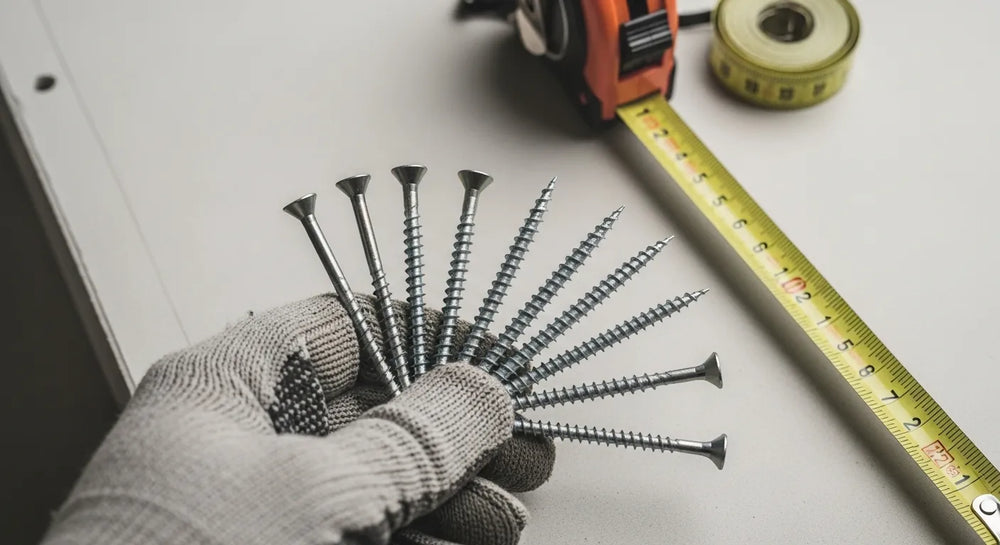
Drill a Screw Hole in Metal: Precision Techniques
Table of Contents
- Introduction
- Understanding the Fundamentals of Metal Drilling
- Essential Tools for Drilling Metal
- Step-by-Step Guide: How to Drill a Screw Hole in Metal
- Advanced Considerations for Specific Metals
- Common Mistakes and How to Avoid Them
- The Critical Link Between Drilling and Sourcing Quality Fasteners
- Conclusion
- FAQ
Manufacturing delays, equipment breakdowns, or even a simple prototype failure often trace back to a fundamental issue: a poorly prepared fastener connection. Imagine a design engineer meticulously planning a new assembly, only to find that the mounting holes for critical components compromise the material's integrity due to inaccurate drilling. Or consider a maintenance team facing repeated equipment failures because replacement parts were installed with fasteners that couldn't properly seat, leading to premature wear and tear. These scenarios underscore a crucial reality in industrial operations: the seemingly simple act of drilling a screw hole in metal is, in fact, a foundational skill demanding precision, knowledge, and the right tools.
This comprehensive guide will delve into the essential techniques, tools, and considerations required to expertly drill a screw hole in metal, ensuring structural integrity, optimal fastener performance, and long-term reliability. We will explore everything from selecting the right drill bit and understanding different metal properties to executing the drilling process flawlessly and avoiding common pitfalls. Ultimately, we aim to demonstrate how meticulous preparation at this critical stage, combined with sourcing high-quality, American-made fasteners, contributes directly to the success and longevity of any industrial project, reinforcing our commitment at Maden.co to industrial excellence and customer empowerment.
Introduction
In the intricate world of industrial manufacturing, MRO, and engineering, the integrity of a fastened connection is paramount. A secure connection begins long before a screw is driven; it starts with the precise preparation of the receiving material. Drilling a screw hole in metal might appear to be a straightforward task, but the nuances involved can significantly impact the strength, durability, and overall performance of the assembly. Improper technique can lead to stripped threads, material deformation, fastener failure, and ultimately, costly downtime or product recalls.
This article serves as an authoritative resource for procurement managers, MRO buyers, design engineers, and business owners who understand that quality begins at the most basic levels of fabrication. We will navigate the complexities of drilling into various metal types, detail the necessary tools and consumables, and provide a step-by-step methodology to achieve perfect screw holes every time. Our exploration will also highlight the undeniable link between precision drilling and the use of high-quality, American-made fasteners—components readily available through our platform at Maden.co. By mastering these techniques, you not only enhance your operational capabilities but also ensure that every project benefits from the unwavering reliability synonymous with U.S.-manufactured industrial supplies.
Understanding the Fundamentals of Metal Drilling
Before any drill bit touches metal, a solid understanding of the underlying principles is essential. The type of metal, the purpose of the hole, and the characteristics of the fastener all dictate the approach.
Why Precision Matters: Beyond Just Making a Hole
Precision in drilling goes far beyond simply creating an opening. It is about ensuring the structural integrity of the material and optimizing the performance of the fastener.
- Preventing Material Fatigue: An improperly drilled hole can introduce stress concentrations, leading to cracks or premature fatigue, especially in dynamically loaded components. Sharp edges, uneven surfaces, or incorrect hole diameters can significantly reduce the material's lifespan.
- Ensuring Secure Fastening: A hole that is too large will result in a loose fit, reducing the screw's clamping force and increasing the risk of vibration-induced loosening. A hole that is too small can lead to stripped threads, damaged fasteners, or even material distortion during installation.
- Optimizing Fastener Performance: The correct hole size allows the fastener to achieve its designed preload and shear strength. This is particularly crucial for applications requiring specific torque values or resistance to vibration. For example, when using a specialized self-tapping screw like the Hi-Lo Double Lead Thread Self-Tapping Sheet Metal Screw, the pilot hole size is critical to allow the unique thread design to form its own threads effectively without over-stressing the material or the fastener.
- Reducing Rework and Waste: Time spent correcting incorrectly drilled holes, replacing damaged fasteners, or scrapping an entire component due to a drilling error represents significant cost and inefficiency. Precision drilling is a core tenet of lean manufacturing and quality assurance.
Types of Metal: Properties and Drilling Considerations
Metals vary widely in hardness, ductility, thermal conductivity, and abrasive properties, all of which affect how they should be drilled.
- Mild Steel: Generally easy to drill. Requires moderate speed and consistent lubrication.
- Stainless Steel: Known for its hardness, toughness, and tendency to work harden (become harder as it's cut). Requires slow speeds, constant pressure, and excellent lubrication to prevent work hardening and extend drill bit life.
- Aluminum: Softer and more ductile than steel. Drills easily but can gum up drill bits if speeds are too high or lubrication is insufficient. Wider flutes are often preferred for better chip clearance.
- Brass and Bronze: Non-ferrous metals that are relatively soft. Can be drilled at moderate to high speeds with minimal lubrication. Be cautious of brittleness, especially with bronze.
- Cast Iron: Very brittle. Does not require lubrication (as the iron acts as its own lubricant). Requires slower speeds and steady pressure to avoid chipping the material. Produces fine, dusty chips.
- Hardened Steel: Extremely challenging. Often requires specialized carbide or carbide-tipped drill bits, very slow speeds, and significant pressure. Sometimes, annealing (softening by heat treatment) is necessary before drilling.
The Role of Fasteners: Matching Hole to Screw
The type of screw being used dictates the hole preparation. Generally, there are two main categories of screw holes:
- Clearance Holes: These are drilled slightly larger than the screw's major diameter (the outside diameter of the threads) to allow the screw to pass through freely. This is common when one component is being clamped to another, with the screw threading into the second component.
- Pilot Holes (Tapped Holes): These are drilled smaller than the screw's major diameter and are designed to either receive threads from a tapping operation (for machine screws) or allow a self-tapping screw to form its own threads. The size of the pilot hole is absolutely critical for the performance of the fastener.
For machine screws, a pilot hole is drilled, and then a tap is used to cut internal threads into the hole. The pilot hole size is precisely calculated to ensure 75-80% thread engagement, providing maximum strength without excessive tapping difficulty.
For self-tapping screws, which cut or form their own threads as they are driven, the pilot hole size is equally vital. For instance, our Steel Zinc Plated Type A Pan Slot Drive Self-Tapping Sheet Metal Screw relies on a specific pilot hole diameter to ensure it can efficiently form strong threads in sheet metal without causing material deformation or stripping. Similarly, a Steel Zinc Plated Type A Truss Square Drive Self-Tapping Sheet Metal Screw also requires an accurately sized pilot hole for optimal thread formation and secure fastening in appropriate materials. The specific pilot hole diameter is typically provided by the fastener manufacturer or found in engineering handbooks and charts.
Essential Tools for Drilling Metal
The right tools are half the battle. Investing in quality equipment and maintaining it properly will ensure consistent, accurate results and enhance safety.
Drills: Power and Control
- Corded Electric Drills: Offer consistent power and are suitable for heavy-duty, continuous use. Often more powerful than cordless equivalents.
- Cordless Drills (Battery-Powered): Provide portability and convenience, ideal for remote work or applications where power outlets are scarce. Battery life and torque are key considerations.
- Drill Presses: Essential for high-precision work, deep holes, or repetitive drilling tasks. They ensure perfectly perpendicular holes, precise depth control, and significantly reduce user fatigue and the risk of drill bit breakage. For a design engineer needing perfectly aligned holes for a critical assembly, a drill press is indispensable.
- Magnetic Drills: Specialized drills that attach magnetically to ferromagnetic materials, allowing for accurate and powerful drilling in large, immovable structures.
Drill Bits: The Cutting Edge
The drill bit is the most critical component, directly interacting with the metal. Its material, coating, and geometry are vital.
- High-Speed Steel (HSS): The most common type, suitable for general-purpose drilling in mild steels, aluminum, and softer metals. Affordable and readily available.
- Cobalt (HSS-Co): An alloy of HSS with 5-8% cobalt, offering significantly improved heat resistance and hardness. Excellent for drilling stainless steel and other harder metals without losing temper.
- Carbide-Tipped (Tungsten Carbide): Extremely hard and abrasion-resistant, ideal for very hard or abrasive materials like hardened steel, cast iron, and exotic alloys. More brittle than HSS or cobalt, requiring careful handling and use with a drill press.
- Solid Carbide: Even harder and more durable than carbide-tipped, but also more expensive and brittle. Used for high-volume production or extremely tough materials.
-
Coatings:
- Titanium Nitride (TiN): A gold-colored coating that increases surface hardness, reduces friction, and improves heat resistance, extending bit life.
- Black Oxide: A cost-effective coating that provides some corrosion resistance and slight lubricity, reducing friction.
- Titanium Carbonitride (TiCN): Harder and more wear-resistant than TiN, often dark blue/gray.
- Aluminium Titanium Nitride (AlTiN): Superior heat resistance, ideal for dry machining or very hard materials.
-
Point Angles:
- 118-degree: Standard point, good for general-purpose drilling in softer metals.
- 135-degree Split Point: Self-centering, reduces "walking" without a center punch, and is excellent for harder metals like stainless steel.
Lubricants and Cutting Fluids: The Unsung Heroes
Cutting fluids are not just for cooling; they play several critical roles:
- Cooling: Dissipate heat generated by friction and cutting, preventing the drill bit from overheating and losing its temper (hardness).
- Lubrication: Reduce friction between the drill bit and the workpiece, allowing for smoother cutting and reducing wear on the bit.
- Chip Removal: Help flush chips out of the hole, preventing them from recutting or clogging the flutes, which can lead to excessive heat and bit breakage.
- Improved Surface Finish: Contribute to a cleaner, smoother hole.
Different metals benefit from different coolants: soluble oils (emulsified in water) are versatile, while tapping fluids or heavy cutting oils are better for harder metals like stainless steel. Cast iron is typically drilled dry.
Measuring and Marking Tools: Precision Starts Here
- Center Punch: Absolutely essential for creating a dimple at the exact drilling location, preventing the drill bit from "walking" or wandering when it starts. Use a spring-loaded automatic center punch for consistency.
- Ruler, Calipers, Micrometers: For accurately measuring the screw diameter and determining the precise pilot hole size.
- Layout Fluid/Marker: To make your marks visible on the metal surface.
Safety Gear: Your Most Important Tools
Never compromise on safety.
- Safety Glasses/Goggles: Non-negotiable. Metal chips can fly at high speeds.
- Gloves: Protect hands from sharp edges and hot chips (but avoid loose gloves that can get caught in rotating machinery).
- Hearing Protection: Especially when using powerful drills or in noisy workshop environments.
- Workholding: Clamps and vises are critical for securing the workpiece, preventing it from rotating or shifting during drilling, which can cause injury or damage.
Step-by-Step Guide: How to Drill a Screw Hole in Metal
Achieving a perfect screw hole is a methodical process. Following these steps ensures accuracy, safety, and optimal results.
Step 1: Preparation and Planning
Thorough preparation is the bedrock of successful drilling.
- Identify the Metal Type: Accurately determine the metal you are working with. This will inform your choice of drill bit, speed, and lubrication. If unsure, a simple spark test or magnet test can provide clues (e.g., stainless steel is often non-magnetic or weakly magnetic; cast iron sparks are short and bushy).
- Choose the Right Drill Bit: Based on the metal type and the fastener. Refer to charts or manufacturer specifications for the correct pilot hole size for your chosen screw. For example, if you're using a common 1/4-20 machine screw, you'll need a different pilot hole size than for a self-tapping screw. Ensure the bit is sharp; a dull bit will generate excessive heat, work-harden the material, and produce a poor hole.
- Select the Correct Screw: Ensure your fastener is appropriate for the application and material. American-made fasteners procured from Maden.co come with rigorous quality assurances and consistent specifications, simplifying this matching process. For a procurement manager needing specific material certifications for a new prototype, the ability to quickly find verified, U.S.-made parts on our platform is a game-changer.
- Secure the Workpiece: This is paramount for safety and accuracy. Use a vise, clamps, or a drill press table with appropriate hold-downs. Never hold small pieces by hand while drilling. The piece must be stable and immovable.
Step 2: Marking and Piloting
This is where precision begins.
- Accurate Measurement and Marking: Use a ruler, calipers, or square to precisely locate the center of your desired hole. Mark it clearly with a fine-tipped marker or scribe.
- Center Punching: This is a non-negotiable step. Place the tip of your center punch directly on your marked point and strike it with a hammer (or use an automatic center punch). This creates a small indentation that guides the drill bit, preventing it from "walking" across the surface when it starts to spin. A drill bit that walks will create an off-center hole and can damage the workpiece surface.
- Drilling a Pilot Hole (If Necessary): For larger holes (typically anything over 1/4 inch or 6mm), or in harder metals, starting with a smaller pilot hole is highly recommended. Use a small diameter drill bit (e.g., 1/8 inch) to drill through the center-punched mark. This creates a clean, accurate starting point for the larger bit, reducing stress on the larger bit and improving accuracy.
Step 3: Drilling Techniques
The actual drilling requires controlled execution.
- Set the Correct RPM (Revolutions Per Minute): This is crucial. General rule: harder metals and larger drill bits require slower speeds; softer metals and smaller drill bits allow for faster speeds. Too fast on hard metal will overheat and dull the bit. Too slow on soft metal can lead to rough holes or excessive burring. Consult a speed and feed chart for specific recommendations for your metal and bit size.
- Apply Consistent, Even Pressure: Let the drill bit do the work. Apply steady, firm pressure, but avoid excessive force, which can cause the bit to flex, break, or overheat. The goal is to produce continuous, curled chips, indicating efficient cutting.
- Continuous Lubrication: For most metals (except cast iron), apply cutting fluid frequently during the drilling process. This cools the bit, lubricates the cut, and helps flush out chips. A squirt bottle or an oil can works well. For deep holes, withdraw the bit periodically to clear chips and reapply lubricant.
- Chip Clearance: Ensure chips are exiting the hole. If chips are building up, it means the bit is recutting, leading to heat buildup and potential breakage. Withdraw the bit from the hole occasionally to clear chips, especially in deeper holes.
- Maintain Perpendicularity: Keep the drill perfectly perpendicular to the workpiece surface. A drill press makes this automatic, but with a hand drill, practice and visual checks are essential. Angled holes can lead to stripped threads or improper fastener seating.
- Through-holes vs. Blind Holes: For through-holes, reduce pressure as the bit breaks through the bottom to prevent "grabbing" and damage to the workpiece or drill bit. For blind holes (not going all the way through), use a drill stop or the depth gauge on a drill press to control depth accurately.
Step 4: Finishing the Hole
The final steps ensure optimal fastener fit and safety.
- Deburring: After drilling, the edges of the hole will likely have sharp burrs. Use a countersink bit, a larger drill bit by hand, or a deburring tool to remove these sharp edges from both sides of the hole. Deburring improves safety, prevents stress concentrations, and allows fasteners to sit flush.
- Tapping (If Required for Machine Screws): If you are preparing the hole for a machine screw, you will need to tap internal threads. This involves using a tap (a specialized thread-cutting tool) with a tap handle. Apply tapping fluid and turn the tap slowly, backing it out frequently to break and clear chips. Accuracy here is crucial; stripped threads in a tapped hole are often irreparable without oversized fasteners or repair inserts.
- Cleaning: Thoroughly clean the hole and surrounding area of any metal chips, burrs, and cutting fluid residue. This prevents corrosion and ensures proper assembly.
Advanced Considerations for Specific Metals
While the general steps apply, certain metals demand tailored approaches.
Stainless Steel: A Challenging but Rewarding Metal
Stainless steel is known for its corrosion resistance and strength, but it's notoriously difficult to drill. It work-hardens rapidly and generates significant heat.
- Cobalt Drill Bits: Essential for stainless steel. HSS bits will quickly dull.
- Slow Speeds, High Pressure: Use a much slower RPM than for mild steel, but apply consistent, firm pressure. This allows the bit to cut effectively rather than just rubbing and work-hardening the surface.
- Constant Lubrication: A high-quality cutting oil specifically for stainless steel is critical for cooling and lubrication.
- Avoid Dwelling: Don't let the drill bit spin without cutting. This immediately work-hardens the material. Maintain continuous cutting action.
- Sharp Bits Only: Even a slightly dull bit will cause problems.
Aluminum: Softness with its Own Quirks
Aluminum is soft but can be problematic due to galling and chip buildup.
- High Speeds, Moderate Pressure: Generally, aluminum can be drilled at higher speeds than steel.
- Sharp HSS Bits: Standard HSS bits work well.
- Lubrication: While not as critical as for stainless steel, a light cutting oil or even WD-40 can help prevent chip welding to the bit (galling) and improve surface finish.
- Larger Flutes: Drill bits with wider flutes can help clear the soft, gummy chips more effectively.
Cast Iron: Brittle and Dry
Cast iron's unique properties require a different strategy.
- No Lubrication: Cast iron is self-lubricating due to its graphite content. Drilling it wet creates a muddy mess.
- Slower Speeds, Steady Pressure: Similar to stainless steel, use slower speeds but consistent pressure to prevent chipping.
- Carbide or HSS Bits: HSS bits are generally sufficient, but carbide-tipped bits can handle the abrasive nature better for high-volume work.
- Chip Control: Cast iron produces fine, powdery chips. Be prepared for dust and ensure proper ventilation.
Hardened Steel: When Standard Methods Fail
Drilling through hardened steel typically requires specialized tooling and techniques.
- Carbide Drill Bits: HSS or cobalt bits will not cut hardened steel. Solid carbide or carbide-tipped bits are necessary.
- Very Slow Speeds: The slowest RPM your drill can achieve.
- Heavy Pressure: Requires significant, consistent pressure, often best achieved with a robust drill press.
- Pilot Hole: Always start with a pilot hole, if possible, but it must also be drilled with a carbide bit.
- Spot Annealing: In some cases, localized heating (spot annealing) can soften the hardened area enough to allow drilling with conventional bits, but this can affect the material's overall properties.
Common Mistakes and How to Avoid Them
Even experienced professionals can make mistakes. Recognizing and avoiding these common pitfalls is key to consistent success.
- Using the Wrong Drill Bit: Trying to drill hardened steel with an HSS bit is futile and damaging. Always match the bit material and geometry to the workpiece.
- Incorrect Speed and Pressure: Too fast on hard metal dulls the bit; too slow on soft metal wastes time and can produce poor holes. Too little pressure leads to rubbing; too much can break the bit or overheat the material.
- Lack of Lubrication: Neglecting cutting fluid leads to excessive heat, premature bit wear, work hardening, and a poor finish.
- Skipping the Center Punch or Pilot Hole: This leads to inaccurate, off-center holes and increased risk of bit wandering, especially with hand drills.
- Improper Clamping: A shifting workpiece is a recipe for disaster—inaccurate holes, damaged parts, and serious injury. Always secure the material.
- Ignoring Safety Gear: Flying chips, hot metal, and rotating machinery are serious hazards. Eye protection is non-negotiable.
- Pushing a Dull Bit: A dull bit generates heat, glazes the material, and often leads to breakage. Stop and sharpen or replace the bit.
- Forgetting to Deburr: Sharp edges can snag wires, cut hands, or prevent components from seating properly, creating stress points.
The Critical Link Between Drilling and Sourcing Quality Fasteners
The art of drilling a perfect screw hole is only half the equation. The other, equally vital half, lies in pairing that meticulously prepared hole with a high-quality, dependable fastener. This is where the strategic importance of sourcing through a platform like Maden.co truly shines, embodying our values of American Manufacturing Pride and Industrial Excellence.
Why U.S.-Made Fasteners Matter
When you source through Maden.co, you're not just buying a part; you're investing in reliability, consistency, and adherence to rigorous standards.
- Consistent Quality and Material Integrity: American manufacturers adhere to stringent quality control processes and material specifications. This means fasteners are made from the specified alloys, heat-treated correctly, and manufactured to precise tolerances. This consistency is crucial for fasteners that must withstand specific loads, temperatures, or corrosive environments. Our mission at Maden.co is to democratize access to American manufacturing, ensuring that industrial buyers can easily find products that meet these high standards.
- Compliance with Critical Industry Standards: Whether you need fasteners compliant with DIN, NPT, or other specific engineering standards, U.S. manufacturers often meet or exceed these requirements. This is vital for applications in aerospace, medical devices, automotive, and heavy machinery, where regulatory compliance is non-negotiable.
- Enhanced Supply Chain Resilience: The past few years have highlighted the vulnerabilities of global supply chains. Sourcing U.S.-made products significantly reduces lead times, minimizes shipping complexities, and offers greater protection against geopolitical disruptions or unexpected global events. For an MRO buyer facing an unexpected equipment breakdown, the ability to quickly find and finance a verified, U.S.-made part is a game-changer for reducing downtime. This directly supports our core value of Supply Chain Transparency.
- Reduced Total Cost of Ownership (TCO): While the initial unit cost of an American-made fastener might sometimes be higher than an overseas alternative, the TCO is often significantly lower. This is due to reduced failure rates, less rework, fewer project delays, and longer component lifespan. A quality fastener properly installed in a precisely drilled hole lasts longer, performs better, and ultimately saves money.
Maden.co's Role: Your Strategic Partner in Procurement
At Maden.co, we are more than just a marketplace; we are a strategic partner committed to driving America's manufacturing revival. We connect industrial buyers with over 2.5 million American-made products from our network of 800+ verified U.S. manufacturers. Our vision is to become the definitive platform that proves American-made components are as accessible and convenient as any global alternative. You can learn more about our mission to champion American manufacturing here: About Us.
Consider the example of a procurement manager under pressure to source a specific, high-strength self-tapping screw for a new product line. Instead of navigating uncertain international supply chains, they can visit Maden.co and efficiently locate options like the Hi-Lo Double Lead Thread Self-Tapping Sheet Metal Screw, available from verified American manufacturers. This not only ensures quality but also supports domestic industry.
Our platform is built on Digital Innovation, offering features that streamline your procurement process, reduce friction, and enhance efficiency. For example, if your project requires a specific sheet metal screw with a pan slot drive, our extensive catalog allows you to easily find the Steel Zinc Plated Type A Pan Slot Drive Self-Tapping Sheet Metal Screw manufactured right here in the U.S. Or, perhaps your design calls for a truss head with a square drive for enhanced torque transmission; you can quickly locate the Steel Zinc Plated Type A Truss Square Drive Self-Tapping Sheet Metal Screw and review its specifications. This direct access to a vast array of quality components underscores our commitment to Customer Empowerment.
Instant Financing: A Strategic Advantage
Recognizing that large-volume purchases or critical equipment can require substantial capital, we offer Instant Financing during the checkout process. This isn't merely a payment option; it's a strategic tool designed to help procurement managers and business owners manage cash flow effectively and make necessary, larger-volume purchases without tying up immediate capital. This feature allows businesses to maintain project momentum and secure the American-made components they need, when they need them, further enhancing supply chain resilience. You can apply for Instant Financing at checkout to streamline your capital-intensive projects.
Are you a qualified U.S. manufacturer? Join our growing network and become part of America's manufacturing revival. Register as a vendor and join the American manufacturing revival. If you have specific sourcing questions or need assistance, our team is ready to help; simply Contact Us.
Conclusion
The ability to accurately drill a screw hole in metal is a fundamental skill that underpins the quality, safety, and longevity of countless industrial applications. From selecting the appropriate drill bit and understanding the unique properties of various metals to employing meticulous techniques for marking, piloting, and drilling, every step plays a crucial role in preventing costly failures and ensuring optimal performance. By prioritizing precision in this foundational task, businesses can significantly reduce rework, enhance product reliability, and safeguard their investments.
Just as crucial as the drilling technique is the quality of the fasteners used. Pairing a perfectly drilled hole with a high-quality, American-made fastener ensures a robust and reliable connection, providing unparalleled confidence in your assemblies and projects. At Maden.co, we are committed to providing seamless access to a vast catalog of such vital components, connecting you directly with verified U.S. manufacturers who uphold the highest standards of Industrial Excellence.
America's manufacturing revival is here, and it's built on a foundation of quality and efficiency. We invite you to explore our extensive catalog of American-made products, from essential fasteners to complex industrial components. Empower your procurement process, enhance your supply chain resilience, and discover the strategic benefits of sourcing through our platform. Leverage our Instant Financing option at checkout to manage your capital effectively and ensure your projects are always equipped with the best that American manufacturing has to offer. Start your search for quality American-made industrial supplies today at Maden.co.
FAQ
Q1: What is the most common mistake people make when drilling screw holes in metal?
A1: The most common mistake is neglecting to use a center punch before drilling. Without a center punch, the drill bit is likely to "walk" across the metal surface, creating an off-center hole and potentially damaging the workpiece. This simple step is crucial for accurate hole placement, especially when using a hand drill.
Q2: How do I choose the correct drill bit size for a screw hole?
A2: The correct drill bit size depends on whether you are drilling a clearance hole or a pilot hole for threading. For clearance holes, the bit should be slightly larger than the screw's major diameter to allow it to pass through freely. For pilot holes (for self-tapping screws or before tapping machine screw threads), the size is critical and must be precise, usually slightly smaller than the screw's major diameter. Always consult a drill bit and tap chart or the screw manufacturer's specifications for exact pilot hole recommendations for the specific screw type and material.
Q3: Why is lubrication important when drilling metal?
A3: Lubrication (cutting fluid) is vital for several reasons: it cools the drill bit, preventing it from overheating and losing its hardness; it lubricates the cutting action, reducing friction and extending bit life; and it helps flush metal chips out of the hole, preventing them from clogging the flutes and re-cutting, which can lead to excessive heat and bit breakage. The only common exception is cast iron, which is typically drilled dry.
Q4: How does sourcing U.S.-made fasteners relate to precise drilling techniques?
A4: Precision drilling creates an optimal environment for fasteners to perform correctly. When you pair that precision with high-quality, U.S.-made fasteners—which are manufactured to consistent specifications, undergo rigorous quality control, and adhere to industry standards—you ensure maximum joint integrity, reliability, and longevity. This combination reduces the likelihood of stripped threads, material deformation, and premature fastener failure, ultimately lowering your Total Cost of Ownership and enhancing overall project success.


