
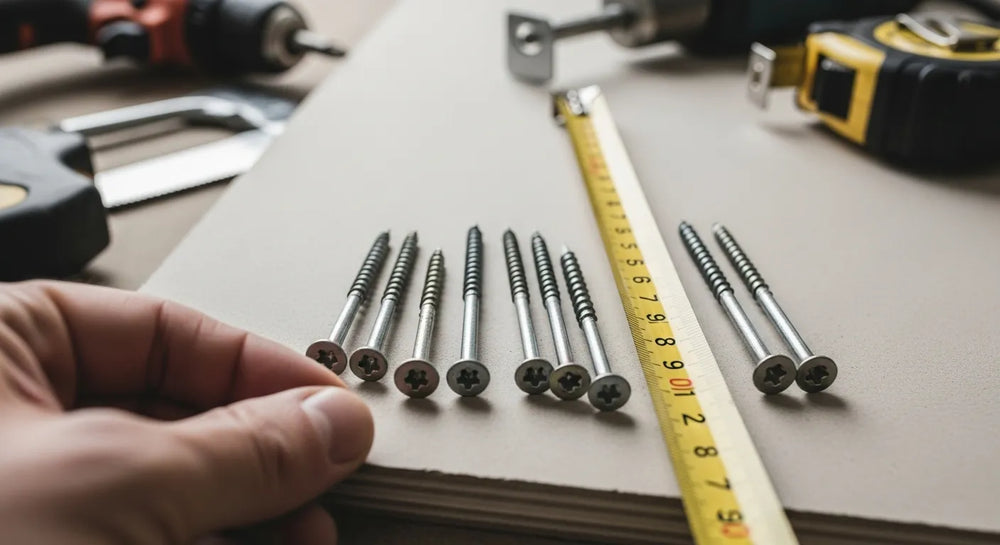
Drill Bit Size for 8mm Concrete Screws
Table of Contents
- Introduction
- The Direct Answer: The Standard Rule for 8mm Concrete Screws
- Why "One Size Fits All" is a Myth in Professional Applications
- The Installation Process: A Step-by-Step Guide to Perfection
- Optimizing Procurement for Fasteners and Hardware
- Calling All U.S. Manufacturers: Join the Revival
- Conclusion
- Frequently Asked Questions
Introduction
A project manager stands on a job site, watching a crew struggle. The concrete anchors they're installing aren't holding. Some screws spin uselessly in their holes, while others snap under the torque of the impact driver. Each failure represents wasted time, compromised materials, and a growing risk to the project's structural integrity and timeline. The root cause? A simple but critical error: a mismatched drill bit. This scenario, all too common in construction and industrial maintenance, highlights a fundamental truth. The difference between a secure, reliable fastening and a catastrophic failure can be measured in millimeters.
This article provides the definitive answer to the question, "what size drill bit for 8mm concrete screws?" But we will go far beyond a simple measurement. We will explore the critical variables—from the density of the base material to the specific design of the screw—that influence this crucial choice. We'll provide a detailed, step-by-step guide to the perfect installation process, ensuring every anchor you set meets the highest standards of safety and performance.
Ultimately, selecting the correct drill bit is more than a technical task; it is a foundational element of Industrial Excellence. It's about understanding that precision in the small details is what guarantees the strength and longevity of the entire structure, a principle we champion at Maden.co by connecting you with the highest quality, American-made industrial components.
The Direct Answer: The Standard Rule for 8mm Concrete Screws
For professionals seeking a direct, actionable starting point, the standard rule is straightforward. For a concrete screw with a nominal diameter of 8mm, you should use a 6mm or 6.5mm masonry drill bit. The selection between these two common sizes is the first decision point and depends on several factors we will explore in detail.
The core principle behind this undersized pilot hole is mechanical. Concrete screws, also known as masonry screws or concrete anchors, are self-threading. They are specifically designed to be driven into a hole that is narrower than their own thread diameter. As the screw is driven, its hardened, specialized threads cut into the walls of the concrete, brick, or block. This action creates a powerful, friction-based interlock between the fastener and the base material.
Key Principle: A pilot hole that is too large will prevent the threads from engaging, resulting in a failed anchor with zero holding power. A hole that is too small can make installation impossible, cause excessive stress on the screw leading to shearing, or even fracture the base material. The "sweet spot" is where the threads can cut and grip effectively without overburdening the fastener or the concrete.
Understanding this mechanism is the first step. The next is recognizing that in professional and industrial settings, relying on a single "rule of thumb" is insufficient. True precision requires a deeper understanding of the variables at play.
Why "One Size Fits All" is a Myth in Professional Applications
While the 6mm to 6.5mm range is a reliable starting point, a procurement manager sourcing for a critical infrastructure project or a design engineer specifying fasteners for a new product cannot afford to guess. The optimal drill bit size is a calculated decision influenced by the specific conditions of the application. Ignoring these factors can lead to reduced load capacity, premature failure, and significant safety risks. Let's break down the three most important variables.
Factor 1: Base Material Density and Composition
The material you are drilling into is arguably the most significant factor. Concrete is not a uniform substance; its properties vary dramatically.
-
High-Strength, Dense Concrete: For applications involving cured, high-PSI (pounds per square inch) concrete, the material is extremely hard and non-porous. In this environment, attempting to drive an 8mm screw into a 6mm hole can create immense friction and stress. This can cause the screw to bind and potentially shear off during installation. For these dense materials, opting for the slightly larger 6.5mm drill bit is often the safer and more effective choice. It reduces installation torque while still allowing for robust thread engagement.
-
Softer or Abrasive Materials: When working with lighter-weight materials like cinder block (CMU), porous brick, or "green" (not fully cured) concrete, the opposite is true. These materials are more forgiving and abrasive. Using a smaller 6mm drill bit is highly recommended. The smaller hole diameter ensures that the screw's threads have maximum material to bite into, compensating for the lower density of the base material and achieving the highest possible pull-out strength.
-
Aggregate Considerations: The size and type of aggregate within the concrete mix can also play a role. If you are drilling and consistently hitting hard aggregate, it can affect the quality of the pilot hole. A high-quality carbide-tipped bit is essential to maintain the hole's integrity and diameter.
For a procurement manager, understanding the interplay between a fastener and its intended base material is crucial for calculating the Total Cost of Ownership (TCO). Sourcing a premium, U.S.-made fastener like these versatile 1/4" x 2-3/4" Flat Head Concrete Screws ensures predictable performance, but only when paired with the correct installation methodology for the specific job site conditions.
Factor 2: The Specific Type of 8mm Concrete Screw
Not all 8mm concrete screws are identical. The design, material, and coating of the fastener itself introduce variables that must be considered.
-
Thread Profile: Screws can have different thread profiles. Some feature a high-low thread design for use in a wider range of materials, while others have a single, deeply notched thread for maximum holding power in hard concrete. A more aggressive thread may require a slightly larger pilot hole to accommodate the material it displaces.
-
Head Type: The head style dictates how the fastener finishes. A hex head provides a large bearing surface and allows for high installation torque, making it ideal for heavy fixtures. A quality Hex Head Concrete Screw made in the U.S.A. ensures the head won't round off under pressure. A flat head, by contrast, is designed to sit flush (countersunk) with the surface of the mounted object, requiring a clean and precise hole, often with a secondary countersinking step.
-
Coatings and Materials: Performance-enhancing coatings are critical for corrosion resistance, especially for MRO buyers dealing with equipment in harsh industrial environments. However, these coatings add thickness—measured in microns, but still significant. A thick ceramic or zinc coating can slightly increase the effective diameter of the screw. For a fastener with a heavy-duty coating, such as this durable Steel Blue Ruspert Ceramic Coated Concrete Screw, referencing the manufacturer's data sheet is paramount to ensure the pilot hole size accounts for the protective layer.
Factor 3: Manufacturer Specifications and U.S. Standards
This is the most important rule, superseding all others: Always read and follow the manufacturer's installation instructions.
The engineers who design and produce a fastener have tested it extensively across a range of materials to determine the optimal performance parameters. Their recommendation for drill bit size is not a suggestion; it is a prerequisite for achieving the published load values and ensuring a safe installation.
This is where the value of a transparent, reliable supply chain becomes a tangible asset. At Maden.co, our mission is to democratize access to American manufacturing. We achieve this by connecting industrial buyers with over 800 verified U.S. manufacturers. This direct connection provides more than just a product; it provides access to critical data. When you source through our platform, you gain:
- Access to Technical Data Sheets (TDS): No more guessing. Get the exact specifications for hole diameter, embedment depth, edge distances, and torque values directly from the source.
- Compliance and Certification: For design engineers, this is non-negotiable. Sourcing U.S.-made components simplifies the process of verifying compliance with industry standards like DIN or NPT.
- Supply Chain Transparency: You know who made your part and that it meets rigorous quality control standards. This stands in stark contrast to the uncertainty that often accompanies anonymously sourced overseas products.
Our entire business model is built on the principles of Customer Empowerment and Industrial Excellence. We believe that providing you with the right components and the right information is the key to a successful project. You can learn more about our mission to champion American manufacturing here.
The Installation Process: A Step-by-Step Guide to Perfection
Owning the right screw and the right drill bit is only half the battle. Flawless execution of the installation process is what translates those high-quality components into a secure and lasting anchor.
Step 1: Selecting the Right Drill and Bit
-
Drill Type: A standard rotary drill is insufficient for concrete. You need a drill that combines rotation with a percussion action.
- Hammer Drill: Suitable for lighter-duty applications in brick, block, and lower-strength concrete.
- Rotary Hammer: Essential for heavy-duty work and drilling into dense, high-PSI concrete. It uses a piston mechanism to deliver a much more powerful hammering blow.
- Bit Type: Always use a high-quality carbide-tipped masonry drill bit that is rated for use in a hammer drill or rotary hammer. The carbide tip is exceptionally hard and designed to pulverize masonry, while the flutes are engineered to clear the dust from the hole. Ensure the bit is straight and the tip is sharp.
Step 2: Drilling the Pilot Hole
- Marking the Depth: The pilot hole must be deeper than the screw's intended embedment. This extra space, known as the dust pocket, is critical. A general rule is to drill the hole at least 1/2 inch (or 12mm) deeper than the fastener's length. Use the adjustable depth rod on your drill or wrap a piece of painter's tape around the bit to serve as a visual depth gauge.
- Drilling Technique: Hold the drill perfectly perpendicular (90 degrees) to the work surface. Apply firm, steady pressure and let the tool do the work. Do not force it. If you hit rebar, stop immediately. Never attempt to drill through rebar with a masonry bit; relocate the hole.
Step 3: Cleaning the Hole – The Most Overlooked Step
This is the most common point of failure in anchoring. A pilot hole filled with concrete dust will prevent the screw's threads from achieving full, proper engagement with the base material. This can reduce the anchor's load capacity by over 50%.
The "Brush, Blow, Brush, Blow" Method: The professional standard for cleaning a pilot hole involves a sequence of actions.
- Brush: Insert a nylon or wire brush (sized to the hole) and scrub the sides to loosen all dust and debris.
- Blow: Use a can of compressed air with a straw or a manual air pump to blow all the loosened dust out of the hole.
- Repeat: Repeat the brush and blow steps to ensure the hole is completely clean.
A clean hole is a prerequisite for a strong anchor. Do not skip this step.
Step 4: Driving the Screw
- Tool Selection: Use an impact driver or a torque-controlled wrench to install the screw. Never use the "hammer" setting on your drill to drive a concrete screw, as the percussive action can damage the threads cut into the concrete and destroy the anchor's holding power.
- Driving Technique: Drive the screw smoothly and consistently into the hole. The screw should require moderate effort to drive. If it is excessively difficult, your hole may be too small or not clean enough. If it drives with almost no resistance, your hole is too large. Continue driving until the head of the fastener is seated firmly against the surface of the fixture. Do not over-torque the screw, as this can strip the threads in the concrete or shear the head of the fastener.
Optimizing Procurement for Fasteners and Hardware
Consider this relatable scenario: An MRO manager at a large manufacturing facility is overseeing a critical equipment installation. The project requires 2,000 specialized concrete anchors with a specific ceramic coating for corrosion resistance. Their regular supplier reveals a 10-week lead time due to an international shipping delay. The entire project, with its significant capital and labor costs, is now on hold, creating a costly bottleneck.
This is a clear example of a fragile supply chain. This is the problem we are dedicated to solving. By choosing to source through a platform dedicated to American manufacturing, that MRO manager could have:
- Improved Supply Chain Resilience: Instantly access a network of domestic manufacturers, insulating the project from global shipping delays, port congestion, and geopolitical uncertainty.
- Reduced Procurement Friction: Use our powerful search and filtering tools to find the exact part needed—down to the material, coating, and head type—from our catalog of over 2.5 million U.S.-made products. No more back-and-forth emails or phone calls chasing down specifications.
- Gained Total Transparency: See clear lead times and work with verified U.S. suppliers who stand by their products.
For larger orders and capital-intensive projects, effective cash flow management is a strategic necessity. A large purchase of fasteners, tools, or other MRO supplies can impact an operational budget. To address this, we've integrated a powerful tool directly into our platform. You can apply for Instant Financing at checkout to streamline your capital-intensive projects, allowing you to acquire all the necessary materials to keep your projects moving forward without compromising your financial flexibility.
Calling All U.S. Manufacturers: Join the Revival
The strength of our platform comes from the strength of our partners—the American manufacturers who are the backbone of our nation's industrial power. We are building the definitive digital ecosystem that proves U.S.-made components are as accessible and convenient as any global alternative. If you are a U.S. manufacturer producing high-quality fasteners, hardware, or any other industrial components, we invite you to join our mission. Let us handle the digital innovation, connecting you to a national network of qualified buyers who are actively searching for American-made solutions. Help us write the next chapter of American industry. Are you a U.S. manufacturer? Register as a vendor and join the American manufacturing revival.
Conclusion
The correct drill bit for an 8mm concrete screw is, in most cases, 6mm or 6.5mm. But as we've seen, this simple answer is the beginning, not the end, of the story. The optimal choice is a nuanced decision dependent on the specific base material, the design of the screw, and the precise instructions from the manufacturer. Following a meticulous installation process—especially the critical step of cleaning the pilot hole—is what ensures the anchor performs to its maximum potential.
Ultimately, a commitment to getting these details right is a commitment to quality, safety, and durability. It reflects a standard of Industrial Excellence that should permeate every aspect of your operations, from the job site to the procurement office. Don't let supply chain friction or component uncertainty become the weak link in your projects.
Explore the comprehensive catalog at Maden.co to discover millions of verified, U.S.-made industrial products. Find the exact concrete screws for your next project, access the technical data you need to ensure a perfect installation, and streamline your entire procurement process. For larger purchases, empower your business by using our Instant Financing option right at checkout. If you have specific sourcing questions or need help finding a hard-to-source component, our expert team is ready to assist. Contact us today and experience the power of a truly American supply chain.
Frequently Asked Questions
1. Can I use a regular cordless drill to make a pilot hole in concrete? It is strongly discouraged. A standard drill lacks the necessary hammering action to efficiently bore into masonry. Using one will be extremely slow, will burn out the drill bit, and can overheat the drill's motor. A hammer drill or, for harder concrete, a rotary hammer is the proper tool for the job.
2. What happens if I drill the pilot hole for my 8mm concrete screw too big? If the hole is too large, the screw's threads will have no material to cut into and grip. The screw will either spin freely in the hole or pull out with minimal force. This creates a completely failed anchor that cannot bear any load and poses a significant safety risk.
3. How do I know the required minimum embedment depth for an 8mm screw? The required embedment depth is a critical specification determined by the manufacturer through engineering tests. This information is always included in the product's Technical Data Sheet (TDS). Sourcing fasteners through a transparent platform like Maden.co ensures you have easy access to this documentation from our verified U.S. manufacturing partners.
4. Are U.S.-made concrete screws genuinely better than imported alternatives? Sourcing U.S.-made concrete screws from verified manufacturers provides several key advantages for professional applications. These include adherence to stringent quality control programs, traceable material certifications (ensuring the steel meets specifications), and consistent manufacturing tolerances. This leads to more reliable and predictable performance, which is essential for ensuring safety and structural integrity in industrial and commercial projects.


