
Drill-Free Drywall Anchor Installation
Table of Contents
- Introduction
- Understanding Drywall and the Necessity of Anchors
- The Essential Toolkit for Drill-Free Installation
- Types of Drywall Anchors for Drill-Less Installation
- Step-by-Step Universal Installation Guide
- The Strategic Value of Sourcing American-Made Fasteners
- Conclusion: Building with Confidence and Efficiency
- Frequently Asked Questions
Introduction
Imagine this scenario: a facilities manager is tasked with installing new safety signage across an entire office floor, an MRO buyer needs to mount replacement tool holders in the maintenance shop, or a design engineer is setting up a prototype display for a critical demonstration. The project is on a tight schedule, but a simple, crucial tool is missing from the kit—a power drill. This common hurdle can halt progress, causing frustrating and costly delays. It raises a critical question for professionals in industrial and commercial settings: is it possible to achieve a secure, reliable installation in drywall without the convenience of a drill?
The answer is an emphatic yes. The challenge lies not in the absence of a power tool, but in understanding the specific fastening technologies designed to overcome this exact problem. This article serves as an authoritative guide for procurement managers, MRO buyers, and engineers on how to properly select and use drywall anchors when a drill is not an option. We will explore the different types of drill-less anchors, provide detailed, step-by-step installation instructions, and discuss common pitfalls to avoid.
Ultimately, this guide demonstrates that with the right American-made components and proper technique, you can ensure project continuity, maintain safety standards, and execute flawless installations, proving that resourcefulness and the right hardware are the true keys to operational efficiency.
Understanding Drywall and the Necessity of Anchors
Before diving into the methods of drill-less installation, it is crucial for any industrial buyer or maintenance professional to understand the material they are working with. Drywall, also known as gypsum board or plasterboard, is the standard for interior walls in most modern commercial and industrial buildings. It consists of a layer of gypsum plaster pressed between two thick sheets of paper. While it offers excellent fire resistance, sound insulation, and a smooth finish, its core structural weakness is its low density and brittle nature.
A simple screw driven directly into drywall has very little material to grip. The gypsum core can easily crumble under pressure, meaning the screw can be pulled out with minimal force. This is a critical point of failure that can lead to damaged equipment, safety hazards, and the need for costly repairs. This is why a drywall anchor is not just a helpful accessory; it is a non-negotiable component for any load-bearing application.
An anchor works by expanding behind or creating significant friction against the interior of the drywall panel, distributing the load over a much wider surface area. This dramatically increases the holding power, allowing you to securely mount everything from shelving and cabinets to heavy-duty fixtures and equipment racks. The integrity of your entire installation depends on the quality and correct application of this small but vital component. Sourcing reliable, high-quality anchors is the first step in mitigating risk and ensuring a long-lasting, secure mount. At Maden.co, we are committed to providing access to a vast catalog of such essential, U.S.-manufactured components, forming the foundation of a resilient and efficient supply chain for American businesses.
The Essential Toolkit for Drill-Free Installation
While a power drill is off the table, a successful installation still requires a few basic hand tools. Assembling this simple kit ensures a professional, clean, and secure result. For most drill-less anchor installations, an MRO professional should have the following on hand:
- Screwdrivers: Both a Phillips head and a flathead screwdriver are essential. The Phillips head will be used to drive the anchor itself (for self-drilling types) and the final mounting screw. A flathead can sometimes be useful for prying or making slight adjustments.
- Hammer: A lightweight hammer is needed to gently tap expansion-style anchors into their pilot holes. It should be used with precision to avoid damaging the drywall surface.
- Awl or Sharp Nail: For anchors that require a pilot hole, an awl is the ideal tool. Its sharp, conical point allows you to create a clean, perfectly sized starting hole with manual pressure. A sturdy nail can be used as an effective substitute.
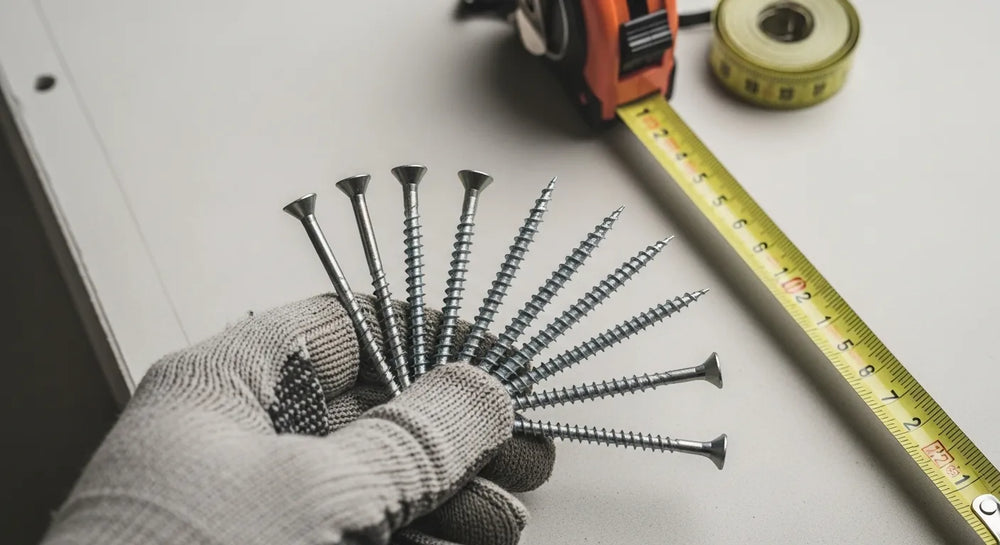
- Measuring Tape and Pencil: Accuracy is paramount. Always measure and mark the exact location for your anchor to ensure proper alignment of the final mounted item.
- Safety Glasses: Protecting your eyes from any potential drywall dust or debris is a fundamental safety practice in any professional setting.
Having these tools readily available in any standard MRO toolkit empowers technicians to handle a wide range of mounting tasks efficiently, without being dependent on the availability of powered equipment.
Types of Drywall Anchors for Drill-Less Installation
The key to a successful drill-free installation is selecting an anchor specifically designed for this purpose. Not all anchors are created equal. The market offers several innovative designs that either create their own hole or function perfectly with a manually created one. Let's explore the most effective types for professional applications.
Self-Drilling Anchors (Threaded or "Zip-It" Style)
Self-drilling anchors are the premier solution for drill-less applications, particularly for medium-duty loads. These anchors feature a sharp, auger-like tip and aggressive threads designed to bore directly into the drywall panel. As you turn the anchor with a Phillips screwdriver, the tip cuts a precise path while the threads securely engage the gypsum and paper.
How They Work: The anchor essentially acts as its own drill bit and anchor in one. The deep, wide threads displace the drywall material and create an incredibly firm grip. Once the anchor is seated flush with the wall, you drive your mounting screw into the center of the anchor, which completes the installation without causing the anchor to expand.
Materials: They are commonly available in two materials:
- Nylon/Plastic: These are excellent for most medium-duty applications. They are corrosion-resistant, easy to drive by hand, and less likely to tear the drywall's paper facing.
- Zinc Alloy (Metal): Metal self-drilling anchors offer higher shear strength and are suitable for heavier loads. They require a bit more force to install but provide a more robust fastening point.
Best Use Cases: Ideal for mounting electrical boxes, shelving units, curtain rods, heavy pictures, and commercial displays.
For MRO buyers looking for a reliable, American-made option, the Medium Duty Nylon Wall Anchor #6 Self-Drilling Drywall (Zip-It®) is an exemplary choice. Its design ensures a quick, secure installation every time, making it a valuable component for any maintenance professional focused on efficiency and reliability. Sourcing such specialized fasteners through a dedicated platform ensures you get a product that meets rigorous quality standards.
Expansion Anchors (Ribbed Plastic Style)
Expansion anchors are one of the most common types of fasteners and are highly effective for light to medium-duty applications. While often installed using a drilled pilot hole, they are perfectly suited for drill-less installation with a manually created opening. These anchors feature a ribbed or finned exterior that helps them grip the drywall and prevent them from spinning once inserted.
How They Work: The process begins by creating a small pilot hole using an awl or a nail. The hole should be slightly smaller than the diameter of the anchor. The plastic anchor is then gently tapped into the hole until its collar is flush with the wall surface. When you drive a screw into the anchor, the anchor splits and expands, pressing firmly against the inside of the drywall. This expansion is what creates the secure hold.
Creating the Pilot Hole Manually:
- Use a hammer and an awl (or a nail) to puncture the drywall at your marked location.
- Gently tap the awl until it has created a hole deep enough for the anchor.
- Wiggle the awl slightly to widen the hole to the appropriate diameter. The goal is a snug fit for the anchor. You can also use the tip of a Phillips screwdriver, applying firm pressure and twisting to create the opening.
Best Use Cases: Excellent for mounting smoke detectors, thermostats, lightweight signage, small pictures, and other items that do not carry a significant load.
For large-scale commercial fit-outs or routine maintenance inventories, having a bulk supply of dependable expansion anchors is a strategic procurement decision. The Ribbed Plastic Anchor available on our marketplace is a versatile, U.S.-made solution. By sourcing these essential components from verified American manufacturers, you reduce supply chain vulnerabilities and ensure consistent quality across all your projects.
Conical Anchors for Manual Installation
Conical anchors, like their ribbed counterparts, are a form of expansion anchor. They are often included in consumer hardware kits and are extremely versatile. While a drill provides the cleanest pilot hole, these can be effectively installed with a manually created one, making them a staple for any well-stocked MRO toolkit. Their simple, tapered design allows for easy insertion, and they provide a reliable hold for many light and medium-duty tasks.
Installation Process without a Drill:
- Mark the Spot: Precisely mark where the anchor will go.
- Create a Pilot Hole: Using a Phillips screwdriver or an awl, apply firm pressure and twist to bore a small hole into the drywall. The goal is to create an opening just large enough to start the anchor.
- Insert the Anchor: Press the tip of the conical anchor into the hole.
- Tap it Flush: Use a hammer to gently tap the anchor until its head is flush with the surface of the drywall. Be careful not to drive it in too far, which could damage the wall.
- Drive the Screw: Insert your item, and then drive the screw into the anchor. You will feel the resistance increase as the anchor expands and secures itself.
For a robust, American-made option that provides a secure hold, consider the Medium Duty Nylon Wall Anchor #8 for Drywall. This type of anchor is a workhorse for maintenance teams, offering a dependable solution that can be installed quickly with minimal tools. Having a ready supply of these U.S.-made fasteners is a key part of maintaining operational readiness and avoiding project delays caused by a lack of basic hardware.
Step-by-Step Universal Installation Guide
While the specific anchor dictates the exact technique, the overall process follows a logical sequence. Adhering to these steps ensures a professional and secure installation every time.
-
Assess the Load and Wall: Before starting, determine the weight of the object you are mounting. Consult the anchor's packaging for its weight rating and ensure it is appropriate for the task. Also, tap on the wall to check for studs. If you find a solid stud where you need to mount, you can drive a screw directly into it for a superior hold, no anchor needed.
-
Select the Appropriate Drill-Less Anchor: Based on the weight and type of item, choose your anchor. For speed and medium loads, a self-drilling anchor is best. For lighter items where precision is key, an expansion anchor with a manually created pilot hole is an excellent choice.
-
Gather Your Tools: Assemble your screwdriver, hammer, awl/nail, tape measure, pencil, and safety glasses.
-
Mark Your Location: Measure twice, mark once. Use your pencil to make a clear, precise mark on the drywall where the center of the anchor will be.
-
Create the Opening:
- For Self-Drilling Anchors: Place the sharp tip of the anchor on your mark. Apply firm, steady pressure with your Phillips screwdriver and turn clockwise. The anchor should bite into the drywall and begin pulling itself in. Continue turning until the anchor head is flush with the wall.
- For Expansion/Conical Anchors: Use your awl or nail to create a pilot hole at your mark. Start by tapping gently with the hammer, then increase the force until the tool penetrates the drywall. Wiggle it to achieve the correct diameter for a snug fit.
-
Insert the Anchor:
- For Self-Drilling: This step is already complete.
- For Expansion/Conical: Press the anchor into the pilot hole by hand. If it doesn't go in easily, gently tap it with the hammer until the head is flush with the wall.
-
Mount the Item and Set the Screw: Position your item over the installed anchor. Insert the provided screw through your item's mounting hole and into the anchor. Turn the screw clockwise. You will feel it tighten as it either engages the anchor's threads or causes the anchor to expand. Stop turning once the screw is snug.
Crucial Tip: Avoid over-tightening the screw. This is the most common mistake and can strip the anchor's internal threads or damage the drywall, causing the anchor to fail. A firm, snug fit is all that is required.
The Strategic Value of Sourcing American-Made Fasteners
For a procurement manager or business owner, the choice of a simple drywall anchor extends far beyond the immediate task. It's a decision that impacts Total Cost of Ownership (TCO), supply chain resilience, and overall project integrity. A failed anchor due to poor quality can lead to property damage, safety incidents, and costly rework—expenses that far exceed the initial cost of a superior, verified component.
This is where our mission at Maden.co becomes critical. We are dedicated to democratizing access to the American manufacturing base, connecting industrial buyers with over 2.5 million products from a network of more than 800 verified U.S. manufacturers. Our vision is to prove that sourcing American-made components is not just a patriotic choice, but the smartest business decision for building a reliable, transparent, and efficient supply chain. You can learn more about our mission to champion American manufacturing here.
Partnering with us means you gain access to a vast catalog of hard-to-find components, ensuring you get the exact specification you need without the friction of traditional sourcing channels. For MRO buyers outfitting an entire facility or engineers requiring specialty fasteners for a new product line, purchasing in bulk is often necessary. We understand the importance of managing cash flow effectively, which is why we offer a strategic tool to facilitate these larger purchases. You can apply for Instant Financing at checkout to streamline your capital-intensive projects and acquire the necessary inventory without disrupting your budget.
We are continuously seeking to strengthen the domestic supply chain by bringing more top-tier producers onto our platform. If you are a U.S. manufacturer producing quality industrial components like the anchors discussed here, we invite you to register as a vendor and join the American manufacturing revival. If you have any questions about bulk ordering, finding specific parts, or our financing options, please do not hesitate to reach out. Our expert team is always ready to assist; you can contact us directly here.
Conclusion: Building with Confidence and Efficiency
The absence of a power drill should never be an obstacle to progress. By understanding the capabilities of drill-less drywall anchors—from self-drilling models to expansion anchors installed with manual pilot holes—MRO professionals, engineers, and facility managers can execute secure, professional-grade installations with a basic set of hand tools. The key lies in matching the right anchor to the specific load requirement and following a precise, methodical installation process.
More importantly, this capability is amplified when backed by a reliable supply chain. Ensuring your toolkits and inventory are stocked with high-quality, American-made fasteners is a strategic investment in efficiency, safety, and operational resilience. It eliminates last-minute sourcing scrambles and provides peace of mind that every component meets rigorous standards.
Don't let a missing tool or a fractured supply chain delay your critical projects. Explore the comprehensive catalog of U.S.-made drywall anchors and millions of other industrial components on Maden.co. Equip your team with the hardware they need to succeed, and drive your business forward with the confidence that comes from building with the best of American manufacturing.
Frequently Asked Questions
1. What is the maximum weight a drywall anchor installed without a drill can hold? The weight capacity depends entirely on the specific type and size of the anchor, as well as the condition of the drywall itself. Generally, self-drilling anchors can hold between 25 to 50 pounds, while lighter-duty expansion anchors may be rated for 10 to 25 pounds. It is critical to always consult the manufacturer's specifications for the exact anchor you are using to ensure a safe installation.
2. Can I reuse a drywall anchor or its hole? It is strongly recommended not to reuse a drywall anchor or its existing hole. Once an anchor is removed, the integrity of the surrounding gypsum is compromised. The hole will be enlarged and the material weakened, preventing a new anchor from gripping securely. For the safest and most reliable mount, always use a new anchor in a fresh location at least a few inches away from the old hole.
3. What should I do if I hit a wooden wall stud while trying to install an anchor? Hitting a stud is actually a positive outcome. A wood stud provides a far more secure mounting point than drywall alone. If you hit a stud, you do not need an anchor. You can simply drive an appropriate-length wood screw directly through your item and into the center of the stud for a significantly stronger and more reliable hold.
4. Why choose nylon self-drilling anchors over metal ones for a manual installation? While metal anchors offer higher strength, nylon self-drilling anchors are often preferable for manual installation without a drill. The nylon material is slightly more forgiving and requires less torque to drive, making it easier to install with a simple screwdriver. Nylon anchors are also less likely to tear the drywall's outer paper layer during insertion and are inherently corrosion-resistant, making them suitable for various environments.


