
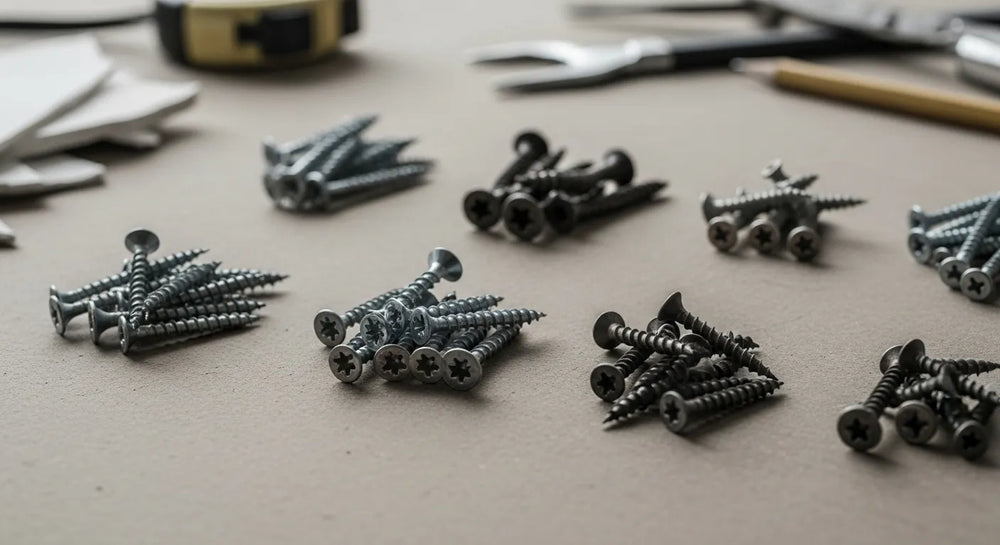
Drill Size for an 8 Wood Screw: Precision in Fastening
Table of Contents
- Introduction
- The Criticality of the Pilot Hole: Beyond Just "Drilling a Hole"
- Understanding Wood Screws: Anatomy and Sizing
- The #8 Wood Screw: A Common Industrial Workhorse
- Determining the Right Pilot Hole Size: The Science Behind the Recommendation
- Pilot Hole Chart for #8 Wood Screws (Detailed Recommendations)
- Drilling Techniques and Best Practices
- Addressing Common Procurement Challenges with Precision Fasteners
- Streamlining Your Capital-Intensive Projects with Instant Financing
- Partnering for the Future: Join the Manufacturing Revival
- Need Expert Advice?
- Conclusion
- FAQ
Introduction
Imagine the frustration: a critical assembly line halts because a fastener splits its wooden housing, or a newly designed product fails quality control due to a stripped screw. These aren't just minor inconven inconveniences; they represent costly delays, material waste, and potential compromises to structural integrity. In the world of industrial applications, MRO, and precision engineering, the smallest detail—like selecting the correct pilot hole for a wood screw—can have cascading effects on project success and the longevity of components. It's a fundamental step that, when overlooked, undermines the very stability a fastener is designed to provide.
This comprehensive guide will delve into the precise considerations for determining what size hole to drill for an 8 wood screw. We will explore the critical factors influencing pilot hole selection, from the nuances of wood types and screw materials to the geometry of the fasteners themselves. Beyond the technical specifics, we’ll discuss best practices for drilling, techniques to ensure optimal screw performance, and how sourcing high-quality, American-made components plays an integral role in achieving robust and reliable assemblies. Our objective is to equip procurement managers, design engineers, MRO buyers, and business owners with the authoritative knowledge needed to eliminate guesswork, enhance project efficiency, and secure the durability of their work. The core message is clear: precision in pilot hole drilling is paramount for structural integrity and project success, and partnering with verified U.S. manufacturers for quality components is equally vital.
The Criticality of the Pilot Hole: Beyond Just "Drilling a Hole"
The act of drilling a pilot hole before driving a wood screw might seem like a minor preparatory step, but its importance cannot be overstated. Far from being an optional chore, a properly sized pilot hole is the linchpin of a secure, durable, and reliable fastening. It's the difference between a connection that endures years of service and one that fails prematurely under stress.
Why Pilot Holes Are Essential for Industrial Fastening
- Preventing Wood Splitting: Wood, by its very nature, has grain patterns that can be highly susceptible to splitting when a screw is driven directly into it, especially near edges or in dense hardwoods. A pilot hole creates a pre-defined path for the screw, guiding it through the fibers without forcing them apart, thereby drastically reducing the risk of splitting and preserving the material's integrity. For projects requiring the utmost reliability, such as securing critical panels or structural elements, this preventative measure is indispensable.
- Ensuring Proper Screw Seating and Engagement: A pilot hole allows the screw's threads to cleanly cut into the wood, rather than merely pushing fibers aside. This ensures that the threads achieve maximum engagement with the wood, leading to superior holding power. When the screw can seat properly, it reduces the likelihood of it backing out or loosening over time, which is crucial for applications experiencing vibration or dynamic loads.
- Maximizing Holding Power: The ideal pilot hole is a balance: large enough to prevent splitting and stripping, yet small enough to allow the screw threads to fully embed and grip the wood. This optimized engagement maximizes the tensile and shear strength of the connection, directly contributing to the overall structural integrity of the assembly. For scenarios where components must withstand significant forces, such as in heavy machinery or specialized equipment, achieving maximum holding power is non-negotiable.
- Protecting Screw Integrity and Preventing Stripping: Driving a screw into an undersized or non-existent pilot hole requires excessive force, which can strip the screw head, snap the screw shank, or damage the driver bit. This not only wastes materials and time but can also leave a compromised fastener that needs to be extracted—a challenging and often destructive process. A correctly sized pilot hole reduces the torque required to drive the screw, prolonging the life of your tools and the fasteners themselves, ensuring a clean, undamaged installation every time.
- Facilitating Clean and Consistent Assemblies: In industrial manufacturing, consistency is key. Pilot holes contribute to consistent screw depth, alignment, and appearance across multiple fasteners, which is vital for aesthetic quality and functional uniformity in mass production or large-scale projects. This level of precision reflects industrial excellence and adherence to high-quality standards.
Risks of Neglecting Proper Pilot Hole Sizing
The consequences of incorrect pilot hole sizing extend far beyond minor annoyances. In a B2B context, these risks translate directly into financial losses, operational inefficiencies, and potential safety hazards:
- Material Damage and Waste: Splitting expensive hardwoods, veneers, or engineered wood products due to an undersized hole results in costly material waste and rework.
- Compromised Structural Integrity: A stripped screw or a weakened joint from wood splitting directly undermines the structural integrity of the entire assembly, potentially leading to catastrophic failure in critical applications.
- Increased Labor Costs and Project Delays: Dealing with broken screws, stripped heads, or damaged materials requires additional labor, specialized extraction tools, and significant downtime, all of which inflate project costs and extend timelines.
- Reduced Product Lifespan: Weakened connections are more prone to loosening under stress, vibration, or environmental factors, leading to a shorter product lifespan and increased warranty claims.
- Safety Hazards: In certain applications, such as load-bearing structures or safety guards, a compromised fastener due to incorrect pilot hole sizing can pose serious safety risks to operators or end-users.
For a procurement manager under pressure to source precise components, a design engineer needing specific material certifications, or an MRO buyer facing an unexpected equipment breakdown, understanding and implementing correct pilot hole sizing, combined with the assurance of high-quality U.S.-made fasteners, is not just good practice—it's a fundamental requirement for operational success and adherence to our core values of Industrial Excellence and Supply Chain Transparency.
Understanding Wood Screws: Anatomy and Sizing
To fully grasp the science behind pilot hole selection, it's essential to understand the basic anatomy and sizing conventions of the wood screw itself. While seemingly simple, each part plays a crucial role in how the screw interacts with the material it fastens.
Wood Screw Anatomy
A typical wood screw consists of several distinct parts, each engineered for a specific function:
-
Head: The top part of the screw, which engages with the driver (e.g., Phillips, Slot, Torx, Square). The head style also dictates how the screw sits relative to the surface (e.g., flat, round, oval, pan).
- Round Head: Sits above the surface, offering a decorative or utilitarian finish. For a classic aesthetic, consider our Round Slot Drive Brass Wood Screw, perfect for applications where the screw head is visible and contributes to the design.
- Flat Head: Designed to be countersunk, sitting flush with or slightly below the surface for a clean, snag-free finish. Our Flat Slot Drive Brass Wood Screw exemplifies this, ideal for flush-mounted hardware or where a smooth surface is critical.
- Oval Head: A decorative head that is partially countersunk, leaving a domed top. This combines aesthetics with functionality. For enhanced corrosion resistance and a refined finish, explore our Oval Slot Drive Silicon Bronze Wood Screw, often chosen for marine or architectural applications.
- Shank (Unthreaded Body): The smooth, unthreaded section of the screw, located just below the head. This part passes through the top material (the workpiece being fastened) and allows it to be drawn tightly against the base material. The diameter of this section is critical for determining the shank pilot hole.
- Threads: The helical ridges that cut into the wood, providing the grip and holding power. Wood screw threads are typically coarse and designed to create a strong mechanical bond.
- Core Diameter (Root Diameter): The diameter of the screw shaft between the threads. This measurement is crucial for determining the pilot hole size for the threaded portion of the screw in the base material, ensuring the threads have enough material to grip without forcing it apart.
- Point: The tapered end of the screw, designed to aid in initial penetration.
Wood Screw Sizing System: The #8 Standard
Wood screws are typically sized by two main dimensions: their gauge (or diameter) and their length.
- Gauge: This refers to the diameter of the screw's shank, measured across the unthreaded portion closest to the head. It's an incremental number, with larger numbers indicating larger diameters. Common gauges range from #0 to #24, with #8 being a very common and versatile size for a wide array of applications. A #8 screw typically has a major thread diameter of approximately 0.164 inches (4.16mm) and a shank diameter of about 0.138 inches (3.5mm).
- Length: This is measured from the tip of the screw to the point where the head seats against the surface. For flat or oval head screws, this is usually the top of the head; for round or pan head screws, it's the underside of the head. Lengths vary widely, from ½ inch to several inches, depending on the application's required penetration depth.
Materials Matter: Steel, Brass, and Silicon Bronze
The material of the wood screw significantly impacts its strength, corrosion resistance, and how it interacts with the wood during installation. At Maden.co, we understand that material specification is paramount for industrial excellence and supply chain transparency, particularly when dealing with critical applications.
-
Steel (Often Zinc Plated or Stainless Steel):
- Properties: High tensile strength, very durable, excellent for structural applications where maximum holding power is required. Zinc plating provides basic corrosion resistance, while stainless steel offers superior resistance to rust and oxidation, making it suitable for outdoor or corrosive environments.
- Considerations: Steel screws are hard and strong, making them less prone to stripping or snapping during installation. However, their hardness means they require precise pilot holes, especially in hardwoods, to prevent wood splitting.
-
Brass:
- Properties: Softer than steel, offers good corrosion resistance, and is highly valued for its aesthetic appeal. Brass screws are often used in decorative applications, furniture, or marine environments where a non-magnetic, corrosion-resistant, and visually appealing fastener is desired.
- Considerations: Due to its softer nature, brass screws are more susceptible to stripping or breaking if too much torque is applied, or if the pilot hole is too small. This makes accurate pilot hole sizing even more critical for brass fasteners like our Round Slot Drive Brass Wood Screw and Flat Slot Drive Brass Wood Screw. They also benefit from lubrication (like wax) during driving.
-
Silicon Bronze:
- Properties: An alloy primarily of copper and silicon, offering exceptional corrosion resistance, especially in saltwater and marine environments. It's stronger than brass but still offers excellent workability. It develops a rich patina over time, which is aesthetically pleasing for many applications.
- Considerations: Silicon bronze is an excellent choice for demanding outdoor or marine applications, where durability and extreme corrosion resistance are paramount, as seen with our Oval Slot Drive Silicon Bronze Wood Screw. Similar to brass, proper pilot hole sizing and careful driving are essential to prevent damage to the softer material compared to steel.
Understanding these material characteristics is vital for procurement managers making informed decisions, design engineers selecting the right components for specific environmental conditions, and MRO buyers ensuring parts can withstand the rigors of their operational environments. At Maden.co, we connect you with U.S. manufacturers who prioritize these material specifications, supporting our mission to democratize access to American manufacturing excellence.
The #8 Wood Screw: A Common Industrial Workhorse
The #8 wood screw stands out as one of the most frequently specified fasteners across a broad spectrum of industries. Its balance of strength, size, and versatility makes it an indispensable component in everything from furniture manufacturing and cabinetmaking to boat building and general construction.
Typical Applications and Why It's a Popular Choice
The #8 wood screw finds its place in countless applications due to its optimal balance:
- Furniture Manufacturing: From assembling frames to attaching hardware, the #8 screw provides ample holding power without being excessively bulky.
- Cabinetry: Securing hinges, drawer slides, and cabinet boxes often relies on #8 screws, ensuring sturdy and long-lasting constructions.
- Woodworking Projects: General construction of jigs, fixtures, and various wooden assemblies frequently utilizes this size for its reliability.
- Decking and Fencing: While larger screws might be used for primary structural elements, #8 screws are common for attaching railing components or decorative elements.
- Boat Building and Marine Applications: Especially when made from corrosion-resistant materials like silicon bronze or stainless steel, #8 screws are vital for securing deck fittings, interior trim, and other components exposed to harsh environments.
- Prototyping and Product Development: Design engineers often turn to #8 screws for initial assembly and testing due to their readily available nature and robust performance.
Its popularity stems from several key attributes:
- Versatility: Strong enough for many load-bearing applications, yet small enough to avoid excessive bulk or splitting in moderately sized timber.
- Availability: Due to its widespread use, #8 screws are readily available in various lengths, head types, and materials. Maden.co, for example, offers a vast catalog of over 2.5 million U.S.-made products, ensuring that the specific #8 screw you need is always within reach.
- Ease of Use: It strikes a good balance for manual and power driving, requiring less torque than larger screws but providing more grip than smaller ones.
Specific Product Examples and Their Industrial Value
At Maden.co, we take pride in connecting industrial buyers with precision-manufactured, American-made components that meet stringent quality and material specifications. Here are specific examples of #8 wood screws and their unique value propositions:
- For a high-strength solution with a classic look, consider a Round Slot Drive Brass Wood Screw. Brass screws are particularly valued in applications where aesthetics, corrosion resistance, and non-magnetic properties are important. Imagine an MRO buyer needing to replace fasteners on antique machinery or a design engineer specifying hardware for custom architectural millwork. The round head provides a subtle, decorative bump above the surface, suitable for visible connections that don't need to be flush. Its slot drive, while traditional, is still widely used in many vintage-style applications or where a low-profile head is acceptable. The brass material ensures a level of corrosion resistance superior to plated steel in many environments, making it ideal for certain marine or humid settings.
- For applications requiring a flush finish and robust connection, our Flat Slot Drive Brass Wood Screw offers an excellent choice. This type of screw is essential when a smooth, snag-free surface is paramount, such as in cabinetry, furniture, or where components need to slide over the fastened area without obstruction. The flat head necessitates countersinking, a critical step we'll discuss, which ensures the screw sits perfectly flush. For a procurement manager sourcing components for high-end cabinetry or a business owner assembling custom fixtures, the combination of brass's durability and the flush finish is a clear advantage, upholding standards of industrial excellence.
- When extreme corrosion resistance and a distinguished appearance are needed, our Oval Slot Drive Silicon Bronze Wood Screw is unparalleled. Silicon bronze is the material of choice for demanding outdoor and marine applications—think boat decks, docks, outdoor furniture, or architectural elements exposed to salt air. Its exceptional resistance to saltwater corrosion vastly outperforms many other materials, ensuring long-term structural integrity and minimal maintenance. The oval head offers a decorative, slightly domed profile that is partially countersunk, providing a more elegant finish than a flat head while still reducing protrusion. This is a go-to for design engineers specifying fasteners for luxury yachts or architectural firms designing coastal properties, where both performance and aesthetics are critical. The durability of U.S.-made silicon bronze ensures compliance with the highest industry standards, enhancing supply chain resilience through a trusted source.
These examples underscore Maden.co’s commitment to providing not just fasteners, but solutions that uphold American Manufacturing Pride and Customer Empowerment. For procurement managers, these precisely engineered components translate into improved Total Cost of Ownership (TCO) by reducing replacements and rework, ensuring compliance with critical industry standards, and enhancing overall supply chain resilience through access to verified U.S. manufacturers.
Determining the Right Pilot Hole Size: The Science Behind the Recommendation
Selecting the correct pilot hole size for an #8 wood screw is not a one-size-fits-all endeavor. It's a nuanced decision influenced by a confluence of factors, primarily the type of wood, the screw material, and the specific design of the screw itself. The goal is always to create a path that guides the screw without splitting the wood, allows the threads to engage fully for maximum holding power, and prevents stripping of the screw head or damage to the fastener.
Factors Influencing Pilot Hole Size
-
Wood Type: Hardwoods vs. Softwoods vs. Composites
- Hardwoods (Oak, Maple, Cherry, Walnut, Ash, Teak, Ipe): These woods are dense and tightly grained, offering superior strength but also making them highly susceptible to splitting if an undersized pilot hole is used. Due to their density, hardwoods require larger pilot holes to accommodate the screw's shank and allow the threads to cut without undue force. The pilot hole for the threaded portion should be closer to the core diameter, and the pilot hole for the shank should be a snug fit for the unthreaded shank.
- Softwoods (Pine, Spruce, Cedar, Fir, Poplar): Less dense and with more open grain, softwoods are less prone to splitting than hardwoods. They require smaller pilot holes than hardwoods, as their fibers are easier for the screw threads to displace and grip. However, an overly small pilot hole can still lead to stripping the screw or damaging the wood.
-
Engineered Wood Products (Plywood, MDF, Particle Board): These materials have uniform density (MDF, particle board) or layered structures (plywood).
- MDF/Particle Board: These are dense but lack grain, so they won't split in the same way natural wood does. Pilot holes should be sized to allow threads to form without stripping the material, which can happen if the hole is too large. They can also be somewhat brittle.
- Plywood: The alternating grain layers make it resistant to splitting, but the internal voids can sometimes affect thread engagement. A pilot hole is still recommended to ensure clean entry and avoid delamination around the screw.
- Plastic & Composites: For some plastic or composite materials designed for screw retention, specific recommendations from the material manufacturer should be followed. These often require precise sizing to prevent cracking or thread stripping within the material.
-
Screw Material (and Finish):
- Harder Screws (Steel, Stainless Steel): These materials are strong and rigid. They can withstand more torque but can also exert greater force on the wood, increasing the risk of splitting if the pilot hole is too small. The hardness of the screw also helps it cut its own threads effectively, so the pilot hole primarily focuses on preventing splitting and guiding the screw.
- Softer Screws (Brass, Silicon Bronze): Being softer, these screws (like our Round Slot Drive Brass Wood Screw or Oval Slot Drive Silicon Bronze Wood Screw) are more prone to snapping, stripping, or having their heads twisted off if too much force is required to drive them. Therefore, a more generously sized pilot hole is crucial for these materials, minimizing resistance during installation and preserving the integrity of the fastener.
-
Screw Type and Thread Design:
- Tapered vs. Straight Shank: Most modern wood screws have a straight shank and a tapered thread. The pilot hole must account for both the unthreaded shank (which should pass freely) and the threaded core (which needs to grip).
- Thread Coarseness: Coarser threads generally require a slightly larger core pilot hole to allow the threads to engage without undue material displacement.
- Self-Tapping/Self-Drilling Tips: While some modern screws feature self-tapping or self-drilling tips that reduce the need for a pilot hole in softer materials, a pilot hole is still recommended for critical applications or in harder woods to ensure optimal performance and prevent splitting.
General Rule of Thumb for #8 Wood Screws
The fundamental principle for pilot hole sizing involves creating two distinct diameters:
- Shank Hole (Clearance Hole): This is the larger diameter hole that allows the unthreaded shank of the screw to pass freely through the top piece of material being fastened. This is crucial because it allows the threads to draw the top piece tightly against the bottom piece as the screw is driven, creating a strong joint. If the shank hole is too small, the threads will engage the top piece, preventing a tight connection. The shank pilot hole should match the major diameter of the screw's unthreaded body, which for a #8 screw is typically around 0.138 inches (3.5mm).
- Thread Hole (Pilot Hole for Threaded Portion): This is the smaller diameter hole drilled into the base material where the threads will grip. This hole should be roughly the same diameter as the screw's core (or root) diameter, which is the diameter of the screw shaft between the threads. This ensures that there is enough material for the threads to bite into and create a strong hold, without stripping the wood or forcing it to split. For a #8 screw, the core diameter is typically around 0.098 inches (2.5mm).
It's important to use a drill bit that accounts for these two distinct sections. Often, specialized "tapered drill bits" or "countersink bits" with integrated stops are available, which drill both the pilot hole and the countersink (for flush heads) in one step.
Pilot Hole Chart for #8 Wood Screws (Detailed Recommendations)
To provide practical, actionable guidance, here is a detailed chart outlining recommended pilot hole sizes for #8 wood screws across various wood types. These are general guidelines; always test on a scrap piece of the actual material if possible.
| Wood Type | Shank Hole Diameter (for top piece) | Thread Hole Diameter (for base piece) | Metric Equivalents (Approx.) |
|---|---|---|---|
| Softwoods | 7/64" (0.109") | 5/64" (0.078") | 3.0 mm / 2.0 mm |
| (Pine, Spruce, Cedar) | (Allows shank to pass freely) | (Tight grip, less splitting risk) | |
| Medium-Density Hardwoods | 1/8" (0.125") | 3/32" (0.094") | 3.2 mm / 2.5 mm |
| (Oak, Maple, Cherry) | (Ensures snug fit, prevents binding) | (Good thread engagement, prevents splitting) | |
| Dense Hardwoods/Exotics | 9/64" (0.141") | 7/64" (0.109") | 3.5 mm / 2.8 mm |
| (Ipe, Teak, Hickory) | (Minimizes resistance in dense wood) | (Crucial to prevent splitting and snapping) | |
| Plywood/MDF/Particle Board | 7/64" (0.109") | 3/32" (0.094") | 3.0 mm / 2.5 mm |
| (Consistent material) | (Prevents damage to surface layers) | (Ensures threads don't strip material) |
Important Considerations and Nuances:
- Screw Length and Depth: For longer screws, ensure the pilot hole for the threaded portion extends sufficiently deep into the base material to avoid hitting an obstruction or encountering un-drilled wood, which can cause snapping.
- Lubrication: Especially with brass or silicon bronze screws, and particularly in hardwoods, applying a small amount of wax (like beeswax or paraffin) or soap to the screw threads before driving can significantly reduce friction and prevent stripping or snapping the screw. This is a simple but highly effective technique for extending tool and fastener life.
- Screw Taper: While many modern screws have a relatively consistent diameter along the threaded shank, older or specialized wood screws may have a more pronounced taper. If using such screws, the pilot hole might need to be slightly larger at the entry point and gradually smaller towards the tip to match the screw's profile.
-
Trial and Error (on Scrap): The absolute best practice is always to test your chosen drill bit on a scrap piece of the actual material you will be fastening. Drive a screw into the test hole.
- If the wood splits or the screw is extremely difficult to drive, the pilot hole is too small. Increase the bit size.
- If the screw drives too easily, feels loose, or strips out the wood threads, the pilot hole is too large. Decrease the bit size.
- The ideal result is a screw that drives firmly with moderate resistance, creating a strong, secure connection without damage.
By meticulously adhering to these guidelines and conducting proper testing, procurement managers and design engineers can significantly mitigate the risks associated with improper fastening, ensuring robust and compliant project outcomes. This attention to detail reflects Maden.co's commitment to industrial excellence and empowers our customers with the knowledge to succeed.
Drilling Techniques and Best Practices
Even with the correct pilot hole size identified, the execution of the drilling process itself is critical to achieving a perfect fastener installation. Proper technique ensures precision, protects the material, and extends the life of your tools and fasteners.
Essential Drilling Techniques for Precision
-
Tool Selection:
- Cordless Drill/Driver: Versatile for most applications. Ensure it has adjustable torque settings to prevent overtightening and stripping, especially with softer materials like brass.
- Drill Press: For absolute precision and repeatable results, particularly in manufacturing or prototyping environments, a drill press is invaluable. It ensures the pilot hole is perfectly perpendicular to the material surface, which is critical for strong, well-aligned joints.
-
Bit Types:
- Twist Drill Bits (HSS): Standard metal-drilling bits work well for wood, especially if sharp.
- Brad Point Bits: Feature a sharp, central point that helps prevent "walking" (the bit straying from its intended mark) and creates a very clean entry hole, reducing splintering. Highly recommended for precision woodworking.
- Tapered Drill/Countersink Bits: These specialized bits are designed to drill both the shank clearance hole, the threaded pilot hole, and the countersink (for flat or oval head screws) in a single operation. They are excellent for efficiency and consistency, particularly in production settings.
-
Marking and Starting the Hole:
- Accurate Marking: Use a sharp pencil or an awl to precisely mark the center point for each pilot hole. For repeated operations, consider using templates or jigs.
- Starting the Hole: Use a center punch or a brad point bit to prevent the drill bit from wandering at the start. For softwoods, a firm push with the bit can sometimes suffice.
-
Controlling Depth with a Depth Stop:
- Consistency is Key: A depth stop (a collar that attaches to the drill bit, or the built-in depth stop on a drill press) is essential for consistent pilot hole depth. The pilot hole for the threaded portion should extend slightly beyond the length of the screw's threaded section into the base material.
- Preventing "Blowout": Drilling too deep, especially through thin material, can cause "blowout" or splintering on the exit side. A depth stop mitigates this risk.
-
Countersinking and Counterboring:
- Countersinking: This creates a conical recess for flat-head screws (like our Flat Slot Drive Brass Wood Screw) to sit flush with or slightly below the surface. Use a countersink bit that matches the angle of the screw head. This is crucial for a clean finish and to prevent snagging.
- Counterboring: This creates a cylindrical recess that allows the entire screw head (and sometimes a washer) to sit below the surface, usually to be plugged later with a matching wood plug for concealment. This is common in high-end furniture or when maximum clearance is required. For an oval head screw like our Oval Slot Drive Silicon Bronze Wood Screw, a partial countersink to accommodate the taper, combined with the head's natural dome, gives its distinct aesthetic.
-
Lubrication for Smooth Driving:
- Before driving any wood screw, especially brass, silicon bronze, or in dense hardwoods, dip the screw threads into a lubricant like paraffin wax, beeswax, or even a bar of soap. This significantly reduces friction, making the screw easier to drive, preventing stripping of the head, and reducing the risk of splitting the wood or breaking the screw.
-
Drilling Straight and Square:
- Perpendicularity: Always strive to drill pilot holes perpendicular (90 degrees) to the material surface. Angled holes reduce the screw's holding power and can cause components to misalign. Using a drill guide or a drill press is the best way to ensure this.
- Steady Pressure: Apply firm, steady pressure when drilling to allow the bit to cut cleanly. Avoid excessive force, which can overheat the bit or cause it to wander.
By integrating these best practices into your procurement and production processes, you not only improve the quality of your assemblies but also enhance efficiency and reduce material waste. For design engineers, specifying these techniques ensures that their designs are executed with the precision intended. For MRO buyers, proper installation techniques mean longer-lasting repairs and reduced downtime. This commitment to detail underscores our values of Industrial Excellence and Customer Empowerment at Maden.co.
Addressing Common Procurement Challenges with Precision Fasteners
In today's dynamic industrial landscape, procurement managers, MRO buyers, and design engineers face a myriad of challenges. From navigating volatile global supply chains to ensuring compliance with stringent quality standards, the stakes are always high. One often-underestimated area is the sourcing of specific, high-quality fasteners. The consequences of sourcing suboptimal components can quickly escalate, impacting project timelines, product reliability, and ultimately, the bottom line.
The Struggle for Quality and Compliance
The common struggles include:
- Difficulty in Sourcing Specific Components: For a procurement manager under pressure to source a specific DIN 931 compliant hex cap screw, or an MRO buyer needing a specialty #8 wood screw in silicon bronze with specific thread pitches, the ability to quickly and reliably find these parts is paramount. The traditional supply chain often involves multiple intermediaries, long lead times, and opaque sourcing channels, making it difficult to pinpoint exact specifications from verified manufacturers.
- Ensuring Material Certifications and Traceability: A design engineer needing specific material certifications for a new prototype—perhaps a non-magnetic brass alloy or a high-strength stainless steel—cannot afford to compromise on traceability. Relying on unverified sources can introduce significant risks related to material integrity and compliance.
- Impact of Low-Quality Fasteners on Project Integrity and TCO: The initial "cost savings" of cheaper, foreign-made fasteners often evaporate rapidly when considering the Total Cost of Ownership (TCO). This includes increased rates of stripping, snapping, corrosion, and premature failure, leading to expensive rework, warranty claims, and reputational damage. When an MRO buyer faces an unexpected equipment breakdown, the ability to quickly find and finance a verified, U.S.-made part is a game-changer, preventing extended downtime and further financial losses.
- Supply Chain Vulnerability: Over-reliance on single-source, international suppliers can expose businesses to significant risks from geopolitical instability, natural disasters, or trade disruptions, severely impacting production schedules.
Maden.co: Your Strategic Partner for American Manufacturing Excellence
At Maden.co, we are revolutionizing the way industrial buyers connect with American manufacturing. Our mission is to democratize access to American manufacturing, ensuring that businesses across the nation can easily source the highest quality, U.S.-made components. We achieve this by connecting industrial buyers with over 2.5 million American-made products from our network of 800+ verified U.S. manufacturers. Our entire business model is built on this principle; you can learn more about our mission to champion American manufacturing here: About Us.
Our platform addresses these critical procurement challenges head-on:
- Unparalleled Access to U.S.-Made Products: We provide a centralized, easy-to-navigate marketplace where you can find an immense variety of fasteners, components, and industrial supplies, all manufactured in the United States. This includes everything from general-purpose #8 wood screws to highly specialized components, ensuring you find what you need quickly and efficiently. For example, whether you need a Round Slot Drive Brass Wood Screw for a specific aesthetic requirement, a Flat Slot Drive Brass Wood Screw for a flush finish, or an Oval Slot Drive Silicon Bronze Wood Screw for superior corrosion resistance, our vast catalog has you covered.
- Supply Chain Transparency and Resilience: By focusing exclusively on U.S. manufacturers, we offer unparalleled supply chain transparency. You know where your products come from, reducing geopolitical risks and shortening lead times. This enhances your operational resilience and predictability. Our commitment to Industrial Excellence means every product meets rigorous quality standards, providing the confidence you need in critical applications.
- Reduced Procurement Friction and Improved TCO: Our intuitive platform and robust search capabilities significantly reduce the time and effort traditionally associated with sourcing. This streamlined process, coupled with the inherent quality and durability of U.S.-made products, directly contributes to a lower Total Cost of Ownership through reduced failures, rework, and expedited project completion. We empower procurement managers to make smarter, more strategic purchasing decisions.
- Compliance with Critical Industry Standards: Sourcing through Maden.co ensures access to products that adhere to critical industry standards, facilitating compliance for your projects and products. Our verified manufacturers are committed to quality and precision, giving design engineers the assurance they need for their specifications.
Maden.co isn't just a marketplace; it's a strategic partner in building a more reliable and efficient procurement process. Our vision is to become the definitive platform that proves American-made components are as accessible and convenient as any global alternative, driving the manufacturing revival with our tagline: "America's manufacturing revival is here." Explore our extensive catalog and experience the difference of sourcing with confidence at Maden.co.
Streamlining Your Capital-Intensive Projects with Instant Financing
In today's competitive business environment, effective cash flow management is paramount for the success of capital-intensive projects. Procurement managers and business owners frequently grapple with balancing immediate operational needs against budget constraints, especially when making larger-volume purchases of critical components. Recognizing this, Maden.co offers a strategic advantage that goes beyond just sourcing quality products: Instant Financing.
This isn't merely a payment option; it's a powerful financial tool designed to empower businesses to make timely, impactful investments in their projects without straining their working capital. Whether you're upgrading machinery, embarking on a large-scale manufacturing run, or stocking up on essential MRO supplies, the ability to secure financing instantly can be a significant differentiator.
The Strategic Value of Instant Financing
- Optimized Cash Flow: Instant Financing allows you to defer immediate payment, freeing up capital for other operational expenses or unexpected needs. This flexibility can be crucial for maintaining liquidity and responding to market demands without delay. For a business owner overseeing multiple projects, this means better resource allocation and smoother project execution.
- Enabling Larger Volume Purchases: Often, the most cost-effective procurement involves larger quantities, which can present an upfront financial hurdle. Our Instant Financing feature removes this barrier, enabling procurement managers to take advantage of bulk pricing or secure sufficient stock for extensive production runs. This leads to better unit costs and reduced administrative overhead associated with frequent, smaller orders.
- Expedited Project Commencement: Waiting for traditional financing approvals can introduce significant delays into a project timeline. With Instant Financing available at checkout, you can secure the necessary components—like those critical #8 wood screws for a major assembly—and commence work almost immediately, keeping your projects on schedule and avoiding costly downtime. This aligns perfectly with our value of Customer Empowerment, providing you with the tools to maintain operational agility.
- Reducing Procurement Friction: The ability to complete the entire procurement process, from selection to financing, within a single platform simplifies operations. This integration reduces bureaucratic hurdles and accelerates decision-making, contributing to a more efficient and responsive supply chain, embodying our commitment to Digital Innovation.
You can apply for Instant Financing directly at checkout to streamline your capital-intensive projects. This seamless integration means you can focus on selecting the best American-made products from our vast catalog, confident that your financial needs can be met efficiently and strategically. It's another way Maden.co supports America's manufacturing revival by providing practical solutions that enhance your purchasing power and operational flexibility.
Partnering for the Future: Join the Manufacturing Revival
The journey toward industrial excellence and supply chain resilience is a collaborative one. While Maden.co empowers buyers with unparalleled access to U.S.-made products and innovative financing solutions, we also recognize the vital role played by the American manufacturers who craft these essential components. Our mission to democratize access to American manufacturing is inherently intertwined with the growth and prosperity of these domestic producers.
For qualified U.S. manufacturers, Maden.co offers more than just a marketplace; it's a platform to amplify your reach, connect with a dedicated network of industrial buyers, and contribute directly to the resurgence of American production. By joining our network, manufacturers gain:
- Expanded Market Access: Showcase your products to a nationwide audience of procurement managers, design engineers, and MRO buyers actively seeking American-made solutions.
- Streamlined Sales Channels: Leverage our digital innovation to simplify the sales process, from listing products to managing orders and reaching new customers more efficiently.
- Visibility and Credibility: Align your brand with our values of American Manufacturing Pride and Industrial Excellence, gaining recognition as a trusted, verified U.S. manufacturer.
- Contribution to a Greater Cause: Play a direct role in strengthening the domestic supply chain and fueling the economic revival of American manufacturing.
Are you a U.S. manufacturer ready to expand your market and become a cornerstone of America's industrial future? We invite you to Register as a vendor and join the American manufacturing revival. Together, we are building a robust ecosystem that celebrates and champions the ingenuity and quality of American production. Our vision is clear: America's manufacturing revival is here, and you can be a part of it.
Need Expert Advice?
Navigating the complexities of industrial procurement, particularly when sourcing specialized fasteners and components, can sometimes require personalized guidance. While this guide provides extensive information on what size hole to drill for an 8 wood screw and the broader context of sourcing, you might encounter unique project requirements or have specific questions about product specifications, material certifications, or bulk purchasing.
At Maden.co, we pride ourselves on Customer Empowerment and providing authoritative, practical support. Our team of industrial supply chain experts is dedicated to assisting you in finding the precise American-made products that meet your project's exacting standards. Whether you need assistance identifying the ideal fastener for a specific application, require clarification on technical data sheets, or have inquiries about integrating our platform into your procurement workflow, we are here to help.
If you have specific sourcing questions, or need further assistance with your procurement challenges, our team is ready to help. Please don't hesitate to reach out to us directly through our dedicated support channels. We are committed to ensuring your success and helping you harness the full potential of American manufacturing excellence. Contact Us today and let us partner with you to streamline your industrial procurement needs.
Conclusion
The seemingly simple act of drilling a pilot hole for an #8 wood screw underpins the structural integrity and longevity of countless industrial applications. As we've explored, achieving precision in this fundamental step requires a deep understanding of wood types, screw materials, and best drilling practices. From preventing costly wood splitting to maximizing holding power and preserving fastener integrity, the correct pilot hole is indispensable for ensuring project success and reducing the Total Cost of Ownership.
For procurement managers, design engineers, MRO buyers, and business owners, the lesson is clear: attention to detail in component selection and installation is not just a best practice—it's a competitive advantage. Just as critical is the source of these components. Sourcing high-quality, reliable, American-made fasteners and industrial supplies minimizes risks, enhances supply chain resilience, and contributes directly to the overall quality and durability of your products and operations.
At Maden.co, we are committed to being your trusted partner in this endeavor. We democratize access to over 2.5 million American-made products from 800+ verified U.S. manufacturers, embodying our values of American Manufacturing Pride, Digital Innovation, Supply Chain Transparency, Industrial Excellence, and Customer Empowerment. We provide the tools, the products, and the insights you need to build with confidence and precision. From standard #8 wood screws like our Round Slot Drive Brass Wood Screw for general applications, to specialized Flat Slot Drive Brass Wood Screw for flush finishes, and even corrosion-resistant Oval Slot Drive Silicon Bronze Wood Screw for demanding environments, our catalog is designed to meet your every need.
Don't let imprecise practices or unreliable sourcing compromise your next project. We encourage you to explore the extensive Maden.co catalog today and discover the difference that quality American manufacturing can make. Leverage our innovative Instant Financing option at checkout to manage your cash flow effectively and make larger-volume purchases, ensuring your capital-intensive projects proceed without interruption. Join us in driving America's manufacturing revival—where precision, quality, and convenience converge.
FAQ
Q1: Why can't I just drive an #8 wood screw directly into wood without a pilot hole, especially in softwoods? A1: While it might seem possible in very soft woods, driving a screw without a pilot hole significantly increases the risk of wood splitting, especially near edges or in denser sections. It also requires much more force, which can strip the screw head, damage your tools, or snap the screw itself. A pilot hole guides the screw, minimizes friction, and ensures the threads properly engage for maximum holding power, making for a cleaner, stronger, and more reliable connection even in softwoods.
Q2: Does the pilot hole size change for different screw lengths of the same #8 gauge? A2: The core and shank diameters of an #8 screw remain consistent regardless of its length. Therefore, the recommended pilot hole diameters for the shank and thread portions will generally not change based on length. However, you must ensure that the pilot hole for the threaded portion is drilled to a sufficient depth to accommodate the full length of the screw's threads that will enter the base material. Drilling too shallow can cause the screw to bottom out prematurely, potentially snapping or leaving the head proud of the surface.
Q3: How do I know if I need to countersink for my #8 wood screw? A3: You need to countersink if you are using a flat-head or oval-head screw and want the screw head to sit flush with or slightly below the surface of the material. This is crucial for a smooth finish, to prevent snagging, or when another component needs to sit on top of the fastened area. Round-head or pan-head screws are designed to sit proud of the surface and typically do not require countersinking, though counterboring can be used to completely conceal them.
Q4: What if I don't know the exact type of wood I'm drilling into? A4: If you are unsure of the wood type (e.g., softwood vs. hardwood), it's always safest to err on the side of caution and treat it as a denser wood. Start with a slightly larger pilot hole for the threaded portion (e.g., the recommendation for medium-density hardwoods) and test it on a scrap piece. If the screw feels too loose, you can try a slightly smaller bit. If it's too difficult to drive or the wood shows signs of splitting, the pilot hole is too small, and you'll need to go up a size. Testing on scrap is always the most reliable method.


