
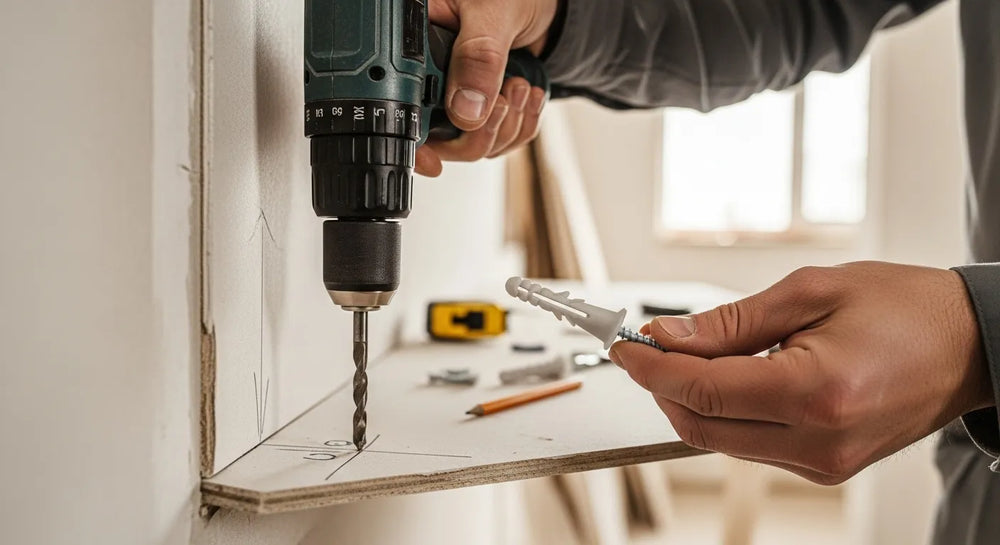
Drywall Fasteners: Nails or Screws for Peak Performance?
Table of Contents
- Introduction
- The Evolution of Drywall Fastening: From Nails to a Screw-Driven Standard
- Why Screws Dominate: Unpacking the Advantages
- Understanding Drywall Screws: Types and Applications
- The Case for Nails: Niche Applications and Historical Context
- The Procurement Perspective: Strategic Fastener Sourcing with Maden.co
- Installation Best Practices: Maximizing Fastener Performance
- The Maden.co Difference: Driving America's Manufacturing Revival
- Conclusion
- FAQ
Introduction
In the intricate world of construction and industrial operations, seemingly minor decisions often harbor significant long-term consequences. The choice of fasteners for drywall installation—whether to use nails or screws—is one such decision that, while often overlooked in its strategic importance, profoundly impacts project integrity, structural longevity, and ultimately, total cost of ownership. Beyond the immediate task of hanging gypsum board, this fundamental choice reverberates through future maintenance cycles, aesthetic quality, and the overall resilience of a structure. For procurement managers balancing budget with durability, MRO buyers addressing facility repairs, and design engineers specifying materials for new builds, understanding the nuanced differences and benefits of each fastening method is paramount.
This comprehensive guide will dissect the historical evolution of drywall fastening, meticulously compare the technical attributes and performance characteristics of nails versus screws, and illuminate why one method has unequivocally emerged as the industry standard. We will delve into specific applications, installation best practices, and the critical role of sourcing high-quality, American-made components in enhancing project outcomes. Our mission at Maden.co, America's premier B2B marketplace for U.S.-manufactured products, is to democratize access to these essential components, empowering businesses to make informed, strategic choices that drive the manufacturing revival. You can explore the vast selection of American-made industrial supplies available on our platform by visiting Maden.co.
The Evolution of Drywall Fastening: From Nails to a Screw-Driven Standard
For decades, the standard method for securing drywall to wood studs involved using nails. Historically, this was a practical and cost-effective approach, relying on the simplicity of hammering to complete installations. Early drywall nails were designed with specific heads and shanks to minimize damage to the gypsum board and provide a decent hold. However, as building techniques advanced, and the expectations for finish quality and structural longevity increased, the limitations of nails became glaringly apparent.
The primary challenge with nails centered on their inability to consistently maintain a tight grip over time, particularly in response to the natural expansion and contraction of wood framing. This often led to a pervasive and frustrating problem known as "nail pops," where the nail head would protrude through the finished surface, marring aesthetics and requiring costly repairs. Moreover, the sheer force required for hammering could sometimes crush the gypsum core, weakening the board's integrity around the fastener.
The advent of the drywall screw, combined with the widespread adoption of power drills and specialized screw guns, marked a pivotal shift in the construction industry. Screws offered a revolutionary alternative that addressed nearly all the shortcomings of nails. Their threaded design provided a far more secure and consistent hold, creating a mechanical bond that resisted movement and significantly reduced the occurrence of nail pops. This innovation not only improved the durability and aesthetic appeal of finished walls and ceilings but also dramatically increased installation efficiency, transforming how drywall projects were executed. This transition wasn't just about a new product; it was about a fundamental improvement in methodology that enhanced quality, reduced long-term costs, and aligned with the growing demands for more resilient and reliable building practices.
Why Screws Dominate: Unpacking the Advantages
Today, drywall screws are the undisputed champions of gypsum board installation, and for good reason. Their design and mechanical properties offer a multitude of advantages that translate directly into superior project outcomes and enhanced long-term value for any industrial application.
Superior Holding Power: The Mechanics of Thread Engagement
The fundamental difference lies in how screws engage with the framing material compared to nails. A nail relies on friction and the displacement of wood fibers to hold itself in place. While effective initially, wood’s natural tendency to shrink and swell can reduce this frictional grip over time, leading to loosening. Screws, on the other hand, create a threaded channel as they are driven, forming a secure mechanical lock with the framing. Each turn of the screw actively draws the drywall tightly against the stud, creating a compression force that maintains a firm bond. This positive thread engagement is far more resistant to pull-out forces, shear stress, and vibrational loosening, ensuring the drywall remains securely fastened for the life of the structure. For scenarios demanding robust and enduring connections, such as in high-traffic commercial spaces or industrial facilities, this superior holding power is not merely a preference but a necessity.
Eliminating "Nail Pops": The Dreaded Aesthetic and Structural Flaw
"Nail pops" are arguably the most notorious issue associated with traditional drywall nailing. These occur when the drywall or the framing moves slightly, causing the nail head to push through the finished surface, creating unsightly bumps. This isn't just an aesthetic problem; it indicates a loss of structural integrity at the fastening point, potentially leading to cracks or compromises in the wall finish. Screws, with their superior holding power and ability to withstand the micro-movements of framing materials, virtually eliminate nail pops. The consistent, tight bond created by the threads prevents the drywall from separating from the stud, ensuring a smooth, unblemished surface that stands the test of time. For businesses focused on delivering impeccable finishes and minimizing post-installation callbacks, the reliability of screws is an invaluable asset.
Speed and Efficiency: Power Tools and Installation
The integration of drywall screws with specialized power tools has revolutionized installation speed and efficiency. Screw guns and impact drivers allow for rapid, consistent driving of fasteners, significantly reducing labor time compared to hammering nails. These tools are often equipped with depth-setting clutches that ensure each screw is driven to the perfect depth – just below the paper surface without tearing it – creating a consistent dimple for subsequent mudding and finishing. This precision not only speeds up the process but also reduces material waste from over-driven or under-driven fasteners. For procurement managers focused on optimizing project timelines and labor costs, the efficiency gains from using screws are substantial, contributing directly to a more streamlined and profitable operation.
Improved Durability and Longevity
The robust connection provided by screws contributes directly to the overall durability and longevity of drywall installations. Walls and ceilings fastened with screws are less prone to developing stress cracks around fasteners, maintaining a more stable and aesthetically pleasing finish over many years. This enhanced durability reduces the need for frequent repairs and maintenance, offering a lower Total Cost of Ownership (TCO) in the long run. In industrial settings where building materials are subjected to various stresses, the inherent strength of a screw-fastened system is a critical advantage.
Ease of Remediation and Repair
While screws are designed for longevity, situations requiring removal or repair of drywall can arise. Screws offer a distinct advantage here: they can be easily backed out with a power drill, allowing for clean, non-destructive removal of drywall panels. Nails, conversely, often require prying, which can damage the surrounding drywall or framing, making repairs more cumbersome and costly. This ease of removal is a practical benefit for MRO buyers managing facility upkeep and renovations, simplifying access to utilities or structural components behind drywall without extensive demolition.
Understanding Drywall Screws: Types and Applications
The effectiveness of drywall screws is further enhanced by their specialized design, tailored to different framing materials and installation requirements. Understanding these nuances is key to selecting the right fastener for peak performance and compliance. At Maden.co, we offer a comprehensive selection of these critical components, all sourced from trusted U.S. manufacturers committed to industrial excellence.
Coarse-Thread Screws (Wood Framing)
Application: These are the most common type of drywall screw, specifically designed for fastening gypsum board to wood studs or joists. Design: Coarse-thread screws feature widely spaced, deep threads that provide superior grip and pull-out resistance in the softer, fibrous material of wood. The aggressive threading efficiently clears wood fibers as the screw is driven, ensuring a strong bite without stripping the wood. Performance: They create a robust mechanical lock, effectively preventing nail pops and securing the drywall firmly against the wooden frame, even as wood naturally expands and contracts with changes in humidity. For dependable fastening in traditional wood-framed construction, these are the go-to choice. For a high-strength solution perfectly suited for wood framing, you can find the detailed specifications for quality U.S.-made 6 x 1-1/4 coarse thread drywall screws on our platform.
Fine-Thread Screws (Metal Framing)
Application: Fine-thread drywall screws are specifically engineered for attaching drywall to light-gauge metal studs, typically between 20-25 gauge steel. Design: Unlike coarse-thread screws, fine-thread screws have threads that are closer together and shallower. This design is crucial for penetrating metal without stripping the hole or damaging the screw. They often feature a self-tapping point that initiates the hole in the metal stud, eliminating the need for pre-drilling. Performance: The finer threads ensure a tight, secure grip in the harder, denser material of steel. They are designed to create a strong connection that resists vibration and movement inherent in metal framing systems. Using the correct screw type for metal studs is essential to prevent loosening and maintain structural integrity. If your project involves metal framing, ensure optimal performance with U.S.-made 6 x 1 fine thread drywall screws, available for direct procurement through Maden.co.
Bugle Head Design: Essential for Flush Seating
All drywall screws, regardless of thread type, feature a distinctive bugle head. This conical, slightly rounded shape is specifically designed to create a clean, flush depression (a "dimple") in the drywall paper surface without tearing it. The bugle head gradually countersinks itself as the screw is driven, ensuring that the fastener head sits just below the surface, ready for compound application and a smooth finish. This design is critical for achieving professional-grade drywall finishing, preventing unsightly bumps or torn paper that would otherwise require additional repair work.
Length and Gauge Considerations: Matching the Screw to Drywall Thickness and Substrate
The appropriate length of a drywall screw is determined by the thickness of the gypsum board and the type of framing material. A general rule of thumb for wood studs is that the screw should penetrate the wood by at least 5/8 inch. For metal studs, a minimum penetration of 3/8 inch into the stud is typically recommended. Common lengths range from 1 inch for single-layer 1/2-inch drywall to 2 inches or longer for multiple layers or thicker boards. The diameter (gauge) of the screw also plays a role, with #6 and #8 gauges being the most common, offering a balance of strength and ease of driving. For more demanding applications or thicker panels, a robust 8 x 4 drywall screw ensures maximum holding power and stability.
Corrosion Resistance: Phosphate Coating Importance
Most drywall screws are treated with a black phosphate coating. This coating serves two primary purposes: it provides a degree of corrosion resistance, crucial for fasteners that might be exposed to moisture during the construction phase or in humid environments, and it also allows drywall mud and paint to adhere better to the screw head, preventing rust stains from bleeding through the finished surface over time. While not typically designed for exterior or high-moisture environments (where specialized corrosion-resistant fasteners would be required), this coating is essential for the long-term integrity and appearance of interior drywall installations.
The Case for Nails: Niche Applications and Historical Context
While screws have largely supplanted nails for drywall installation, it's worth acknowledging the historical role of nails and their extremely limited, niche applications today. Drywall nails, typically ring-shanked, were designed with annular rings along the shank to improve withdrawal resistance compared to smooth-shank nails. They also featured a "cupped" head to help dimple the drywall surface.
Today, nails are rarely, if ever, the primary fastener for new drywall installations due to the overwhelming advantages of screws. The primary reasons for their decline include:
- Proneness to Nail Pops: As discussed, this remains the most significant drawback.
- Lower Holding Power: Despite ring shanks, they still offer less secure fastening than screws, leading to greater movement and potential for cracking.
- Slower Installation: Hammering is inherently slower and more labor-intensive than using a screw gun.
- Damage Potential: Improper hammering can easily crush the gypsum core or tear the paper, compromising the board.
In extremely rare instances, where an existing structure might have been nailed, an MRO buyer might use nails for a small patch repair to match historical methods, but even then, screws are typically a superior and more accessible choice. Fundamentally, for any project prioritizing durability, aesthetic quality, and long-term cost-efficiency, the choice is unequivocally screws.
The Procurement Perspective: Strategic Fastener Sourcing with Maden.co
For procurement managers, MRO buyers, and design engineers, the decision between nails and screws for drywall, and indeed the sourcing of any industrial component, extends far beyond the initial purchase price. It’s a strategic choice with profound implications for project success, operational efficiency, and financial health. This is where Maden.co's commitment to industrial excellence and supply chain transparency provides unparalleled value.
Beyond Unit Cost: Total Cost of Ownership (TCO)
Focusing solely on the per-unit cost of a fastener can be a costly oversight. The True Cost of Ownership for fasteners includes:
- Labor Costs: Screws significantly reduce installation time and re-work due to fewer nail pops, directly impacting labor efficiency.
- Material Waste: Fewer damaged drywall sheets from faulty fastening.
- Maintenance & Repair: Reduced need for future repairs stemming from fastener failures.
- Project Delays: Reliable fasteners prevent callbacks and delays, keeping projects on schedule and avoiding penalties.
- Reputation: High-quality installations bolster a company's reputation for quality and reliability.
By choosing high-quality, reliable U.S.-made screws sourced through Maden.co, businesses are investing in a lower TCO, ensuring projects are completed efficiently, durably, and to the highest standards.
Supply Chain Resilience: Why U.S.-Made Matters
The past few years have underscored the fragility of global supply chains. Sourcing U.S.-manufactured products provides a distinct advantage in supply chain resilience:
- Reduced Lead Times: Shorter shipping distances mean faster delivery and reduced dependency on international logistics, which can be prone to disruptions.
- Consistent Quality: American manufacturers adhere to stringent quality control standards, ensuring consistency and reliability in every batch of fasteners.
- Ethical Sourcing: Supports local economies and adheres to fair labor practices.
- Regulatory Compliance: Simplifies compliance with various industry standards and procurement regulations that may prioritize or require domestic sourcing.
At Maden.co, our mission is to democratize access to American manufacturing. We connect industrial buyers with over 2.5 million American-made products from our network of 800+ verified U.S. manufacturers. This isn't just about patriotism; it's about building a more robust, predictable, and transparent supply chain for essential industrial components. To learn more about our commitment to championing American manufacturing, visit our About Us page.
Ensuring Quality and Compliance: Verified Manufacturers
For a procurement manager under pressure to source a specific fastener that meets strict quality control, a design engineer needing material certifications for a new prototype, or an MRO buyer facing an unexpected equipment breakdown, the ability to quickly find and finance a verified, U.S.-made part is a game-changer. Our platform ensures that all products meet the rigorous standards expected by industrial buyers. We pride ourselves on the meticulous vetting of our manufacturers, guaranteeing that every screw, bolt, or component you source through us embodies Industrial Excellence.
Reducing Procurement Friction: Streamlined Platform
Our digital innovation is designed to streamline your procurement process. Searching through a vast, fragmented market for specific U.S.-made components can be time-consuming and inefficient. Maden.co consolidates this process into a single, intuitive platform, making it easy to find, compare, and purchase precisely what you need, from drywall screws to specialized industrial hardware. This reduction in procurement friction saves valuable time and resources, allowing your team to focus on core tasks.
Consider a practical scenario: A procurement manager overseeing a multi-site housing development needs a consistent, high-volume supply of specific drywall screws. The choice of fasteners like our 6 x 1-1/4 coarse thread drywall screws directly impacts project timelines and structural integrity. Any delay or compromise in fastener quality can lead to costly rework, schedule overruns, and ultimately, damage to reputation. Similarly, an MRO buyer tasked with an urgent facility renovation needs not just any screws, but reliable, U.S.-made 8 x 4 drywall screws that meet stringent building codes, available instantly to prevent prolonged operational downtime. And a design engineer specifying fasteners for a new prefabrication module relies on the precise specifications of a 6 x 1 fine thread drywall screw for metal framing, knowing that even minor variations could compromise the module's assembly and performance. This is precisely where Maden.co offers strategic value: providing access to verified, high-quality, U.S.-made fasteners with unparalleled convenience.
Instant Financing: A Strategic Tool for Cash Flow
Recognizing the capital-intensive nature of many industrial projects, Maden.co offers Instant Financing as a strategic tool for businesses. This option allows procurement managers and business owners to manage cash flow effectively and make larger-volume purchases without immediate upfront capital expenditure. It's not just a payment method; it's a mechanism to ensure your projects stay on track and your supply chain remains robust, even when facing significant material costs. You can apply for Instant Financing at checkout to streamline your capital-intensive projects, ensuring you always have access to the U.S.-made components you need.
Are you a U.S. manufacturer producing high-quality industrial components? Expand your reach and connect with thousands of industrial buyers across the nation. Register as a vendor and join the American manufacturing revival.
Installation Best Practices: Maximizing Fastener Performance
Even the highest quality fasteners require proper installation to achieve optimal performance. Following best practices ensures the longevity and structural integrity of drywall installations:
- Proper Depth Setting: The bugle head of the screw should create a slight dimple in the drywall paper, just below the surface, without tearing the paper or breaking through the gypsum core. Over-driving can weaken the bond and damage the board, while under-driving leaves protruding heads that complicate finishing. Use a screw gun with an adjustable clutch for consistent depth.
- Correct Spacing: Adhere to building codes and industry standards for fastener spacing. Typically, screws are spaced every 12-16 inches on ceilings and 16-24 inches on walls, depending on local codes and the orientation of the drywall. Closer spacing may be required for fire-rated assemblies or impact-resistant drywall.
- Edge Fastening: Ensure screws are placed at least 3/8 inch from the edge of the drywall sheet to prevent edge crumbling, but no more than 1/2 inch to ensure they catch the stud adequately.
- Driving Techniques: Drive screws perpendicular to the drywall surface, straight into the center of the framing member. Angled screws reduce holding power and can break the gypsum core.
- Avoid Over-Tightening: Over-tightening can strip the screw's threads in the framing or crush the gypsum core, compromising the fastener's effectiveness. The goal is a snug, flush fit.
Adhering to these practices, combined with using verified, U.S.-made fasteners, guarantees a superior drywall installation that stands the test of time.
The Maden.co Difference: Driving America's Manufacturing Revival
At Maden.co, our vision extends beyond being merely a marketplace. We aspire to be the definitive platform that proves American-made components are as accessible and convenient as any global alternative. Our commitment to American Manufacturing Pride is embedded in every aspect of our operations. Through Digital Innovation, we simplify complex procurement processes, providing unparalleled Supply Chain Transparency for our buyers. We champion Industrial Excellence by partnering exclusively with verified U.S. manufacturers, ensuring that every product listed on our site meets stringent quality benchmarks. Ultimately, our purpose is Customer Empowerment, equipping procurement managers, MRO buyers, and design engineers with the tools and resources they need to succeed.
We believe that America's manufacturing revival is here, and it is powered by informed procurement decisions, resilient supply chains, and a renewed focus on domestic production. Our platform is meticulously designed to facilitate this revival by connecting industrial buyers directly with the heart of American innovation. If you have specific sourcing questions or require assistance finding the perfect U.S.-made components for your next project, our expert team is ready to help; simply Contact Us and we'll guide you through our extensive catalog.
Conclusion
The choice between nails and screws for drywall installation, while seemingly minor, represents a critical decision point that significantly influences the integrity, longevity, and overall cost-efficiency of any construction or renovation project. The overwhelming evidence and industry adoption point unequivocally to drywall screws as the superior fastener. Their unparalleled holding power, ability to prevent unsightly nail pops, and compatibility with efficient power tools translate into higher quality finishes, reduced labor costs, and significantly lower long-term maintenance requirements.
For discerning procurement professionals, MRO buyers, and design engineers, sourcing these crucial components is not just about finding the cheapest option, but about making a strategic investment in supply chain resilience, consistent quality, and reduced total cost of ownership. By partnering with Maden.co, you gain access to a vast network of over 800 verified U.S. manufacturers offering more than 2.5 million American-made products, ensuring you receive fasteners that meet the highest standards of Industrial Excellence. We are dedicated to providing the transparency, digital innovation, and customer empowerment necessary to thrive in today's demanding industrial landscape.
Don't compromise on the foundational elements of your projects. Empower your procurement process with the best American-made industrial components. We invite you to explore the extensive catalog of high-quality, U.S.-manufactured products on Maden.co today. For essential drywall fasteners, discover reliable options such as our 6 x 1-1/4 coarse thread drywall screws for wood framing, robust 8 x 4 drywall screws for demanding applications, or specialized 6 x 1 fine thread drywall screws for metal studs. Remember, you can apply for Instant Financing at checkout to streamline your capital-intensive projects and keep your operations running smoothly. Make the strategic choice for American quality and efficiency—the future of manufacturing starts here.
FAQ
Q1: Why are screws preferred over nails for drywall today?
A1: Screws are preferred due to their superior holding power, which virtually eliminates "nail pops" (where fastener heads protrude through the finished surface). Their threaded design creates a stronger mechanical bond that resists movement, offering greater durability and a smoother finish over the long term. Additionally, screws are much faster and more efficient to install with power tools, reducing labor costs and project timelines.
Q2: What's the difference between coarse and fine-thread drywall screws?
A2: Coarse-thread drywall screws have widely spaced, aggressive threads designed for optimal grip in wood studs, efficiently biting into the wood fibers. Fine-thread drywall screws, conversely, have shallower, more closely spaced threads and are specifically engineered for fastening drywall to light-gauge metal studs. They often have self-tapping points to penetrate the metal easily without stripping.
Q3: Can I use regular wood screws for drywall?
A3: While some wood screws might technically secure drywall, it is strongly advised against. Regular wood screws often lack the specific bugle head design that drywall screws have, which is crucial for creating a proper dimple without tearing the paper. Their heads may protrude or damage the drywall surface, complicating finishing and potentially leading to cracks or aesthetic issues. Always use specialized drywall screws for optimal results.
Q4: How does Maden.co ensure quality for U.S.-made drywall fasteners?
A4: At Maden.co, we are committed to Industrial Excellence. We achieve this by meticulously vetting all our manufacturing partners, ensuring they are verified U.S. manufacturers who adhere to stringent quality control standards. This commitment to Supply Chain Transparency means that every U.S.-made drywall fastener procured through our platform meets the high-performance and durability expectations of industrial buyers, contributing to more resilient and reliable projects.


