
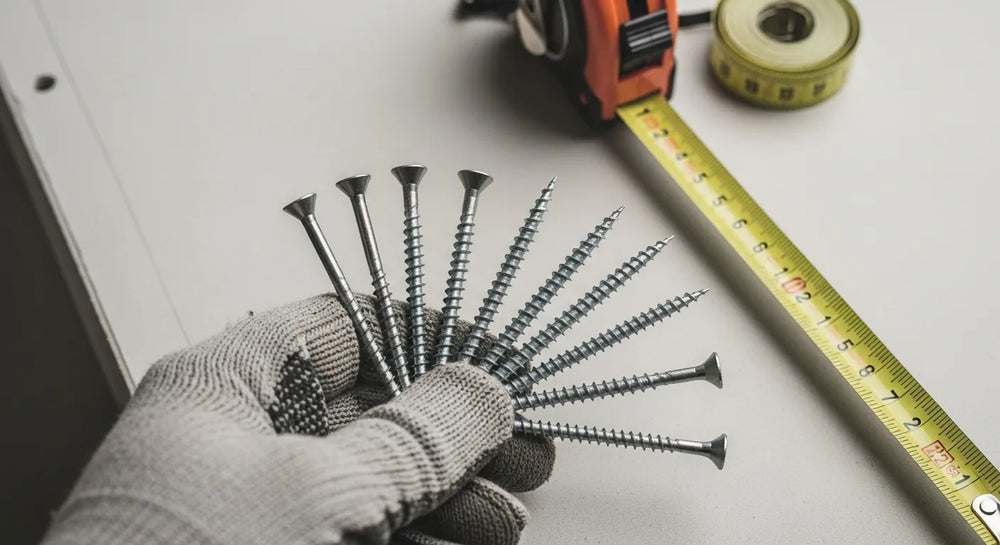
Drywall Screw Anatomy: What Does a Drywall Screw Look Like?
Table of Contents
- Introduction
- The Essential Fastener: Understanding What Makes a Drywall Screw Unique
- The Anatomy of a Drywall Screw: A Detailed Breakdown
- Why the Right Drywall Screw Matters: Performance, Safety, and Compliance
- Beyond the Standard: Specialized Drywall Screws and Advanced Applications
- Sourcing Excellence: The Maden.co Advantage for Drywall Screws and Beyond
- Conclusion
- FAQ
Introduction
Imagine a construction project, large or small, where every detail matters, from the structural integrity of the framing to the flawless finish of the drywall. The success of such an endeavor often hinges on seemingly minor components—fasteners. A faulty or incorrectly chosen fastener can lead to drywall pops, cracks, or even structural instability, undermining hours of work and incurring costly repairs. For procurement managers, MRO buyers, and design engineers, understanding the nuances of every component, down to the humble drywall screw, isn't just a matter of technical interest; it's a critical aspect of project reliability, cost efficiency, and long-term performance.
This comprehensive guide aims to demystify the drywall screw, detailing its distinct features, various types, and critical applications. We will delve into the specific design elements that make drywall screws uniquely suited for their task, helping you identify precisely what a drywall screw looks like and, more importantly, why its design matters. By exploring the different head types, thread patterns, and points, we'll equip you with the knowledge to make informed decisions. Furthermore, we'll highlight how sourcing high-quality, U.S.-made fasteners through platforms like Maden.co can enhance supply chain resilience, ensure compliance, and ultimately contribute to the success and longevity of your projects, driving America's manufacturing revival.
The Essential Fastener: Understanding What Makes a Drywall Screw Unique
At its core, a drywall screw is a specialized fastener engineered to attach gypsum board (drywall) panels to framing studs, whether they are made of wood or light-gauge metal. While superficially similar to other screws, its distinct design features are optimized for this specific application, preventing damage to the brittle gypsum core and ensuring a secure, lasting hold.
Drywall screws were introduced in the late 1960s as a superior alternative to nails, which often resulted in "nail pops" due to wood movement and insufficient holding power. Their innovative design, characterized by a sharp point, coarse or fine threads, and a bugle head, revolutionized drywall installation, leading to fewer defects and faster, more reliable construction. This seemingly simple component embodies decades of material science and engineering refinement aimed at enhancing construction efficiency and durability.
When we consider the broader landscape of industrial procurement, the principles behind the drywall screw’s design—specialization, material science, and application-specific engineering—resonate deeply. Just as a drywall screw is engineered for precise performance, so too are the millions of industrial components we offer at Maden.co. Our mission is to democratize access to American manufacturing, ensuring that every industrial buyer can find the exact, U.S.-made part they need, designed with this same commitment to industrial excellence.
The Anatomy of a Drywall Screw: A Detailed Breakdown
To truly understand what a drywall screw looks like, we must dissect its various components. Each part plays a crucial role in its function, from the way it drives into material to how it secures the drywall panel.
The Head: Precision and Finish
The head of a drywall screw is perhaps its most recognizable feature, primarily designed to create a flush or slightly countersunk finish without tearing the paper facing of the drywall.
Bugle Head
The vast majority of drywall screws feature a bugle head. This conical, slightly rounded shape is engineered to gradually countersink into the drywall surface, creating a small, clean depression. Unlike flat-head screws, which can easily rip through the paper or plaster, the bugle head distributes pressure evenly, preventing damage and allowing for a smooth surface ready for finishing compounds. This design is critical for achieving a professional, unblemished wall surface. The bugle head ensures the screw sits just below the surface, making it easy to cover with joint compound and paint, thus becoming virtually invisible.
Drive Type
While the bugle head defines the screw's interaction with the drywall, the drive type determines how the screw is driven.
- Phillips Drive (Cross Recess): This is the most common drive type for drywall screws, characterized by a cross-shaped recess. It’s widely used due to the ubiquitous availability of Phillips drivers and bits. While generally effective, Phillips drives can sometimes experience "cam-out," where the driver slips out of the recess, especially when higher torque is applied.
- Square Drive (Robertson): Less common for general drywall screws, but gaining popularity due to its superior torque transmission and reduced cam-out. The square recess provides a more secure fit for the driver bit, making it easier to drive screws consistently, particularly in overhead applications or when working with impact drivers. While our primary offerings for drywall screws feature the standard Phillips drive, we continuously expand our catalog of U.S.-made fasteners, including those with square drives, to meet diverse industrial needs.
The Shank and Threads: Grip and Holding Power
The shank is the unthreaded or partially threaded body of the screw, while the threads are the helical ridges that cut into the material, providing holding power. For drywall screws, the threading is particularly critical.
Thread Types: Coarse vs. Fine
The choice between coarse and fine threads is perhaps the most important decision when selecting a drywall screw, as it dictates the type of framing material it can effectively grip.
- Coarse Thread Drywall Screws: These screws feature widely spaced, aggressive threads. They are specifically designed for fastening drywall to wood studs. The coarse threads grab and hold firmly into the softer wood fibers, providing excellent pull-out resistance. The large gap between threads allows wood fibers to settle without stripping, ensuring a robust connection. For robust fastening into wood, consider these high-quality 6 x 1-1/4 coarse thread drywall screws, proudly made in the U.S.
- Fine Thread Drywall Screws: In contrast, fine thread screws have narrower, more closely spaced threads. These are engineered for attaching drywall to light-gauge metal studs (typically 25-gauge or thinner). The finer threads are adept at tapping into the thin metal without stripping, creating a secure hold. Using coarse thread screws in metal studs would likely lead to stripping, compromising the fastener's integrity. For projects requiring secure fastening into metal, our 6 x 1 fine thread drywall screw offers the precision and reliability you need.
Shank Diameter and Length
The diameter of the shank (typically 6, 7, or 8 gauge) and the overall length of the screw are critical for ensuring adequate penetration and holding power. The length must be sufficient to pass through the drywall board and penetrate the stud by at least 5/8 inch (for wood) or 3/8 inch (for metal) to meet most building codes. Common lengths range from 1 inch for single-layer drywall to 2 inches or more for multiple layers or thicker boards. Our diverse catalog includes various sizes, such as this versatile 8 x 4 drywall screw, suitable for a range of applications.
The Tip: Penetration and Efficiency
The tip of a drywall screw is engineered for efficient penetration, minimizing the need for pre-drilling in most standard applications.
- Sharp Point (Needle Point): The most common tip for drywall screws. This sharp, pointed tip allows for quick piercing of drywall paper and gypsum core, as well as easy entry into wood or light-gauge metal studs. It's designed for speed and efficiency.
- Self-Drilling (Tek) Point: While less common for standard drywall installation, some specialized drywall screws, particularly those designed for heavier gauge metal studs (often referred to as self-drilling screws or Tek screws), feature a drill-bit-like tip. This point drills its own pilot hole before the threads engage, eliminating the need for a separate drilling step. These are invaluable in applications where speed and strong fastening into thicker metal are paramount.
Coatings and Materials: Durability and Application-Specificity
The material and coating of a drywall screw significantly impact its durability, corrosion resistance, and suitability for various environments.
- Material: Drywall screws are typically made from hardened steel, which provides the necessary strength to prevent snapping during installation and ensures a robust connection. This hardening process makes them strong but also somewhat brittle, which is why proper torque control is essential.
- Black Phosphate Coating: This is the most common coating for standard drywall screws. The black phosphate finish offers mild corrosion resistance and, crucially, provides an excellent surface for joint compound and paint to adhere to. It helps prevent "bleed-through" (rust stains appearing through the finish coat) in interior, dry environments.
- Zinc or Galvanized Coating: For applications where moisture might be present, such as bathrooms, kitchens, or exterior sheathing (like cement board installations), drywall screws with zinc plating or galvanized coatings are used. These coatings provide enhanced corrosion resistance, preventing rust that could stain the finish or compromise the screw's integrity over time.
- Ceramic or Polymer Coatings: Some specialized screws feature advanced coatings that offer superior corrosion resistance, often in a green or yellow color, making them suitable for treated lumber or exterior applications where standard phosphate screws would quickly corrode.
Understanding these details is fundamental for procurement managers, MRO buyers, and design engineers. Knowing the specific requirements of a project—whether it's fastening into wood, light-gauge steel, or a moisture-prone environment—directly influences the selection of the correct screw type. At Maden.co, we simplify this process by providing detailed specifications for all our U.S.-made products, ensuring you can quickly identify the exact component that meets your project's demands. Our commitment to industrial excellence means offering a vast selection of high-quality, verified American-made products.
Why the Right Drywall Screw Matters: Performance, Safety, and Compliance
Selecting the appropriate drywall screw is far more critical than it might initially appear. The consequences of using the wrong type or an inferior-quality screw can range from aesthetic flaws to significant structural and safety issues.
Avoiding Common Project Pitfalls
- Drywall Pops and Cracks: One of the most common issues stemming from incorrect fasteners is "drywall pops." These occur when the screw head pushes through the drywall paper, or when the screw isn't securely seated, allowing the drywall to flex. Using an improperly sized or specified screw, especially one with a flat head instead of a bugle head, can easily cause these problems. Similarly, screws that don't hold tightly to the stud can allow movement, leading to unsightly cracks in the finished surface.
- Weakened Joints: If screws fail to penetrate adequately into the framing or strip out of the material, the drywall panel's attachment will be compromised. This can lead to weakened joints, sagging panels, and an overall reduction in the structural integrity of the wall or ceiling.
- Corrosion and Staining: In environments with elevated humidity, such as bathrooms, or if green board or cement board is used, standard black phosphate screws can rust. This rust can "bleed through" the paint and finishing compounds, creating unsightly orange or brown stains that are difficult to cover. Using zinc-plated or galvanized screws specifically designed for moisture-prone areas is essential to prevent this.
- Reduced Fire Resistance: Drywall is often a critical component of a building's fire-rated assembly. If the fasteners fail or are improperly installed, the fire resistance rating can be compromised, posing significant safety risks.
Ensuring Building Code Compliance and Longevity
Building codes specify requirements for fasteners, including type, spacing, and penetration depth. Adhering to these codes is not just a legal necessity but a guarantee of safety and durability. Utilizing U.S.-made drywall screws that meet established industry standards means you are sourcing products manufactured with precision and consistency, ensuring your projects comply with the strictest regulations.
For a procurement manager under pressure to source a specific fastener that meets strict DIN or NPT compliance, or an MRO buyer needing robust components for critical infrastructure, the ability to quickly find and verify U.S.-made parts is paramount. At Maden.co, our platform connects you with over 2.5 million American-made products from our network of 800+ verified U.S. manufacturers, ensuring that compliance and quality are never a compromise.
Beyond the Standard: Specialized Drywall Screws and Advanced Applications
While the coarse and fine thread bugle head screws cover the vast majority of drywall applications, specialized versions exist for unique challenges.
- Water-Resistant and Cement Board Screws: When installing moisture-resistant drywall (green board), cement board, or other specialty panels in high-humidity areas, specific screws with enhanced corrosion resistance are essential. These often feature specialized coatings that can withstand prolonged exposure to moisture without rusting, ensuring the longevity and integrity of the installation.
- Self-Drilling Drywall Screws for Heavy Gauge Metal: As mentioned earlier, for framing with thicker gauge metal studs (typically 20-gauge or heavier), self-drilling (Tek) screws are indispensable. Their drill-bit tips eliminate the need for pre-drilling, saving significant time and labor on large-scale projects. These screws often have finer threads optimized for robust engagement with metal.
- High-Low Thread Screws: Some specialized screws feature a "high-low" thread design, where two threads of different heights alternate around the shank. This design is excellent for fastening into various materials, including some plastics and particleboards, offering enhanced grip and reduced stripping.
Understanding these specialized options allows businesses to optimize their procurement strategies for diverse construction and maintenance needs. Sourcing through a robust platform that offers a wide array of specialized, U.S.-made fasteners, like Maden.co, empowers procurement managers and design engineers to tackle any project with confidence, ensuring they always have access to the right tool for the job.
Sourcing Excellence: The Maden.co Advantage for Drywall Screws and Beyond
In today's complex supply chain environment, the strategic decision to source American-made products offers unparalleled benefits. At Maden.co, we are at the forefront of this movement, connecting industrial buyers with the very best of U.S. manufacturing.
American Manufacturing Pride and Supply Chain Resilience
Our mission is to democratize access to American manufacturing. We believe that choosing U.S.-made products, from essential drywall screws to complex machinery components, strengthens domestic industries, supports local economies, and fosters innovation. By sourcing through Maden.co, you are not just acquiring a product; you are investing in American ingenuity and craftsmanship. This commitment translates directly into enhanced supply chain resilience. Shorter lead times, reduced shipping complexities, and direct communication with manufacturers mitigate risks inherent in global supply chains, allowing for greater predictability and control over your procurement process.
Digital Innovation and Customer Empowerment
We leverage digital innovation to transform the B2B procurement experience. Our platform offers a seamless, intuitive interface where you can easily search, compare, and purchase from our vast catalog of over 2.5 million American-made products. We connect you with 800+ verified U.S. manufacturers, providing unparalleled transparency and choice. This digital-first approach empowers MRO buyers, design engineers, and business owners to quickly find the exact parts they need, backed by detailed specifications and manufacturer information. This process drastically reduces procurement friction, saving valuable time and resources.
Ensuring Quality, Compliance, and Total Cost of Ownership (TCO)
Quality is non-negotiable, especially when it comes to fasteners that hold projects together. All products on Maden.co are sourced from verified U.S. manufacturers, ensuring adherence to rigorous quality standards and compliance with critical industry specifications (e.g., DIN, NPT). While the initial price of a U.S.-made component might sometimes be perceived as higher, the true value lies in the Total Cost of Ownership (TCO). By reducing risks of defects, improving project longevity, minimizing delays, and simplifying logistics, U.S.-made components ultimately offer superior long-term value. This strategic approach to procurement is a cornerstone of our industrial excellence value.
Instant Financing: A Strategic Tool for Businesses
We understand that managing cash flow is critical for businesses of all sizes, especially when undertaking larger-volume purchases or capital-intensive projects. That's why Maden.co offers Instant Financing as a key differentiator. This feature is not merely a payment option; it's a strategic tool designed to help procurement managers and business owners manage their capital effectively. It allows you to make necessary purchases without tying up immediate cash reserves, facilitating larger orders and ensuring your projects stay on track without financial bottlenecks. You can apply for Instant Financing at checkout to streamline your capital-intensive projects. This commitment to customer empowerment ensures that access to high-quality American manufacturing is both convenient and financially flexible.
Partnering for Success: Maden.co's Commitment to Industrial Excellence
At Maden.co, our core values—American Manufacturing Pride, Digital Innovation, Supply Chain Transparency, Industrial Excellence, and Customer Empowerment—guide everything we do. We are more than just a marketplace; we are a strategic partner committed to helping your business thrive. We strive to be the definitive platform that proves American-made components are as accessible and convenient as any global alternative, driving the manufacturing revival with our tagline: "America's manufacturing revival is here." Our entire business model is built on this principle; you can learn more about our mission to champion American manufacturing here: About Us.
We also invite qualified U.S. manufacturers to join our growing network. Are you a U.S. manufacturer looking to expand your reach and connect with thousands of industrial buyers across the nation? Register as a vendor and join the American manufacturing revival. We are actively seeking partners who share our commitment to quality and innovation: Vendor Registration.
Conclusion
Understanding what a drywall screw looks like—its bugle head, coarse or fine threads, sharp or self-drilling tip, and protective coatings—is fundamental for anyone involved in construction, maintenance, or design. These seemingly minor details have profound implications for project quality, safety, and longevity. Choosing the right drywall screw is not just about making a purchase; it's about making an informed decision that safeguards your investment and ensures superior results.
By prioritizing high-quality, U.S.-made fasteners, businesses can significantly enhance their supply chain resilience, ensure compliance with critical standards, and ultimately improve their Total Cost of Ownership. At Maden.co, we are dedicated to making this process seamless and efficient. Our platform, with its vast catalog of over 2.5 million American-made products and convenient features like Instant Financing, stands as America's premier B2B marketplace for connecting industrial buyers with the best of U.S. manufacturing. Explore the comprehensive range of U.S.-made drywall screws and other essential industrial components on Maden.co today. Empower your projects with precision, reliability, and the unwavering quality of American manufacturing.
FAQ
Q1: Can I use drywall screws for outdoor projects or in high-moisture areas?
A1: Standard black phosphate drywall screws are not suitable for outdoor use or high-moisture areas as they offer minimal corrosion resistance and will rust, causing stains and compromising the fastener's integrity. For such applications, it is essential to use specialized drywall screws with enhanced corrosion-resistant coatings, such as zinc-plated, galvanized, or ceramic-coated screws, which are designed to withstand humidity and outdoor elements.
Q2: What's the main difference between coarse thread and fine thread drywall screws?
A2: The primary difference lies in their application. Coarse thread drywall screws have wider, more aggressive threads and are designed for securely fastening drywall to wood studs. Fine thread drywall screws have narrower, more closely spaced threads, making them ideal for attaching drywall to light-gauge metal studs. Using the wrong thread type for the stud material can lead to stripping and a weakened connection.
Q3: Do I need to pre-drill holes before using drywall screws?
A3: For most standard drywall installations into wood or light-gauge metal studs, pre-drilling is generally not required when using typical sharp-point drywall screws. Their design allows them to penetrate the drywall and framing material efficiently. However, if you are working with thicker gauge metal studs, specialized self-drilling (Tek) screws are recommended, as they include a drill-bit-like tip that creates its own pilot hole.
Q4: Why should I choose U.S.-made drywall screws over imported alternatives?
A4: Choosing U.S.-made drywall screws offers several strategic advantages. It ensures adherence to stringent quality control standards, resulting in more consistent and reliable products. Sourcing domestically through platforms like Maden.co contributes to greater supply chain resilience, reducing lead times and shipping complexities. Furthermore, it supports American manufacturing, job creation, and economic growth, while often providing superior Total Cost of Ownership through enhanced durability and reduced project risks.


