
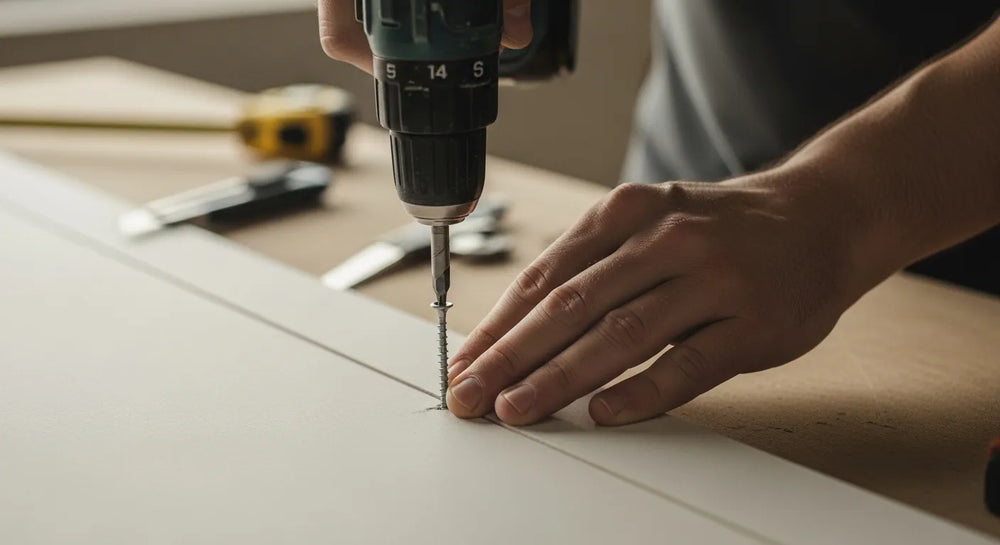
Estimating Drywall Screws: How Many Pounds Per Sheet?
Table of Contents
- Introduction
- The Nuances of Drywall Installation: Beyond Just the Board
- Understanding Drywall Sheet Dimensions and Fastener Requirements
- Calculating Drywall Screw Needs: A Step-by-Step Approach
- From Screw Count to Weight: Converting Quantity to Pounds
- Why Precision Matters: Beyond Just the Cost of Screws
- Selecting the Right Drywall Screw for Your Project
- Sourcing American-Made Drywall Screws: The Maden.co Advantage
- Streamlining Procurement: Digital Innovation and Instant Financing with Maden.co
- Conclusion
- Frequently Asked Questions (FAQ)
In the dynamic world of industrial procurement and project management, the seemingly minor details often hold the greatest sway over a project’s success, budget, and timeline. Imagine the scenario: a critical construction phase is underway, the drywall panels are ready for installation, and then, a sudden halt. The crew is out of screws. Or perhaps, the opposite problem: a massive surplus of specialized fasteners, tying up capital and storage space. These aren't just minor inconveniences; they are tangible roadblocks that can inflate Total Cost of Ownership (TCO), disrupt schedules, and ripple negatively through an entire supply chain. For procurement managers, MRO buyers, and design engineers alike, the ability to accurately estimate material needs—down to the precise quantity and weight of fasteners like drywall screws—is not merely a best practice; it is a strategic imperative. This post delves into the meticulous process of calculating drywall screw requirements, translating those counts into pounds, and uncovering how precise estimation, coupled with strategic sourcing of American-made components, can significantly enhance project efficiency and resilience.
Introduction
Project overruns, whether due to material shortages or excessive waste, can swiftly erode profit margins and compromise project timelines. One common area where such inefficiencies often manifest is in fastener procurement, particularly for high-volume items like drywall screws. The seemingly straightforward task of attaching drywall to framing hides a complex interplay of factors that dictate the exact number, and subsequently, the weight in pounds, of screws needed. Failing to accurately account for these variables can lead to costly delays, unnecessary reorders, or the burden of excess inventory. This article aims to demystify the process of estimating drywall screw requirements, providing a comprehensive guide that transcends simple calculators. We will explore the critical factors influencing screw count per sheet, detail the conversion from individual screws to pounds, discuss the strategic implications of accurate procurement, and highlight how leveraging a robust marketplace like Maden.co can transform your approach to sourcing high-quality, American-made fasteners. Our goal is to equip you with the knowledge to optimize your purchasing, enhance project execution, and reinforce the reliability of your supply chain.
The Nuances of Drywall Installation: Beyond Just the Board
Drywall installation, while appearing routine, is a precision task where the choice and application of fasteners are paramount. It’s not simply about attaching a gypsum board to a stud; it’s about creating a durable, stable, and code-compliant surface that forms the very backbone of interior construction. The effectiveness of a drywall system hinges almost entirely on the quality and correct application of its screws. An insufficient number of screws, or screws of the wrong type, can lead to aesthetic failures like screw pops and bulging, or more critically, structural compromises that affect the wall's integrity, fire rating, and sound dampening properties.
For MRO buyers managing ongoing facility maintenance or procurement managers overseeing new constructions, understanding these nuances is crucial. Specifying the correct screw and quantity directly impacts worker productivity, the longevity of the installation, and ultimately, the TCO. When every component contributes to the overall success and safety of a structure, cutting corners on fasteners is a false economy. Accurate estimation ensures that crews have the right materials at hand, preventing frustrating work stoppages and the costly scramble for last-minute supplies, which often comes with expedited shipping fees and premium pricing.
Why Accurate Screw Estimation Matters for Industrial Buyers
The precision in estimating how many pounds of drywall screws per sheet is far more than an academic exercise; it's a direct contributor to operational efficiency and financial health. For procurement teams, this translates into:
- Optimized Inventory Management: Avoiding both stockouts and overstocking. Stockouts halt production, while excess inventory ties up capital, requires storage space, and risks obsolescence.
- Budgetary Control: Precise estimates allow for accurate budgeting, preventing unexpected cost increases and improving financial forecasting.
- Reduced Waste: Minimizing material waste aligns with sustainability goals and reduces disposal costs.
- Enhanced Project Timelines: Having the right materials available when needed ensures projects stay on schedule, avoiding expensive delays and penalties.
- Compliance and Quality Assurance: Ensuring the correct type and quantity of screws are used is essential for meeting building codes, safety standards, and project specifications, safeguarding against costly rework or liability issues down the line.
For a procurement manager under pressure to source a specific quantity of compliant fasteners, a design engineer needing specific material certifications for a new prototype, or an MRO buyer facing an unexpected equipment breakdown, the ability to quickly find and finance a verified, U.S.-made part is a game-changer. This foundational understanding allows for more intelligent procurement decisions, moving beyond mere transactional purchases to strategic material management.
Understanding Drywall Sheet Dimensions and Fastener Requirements
The initial step in accurately calculating drywall screw needs involves understanding the standard dimensions of drywall sheets and the industry-accepted guidelines for fastener spacing. While regional variations may exist, several common sizes dominate the market, each impacting the total surface area to be covered and, consequently, the number of fasteners required.
Standard Drywall Sheet Sizes
The most common drywall sheet sizes include:
- 4 feet x 8 feet (32 sq ft): The most prevalent size for residential and light commercial projects, easy to handle.
- 4 feet x 10 feet (40 sq ft): Offers fewer seams for larger walls, reducing finishing time.
- 4 feet x 12 feet (48 sq ft): Ideal for large areas, further minimizing seams and improving efficiency.
- 4 feet x 14 feet & 4 feet x 16 feet: Less common but used in very large commercial applications to achieve seamless finishes.
The thickness of the drywall also plays a role, typically 1/2 inch or 5/8 inch. While thickness doesn't directly alter the number of screws per sheet, it influences the length of the screws required, which in turn impacts the overall weight per pound.
Screw Spacing Guidelines: Walls vs. Ceilings
The recommended spacing for drywall screws is not arbitrary; it's dictated by structural engineering principles and building codes (e.g., ASTM C1002 in the U.S. for gypsum board screws). These guidelines ensure that the drywall is securely fastened to the framing, preventing sagging, cracking, and ensuring fire resistance.
-
Walls:
- Screws are typically spaced 12 inches on center along the studs in the field of the panel.
- Along the perimeter (edges) of the panel, screws are often spaced 8 inches on center.
- For specific applications like fire-rated assemblies or shear walls, spacing may be reduced to 7 inches or even 6 inches on center, significantly increasing the screw count.
-
Ceilings:
- Due to gravity and the need for greater support, screws for ceiling drywall are typically spaced more closely.
- Field screws are usually 12 inches on center.
- Perimeter screws are often 7 inches on center, or even 6 inches in some jurisdictions or for heavier gypsum boards.
- Some codes may even specify double fastening (two screws per fastening point) for enhanced stability, particularly with thicker or more resilient boards.
These differing requirements highlight why a "one-size-fits-all" approach to calculating how many pounds of drywall screws per sheet is insufficient. Each project demands a tailored calculation based on its specific application and local building codes.
Calculating Drywall Screw Needs: A Step-by-Step Approach
Accurately calculating the number of drywall screws needed is a multi-step process that accounts for dimensions, spacing, and crucial real-world variables.
Basic Calculation Per Sheet (4x8 Foot Example)
Let's consider a standard 4x8 foot drywall sheet for a wall application, attached to studs spaced 16 inches on center.
-
Identify Studs: A 4x8 sheet will typically span across 3-4 studs (one at each end, and 1-2 in the middle).
- For a typical vertical installation, you'd have studs at 0", 16", 32", 48" (or similar). So, 4 vertical lines of fastening.
-
Perimeter Screws:
- Two 8-foot (96-inch) edges: 96 / 8 inches per screw = 12 screws per edge. Total 24 screws for long edges.
- Two 4-foot (48-inch) edges: 48 / 8 inches per screw = 6 screws per edge. Total 12 screws for short edges.
- Total Perimeter Screws: 24 + 12 = 36 screws. Note: Screws at corners are counted once. A more precise method often involves calculating fasteners along each edge and adjusting for overlaps at corners.
-
Field Screws:
- For studs within the sheet's field, screws are spaced 12 inches on center.
- If studs are at 16" and 32", that's two lines of screws.
- Length of stud line: 96 inches. 96 / 12 inches per screw = 8 screws per line.
- Total Field Screws: 2 lines * 8 screws/line = 16 screws.
- Total Raw Count: 36 (perimeter) + 16 (field) = 52 screws per 4x8 sheet.
This is a simplified example. Many contractors use a quicker rule-of-thumb: roughly 30-32 screws per 4x8 sheet for walls, and 38-40 for ceilings, assuming standard spacing. However, these quick estimates can be dangerously low for projects with strict compliance requirements.
Factors Influencing Screw Count
The "raw count" is just the beginning. Several critical factors will influence the final number of screws required for a project:
- Framing Material: Wood studs vs. metal studs. While spacing is similar, metal studs often require self-tapping screws.
- Wall vs. Ceiling Installation: As discussed, ceilings generally demand closer spacing due to gravity and often heavier gypsum panels.
- Fire-Rated Assemblies: Walls and ceilings requiring specific fire ratings (e.g., 1-hour, 2-hour) often mandate closer screw spacing, specific screw types, and sometimes multiple layers of drywall, all dramatically increasing fastener needs.
- Shear Walls: In areas prone to seismic activity or high winds, drywall can contribute to a building's shear resistance. Shear wall designs often specify extremely tight screw spacing (e.g., 4-6 inches on center) and specific screw types to maximize strength.
- Acoustic Requirements: For sound-dampening walls, specific resilient channels or staggered stud framing might be used, altering fastening patterns and potentially increasing screw count if additional layers are involved.
- Drywall Thickness and Type: Thicker or specialized gypsum boards (e.g., abuse-resistant, water-resistant) may require longer screws and potentially tighter spacing for optimal performance.
Waste Factor Considerations
No project is perfect, and accounting for waste is essential for accurate procurement. A typical waste factor for drywall screws is 10-15%. This covers:
- Damaged Screws: Stripped heads, bent shafts, or manufacturing defects.
- Dropped Screws: Screws that fall and are not recovered.
- Misdrives: Screws that are over-driven, under-driven, or improperly placed and need to be removed or replaced.
- Adjustments and Rework: Changes during installation that necessitate removing and re-installing drywall sections.
By applying this waste factor to your initial raw count, you arrive at a more realistic total, ensuring you don't run short. For instance, if you calculated 52 screws per 4x8 sheet, applying a 15% waste factor means you should procure 52 * 1.15 = ~60 screws per sheet.
From Screw Count to Weight: Converting Quantity to Pounds
Once the total number of screws is estimated, the next crucial step, particularly for bulk purchasing, is to convert this count into pounds. This is where the intricacies of screw dimensions and packaging come into play, and why answering "how many pounds of drywall screws per sheet" is not a simple direct answer but rather a calculated estimate.
Average Screw Weight
The weight of a single drywall screw varies significantly based on its:
- Gauge (Diameter): Common drywall screws are #6 or #8 gauge. A #8 screw is thicker and heavier than a #6.
- Length: Common lengths range from 1 inch to 4 inches. A longer screw naturally weighs more.
- Thread Type: Coarse thread screws typically have a slightly larger diameter than fine thread screws of the same gauge, potentially affecting weight minimally.
- Head Type: While most are bugle head, slight variations in head size or drive type can have minor weight implications.
- Material and Coating: While most drywall screws are phosphated carbon steel, variations in steel density or coating thickness can influence weight.
As a general guideline, for common #6 x 1-1/4 inch coarse thread drywall screws, approximately 225 to 300 screws typically weigh 1 pound. For #8 x 4 inch screws, the count per pound would be significantly lower, perhaps in the range of 50-70 screws per pound due to their increased length and gauge. Conversely, for a smaller #6 x 1 inch fine thread drywall screw, you might get closer to 300-350 screws per pound. These are approximations; precise figures should always be obtained from the manufacturer's specifications when available, especially for large-volume purchases.
Specific Screw Types and Their Impact on Weight
Let's look at some examples:
- 6 x 1-1/4 Coarse Thread Drywall Screws: These are standard workhorses for attaching gypsum board to wood studs. Being a #6 gauge and 1-1/4 inch long, they represent a mid-range weight. If a project requires several thousand of these, understanding their per-pound count is vital for efficient ordering.
- 8 x 4 Drywall Screw: This is a much longer and thicker screw, likely used for specialized applications like attaching multiple layers of drywall, thicker boards, or even some light framing. Its significantly greater mass means fewer screws per pound, dramatically altering bulk order calculations. Sourcing such specialized, heavy-duty fasteners requires a supplier network capable of providing robust options.
- 6 x 1 Fine Thread Drywall Screw: Shorter and fine-threaded, these are typically used for attaching drywall to light-gauge metal studs. Their smaller size means more screws per pound compared to their coarser, longer counterparts.
When you're trying to figure out how many pounds of drywall screws per sheet you need, it's crucial to specify the exact screw dimensions and type. Without this detail, any weight-based estimate will be highly inaccurate. Procurement managers must look beyond just "drywall screws" and drill down into the precise specifications for each project.
The Role of Packaging: Bulk vs. Small Boxes
Drywall screws are commonly sold in various packaging formats:
- Small Boxes (e.g., 100, 500, 1000 count): Ideal for smaller projects or touch-ups, often priced higher per screw due to packaging and handling.
- Bulk Boxes (e.g., 5,000, 10,000 count): The preferred option for large commercial projects, offering significant cost savings per screw. These are often sold by count but sometimes also by weight for very large orders.
- Collated Strips (for auto-feed screw guns): These are packed by count in strips, and while they enhance installation speed, their total weight per unit count will still follow the same principles as bulk loose screws.
When converting to pounds, particularly for bulk orders, it's essential to understand the vendor's standard unit of sale. If a supplier sells "50 lb boxes," you need to know the approximate screw count within that box for your specific screw type to ensure you're getting the quantity you need for your sheets. Conversely, if you're ordering by count (e.g., 50,000 screws), your internal logistics might need to know the approximate total weight for shipping and handling purposes.
Why Precision Matters: Beyond Just the Cost of Screws
The meticulous process of calculating drywall screw needs, from count per sheet to total pounds, extends far beyond the immediate cost of the fasteners themselves. For professional buyers and project managers, this precision underpins broader strategic objectives crucial to business success. It affects every facet of a project, from the initial bid to final project delivery and even long-term structural performance.
Project Efficiency and Timelines
In any construction or MRO project, time is a non-renewable resource, and delays are costly. Running out of screws midway through a drywall installation brings work to a grinding halt, idling skilled labor and specialized equipment. This downtime translates directly into increased labor costs, missed deadlines, and potential contractual penalties. Conversely, over-ordering ties up storage space and creates unnecessary inventory management burdens. Precision in procurement ensures materials are available exactly when needed, facilitating continuous workflow and optimal resource utilization, which is a significant factor in driving industrial excellence.
Structural Integrity and Safety
Fasteners are not mere accessories; they are critical structural components. The correct type and quantity of drywall screws ensure the structural integrity of the installed gypsum board. Under-fastening can lead to:
- Screw Pops: Where the screw head breaks through the surface, requiring cosmetic repair.
- Board Sagging: Especially prevalent in ceilings, leading to an unsightly and potentially unsafe condition.
- Reduced Fire Resistance: Fire-rated assemblies rely on precise fastening patterns to maintain their integrity during a fire event. Deviations can compromise safety.
- Compromised Shear Strength: In seismic or high-wind zones, inadequate fastening can weaken the wall's ability to resist lateral forces, posing serious safety risks.
For design engineers, specifying the right screw and quantity is fundamental to meeting design specifications and safety standards. For MRO buyers, ensuring correct replacement fasteners during repairs is vital for maintaining the ongoing safety and performance of a facility.
Waste Reduction and Sustainability
In an era of increasing environmental consciousness and rising material costs, waste reduction is both an economic and an ethical imperative. Over-ordering screws results in unnecessary material waste, which contributes to landfill burden and increases disposal costs. Precise estimation minimizes surplus, aligning with sustainable procurement practices and helping businesses achieve their environmental, social, and governance (ESG) goals. Maden.co, through its focus on efficient, U.S.-made sourcing, champions these values by promoting responsible consumption and reducing the environmental footprint often associated with fragmented, globalized supply chains.
Impact on Total Cost of Ownership (TCO)
The true cost of drywall screws isn't just their purchase price. TCO encompasses all costs associated with their acquisition, use, and disposal over their lifecycle. Inaccurate procurement drives up TCO through:
- Expedited Shipping: Last-minute orders often require expensive rush delivery.
- Labor Downtime: Idled crews are still paid, but unproductive.
- Rework and Repairs: Fixing screw pops or sagging boards adds significant labor and material costs.
- Inventory Carrying Costs: Storage, insurance, and potential obsolescence for excess stock.
- Disposal Costs: For surplus materials.
By focusing on precision and strategic sourcing, businesses can significantly lower their TCO. This is where Maden.co's value proposition shines, not just in providing quality products, but in enabling a procurement process that saves time, reduces risk, and provides access to a vast catalog of hard-to-find, U.S.-made components, thereby improving the overall financial health of projects.
Selecting the Right Drywall Screw for Your Project
Choosing the correct drywall screw extends beyond merely counting. It involves understanding various types, materials, and lengths to ensure optimal performance and compliance. The right screw ensures proper installation, long-term durability, and adherence to specific project requirements.
Types of Drywall Screws
The market offers several types of drywall screws, each designed for specific applications:
- Coarse Thread Drywall Screws: These are the most common and are designed for fastening drywall to wood studs. Their aggressive threads provide excellent grip in wood, minimizing stripping. For a robust solution, consider options like these 6 x 1-1/4 Coarse Thread Drywall Screws.
- Fine Thread Drywall Screws: Featuring finer, more closely spaced threads, these are specifically engineered for attaching drywall to light-gauge metal studs. The finer threads tap into the metal without stripping easily. If your project involves metal framing, you might need a product like these 6 x 1 Fine Thread Drywall Screws.
- Self-Tapping Drywall Screws: These screws often have a drill-bit-like point, allowing them to create their own pilot hole in metal studs, speeding up installation.
- High-Low Thread Drywall Screws: These feature alternating high and low threads, providing excellent holding power in both wood and metal studs. They offer versatility for projects that may involve mixed framing types.
Material Considerations
Most drywall screws are made from hardened carbon steel, typically finished with a black phosphate coating. This coating offers a degree of corrosion resistance and helps the screws blend in with the gypsum board surface, making them easier to conceal with joint compound. For applications in high-humidity environments or where enhanced corrosion resistance is critical, some specialized screws might feature galvanized or even stainless steel coatings, though these are less common for standard drywall installation. For demanding projects requiring longer fasteners, options such as the 8 x 4 Drywall Screw are engineered to provide superior hold.
Length and Gauge Selection
-
Length: The screw length must be sufficient to penetrate at least 5/8 inch (16 mm) into wood studs or fully engage the metal stud by at least 3/8 inch (10 mm) after passing through the drywall.
- For 1/2-inch drywall on wood: 1-1/4 inch or 1-3/8 inch screws are common.
- For 5/8-inch drywall on wood: 1-5/8 inch screws are typically used.
- For multiple layers or thicker drywall, longer screws like 2-inch, 2-1/2 inch, or even specialized 4-inch screws may be necessary.
-
Gauge: The gauge refers to the screw's diameter.
- #6 gauge: The most common for single-layer drywall applications.
- #8 gauge: Used for heavier boards, multiple layers, or applications requiring extra holding power. This gauge provides increased shear strength and pull-out resistance.
Procurement managers should always cross-reference project specifications, architectural drawings, and local building codes when determining the appropriate screw type, length, and gauge. The minor effort in precise selection upfront prevents significant headaches and costly rework down the line.
Sourcing American-Made Drywall Screws: The Maden.co Advantage
In an increasingly complex global supply chain, the decision to source materials domestically has profound implications for quality, reliability, and economic resilience. At Maden.co, our mission is to democratize access to American manufacturing, making it simpler, faster, and more transparent for industrial buyers to connect with the backbone of U.S. industry. When considering how many pounds of drywall screws per sheet, the question isn't just about quantity, but about the assured quality and consistent availability that comes with American-made products.
We achieve this by connecting industrial buyers with over 2.5 million American-made products from our network of 800+ verified U.S. manufacturers. This extensive network means that whether you need standard coarse thread screws for wood studs, fine thread screws for metal framing, or specialized longer fasteners for heavy-duty applications, you can find them from a trusted domestic source. Our vision is to become the definitive platform that proves American-made components are as accessible and convenient as any global alternative, driving the manufacturing revival with our tagline: "America's manufacturing revival is here."
Benefits of Sourcing Through Maden.co
- Unwavering Quality and Compliance: American-made products are synonymous with high manufacturing standards and stringent quality control. Sourcing through Maden.co ensures that your drywall screws and other fasteners meet critical industry standards (e.g., DIN, NPT), reducing the risk of product failure and ensuring project compliance.
- Enhanced Supply Chain Resilience: Reliance on overseas suppliers can expose businesses to geopolitical risks, shipping delays, and fluctuating tariffs. By partnering with verified U.S. manufacturers, you significantly reduce supply chain vulnerabilities, ensuring a steady and reliable flow of materials. This is particularly crucial for time-sensitive projects and MRO operations.
- Reduced Procurement Friction: Our platform is designed to simplify the procurement process. For procurement managers, MRO buyers, and design engineers, finding exact specifications, comparing products, and placing orders is streamlined, saving valuable time and reducing administrative overhead.
- Supporting the American Economy: Every purchase of a U.S.-made product contributes directly to American jobs, innovation, and economic growth. This alignment with American Manufacturing Pride is a core value we share with our customers. You can learn more about our mission to champion American manufacturing here: About Us.
- Transparency and Trust: We uphold core values like Digital Innovation, Supply Chain Transparency, Industrial Excellence, and Customer Empowerment. Our platform provides clear information about products and manufacturers, fostering trust and enabling informed purchasing decisions.
For example, when an MRO buyer needs to quickly replace a specific type of drywall screw for a facility repair, or a procurement manager is tasked with outfitting a large commercial build, the ability to rapidly search, specify, and procure a high-quality, American-made fastener ensures the project moves forward without costly delays or questions about material integrity. If you are a U.S. manufacturer, we invite you to register as a vendor and join the American manufacturing revival: Register as a vendor.
Streamlining Procurement: Digital Innovation and Instant Financing with Maden.co
In today's fast-paced industrial landscape, efficient procurement is a competitive advantage. Maden.co not only offers a vast catalog of American-made products but also provides innovative solutions designed to reduce procurement friction and empower our customers. Our digital-first approach means that the entire purchasing journey, from discovery to delivery, is optimized for speed and convenience.
For businesses engaged in capital-intensive projects, managing cash flow while ensuring access to necessary materials is a perpetual challenge. This is where our "Instant Financing" option becomes a strategic tool, not merely a payment method. It allows procurement managers and business owners to manage cash flow effectively and make larger-volume purchases without immediately impacting working capital. Imagine needing several thousand pounds of drywall screws for a major commercial build; the upfront cost can be substantial. Instant Financing provides the flexibility to acquire these crucial materials without delay, aligning expenditures with project revenue streams.
This feature is seamlessly integrated into the checkout process, making it simple and accessible. Instead of navigating complex third-party applications or waiting for lengthy approval processes, you can apply for Instant Financing at checkout to streamline your capital-intensive projects. This empowers businesses to seize opportunities, mitigate supply chain risks, and maintain project momentum without financial strain.
Our commitment to customer empowerment means providing tools that genuinely solve business challenges. Whether you're optimizing your inventory by meticulously calculating how many pounds of drywall screws per sheet you'll need, or seeking a specific U.S.-made component that meets exacting design specifications, Maden.co is your strategic partner. Our comprehensive platform, coupled with solutions like Instant Financing, redefines industrial procurement for the modern era.
If you have specific sourcing questions, or need assistance navigating our extensive product catalog, our team is ready to help. You can reach out to us directly through our Contact Us page. We are dedicated to ensuring a smooth and efficient experience, reflecting our core values of customer empowerment and industrial excellence. To explore our full range of American-made industrial products, start your search at Maden.co.
Conclusion
Accurately estimating drywall screw requirements, translating count to pounds, and strategically sourcing these fasteners is a critical component of successful project management and efficient procurement. We've explored the detailed calculations, the crucial waste factors, the specific types of screws, and the profound impact these decisions have on project timelines, structural integrity, and overall Total Cost of Ownership. The complexities of ensuring compliance, mitigating supply chain risks, and optimizing budgets underscore the importance of precision in every procurement decision.
For procurement managers, MRO buyers, and design engineers, the strategic advantage lies not just in knowing how many pounds of drywall screws per sheet, but in leveraging a reliable partner committed to quality, transparency, and domestic manufacturing. At Maden.co, we simplify this intricate process by providing unparalleled access to over 2.5 million American-made products from our network of 800+ verified U.S. manufacturers. Our platform ensures that you can find the exact coarse thread, fine thread, or specialized drywall screws you need, confident in their quality and origin.
Embrace the power of precise procurement and bolster your supply chain resilience by choosing American manufacturing. Explore the vast catalog of U.S.-made industrial components on Maden.co today. For large-volume purchases or to manage your project capital effectively, remember that you can apply for Instant Financing at checkout to streamline your capital-intensive projects. Discover the difference that quality, efficiency, and strategic partnership can make for your next project.
Frequently Asked Questions (FAQ)
1. What factors most influence the number of drywall screws needed per sheet?
The primary factors influencing the number of drywall screws per sheet are the sheet's dimensions (e.g., 4x8 ft, 4x12 ft), whether it's being installed on a wall or ceiling (ceilings typically require more screws due to gravity), and local building code requirements, especially for fire-rated assemblies or shear walls which often mandate tighter screw spacing. The type of framing (wood vs. metal) also dictates the screw type, which impacts weight if you're buying by the pound.
2. How do I convert a screw count into pounds for bulk purchasing?
To convert a screw count into pounds, you need to know the approximate weight of an individual screw, which varies significantly by gauge (diameter) and length. For example, a common #6 x 1-1/4 inch coarse thread drywall screw typically has about 225-300 screws per pound. For a larger #8 x 4 inch screw, the count per pound would be much lower. Always consult manufacturer specifications or perform a small sample weighing for accuracy, especially for large orders.
3. Why is sourcing American-made drywall screws important for my business?
Sourcing American-made drywall screws, especially through a platform like Maden.co, offers several key benefits. It enhances supply chain resilience by reducing dependence on overseas logistics, ensures higher quality and compliance with stringent U.S. manufacturing standards, supports the domestic economy, and often provides greater transparency. This contributes to reducing your project's Total Cost of Ownership by minimizing delays, rework, and quality issues.
4. Can Maden.co help with large-volume orders for drywall screws and other industrial fasteners?
Yes, Maden.co is specifically designed to support industrial buyers with both standard and specialized procurement needs. Our platform connects you with over 800 verified U.S. manufacturers offering more than 2.5 million American-made products, including a comprehensive range of drywall screws and other fasteners suitable for large-volume industrial and construction projects. Additionally, our Instant Financing option available at checkout can help businesses manage cash flow for capital-intensive, large-volume purchases effectively.


