
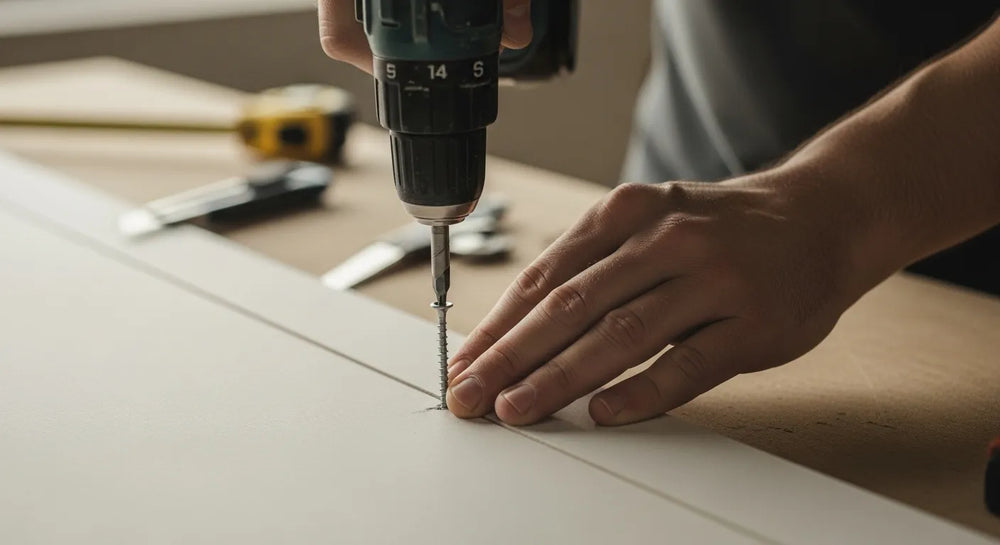
Extracting Broken Screws from Wood: A Practical Guide for Industrial Maintenance
Table of Contents
- Introduction
- Understanding the Problem: Why Screws Break
- The Toolkit for Extraction: Essential Equipment
- Step-by-Step Extraction Techniques
- Post-Extraction: Repairing the Wood and Preventing Future Breaks
- The Strategic Advantage of Sourcing American-Made Fasteners
- Partnering with Maden.co for Reliable Sourcing
- Conclusion
- FAQ
Introduction
Few scenarios in industrial maintenance or design can induce a quicker sense of frustration than a screw that breaks off flush with, or even below, the surface of a wooden component. This seemingly minor mishap can swiftly escalate into a significant impediment, causing project delays, risking structural integrity, and impacting overall operational efficiency. Whether it’s a critical piece of machinery fastened to a timber base, a structural element in a facility, or a precise prototype being assembled, a broken screw demands immediate and effective intervention. The challenge isn't just about removal; it's about doing so without further damaging the surrounding material, preserving the integrity of the component, and ensuring a swift return to productivity.
This comprehensive guide is designed for procurement managers, MRO buyers, design engineers, and business owners who frequently encounter such dilemmas. We will delve into the various reasons screws break, explore the essential tools required for extraction, and outline a series of practical, authoritative methods for safely removing even the most stubborn broken fasteners from wood. Furthermore, we will emphasize the critical role of sourcing high-quality, American-made fasteners in preventing these issues, aligning with our commitment at Maden.co to industrial excellence. Our ultimate goal is to equip you with the knowledge and resources to transform a frustrating setback into a manageable task, ensuring continuity in your operations and projects. Mastering these extraction techniques, coupled with strategic sourcing of high-quality U.S.-made fasteners, is crucial for maintaining operational efficiency and project integrity.
Understanding the Problem: Why Screws Break
Before we delve into the solutions, it's vital to understand the root causes behind broken screws. Identifying these factors not only helps in successful extraction but also, more importantly, informs preventative strategies. In industrial and MRO settings, where the stakes are often higher, understanding these dynamics is paramount.
Common Causes of Fastener Failure
-
Stripped Heads: This is arguably the most common issue. It occurs when the driver bit loses its grip on the screw head, grinding away the recess (e.g., Phillips, Torx, Square, Slotted).
- Causes: Using the wrong size or type of driver bit, worn-out driver bits, applying excessive torque with an impact driver, not applying enough downward pressure, or angled driving.
-
Sheared Shafts: A more severe issue, this happens when the screw shaft itself breaks, typically at or just below the surface of the material.
-
Causes:
- Overtorquing: Applying too much rotational force, exceeding the screw's tensile or shear strength.
- Insufficient Pilot Hole: If the pilot hole is too small or nonexistent, the screw experiences immense stress as it tries to displace wood, leading to shearing.
- Wood Movement: Natural expansion and contraction of wood can exert significant stress on fasteners over time, especially in outdoor or humid environments.
- Cross-Graining: Driving a screw into end grain or across a complex grain pattern can create uneven stress distribution.
- Material Fatigue: Repeated stress cycles, vibration, or movement can weaken the screw's material over time, leading to eventual failure.
- Low-Quality Fasteners: Screws made from inferior materials or with manufacturing defects (e.g., inconsistent tempering, impurities) are inherently weaker and more prone to shearing under stress.
-
Causes:
-
Corrosion and Rust: Chemical reactions, especially in wet or corrosive environments, can weaken the screw material, making it brittle and prone to breaking during removal attempts or even under normal load.
- Causes: Exposure to moisture, chemicals, galvanic corrosion (when dissimilar metals are in contact), or lack of protective coatings.
-
Improper Pilot Holes: This is a critical factor often overlooked.
- Too Small: Causes excessive friction and stress on the screw, leading to shearing or stripping.
- Not Deep Enough: Prevents the screw from fully seating, leaving it vulnerable to bending or breaking.
- Incorrect Diameter: The pilot hole should match the screw's shank diameter for maximum holding power without overstressing the fastener.
-
Low-Quality Fasteners: This point cannot be overstressed in an industrial context. Cheap, imported screws often have inconsistent material composition, poor thread quality, and inadequate strength for demanding applications.
- Impact: Leads to frequent failures, increased maintenance costs, and project delays. Sourcing high-quality, U.S.-made fasteners is a strategic decision that pays dividends in reliability and performance. At Maden.co, we emphasize American Manufacturing Pride, connecting industrial buyers with products from verified U.S. manufacturers who adhere to rigorous quality standards. Our mission is to democratize access to American manufacturing, ensuring you acquire components that meet the highest benchmarks for industrial excellence.
Impact on Operations
The immediate fallout from a broken screw extends beyond mere inconvenience:
- Downtime and Delays: Equipment out of service, production lines halted, project schedules missed. For a procurement manager overseeing facility maintenance, knowing how to confidently tackle a sheared structural screw not only saves time but also reduces the need to source an entirely new timber beam.
- Material Waste: Damage to the surrounding wood can necessitate costly repairs or even replacement of entire components.
- Increased Labor Costs: Time spent on extraction is unproductive labor that detracts from other critical tasks.
- Safety Hazards: A compromised fastener can weaken a structure or assembly, posing risks to personnel and equipment.
By understanding these contributing factors, industrial buyers and engineers can implement preventative measures and approach extraction challenges with a more informed and strategic mindset. This proactive stance, coupled with a commitment to sourcing reliable, U.S.-made fasteners, is key to operational resilience.
The Toolkit for Extraction: Essential Equipment
Successfully extracting a broken screw often comes down to having the right tools for the job. While some methods might only require basic hand tools, others demand specialized equipment. For industrial and MRO applications, investing in a robust extraction kit is a wise decision, as it minimizes downtime and prevents further damage.
Safety First
Before reaching for any tool, prioritize safety:
- Eye Protection: Always wear safety glasses or goggles to protect against flying debris, especially when drilling, grinding, or hammering.
- Gloves: Protect your hands from splinters, sharp edges, and chemical exposure (e.g., penetrating oils).
Basic Hand Tools
These are the workhorses of any toolkit and are often sufficient for less stubborn breaks:
-
Pliers:
- Locking Pliers (Vice Grips): Indispensable for gripping a small protruding shaft. Their adjustable jaws lock tightly, providing immense leverage.
- Needle-Nose Pliers: Useful for very small screws or when space is limited.
- Slip-Joint Pliers: Can offer a wider grip for larger, more exposed stubs.
- Hammer: For gently tapping a driver or chisel into a screw head to create purchase, or for impacting a screw extractor.
- Chisel / Flat-head Screwdriver (Sacrificial): Can be used with a hammer to cut a new slot into a stripped screw head if there's enough material, or to pry. Choose an older, robust flat-head that you don't mind potentially damaging.
- Punch / Center Punch: Essential for creating a starting dimple before drilling, preventing the drill bit from wandering (walking). A good punch ensures precision, which is critical when dealing with broken fasteners.
- Penetrating Oil: Products like WD-40 Specialist Penetrant or PB Blaster are crucial for breaking down rust and loosening seized threads. Apply liberally and allow ample time to soak in – often several hours or overnight for very stubborn screws.
- Wire Brush: For cleaning around the screw head, removing debris, rust, or wood fibers that might obscure the screw.
Specialized Extraction Tools
For more challenging extractions, these tools significantly increase your chances of success:
-
Screw Extractors: These are the dedicated tools for removing broken fasteners. They come in various forms:
- Spiral (Fluted) Extractors: These have a tapered, reverse (left-hand) thread that bites into a pre-drilled pilot hole in the broken screw. As you turn the extractor counter-clockwise, it wedges itself in and unscrews the fastener. They require a specific drill bit size for the pilot hole.
- Square Extractors: Often used for larger screws, these are hammered into a square or slightly undersized round hole drilled into the screw. They then provide a robust purchase for turning with a tap wrench or crescent wrench.
- Left-Hand (Reverse) Drill Bits: These bits are designed to rotate counter-clockwise. When drilling a pilot hole into the broken screw, the reverse rotation might sometimes catch and unscrew the fastener before an extractor is even needed. They are often sold as part of screw extractor sets.
-
Drill (Corded or Cordless): A powerful, variable-speed drill with a reversible function is non-negotiable.
- Key Feature: The ability to run in reverse (counter-clockwise) is essential for using left-hand drill bits and screw extractors.
- Chuck Quality: A high-quality chuck ensures the drill bits and extractors are held securely without slipping.
-
Rotary Tool (e.g., Dremel-style) with Accessories: Invaluable for precision work.
- Cutting Wheels: For cutting a new slot into a stripped or flush screw head, allowing a flat-head screwdriver to be used.
- Grinding Bits: For flattening a surface or preparing a screw head for further work.
- Impact Driver: While often a cause of stripped heads, a controlled impact driver on a low setting can sometimes provide the initial burst of torque needed to break a stubborn screw free, especially if there's still a usable head. Use with extreme caution.
- Heat Gun / Soldering Iron: Localized heat can cause the screw to expand and contract, breaking the bond with the wood or any adhesive/corrosion. A soldering iron is particularly useful for very small, delicate screws as it applies concentrated heat.
Having this array of tools readily available will significantly improve your success rate in tackling broken screws, minimizing damage and expediting repairs in any industrial environment. And remember, sourcing high-quality, U.S.-made tools is as important as sourcing quality fasteners; both contribute to reliable operations.
Step-by-Step Extraction Techniques
The approach to removing a broken screw depends heavily on how it broke and how much of it is accessible. We'll detail several methods, ranging from simple to more involved, providing solutions for various scenarios common in industrial maintenance.
Method 1: The Stripped Head – When You Still Have Some Grip
This scenario occurs when the screw head's recess (Phillips, Torx, Square) is rounded out, but the head itself is still intact and largely visible.
- Preparation: Clean the area around the screw head with a wire brush to remove any debris or wood fibers that might be obstructing the view or preventing a good grip. Apply a generous amount of penetrating oil to the screw head and threads, allowing it to soak for at least 30 minutes, or ideally, several hours.
-
Increase Grip with a Larger Bit or Rubber Band:
- Larger Driver Bit: Sometimes, moving up one size in your driver bit (e.g., from PH2 to PH3, or a slightly larger Torx bit) can create new purchase in the stripped recess.
- Rubber Band/Steel Wool: Place a wide, thick rubber band or a piece of steel wool over the stripped head. Insert your driver bit (the original size or slightly larger) firmly into the screw head on top of the rubber band/steel wool. The material will fill the gaps and provide extra friction. Apply significant downward pressure while slowly attempting to turn the screw counter-clockwise.
- Impact Driver (Controlled): With an impact driver set to a low torque setting, fit the largest possible bit that still seats, or use the rubber band trick. The impact driver's hammering action can sometimes jar the screw loose without further stripping. Apply steady, firm downward pressure.
- Vice Grips/Pliers: If any part of the screw head protrudes above the wood surface, even slightly, use locking pliers (Vice Grips) or strong needle-nose pliers. Clamp them firmly onto the head and slowly turn counter-clockwise. The locking mechanism provides constant pressure, reducing slippage.
- Create a New Slot (Dremel/Grinder): If the above methods fail and the screw head is still accessible, use a rotary tool (like a Dremel) fitted with a thin cutting wheel. Carefully cut a new straight slot across the diameter of the screw head. Once the slot is deep enough, use a sturdy flat-head screwdriver to extract the screw. Be extremely cautious not to damage the surrounding wood.
Method 2: The Protruding Stub – When the Shaft is Broken but Visible
This is one of the more straightforward scenarios, where the screw shaft has sheared, but a portion of it extends above the wood surface.
- Preparation: As always, clean the area and apply penetrating oil to the exposed shaft, allowing it to soak.
- Vice Grips / Locking Pliers: This is your primary tool here. Clamp the locking pliers firmly onto the exposed stub. Ensure the jaws are as tight as possible for maximum grip.
- Slow, Steady Rotation: With the pliers locked on, gently rock and turn the stub counter-clockwise. Avoid sudden, forceful twists that could shear the stub further. If it's very stubborn, apply more penetrating oil and allow more soak time.
- Pipe Wrench: For larger diameter screws where a vice grip might not provide enough leverage, a small pipe wrench can be effective, provided there’s enough shaft exposed for a secure grip.
- Heat Application (Caution!): If the screw is severely corroded or stuck, carefully apply localized heat with a heat gun or soldering iron to the exposed stub. The heat can help expand the metal, breaking the bond with the wood and corrosion. Immediately after heating, try to turn with vice grips. Repeat the heat and turn cycle, applying more penetrating oil as the screw cools.
Method 3: The Flush or Sub-Surface Break – The Most Challenging
This is often the most difficult scenario, as there's no visible head or shaft to grip. This requires drilling and specialized extractors.
- Center Punching: This is critical. Use a center punch and hammer to create a small, precise indentation exactly in the center of the broken screw. This dimple will prevent your drill bit from wandering (walking) when you start drilling. Accuracy here prevents damage to the surrounding wood and ensures the extractor bites correctly.
-
Drilling a Pilot Hole:
- Choose the Right Drill Bit: Select a drill bit that is smaller than the diameter of the broken screw's shaft, but large enough for the screw extractor you intend to use. Most screw extractor sets will specify the correct drill bit size.
- Left-Hand Drill Bit (Optional but Recommended): Begin drilling with a left-hand (reverse) drill bit. These bits are designed to rotate counter-clockwise. As you drill slowly and with steady pressure, the reverse rotation might catch the broken screw and unscrew it out of the wood before you even need an extractor. If this happens, congratulations – you’ve saved a step!
- Regular Drill Bit (if no left-hand bit): If using a regular drill bit, drill slowly and steadily into the center-punched mark. Ensure the drill is perfectly perpendicular to the wood surface. Drill deep enough for the extractor to get a good bite, but not so deep that you go through the wood or damage components beneath.
-
Using a Screw Extractor:
- Insert Extractor: Once the pilot hole is drilled, insert the appropriate size screw extractor into the hole. Spiral extractors are generally preferred for this method.
- Apply Downward Pressure: Tap the extractor gently with a hammer to ensure it seats firmly in the pilot hole. This helps the extractor's reverse threads bite into the screw material.
- Counter-Clockwise Rotation: Using a tap wrench, adjustable wrench, or a specialized extractor driver, slowly turn the extractor counter-clockwise. As you turn, the extractor will bite deeper into the broken screw. Maintain steady, firm pressure. The goal is to apply enough torque to turn the broken screw without snapping the extractor itself.
- Practical Scenario: For a procurement manager under pressure to source a specific DIN 931 compliant hex cap screw, a design engineer needing specific material certifications for a new prototype, or an MRO buyer facing an unexpected equipment breakdown, the ability to quickly find and finance a verified, U.S.-made part is a game-changer. When replacement fasteners are needed after a successful extraction, they can rely on Maden.co for readily available options like a sturdy round slot drive brass wood screw or a durable flat slot drive brass wood screw from our network of verified U.S. manufacturers.
-
Alternative: Drilling Out the Entire Screw: If the extractor fails, or if the screw is too small or brittle for an extractor, your last resort might be to drill out the entire screw.
- Larger Drill Bit: Use a drill bit that is slightly larger than the screw's major thread diameter. Carefully drill directly into the screw, aiming to disintegrate it. This method will inevitably damage the surrounding wood hole.
- Repairing the Hole: After drilling out the screw, you'll be left with a larger, potentially irregular hole. This will need to be repaired using wood dowels, wood filler, or epoxy before a new screw can be inserted.
Method 4: The Heat and Penetrating Oil Approach (for corroded/stubborn screws)
This method is particularly effective for screws that are stuck due to rust, corrosion, or old adhesive.
- Alternating Heat and Cold: Apply localized heat (using a heat gun on a low setting, or a soldering iron for smaller screws) to the broken screw stub or the surrounding wood directly above it. Heat causes the metal to expand. Immediately after heating, allow it to cool slightly, or even apply a cold pack (though this is less common in industrial settings). The rapid expansion and contraction can help break the rust or adhesive bond.
- Liberally Applying Penetrating Oil: While the screw is still warm from the first heat cycle, generously apply penetrating oil. The heat helps the oil wick into the threads more effectively. Allow ample time for the oil to work – ideally several hours or overnight.
- Tapping/Vibration: Gently tap the broken screw with a center punch and hammer while the penetrating oil is soaking. The vibrations can help the oil penetrate deeper into the threads and further break up corrosion.
- Repeat and Attempt Extraction: Repeat the heat-oil-tap cycle a few times. Then, attempt extraction using Method 2 (if protruding) or Method 3 (if flush) with an extractor. The combination of heat and lubrication significantly increases your chances of success.
Method 5: Creating a New Drive Slot (Dremel Method)
This is a refined version of the Dremel technique mentioned in Method 1, specifically for flush or slightly recessed stripped heads where other methods have failed.
- When to Use: Ideal for stripped Phillips, Torx, or hex heads that are flush with the wood surface, but where there's still enough metal in the screw head to cut a new slot.
- Technique: Fit your rotary tool with a thin, abrasive cutting wheel. Carefully and steadily cut a straight slot across the diameter of the screw head. Aim for a slot that is deep enough and wide enough to accept a sturdy flat-head screwdriver. Take care to keep the cut straight and centered, avoiding contact with the surrounding wood.
- Extraction: Once the slot is created, use a flat-head screwdriver that fits snugly. Apply firm downward pressure and slowly turn counter-clockwise.
- Caution: This method carries a higher risk of damaging the surrounding wood if not performed with extreme precision and a steady hand.
Method 6: The Sacrificial Wood Block Method (for very stubborn, flush screws)
This is a more aggressive method for deeply embedded, very stubborn screws that resist other extraction techniques.
- Drill Around the Screw: Using a drill bit slightly larger than the diameter of the screw head (not the shaft), carefully drill around the broken screw. The goal is to create a small, shallow plug of wood containing the screw. Be precise to avoid hitting the screw itself.
- Remove the Plug: Gently chisel or pry out the wood plug, which should now contain the top portion of the broken screw.
- Exposed Screw: You should now have more of the broken screw shaft exposed.
- Extract: Once exposed, you can use vice grips (Method 2) or re-drill and use an extractor (Method 3) on the now-accessible shaft.
- Repair: This method will leave a larger hole that will need to be plugged with a wood dowel and adhesive, then sanded flush.
By systematically working through these methods, beginning with the least invasive and progressing to more aggressive techniques, you can significantly increase your success rate in extracting broken screws from wood, preserving the integrity of your components and maintaining project timelines.
Post-Extraction: Repairing the Wood and Preventing Future Breaks
Successfully extracting a broken screw is only half the battle. The next crucial steps involve repairing any damage to the wood and, more importantly, implementing strategies to prevent similar issues in the future. In industrial settings, prevention is always more cost-effective than repair.
Repairing the Hole
After a successful extraction, especially if you had to drill out the screw or use the sacrificial wood block method, you’ll likely be left with a compromised hole. Proper repair is essential to maintain structural integrity and aesthetics.
- Wood Filler: For small to medium-sized holes or minor surface damage, a high-quality wood filler (e.g., epoxy-based, two-part resin) can be effective. Apply according to manufacturer instructions, allow it to cure completely, and then sand flush with the surrounding wood.
-
Wood Dowels: For larger or structurally critical holes, using a wood dowel is often the best solution.
- Drill out the damaged hole to a clean, consistent diameter that matches a standard wood dowel (e.g., 3/8", 1/2").
- Apply strong wood glue to the dowel and the inside of the hole.
- Insert the dowel, tapping it gently with a hammer until it’s fully seated and flush.
- Allow the glue to cure completely.
- Once dry, cut or sand the dowel flush with the surface. You can then redrill a new pilot hole into the dowel for a new screw.
- Epoxy Putty: For irregular holes or when maximum strength is required, industrial-grade epoxy putty can be molded into the hole, allowed to cure, and then sanded and drilled.
- Ensuring Structural Integrity: Regardless of the repair method, always ensure that the repaired area can adequately hold a new fastener and withstand the expected loads. For high-stress applications, a dowel repair is generally superior to filler.
Preventative Measures: Sourcing for Success
The most effective way to deal with broken screws is to prevent them from happening in the first place. This involves a combination of best practices and, crucially, strategic sourcing of high-quality fasteners.
-
Choosing the Right Fastener:
- Material: Select the screw material appropriate for the application and environment. For resistance to corrosion, consider brass, silicon bronze, or stainless steel. For strength, hardened steel is often necessary.
- Length and Diameter: Ensure the screw is long enough to provide adequate holding power without protruding too far, and that its diameter is suited for the load.
- Thread Type: Wood screws have specific thread patterns designed to grip wood fibers effectively. Coarse threads are generally for softwoods, while finer threads might be for hardwoods or particleboard. For applications requiring specific corrosion resistance or aesthetic, a quality oval slot drive silicon bronze wood screw might be the perfect fit, and Maden.co ensures access to such specialized, American-made components.
-
Proper Pilot Holes: This is perhaps the single most important preventative measure.
- Correct Diameter: The pilot hole should be slightly smaller than the screw’s shank (unthreaded body) and larger than the core diameter of its threads. This allows the threads to cut into the wood without the shank binding or the screw experiencing excessive stress.
- Correct Depth: The pilot hole should be drilled to at least the full depth of the screw's intended penetration.
- Countersinking/Counterboring: For screws that need to sit flush or below the surface, use a countersink bit to create a tapered recess for the screw head. For larger bolts or nuts, counterboring creates a deeper, wider recess.
- Correct Driver Bit: Always use a driver bit that fits snugly into the screw head. A loose fit (cam-out) is the primary cause of stripped heads. Ensure your bits are in good condition, not worn or rounded.
- Lubrication: For driving screws into hardwoods, applying a small amount of wax (beeswax or candle wax) or soap to the screw threads can significantly reduce friction and prevent shearing.
- Controlled Torque: Avoid overtightening. Use a drill with an adjustable clutch or a torque wrench to apply the appropriate amount of force. Overtightening stresses the screw, making it prone to breaking or stripping.
-
Quality of Screws: This is where strategic sourcing plays a critical role. Cheap, mass-produced fasteners often have inconsistent material properties, brittle shafts, or poorly formed heads, making them highly susceptible to breaking.
- Maden.co Tie-in: At Maden.co, our commitment to American Manufacturing Pride means we connect industrial buyers with over 2.5 million American-made products from our network of 800+ verified U.S. manufacturers. This ensures you're always sourcing reliable, high-performance components, reducing the likelihood of failures that lead to frustrating extraction tasks. Our mission is to democratize access to American manufacturing, making it simple to find fasteners that meet stringent quality standards and comply with critical industry specifications. Our dedication to industrial excellence and customer empowerment means we provide the resources for you to make informed decisions. Learn more about our unwavering commitment to these principles on our About Us page.
By integrating these preventative measures into your procurement and operational protocols, you not only reduce the incidence of broken screws but also enhance the overall quality, reliability, and longevity of your projects and equipment.
The Strategic Advantage of Sourcing American-Made Fasteners
In an industrial environment, the choice of fastener is never a minor detail. It impacts everything from product performance and safety to supply chain stability and total cost of ownership (TCO). This is precisely why Maden.co champions the strategic advantage of sourcing American-made fasteners.
Quality and Consistency
U.S. manufacturing is synonymous with stringent quality control and superior material science. American-made fasteners are typically produced to precise specifications, utilizing high-grade materials and consistent manufacturing processes. This translates to:
- Reduced Defects: Lower incidence of brittle shafts, poorly formed threads, or inconsistent head recesses.
- Superior Materials: Access to fasteners made from higher-quality steel, brass, bronze, or other alloys, often with better heat treatment and coatings for enhanced durability and corrosion resistance.
- Predictable Performance: Fasteners that consistently meet or exceed industry standards (e.g., ANSI, ASTM, DIN, NPT), ensuring reliable performance under load and in demanding environments.
This consistent quality directly addresses the root causes of screw failures, drastically reducing the likelihood of stripped heads or sheared shafts that necessitate complex extraction procedures.
Supply Chain Resilience
Reliance on distant, global supply chains has exposed businesses to unprecedented volatility – from geopolitical tensions and trade disruptions to natural disasters and shipping delays. Sourcing domestically from verified U.S. manufacturers offers a robust alternative:
- Shorter Lead Times: Reduced transit times mean faster access to critical components, minimizing project delays and downtime.
- Greater Stability: Less vulnerability to international shipping disruptions, customs delays, or fluctuating tariffs.
- Enhanced Agility: The ability to respond more quickly to changes in demand or unexpected component needs.
- Maden.co Tie-in: Our vision is to become the definitive platform that proves American-made components are as accessible and convenient as any global alternative, driving the manufacturing revival with our tagline: "America's manufacturing revival is here." This focus on digital innovation ensures a streamlined procurement process, making domestic sourcing not just a patriotic choice, but a strategic imperative.
Compliance and Traceability
For many industries, strict compliance with various standards and regulations is non-negotiable. Sourcing American-made products often simplifies this process:
- Easier Certifications: U.S. manufacturers are generally more attuned to domestic and international standards, providing readily available material certifications and compliance documentation.
- Improved Traceability: Knowing the origin of your components and having direct access to manufacturers enhances accountability and transparency in your supply chain.
- Maden.co Tie-in: We prioritize supply chain transparency, offering detailed product specifications, material certifications, and manufacturer information directly on our platform. This commitment allows procurement managers and design engineers to verify compliance with critical industry standards like DIN or NPT with ease, facilitating informed purchasing decisions.
Reduced Total Cost of Ownership (TCO)
While the initial unit cost of an American-made fastener might sometimes be perceived as higher than an imported alternative, the TCO tells a different story:
- Fewer Failures: High-quality fasteners break less often, reducing the need for costly extraction, repairs, and replacement.
- Less Downtime: Reliable components mean fewer operational interruptions, preserving productivity and revenue.
- Longer Product Life: Durable fasteners contribute to the longevity and reliability of the final assembled product or equipment.
- Reduced Labor Costs: Less time spent on rework, troubleshooting, and expedited shipping.
- Maden.co Tie-in: By partnering with verified U.S. manufacturers through Maden.co, businesses significantly reduce procurement friction, enhance supply chain resilience, and ultimately improve their TCO. Our platform, which you can explore further at Maden.co, simplifies the complex world of industrial sourcing, enabling you to make choices that optimize long-term value.
Instant Financing for Strategic Procurement
Recognizing that industrial purchasing often involves significant capital outlay, Maden.co offers a key differentiator designed to empower businesses strategically:
- Strategic Cash Flow Management: For large-volume purchases, capital-intensive projects, or unexpected MRO needs, managing cash flow effectively is paramount. Maden.co’s Instant Financing option allows procurement managers and business owners to secure the necessary components without immediately impacting their working capital.
- Flexibility and Agility: This financing tool provides the flexibility to make larger or more timely purchases, ensuring projects stay on schedule and critical operations remain uninterrupted. It's not just a payment method; it's a strategic enabler for efficient resource allocation.
- Seamless Process: Instant Financing is conveniently available during the checkout process on our platform, making it a simple, integrated part of your procurement workflow.
- Maden.co Tie-in: This feature exemplifies our commitment to Customer Empowerment and Digital Innovation, providing tangible benefits that go beyond just finding a product. It helps businesses operate more efficiently and capitalize on opportunities. You can apply for Instant Financing at checkout to streamline your capital-intensive projects and secure the American-made components you need.
By choosing to source American-made fasteners and leveraging the strategic advantages offered by a platform like Maden.co, industrial buyers are not just making a purchasing decision; they are investing in reliability, efficiency, and the resilience of their entire operation.
Partnering with Maden.co for Reliable Sourcing
Navigating the complexities of industrial procurement demands a partner that offers more than just a catalog of products. It requires a commitment to quality, transparency, and innovation. At Maden.co, we are dedicated to being that strategic partner for your business.
We understand that for MRO buyers, design engineers, and procurement managers, finding specific, high-quality components, especially those that are U.S.-made, can often be a time-consuming and fragmented process. Our platform is meticulously designed to simplify this challenge. With over 2.5 million American-made products from our network of 800+ verified U.S. manufacturers, we offer an unparalleled selection, ensuring you can find everything from standard fasteners to highly specialized industrial parts.
Our commitment goes beyond the product itself. We champion Supply Chain Transparency, providing detailed specifications and manufacturer information that empower you to make informed decisions confidently. Our Digital Innovation ensures a streamlined, intuitive procurement experience, reducing friction and saving valuable time. This dedication to Industrial Excellence and Customer Empowerment is at the core of our operations.
Are you a qualified U.S. manufacturer looking to expand your reach and connect with industrial buyers across the nation? We invite you to join our growing network. Register as a vendor and join the American manufacturing revival to showcase your products and become a vital part of America's manufacturing resurgence.
For our buyers, if you have specific sourcing questions, need assistance with product specifications, or require guidance on navigating our extensive catalog, our expert team is ready to help. We are committed to providing the support you need to optimize your procurement process. Feel free to reach out to us directly through our Contact Us page.
At Maden.co, we believe that America's manufacturing revival is here, and we are proud to be the definitive platform making U.S.-made components as accessible and convenient as any alternative.
Conclusion
The frustration of a broken screw in wood, whether in a critical piece of machinery or a structural component, is an unavoidable reality in industrial settings. However, as we’ve explored, mastering the various extraction techniques—from leveraging simple hand tools to employing specialized extractors—can transform a significant setback into a manageable task. More importantly, understanding the root causes of screw failures and adopting a proactive approach to prevention are paramount. This means meticulous attention to pilot holes, correct torque, and, most critically, prioritizing the sourcing of high-quality fasteners.
The strategic decision to procure American-made components offers a powerful advantage. It ensures reliability, enhances supply chain resilience, guarantees compliance, and ultimately reduces your Total Cost of Ownership. By choosing products from verified U.S. manufacturers, you are investing in the bedrock of operational excellence and contributing to the resurgence of domestic manufacturing.
We encourage you to explore Maden.co’s extensive catalog of U.S.-made products. Discover the vast selection of high-quality fasteners and industrial components that meet the most stringent standards. As you build a more robust and efficient procurement process, remember our Instant Financing option, available at checkout, is a strategic tool designed to streamline your capital-intensive projects and ensure you always have access to the American-made components you need, precisely when you need them. Take the next step towards enhanced operational efficiency and unwavering reliability by partnering with Maden.co.
FAQ
Q1: How do I prevent screws from breaking in the first place? A1: Prevention is key. Always drill a pilot hole of the correct diameter and depth for the screw you are using. Apply lubrication like wax or soap to the screw threads, especially for hardwoods. Use the correct driver bit size that fits snugly in the screw head to prevent stripping. Finally, avoid overtightening by using a drill with an adjustable clutch or setting the torque appropriately. Sourcing high-quality, American-made fasteners also significantly reduces the risk of material failure.
Q2: What's the most common mistake when trying to extract a broken screw? A2: The most common mistake is impatience and using excessive force. Forcing a stripped screw or a seized extractor can further damage the screw, making it harder to remove, or even break the extraction tool itself. It's crucial to clean the area, apply penetrating oil, allow adequate soaking time, and use slow, steady, controlled pressure, especially when using screw extractors.
Q3: Can I use superglue to attach a driver to a stripped screw head? A3: While some DIY guides might suggest using superglue or epoxy to attach a driver bit to a stripped screw head, this method is generally not recommended for industrial applications. It is often unreliable, messy, and can permanently bond the driver bit to the screw, complicating any further extraction attempts. It's far more effective to use mechanical methods like larger driver bits, rubber bands, vice grips, or screw extractors.
Q4: When should I call a professional instead of attempting extraction myself? A4: You should consider calling a professional (e.g., a skilled machinist, carpenter, or MRO technician) if the screw is in a critical structural component, if your attempts are causing further damage to the surrounding material, if the screw is highly specialized or made of exotic material, or if you lack the necessary specialized tools and expertise. For very deep, stubborn breaks where extensive damage could compromise safety or functionality, professional intervention can save time, cost, and prevent irreversible mistakes.


