
Fixing Drywall Flaws: Why Are Drywall Screws Protruding?
Table of Contents
- The Anatomy of a Drywall Screw: More Than Just a Fastener
- Why Drywall Screws Protrude: The Core Issues
- The Cost of Protruding Screws: Beyond Aesthetics
- Precision in Procurement: Preventing Issues from the Start
- Practical Solutions for Protruding Drywall Screws
- Conclusion
- FAQ
Few sights are as frustrating on a construction site or during a renovation as perfectly installed drywall suddenly marred by an army of protruding screws. What starts as a minor cosmetic annoyance can quickly escalate into significant delays, costly reworks, and compromised finish quality. For procurement managers, MRO buyers, and design engineers, understanding the root causes of this common issue is not just about aesthetics; it’s about preventing project setbacks, ensuring structural integrity, and optimizing the Total Cost of Ownership (TCO) for every material acquired. The precision required in drywall installation underscores the critical importance of sourcing the right components from the outset.
At Maden.co, we understand that industrial excellence begins with reliable parts. Our mission is to democratize access to American manufacturing, connecting industrial buyers with over 2.5 million American-made products from our network of 800+ verified U.S. manufacturers. We champion the values of American Manufacturing Pride, Digital Innovation, Supply Chain Transparency, Industrial Excellence, and Customer Empowerment. This comprehensive guide will delve into the multifaceted reasons why drywall screws protrude, explore the ripple effects on project timelines and budgets, and highlight how strategic procurement — leveraging verified American-made products — can mitigate these challenges, proving that America’s manufacturing revival is here.
The Anatomy of a Drywall Screw: More Than Just a Fastener
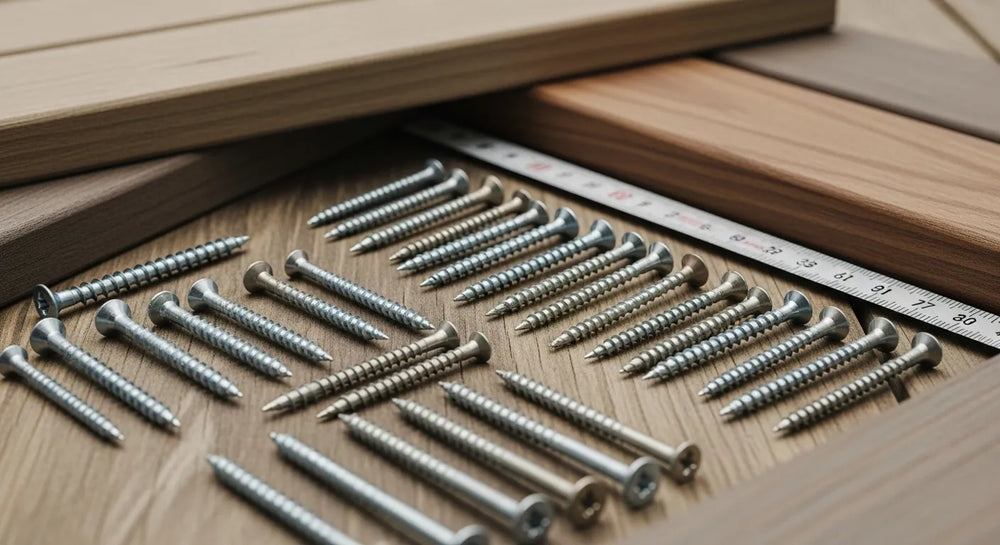
Before dissecting the causes of protrusion, it’s essential to appreciate the engineering behind a drywall screw. Unlike standard wood screws, drywall screws are designed with a specific thread pattern, head shape, and material composition optimized for fastening gypsum board to wood or metal studs. They typically feature a bugle head, which tapers to a sharp point, allowing the screw to sink smoothly into the drywall surface without tearing the paper facing. The threads are designed to grip the gypsum board firmly and the stud securely, creating a strong, stable connection.
Variations exist to suit different applications:
- Coarse-thread screws: Ideal for fastening drywall to wood studs, offering superior grip in timber. For robust wood applications, a product like our 6 x 1-1/4 Coarse Thread Drywall Screws provides excellent holding power.
- Fine-thread screws: Preferred for metal studs, their finer threads bite into the lighter gauge steel more effectively, preventing stripping. If your project involves metal framing, precision is key, and our 6 x 1 Fine Thread Drywall Screw ensures a secure fit.
- Self-tapping screws: Some metal stud screws are self-tapping, eliminating the need for pre-drilling.
- Corrosion-resistant screws: For moisture-prone areas, screws with a protective coating are crucial to prevent rust bleed-through.
Understanding these distinctions is the first step in preventing issues. For procurement managers, selecting the exact type and specification is paramount, and our platform at Maden.co makes this precision sourcing straightforward.
Why Drywall Screws Protrude: The Core Issues
Protruding drywall screws are rarely the result of a single error but rather a combination of factors, each contributing to an imperfect finish. Pinpointing these causes is crucial for effective prevention and repair, directly impacting project efficiency and overall cost.
Improper Installation Depth: A Common Culprit
One of the most frequent reasons for screws sticking out is incorrect installation depth.
Under-driving Screws
When a screw is not driven deep enough, its head sits proud of the drywall surface. This can happen for several reasons:
- Insufficient force: The installer simply didn't apply enough pressure or drive time.
- Tool settings: The clutch on the drill/driver is set too low, or the depth-stop attachment is improperly adjusted.
- Dull bit: A worn or damaged driver bit can prevent proper screw seating, especially with stubborn materials.
- Stud inconsistency: If the stud isn't perfectly flush or has a slight imperfection, the screw might hit resistance and stop short.
An under-driven screw creates a noticeable bump that will show through primer and paint, requiring rework.
Over-driving Screws
While less common as a direct cause of protrusion, over-driving can indirectly lead to future issues that mimic protrusion or compromise the repair. Over-driving happens when a screw is driven too deep, tearing through the paper face of the drywall and into the gypsum core. This compromises the screw's holding power, as the paper is the primary structural element the screw head grips. A screw that has lost its grip due to over-driving can, over time, loosen and push out slightly due to minor structural shifts, vibration, or even humidity changes. It also requires more extensive patching.
Tool Calibration and Technique
Modern drywall guns and drills are equipped with depth-stop attachments or clutches designed to set screws perfectly flush or just below the surface. However, if these tools are not calibrated correctly or if the installer lacks consistent technique, depth variations are inevitable. Even experienced installers can face challenges if they are rushing or using unfamiliar equipment. Investing in quality, well-maintained tools and ensuring proper training can significantly reduce these issues.
Incorrect Screw Length and Type: Matching the Fastener to the Task
The choice of screw length and type is fundamental to a successful drywall installation. Using the wrong screw is a guaranteed path to problems.
Screw Length Mismatch
- Too short: If a screw is too short, it won't penetrate the stud adequately to achieve sufficient grip. While it might appear flush initially, it's susceptible to backing out over time, leading to protrusion. General guidelines suggest at least 5/8 inch (16mm) penetration into wood studs or 3/8 inch (9.5mm) into metal studs. For standard 1/2-inch drywall, a 1-1/4 inch screw is often sufficient for wood studs, while for 5/8-inch drywall, a 1-5/8 inch screw is common. Thicker drywall, like the kind used for soundproofing or fire rating, will require longer screws, such as our robust 8 x 4 Drywall Screw, to ensure proper engagement with the framing.
- Too long: While less likely to cause protrusion directly, excessively long screws can hit pipes, wires, or another structural element behind the stud, preventing them from seating fully. This can also lead to weakened studs or damage to hidden utilities.
Thread Type for Substrate
As mentioned, coarse threads are for wood, and fine threads are for metal. Using coarse-thread screws in metal studs will result in poor grip, stripping, and potential protrusion as the screw fails to hold securely. Conversely, fine-thread screws in wood studs may not achieve optimal holding power, especially in softer woods, increasing the likelihood of screws backing out. For critical metal stud applications, our 6 x 1 Fine Thread Drywall Screw ensures the right engagement.
For procurement managers, a design engineer needing specific material certifications for a new prototype, or an MRO buyer facing an unexpected equipment breakdown, the ability to quickly find and finance a verified, U.S.-made part is a game-changer. Ensuring the correct screw specification from a reputable source like Maden.co not only prevents these installation headaches but also upholds the integrity of your entire project. Our vast catalog of over 2.5 million American-made products ensures you can always find the precise component for any application.
Substrate and Material Issues: The Foundation Matters
Even with perfect screws and installation technique, problems can arise from the underlying materials.
Damaged Drywall
If the drywall itself is damaged, brittle, or has an uneven surface, screws may not seat properly. Drywall that has been exposed to moisture, stored improperly, or subjected to excessive handling can develop soft spots or delamination, making it difficult for screws to grip firmly and creating localized protrusions.
Warped or Uneven Studs
Framing inconsistencies are a major contributor to screw protrusion. Studs that are warped, twisted, bowed, or not perfectly flush with each other create an uneven plane. When drywall is fastened to such framing, the tension can cause screws to pop out over time, especially in areas where the drywall is being pulled into a concave or convex shape. Even minor differences in stud depth can lead to varied screw engagement, where some screws are driven perfectly while others struggle to seat.
Insufficient Stud Penetration
Sometimes, the issue isn't the screw length itself but rather the density or condition of the stud. If wood studs are exceptionally hard, knotty, or contain previous fastener holes, a screw may not fully penetrate, leaving its head proud. For metal studs, if the gauge is too thick for the chosen screw type, the screw may struggle to pierce and thread properly.
Environmental Factors: The Unseen Forces
Buildings are dynamic structures, constantly responding to environmental changes. These forces can gradually push screws out.
Humidity and Moisture
Gypsum board, like wood, can absorb and release moisture, causing it to expand and contract. This subtle movement, though often imperceptible to the eye, exerts constant stress on the fasteners. Over time, this cyclical stress can loosen screws, particularly if they weren't perfectly seated or if the drywall has been exposed to significant humidity fluctuations. Rust from non-corrosion-resistant screws can also weaken the surrounding gypsum, leading to loosening.
Building Settlement and Movement
All buildings settle and shift over time. Minor structural movements, seismic activity, or even heavy foot traffic on upper floors can create vibrations and stresses that gradually cause drywall screws to back out. This is more common in older homes or in new construction during the initial settling period. Screws installed near high-traffic areas or doors and windows that frequently slam are particularly susceptible to this phenomenon.
Tool Malfunction or Misuse: The Human Element
The tools and the way they are used play a critical role in screw installation quality.
Worn Driver Bits
A worn or stripped driver bit can prevent the screw head from engaging properly, leading to cam-out (the bit slipping out of the screw head). This not only damages the screw head, making it difficult to drive further or remove, but also prevents the screw from being driven to the correct depth, leaving it protruding.
Lack of Depth Control
Using a standard drill/driver without a clutch or a dedicated depth-setting attachment makes consistent screw depth incredibly difficult. Operators must rely entirely on feel, often leading to a mix of under-driven and over-driven screws across a single sheet of drywall. Dedicated drywall guns or drills with precise depth stops are essential for professional results.
The Cost of Protruding Screws: Beyond Aesthetics
For procurement and MRO teams, understanding the true cost of subpar components or installation errors extends far beyond the immediate visual flaw. Protruding drywall screws embody a hidden TCO that can significantly impact project profitability and operational efficiency.
Rework and Labor Costs
The most immediate impact of protruding screws is the need for rework. This involves:
- Identification: Time spent finding and marking all protruding screws.
- Correction: Re-driving, removing and replacing, or patching each affected screw. This is not a quick fix; it requires skilled labor.
- Refinishing: Re-sanding, re-priming, and often re-painting the affected areas. This step alone can add days to a project schedule.
Each hour spent on rework is an hour not spent on progressing the project, directly translating to increased labor costs and delayed completion.
Reduced Structural Integrity and Safety Concerns
While a single protruding screw might seem minor, a widespread issue indicates compromised fastening. This can lead to:
- Drywall sagging: Especially in ceilings, where gravity adds extra stress.
- Cracks: Stress points around poorly fastened screws can lead to cracks in the drywall or joint compound over time.
- Panel instability: In extreme cases, poorly fastened panels can become loose, posing a safety risk.
For critical infrastructure projects, where compliance with standards like DIN or NPT is non-negotiable, the integrity of every fastener is paramount.
Impact on Finishing and Reputational Damage
A perfectly smooth finish is the hallmark of quality drywall installation. Protruding screws, even after patching, can leave subtle bumps or shadows that become glaringly obvious under certain lighting conditions. This not only detracts from the aesthetic appeal but can also lead to customer dissatisfaction and reputational damage for contractors or project managers. In B2B contexts, a reputation for quality and reliability is priceless, and seemingly small issues like this can erode trust.
Material Waste
Correcting issues often means using additional joint compound, tape, primer, and paint. While the individual cost of these materials might be low, multiplied across a large project with numerous protruding screws, it adds up. Moreover, if screws need to be removed and replaced, there's waste of fasteners.
Precision in Procurement: Preventing Issues from the Start
The intricate dance of a successful construction or maintenance project relies heavily on the quality and reliability of its components. Preventing issues like protruding drywall screws begins not on the job site, but in the procurement office. Strategic sourcing plays a pivotal role in mitigating these risks and optimizing the overall project lifecycle.
The Imperative of Quality Components
For a procurement manager under pressure to source a specific DIN 931 compliant hex cap screw, a design engineer needing specific material certifications for a new prototype, or an MRO buyer facing an unexpected equipment breakdown, the ability to quickly find and finance a verified, U.S.-made part is a game-changer. The same principle applies to drywall screws. Sourcing high-quality, consistent screws from reputable manufacturers ensures:
- Consistent dimensions: Screws that consistently meet specified length and head dimensions.
- Optimal material properties: Steel that offers the right balance of hardness for driving and ductility to resist snapping.
- Reliable coatings: Effective corrosion resistance for longevity.
When every screw performs as expected, installation becomes more efficient, and the risk of rework plummets. This is where Maden.co’s commitment to American manufacturing pride and industrial excellence becomes a critical advantage. We offer a curated selection of over 2.5 million U.S.-made products, including fasteners that meet stringent quality controls, ensuring your projects are built with precision from the ground up.
Maden.co: Your Strategic Partner for Industrial Excellence
At Maden.co, we are more than just a marketplace; we are a strategic partner in building a more reliable and efficient procurement process. Our entire business model is built on the principle of connecting industrial buyers with the very best of American manufacturing. You can learn more about our mission to champion American manufacturing here: About Us.
Democratizing Access to American Manufacturing
We believe that sourcing American-made components should be as accessible and convenient as any global alternative. Our platform empowers procurement managers, MRO buyers, and business owners by:
- Verified Network: Our network comprises over 800+ verified U.S. manufacturers, ensuring that every product listed meets rigorous quality and compliance standards. This eliminates the uncertainty often associated with global supply chains.
- Vast Catalog: With over 2.5 million products, from standard fasteners like the 6 x 1-1/4 Coarse Thread Drywall Screws to highly specialized industrial components, our platform serves as a single, comprehensive source for all your industrial needs.
- Supply Chain Resilience: By sourcing domestically, you inherently enhance your supply chain resilience, reducing lead times, mitigating geopolitical risks, and supporting local economies.
- Digital Innovation: Our user-friendly interface simplifies the procurement process, reducing friction and saving valuable time. For complex orders or specific component needs, our team is ready to help; reach out to us at Contact Us.
Instant Financing: Empowering Your Capital-Intensive Projects
A key differentiator that sets Maden.co apart is our "Instant Financing" option. We recognize that large-volume purchases or capital-intensive projects require flexible financial solutions. This feature is not just a payment method; it's a strategic tool designed to empower businesses:
- Effective Cash Flow Management: Instant Financing allows procurement managers and business owners to manage cash flow effectively, freeing up working capital for other critical operational needs.
- Facilitating Larger Purchases: It enables the immediate acquisition of larger volumes of components, ensuring project continuity without upfront budget constraints.
- Streamlined Process: The application for Instant Financing is seamlessly integrated into the checkout process, offering a quick and efficient way to secure the necessary funds.
For instance, when planning a large-scale construction project requiring thousands of 8 x 4 Drywall Screws or specialized industrial equipment, the ability to apply for Instant Financing at checkout can be a game-changer, allowing you to proceed with confidence.
Building American Manufacturing Pride
Every purchase made through Maden.co directly supports American jobs and strengthens our domestic manufacturing base. We are proud to be at the forefront of America's manufacturing revival, fostering industrial excellence and customer empowerment through transparency and innovation. Are you a U.S. manufacturer? Register as a vendor and join the American manufacturing revival by visiting our Vendor Registration page.
Practical Solutions for Protruding Drywall Screws
Even with the best planning and procurement, issues can sometimes arise. Knowing how to effectively address protruding screws is essential for any project manager or MRO team.
Repair Techniques
- Re-driving: If a screw is only slightly protruding and hasn't stripped the drywall paper, it can often be re-driven a bit deeper using a drill with a depth-setting attachment. Ensure you don't over-drive it this time.
- Removing and Replacing: If the screw is severely protruding, has stripped the paper, or is too short, the best approach is often to remove it completely. Use a utility knife to carefully cut around the screw head, remove the screw, and then drive a new, longer screw a couple of inches away from the original spot into the same stud. Patch both holes thoroughly.
-
Patching: For minor protrusions that are fixed by re-driving, a simple application of joint compound (spackle) and sanding may suffice. For removed screws or over-driven screws that tore the paper, a two-stage patching process is usually needed:
- Fill the divot with joint compound, ensuring it's slightly overfilled.
- Allow to dry, then sand smooth.
- Apply a second, thinner coat if necessary, feathering the edges.
- Sand again, prime, and paint.
Prevention Best Practices
- Inspect Framing: Before hanging drywall, inspect all studs for warps, bows, or inconsistencies. Address these issues by shimming, planing, or replacing problem studs.
- Use the Right Tools: Invest in a dedicated drywall screw gun or a drill with a clutch and depth-stop attachment. Calibrate your tools regularly.
- Choose the Correct Screws: Always match the screw type and length to the drywall thickness and stud material (wood vs. metal). Consult manufacturer specifications for specific applications, such as our 6 x 1 Fine Thread Drywall Screw for metal framing.
- Consistent Technique: Train installers to apply consistent pressure and maintain a steady hand. The goal is to set the screw head just below the paper surface, creating a slight dimple without breaking the paper.
- Proper Storage: Store drywall flat in a dry, temperature-controlled environment to prevent moisture damage and warping.
- Quality Sourcing: Partner with a reliable supplier like Maden.co for all your components. Our verified U.S. manufacturers provide the consistent quality needed for seamless project execution. Our network allows you to secure components like the 6 x 1-1/4 Coarse Thread Drywall Screws with confidence in their origin and quality.
Conclusion
The nuisance of protruding drywall screws, though seemingly minor, highlights a critical lesson in industrial procurement: precision, quality, and strategic sourcing are paramount. From ensuring the correct screw length and thread type – whether it’s a 6 x 1 Fine Thread Drywall Screw for metal studs or a 6 x 1-1/4 Coarse Thread Drywall Screws for wood – to understanding the subtle impacts of environmental factors and installation techniques, every detail contributes to the overall success and longevity of a project. The true cost of overlooking these details extends beyond aesthetics, impacting labor, materials, project timelines, and ultimately, your reputation.
At Maden.co, we are dedicated to providing procurement managers, MRO buyers, and design engineers with the tools and resources to overcome these challenges. Our commitment to American Manufacturing Pride, Digital Innovation, Supply Chain Transparency, Industrial Excellence, and Customer Empowerment means we are not just selling products; we are offering solutions that enhance supply chain resilience, reduce procurement friction, and improve your Total Cost of Ownership.
America's manufacturing revival is here, and it's built on a foundation of quality, reliability, and accessibility. Stop letting protruding screws disrupt your projects. Explore our extensive catalog of over 2.5 million American-made products today and experience the difference of sourcing through a platform built for industrial excellence. For capital-intensive projects or larger volume purchases, remember you can apply for Instant Financing at checkout to streamline your operations and ensure your projects stay on track and within budget.
FAQ
Q1: Can humidity really cause drywall screws to protrude?
A1: Yes, humidity and moisture fluctuations can certainly contribute. Gypsum board naturally expands and contracts with changes in moisture content. This subtle movement, over time, can exert stress on fasteners, causing screws to loosen and gradually push out, especially if they were not perfectly seated during installation or if the surrounding gypsum has been compromised.
Q2: What's the best type of screw to prevent protrusion in wood studs?
A2: For wood studs, coarse-thread drywall screws are generally recommended. Their wider threads provide better grip in the wood fibers compared to fine-thread screws. Ensure the length is appropriate for your drywall thickness (e.g., 1-1/4 inch for 1/2-inch drywall, or longer like our 8 x 4 Drywall Screw for thicker boards) to ensure adequate penetration into the stud.
Q3: My drywall screws keep popping out after I patched them. What am I doing wrong?
A3: If screws are consistently popping out after patching, it often indicates an unresolved underlying issue. The original screw might have stripped the drywall paper, or the framing stud might be warped, uneven, or moving. Simply patching won't address these structural problems. The best approach is to remove the problematic screw, drive a new, longer screw a few inches away into the same stud (ensuring it hits solid wood/metal), and then patch both the old and new screw holes thoroughly.
Q4: Does using a drill with a clutch or depth stop really make a difference?
A4: Absolutely. A drill with a properly set clutch or a dedicated depth-stop attachment is crucial for consistent and proper screw installation. These tools prevent both under-driving (screws sticking out) and over-driving (screws tearing through the paper). By ensuring each screw is seated just below the surface without breaking the paper, you minimize rework and significantly improve the quality and longevity of your drywall finish.


