
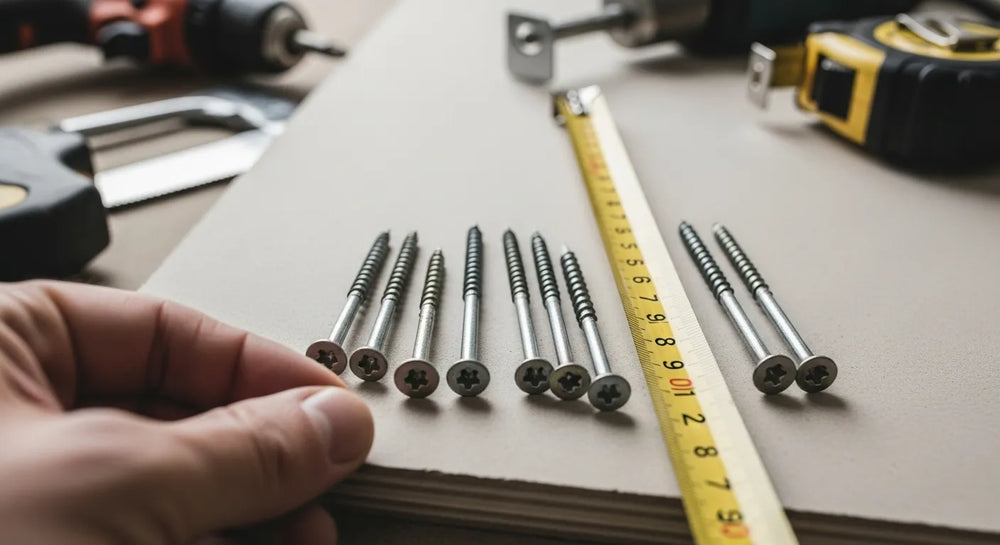
Fixing Split Wood: Repairing Screw Damage Effectively
Table of Contents
- Introduction
- Understanding Wood Splitting: Why It Happens
- The Proactive Approach: Preventing Wood Splitting
- When Prevention Fails: Repairing Split Wood
- The Maden.co Advantage: Sourcing for Reliability and Resilience
- Conclusion
- FAQ
Introduction
Few frustrations are as immediate and disruptive in industrial projects, MRO tasks, or product design as the unexpected splintering of a critical wood component. You've selected the perfect U.S.-made fastener, carefully aligned your materials, and just as the screw bites, the wood gives way, cracking along the grain. This isn't merely a cosmetic flaw; it can compromise structural integrity, delay timelines, and lead to costly material waste. For procurement managers, MRO buyers, and design engineers, such incidents translate directly into project setbacks and increased Total Cost of Ownership (TCO). This post delves into the core reasons why wood splits from screws, offering comprehensive strategies for both preventing this common issue and expertly repairing it when it inevitably occurs. Ultimately, understanding these mechanics and embracing quality sourcing through platforms like Maden.co are paramount to ensuring project success and building resilient operations.
Understanding Wood Splitting: Why It Happens
Wood is a remarkable natural material, renowned for its strength, versatility, and aesthetic appeal. However, its anisotropic nature—meaning its properties vary with direction—makes it susceptible to splitting, particularly when subjected to the concentrated forces of a screw. Understanding the underlying causes is the first step toward effective prevention and repair.
Wood Characteristics: The Foundation of Vulnerability
The inherent properties of wood play a critical role in its susceptibility to splitting:
- Grain Direction: This is the most significant factor. Wood is weakest when a force is applied perpendicular to its grain, especially near edges or ends. Screws driven too close to an edge or into end grain are highly prone to causing splits because the wedge-like action of the screw forces the wood fibers apart along their weakest plane.
- Moisture Content: Wood expands and contracts with changes in moisture. Drier wood is typically more brittle and less forgiving, making it more prone to splitting than wood with optimal moisture content. Conversely, excessively wet wood can also split as it dries and shrinks around a screw.
- Density and Hardness: Denser, harder woods like oak, maple, or exotic hardwoods offer superior strength but are also less compressible. This means they resist the displacement caused by a screw, increasing internal stress and the likelihood of splitting if a pilot hole isn't perfectly sized. Softer woods, while more forgiving, can still split, especially if screws are oversized or over-torqued.
- Knots and Irregularities: Knots are areas where branches grew from the trunk, creating localized grain deviations. These areas are often harder and more brittle than the surrounding wood, making them prime candidates for splitting if a screw is driven through or too close to them. Other irregularities, such as checks or shakes (natural separations in the wood), also present weakened planes where splits can initiate.
Screw Characteristics: The Instigator of Stress
While wood is the material, the screw itself is the direct agent of stress. Its design and application significantly influence the risk of splitting:
- Screw Diameter: A larger diameter screw displaces more wood, generating greater internal stress. If this displacement exceeds the wood's tensile strength along the grain, a split occurs.
- Thread Design: Traditional wood screws have threads that extend along most of the shank. These threads act like a wedge, continuously pushing wood fibers apart. Modern self-tapping or self-drilling screws are designed to minimize this effect, sometimes incorporating cutters or special points.
- Screw Material and Finish: While not directly causing splits, the quality of the screw's material and its finish can impact its driving performance. A poorly manufactured screw might gall or bind, requiring more torque and increasing the risk of splitting. Sourcing high-quality, American-made fasteners ensures consistency and reliable performance. For example, a Round Slot Drive Brass Wood Screw offers excellent corrosion resistance and a classic aesthetic, but its softer brass might be more prone to stripping if not handled with care. Similarly, a Flat Slot Drive Brass Wood Screw provides a flush finish but still requires careful pre-drilling. For environments requiring superior corrosion resistance, an Oval Slot Drive Silicon Bronze Wood Screw might be chosen, demanding similar precision in installation.
- Tip Design: Sharp, pointed screw tips help initiate entry without tearing fibers excessively. Blunt tips, conversely, act more like a punch, increasing the risk of splitting.
Installation Practices: Human Factors in the Equation
Even with perfect wood and ideal screws, improper installation can lead to disaster:
- Lack of Pilot Holes: This is arguably the leading cause of splitting. Without a pre-drilled pilot hole, the screw has to force its way through solid wood, displacing a large volume of material and creating immense stress.
- Incorrect Pilot Hole Size: A pilot hole that is too small won't sufficiently relieve stress, while one that is too large won't allow the screw threads to grip properly, leading to a weak joint.
- Overtightening: Driving a screw beyond the point where it is snug can compress the wood fibers excessively, causing them to yield and split, especially with power tools.
- Driving Angle: Screws driven at an awkward angle or not perpendicular to the surface can create uneven stress distribution, increasing the risk of splitting.
- Proximity to Edges or Ends: As mentioned, driving screws too close to the edge or end of a board drastically reduces the amount of wood available to resist the outward pressure, making splitting almost inevitable.
The Proactive Approach: Preventing Wood Splitting
Prevention is always better—and less costly—than repair. For procurement managers, MRO buyers, and design engineers, implementing a robust preventive strategy means not only saving material and labor but also enhancing the overall reliability and longevity of their assemblies. This strategy hinges on selecting the right components and adopting best practices for installation.
Choosing the Right Screw for the Job
The selection of fasteners is a critical early decision that impacts structural integrity and prevents common issues like wood splitting. At Maden.co, we emphasize access to a vast catalog of American-made components that meet stringent quality standards, ensuring you start with the best possible materials.
-
Understanding Screw Types and Their Applications:
- Wood Screws: Traditionally designed for wood, these typically have a partially threaded shank that allows the unthreaded portion to draw the two pieces of wood tightly together. The tapered tip aids in initial penetration.
- Decking Screws: Often coated for corrosion resistance and featuring specialized thread patterns (e.g., self-drilling tips, partial threads with a smooth upper shank), these are engineered to reduce splitting in exterior wood applications, where wood expansion and contraction are more pronounced.
- Self-Tapping/Self-Drilling Screws: While primarily used in metal, some variants are designed for wood, featuring cutting tips that create their own pilot hole or threads. They can be beneficial in certain applications but still require careful consideration to prevent splitting in dense woods.
-
Material and Finish Considerations: The material of the screw influences its strength, corrosion resistance, and how it interacts with different wood species.
- Brass Screws: Known for their aesthetic appeal and corrosion resistance, brass screws are ideal for decorative applications or in environments where rust is a concern. However, brass is softer than steel and can shear or strip if over-torqued. For example, a Round Slot Drive Brass Wood Screw offers both functionality and a premium finish. Similarly, when a flush, clean surface is paramount, the Flat Slot Drive Brass Wood Screw is an excellent choice, requiring careful pre-drilling and controlled driving.
- Silicon Bronze Screws: Offering superior corrosion resistance compared to brass, silicon bronze screws are often specified for marine applications, exterior structures, or high-humidity environments. They are also stronger than brass, providing a good balance of strength and durability. An Oval Slot Drive Silicon Bronze Wood Screw combines this robust material with an attractive head style, suitable for demanding applications where long-term performance is key.
- Steel Screws (coated/plated): Often galvanized, phosphated, or polymer-coated, steel screws provide high strength and varying degrees of corrosion resistance depending on the finish. These are workhorses for general construction and structural applications.
- Stainless Steel Screws: Chosen for maximum corrosion resistance, especially in outdoor or chemically exposed environments. While strong, they can sometimes be more brittle than coated steel screws and require precise pilot holes.
- Maden.co's Commitment: At Maden.co, we understand that selecting the right fastener isn't just about finding a part; it's about optimizing performance and ensuring compliance. Our platform connects you with over 2.5 million American-made products from 800+ verified U.S. manufacturers, ensuring that whether you need standard wood screws or specialized silicon bronze fasteners, you can trust their quality and origin. We champion American Manufacturing Pride, making it simpler to source components that meet your exact specifications and contribute to greater supply chain transparency.
-
Thread Design and Tip Innovation:
- Screws with specialized tips, such as type 17 (auger point) or self-drilling points, are designed to bore through wood fibers rather than push them apart, significantly reducing the risk of splitting, particularly in hardwoods.
- Aggressive thread designs can provide stronger holding power but may also increase the risk of splitting if pilot holes are inadequate. Conversely, finer threads can be less disruptive to wood fibers but may offer less grip. Matching the thread to the wood type and application is crucial.
Mastering Pilot Holes
The pilot hole is the single most effective preventive measure against wood splitting. It pre-relieves the stress that the screw would otherwise create, allowing the screw to glide in and grip without forcing the wood apart.
- The Science Behind Pilot Holes: When a screw is driven into wood, its threads displace wood fibers. Without a pilot hole, these fibers are pushed outwards, creating radial stress. If this stress exceeds the wood's tensile strength, especially at weak points like grain lines or edges, it results in a split. A pilot hole provides a cavity for these fibers to expand into, drastically reducing internal pressure.
-
Sizing Pilot Holes for Optimal Performance:
- Shank Diameter (Clearance Hole): The upper, unthreaded portion of the screw (the shank) needs a pilot hole that matches its diameter. This allows the two pieces of wood to be drawn tightly together without the shank threads binding.
- Thread Root Diameter (Pilot Hole): The threaded portion of the screw needs a pilot hole that matches the diameter of the screw at the base of its threads (the root diameter), not the outer diameter of the threads. This ensures the threads have enough wood to grip firmly without having to force too much material aside.
- General Rule of Thumb: For hardwoods, the pilot hole should be slightly larger, typically matching the root diameter. For softwoods, it can be slightly smaller to ensure maximum grip. However, always test on a scrap piece of the same wood first.
-
Tools for Accurate Pilot Holes:
- Drill Bits: High-quality twist bits are essential. Ensure they are sharp and appropriate for wood.
- Countersink Bits: For screws with conical heads (like flat-head or oval-head screws), a countersink bit creates a chamfered opening that allows the screw head to sit flush with or below the surface. This prevents the screw head itself from causing surface splitting as it's driven in.
- Depth Stops: Using a depth stop on your drill or a piece of tape wrapped around the drill bit ensures consistent pilot hole depth, preventing over-drilling or under-drilling.
Smart Installation Techniques
Beyond material selection and pilot holes, the actual driving of the screw requires attention to detail.
-
Controlling Driving Speed and Torque:
- Start Slow: Begin driving the screw at a slow speed to ensure proper engagement and to prevent cam-out, which can strip the screw head or damage the pilot hole.
- Increase Speed Gradually: Once engaged, you can increase speed, but remain attentive.
- Avoid Overtightening: Power drills and impact drivers can quickly over-torque screws. Use a clutch setting on your drill or finish driving by hand to achieve a snug fit without stripping the screw or splitting the wood. For precision work, a torque-limiting driver is invaluable.
-
Strategic Screw Placement:
- Distance from Edges and Ends: Maintain a sufficient distance from the edges and ends of boards. A good rule of thumb is to keep screws at least 1/2 inch to 1 inch from the edge and 2-3 inches from the end, depending on the wood species and thickness. The closer to an edge, the higher the risk of splitting.
- Staggering Screws: Instead of driving multiple screws in a straight line along the grain, stagger their placement slightly. This distributes stress more evenly across the wood.
- Grain Alignment: Whenever possible, drive screws perpendicular to the wood grain. Driving parallel to the grain or into end grain significantly increases splitting risk. If you must drive into end grain, use a larger pilot hole and consider using specialized screws or reinforcement.
- Lubrication for Hardwoods: For particularly dense or brittle hardwoods, a small amount of lubricant on the screw threads can reduce friction and the force required to drive the screw. Options include wax (paraffin or beeswax), soap, or even specialized screw lubricants. This small step can make a big difference in preventing splits.
When Prevention Fails: Repairing Split Wood
Despite the best preventive measures, wood can still split. Whether due to an unforeseen weakness in the grain, an accidental overtightening, or simply the material's age and movement, knowing how to fix split wood from a screw is a vital skill. The repair method depends heavily on the extent and location of the damage.
Assessing the Damage: Minor Cracks vs. Major Splits
Before attempting any repair, a thorough assessment is crucial. This will dictate the most appropriate and effective repair strategy.
- Hairline Cracks: These are superficial splits, often just a few millimeters deep, that typically don't compromise structural integrity but are visually unappealing. They might appear around the screw head or just beneath the surface.
- Surface Splits: These are more noticeable, extending deeper into the wood, sometimes several inches along the grain. They can occur along an edge or on the face of a board, potentially weakening the joint or the component itself.
- Through Splits: The most severe form, where the wood has completely separated along the split line. This usually indicates a significant loss of structural integrity and requires a more robust repair to restore strength.
- Structural vs. Cosmetic Damage: It’s vital to differentiate. A hairline crack on a non-load-bearing part might only need a cosmetic fix. A through split on a load-bearing component, however, demands a structural repair to ensure safety and functionality. For design engineers, this distinction is critical for compliance and product reliability.
Repair Methods for Minor Splits (Screw-Induced)
For smaller splits and cracks, simple yet effective techniques can often restore the wood's appearance and some stability.
-
Wood Glue and Clamping (Basic Repair):
- Process: For splits where the wood pieces are still largely connected but separated, apply a high-quality wood glue (PVA-based is common) liberally into the crack. Use a fine applicator tip, a syringe, or even a credit card to work the glue deep into the split.
- Clamping: Immediately clamp the split closed, applying even pressure across the length of the crack. Ensure the surfaces are flush. If clamping is difficult due to the shape or location, strong tape or strategically placed weights can sometimes suffice.
- Curing: Allow the glue to cure completely according to the manufacturer's instructions, typically 24 hours, before removing clamps.
- Finishing: Scrape off any excess dried glue and sand the area smooth.
-
Toothpicks/Dowels and Glue (Filling Small Holes/Cracks):
- Scenario: Ideal for stripped screw holes or small splits where a screw might be re-driven, or to simply fill a void.
- Process: For stripped holes, coat several toothpicks or small wooden dowels with wood glue. Insert them into the hole until it's tightly packed. Break them off flush with the surface. For small, isolated splits, this method can also be used if the split is wide enough to accommodate the toothpicks.
- Curing and Re-drilling: Let the glue dry completely. Once cured, you can re-drill a pilot hole directly through the filled area, ensuring a fresh, tight grip for a new screw.
-
Wood Fillers and Putties (Cosmetic Fixes):
- Scenario: Best for hairline cracks, small surface imperfections, or filling holes where structural strength isn't paramount.
- Process: Select a wood filler that matches the wood species' color as closely as possible, or one that is stainable/paintable. Apply the filler into the crack with a putty knife, ensuring it's pressed firmly and slightly overfilled.
- Drying and Sanding: Allow the filler to dry completely, then sand it flush with the surrounding wood.
- Limitations: Wood fillers typically offer little structural strength and are primarily for aesthetic repair. They can shrink over time, requiring reapplication.
Advanced Repair for Major Splits
When the damage is more extensive, particularly in load-bearing applications or where strength is critical, more robust repair methods are necessary.
-
Using Sawdust and Glue Paste:
- Process: Collect fine sawdust from the same type of wood you are repairing. Mix it with wood glue (or a strong epoxy for structural applications) to create a thick paste.
- Application: Pack this paste firmly into the split. This method creates a repair that blends well with the surrounding wood and offers more structural integrity than standard wood filler.
- Clamping and Curing: Clamp the repair area securely and allow for full curing.
-
Dowel Reinforcement (for Structural Integrity):
- Scenario: Excellent for strengthening a significantly split area or re-establishing a robust connection where a screw has failed.
- Process: After gluing and clamping a split closed, drill one or more holes perpendicular to the split line, passing through the split and into solid wood on either side. These holes should be sized to accommodate wooden dowels. Coat the dowels generously with strong wood glue or epoxy and tap them into the drilled holes until flush.
- Benefits: Dowels create a strong mechanical bond across the split, significantly improving the joint's resistance to future stresses. This is crucial for components where MRO buyers need to ensure equipment reliability.
-
Butterfly Patches / Splines (for Large, Visible Repairs):
- Scenario: Often used for decorative effect but also offers significant structural reinforcement for wider, through splits.
- Process: A dovetail or butterfly-shaped mortise is routed across the split, spanning the gap. A matching patch (butterfly or spline) made from a contrasting or matching wood species is then cut, glued, and tapped into place.
- Benefits: This method creates an incredibly strong mechanical joint that resists further splitting and can add a unique aesthetic element.
-
Epoxy Resins (Strongest Structural Repair):
- Scenario: For highly stressed applications, severely degraded wood, or repairs requiring maximum strength and water resistance.
- Process: Two-part epoxy resin offers superior bonding strength and fills voids effectively. For splits, clean the area thoroughly. Mix the epoxy according to instructions and apply it generously into the crack, ensuring full penetration. For wider splits, mix in sawdust or a thickening agent to create an epoxy paste.
- Clamping and Curing: Clamp tightly and allow ample time for the epoxy to cure (often 24-72 hours, depending on temperature and product). Epoxy provides a permanent, waterproof, and extremely strong bond. This is often the go-to solution for design engineers working with critical wood components.
Re-securing the Screw after Repair
Once the wood has been repaired and fully cured, the next step is to re-secure the fastener. This is where the initial lessons in prevention become crucial again.
- Pre-drilling New Pilot Holes: Never drive a screw into the exact same location where the wood split, especially if the original pilot hole was compromised. Drill a fresh pilot hole, ensuring it's appropriately sized for the screw you plan to use.
- Using Larger Diameter Screws (If Necessary): If the repair involved significant material addition (like dowels or sawdust/glue paste), or if the original screw caused too much damage, consider using a slightly larger diameter screw for improved grip. However, always re-drill the pilot hole accordingly.
- Offsetting the Screw Location: If feasible, shift the screw's position slightly (even a fraction of an inch) from its original placement. This allows the screw to bite into undisturbed, stronger wood fibers.
- The Importance of Quality Replacement Fasteners: When re-securing, ensure you're using high-quality fasteners. Sourcing through Maden.co provides access to verified, U.S.-made screws that meet precise specifications, reducing the likelihood of future issues. For demanding industrial applications or where specific material properties are required, the integrity of the fastener is as critical as the repair itself.
The Maden.co Advantage: Sourcing for Reliability and Resilience
At Maden.co, we understand that issues like wood splitting are often symptoms of deeper challenges in procurement—challenges related to component quality, supply chain reliability, and access to the right materials. Our mission is to democratize access to American manufacturing, empowering procurement managers, MRO buyers, and design engineers to build more robust and resilient operations.
Why American-Made Matters for Your Fasteners and Components:
- Uncompromised Quality and Standards: American-made products from our network of 800+ verified U.S. manufacturers adhere to stringent industry standards (e.g., DIN, NPT). This commitment to industrial excellence ensures that every screw, every component, performs reliably as intended, minimizing failures like wood splitting. When you source through Maden.co, you're not just buying a part; you're investing in a proven standard of quality that reduces your TCO over the product lifecycle.
- Enhanced Supply Chain Resilience: In an unpredictable global market, relying on a domestic supply chain reduces lead times, mitigates geopolitical risks, and ensures greater supply chain transparency. Our vision is to become the definitive platform that proves American-made components are as accessible and convenient as any global alternative, driving the manufacturing revival with our tagline: "America's manufacturing revival is here." This means less waiting for critical fasteners and more predictable project timelines.
- Access to a Vast, Verified Catalog: Our marketplace features over 2.5 million American-made products. Whether you need specialized screws like a Round Slot Drive Brass Wood Screw for a heritage restoration, a Flat Slot Drive Brass Wood Screw for precise woodworking, or an Oval Slot Drive Silicon Bronze Wood Screw for a marine application, our platform simplifies the search for hard-to-find components. This digital innovation drastically reduces procurement friction.
- Customer Empowerment: We empower our customers with the tools and resources to make informed decisions. This includes access to detailed product specifications, manufacturer information, and robust search functionalities that cater to specific industrial needs. Our entire business model is built on this principle; you can learn more about our mission to champion American manufacturing here: About Us.
Strategic Financing for Your Projects:
A key differentiator for businesses sourcing through Maden.co is our Instant Financing option. We understand that managing cash flow for large-volume purchases or capital-intensive projects can be challenging. Our financing solution is designed not just as a payment method, but as a strategic tool to empower your business. It allows you to:
- Optimize Cash Flow: Make necessary purchases without tying up immediate capital, freeing up funds for other operational needs.
- Secure Larger Orders: Facilitate bulk purchases of quality American-made fasteners and components, ensuring you have the supplies you need without delay.
- Streamline Procurement: Integrate financing seamlessly into your procurement process, making it quicker and more efficient.
You can apply for Instant Financing at checkout to streamline your capital-intensive projects, ensuring your operations never miss a beat due to funding constraints.
Furthermore, we are always looking to expand our network of quality U.S. manufacturers. Are you a U.S. manufacturer? Register as a vendor and join the American manufacturing revival. If you have specific sourcing questions or need assistance finding the perfect component, our team of experts is ready to help; please don't hesitate to Contact Us.
Conclusion
Preventing and repairing split wood from screws is a multi-faceted challenge that demands a blend of careful planning, precise execution, and quality materials. By understanding the intricate relationship between wood properties, fastener design, and installation techniques, businesses can significantly mitigate this common issue, saving time, reducing material waste, and enhancing overall project integrity.
For procurement managers, MRO buyers, and design engineers, the strategic importance of sourcing high-quality, verified American-made fasteners cannot be overstated. Opting for superior components from platforms like Maden.co not only minimizes the risk of splitting but also contributes to a more resilient, transparent, and efficient supply chain, ultimately improving your Total Cost of Ownership.
Don't let wood splitting derail your projects or compromise your finished products. Explore our extensive catalog of over 2.5 million American-made products today. Whether you need robust steel fasteners for heavy construction or specialized brass wood screws for fine craftsmanship, Maden.co is your definitive source for industrial excellence. Leverage our Instant Financing at checkout to manage your capital effectively and streamline your procurement process. Discover the Maden.co difference and join America's manufacturing revival today.
FAQ
Q1: What is the most common reason wood splits when driving a screw?
A1: The most common reason wood splits is the absence of an appropriately sized pilot hole. Without a pilot hole, the screw's threads displace too much wood fiber, creating excessive stress that forces the wood apart along its grain, especially when driven close to an edge or into end grain.
Q2: How do I determine the correct pilot hole size for a wood screw?
A2: For hardwoods, the pilot hole should generally match the root diameter (the diameter of the screw shaft not including the threads) to prevent splitting. For softer woods, it can be slightly smaller to ensure maximum thread grip. Always test on a scrap piece of the same wood to find the optimal size, ensuring the screw threads bite securely without excessive force.
Q3: Can I repair a major structural split in wood caused by a screw, or should I replace the component?
A3: Major structural splits can often be effectively repaired, especially with techniques like dowel reinforcement or epoxy resin, which restore significant strength. The decision to repair or replace depends on the component's criticality, the extent of the damage, and the quality of the repair. For critical load-bearing applications, a professional assessment or complete replacement with high-quality, U.S.-made components from a reliable source like Maden.co might be prudent.
Q4: Are some types of wood more prone to splitting than others?
A4: Yes, denser and harder woods (like oak, maple, hickory) are generally more prone to splitting because their fibers are less compressible, leading to higher internal stress when a screw is driven. Wood with irregular grain patterns, knots, or lower moisture content can also be more susceptible to splitting than softer, more uniform woods. Proper pilot hole sizing is especially critical when working with these materials.


