
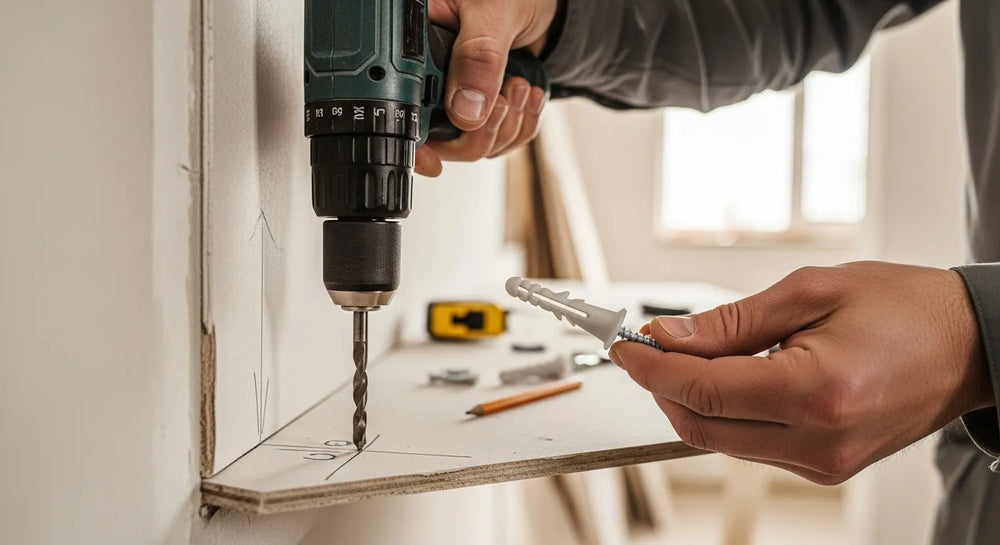
How Do Drywall Screw Anchors Work?
Table of Contents
- Introduction
- The Fundamental Challenge: Why Drywall Needs Support
- The Core Principle: Friction, Expansion, and Load Distribution
- A Deep Dive into Anchor Types for Professional Applications
- Selecting the Right Anchor: A Procurement Manager's Checklist
- The Strategic Advantage of Sourcing U.S.-Made Fasteners
- Streamlining Your Procurement Process
- Conclusion
Introduction
A single, seemingly minor component has halted more commercial fit-outs and industrial maintenance projects than one might imagine. You have the schematics, the equipment is on-site, but the task of mounting a critical piece of hardware—be it safety signage, heavy-duty shelving, or control panels—comes to a dead stop at the wall itself. The substrate is drywall, a material notoriously unforgiving to standard screws. Driving a screw directly into gypsum board is a recipe for failure, as the fastener will inevitably pull out under even the slightest load, leaving a crumbled, useless hole. This common frustration underscores a fundamental engineering principle: to secure anything to a hollow wall, you need to distribute the load.
This is where the drywall screw anchor becomes one of the most vital, yet often overlooked, components in any MRO or construction toolkit. Its function is far more sophisticated than simply filling a hole. Understanding the mechanics behind how these anchors work is not just for maintenance technicians; it's critical knowledge for procurement managers, design engineers, and business owners dedicated to ensuring safety, stability, and long-term project integrity.
In this comprehensive overview, we will deconstruct the engineering principles that make drywall anchors effective. We will explore the various types available, from light-duty expansion anchors to heavy-duty toggle bolts, detailing the specific mechanisms each employs to create a secure fastening point. Furthermore, we will provide a strategic framework for selecting the appropriate anchor for any given application and discuss the profound supply chain and quality advantages of sourcing these critical components from verified U.S. manufacturers. At Maden.co, our mission is to provide direct access to the backbone of American industry, ensuring you can find the exact, high-quality components you need to get the job done right, reinforcing the structural integrity of your projects and the resilience of your supply chain.
The Fundamental Challenge: Why Drywall Needs Support
To appreciate how drywall anchors work, one must first understand the limitations of drywall itself. Also known as gypsum board or wallboard, drywall is a panel made of a gypsum mineral core pressed between two thick sheets of paper. This composition makes it lightweight, easy to install, and excellent for finishing interior spaces, but it also gives it very low structural strength.
Key Weaknesses of Gypsum Board
- Low Density and Compressive Strength: The gypsum core is relatively soft and brittle. When a screw is driven into it, the threads have very little dense material to bite into. The gypsum easily pulverizes and cannot provide the resistance needed to hold the screw in place against a pull-out (tensile) force.
- Poor Shear Strength: Similarly, the material offers little resistance to shear forces, which are forces that act parallel to the surface (e.g., the downward pull of a heavy picture frame). A standard screw can easily tear a vertical slit through the gypsum under such a load.
- Hollow Construction: In most applications, drywall is fastened to studs (wood or metal) that are spaced 16 or 24 inches apart. The vast majority of the wall surface is therefore hollow. Unless a fastener is driven directly into a stud, it has nothing solid behind it for support.
An unassisted screw in drywall might only support a few pounds before failing catastrophically. For any commercial, industrial, or safety-critical application, this is an unacceptable risk. A drywall anchor is an engineered solution designed specifically to overcome these material weaknesses.
The Core Principle: Friction, Expansion, and Load Distribution
At its heart, every drywall anchor operates on a simple but brilliant principle: it transfers the load from the weak, localized point of the screw to a much larger surface area, primarily on the hidden, backside of the drywall panel. This distribution prevents the concentrated force from exceeding the gypsum's low pull-out and shear strength.
Imagine trying to pull a small button through a piece of fabric. It would likely tear a hole. Now, imagine that button is attached to a much larger disc on the other side of the fabric. To pull the button through, you would have to tear a hole the size of the entire disc, which requires significantly more force. A drywall anchor functions as that larger disc.
The process generally involves two key actions:
- Expansion: After being inserted into a hole in the drywall, the anchor is designed to expand as the screw is driven into it. This expansion can push outwards against the inside of the hole, creating a tight friction fit, or it can flare out behind the wall, creating wings or braces.
- Bracing: In more robust designs, the anchor deforms to create a T-brace or a set of "legs" that sit flush against the back of the drywall. The screw then pulls the mounted item against the front of the drywall, while the anchor's brace pulls against the back. This clamps the drywall panel between the two, creating an exceptionally stable connection.
By leveraging these mechanics, an anchor can increase the load-bearing capacity of a single point on a drywall wall from a mere 5-10 pounds to well over 100 pounds, depending on the anchor type and wall condition.
A Deep Dive into Anchor Types for Professional Applications
The specific way an anchor expands and braces dictates its strength and ideal application. For procurement professionals and MRO teams, choosing the correct type is paramount for safety, efficiency, and cost-effectiveness. Here’s a breakdown of the most common anchor families and the mechanics that define them.
Expansion Anchors
These are the most common type of light-duty anchor, often made from nylon or plastic. Their mechanism is based purely on friction and outward pressure.
- How They Work: An expansion anchor typically has a hollow body with one or more slits running down its length. After being inserted into a pre-drilled pilot hole, a screw is driven into the anchor. The screw's tapered profile and threads force the split sections of the anchor to flare outwards, pressing firmly against the interior of the hole drilled in the gypsum.
-
Types and Features:
- Ribbed Plastic Anchors: The exterior of these anchors features pronounced ribs. These ribs are designed to bite into the surrounding gypsum, preventing the anchor from spinning in the hole during screw installation and providing additional friction for a more secure hold. They are excellent for light-duty, static loads like mounting small signs, thermostats, or smoke detectors. For reliable, American-made options perfect for MRO stock, a high-quality Ribbed Plastic Anchor is an essential inventory item.
- Sleeve-Type Anchors: These are a more robust variant where a distinct sleeve expands around the screw. They can offer slightly more holding power than basic ribbed anchors.
- Best For: Light-duty applications, typically under 20 pounds.
- Key Consideration: The quality of the plastic or nylon is critical. Low-grade materials can become brittle over time or deform under load, leading to failure. Sourcing from verified U.S. manufacturers helps ensure material consistency and performance.
Self-Drilling and Threaded Anchors
Designed for speed and medium-duty applications, these anchors eliminate the need for a separate pilot hole, streamlining the installation process.
- How They Work: Self-drilling anchors, sometimes known by brand names like Zip-It®, feature a sharp, aggressive point that can bore directly through drywall. They have wide, deep threads along their body that cut into and grip the gypsum material, providing a secure hold. When you drive the screw into the anchor, it can create a slight additional expansion for an even tighter fit.
- Mechanics: The primary holding power comes from the large surface area of the anchor's threads engaging with the gypsum core. This is more secure than a simple friction fit because it relies on the shear strength of the gypsum across many threads.
- Best For: Medium-duty tasks like installing shelving brackets, heavy picture frames, or wall-mounted dispensers. Their speed makes them a favorite for electricians and maintenance teams performing multiple installations. A product like the Medium Duty Nylon Wall Anchor #6 Self-Drilling Drywall Zip-It® is a perfect example of a design that prioritizes both strength and installation efficiency. Other variants, which may require a pilot hole but use a similar deep-thread principle, offer exceptional holding power. For instance, the Medium Duty Nylon Wall Anchor #8 for Drywall provides a secure, threaded bite into the substrate for reliable mounting.
- Key Consideration: These are best used in standard 1/2" or 5/8" drywall. They may not be as effective in plaster or older, more brittle wall materials.
Hollow Wall Anchors (Molly Bolts)
When you move into heavy-duty applications, you need an anchor that creates a physical brace behind the drywall. Molly bolts are a classic, high-strength solution.
- How They Work: A molly bolt consists of a metal sleeve with slits and a screw. After the entire assembly is inserted into a pre-drilled hole, the screw is tightened. This action draws the end of the sleeve towards the front, causing the slitted sections in the middle to collapse and flare outwards, forming a set of strong metal "legs" that press flat against the back of the drywall.
- Mechanics: This creates a permanent, load-bearing metal fixture inside the wall. The load is distributed across the wide footprint of these legs. A key advantage is that once the anchor is set, the screw can be removed and re-inserted as needed to mount different items, which is not possible with many other anchor types.
- Best For: Heavy-duty, permanent installations like grab bars, heavy mirrors, small wall-mounted cabinets, and commercial-grade shelving.
- Key Consideration: Installation requires precision. The anchor must be set correctly for the legs to expand properly, and the initial hole size must be exact.
Toggle Bolts
For the most demanding applications, toggle bolts provide the highest load-bearing capacity by utilizing the largest footprint behind the wall.
- How They Work: A toggle bolt consists of a screw and a spring-loaded, wing-like toggle. To install, a hole large enough for the folded toggle is drilled in the wall. The toggle is folded, pushed through the hole, and the springs cause it to pop open on the other side. As the screw is tightened, it pulls the toggle wings firmly against the back of the drywall.
- Mechanics: This is the ultimate example of load distribution. The force is spread across the entire length of the metal wings, which can be several inches long. This creates an exceptionally strong and stable mounting point capable of holding significant weight.
- Best For: The heaviest loads, such as mounting televisions, large cabinets, heavy-duty commercial shelving, and even some overhead fixtures (always consult building codes and load ratings).
- Key Consideration: Toggle bolts require a relatively large hole for installation. Also, if the screw is ever fully removed, the toggle wings will fall down inside the wall cavity, lost forever. Newer "snap toggle" designs have addressed this by providing a plastic strap system that holds the toggle in place.
Selecting the Right Anchor: A Procurement Manager's Checklist
Choosing the wrong anchor can lead to project delays, material waste, and significant safety hazards. For those responsible for sourcing these components, a systematic approach is essential.
Key Takeaway: The anchor must always be matched to the load weight, the wall material, and the application. Over-specifying can be wasteful, but under-specifying is dangerous.
Here are the critical factors to consider:
- Load Weight and Type: First, determine the maximum weight the anchor will need to support. Is it a static load (like a mirror) or a dynamic load (like a grab bar that will be pulled on)? Also, consider the force direction: is it primarily shear (downward) or tensile (pull-out)? Anchor packaging and technical data sheets provide these ratings.
- Drywall Thickness: Standard commercial drywall is often 1/2" or 5/8" (Type X fire-rated). The anchor's "grip range" must be compatible with this thickness to ensure it can expand properly behind the wall.
- Material and Environment: In environments with moisture or corrosive elements, consider anchors made from nylon, polymer-coated metals, or stainless steel. For MRO in industrial settings, vibration can also be a factor, making nylon anchors with some inherent damping properties a smart choice.
- Sourcing and Compliance: Consistency is everything. A batch of poorly manufactured anchors can compromise an entire project. Partnering with a platform that connects you directly with verified American manufacturers ensures you receive components that meet rigorous quality standards every time. Our commitment to this principle is the foundation of Maden.co; you can learn more about our mission to champion American manufacturing here.
The Strategic Advantage of Sourcing U.S.-Made Fasteners
In an era of unpredictable global supply chains, the strategic importance of domestic sourcing cannot be overstated, even for components as small as a drywall anchor. The decision to source from American manufacturers provides tangible benefits that go far beyond the component itself.
- Supply Chain Resilience: Reduce lead times, eliminate the risk of port delays, and insulate your projects from international geopolitical instability. When a critical project requires a specific fastener, waiting weeks for an overseas shipment is not an option.
- Uncompromising Quality and Consistency: American manufacturers operate under some of the world's strictest quality control standards. This translates to superior material grades, precise tolerances, and reliable performance. This dedication to Industrial Excellence means fewer product failures, reduced worksite waste, and enhanced safety and liability protection.
- Transparency and Traceability: Knowing the origin of your components is crucial for compliance, especially in regulated industries. Sourcing through our platform provides a clear line of sight into your supply chain, fostering trust and accountability.
- Driving the American Economy: Every purchase of a U.S.-made product supports domestic jobs and contributes to the revitalization of our nation's industrial base. We believe that America's manufacturing revival is here, and we are proud to be at its forefront. If you are a U.S. manufacturer committed to quality and innovation, we invite you to grow with us. Register as a vendor and join the American manufacturing revival.
Streamlining Your Procurement Process
We understand the pressures facing procurement managers and MRO buyers. Your time is best spent on strategic initiatives, not on endless searches for reliable, domestically produced components. Our platform was built to eliminate that friction. With over 2.5 million products from a network of more than 800 verified U.S. manufacturers, Maden.co is your direct portal to the parts you need.
For a project manager tasked with outfitting a new facility or an MRO buyer needing to restock a wide variety of fasteners, the ability to find everything in one place, verify its origin, and purchase it efficiently is a game-changer. Furthermore, we empower your purchasing power with strategic financial tools. For larger orders or capital-intensive projects, you can apply for Instant Financing at checkout to streamline your procurement process and manage cash flow more effectively. If you have specific sourcing questions or need help finding a particular component, our team is ready to help.
Conclusion
A drywall screw anchor is a marvel of simple engineering, turning a weak, unforgiving surface into a secure and reliable mounting point. By understanding the core principles of expansion, friction, and load distribution, professionals can confidently select the correct anchor for any task, ensuring stability and safety. The mechanism is straightforward: transfer the force from a single point to a much wider area behind the hollow wall.
However, the "how" of its function is only half the story. The "where" it comes from is just as important. Choosing high-quality, consistently manufactured anchors from reliable domestic sources is a critical business decision. It is an investment in supply chain resilience, project integrity, and the strength of American industry.
Don't let fastener sourcing be the weak link in your operations. Explore the vast catalog of American-made products on Maden.co to find the precise, high-performance drywall anchors and other industrial components your projects demand. With easy purchasing and the option for instant financing at checkout, strengthening your infrastructure and your supply chain has never been more straightforward.
Frequently Asked Questions
1. Can I reuse a drywall anchor after removing the screw? Generally, no. Most drywall anchors, especially plastic expansion and self-drilling types, are designed for single use. Removing the screw can damage the anchor or the drywall around it, and it will not provide its original rated holding power if reused. The exception is a hollow wall anchor (Molly Bolt), which is designed to remain in the wall, allowing the screw to be removed and re-inserted.
2. What is the difference between shear strength and tensile strength for an anchor? Tensile strength (or pull-out strength) refers to the anchor's ability to resist a force pulling it straight out of the wall. Shear strength refers to its ability to resist a force pulling downward, parallel to the wall surface. For hanging heavy objects like a large mirror, shear strength is often the more critical rating. Both values are typically provided by the manufacturer.
3. Why is using a U.S.-made anchor important for a commercial project? For commercial projects, liability, safety, and durability are paramount. U.S.-made anchors are typically manufactured under stringent quality control protocols, ensuring consistent material quality, precise dimensions, and reliable load ratings. This reduces the risk of failure due to manufacturing defects. Furthermore, it ensures a stable and transparent supply chain, preventing project delays caused by sourcing issues from overseas.
4. How do I know what size drill bit to use for my anchor? The correct drill bit size is crucial for proper installation. If the hole is too small, you can damage the anchor or the drywall when trying to insert it. If the hole is too large, the anchor will not be able to expand and grip the wall effectively. The required drill bit size is almost always printed on the anchor's packaging or included in the product's technical data sheet online. Always verify this before drilling.


