
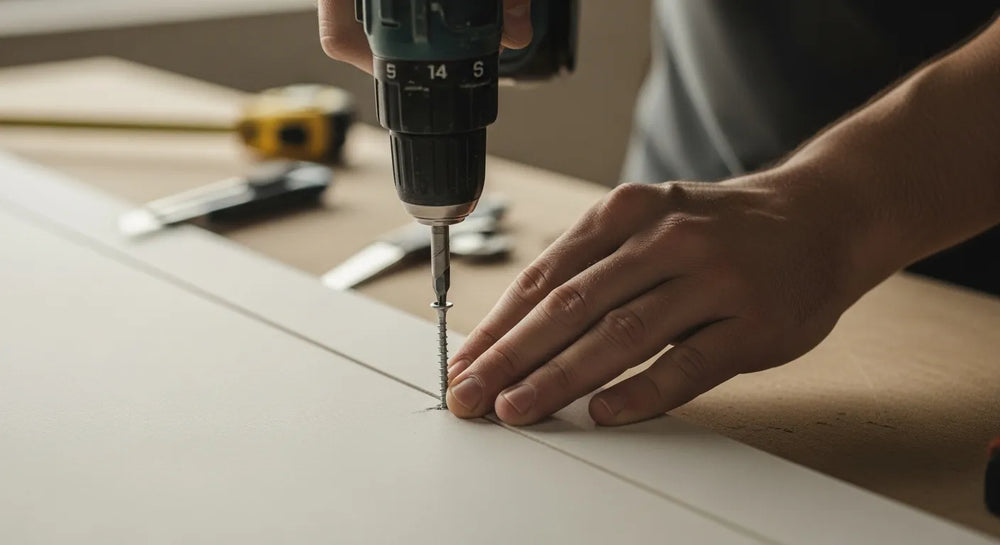
How Much Weight Will a Screw in Drywall Hold?
Table of Contents
- Introduction
- Understanding Drywall: A Foundation of Fragility
- The Science of Holding Power: What Factors Matter?
- Actual Weight Capacities: A Realistic Outlook
- Practical Scenarios and Best Practices for Procurement and Installation
- Conclusion
- Frequently Asked Questions
Introduction
Imagine a critical procurement scenario: you need to secure a vital piece of equipment, install a heavy display, or perhaps a design engineer requires precise load-bearing calculations for a new product enclosure. The integrity of that attachment often hinges on a seemingly small component—a screw. But what happens when the primary anchor point is not solid wood or steel, but the ubiquitous gypsum board known as drywall? The seemingly simple question, "how much weight will a screw in drywall hold," quickly unravels into a complex inquiry with significant implications for safety, structural integrity, and project success. Overestimating this capacity can lead to catastrophic failures, costly repairs, and potential safety hazards, while underestimating it can lead to inefficient designs and unnecessary over-engineering. This blog post aims to demystify the holding power of screws in drywall, exploring the critical factors that influence it, detailing various anchoring strategies, and providing practical guidance for procurement managers, MRO buyers, and design engineers. We will move beyond common misconceptions to equip you with the knowledge needed to make informed decisions, ensuring the reliability and safety of your installations, all while highlighting the strategic advantage of sourcing high-quality, American-made components through a trusted platform like Maden.co.
Understanding Drywall: A Foundation of Fragility
Before delving into the specifics of screw capacity, it's essential to understand the material we're working with. Drywall, also known as plasterboard or gypsum board, is a construction material made of gypsum plaster pressed between two sheets of thick paper. It's widely used for interior walls and ceilings due to its ease of installation, fire resistance, and smooth finish. However, its composition inherently limits its structural strength as an anchor point.
The Anatomy of Drywall and Its Weaknesses
At its core, drywall is a compressed mineral (gypsum) that, while rigid, is also relatively brittle and soft. The paper facing provides some surface integrity, but it's not designed to bear significant load directly. When a screw is driven into drywall alone, without hitting a solid structural element like a wood or metal stud, it primarily relies on the friction and minimal compression of the gypsum and paper. This creates several inherent weaknesses:
- Low Shear Strength: Drywall has poor resistance to forces acting parallel to its surface. A screw pulling downwards can easily tear through the gypsum and paper, creating an elongated hole and quickly losing its grip.
- Poor Pull-out Resistance: Forces acting perpendicular to the surface (pulling straight out) are even more problematic. The threads of a screw have very little material to engage with, leading to easy stripping and pull-out failure.
- Pulverization: Over-tightening a screw in drywall can cause the gypsum to pulverize around the threads, instantly destroying its already limited holding power.
These characteristics mean that a standard screw driven into drywall alone offers very little reliable weight-bearing capacity. It's a common misconception that a screw can hold anything if "just snug." For any item beyond the lightest wall art, this approach is fundamentally unsafe and unreliable. Understanding this basic fragility is the first step toward proper and safe installation practices.
The Science of Holding Power: What Factors Matter?
The actual weight a screw can hold in drywall isn't a single, fixed number. It's a dynamic variable influenced by a complex interplay of several factors. Procurement managers, MRO buyers, and design engineers must grasp these nuances to specify the correct fasteners and anchoring solutions for their projects. Relying on guesswork can compromise safety and lead to costly failures.
Screw Type and Material: More Than Just a Pointed Stick
Not all screws are created equal, especially when it comes to drywall applications. The design and material of the screw significantly impact its performance.
-
Drywall Screws (Coarse vs. Fine Thread): These are specifically designed for drywall installation, featuring a sharp point and a bugle head that sinks flush into the surface.
- Coarse-Thread Drywall Screws: These screws have wider, more aggressive threads, ideal for gripping into wood studs. The coarser threads provide greater biting power in softer materials like wood, minimizing stripping. When purchasing fasteners, it's crucial to specify the right thread for the job. For example, consider our durable 6 x 1-1/4 Coarse Thread Drywall Screws, designed for reliable performance in wood framing.
- Fine-Thread Drywall Screws: With finer, more numerous threads, these are designed for attaching drywall to metal studs. The finer threads create a more secure grip in the thinner gauge of metal, preventing stripping and ensuring a strong connection. When your project demands precision in metal stud applications, our 6 x 1 Fine Thread Drywall Screw offers the necessary strength and reliability.
- Important Note: While these screws excel at attaching drywall to studs, they offer minimal holding power when driven into drywall alone.
- Material and Coatings: Most drywall screws are made from hardened steel, offering good tensile strength. Phosphate coatings provide corrosion resistance and allow the screw to smoothly penetrate the gypsum.
- Wood Screws vs. Drywall Screws: While a wood screw might appear similar, its thread design is optimized for wood, not gypsum board. Using a wood screw in drywall alone can result in poorer holding power compared to a drywall screw, and vice versa when attaching to studs.
- Self-Tapping Screws: Primarily used for fastening to metal, these screws have a special tip that drills its own pilot hole. While useful for metal studs, they are not designed for direct drywall anchorage.
Procurement managers understand the necessity of specifying the exact screw for the job. Sourcing from a platform that provides detailed specifications and ensures adherence to standards is paramount. Maden.co connects industrial buyers with an extensive catalog of over 2.5 million American-made products, ensuring you find the right fastener with the right specifications for every application. For example, when you need a robust, general-purpose drywall screw that can handle a variety of tasks, our 8 x 4 Drywall Screw provides a reliable, U.S.-made solution.
Screw Length and Diameter (Gauge): The More, The Merrier?
The physical dimensions of the screw play a crucial role in its load-bearing capabilities.
-
Length:
- Into Drywall Only: Longer screws provide marginally more surface area for friction, but this effect is minimal and unreliable in drywall alone. The gypsum will still pulverize.
- Into a Stud: This is where length truly matters. A screw needs to penetrate the structural framing (wood or metal stud) by at least 1 inch for wood and 3/8 inch for metal to achieve its rated shear strength. A screw that barely catches the stud offers significantly less holding power. Longer screws ensure adequate embedment into the solid material, providing a secure anchorage.
-
Diameter (Gauge):
- Into Drywall Only: A thicker screw might displace more gypsum, but it doesn't fundamentally change the material's fragility. The increase in holding power is negligible.
- Into a Stud: A larger diameter screw provides more surface area for the threads to grip the stud, increasing both shear and pull-out resistance. However, too large a diameter can split a wood stud or warp a metal stud if not properly installed.
Specifying the correct length and gauge is a fundamental aspect of effective procurement, ensuring optimal performance without over-engineering or risking failure.
Installation Technique: Precision Prevents Problems
Even the highest quality screw, meticulously selected, can fail if installed incorrectly.
- Over-tightening: This is a common culprit. Driving a screw too far into drywall, especially without hitting a stud, will "strip out" the hole. The threads lose their grip as the gypsum crumbles, rendering the screw useless. The bugle head of drywall screws is designed to create a slight dimple, allowing the screw head to sit flush with the surface without tearing the paper.
- Angle of Insertion: Screws should be driven perpendicular (90 degrees) to the wall surface for maximum engagement and strength. Angled screws reduce the effective contact area and can weaken the connection.
- Pilot Holes: For standard drywall screws into drywall or wood studs, pilot holes are generally not needed. The sharp point is designed to penetrate directly. However, for some anchors or very hard wood, a pilot hole is essential to prevent splitting or snapping the screw.
For MRO buyers overseeing routine installations or design engineers specifying assembly procedures, emphasizing correct installation is as critical as selecting the right part. This attention to detail reflects Maden.co's core value of Industrial Excellence, promoting best practices across the supply chain.
Weight Distribution and Load Type: Shear vs. Pull-Out
The way a weight is applied to a screw dramatically influences its holding capacity.
- Shear Load: This occurs when the force is parallel to the wall surface, attempting to slice the screw. Think of a picture frame hanging, where the weight pulls straight down, attempting to cut the screw shaft. Drywall has slightly better resistance to shear loads than pull-out, but still very limited.
- Pull-out Load: This occurs when the force is perpendicular to the wall surface, attempting to pull the screw straight out. A coat hook with a heavy bag, or a shelf sagging forward, exerts pull-out force. Drywall offers extremely poor resistance to pull-out loads. The screw threads simply strip out of the soft gypsum.
- Multiple Screws: Distributing weight across multiple screws significantly increases overall capacity. Two screws holding 10 lbs each will collectively hold more reliably than a single screw attempting to hold 20 lbs. This is crucial for shelves or heavier fixtures.
- Dynamic vs. Static Loads: Static loads (constant, unchanging weight) are easier to manage. Dynamic loads (impacts, vibrations, swinging objects) place far greater stress on fasteners and require more robust anchoring solutions.
Understanding these load types is vital for design engineers conducting stress analyses and for procurement managers ensuring the specified fasteners meet the actual operational demands, not just static weight ratings.
Environmental Factors: The Silent Degrader
The environment in which fasteners are installed can also impact long-term holding power.
- Moisture and Humidity: Prolonged exposure to high humidity or direct moisture can weaken drywall, causing it to soften and lose its ability to hold screws effectively. This is particularly relevant in bathrooms, kitchens, or basements.
- Temperature Fluctuations: Extreme or rapid temperature changes can cause minor expansion and contraction, which over many cycles can loosen fasteners or degrade the drywall material itself.
- Age and Condition of Drywall: Older drywall, or drywall that has been patched multiple times, may be weaker and more susceptible to failure.
These factors underscore the need for durable, high-quality fasteners that can withstand varied conditions, reinforcing the value of sourcing from verified U.S. manufacturers who adhere to rigorous production standards, a cornerstone of Maden.co's mission.
Actual Weight Capacities: A Realistic Outlook
Setting realistic expectations for what a screw can hold in drywall is critical for preventing failures and ensuring safety. The numbers vary dramatically based on whether a stud is involved or if an anchor is used.
Screws into Drywall ONLY: The Risky Zone
When a standard drywall screw is driven solely into the gypsum board, without contacting a structural stud or using an anchor, its holding capacity is extremely limited and highly unreliable.
- Shear Load (Downward Pull): You might get 5-10 pounds, but even this is tenuous. The gypsum can easily tear, especially if the load shifts or experiences a slight tug. We do not recommend this method for anything of significant value or weight.
- Pull-out Load (Outward Pull): This is where drywall performs worst. Expect a mere 1-2 pounds, if that. A light coat or small towel can easily pull a screw straight out.
Key Takeaway: Never rely on a screw directly into drywall for anything beyond the lightest decorative items (e.g., a small picture frame weighing less than a pound), and even then, understand the risk. For procurement managers and MRO buyers, specifying this method for any functional item is an unacceptable risk. The "America's manufacturing revival is here" is about building things to last, and that starts with proper foundations.
Screws into Drywall WITH a Stud: The Gold Standard
This is the fundamentally correct and safe method for securing items to a wall. When a screw penetrates the drywall and then firmly embeds into a wooden or metal stud, its holding power dramatically increases, relying on the robust strength of the structural framing rather than the fragile drywall.
-
Into Wood Studs:
- Shear Load: A properly installed screw (e.g., a 6 x 1-1/4 Coarse Thread Drywall Screw penetrating at least an inch into the stud) can hold 50-100+ pounds for typical household items. Heavy-duty construction screws can hold significantly more, depending on their size and the quality of the wood.
- Pull-out Load: While less than shear, pull-out resistance is still substantial when anchored into wood, often 20-50+ pounds, again depending on screw characteristics and embedment depth.
- Practical Application: For hanging heavy shelves, cabinets, large mirrors, or wall-mounted televisions, fastening directly into wood studs is the preferred and safest method.
-
Into Metal Studs:
- Shear Load: When a fine-thread screw (like our 6 x 1 Fine Thread Drywall Screw) properly penetrates a metal stud, it can hold 30-70+ pounds, depending on the gauge of the metal stud. Thicker gauge studs offer greater strength.
- Pull-out Load: Generally lower than wood studs, but still substantial for many applications, typically 15-30+ pounds.
- Practical Application: Ideal for office fit-outs, commercial spaces, or anywhere metal stud construction is prevalent. Choosing the correct fine-thread screw is essential to prevent stripping the thinner metal.
The Role of Anchors: When No Stud is Available
Sometimes, a stud simply isn't where you need it, or the item is too wide to span two studs. In these scenarios, various types of drywall anchors can bridge the gap, significantly increasing holding power beyond a bare screw in gypsum. It's crucial for procurement managers to understand the capabilities of these anchors to specify the correct solution, especially when dealing with specific compliance standards. Our commitment to Industrial Excellence means providing information that supports robust decision-making.
-
Plastic Expansion Anchors (Light Duty):
- Mechanism: A plastic sleeve inserted into a pre-drilled hole. As the screw is driven in, the plastic expands, gripping the back of the drywall.
- Holding Power: Approximately 5-15 pounds (shear), 3-10 pounds (pull-out).
- Use Cases: Small pictures, light wall decor, small lightweight shelving.
- Limitations: Prone to stripping if over-tightened. Not for heavy or dynamic loads.
-
Self-Drilling/Self-Tapping Anchors (Medium Duty):
- Mechanism: Often made of nylon or metal, these anchors have a sharp tip and coarse threads, allowing them to be screwed directly into the drywall (no pilot hole usually needed). The screw is then driven into the anchor.
- Holding Power: Approximately 10-25 pounds (shear), 8-15 pounds (pull-out). Metal versions tend to be stronger.
- Use Cases: Medium-sized mirrors, light fixtures, towel bars, small shelves.
- Limitations: Can still strip out if over-torqued. Not for very heavy items.
-
Molly Bolts (Medium-Heavy Duty):
- Mechanism: A metal sleeve with a pointed tip that inserts into a pre-drilled hole. As the screw is tightened, the sleeve collapses behind the drywall, forming a strong, permanent grip.
- Holding Power: Approximately 20-50 pounds (shear), 15-30 pounds (pull-out), depending on size.
- Use Cases: Medium-heavy shelves, curtain rods, light wall-mounted storage units.
- Limitations: Requires a precise pilot hole. Not reusable if removed.
-
Toggle Bolts (Heavy Duty):
- Mechanism: These anchors require a larger pilot hole. A spring-loaded metal wing (toggle) is pushed through the hole, then springs open behind the drywall. The screw is then threaded into the toggle, pulling it tight against the back of the wall.
- Holding Power: The strongest drywall anchor, often reaching 50-100+ pounds (shear) and 30-60+ pounds (pull-out), limited more by the strength of the drywall itself than the anchor.
- Use Cases: Flat-screen TVs, heavy shelves, small wall cabinets, grab bars (non-ADA compliant unless structural blocking is behind).
- Limitations: Requires a large pilot hole (which then needs patching if the item is removed). The wing can be difficult to retrieve if it drops into the wall cavity.
Choosing the Right Anchor: For design engineers, specifying the correct anchor based on load, drywall thickness, and environmental factors is paramount. For MRO buyers, having access to a reliable supply of various high-quality, U.S.-made anchors is crucial for effective maintenance and repair operations. Maden.co’s extensive catalog includes a wide range of fastening solutions to meet diverse industrial needs, ensuring you can find the right anchor to complement your U.S.-made screws and bolts. Our vision is to become the definitive platform that proves American-made components are as accessible and convenient as any global alternative.
Practical Scenarios and Best Practices for Procurement and Installation
Understanding theoretical weight capacities is one thing; applying that knowledge in real-world scenarios is another. For procurement managers, MRO buyers, and design engineers, making the right decisions means ensuring project success, safety, and operational efficiency. Maden.co champions these goals through its commitment to American Manufacturing Pride and Customer Empowerment.
Scenario 1: The Small Office Setup (Light Items)
An MRO buyer needs to hang clocks, small whiteboards, and framed motivational posters in a newly furnished office. These items are generally lightweight, typically under 5 pounds.
- Incorrect Approach: Using a standard drywall screw directly into the wall everywhere. This is risky; while some items might hold initially, the gypsum will inevitably degrade, leading to items falling, potential damage, and an unprofessional appearance.
- Best Practice: For items under 5 pounds, plastic expansion anchors or small self-drilling anchors are appropriate where studs aren't available. For items over 5 pounds, always locate a stud.
- Maden.co Solution: The buyer can quickly source a bulk order of reliable, U.S.-made plastic anchors and coarse-thread drywall screws through our platform, ensuring consistent quality across the installation. Our network of 800+ verified U.S. manufacturers guarantees access to a wide variety of such industrial components.
Scenario 2: Installing a Commercial Display or Heavy Shelving (Medium-Heavy Items)
A procurement manager is overseeing the installation of new product display shelving in a retail space or heavy storage shelves in a warehouse. Each shelf, once loaded, could weigh 30-70 pounds.
- Incorrect Approach: Relying on self-drilling anchors for all attachment points. While convenient, these are insufficient for sustained, heavy loads, especially with potential dynamic forces from items being moved on and off shelves.
- Best Practice: Identify and use studs wherever possible. For areas between studs, heavy-duty toggle bolts are the most reliable option. The design engineer must specify anchor points and load distribution meticulously.
- Maden.co Solution: The procurement manager can precisely specify robust, American-made toggle bolts and structural screws designed for high load capacities, ensuring compliance with internal safety standards. Our platform's commitment to Supply Chain Transparency means clear product specifications and verifiable origins, reducing procurement friction. For critical projects, our 6 x 1-1/4 Coarse Thread Drywall Screws are excellent for anchoring into wood studs, providing reliable structural integrity.
Scenario 3: Wall-Mounting Industrial Equipment or Large Displays (Heavy, Critical Items)
A design engineer is specifying the installation of a large, wall-mounted control panel in a manufacturing facility, or a heavy flat-screen monitor in a conference room. The panel weighs 150 pounds, and failure is not an option.
- Incorrect Approach: Attempting to use even the strongest drywall anchors. While toggle bolts are powerful, a 150-pound item exceeds the safe limits for drywall-only attachment.
- Best Practice: Such critical and heavy items must be securely fastened into structural studs. If studs are not optimally placed, additional structural blocking (e.g., plywood inserts between studs, fastened securely to the studs) behind the drywall is mandatory. This requires careful pre-planning and potentially opening up the wall.
- Maden.co Solution: For the secure installation of heavy equipment, access to high-strength, verified U.S.-made structural fasteners is non-negotiable. Maden.co provides access to a comprehensive range of these components, ensuring that design engineers can source parts that meet stringent performance criteria and industry standards. For example, when securing large fixtures, our 8 x 4 Drywall Screw can be a robust choice for anchoring into substantial wood framing.
For Procurement Managers: Beyond the Part Number
Procurement is more than just buying parts; it's about strategic sourcing, risk mitigation, and optimizing Total Cost of Ownership (TCO).
- TCO and Reliability: A cheaper, imported fastener that fails can lead to immense costs in repairs, downtime, liability, and reputational damage. Sourcing reliable, U.S.-made components, even if the initial unit cost is slightly higher, often leads to a lower TCO due to superior quality and performance. Our mission at Maden.co is to democratize access to American manufacturing, making these reliable choices readily available.
- Compliance and Standards: Many industrial applications require fasteners that meet specific standards (e.g., DIN, NPT, ASTM). Maden.co connects you with manufacturers who adhere to these stringent specifications, providing the necessary documentation and certifications. Our platform embodies Digital Innovation by making this information transparent and accessible.
- Supply Chain Resilience: Relying solely on overseas suppliers can expose businesses to significant risks from geopolitical events, natural disasters, or logistical disruptions. Sourcing from U.S. manufacturers through Maden.co enhances supply chain resilience, offering stability and predictability, crucial for maintaining Industrial Excellence.
- Access to Hard-to-Find Components: For a procurement manager under pressure to source a specific DIN 931 compliant hex cap screw, a design engineer needing specific material certifications for a new prototype, or an MRO buyer facing an unexpected equipment breakdown, the ability to quickly find and finance a verified, U.S.-made part is a game-changer. Our platform makes this possible, streamlining your capital-intensive projects.
Maden.co: Your Strategic Partner in Sourcing Excellence
At Maden.co, we understand the complexities and critical nature of industrial procurement. Our entire business model is built on the principle of empowering American industry; you can learn more about our mission to champion American manufacturing here: About Us.
We are America's premier B2B marketplace for U.S.-manufactured products, connecting industrial buyers with over 2.5 million American-made products from our network of 800+ verified U.S. manufacturers. Our vision is to become the definitive platform that proves American-made components are as accessible and convenient as any global alternative, driving the manufacturing revival with our tagline: "America's manufacturing revival is here."
We uphold core values of American Manufacturing Pride, Digital Innovation, Supply Chain Transparency, Industrial Excellence, and Customer Empowerment. This means we are committed to providing you with:
- Unparalleled Access: A vast, searchable catalog of U.S.-made components, from fasteners to complex machinery parts.
- Verified Quality: Every product comes from a U.S. manufacturer, often with certifications and transparent specifications, reducing the guesswork and risk associated with unknown origins.
- Streamlined Procurement: Our platform is designed to reduce procurement friction, making it easier and faster to find, compare, and purchase the exact parts you need.
- Strategic Financial Tools: A key differentiator is our "Instant Financing" option, available at checkout. This isn't just a payment method; it's a strategic tool for businesses. It allows procurement managers and business owners to manage cash flow effectively and make larger-volume purchases without immediate capital strain. You can apply for Instant Financing at checkout to streamline your capital-intensive projects.
Are you a qualified U.S. manufacturer looking to expand your reach and connect with industrial buyers across the nation? Register as a vendor and join the American manufacturing revival: Vendor Registration.
If you have specific sourcing questions or need assistance navigating our platform, our expert team is always ready to help: Contact Us.
Conclusion
The question of "how much weight will a screw in drywall hold" reveals a spectrum of possibilities, from near-zero reliability to robust structural integrity, all depending on informed decisions and proper execution. We've seen that relying solely on a screw into drywall is a perilous gamble for anything beyond the most trivial items. The true holding power emerges when screws are properly anchored into structural studs or when appropriate, high-quality drywall anchors are employed. Factors like screw type, length, diameter, installation technique, load type, and even environmental conditions all play a crucial role in determining the safety and longevity of an installation.
For procurement managers, MRO buyers, and design engineers, this knowledge is not merely academic; it is fundamental to ensuring safety, minimizing risks, and optimizing project outcomes. It underscores the critical importance of specifying the right part for the job, adhering to industry best practices, and investing in components that deliver consistent quality and reliability.
At Maden.co, we are dedicated to providing the solutions you need to achieve these objectives. By offering unparalleled access to over 2.5 million high-quality, U.S.-made products from a network of 800+ verified manufacturers, we empower you to build resilient supply chains, ensure compliance with critical standards, and enhance your overall operational efficiency. Our commitment to American Manufacturing Pride, Digital Innovation, Supply Chain Transparency, Industrial Excellence, and Customer Empowerment means you're not just buying a part; you're investing in a partnership that supports the revitalization of domestic manufacturing.
Don't leave the integrity of your projects to chance. Explore our vast catalog of U.S.-made industrial components and materials today at Maden.co. Leverage our platform to find the precise fasteners and anchoring solutions you require, and take advantage of our Instant Financing option at checkout to manage your capital effectively and streamline your next critical project. America's manufacturing revival is here, and with Maden.co, you have the power to build its future.
Frequently Asked Questions
Q1: Can I hang a TV with just drywall screws?
Absolutely not. Hanging a TV directly into drywall with only screws is extremely dangerous and almost guarantees failure. The weight of even a small TV far exceeds the negligible holding capacity of drywall itself. TVs must always be mounted directly into wooden or metal studs using appropriate lag screws or heavy-duty mounting hardware. If studs aren't available in the desired location, additional structural blocking must be installed within the wall, or very robust, high-capacity toggle bolts can be used as a last resort, but always verify the weight rating and consult with a professional.
Q2: What's the difference between coarse and fine thread drywall screws?
Coarse-thread drywall screws have wider, more aggressive threads designed to grip effectively into the softer fibers of wood studs. They are less prone to stripping in wood. Fine-thread drywall screws, conversely, have narrower, more numerous threads that create a more secure purchase in the thinner gauge of metal studs, preventing the screw from stripping the metal. Choosing the correct thread type based on your framing material (wood or metal) is crucial for a strong and reliable connection.
Q3: How do I find a stud in the wall?
There are several reliable methods to locate studs:
- Stud Finder: An electronic stud finder is the most common and accurate tool. Run it across the wall, and it will indicate the edges and center of studs.
- Tapping Method: Gently tap along the wall. A hollow sound indicates drywall, while a more solid, dull thud suggests a stud.
- Measuring: In standard construction, studs are typically spaced 16 or 24 inches on center. Start measuring from a corner, door frame, or window frame, where a stud is almost always present.
- Outlet/Switch Boxes: Electrical outlet and light switch boxes are usually attached to a stud. You can often find a stud directly adjacent to them.
Q4: What are the benefits of using American-made drywall screws and fasteners?
Sourcing American-made drywall screws and fasteners offers several key advantages for industrial buyers. Firstly, it ensures higher quality and consistency, as U.S. manufacturers often adhere to stringent domestic and international standards (like ASTM, DIN, NPT). This translates to more reliable performance, reducing project risks and long-term maintenance costs. Secondly, it strengthens supply chain resilience by reducing reliance on volatile international shipping and geopolitical factors, ensuring more predictable delivery times and stock availability. Lastly, choosing American-made products supports domestic jobs, fosters innovation within the U.S. manufacturing sector, and contributes to the nation's economic vitality, aligning with values of American Manufacturing Pride. Platforms like Maden.co democratize access to these high-quality, verified U.S. products, simplifying the procurement process for buyers committed to excellence.


