
How to Fix Loose Anchor Bolts in Concrete
Table of Contents
- Introduction
- Understanding Anchor Bolt Failure: Why They Break or Loosen
- The Criticality of Timely Anchor Bolt Repair
- Assessing the Damage: A Systematic Approach
- Repair Strategies: Matching the Fix to the Failure
- Best Practices for Anchor Bolt Repair and Installation
- Strategic Sourcing for Anchor Bolt Solutions with Maden.co
- Conclusion
- FAQ
Imagine the scene: a critical piece of machinery, firmly anchored to its concrete foundation for years, suddenly shows signs of instability. A procurement manager receives an urgent call from the MRO team, describing a loose anchor bolt threatening operational integrity. Or perhaps a design engineer, reviewing a new structural specification, realizes the existing anchor points are compromised, jeopardizing safety and compliance. These aren't isolated incidents; anchor bolt failures in concrete are a common, yet often critical, challenge in industrial environments. They can lead to costly downtime, safety hazards, and significant structural concerns.
The integrity of anchor bolts is paramount to the stability and longevity of countless industrial structures, equipment, and heavy machinery. When these critical fasteners loosen, corrode, or fail, it necessitates immediate and precise intervention. This guide will provide a comprehensive, authoritative framework for understanding, assessing, and effectively fixing anchor bolts in concrete, ensuring the longevity and safety of your operations. We will delve into the underlying causes of failure, systematic assessment methodologies, diverse repair strategies, and the critical role of sourcing high-quality, American-made components—a core tenet of our mission at Maden.co.
Introduction
In the demanding world of industrial operations, the foundational stability of machinery and structures is non-negotiable. An unexpected failure of an anchor bolt in concrete can ripple through an entire facility, leading to production halts, safety risks, and immense financial pressure. For procurement managers, MRO buyers, and design engineers, understanding the nuances of anchor bolt integrity and repair is not merely a technical skill but a strategic imperative. The ability to swiftly diagnose, accurately specify, and procure the correct repair components directly impacts a company's bottom line and its commitment to safety and quality.
This blog post will equip you with the detailed knowledge needed to tackle these challenges head-on. We'll explore the various types of anchor bolt failures, the systematic steps involved in assessing damage, and a spectrum of repair strategies, from simple retightening to advanced structural interventions. Crucially, we will emphasize the invaluable advantage of leveraging high-quality, U.S.-manufactured components and specialized tools, highlighting how platforms like Maden.co streamline the procurement process for these essential parts. Our central message is clear: informed assessment, precise execution, and the strategic use of robust, American-made materials are the bedrock of successful anchor bolt repair, safeguarding your assets and operational continuity.
Understanding Anchor Bolt Failure: Why They Break or Loosen
Anchor bolts are engineered to create a secure connection between structural elements or equipment and concrete foundations. Their reliability is fundamental. However, various factors can compromise this connection, leading to failure. A thorough understanding of these mechanisms is the first step toward effective repair.
Types of Anchor Bolts and Their Vulnerabilities
Before diving into failure modes, it's essential to recognize the common types of anchor bolts, as their design dictates their specific vulnerabilities:
- Mechanical Anchor Bolts: These include wedge anchors, sleeve anchors, drop-in anchors, and strike anchors. They create an interlocking connection within the concrete, often through expansion. Their vulnerabilities typically involve insufficient embedment, over-torquing causing concrete spalling, or under-torquing leading to loosening.
- Adhesive Anchor Bolts: These rely on a chemical bond between the bolt and the concrete, using epoxy, polyester, or vinylester resins. Failures here often stem from improper hole cleaning, incorrect mixing ratios, insufficient cure time, or exposure to excessive temperatures or chemicals that degrade the bond.
- Cast-in-Place Anchor Bolts: These are embedded directly into the wet concrete during its pouring. While offering superior strength, failures can occur if the bolts are improperly positioned, not adequately secured during pouring, or if the concrete itself develops defects around the bolt.
Common Failure Modes
Understanding how and why an anchor bolt fails is crucial for selecting the appropriate repair strategy.
Improper Installation
This is perhaps the most common root cause. Errors during installation can severely compromise an anchor bolt's performance from day one.
- Insufficient Embedment Depth: If a bolt isn't embedded deep enough, it lacks the necessary friction or bond area to resist design loads, leading to pull-out failure.
- Incorrect Hole Diameter or Depth: Holes that are too large reduce the effectiveness of mechanical expansion anchors or the adhesive bond. Holes that are too shallow compromise embedment.
- Improper Hole Cleaning: For adhesive anchors, dust and debris in the drilled hole prevent a strong chemical bond, leading to premature failure.
- Over-Torquing: Applying excessive torque can crack or spall the surrounding concrete, reducing the anchor's load-bearing capacity and potentially damaging the bolt itself.
- Under-Torquing: Insufficient torque leaves mechanical anchors loose, allowing movement and eventual fatigue.
- Inadequate Curing Time or Conditions: Adhesive anchors require specific curing times and temperatures to achieve full strength. Rushing this process or exposing the anchor to adverse conditions can lead to bond failure.
Overloading and Dynamic Stress
Anchor bolts are designed for specific static and dynamic loads. Exceeding these limits can lead to failure.
- Static Overload: Applying a sustained load greater than the anchor's design capacity can cause the bolt to yield, stretch, or pull out.
- Dynamic and Vibrational Loading: Machinery that vibrates or imparts cyclic loads can cause fatigue in the bolt material or the surrounding concrete. This constant back-and-forth stress can gradually loosen mechanical anchors or degrade adhesive bonds, leading to fatigue failure.
- Impact Loading: Sudden, sharp impacts can exert extreme forces, causing brittle fracture of the bolt or localized concrete failure.
Environmental Factors
The operating environment plays a significant role in the long-term performance of anchor bolts.
- Corrosion: Exposure to moisture, chemicals, or saltwater can lead to corrosion of steel anchor bolts. This reduces the bolt's cross-sectional area, weakening it and potentially leading to failure. Corroded bolts can also expand, stressing the concrete.
- Freeze-Thaw Cycles: In environments with fluctuating temperatures, water ingress into cracks around the anchor can freeze and expand, progressively spalling and degrading the concrete, which then compromises the anchor's grip.
- Chemical Attack: Certain industrial chemicals can degrade both the concrete and, in some cases, the resins used in adhesive anchors.
Material Fatigue and Wear
Over extended periods, even properly installed anchor bolts can experience material degradation.
- Bolt Material Fatigue: Repeated stress cycles, even below the yield strength, can lead to microscopic cracks that propagate over time, eventually causing the bolt to fracture.
- Wear and Abrasion: In specific applications, physical wear on the bolt or its connection points can reduce its effectiveness.
Concrete Degradation
The strength and integrity of the concrete itself are foundational to the anchor's performance.
- Cracking: Cracks in the concrete, often due to drying shrinkage, thermal expansion, or structural overloading, can propagate through the anchor's embedment zone, reducing its holding power.
- Spalling and Delamination: Surface concrete degradation, often due to impact, rebar corrosion, or freeze-thaw, can expose the anchor and compromise its superficial embedment.
- Poor Concrete Quality: Inadequate concrete mix, insufficient curing, or improper compaction during construction can result in weaker concrete that cannot adequately support the anchor's design loads.
The Criticality of Timely Anchor Bolt Repair
Ignoring loose or damaged anchor bolts is not an option in any industrial or structural setting. The implications of delayed repair can be severe and far-reaching.
Safety Implications
The most immediate and critical concern is safety. Loose anchors can lead to:
- Equipment Failure: Machinery becoming unstable, vibrating excessively, or even toppling over, posing a direct threat to personnel.
- Structural Collapse: In load-bearing applications, anchor bolt failure can compromise the structural integrity of buildings, racks, or mezzanines, leading to catastrophic collapse.
- Flying Debris: Instability can cause parts of equipment or structures to break off and become dangerous projectiles.
Structural Integrity and Equipment Stability
Beyond immediate safety, anchor bolts ensure the long-term stability of assets.
- Foundation Damage: A loose bolt creates a point of weakness that can lead to further concrete degradation, exacerbating the problem and requiring more extensive, costly repairs down the line.
- Reduced Equipment Lifespan: Excessive vibration due to unstable anchoring can accelerate wear and tear on machinery, leading to more frequent breakdowns and a shortened operational life.
- Precision Compromise: Equipment requiring precise alignment (e.g., lathes, milling machines) will lose accuracy if their base is unstable, impacting product quality and operational efficiency.
Operational Downtime and Costs
The financial impact of anchor bolt failure can be substantial.
- Unscheduled Downtime: Repairs often require shutting down operations, leading to lost productivity and revenue.
- Emergency Repair Costs: Expedited procurement, specialized labor, and potential overtime can significantly inflate repair expenses.
- Secondary Damage: A primary anchor failure can cause other components or adjacent structures to fail, escalating repair complexity and costs.
Regulatory Compliance
Many industries are subject to stringent safety and structural regulations.
- OSHA and Industry Standards: Ensuring anchors meet specific load-bearing and safety standards is critical for compliance and avoiding penalties.
- Insurance Implications: Failure to maintain structural integrity can impact insurance coverage or lead to higher premiums.
Given these critical stakes, proactive and timely repair, utilizing high-quality, verified components, is not just good practice—it's essential for business continuity and risk management. This is where strategic sourcing through platforms like Maden.co becomes invaluable, ensuring access to the right parts quickly and reliably.
Assessing the Damage: A Systematic Approach
Before any repair work begins, a thorough and systematic assessment of the damaged anchor bolt and surrounding concrete is indispensable. Rushing this stage can lead to ineffective repairs or mask underlying issues.
Visual Inspection
Begin with a detailed visual examination. This initial step can reveal much about the nature and extent of the problem.
-
Bolt Condition:
- Movement: Can the bolt be wiggled by hand? Is there a gap between the bolt and the equipment base plate?
- Rust/Corrosion: Are there signs of rust on the bolt, especially near the concrete surface? This indicates moisture ingress and potential material degradation.
- Deformation: Is the bolt bent, stretched, or does it show signs of yielding?
- Missing Components: Are washers or nuts missing or damaged?
-
Concrete Condition:
- Cracks: Are there radial cracks emanating from the anchor bolt? Are there larger cracks in the surrounding concrete foundation?
- Spalling/Chipping: Has the concrete surface around the bolt chipped or spalled away? This indicates localized failure due to stress or impact.
- Powdering/Dusting: Is the concrete itself showing signs of degradation, becoming soft or powdery?
- Voids: Are there visible voids or gaps under the base plate or around the anchor?
Load Testing and Pull-Out Tests
For critical applications or when the visual inspection raises concerns about load-bearing capacity, more rigorous testing is required.
- Torque Testing: For mechanical anchors, checking the current torque value can indicate if the bolt has loosened. Re-torquing to the specified value can often resolve minor issues.
- Pull-Out Testing: This involves applying a controlled tensile load to the anchor bolt until a specified proof load is reached or failure occurs. This test provides a direct measure of the anchor's capacity. Specialized equipment is used to exert and measure the force. This helps determine if the anchor still meets its design specifications or if a repair is truly necessary.
Non-Destructive Testing (NDT) Methods
Advanced NDT techniques can reveal hidden defects in the concrete or the anchor bolt itself without causing damage.
- Ground Penetrating Radar (GPR): Can locate embedded rebar or other anomalies in the concrete that might be affecting the anchor.
- Ultrasonic Pulse Velocity (UPV): Measures the speed of ultrasonic pulses through concrete, indicating its density and presence of voids or cracks.
- Rebound Hammer (Schmidt Hammer): Provides a rough estimation of concrete compressive strength, useful for assessing overall concrete quality.
- Infrared Thermography: Can sometimes detect areas of delamination or voids in the concrete by identifying temperature differences.
Documentation and Reporting
For procurement managers, MRO buyers, and design engineers, thorough documentation of the assessment is critical.
- Detailed Records: Document findings, including measurements, photos, test results, and environmental conditions.
- Repair Plan Justification: This data provides the basis for justifying the chosen repair method, material specifications, and budget requests.
- Compliance: Comprehensive records are essential for regulatory compliance and audit trails.
A meticulous assessment lays the groundwork for a successful repair. By understanding the full extent of the damage, you can make informed decisions about the most effective, durable, and cost-efficient repair strategy. This often involves specifying precise components, a task made simpler and more reliable when sourcing through platforms committed to quality and transparency, like Maden.co.
Repair Strategies: Matching the Fix to the Failure
Once the damage has been thoroughly assessed, the next crucial step is selecting the appropriate repair strategy. This choice depends on the type of failure, the extent of damage, and the criticality of the application.
Minor Loosening/Retightening
For anchor bolts that have merely come loose due to vibration or insufficient initial torque, a simple retightening might suffice.
- Inspection and Cleaning: Before retorquing, visually inspect the bolt, nut, and washer for damage or corrosion. Clean any debris or rust. If significant corrosion is present, the bolt may need replacement.
- Re-torquing: Using a calibrated torque wrench, apply the manufacturer's specified torque to the nut. It's crucial not to over-torque, as this can damage the concrete or the bolt itself.
- Using Thread Lockers: For bolts in high-vibration environments, applying a high-strength liquid thread locker (e.g., anaerobic adhesive) to the threads before retorquing can help prevent future loosening. This creates a chemical bond that resists vibration and shock.
- Adding Lock Washers: If not present, adding a split lock washer or a Belleville washer can enhance vibrational resistance, though thread lockers often offer superior performance.
Replacing Damaged Bolts in Existing Holes
When an anchor bolt is damaged (e.g., severely corroded, bent, fractured, or stripped threads) but the surrounding concrete remains in good condition, replacement in the existing hole is often the most efficient solution.
- Drilling Out (if removable): For mechanical anchors, sometimes the damaged bolt can be drilled out. This requires specialized drill bits and careful execution to avoid enlarging or damaging the concrete hole.
- Using Oversized or Specialty Anchors: If the original hole has become slightly enlarged, an oversized mechanical anchor or a specialty anchor designed for problematic holes might be an option.
- Adhesive Anchors for Re-Use: For a procurement manager facing an urgent need to replace a failed bolt in a pre-drilled hole, selecting a reliable adhesive anchor system is often the go-to solution. These anchors rely on a strong chemical bond, making them highly effective in existing holes, provided proper hole cleaning. When dealing with specialized anchoring challenges, such as installing a precise drop-in anchor for light-to-medium duty applications where a female thread is required, a high-quality product like the BN Products 3/8 Inch Inside Thread Sanko Drop-In Concrete Anchor from our platform can provide a robust and reliable solution, ensuring precise installation and long-term stability. This type of anchor offers excellent performance in solid concrete and provides a secure, flush-mount finish.
Repairing Concrete Around the Bolt
When the concrete itself is damaged around the anchor bolt (spalling, significant cracking, or degradation), the repair must address both the bolt and its surrounding medium.
-
Grouting and Non-Shrink Mortars: For localized concrete damage around a bolt, removing all loose and damaged concrete and then re-grouting with a high-strength, non-shrink grout or mortar is effective. These materials are designed to fill voids completely and provide excellent compressive strength without shrinking away from the bolt or original concrete.
- Process: Prepare the area by cleaning and roughening the concrete surface. Install a formwork if needed. Mix and pour the non-shrink grout, ensuring it flows completely around the bolt and fills all voids. Allow for proper curing.
- Patching Compounds for Spalled Concrete: For surface spalling that doesn't affect the deep embedment, polymer-modified cementitious patching compounds can restore the concrete surface and protect the anchor. These compounds offer good adhesion and durability.
New Anchor Bolt Installation Near Old Location
In cases of severe concrete damage around the original bolt, or when the original bolt location is structurally compromised beyond repair, installing a new anchor bolt in a fresh location nearby is often the safest and most robust solution.
-
When is this necessary? This approach is typically chosen when:
- The concrete around the original anchor is extensively cracked, spalled, or shows signs of deep structural weakness.
- The original anchor is too large to easily replace or extract, or its failure has created significant damage.
- Structural analysis indicates the need for a completely new, undisturbed anchoring point.
- Considerations for Spacing and Load Distribution: When installing new anchors, it's critical to consider proper spacing from the concrete edge and from other anchors to avoid interaction failures and ensure the load is distributed correctly. Consult engineering specifications for minimum edge distances and spacing.
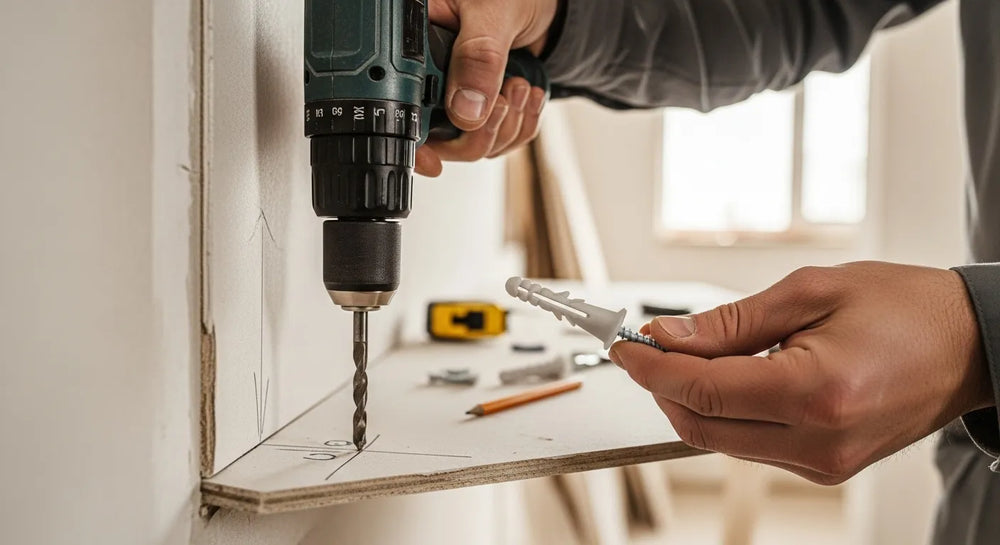
- Drilling Techniques and Equipment: Precision drilling is paramount for new anchor installations. Using the correct drill bit size and ensuring the hole is perpendicular to the concrete surface is essential for optimal anchor performance. For MRO buyers and contractors focused on precision and efficiency in drilling new anchor points, having the right tools is critical. Our marketplace offers specialized solutions like the 1-Headed Concrete Anchor Shear Connector Chuck and the comprehensive Concrete Anchor Shear Connector Chuck Set, both sourced from verified U.S. manufacturers. These tools ensure accuracy and durability in the demanding task of creating new anchor holes, directly contributing to the success and longevity of your installations.
- New Anchor Selection: Choose an anchor type appropriate for the load, concrete conditions, and environmental factors. Adhesive anchors are often preferred for new installations due to their high strength and flexibility in varying concrete conditions.
Each repair strategy requires careful planning, the right materials, and skilled execution. The success hinges not just on the method but critically on the quality of the components used.
Best Practices for Anchor Bolt Repair and Installation
Achieving a durable and reliable anchor bolt repair or new installation goes beyond simply applying a fix. It requires adherence to best practices, with a strong emphasis on material quality and precise execution.
Material Selection: Importance of U.S.-Made, Certified Materials
The foundation of any successful repair or installation is the quality of the materials used. Sourcing through platforms that prioritize American-made components offers distinct advantages:
- Consistency and Quality Control: U.S. manufacturers adhere to rigorous quality control standards, ensuring that each bolt, anchor, or adhesive system performs consistently to specification. This minimizes variations that can compromise structural integrity.
- Traceability and Certifications: Products from verified U.S. manufacturers often come with clear traceability and material certifications. This is crucial for design engineers and procurement managers needing to ensure compliance with specific industry standards (e.g., ASTM, ACI, DIN, NPT) and for audit purposes.
- Supply Chain Resilience: Relying on domestic manufacturing significantly reduces lead times, mitigates geopolitical risks, and ensures a more stable and predictable supply chain—a core value at Maden.co. For a procurement manager under pressure to source a specific DIN 931 compliant hex cap screw, a design engineer needing specific material certifications for a new prototype, or an MRO buyer facing an unexpected equipment breakdown, the ability to quickly find and finance a verified, U.S.-made part is a game-changer.
- Support for American Manufacturing: At Maden.co, our mission is to democratize access to American manufacturing. We achieve this by connecting industrial buyers with over 2.5 million American-made products from our network of 800+ verified U.S. manufacturers. This commitment not only supports domestic industries but also provides you with access to some of the highest quality industrial components available. Our vision is to become the definitive platform that proves American-made components are as accessible and convenient as any global alternative, driving the manufacturing revival with our tagline: "America's manufacturing revival is here." Our core values of American Manufacturing Pride, Digital Innovation, Supply Chain Transparency, Industrial Excellence, and Customer Empowerment are reflected in every product we offer.
Proper Installation Techniques
Even the highest quality components can fail if not installed correctly.
- Hole Preparation is Key: For both mechanical and adhesive anchors, the drilled hole must be free of dust, debris, and moisture. For adhesive anchors, using a wire brush and compressed air multiple times is critical to ensure a clean bonding surface.
- Correct Torque Application: Always use a calibrated torque wrench and adhere strictly to the manufacturer's specified torque values. Over-torquing can damage the concrete or bolt; under-torquing leads to loosening.
- Adequate Curing Times: For adhesive anchors and grouts, allow the full specified curing time before applying any load. Rushing this process compromises the ultimate strength of the bond. Always consider ambient temperature, as it impacts curing.
- Following Manufacturer Instructions: Each anchor system has specific installation procedures. Deviating from these can void warranties and compromise performance.
Compliance and Standards
Adhering to relevant industry standards and building codes is non-negotiable for safety and regulatory compliance.
- ACI (American Concrete Institute) Standards: Provide guidelines for concrete design and construction, including anchoring.
- IBC (International Building Code): Incorporates standards for anchor design and installation, particularly for seismic and wind resistance.
- Material Specific Standards: Ensure bolts, nuts, washers, and adhesives meet specific ASTM (American Society for Testing and Materials) or equivalent standards for material composition and mechanical properties.
- Environmental Considerations: Select anchors designed to resist the specific environmental conditions (e.g., corrosive environments require stainless steel or galvanized anchors).
Tooling and Equipment
The right tools ensure precision, safety, and efficiency.
- Calibrated Torque Wrenches: Essential for accurate tightening.
- Hammer Drills and Rotary Hammers: For efficient and precise hole drilling into concrete.
- Specialized Cleaning Tools: Wire brushes, blow-out bulbs, or air compressors for thorough hole cleaning.
- Adhesive Dispensing Guns: For multi-component adhesive anchors, ensuring proper mixing and application.
Preventative Maintenance
Regular inspection and maintenance can prevent minor issues from escalating into major failures.
- Routine Inspections: Periodically check anchor bolts for signs of loosening, corrosion, or concrete degradation.
- Load Monitoring: For critical equipment, consider implementing load monitoring systems to detect changes in stress distribution.
- Re-torquing Schedules: In high-vibration environments, implement a schedule for checking and re-torquing mechanical anchors.
By integrating these best practices with a strategic sourcing approach, businesses can significantly enhance the reliability of their anchor bolt installations and repairs, contributing to safer, more efficient, and more resilient operations. Our entire business model is built on this principle; you can learn more about our mission to champion American manufacturing here.
Strategic Sourcing for Anchor Bolt Solutions with Maden.co
In the realm of industrial procurement, the choice of supplier for critical components like anchor bolts can have profound effects on project timelines, budget, and long-term operational stability. Maden.co stands as a strategic partner, offering a unique value proposition for procurement managers, MRO buyers, and design engineers seeking reliable, U.S.-made solutions.
The Value of Verified U.S. Manufacturers
When you source through Maden.co, you are not just buying a product; you are investing in quality, reliability, and a resilient supply chain. We partner with over 800+ verified U.S. manufacturers, emphasizing our values of American Manufacturing Pride, Supply Chain Transparency, and Industrial Excellence. This means:
- Ensured Quality and Compliance: Every product listed on our platform meets stringent quality standards. This is particularly vital for anchor bolts, where material composition, tensile strength, and corrosion resistance are non-negotiable for safety and structural integrity. You gain peace of mind knowing the products comply with critical industry standards.
- Enhanced Supply Chain Resilience: By sourcing domestically, you mitigate the risks associated with global supply chain disruptions, fluctuating international tariffs, and extended lead times. This directly translates to reduced procurement friction and improved project continuity.
- Direct Support for the American Economy: Your purchases contribute to the growth and sustainability of U.S. manufacturing, aligning with a broader commitment to national industrial strength.
Access to a Vast Catalog
Our platform offers an unparalleled selection of over 2.5 million American-made products. Whether you need specialized adhesive anchors, heavy-duty mechanical bolts, custom fabrication tools, or the specific chucks required for precise installation like the 1-Headed Concrete Anchor Shear Connector Chuck or a Concrete Anchor Shear Connector Chuck Set, our extensive catalog provides the solutions you need. This vast inventory ensures that even hard-to-find components are readily accessible, eliminating the need to search across multiple vendors.
Reducing Procurement Friction
Maden.co is designed to streamline your purchasing process:
- User-Friendly Interface: Our digital marketplace offers an intuitive experience, allowing you to quickly search, compare, and select products with detailed specifications and clear pricing.
- Transparent Product Information: Each listing provides comprehensive technical data, material certifications, and application guidelines, empowering design engineers to make informed decisions and procurement managers to ensure compliance.
- Centralized Sourcing: Consolidate your industrial purchases through a single platform, simplifying vendor management and optimizing purchasing workflows.
Enhancing Total Cost of Ownership (TCO)
While the initial price of a U.S.-made product might sometimes seem higher than international alternatives, the long-term TCO is often significantly lower.
- Durability and Longevity: Higher quality American-made anchor bolts mean fewer failures, reducing the need for costly repairs and replacement cycles.
- Reduced Downtime: Reliable components minimize unexpected equipment breakdowns and associated operational interruptions, protecting your productivity.
- Lower Risk: Adherence to standards and superior quality control translate to reduced safety risks, insurance claims, and potential liabilities.
- Predictable Performance: Knowing your components will perform as expected allows for more accurate project planning and budgeting.
Instant Financing: A Strategic Tool
A key differentiator on our platform is the availability of Instant Financing. This feature allows procurement managers and business owners to manage cash flow effectively and make larger-volume purchases, ensuring projects stay on schedule and crucial repairs aren't delayed due to capital constraints. Whether you're making an emergency MRO purchase or planning a significant capital project, you can apply for Instant Financing at checkout to streamline your capital-intensive projects. This isn't just a payment method; it's a strategic tool for maintaining operational agility and seizing opportunities.
At Maden.co, we are more than just a marketplace; we are a strategic partner dedicated to empowering industrial customers. By leveraging our platform, you gain access to the best of American manufacturing, secure your supply chain, and enhance your operational excellence. Are you a U.S. manufacturer? Register as a vendor and join the American manufacturing revival.
Conclusion
The integrity of anchor bolts in concrete foundations is a cornerstone of industrial safety, operational continuity, and structural reliability. Addressing loose or damaged anchor bolts is not merely a maintenance task but a critical aspect of risk management and asset preservation. We've explored the diverse causes of anchor bolt failure, from improper installation to environmental degradation, emphasizing the necessity of a systematic assessment before any repair work commences. From simple re-torquing to complex concrete reconstruction and new anchor installations, the appropriate repair strategy hinges on a thorough understanding of the problem.
Crucially, the success and longevity of any anchor bolt repair depend profoundly on the quality of the materials and tools utilized. By prioritizing high-quality, American-made components, businesses can ensure compliance, enhance supply chain resilience, and significantly improve the Total Cost of Ownership (TCO) of their industrial assets. At Maden.co, we are committed to providing unparalleled access to these essential U.S.-manufactured products, fostering industrial excellence, and driving America's manufacturing revival.
Don't let compromised anchor bolts jeopardize your operations. Empower your procurement processes with the reliability and innovation offered by American manufacturing. We invite you to explore our comprehensive catalog of over 2.5 million U.S.-made products today. Discover the robust anchor bolts, specialized chucks, and precision tools that will secure your structures and equipment for years to come. Leverage our Instant Financing option at checkout to ensure your vital projects proceed without capital constraints. Visit Maden.co to find your solutions and solidify your operational foundation. If you have specific sourcing questions or need guidance, our team is ready to help and guide you through our offerings.
FAQ
Q1: How can I tell if an anchor bolt is truly failing or just loose?
A1: A visual inspection is the first step. Look for movement of the bolt, cracks radiating from the bolt into the concrete, signs of rust, or spalling concrete around the bolt. If the bolt wiggles easily, or if you can see a gap between the base plate and the concrete, it's likely failing beyond simple looseness. For critical applications, a load test or pull-out test performed by a qualified professional can definitively determine its structural integrity and load-bearing capacity.
Q2: Is it always necessary to replace a damaged anchor bolt, or can it be repaired?
A2: It depends on the extent and nature of the damage. Minor loosening might only require re-torquing and possibly a thread locker. If the bolt itself is corroded, bent, fractured, or has stripped threads, replacement is typically necessary. If the concrete around the bolt is damaged, it might be possible to repair the concrete with non-shrink grout and reinstall the same type of bolt, or opt for an adhesive anchor in the existing hole if the concrete damage isn't extensive. In cases of severe concrete degradation, installing a new anchor nearby is often the most reliable solution.
Q3: What is the benefit of using adhesive anchors over mechanical anchors for repairs?
A3: Adhesive anchors often provide superior bond strength, especially in applications subject to dynamic or vibratory loads. They distribute stress more evenly into the concrete, reducing localized pressure points that can lead to spalling. For repairs, they are particularly useful for installing new bolts in existing, slightly oversized, or imperfect holes, as the resin fills voids and creates a strong, monolithic bond. They also do not rely on expansion stress, which can be an advantage in concrete with lower compressive strength or near edges.
Q4: How does Maden.co help businesses facing urgent anchor bolt repair needs?
A4: Maden.co streamlines the procurement of high-quality, U.S.-made anchor bolts, related hardware, and installation tools. Our platform provides access to over 2.5 million products from 800+ verified American manufacturers, ensuring rapid access to the right components with detailed specifications for compliance. For urgent needs, our focus on supply chain transparency and domestic sourcing reduces lead times, and our Instant Financing option at checkout allows businesses to quickly acquire necessary materials without cash flow delays, minimizing downtime and securing critical projects efficiently.


