
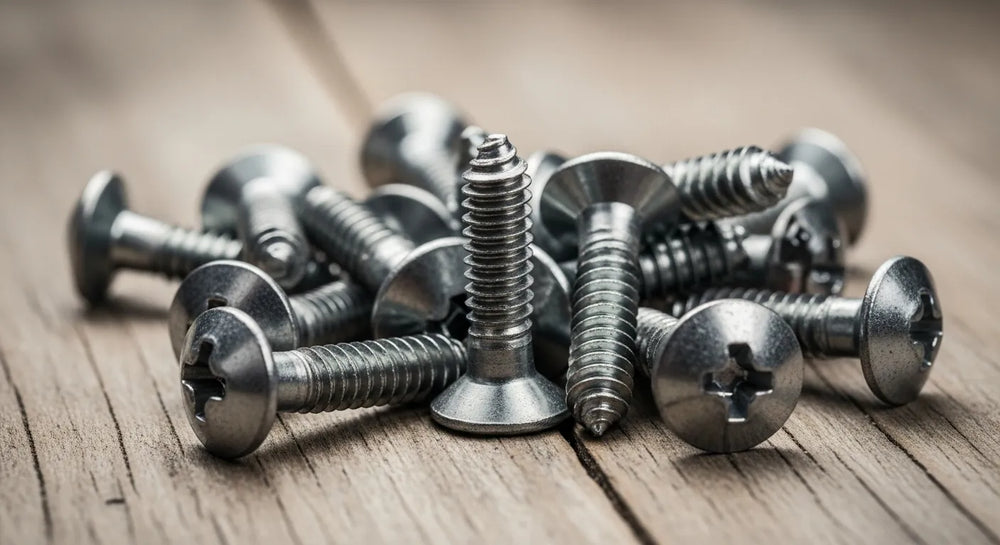
How to Install Threaded Drywall Anchors Securely
Table of Contents
- Introduction
- The Unseen Foundation: Why Drywall Anchor Selection Matters
- Understanding Threaded Drywall Anchors: Types and Applications
- The Step-by-Step Installation Process: A Professional's Guide
- Common Installation Mistakes and How to Avoid Them
- The Maden.co Advantage: Sourcing with Confidence for Industrial Applications
- Conclusion
- Frequently Asked Questions (FAQ)
Introduction
A single work order comes across your desk: "Re-mount control panel, west wall." It seems simple enough, but you know the history. This isn't the first time this panel has been mounted. The last installation failed because the anchors pulled straight out of the drywall, leaving behind gaping holes and causing an unexpected operational delay. This scenario, repeated in facilities across the country, highlights a fundamental truth in maintenance, repair, and operations: the integrity of an entire assembly can depend on its smallest, most overlooked component. The humble drywall anchor is often the difference between a secure, long-lasting installation and a costly, hazardous failure.
This guide is designed for the industrial professional—the MRO buyer, the facility manager, the design engineer—who understands that "good enough" isn't a viable standard. We will move beyond basic instructions and delve into the critical details of how to install threaded drywall anchors for maximum reliability and safety. We will explore the different types of anchors, their specific load capacities and applications, the precise step-by-step installation process, and the common mistakes that lead to failure.
Ultimately, this article asserts that the proper selection and meticulous installation of high-quality, American-made threaded drywall anchors are not just best practices; they are essential disciplines for ensuring project integrity, workplace safety, and operational continuity. By sourcing with intention and installing with precision, you fortify your work against the preventable failures that erode budgets and timelines.
The Unseen Foundation: Why Drywall Anchor Selection Matters
In an industrial or commercial setting, a failed anchor is never just a cosmetic issue. It represents a cascade of potential negative outcomes. A heavy tool rack pulling away from a wall can damage expensive equipment and, more importantly, pose a serious safety risk to personnel. A piece of conduit or a junction box detaching can lead to electrical hazards and operational shutdowns. The direct cost of re-work—labor, materials, and time—is often dwarfed by the indirect costs of downtime and compromised safety protocols. This is why the initial selection of the right anchor is a critical risk-management decision.
Before you can even begin installation, you must understand the forces the anchor will be subjected to. The two primary forces to consider are:
- Tensile Strength (Pull-Out Force): This measures the anchor's resistance to being pulled straight out of the wall. This is a critical rating for anything mounted on a ceiling or items that may be pulled away from the wall, like a handrail.
- Shear Strength: This measures the anchor's ability to resist a downward-pulling force, parallel to the wall surface. This is the primary consideration for hanging items like shelving, cabinets, and display panels.
Every anchor is rated by its manufacturer for specific load capacities in different materials, typically drywall of ½-inch or ⅝-inch thickness. Exceeding these limits is a direct invitation to failure. It's imperative to always consult the manufacturer's technical data sheets and choose an anchor with a safe working load that is significantly higher than the weight of the object you are mounting, often by a factor of four to account for dynamic loads and material inconsistencies.
This focus on reliability and documented performance is at the core of our philosophy at Maden.co. We believe that building a resilient American supply chain starts with empowering professionals to source components they can trust. Our entire business model is built on the principle of transparency and quality. We connect you with verified U.S. manufacturers whose products meet rigorous standards, ensuring that the specifications on the data sheet are backed by real-world performance. You can learn more about our mission to champion American manufacturing here.
Understanding Threaded Drywall Anchors: Types and Applications
Not all threaded anchors are created equal. Their design dictates their installation method, holding power, and ideal use cases. Selecting the correct type for the job is the first step toward a successful installation.
Self-Drilling Anchors (Zip-It Style)
These anchors are champions of efficiency. Typically made from high-strength nylon or zinc alloy, their defining feature is a sharp, aggressive point and wide threads that cut directly into drywall material without the need for a pre-drilled pilot hole.
- How They Work: The anchor itself acts as the drill bit. As it's driven into the wall with a screwdriver or a drill on a low-torque setting, its threads bite into the gypsum and paper, creating a secure hold. Once flush with the wall, a screw is inserted, which expands the anchor slightly to lock it in place.
- Ideal Applications: Self-drilling anchors are perfect for light to medium-duty tasks where speed is a factor. This includes mounting signage, lightweight conduit clamps, thermostats, smoke detectors, and small electrical boxes. For rapid installation of fixtures where efficiency is key, a product like this U.S.-Made Self-Drilling Drywall Anchor offers exceptional convenience and holding power for its class.
- Limitations: Their holding power is derived solely from the threads engaging with the soft gypsum core. They are not suitable for heavy loads or applications subject to significant vibration. Over-torquing during installation can easily strip the drywall, completely compromising the anchor's grip.
Expansion Anchors (Ribbed Plastic Anchors)
The classic expansion anchor is one of the most common fasteners found in any MRO kit, and for good reason. Its simple, effective design has been proven over decades.
- How They Work: This type of anchor requires a pre-drilled pilot hole. The anchor, often featuring external ribs to prevent it from spinning during installation, is inserted into the hole. When the screw is driven into the anchor, it forces the anchor's split end to expand, pressing firmly against the inside of the drywall.
- Ideal Applications: Ribbed anchors are workhorses for light-duty applications. They are excellent for securing brackets, small shelves, cable clips, and other fixtures where the load is primarily in shear. A classic choice for its versatility is the Ribbed Plastic Anchor, a staple in maintenance kits for its proven reliability in drywall, plaster, and even light-duty concrete block applications.
- Limitations: Their holding power is entirely dependent on the friction created by the expansion. The integrity of the surrounding drywall is paramount, and they are not recommended for older, crumbly plaster or drywall that has been compromised by moisture. The most critical factor for success is drilling a pilot hole of the exact specified diameter.
Threaded Nylon Wall Anchors (Toggle or Winged Expansion Type)
When you graduate to medium-duty applications, you need an anchor that provides a more robust mechanical lock behind the drywall. This is where more advanced nylon expansion anchors shine.
- How They Work: These anchors also require a pilot hole. After being inserted, driving the screw causes a section of the anchor's body to either collapse, buckle, or spread out into "wings" behind the drywall panel. This creates a much larger contact area and mechanically locks the anchor in place, preventing it from pulling through the installation hole.
- Ideal Applications: These are the go-to solution for mounting items that carry a more significant load, such as wall-mounted shelving units, small cabinets, fire extinguishers, and heavier control panels. Their superior tensile strength makes them far more reliable for applications where pull-out force is a concern. When a more robust solution is required for mounting heavier equipment panels or support brackets, a Medium-Duty Nylon Wall Anchor provides the necessary expansion and grip to ensure a secure hold that you can depend on.
- Limitations: They require a larger pilot hole than simple expansion anchors, and like all drywall anchors, their effectiveness is limited by the strength of the drywall sheet itself. For truly heavy-duty applications (e.g., large cabinets, grab bars), fastening directly to a wall stud or using a heavy-duty hollow wall anchor (like a toggle bolt) is necessary.
The Step-by-Step Installation Process: A Professional's Guide
Precision is not optional. Following a meticulous, repeatable process eliminates guesswork and ensures that every anchor is installed for maximum holding power.
Step 1: Pre-Installation Assessment & Tool Gathering
Before you make a single mark on the wall, conduct a thorough assessment.
- Locate Studs: Use a quality electronic stud finder to scan the area. Drywall anchors are designed exclusively for the hollow spaces between studs. If your mounting point lands on a stud, you must use a wood screw, not an anchor.
- Check for Utilities: Be aware of what might be behind the drywall. Are there electrical outlets or light switches nearby? Is it an exterior wall that might contain plumbing? Use a non-contact voltage tester or a more advanced wall scanner if there is any doubt. Cutting into wiring or a pipe is a costly and dangerous mistake.
-
Gather Your Tools: Having everything on hand prevents delays and compromises. You will need:
- Safety glasses (non-negotiable)
- Tape measure and pencil
- A level (laser or bubble)
- An electronic stud finder
- A power drill/driver with adjustable torque settings
- A complete set of sharp drill bits
- A Phillips head screwdriver
- A hammer or rubber mallet
Step 2: Marking Your Location
Accuracy here prevents misaligned fixtures and extra holes. Use your tape measure and level to precisely mark the center of your desired installation point. Use a light "X" or a dot. If you are mounting an object with multiple anchor points, measure and mark all locations before proceeding. Double-check your measurements.
Step 3: Drilling the Pilot Hole (for Expansion Anchors)
This is the most critical step for any anchor that is not self-drilling.
- Select the Correct Bit: The anchor's packaging or the manufacturer's technical data sheet will specify the exact drill bit diameter required. Do not estimate. A hole that is too large will allow the anchor to spin or pull out. A hole that is too small will cause the anchor to deform or break upon insertion and can damage the surrounding drywall.
- Drilling Technique: Place the tip of the drill bit directly on your pencil mark. Start the drill slowly to create a small divot, which will prevent the bit from "walking" across the wall surface. Once the hole is started, increase the speed and apply steady, even pressure. Drill straight into the wall until you feel the bit push through the back of the drywall. Reverse the drill to pull the bit out cleanly, clearing any dust or debris from the hole.
Step 4: Installing the Anchor Body
The method varies depending on the anchor type.
- For Self-Drilling Anchors: Insert the Phillips bit into the head of the anchor. Place the sharp tip of the anchor on your mark. Using a drill on a low-speed, low-torque setting, apply firm pressure and drive the anchor into the wall. The goal is to sink it until the head is perfectly flush with the surface of the drywall. Do not overtighten. The moment the head is flush, stop. Overtightening will strip the threads you just created in the drywall.
- For Expansion Anchors: Position the anchor into the pilot hole. It should be a snug fit. If it's too loose, your hole is too big. If it's too tight to push in by hand, gently tap it with a hammer or rubber mallet until the head of the anchor is flush with the wall. Never force it aggressively, as this can damage the anchor or the wall.
Step 5: Setting the Anchor and Mounting the Fixture
This final step activates the anchor's holding mechanism.
- Position Your Item: Place the bracket, shelf, or fixture over the installed anchor, aligning the mounting hole.
- Insert the Screw: Insert the correct size screw (as specified by the anchor manufacturer) through your fixture and into the anchor.
- Tighten Securely: Using a screwdriver (manual or powered), turn the screw. You will feel initial resistance, and then as the screw drives deeper, it will engage the anchor's expansion mechanism. Continue tightening until the screw is snug and the fixture is held firmly against the wall. Again, be mindful not to over-torque. The goal is "snug," not "strained." Over-tightening can strip the anchor's internal threads or crack the surrounding drywall.
Common Installation Mistakes and How to Avoid Them
Even experienced technicians can make mistakes when working quickly. Being aware of these common pitfalls is the key to prevention.
- Ignoring Load Capacity: The most dangerous mistake is mounting an object that is too heavy for the anchor's rating. Always verify the weight of your item and cross-reference it with the anchor's Safe Working Load. When in doubt, choose a stronger anchor or use multiple anchor points to distribute the load.
- Using the Wrong Size Pilot Hole: This is the number one cause of failure for expansion anchors. Always use the bit size specified by the manufacturer. Keep your drill bits organized and clearly labeled to avoid grabbing the wrong one.
- Over-Torquing the Anchor or Screw: Whether it's a self-drilling anchor or the final screw in an expansion anchor, excessive force is your enemy. It strips the gypsum, breaks the plastic anchor, or pulls the anchor's head through the drywall paper. Use a drill with an adjustable clutch set to a low number, or finish the last few turns by hand with a screwdriver for better feel.
- Hitting a Stud (and Forcing It): If your drill bit or self-drilling anchor suddenly stops after penetrating about half an inch, you have likely hit a wood stud or a metal plate. Do not try to force it. Stop, remove the anchor/bit, and either shift your mounting location or switch to an appropriate wood screw.
- Sourcing Substandard Hardware: In a professional context, the hidden cost of a cheap, unverified anchor is astronomical. The potential for failure, rework, equipment damage, and safety incidents makes sourcing a critical part of the installation process. This is where sourcing from a trusted marketplace becomes a strategic advantage, ensuring every component meets high standards of quality and traceability.
The Maden.co Advantage: Sourcing with Confidence for Industrial Applications
For a procurement manager under pressure to reduce TCO, a design engineer needing specific material certifications, or an MRO buyer facing an unexpected breakdown, the ability to quickly find and finance a verified, U.S.-made part is a game-changer. The traditional procurement process is often fraught with friction: opaque supply chains, long lead times from overseas vendors, and questions about component quality.
At Maden.co, we are fundamentally changing this dynamic. Our mission is to democratize access to American manufacturing, making the process of sourcing domestic industrial components as seamless and convenient as any global alternative. We are proving that America's manufacturing revival is here.
Here’s how our platform provides a strategic advantage:
- Direct Access to Verified U.S. Manufacturers: Our marketplace connects you to a network of over 800+ vetted American manufacturers, offering more than 2.5 million products. This eliminates the uncertainty of dealing with unknown distributors and ensures you are getting quality parts directly from the source. Our network is constantly growing as we empower American businesses to thrive. Are you a U.S. manufacturer? Register as a vendor and join the movement.
- Enhanced Supply Chain Resilience: By sourcing domestically, you insulate your operations from the volatility of international shipping, tariffs, and geopolitical disruptions. This strengthens your supply chain, reduces lead times, and improves your ability to manage inventory and respond to urgent needs.
- Digital Innovation and Procurement Efficiency: Our platform is engineered to reduce procurement friction. With powerful search tools, detailed technical specifications, and a streamlined ordering process, we save your team valuable time that can be reallocated to more strategic tasks.
- Strategic Financial Tools: We understand that managing cash flow is critical for businesses of all sizes. For larger MRO stock-ups or capital-intensive project needs, you can apply for Instant Financing at checkout to streamline your procurement budget and acquire the necessary materials without delaying your projects.
If you have specific sourcing questions or need help finding a particular component for a complex application, our team is ready to help. We are more than a marketplace; we are a partner in building a stronger, more reliable American industrial base.
Conclusion
The proper installation of a threaded drywall anchor is a microcosm of industrial excellence. It requires knowledge of the materials, precision in execution, and a commitment to using quality components. As we've seen, the choice of anchor, the size of the pilot hole, and the amount of torque applied are not trivial details—they are the critical factors that determine the safety and longevity of the installation. A failure at this small scale can have significant operational and financial consequences.
By internalizing the best practices outlined in this guide, you can ensure that every anchor you install provides the secure foundation your projects demand. This commitment to quality should extend to your sourcing strategy. Don't let component failure compromise your project's integrity. Explore our extensive catalog of American-made industrial hardware and discover the difference that quality, traceability, and a resilient domestic supply chain can make for your operations. Streamline your next major purchase by applying for Instant Financing directly at checkout to manage your cash flow effectively and keep your projects moving forward.
Frequently Asked Questions (FAQ)
1. Can I reuse a threaded drywall anchor? It is strongly recommended not to reuse most threaded drywall anchors, especially plastic expansion and self-drilling types. The process of installation and removal deforms the anchor and compromises its ability to hold securely a second time. The cost of a new anchor is negligible compared to the risk of failure from a reused one.
2. What's the difference between shear strength and tensile strength for anchors? Tensile strength (or pull-out strength) refers to the anchor's ability to resist being pulled straight out from the wall. This is a key factor for ceiling-mounted items. Shear strength refers to the anchor's ability to support a load hanging downward, parallel to the wall face. This is the primary force for most wall-mounted items like pictures or shelves. Both values are important and should be considered based on the specific application.
3. How do I know what size screw to use with a plastic expansion anchor? The anchor's manufacturer will always specify the appropriate range of screw sizes (both diameter and length) to use with a particular anchor. Using a screw that is too thin will not cause proper expansion, resulting in very low holding power. A screw that is too thick can split the anchor or the drywall. Always refer to the packaging or technical data sheet.
4. Why should my business prioritize U.S.-made fasteners like those on Maden.co? Prioritizing U.S.-made fasteners offers several strategic business advantages. First, it ensures a higher level of quality control and material traceability, reducing the risk of component failure. Second, it strengthens your supply chain resilience by reducing dependence on international shipping and mitigating risks of delays. Finally, it supports the domestic manufacturing economy, contributing to a more robust and innovative industrial ecosystem for everyone.


