
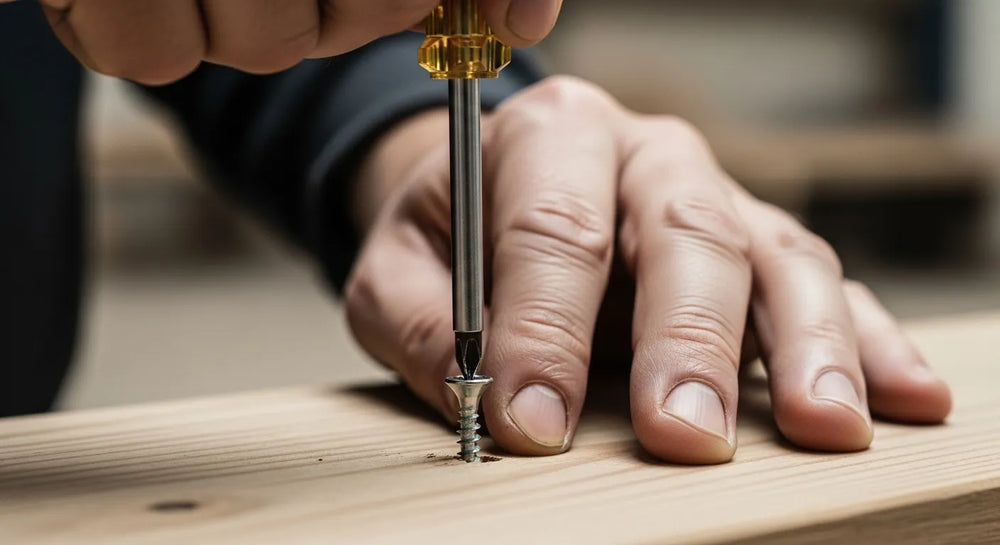
How to Install Toggle Drywall Anchors Securely
Table of Contents
- Introduction
- The "Why": The Critical Role of Anchors in Industrial Environments
- Choosing the Right Anchor: A Procurement Manager's Guide
- Step-by-Step Installation Guide for Toggle Anchors
- The Maden.co Advantage: Sourcing for Supply Chain Resilience
- Conclusion
- Frequently Asked Questions (FAQ)
Introduction
An industrial facility manager is tasked with mounting a new, heavy-duty fire extinguisher cabinet in a high-traffic corridor. The only available location is a large stretch of drywall, far from any structural studs. Using the wrong fastener is not an option. A failure could lead to damaged equipment, potential injury, and a serious safety compliance violation. This scenario, common in MRO (Maintenance, Repair, and Operations) and facility management, highlights a critical truth: the integrity of an entire installation often comes down to the smallest component. The humble drywall anchor, when chosen and installed correctly, becomes a linchpin of industrial safety and operational excellence.
This article provides a detailed, professional guide on how to install toggle drywall anchors—the undisputed heavyweights of hollow-wall fastening. We will move beyond a simple DIY tutorial to address the specific needs of procurement managers, MRO buyers, and design engineers. We'll explore the mechanics behind their strength, provide a meticulous step-by-step installation process for different toggle types, and identify common pitfalls that can compromise safety. Most importantly, we will frame this technical knowledge within the larger context of building a resilient, reliable, and all-American supply chain. Mastering the proper installation of a toggle anchor is more than a maintenance task; it’s a commitment to quality and safety, reflecting the core values of industrial excellence that we champion at Maden.co.
The "Why": The Critical Role of Anchors in Industrial Environments
Drywall, or gypsum board, is a cost-effective and versatile building material, but it has one significant limitation: it possesses very little structural strength on its own. Driving a screw directly into drywall is asking for failure; it will hold little more than its own weight before pulling out and leaving a crumbling hole. For any application in a commercial or industrial setting—from mounting safety signage and control panels to securing shelving and equipment—a specialized anchor is non-negotiable.
The consequences of anchor failure in these environments are far more severe than a fallen picture frame at home. They can include:
- Safety Hazards: Falling equipment can cause serious injury to personnel.
- Asset Damage: A failed anchor can result in the destruction of both the mounted object and the wall itself, leading to costly repairs and operational downtime.
- Compliance Issues: Many mounted items, such as emergency equipment or OSHA-mandated signage, must be secured according to specific regulations. A failure can lead to non-compliance penalties.
- Project Delays: An MRO team facing a series of failed installations due to improper technique or low-quality fasteners will see project timelines and budgets spiral out of control.
This is where the toggle anchor proves its worth. Unlike expansion anchors that grip the inside of the drilled hole, a toggle anchor utilizes a mechanical advantage. Its design features a metal bar or "wing" that is inserted through the wall and springs open in the hollow cavity behind it. As the bolt is tightened, this wing is pulled flush against the interior surface of the drywall, distributing the load over a much larger surface area. This mechanism dramatically increases the anchor's holding power, making it the premier choice for heavy-duty applications in hollow walls.
However, the mechanical principle is only as reliable as the material itself. This is why a commitment to sourcing high-quality, American-made components is a cornerstone of a sound procurement strategy. A design engineer specifying fasteners for a new product installation or a procurement manager sourcing for facility-wide upgrades cannot afford the risk of substandard materials or inconsistent manufacturing tolerances that can plague complex global supply chains. At Maden.co, our entire business model is built on mitigating this risk. Our mission is to democratize access to the best of American manufacturing, ensuring that every component, down to the last anchor, meets rigorous standards of quality and reliability. You can learn more about our mission to champion American manufacturing here.
Choosing the Right Anchor: A Procurement Manager's Guide
Selecting the correct fastener is a strategic decision that impacts project timelines, safety, and Total Cost of Ownership (TCO). A professional buyer understands that not all anchors are created equal. The choice depends on the specific application, load requirements, and installation environment.
Types of Toggle Anchors and Alternatives
While "toggle anchor" is often used as a general term, there are distinct variations, each with specific advantages.
- Traditional Spring-Wing Toggles: This is the classic design, consisting of a bolt and a separate, spring-loaded pair of wings. They offer exceptional holding power and are very cost-effective for bulk purchases. The primary drawbacks are the requirement for a relatively large installation hole and the fact that if the bolt is ever fully removed, the wings will fall down inside the wall cavity, rendering the anchor unusable.
- Strap-Type Toggles (e.g., SnapToggles): This modern iteration features a metal toggle channel connected to a pair of plastic straps. The user inserts the channel, slides a plastic cap into place, and snaps off the straps. This design offers several key advantages for professional use: the installation hole is smaller, the anchor can be installed before mounting the fixture, and the bolt can be removed and reinserted multiple times. This makes them ideal for equipment that may require periodic servicing.
While toggle bolts are the go-to for heavy loads, a comprehensive procurement strategy includes sourcing a range of fasteners for different needs. For lighter-duty tasks like mounting small data plates or wiring conduits, a simpler solution is often more efficient. A high-quality, U.S.-made Ribbed Plastic Anchor provides a secure hold for lightweight items with a quick and easy installation process. For medium-duty applications where speed is a priority, self-drilling anchors are an excellent choice. An American-made Medium Duty Self-Drilling Drywall Anchor can be driven directly into drywall with just a screwdriver, significantly reducing installation time for MRO teams working on large-scale projects.
Key Selection Criteria
To ensure you are sourcing the correct anchor for the job, consider these critical factors:
- Load Capacity: Every anchor has a specified safe working load, which should never be exceeded. This is often listed in terms of both shear strength (the force pulling downward, parallel to the wall) and tensile strength (the force pulling straight out, perpendicular to the wall). Always consult the manufacturer's technical data sheets, a level of transparency we prioritize for the products on our platform.
- Drywall Thickness: The most common drywall thicknesses in commercial construction are 1/2-inch and 5/8-inch. The toggle anchor you select must have a grip range compatible with your wall's thickness to ensure the toggle can deploy correctly and seat firmly.
- Bolt Diameter and Length: The bolt's diameter is directly related to its strength. The length is equally critical. A design engineer must calculate the required bolt length by adding the thickness of the fixture being mounted, the thickness of the drywall, and an additional half-inch to ensure full engagement with the toggle mechanism inside the wall.
- Material and Finish: For most indoor applications, zinc-plated steel offers sufficient corrosion resistance. However, for environments with high humidity, chemical exposure, or for outdoor applications (e.g., mounting to an exterior sheathed wall), sourcing anchors made from stainless steel is essential for long-term durability. This commitment to matching the right material to the application is a hallmark of Industrial Excellence.
Step-by-Step Installation Guide for Toggle Anchors
Proper installation is not just about technique; it’s about precision and preparation. A rushed or careless installation can cause a high-quality anchor to fail. We will break down the process for both traditional spring-wing and modern strap-type toggles.
Phase 1: Preparation is Paramount
Before you drill a single hole, thorough preparation will prevent costly mistakes and ensure a secure mount.
Gather Your Tools:
- Power drill
- Drill bit set (ensure you have the exact size specified for your anchor)
- Screwdriver (Phillips or flathead, matching the bolt head)
- Tape measure
- Pencil
- Level
- Stud finder
- Safety glasses
Locating and Marking: Precision is key. Use your tape measure and level to mark the exact spot for your anchor. Double-check all measurements before proceeding.
Critical Safety Step: Check for Obstructions Before drilling, always use a stud finder to scan the area. The primary purpose of a toggle anchor is for use in the hollow sections between studs. Drilling into a wooden or metal stud will prevent the toggle from deploying. More critically, you must ensure you are not drilling into electrical wiring, plumbing pipes, or HVAC ductwork concealed within the wall cavity. Taking a moment to scan the area can prevent thousands of dollars in damage and serious safety hazards.
Phase 2: The Installation Process (Traditional Spring-Wing Toggle)
This method has been the standard for decades and offers immense strength when done correctly.
- Step 1: Drill the Pilot Hole. This is the most common point of failure. The anchor's packaging will specify the exact drill bit diameter required. A hole that is too small will not allow the folded toggle to pass through. A hole that is too large will not provide enough surface area for the bolt head and fixture to rest against, compromising the anchor's integrity. Drill a clean, straight hole at your marked location.
- Step 2: Prepare the Anchor Assembly. This is a crucial difference from other anchor types. You must assemble the components through your fixture before inserting the anchor into the wall. Pass the toggle bolt through the mounting hole on the bracket, shelf, or piece of equipment you are hanging. Then, thread the spring-loaded wings onto the end of the bolt, leaving just a few threads engaged.
- Step 3: Insert the Toggle. Pinch the wings together so they are flat against the bolt and parallel to it. Push the folded wings completely through the hole you drilled in the drywall. Once through, you should hear or feel a distinct "snap" as the springs force the wings to open within the wall cavity.
- Step 4: Tighten the Bolt. Before you begin tightening, gently pull the bolt back towards yourself. This action ensures the wings are seated flat against the interior wall surface. While maintaining this slight outward pressure, begin to tighten the bolt with a screwdriver. You will feel the resistance increase as the wings clamp down. Tighten until the fixture is snug against the wall. Do not over-tighten. Excessive torque can crush the drywall from the inside, leading to a complete failure of the anchor.
Phase 3: The Installation Process (Strap-Type Toggle)
This modern design streamlines the process and is particularly useful for projects requiring multiple anchor points.
- Step 1: Drill the Hole. As with the spring-wing toggle, use the exact drill bit size specified by the manufacturer.
- Step 2: Insert the Metal Channel. Hold the metal channel at the end of the plastic straps and insert it lengthwise through the hole.
- Step 3: Secure the Cap. With the metal channel now inside the wall cavity, pull on the straps to seat the channel vertically against the interior wall. Slide the plastic cap down the straps until its flange is flush against the exterior wall surface.
- Step 4: Snap Off the Straps. Simply bend the plastic straps back and forth at the base of the cap. They will snap off cleanly, leaving the anchor installed and ready.
- Step 5: Mount the Fixture. Place your item over the installed anchor cap, insert the provided bolt through your fixture and into the threaded hole in the metal channel, and tighten until secure. The ability to pre-install these anchors is a massive time-saver. For an MRO team outfitting an entire floor with new equipment, sourcing a reliable, U.S.-made anchor that simplifies installation, such as this Medium Duty Nylon Wall Anchor, directly impacts labor costs and project completion times.
The Maden.co Advantage: Sourcing for Supply Chain Resilience
Knowing how to install an anchor is only half the battle. For the industrial buyer, knowing where to source that anchor is equally important. This is where we provide a strategic advantage that goes far beyond a simple transaction.
Supply Chain Transparency and Digital Innovation: When a procurement manager sources a toggle anchor through our platform, they are not just buying a piece of hardware; they are tapping into a transparent, all-American supply chain. Our mission of Digital Innovation means we provide clear specifications, material data, and manufacturer information for our catalog of over 2.5 million U.S.-made products. This eliminates the guesswork and risk associated with sourcing from unverified overseas suppliers, preventing counterfeit or substandard parts from ever entering your facility.
Reducing Procurement Friction: Consider a scenario where an MRO buyer for a national chain of facilities needs to procure 10,000 specific toggle anchors for a system-wide safety upgrade. The traditional procurement process would involve RFQs, vetting multiple suppliers, and navigating complex logistics. Our platform consolidates this entire process. With access to over 800 verified U.S. manufacturers, that buyer can find, specify, and purchase the required components in a fraction of the time, dramatically reducing procurement friction and administrative overhead. Should you have unique sourcing requirements or questions about bulk ordering, our expert team is here to help; you can contact our team for personalized assistance.
Customer Empowerment and Financial Flexibility: We understand that large-scale industrial projects and retrofits represent a significant capital investment. To empower businesses to manage cash flow more effectively, we offer a key differentiator. For larger orders or capital-intensive projects, you can apply for Instant Financing at checkout to streamline your purchases. This strategic tool transforms a large capital expenditure into a predictable operational expense, allowing you to secure the high-quality components you need without disrupting your budget.
Championing the American Manufacturing Revival: Every purchase made on our platform is a direct investment in domestic manufacturing. We believe that America's manufacturing revival is here, and we are proud to be at the forefront of this movement. By connecting industrial buyers with the nation's best manufacturers, we are collectively building stronger, more resilient domestic supply chains. For the proud American manufacturers who produce these high-quality components and share our vision, we invite you to register as a vendor and join the revival.
Conclusion
The proper installation of a toggle drywall anchor is a foundational skill in any industrial setting, a blend of precision, knowledge, and adherence to best practices. It requires selecting the correct anchor based on load, wall thickness, and application; using the right tools and techniques for a flawless installation; and understanding the common pitfalls that can lead to failure. For the professional, it is a task that leaves no room for error.
Ultimately, the physical integrity of the installation is inseparable from the material integrity of the component itself. Sourcing cheap, unverified fasteners is a short-term saving that invites long-term risk to safety, assets, and operational continuity. By choosing to source high-quality, verifiably U.S.-made toggle anchors, you are making a strategic decision to prioritize reliability and build a more robust operational foundation.
Elevate your projects from the ground up. We encourage you to solve your procurement challenges by exploring the extensive Maden.co catalog. Discover the peace of mind that comes from a transparent, all-American supply chain and empower your business with the financial flexibility of our Instant Financing option available right at checkout.
Frequently Asked Questions (FAQ)
1. Can I reuse a spring-wing toggle anchor? No. Once the bolt is fully removed from a traditional spring-wing toggle, the unattached wings will fall down into the wall cavity, making it impossible to re-engage. If you anticipate needing to remove the mounted item for service, a strap-type toggle anchor is the better choice, as the bolt can be removed and reinserted as needed.
2. What is the main difference between shear strength and tensile strength for an anchor? Tensile strength (or pull-out strength) refers to the amount of force the anchor can withstand being pulled straight out from the wall. Shear strength refers to the downward or sideways force the anchor can withstand, which is a load that runs parallel to the wall surface. For hanging heavy objects like cabinets or shelving, shear strength is often the more critical specification.
3. How do I know what size drill bit to use? The required drill bit diameter will always be specified by the anchor manufacturer on the product's packaging or technical data sheet. Using the exact size specified is the single most important step for a successful installation. Do not estimate or use the next closest size.
4. Why is it important to source U.S.-made fasteners for industrial applications? Sourcing from verified U.S. manufacturers, like the hundreds available on the Maden.co marketplace, provides multiple strategic advantages. It ensures adherence to strict quality control standards and material traceability, which is critical for compliance and safety. It also contributes to a more resilient domestic supply chain, reducing the risks of project delays and quality issues often associated with extended global supply chains.


