
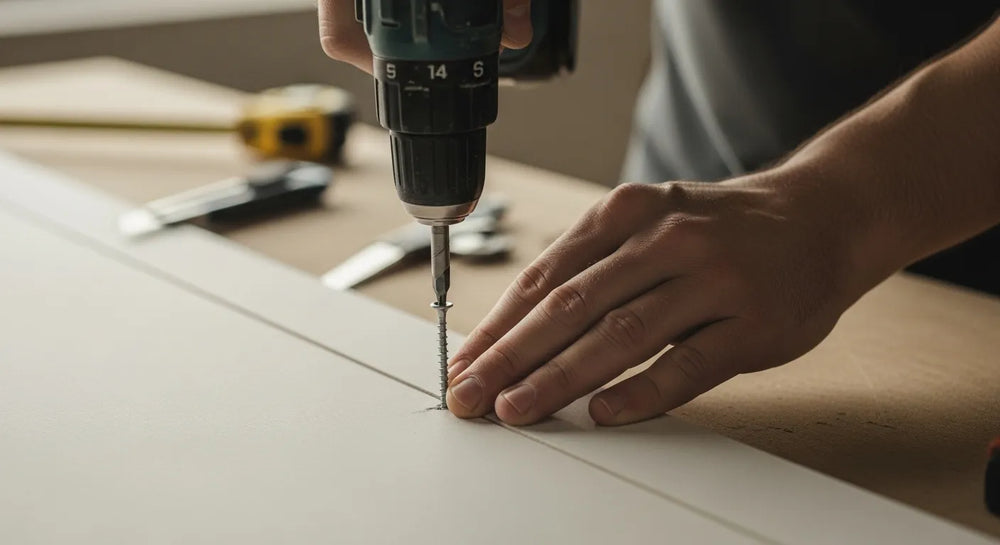
How to Remove a Drywall Anchor: A Professional Guide
Table of Contents
- Introduction
- The Hidden Costs: Why Proper Anchor Removal Matters
- Identifying Your Target: A Field Guide to Common Drywall Anchors
- Step-by-Step Removal Techniques for Maintenance Professionals
- The Aftermath: Professional Wall Repair and Finishing
- Proactive Procurement: Preventing Problems Before They Start
- The Maden.co Advantage: Streamlining Your Procurement Process
- Conclusion
- Frequently Asked Questions (FAQ)
Introduction
A facilities manager walks through a newly vacated office floor, clipboard in hand. The previous tenant is gone, but they’ve left a ghost of their presence behind—not in paperwork, but on the walls. Dozens, if not hundreds, of small plastic and metal holes dot the drywall where pictures, shelving, and whiteboards once hung. Each one represents a small but significant task: removing a drywall anchor without causing further damage. For MRO buyers, procurement managers, and maintenance professionals, this scenario is all too common. It's a task that, if done incorrectly, multiplies labor costs and material waste, turning a simple office turnover into a patchwork of expensive repairs. This isn't just a homeowner's DIY project; in a commercial or industrial setting, it's a matter of operational efficiency and asset maintenance.
This guide moves beyond simple instructions and reframes the task of drywall anchor removal from a professional perspective. We will explore not only the precise techniques for removing various types of anchors but also the critical importance of understanding the hardware itself. We will cover the identification of common anchor types, step-by-step removal procedures, and the essential steps for professional-grade wall repair. Most importantly, we will delve into the strategic procurement decisions that can prevent these maintenance headaches from the outset.
The core message is this: the lifecycle of a component, from selection and installation to eventual removal, has a direct impact on your Total Cost of Ownership (TCO). By understanding the process and sourcing high-quality, reliable American-made hardware from a trusted partner like Maden.co, you can streamline maintenance, reduce long-term costs, and uphold the professional appearance of your facilities.
The Hidden Costs: Why Proper Anchor Removal Matters
In a business environment, time is money, and rework is a direct drain on resources. A seemingly minor task like removing a drywall anchor can have cascading financial implications when scaled across a large facility or multiple properties. Understanding these hidden costs is the first step toward appreciating the value of both proper technique and quality components.
Labor and Time Inefficiency
Consider a maintenance technician tasked with prepping a 10,000-square-foot office space for a new tenant. If there are 100 anchors to be removed, and each improper removal adds 10-15 minutes of extra patching and sanding time, that's over 25 hours of additional, unplanned labor. This is time that could have been spent on more critical MRO tasks. Inefficiency stems from several factors:
- Using the wrong tools: Attempting to pry out an anchor with a flathead screwdriver can easily gouge the drywall, creating a much larger area to repair.
- Lack of technique: Aggressively pulling on an anchor can tear the drywall's paper face, leading to a bubbling effect when painted over if not properly sealed and repaired.
- Unfamiliarity with anchor types: A technique that works for a simple plastic sleeve will fail on a metal molly bolt, leading to frustration and damage.
Material Waste and Escalating Repairs
A botched removal doesn't just damage the wall; it consumes more materials to fix. A small hole that could have been filled with a dab of spackle now requires a multi-step process:
- Cutting away loose paper and gypsum.
- Applying mesh tape or a drywall patch.
- Applying multiple layers of joint compound, with drying time in between.
- Extensive sanding.
- Priming the entire patched area to prevent "flashing" (a difference in sheen) when painted.
What should have been a simple, low-cost repair has now escalated into a more complex and material-intensive task, increasing the overall cost of the facility turnover.
Aesthetic and Brand Integrity
In a client-facing office, a retail space, or a high-end residential complex, the quality of the finish is paramount. Walls covered in poorly patched anchor holes project an image of carelessness and deferred maintenance. This can impact tenant satisfaction, customer perception, and overall brand integrity. A smooth, professionally finished wall is an essential part of maintaining a property's value and appeal. By investing in the right training, tools, and components, organizations ensure their physical spaces reflect their commitment to quality and Industrial Excellence.
Identifying Your Target: A Field Guide to Common Drywall Anchors
Before you can devise a removal strategy, you must first identify the type of anchor embedded in the wall. Different designs require vastly different removal techniques. For a procurement manager, understanding these types is also crucial for specifying the right product for future installations.
Ribbed Plastic Expansion Anchors
These are perhaps the most common type of light-to-medium-duty anchor. They consist of a simple plastic sleeve, often made of nylon or polyethylene, that is inserted into a pre-drilled hole. When a screw is driven in, the anchor's sides expand, pressing against the inside of the drywall to create a secure hold.
- Appearance: A small plastic collar, or flange, that sits flush with the wall surface. The inside is hollow and threaded to accept a screw.
- Common Use: Hanging pictures, clocks, lightweight signage, and other decorative items.
- Procurement Note: When sourcing these, material quality is key. High-quality, American-made versions like this Ribbed Plastic Anchor are typically made from virgin nylon, which provides greater strength and resistance to becoming brittle over time compared to anchors made from cheaper, recycled plastics.
Self-Drilling Anchors (Threaded Anchors)
Often referred to by brand names like Zip-It® or E-Z Ancor, these are a favorite for their quick installation. They are large, threaded anchors, typically made of nylon or a zinc alloy, with a sharp, drill-like tip. They are designed to be screwed directly into the drywall with a screwdriver or drill, cutting their own threads into the gypsum.
- Appearance: A large, pronounced flange with a Phillips or other drive-type head. The body is thick and aggressively threaded.
- Common Use: Installing shelving, curtain rods, and heavier wall fixtures.
- Example: The design of this U.S.-made Medium Duty Nylon Wall Anchor #6 Self-Drilling Drywall (Zip-It®) is a perfect illustration of this efficient, high-strength design. Its ease of installation makes it a go-to for many contractors.
Hollow Wall Anchors (Molly Bolts)
Molly bolts are all-metal anchors designed for medium-to-heavy-duty applications. A molly bolt consists of a screw inside a metal sleeve with slits. When the screw is tightened, it draws the back of the sleeve forward, causing the slitted portion to expand and collapse like an umbrella against the back of the drywall.
- Appearance: A small, round metal flange with two small anti-rotation "teeth" that dig into the wall's surface. The center contains the head of the machine screw.
- Common Use: Mounting towel bars, heavy mirrors, and small cabinets. They provide significant holding power but are more difficult to remove.
Toggle Bolts
For the heaviest applications, toggle bolts are the solution. They consist of two parts: a machine bolt and a spring-loaded, wing-like toggle. A large hole is drilled, the toggle is collapsed and pushed through the hole, and springs open flat against the back of the drywall. Tightening the bolt clamps the toggle against the wall.
- Appearance: Only the head of the machine bolt is visible. There is no external flange.
- Common Use: Hanging heavy shelving, grab bars, large televisions, and commercial fixtures. Their removal is unique, as the toggle wing is almost always sacrificed and left inside the wall cavity.
Step-by-Step Removal Techniques for Maintenance Professionals
With the anchor identified, you can now select the appropriate tools and technique. The goal is always to minimize damage to the surrounding drywall.
Method 1: The Simple Pull (For Flanged Plastic Anchors)
This is the cleanest method for basic ribbed plastic anchors, provided they haven't been glued in or damaged.
- Tools: Needle-nose pliers or a sturdy utility knife.
- Step 1: Remove the Screw. Back the screw out of the anchor completely.
- Step 2: Grip the Flange. Firmly grasp the plastic flange of the anchor with the needle-nose pliers.
- Step 3: Pull and Wiggle. Pull straight out, applying steady pressure. A slight wiggling or twisting motion can help break it free from the drywall. If the flange is too flush, you may need to carefully pry under its edge with a utility knife to lift it enough to get a grip with the pliers.
Method 2: The Corkscrew Method (For Stubborn Plastic Anchors)
If the anchor's flange breaks off or it refuses to pull out, this method uses the screw itself as a tool.
- Tools: A screwdriver and the original screw (or one that fits snugly).
- Step 1: Re-insert the Screw. Thread the screw back into the anchor, but only two or three turns. You want it to get a good bite without expanding the anchor again.
- Step 2: Lever and Pull. Use the screw head for leverage. You can either grip it with pliers and pull or, for more force, use the claw of a hammer. Crucially, place a putty knife or a small piece of wood between the hammer and the wall to protect the drywall surface from being dented.
- Step 3: Extract. Apply gentle, steady pressure to lever the screw and the anchor out of the wall together.
Method 3: Unscrewing Self-Drilling Anchors
This is typically the most straightforward removal process, as these anchors are designed to be removed much like they were installed.
- Tools: A screwdriver or drill with the appropriate bit (usually Phillips).
- Step 1: Remove the Fixture Screw. Take out the screw that was holding the fixture.
- Step 2: Engage the Anchor Body. Insert the screwdriver into the head of the anchor itself.
- Step 3: Reverse and Extract. Set your drill to reverse or simply turn the screwdriver counter-clockwise. The anchor should back out of the drywall along the threads it created on its way in, often leaving a relatively clean hole.
Method 4: Managing Metal Hollow Wall Anchors (Molly Bolts)
Molly bolts are more challenging due to their expanding metal sleeve. You have three primary options.
- Option A: Unscrew and Push. Back the screw out until it's almost completely removed but still engaged in the threads. Gently tap the head of the screw with a hammer. This should push the body of the anchor back and cause the expanded "umbrella" to flatten, potentially allowing you to pull the entire unit out. This method rarely works perfectly but is worth trying first.
- Option B: The Punch-Through. This is often the most practical method. Remove the screw completely. Place a nail set or a thin Phillips screwdriver on the metal flange of the anchor. With a firm hammer tap, drive the entire anchor body through the drywall and into the wall cavity. The hole left behind will be the exact size of the flange and easy to patch.
- Option C: Drilling it Out. If the anchor is stuck fast, you can drill it out. Choose a metal drill bit that is slightly larger than the screw hole but smaller than the anchor's flange. Drill directly into the center of the anchor. This will destroy the anchor's head, allowing you to punch the remaining body into the wall. This method requires more precision to avoid enlarging the hole in the drywall.
Method 5: Removing Toggle Bolts
With a toggle bolt, the wing is always left behind. The objective is simply to remove the bolt.
- Tools: Screwdriver.
- Step 1: Loosen the Bolt. Unscrew the bolt while applying slight outward pressure on it to keep the toggle engaged with the back of the wall.
- Step 2: Final Removal. Once the bolt is almost out, you can remove whatever was being hung. Continue unscrewing the bolt completely.
- Step 3: Push the Toggle. The toggle wing will fall down inside the wall cavity. It is harmless and can be left there permanently. You are now left with a clean, empty hole to patch.
The Aftermath: Professional Wall Repair and Finishing
Removing the anchor is only half the battle. Restoring the wall to a pristine, professional finish is a non-negotiable step in any commercial or high-end residential setting.
- Preparation: Use a utility knife to trim away any loose paper or frayed edges of drywall around the hole. If the paper is torn, it's crucial to seal it. A quick spray of oil-based primer or a thin coat of shellac over the torn paper will prevent it from absorbing moisture from the spackle and bubbling up later.
- Filling the Hole: For small holes (less than 1/4 inch), a lightweight spackling compound is sufficient. For larger holes, a heavier all-purpose joint compound or a vinyl patching compound is better as it is less prone to shrinking and cracking. Apply the compound with a flexible putty knife, pressing firmly to ensure the hole is completely filled. Overfill slightly, as the compound will shrink as it dries.
- Sanding: Once the compound is completely dry (check the manufacturer's instructions), sand it smooth. Use a fine-grit sanding sponge or sandpaper (120-150 grit). The goal is to make the patched area perfectly flush with the surrounding wall, imperceptible to the touch. For a professional finish, feather the edges of the patch by sanding with progressively lighter pressure as you move away from the center.
- Priming: This is the step most often skipped in amateur repairs, and its absence is always noticeable. Applying a coat of quality drywall primer over the patch is essential. The primer seals the porous patching compound and ensures that the final coat of paint will have a consistent sheen and color. Without primer, the patched spot will absorb paint differently, resulting in a dull, blotchy area known as "flashing."
- Painting: Once the primer is dry, apply one or two coats of paint that match the existing wall color. Use a small roller or brush to blend the new paint seamlessly with the surrounding area.
Proactive Procurement: Preventing Problems Before They Start
The most efficient way to deal with anchor removal is to choose the right anchor for the job from the very beginning. This is where procurement and design engineering play a vital, strategic role. Sourcing decisions should not be based on unit price alone but on the Total Cost of Ownership, which includes potential removal and repair costs.
Our mission at Maden.co is to democratize access to superior American manufacturing, empowering businesses to make these strategic choices. We believe that American-made components are not just a matter of pride but a guarantee of quality, transparency, and reliability. You can learn more about our mission to champion American manufacturing here.
The Material Difference
Consider a simple fastener like the Medium Duty Nylon Wall Anchor #8 for Drywall. Sourced from a verified U.S. manufacturer, this product is engineered with high-grade materials that provide consistent performance. Lower-quality, imported anchors are often made from brittle, recycled plastics that can break during installation or shear off during removal, complicating the process immensely. Specifying quality from the start ensures that when it's time for a change, the hardware performs as expected, saving time and money.
Right-Sizing and Load Matching
Another common issue is using an anchor that is vastly overrated for the application. Using a heavy-duty toggle bolt to hang a 5-pound picture frame is inefficient and creates an unnecessarily large hole to patch later. A well-managed MRO program involves having a stocked inventory of various anchor types to ensure maintenance staff can match the fastener to the load. Our platform connects you with over 2.5 million American-made products, making it simple to source a full range of hardware for any application, from light-duty plastic anchors to heavy-duty industrial fasteners.
Building a Resilient Supply Chain
For a procurement manager under pressure to complete a facility refit, or an MRO buyer facing an unexpected equipment repair, waiting on an overseas shipment of critical components is not an option. By sourcing from our network of over 800 verified U.S. manufacturers, you build a more resilient and transparent supply chain. You gain confidence in material certifications, compliance with standards, and lead times you can count on. This is the foundation of the American manufacturing revival, and we are proud to be at its forefront.
The Maden.co Advantage: Streamlining Your Procurement Process
We built Maden.co to solve the exact challenges discussed here. Our platform is more than just a marketplace; it is a strategic tool for any business that relies on industrial components.
We remove the friction from the procurement process. Instead of spending hours vetting suppliers or questioning material origins, you have immediate access to a vast catalog of verified, U.S.-made products. Our core value of Customer Empowerment means providing you with the tools and information to make the best possible sourcing decisions for your business. If you have specific sourcing questions or need help finding a particular component, our team is ready to help.
Furthermore, we understand that managing cash flow is critical for large-scale projects and inventory replenishment. That's why we offer a unique "Instant Financing" option directly within our platform. This feature allows businesses to acquire the necessary materials for a major renovation or stock up on essential MRO supplies without delaying projects due to capital constraints. You can apply for Instant Financing at checkout to streamline your capital-intensive projects.
If you are a U.S. manufacturer dedicated to quality and excellence, we invite you to join our network. Register as a vendor and join the American manufacturing revival. Together, we can prove that American-made is the most accessible, convenient, and reliable choice.
Conclusion
The seemingly simple act of removing a drywall anchor is a microcosm of the larger challenges in facility maintenance and industrial procurement. It highlights the direct link between the quality of a component, the efficiency of a process, and the overall cost to a business. A professional approach requires not just the right technique but a strategic mindset that prioritizes quality, reliability, and long-term value over short-term savings.
By understanding the different types of anchors, employing proper removal and repair techniques, and, most importantly, making informed procurement decisions from the start, you can protect your assets, control your maintenance budget, and uphold the professional standards of your organization.
At Maden.co, we are your partners in this endeavor. We connect you to the heart of American industry, providing the high-quality components and streamlined procurement process you need to succeed. Explore our catalog today to find the right fasteners for your next project, and empower your business with a supply chain built on American strength and ingenuity.
Frequently Asked Questions (FAQ)
1. What's the best way to remove a metal drywall anchor like a molly bolt? The most reliable and often cleanest method for removing a metal molly bolt is the "punch-through" technique. After removing the central screw, use a nail set or a sturdy screwdriver and a hammer to tap the anchor's flange, driving the entire anchor body into the wall cavity. This leaves a clean, uniform hole that is much easier to patch than a hole damaged by prying or pulling.
2. Is it better to push an anchor into the wall or pull it out? This depends entirely on the anchor type. For simple plastic expansion anchors, pulling them out with pliers is ideal as it leaves the smallest possible hole. For metal molly bolts or any anchor whose flange has broken off, pushing it into the wall is far more efficient and causes less damage to the drywall's fragile paper face. Never try to forcefully pry out a metal anchor.
3. How can I avoid damaging the drywall during anchor removal? The key to preventing damage is to use the right tool and technique for the specific anchor type. Always use a barrier, like a wide putty knife or a thin piece of wood, between your prying tool (like a hammer claw) and the wall to distribute the pressure and prevent dents. Apply steady, even force rather than abrupt, jerking motions. If an anchor refuses to come out easily, switch to a less destructive method like pushing it through rather than risking a large tear in the drywall.
4. Why should my business source MRO components like anchors from U.S. manufacturers? Sourcing MRO components from U.S. manufacturers through a platform like Maden.co offers several strategic advantages. It provides Supply Chain Transparency, ensuring you know the origin and quality of your materials. U.S.-made products often adhere to stricter quality control and material standards, leading to more reliable performance and a lower Total Cost of Ownership. Furthermore, it builds a more resilient domestic supply chain, reducing your vulnerability to international shipping delays and geopolitical disruptions, which is a cornerstone of our mission to fuel America's manufacturing revival.


