
How to Screw into a Concrete Wall: A Pro's Guide
Table of Contents
- Introduction
- Understanding the Substrate: Not All Concrete is Created Equal
- The Right Tool for the Job: Selecting Your Concrete Screw
- The Installation Process: A Step-by-Step Professional Guide
- Beyond the Basics: Advanced Considerations for Industrial Applications
- The Maden.co Advantage: Streamlining Your Industrial Procurement
- Conclusion: Fastening Your Success with American-Made Quality
- Frequently Asked Questions (FAQs)
Introduction
A project stalls. The timeline is tight, the team is on standby, and the reason is a fastener that stripped out of a concrete wall. It’s a scenario that plays out in manufacturing facilities, on construction sites, and during critical MRO tasks across the country. The seemingly simple act of anchoring an object to a concrete surface is fraught with potential for failure, delays, and safety risks. The challenge, however, extends beyond the physical installation; it begins with the complex process of sourcing the correct, high-quality fastener that meets exact specifications for the load, environment, and substrate. A failed anchor isn't just a materials issue; it's a supply chain issue.
This article addresses both facets of the challenge. We will provide a detailed, step-by-step technical guide on how to properly install screws into concrete, moving beyond basic instructions to cover the professional nuances that ensure a secure and lasting hold. We will explore the material science of concrete, the engineering behind different screw designs, and the critical installation techniques that separate success from failure. Furthermore, we will contextualize this technical knowledge within the larger strategic framework of industrial procurement. We assert that mastering how to screw into a concrete wall is a fundamental skill that, when paired with a resilient and transparent supply chain for American-made components, becomes a powerful driver of project integrity, operational efficiency, and workplace safety.
Understanding the Substrate: Not All Concrete is Created Equal
Before a single hole is drilled, a professional must understand the material they are working with. Concrete is not a uniform, homogenous block; it's a complex composite material whose properties can vary dramatically, directly impacting the performance and selection of a fastener. Assuming all concrete is the same is the first step toward a potential failure.
The Composition of Concrete
At its core, concrete is a mixture of three main components:
- Portland Cement: The binding agent that reacts with water to harden and gain strength.
- Water: The catalyst for the chemical reaction (hydration) that gives concrete its strength.
- Aggregates: Inert granular materials like sand, gravel, or crushed stone that make up the bulk of the concrete's volume and provide dimensional stability.
The ratio of these components, along with the type and size of the aggregates, determines the final characteristics of the cured concrete.
Key Variables That Influence Fastener Selection and Performance
An MRO manager securing a new piece of equipment or a design engineer specifying mounting points must consider these crucial factors:
- Compressive Strength (PSI): This is the most common measure of concrete strength, indicating its ability to resist being crushed. Values can range from 2,500 PSI for residential slabs to over 10,000 PSI for high-performance structural applications. Higher PSI concrete is harder and more brittle, requiring a more powerful drill (typically a rotary hammer) and a fastener designed for high-density materials.
- Age and Curing Time: Freshly poured or "green" concrete has not yet reached its full design strength. Fastening into concrete that is less than 28 days old is generally not recommended, as the material is still curing and may not provide adequate holding power.
- Aggregate Type and Density: The pilot hole for a screw is not drilled through a uniform substance. The drill bit will encounter sand, cement paste, and hard aggregates like gravel or crushed granite. Hitting a large, dense piece of aggregate can cause the bit to "walk," deflect, or dull prematurely. In some cases, it can even cause micro-fracturing around the hole, compromising the fastener's grip.
- Presence of Reinforcement: Most structural concrete contains steel reinforcement bars (rebar) or wire mesh. Drilling into rebar is not only difficult and damaging to drill bits but can also compromise the structural integrity of the concrete element itself. It is critical to use a rebar scanner or other detection methods before drilling.
- Overall Condition: Inspect the concrete for pre-existing cracks, spalling (chipping), or efflorescence (powdery white deposits). Fastening too close to a crack or a spalled edge can cause the concrete to break away, resulting in a complete failure of the anchor point.
Understanding these substrate characteristics is foundational. It informs every subsequent decision, from the type of screw chosen to the tools used for installation. At Maden.co, we connect buyers with American manufacturers who understand these nuances, providing fasteners engineered for the demanding and variable conditions found in real-world industrial settings.
The Right Tool for the Job: Selecting Your Concrete Screw
With a clear understanding of the concrete, the next step is selecting the appropriate fastener. While many anchoring systems exist (expansion anchors, epoxy anchors, wedge anchors), concrete screws have become a preferred choice in many industrial and commercial applications due to their unique combination of strength, speed of installation, and removability.
Why Concrete Screws are a Superior Choice
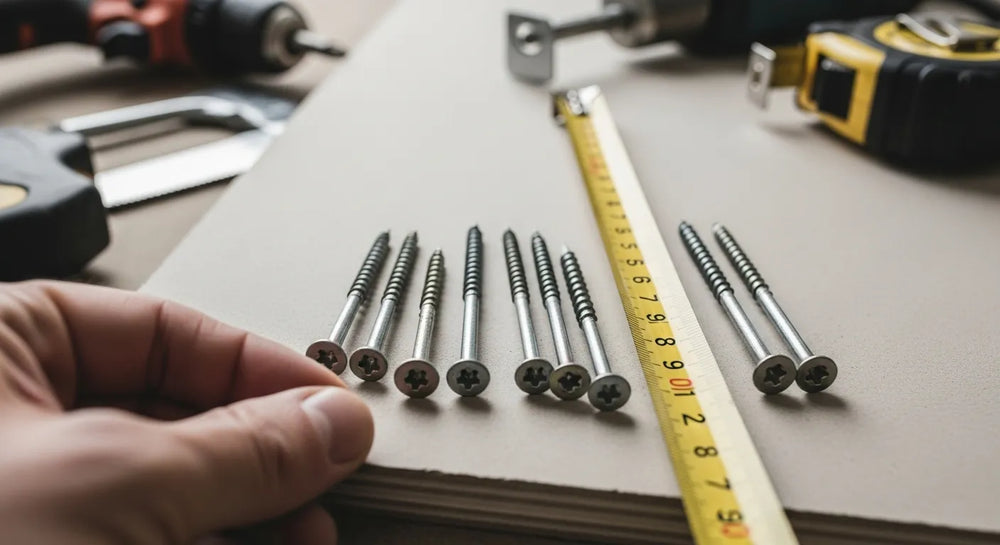
Concrete screws, often recognized by their distinctive high-low thread pattern, function by tapping threads directly into the concrete. This direct-fastening method offers several key advantages:
- No Separate Anchor Needed: The screw itself is the anchor, simplifying inventory and reducing installation steps.
- High Holding Power: The threads engage directly with the base material, creating a strong mechanical interlock with high tensile (pull-out) and shear (side-to-side) load capacities.
- Reduced Stress on Concrete: Unlike expansion anchors, which exert outward force on the concrete, concrete screws create less stress. This allows them to be installed closer to edges and other fasteners without the same risk of causing the concrete to crack or spall.
- Removability: In applications where fixtures may need to be moved or adjusted, concrete screws can be removed, leaving a clean hole.
Key Factors in Screw Selection
Choosing the right concrete screw is a technical decision. A procurement manager under pressure to source parts for an urgent repair or a design engineer finalizing a bill of materials needs to consider several variables to ensure performance and safety.
Material and Coating
The environment is the primary determinant of the required material and protective coating.
- Carbon Steel: The standard for most indoor, dry applications. They are typically coated with zinc or a similar finish for minimal corrosion protection.
- Stainless Steel: The choice for environments with moisture, humidity, or exposure to corrosive chemicals. Grades like 304 or 316 stainless steel offer excellent long-term resistance to rust.
- Specialized Coatings: For the most demanding environments, advanced coatings provide protection that surpasses standard plating. For example, the Steel Blue Ruspert Ceramic Coating Flat Phillips® Drive Concrete Screw is an exceptional choice for exterior applications or interior industrial settings with exposure to moisture or chemicals. This multi-layer ceramic coating offers superior corrosion resistance, extending the service life of the fastener and protecting the integrity of the connection. Sourcing such specialized, American-made components through our platform removes the guesswork and ensures you get the performance specified.
Head Style
The head style is chosen based on the application's torque requirements and aesthetic needs.
- Hex Head: This is the most common style for industrial applications. The external hex allows for high installation torque using a standard socket or nut driver, making it ideal for securing heavy equipment, racking, or structural components. For an MRO buyer needing to quickly and securely mount heavy-duty shelving in a warehouse, the robust design of these U.S.-Made Hex Head Concrete Screws provides the necessary clamping force and ease of installation.
- Flat Head (Countersunk): When a flush, smooth surface is required, a flat head screw is the solution. It sits level with or slightly below the surface of the mounted fixture, preventing snag hazards and providing a clean, finished appearance. A design engineer specifying fasteners for machine guarding, architectural elements, or signage would select a product like these 1/4 x 2-3/4 Flat Head Concrete Screws to ensure both security and a non-obtrusive profile.
Diameter and Length
The size of the screw is directly related to its strength and the requirements of the application.
- Diameter: A larger diameter screw generally provides greater tensile and shear strength. The manufacturer's technical data sheets will provide specific load ratings for different diameters in various strengths of concrete.
- Length: The length must be sufficient to pass through the fixture being attached and achieve the required minimum embedment depth in the concrete. A common rule of thumb is a minimum embedment of 1 inch, but for heavier loads, this can increase to 1-3/4 inches or more. Always consult the manufacturer's specifications.
Calculating Screw Length: (Thickness of the fixture to be fastened) + (Minimum embedment depth) + (A small extra margin for dust at the bottom of the hole, ~1/4") = Required Screw Length.
The Installation Process: A Step-by-Step Professional Guide
Proper installation is as crucial as proper selection. A high-quality, American-made fastener can fail if not installed according to precise procedures. The following steps represent the professional standard for installing concrete screws.
Step 1: Pre-Installation Safety and Preparation
Safety is paramount. Before beginning any work, ensure the following:
- Personal Protective Equipment (PPE): Always wear ANSI-rated safety glasses to protect against flying debris, gloves to protect your hands, and hearing protection, especially when using a hammer drill or rotary hammer.
- Site Inspection: The area must be clear and stable. Use a reliable stud finder or a dedicated concrete scanner to check for embedded rebar, electrical conduit, or plumbing lines behind the surface where you intend to drill. Hitting any of these can cause serious injury or costly damage.
Step 2: Drilling the Pilot Hole
The pilot hole is the foundation of the entire connection. Its quality determines the holding power of the screw.
-
Tool Selection:
- Hammer Drill: Suitable for softer concrete, block, or brick, and for smaller diameter screws. It combines rotation with a rapid hammering action.
- Rotary Hammer: Essential for dense, high-PSI concrete and larger diameter screws. It uses a piston mechanism to create a much more powerful hammering blow, making drilling faster and less strenuous.
-
Drill Bit Selection:
- Use a carbide-tipped masonry drill bit. Standard drill bits will be destroyed by concrete.
- The bit diameter must precisely match the manufacturer's specification for the screw. This is a non-negotiable, critical point. A hole that is too small will prevent the screw from being installed or cause it to bind and snap. A hole that is too large will not allow the threads to engage properly, resulting in drastically reduced or zero holding power. The required bit size is almost always stamped on the fastener's box or included in the technical data sheet.
-
Drilling Technique:
- Mark the Depth: Measure the required hole depth (fixture thickness + embedment depth + 1/4") and mark it on your drill bit with a piece of electrical tape or a permanent marker. This ensures you don't drill too shallow or excessively deep.
- Start Slow: Begin drilling at a slow speed to create a small starting dimple. This prevents the bit from "walking" across the concrete surface.
- Drill Perpendicular: Apply firm, steady pressure and drill straight into the concrete, ensuring the drill is perpendicular (90 degrees) to the surface.
- Clear Debris: Periodically pull the bit partially out of the hole while it's still spinning to help clear dust and debris.
Step 3: Cleaning the Hole
This is the most frequently overlooked step in the process, and it is arguably the most critical for achieving maximum holding power. Concrete dust and debris left in the pilot hole act as a lubricant and a barrier, preventing the screw's threads from fully engaging and cutting into the base material. Failing to clean the hole can reduce the fastener's load capacity by 50% or more.
-
Best Practice Method:
- Brush: Use a nylon or wire brush with a diameter that matches the hole size. Insert it to the bottom of the hole and twist it as you pull it out to loosen all debris from the sides.
- Blow: Use a can of compressed air with a straw attachment or a dedicated handheld blower to forcefully blow all the loosened dust out of the hole. Direct the dust away from your face.
- Repeat: For critical applications, repeat the brush-and-blow process at least twice to ensure the hole is completely clean. A vacuum can also be used in conjunction with these methods.
Step 4: Driving the Screw
With a clean, properly drilled pilot hole, you are ready to install the screw.
- Tool Selection: Use an impact driver or a wrench/socket that matches the screw head (e.g., a hex driver for a hex head screw).
-
Driving Technique:
- Position your fixture over the hole.
- Insert the tip of the concrete screw into the hole through the fixture.
- Drive the screw steadily and continuously. Do not stop and start, as this can disrupt the thread-cutting process.
- Continue driving until the head of the screw is seated firmly against the fixture.
- Do Not Over-Torque: This is a common mistake. Over-tightening the screw can strip the threads it has just cut into the concrete or, in a worst-case scenario, exceed the screw's torsional strength and cause it to snap. Use a torque wrench for applications with specific torque requirements.
Beyond the Basics: Advanced Considerations for Industrial Applications
For engineers, MRO professionals, and facility managers, fastening into concrete involves more than just the basic installation steps. Industrial environments demand a higher level of scrutiny and planning.
- Edge and Spacing Requirements: Every concrete fastener has a minimum required distance from any edge of the concrete slab or wall, as well as a minimum spacing distance from other fasteners. Installing a screw too close to an edge or another anchor can create a "cone of influence" that over-stresses the concrete, leading to a "blowout" failure where a cone-shaped chunk of concrete breaks away. These specifications are provided by the manufacturer and are essential for designing safe, multi-fastener layouts.
- Dynamic vs. Static Loads: A static load is a constant, unchanging force, like a permanently mounted electrical panel. A dynamic load involves vibration, shock, or movement, such as the mounting points for a large motor, conveyor system, or stamping press. Dynamic loads require fasteners with higher fatigue resistance and may necessitate additional locking features or a more robust anchor system.
- Compliance and Traceability: In many industries, compliance with standards and complete material traceability are not optional. For a design engineer working on a project with specific regulatory requirements, or a procurement manager in aerospace or energy, knowing the origin and material certification of a fastener is critical. This is a core element of our mission at Maden.co. We provide unparalleled Supply Chain Transparency, connecting you with verified U.S. manufacturers who can provide the documentation and quality assurance you need. This commitment to Industrial Excellence is how we help businesses mitigate risk and build with confidence. You can learn more about our mission to champion American manufacturing here.
The Maden.co Advantage: Streamlining Your Industrial Procurement
Knowing how to properly install a concrete screw is only half the battle. The other half is efficiently sourcing the right component, from a reliable domestic supplier, exactly when you need it. This is where we excel.
Reducing Procurement Friction
The traditional procurement process for industrial components can be fragmented and inefficient, involving hours spent searching catalogs, vetting suppliers, and managing purchase orders. We built our platform to solve this. With a single, searchable marketplace featuring over 2.5 million products from a network of more than 800 verified U.S. manufacturers, we empower buyers to find the exact part they need—from a standard hex screw to a specialty coated fastener—in minutes, not days.
Building a Resilient Domestic Supply Chain
Recent global events have exposed the vulnerabilities of long, complex international supply chains. Delays, tariffs, and quality control issues can bring a project to a halt. By focusing exclusively on American-made products, we help businesses build more resilient, predictable, and cost-effective supply chains. Sourcing domestically improves your Total Cost of Ownership (TCO) by reducing shipping times, eliminating import complexities, and ensuring a higher standard of quality control. This is the heart of our vision: to prove that American-made is not just a preference but a strategic advantage. America's manufacturing revival is here.
Empowering Your Purchasing Power
We understand that managing cash flow is critical for businesses of all sizes. A large-scale facility upgrade or an unexpected major repair can strain capital resources. To address this, we offer a strategic tool to empower your procurement process: Instant Financing. This feature, available directly during the checkout process, allows businesses to acquire the necessary volume of components for capital-intensive projects while maintaining financial flexibility. You can apply for Instant Financing at checkout to streamline your capital-intensive projects.
A Partnership for American Manufacturers
Our platform is a two-way street. We are dedicated to supporting the manufacturers who are the backbone of our nation's industrial strength. By providing a modern, digital channel to market, we help them connect with new customers and grow their business. If you are a U.S. manufacturer producing high-quality industrial components, we invite you to join our network. Register as a vendor and join the American manufacturing revival.
Conclusion: Fastening Your Success with American-Made Quality
Successfully screwing into a concrete wall is a process that demands precision, knowledge, and the right materials. It begins with a thorough understanding of the concrete substrate and culminates in a meticulous installation process where every step—especially cleaning the pilot hole—is critical. Overlooking any part of this process compromises the safety and integrity of the connection.
However, for today’s industrial professionals, the process doesn't end at the wall. It's intrinsically linked to a procurement strategy that values reliability, transparency, and domestic strength. Partnering with Maden.co gives you a distinct competitive advantage. You gain immediate access to a vast catalog of high-quality, U.S.-made fasteners, ensuring you can find the exact component for any application. You strengthen your supply chain, reduce project delays, and gain financial flexibility with tools like Instant Financing.
Don’t let your next critical project be delayed by a simple fastener. Explore our catalog of American-made concrete screws and thousands of other industrial components. Should you have specific sourcing questions or need assistance finding a particular part, please do not hesitate to contact our team. Build with the confidence that comes from using the best components, sourced from the best American manufacturers.
Frequently Asked Questions (FAQs)
1. Can I reuse a concrete screw?
No, it is not recommended to reuse a concrete screw. The initial installation process involves the screw's threads cutting into the concrete to form a secure bond. When the screw is removed, these threads are often worn or damaged, and the concrete threads they created can be compromised. Reusing the screw in the same hole will result in significantly reduced holding power and is not a safe practice for any load-bearing application.
2. What is the most common mistake when installing concrete screws?
The single most common—and most critical—mistake is failing to properly clean the pilot hole after drilling. Concrete dust left in the hole prevents the screw's threads from fully engaging with the base material, which can reduce the fastener's load-bearing capacity by 50% or more. Always use a wire brush and compressed air to thoroughly clean the hole before installation.
3. How do I know what size pilot hole to drill?
The required pilot hole diameter is determined by the manufacturer of the concrete screw and is specific to the screw's diameter. This information is almost always printed on the product's packaging or available on its technical data sheet. It is absolutely critical to use the exact size of carbide-tipped masonry bit specified; using a bit that is even slightly too large or too small will lead to a failed connection.
4. Do I need to use an anchor with a concrete screw?
No, you do not need a separate plastic or metal anchor with a concrete screw. The primary advantage of a concrete screw is that it is a "direct fastening" system. The screw itself is designed to tap its own threads directly into the concrete, serving as both the fastener and the anchor in one component. This simplifies the installation process and reduces the number of components needed.


