
How to Securely Screw into Metal Studs
Table of Contents
- Introduction
- Understanding the Landscape: Metal Studs in Modern Construction and Manufacturing
- Selecting the Ideal Fasteners for Metal Studs
- Essential Tools and Techniques for Secure Fastening
- Common Applications and Best Practices
- The Maden.co Advantage: Sourcing American-Made Quality with Confidence
- Addressing Challenges and Troubleshooting
- Conclusion
- FAQ
In the intricate world of construction, manufacturing, and MRO, the foundational integrity of a structure often hinges on seemingly small details – like how effectively a fastener secures into a metal stud. The choice between a robust, precisely engineered screw and a subpar alternative can dictate project timelines, structural longevity, and even long-term maintenance costs. For procurement managers, MRO buyers, and design engineers alike, understanding the nuances of fastening into metal studs is not just a technicality; it's a strategic imperative for ensuring operational excellence and compliance. This comprehensive guide delves into the essential techniques, the correct fastener types, and the critical considerations for achieving secure, lasting connections in metal studs, underscoring the vital role of high-quality, American-made components in every project.
Introduction
Securing materials to metal studs is a common yet often underestimated task across various industrial and commercial applications. Unlike their wooden counterparts, metal studs present unique challenges due to their thinner gauge, specific material properties, and the potential for fasteners to strip out if not correctly chosen and installed. The ripple effect of a failed connection—whether it's a loose drywall panel, a precarious fixture, or a critical component detaching within an assembly—can range from minor inconvenience to significant safety hazards and costly project delays. Our goal at Maden.co is to empower you with the knowledge and the highest quality American-made products to overcome these challenges, ensuring every connection you make is secure, compliant, and contributes to the overall resilience of your operations. This post will detail the characteristics of metal studs, guide you through selecting the ideal fasteners, explain the proper installation techniques, and highlight why sourcing from a trusted marketplace like ours is fundamental to your success.
Understanding the Landscape: Metal Studs in Modern Construction and Manufacturing
Metal studs have become ubiquitous in contemporary construction and industrial settings, primarily valued for their strength-to-weight ratio, non-combustibility, and dimensional stability. Fabricated from galvanized steel, they resist rot, insects, and warping, offering a superior alternative to wood in many applications. However, their thinner profiles and specific material hardness require a distinct approach when it comes to fastening.
The Anatomy of a Metal Stud
Metal studs are typically formed from sheets of steel, bent into C-shaped channels (for walls) or U-shaped tracks (for floor and ceiling plates). They come in various gauges, which refers to the thickness of the steel. Lower gauge numbers indicate thicker, stronger steel, while higher numbers mean thinner material. Most interior non-load-bearing walls use 25-gauge or 20-gauge studs, whereas load-bearing walls or structural framing might require 18-gauge or even 16-gauge steel. This variation in thickness is a crucial factor in fastener selection, as a screw designed for thin 25-gauge metal will likely underperform or fail in a thicker 16-gauge stud, and vice-versa.
Why the Right Fastener Matters
The primary challenge with metal studs lies in creating a secure thread engagement without stripping the metal or breaking the fastener. The smooth, hard surface of galvanized steel requires fasteners specifically designed to either tap their own threads or drill their own pilot holes. Using an inappropriate screw—such as a standard wood screw—will result in poor holding power, potential damage to the stud, and ultimately, a compromised connection. For procurement managers, MRO buyers, and design engineers, this isn't merely about buying a screw; it's about investing in the long-term integrity and safety of an entire system. It means ensuring compliance with industry standards and reducing the total cost of ownership (TCO) by minimizing rework and maintenance.
Selecting the Ideal Fasteners for Metal Studs
The success of fastening into metal studs hinges on choosing the right screw. This involves considering the stud's gauge, the material being attached, and the required holding power. Precision-engineered, American-made fasteners offer the reliability and consistency vital for critical applications.
Self-Tapping vs. Self-Drilling Screws: A Fundamental Distinction
The most common types of screws for metal studs fall into two categories:
-
Self-Tapping Screws: These screws feature sharp threads and a pointed tip designed to tap their own mating threads into a pre-drilled pilot hole or soft metal without requiring a separate drilling operation. They are generally suitable for thinner gauge metal studs (typically 20-gauge and higher). The design allows the screw to cut its thread as it's driven, creating a strong, secure connection.
- Sheet Metal Screws (Types A, AB, B): These are a subset of self-tapping screws often used in metal stud applications, especially for attaching drywall, light fixtures, or other non-structural elements. They feature coarse threads for superior grip in thin metal. For example, a reliable option for many general applications is the Steel Zinc Plated Type A Pan Slot Drive Self-Tapping Sheet Metal Screw, offering durability and easy installation. Another excellent choice for a broad range of sheet metal applications is the Steel Zinc Plated Type A Truss Square Drive Self-Tapping Sheet Metal Screw, known for its robust head and strong drive. For specialized needs, such as improved pull-out resistance, consider fasteners with advanced thread designs like the Hi-Lo Double Lead Thread Self-Tapping Sheet Metal Screw, which offers enhanced engagement in various materials.
- Self-Drilling Screws (Tek® Screws): Also known as Tek screws, these fasteners combine a drill bit tip with screw threads, allowing them to drill their own pilot hole and tap threads in a single action. They are typically used for thicker gauge metal studs (18-gauge and lower) or when fastening through multiple layers of material. The length of the drill bit tip must be sufficient to penetrate all materials before the threads engage.
Key Characteristics to Consider
Beyond self-tapping vs. self-drilling, several other factors influence fastener selection:
-
Thread Type:
- Fine-Thread Screws: Often preferred for drywall into metal studs, as they create more threads per inch, offering greater holding power in thinner metal without stripping.
- Coarse-Thread Screws: While effective in wood, they are generally less suitable for metal studs unless specifically designed for sheet metal applications (like the Type A screws mentioned above).
-
Head Type:
- Pan Head: A slightly rounded, low-profile head that sits on the surface, commonly used for attaching panels or brackets.
- Truss Head: A wider, shallower domed head that provides a larger bearing surface, ideal for attaching thinner materials without pull-through.
- Hex Head: Offers maximum driving power and torque transfer, often used with self-drilling screws for heavy-duty applications.
- Bugle Head: Designed specifically for drywall, it tapers to self-countersink, leaving a flush surface for finishing.
- Material and Coating: Most screws for metal studs are made of hardened steel and often feature zinc plating for corrosion resistance. For outdoor applications or environments with high humidity, corrosion-resistant coatings or stainless steel fasteners are essential. Our curated selection on Maden.co emphasizes materials and finishes that comply with stringent U.S. industrial standards, ensuring longevity and performance.
- Length: The screw must be long enough to penetrate the material being fastened, pass through any air gap, and engage fully with the metal stud, typically by at least three full threads.
Choosing the correct screw is paramount for safety, structural integrity, and long-term performance. At Maden.co, our mission is to democratize access to American manufacturing, providing you with a vast catalog of over 2.5 million U.S.-made products from our network of 800+ verified U.S. manufacturers. This extensive selection ensures that you can always find the precise fastener, manufactured to exact specifications, that your project demands. For a broader look at our offerings, visit Maden.co.
Essential Tools and Techniques for Secure Fastening
Even the perfect fastener can fail if installed incorrectly. Proper tools and precise techniques are crucial for maximizing holding power and preventing common issues like stripping or cam-out.
The Right Driver and Bits
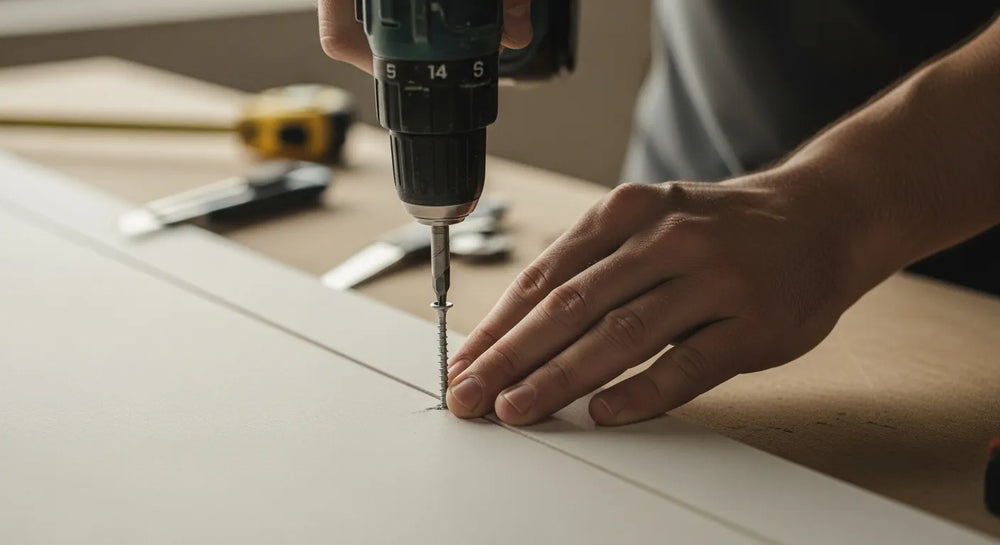
- Variable Speed Drill/Driver: An absolute necessity. The ability to control speed is critical to prevent over-driving, especially in thinner gauge metal. A drill with a clutch setting allows you to set the torque, which helps prevent stripping the screw head or the metal stud.
- Impact Driver: While more powerful and faster, impact drivers require careful control. Their high torque can easily strip screws or overtighten, especially in thinner metal. Use with caution and always practice first.
- Correct Driver Bits: Using the right bit for the screw head (Phillips, Square, Torx, Hex) is non-negotiable. A worn or ill-fitting bit dramatically increases the chance of cam-out (the bit slipping out of the screw head), damaging both the screw and potentially the material.
The Art of Driving a Screw into a Metal Stud
-
Preparation (Pilot Holes):
- For self-tapping screws, a pilot hole is generally required. The size of the pilot hole is critical: it should be slightly smaller than the minor (inner) diameter of the screw threads. Consult fastener specifications for recommended pilot hole sizes. Too small, and you risk breaking the screw or stripping the head; too large, and the screw won't grip effectively.
- For self-drilling screws, no pilot hole is needed, as the screw's tip performs this function. Ensure the drilling tip fully penetrates the metal stud before the threads engage.
-
Positioning and Pressure:
- Align the screw perfectly perpendicular to the metal stud. Any angle will lead to an uneven bite and a weak connection.
- Apply firm, consistent pressure directly in line with the screw. This helps the screw's tip engage and prevents cam-out.
-
Speed Control:
- Start at a moderate speed to allow the screw to seat properly and begin tapping or drilling.
- Increase speed once the threads begin to engage, but always maintain control.
- As the screw head approaches the surface, reduce speed to avoid over-driving.
-
Avoiding Over-Driving: This is perhaps the most common mistake.
- In drywall applications: Over-driving can break the paper face of the drywall, reducing the screw's holding power. The screw head should be just below the surface, creating a slight dimple ready for mudding.
- In structural applications: Over-driving can strip the threads cut into the metal stud, rendering the connection useless. Stop driving as soon as the screw head is flush or appropriately seated. The clutch setting on your drill is your best friend here.
Relatable Scenarios and Strategic Sourcing
Consider a design engineer prototyping a new enclosure where internal components must be rigidly mounted to a metal framework. Or an MRO buyer replacing a critical panel in a manufacturing facility. For these professionals, the ability to quickly source specific fasteners that meet precise material specifications and performance requirements is paramount. For a procurement manager under pressure to source a specific DIN 931 compliant hex cap screw for a critical assembly, or an MRO buyer needing specific material certifications for an unexpected equipment breakdown, the ability to quickly find and finance a verified, U.S.-made part is a game-changer. Similarly, when securing essential components to metal studs in a high-compliance environment, the peace of mind that comes from knowing your fasteners meet stringent American quality standards is invaluable. This is where Maden.co provides critical support, enabling you to reduce procurement friction and enhance supply chain resilience.
Common Applications and Best Practices
Securing into metal studs is integral to various projects, each with its own nuances:
- Drywall Attachment: Fine-thread self-tapping drywall screws are the standard. They feature a bugle head that countersinks neatly into the gypsum board without tearing the paper.
- Furring Strips and Plywood: When attaching wood furring strips or plywood to metal studs, longer self-tapping or self-drilling screws are needed. Ensure the screw length accounts for the thickness of the wood and adequate penetration into the stud.
- Mounting Fixtures and Cabinets: For heavier loads, consider using larger gauge self-drilling screws, potentially combined with toggle anchors or expansion fasteners for maximum pull-out strength, especially if the stud gauge is thin. Always verify the load capacity of your chosen fasteners.
- Electrical Boxes and Conduit: Specialized screws, often with a pointed tip and coarse threads, are available for attaching electrical boxes directly to metal studs. Always ensure compliance with local electrical codes.
Preventing Stripping and Cam-Out
- Use the Right Bit: As mentioned, a perfectly fitting, non-worn driver bit is your first line of defense.
- Consistent Pressure: Keep steady, downward pressure on the driver, preventing it from lifting out of the screw head.
- Controlled Speed: Avoid excessive speed, which can cause the bit to slip or the threads to strip before they fully engage.
- Pilot Holes: When in doubt for self-tapping screws, pre-drilling a pilot hole helps guide the screw and reduces the effort required to start threading.
- Lubrication (Sparing): For very tough materials, a tiny amount of cutting oil or lubricant on the screw tip can sometimes aid in thread formation, but use sparingly to avoid weakening the grip.
The Maden.co Advantage: Sourcing American-Made Quality with Confidence
In a globalized market, the reliability and provenance of industrial components are more critical than ever. At Maden.co, we understand that procurement managers, MRO buyers, and design engineers face constant pressure to source high-quality, compliant parts efficiently. Our platform is built specifically to address these needs by championing American manufacturing.
Our Commitment to American Manufacturing
Our vision is to become the definitive platform that proves American-made components are as accessible and convenient as any global alternative. We believe that "America's manufacturing revival is here," and we are driving it by connecting industrial buyers with over 2.5 million American-made products. Our core values reflect this commitment:
- American Manufacturing Pride: We celebrate the ingenuity and quality inherent in U.S. production.
- Digital Innovation: Our marketplace leverages cutting-edge technology to streamline your procurement process, making it easy to find precisely what you need from our extensive network of 800+ verified U.S. manufacturers.
- Supply Chain Transparency: We offer clarity on product origin and specifications, enabling you to make informed decisions and build a resilient, predictable supply chain.
- Industrial Excellence: We partner with manufacturers who uphold the highest standards, ensuring every product on our platform meets rigorous industrial quality benchmarks.
- Customer Empowerment: We put the tools and information you need directly into your hands, making complex sourcing simple and efficient. You can learn more about our mission to champion American manufacturing here.
Seamless Procurement and Strategic Financing
We know that beyond finding the right part, managing cash flow for capital-intensive projects is a significant consideration. That's why we offer an "Instant Financing" option during the checkout process. This strategic tool allows businesses to manage their capital effectively, facilitating larger-volume purchases without immediate upfront costs. It's not just a payment method; it's a financial lever to keep your projects moving forward and maintain momentum in your operations.
Our platform is more than just a marketplace; it's a strategic partner in building a more reliable and efficient procurement process. For instance, when you require a specific type of fastener—such as the Hi-Lo Double Lead Thread Self-Tapping Sheet Metal Screw for a unique application or the tried-and-true Steel Zinc Plated Type A Pan Slot Drive Self-Tapping Sheet Metal Screw for general use—you can quickly locate it, confirm its specifications, and secure it with the confidence that it meets American quality standards. For high-volume needs, consider the versatility and strength of the Steel Zinc Plated Type A Truss Square Drive Self-Tapping Sheet Metal Screw, readily available through our platform.
Are you a U.S. manufacturer? Register as a vendor and join the American manufacturing revival. If you have specific sourcing questions, our team is ready to help; you can contact us directly.
Addressing Challenges and Troubleshooting
Despite careful planning, issues can arise when fastening into metal studs. Understanding how to troubleshoot common problems can save time and resources.
Stripped Screws or Holes
- Problem: The screw spins freely, failing to tighten, or the existing hole no longer grips a screw.
-
Solution:
- For stripped screw heads: Use a screw extractor or carefully drill out the screw.
- For stripped holes: If the hole in the metal stud is stripped, you'll need to use a larger diameter screw to create new threads, or relocate the fastener to a new, undamaged spot on the stud. In some cases, a rivet or a toggle anchor might be a suitable alternative to ensure a secure connection.
Bent or Broken Fasteners
- Problem: The screw bends or snaps during installation.
- Solution: This often indicates that the screw is too small or too weak for the material thickness, or excessive force was applied. Ensure you are using the correct gauge screw for the metal stud, and that the drill speed and pressure are appropriate. High-quality fasteners, like those found on Maden.co, are engineered to resist bending and breaking under normal operating conditions.
Over-Driving
- Problem: The screw is driven too far, either stripping the metal stud's threads or damaging the surface of the attached material (e.g., tearing drywall paper).
- Solution: As emphasized earlier, precise speed control and a properly adjusted clutch on your drill are crucial. Practice on scrap material to get a feel for the stopping point.
Material Considerations
- Galvanized Steel: Standard metal studs are typically galvanized. Ensure your screws are compatible with this coating to prevent galvanic corrosion over time, especially in environments where moisture is present. Zinc-plated screws are generally suitable.
- Stainless Steel: For applications requiring higher corrosion resistance, stainless steel studs and fasteners are used. When fastening into stainless steel, ensure your screws are also stainless steel (to prevent galvanic corrosion) and are specifically designed for the increased hardness of stainless steel.
By adhering to best practices and utilizing high-quality, purpose-built fasteners, you can significantly reduce the incidence of these problems, ensuring robust and reliable connections every time.
Conclusion
Mastering the art of screwing into metal studs is a critical skill for any professional involved in industrial procurement, MRO, or design. It demands a keen understanding of fastener types, precise installation techniques, and a commitment to sourcing components that meet the highest standards of quality and reliability. The integrity of your projects, the efficiency of your operations, and the safety of your installations depend on these seemingly minor details.
At Maden.co, we are dedicated to simplifying this complex landscape by providing unparalleled access to the finest American-made industrial products. Our platform ensures that procurement managers, MRO buyers, and design engineers can find the exact fasteners they need, manufactured with pride and precision in the USA. We are not just a marketplace; we are a strategic partner committed to supporting America's manufacturing revival, one quality component at a time.
Equip your projects with the confidence that comes from using superior, U.S.-made fasteners. Explore our extensive catalog today to discover millions of American-made products designed for industrial excellence. For seamless capital management on larger orders, remember that you can apply for Instant Financing at checkout to streamline your capital-intensive projects. Your next secure, compliant, and cost-effective connection begins with Maden.co.
FAQ
Q1: Can I use regular wood screws in metal studs?
A1: No, regular wood screws are not designed for metal studs. Wood screws have coarser threads that are optimized for gripping wood fibers, but they will not create secure threads in metal, leading to poor holding power and potential stripping of the stud. You need self-tapping or self-drilling screws specifically designed for metal.
Q2: Do I always need to pre-drill for screws in metal studs?
A2: It depends on the type of screw. If you are using standard self-tapping screws, a pilot hole is generally required, especially for thicker gauge metal studs. The pilot hole helps guide the screw and ensures proper thread engagement. However, if you are using self-drilling screws (often called Tek screws), they have a drill bit tip that creates their own pilot hole, eliminating the need for pre-drilling.
Q3: What's the difference between self-tapping and self-drilling screws for metal studs?
A3: Self-tapping screws have sharp threads and a pointed tip designed to cut threads into a pre-drilled pilot hole or soft metal. They are best for thinner gauge metal. Self-drilling screws, on the other hand, have a drill bit tip that allows them to drill their own pilot hole and then tap threads in a single operation, making them suitable for thicker gauge metal studs and faster installation.
Q4: How do I prevent stripping screws when working with metal studs?
A4: Preventing stripped screws involves several key practices: use the correct type and size of screw for the metal gauge; ensure your driver bit fits snugly into the screw head; apply firm, consistent pressure in line with the screw; use a variable speed drill with a clutch setting to control torque; and avoid over-driving the screw once it is seated.


