
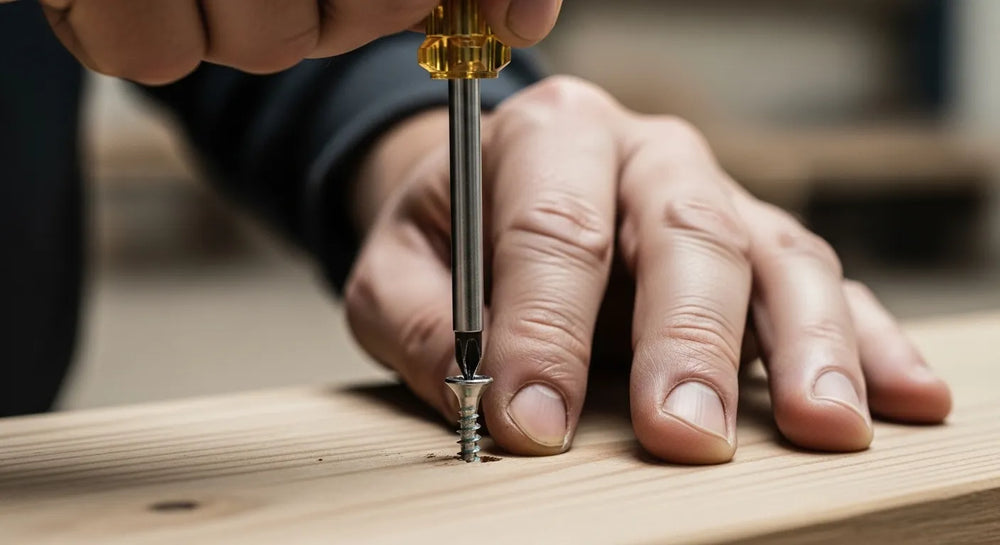
How to Use a Wood Screw: A Guide to Secure Fastening
Table of Contents
- Introduction
- Understanding the Anatomy of a Wood Screw
- Types of Wood Screws and Their Applications
- Selecting the Right Wood Screw for Your Project
- Essential Tools for Wood Screw Installation
- Step-by-Step Guide: How to Use a Wood Screw Effectively
- Advanced Techniques and Best Practices
- The Maden.co Advantage: Sourcing American-Made Quality
- Conclusion
- FAQ
Introduction
In the complex world of industrial design, manufacturing, and MRO, the integrity of a structure often hinges on its smallest components. A loose fastener, a stripped thread, or a split workpiece can compromise an entire assembly, leading to costly delays, material waste, and diminished product longevity. For procurement managers, design engineers, and MRO buyers, understanding the proper application of every component is not merely a detail—it’s a fundamental aspect of quality control and operational efficiency. This post delves into the essential techniques and considerations for effectively using wood screws, transforming a seemingly simple task into a strategic element of robust construction. We will explore everything from screw anatomy and material selection to pilot hole precision and advanced installation methods, ensuring your projects achieve maximum stability and durability.
Understanding the Anatomy of a Wood Screw
Before we delve into usage, a clear understanding of a wood screw's components is crucial. While all screws are designed to join materials, wood screws are specifically engineered for timber and wood-based composites, featuring distinct characteristics that optimize their performance in these substrates.
Key Components of a Wood Screw:
- Head: The top part of the screw, which provides a bearing surface for the driving tool and allows for flush, proud, or decorative finishes. Common types include flat, round, oval, pan, and hex heads. The head also dictates the type of driver required (e.g., slotted, Phillips, square, Torx).
- Shank: The unthreaded portion of the screw directly below the head. While some wood screws are fully threaded, many feature a smooth shank designed to allow the top piece of material to be pulled tightly against the bottom piece without being pushed apart by the threads, creating a strong clamping force.
- Threads: The helical ridges that wrap around the screw body. Wood screw threads are typically coarse and sharp, designed to cut into wood fibers rather than deform metal. This allows for strong engagement and resistance to pull-out.
- Point: The tapered end of the screw, which aids in initial penetration and can be self-tapping on some designs, reducing the need for a pilot hole in softer woods.
The thoughtful design of each component contributes to a wood screw’s ability to create a strong, lasting joint in timber. For a design engineer specifying fasteners for a new furniture line or an MRO buyer replacing components in timber structures, this foundational knowledge is indispensable for selecting the right part.
Types of Wood Screws and Their Applications
The vast array of wood screws available can be overwhelming, but understanding their variations is key to optimal performance and aesthetics. The choice often depends on the specific wood type, the load-bearing requirements, and the desired finish.
Head Styles and Their Uses:
- Flat-Head Wood Screws: Designed to sit flush with or slightly below the surface of the wood when countersunk. This provides a smooth, unencumbered finish, ideal for applications where aesthetics and a snag-free surface are critical, such as furniture, cabinetry, or decking. For projects demanding precision and a seamless finish, consider a Flat Slot Drive Brass Wood Screw which combines durability with classic aesthetics.
- Round-Head Wood Screws: These screws sit proud of the surface, creating a decorative or utilitarian bump. They are often used when a flush finish isn't necessary or when a larger bearing surface is desired, potentially for applications involving thin materials or to spread the clamping force over a wider area. A Round Slot Drive Brass Wood Screw can offer a distinct visual element while providing robust fastening.
- Oval-Head Wood Screws: A hybrid of flat and round heads, oval heads are countersunk but feature a decorative domed top that remains visible. They offer an elegant finish, often seen in fine woodworking, boat building, or architectural details where both function and appearance are paramount. For such refined applications, an Oval Slot Drive Silicon Bronze Wood Screw provides excellent corrosion resistance and a distinguished aesthetic.
- Pan-Head Wood Screws: Feature a slightly rounded, flat-topped head that sits proud of the surface. They offer a larger bearing surface than round heads and are commonly used in general-purpose applications where a decorative look isn't a priority but strong clamping is.
- Hex-Head Wood Screws: Characterized by a six-sided head, these are typically driven with a wrench or socket. They are often found in heavy-duty applications, such as construction framing or timber engineering, where maximum torque is required, and a robust, secure joint is essential.
- Trim-Head Wood Screws: These screws have a very small head designed to be virtually invisible when driven, ideal for trim and molding where minimal disruption to the surface is desired.
Drive Types for Different Tools:
- Slotted Drive: The oldest and simplest, requiring a flat-blade screwdriver. While common historically, it can be prone to cam-out (the driver slipping out of the slot), especially with power tools.
- Phillips Drive: A cross-shaped recess designed to allow the driver to cam-out under excessive torque, preventing overtightening and damage to the screw or workpiece. Very common for general use.
- PoziDriv Drive: An advancement of the Phillips, featuring additional smaller slots for better torque transfer and less cam-out.
- Square (Robertson) Drive: A square recess that offers superior torque transfer and virtually no cam-out, making it popular in construction and manufacturing.
- Torx (Star) Drive: A six-pointed star recess that provides excellent torque transfer and resistance to cam-out, favored for high-torque applications and when precise control is needed.
Material Considerations:
The material of a wood screw is critical for its performance and longevity, especially in industrial environments.
- Brass: Offers good corrosion resistance and is aesthetically pleasing, making it suitable for decorative finishes or marine applications where a classic look is desired. However, it is softer than steel, so care must be taken not to over-torque. Our Round Slot Drive Brass Wood Screw is a prime example of quality brass craftsmanship.
- Silicon Bronze: A copper alloy known for exceptional corrosion resistance, particularly in saltwater and harsh outdoor environments. It's stronger than brass, making it excellent for marine, boat building, and exterior architectural applications where durability and resistance to degradation are paramount. An Oval Slot Drive Silicon Bronze Wood Screw highlights the blend of strength and enduring beauty this material offers.
- Steel (Plain, Plated, Coated): The most common and economical. Plain steel offers high strength but is prone to rust. Various platings (zinc, chrome) and coatings (phosphate, ceramic, polymer) provide corrosion resistance, lubrication, and sometimes color.
- Stainless Steel: Offers superior corrosion resistance compared to plated steel, ideal for outdoor or damp environments. Common grades like 304 and 316 provide different levels of resistance and strength.
For a procurement manager under pressure to source a specific fastener that meets strict environmental or aesthetic specifications, or a design engineer needing specific material certifications, the ability to quickly find and vet U.S.-made components is a game-changer. At Maden.co, we simplify this process by providing access to over 2.5 million American-made products from our network of 800+ verified U.S. manufacturers. Our mission is to democratize access to American manufacturing, ensuring you find the precise part you need with confidence in its origin and quality. You can learn more about our commitment to American manufacturing and our values on our About Us page.
Selecting the Right Wood Screw for Your Project
Choosing the correct wood screw involves a careful evaluation of the application's requirements, the type of wood, and environmental conditions. This selection directly impacts the joint's strength, durability, and appearance.
Key Selection Criteria:
- Material Compatibility: Always match the screw material to the environment and the wood. For hardwoods, a stronger screw material (like steel or silicon bronze) is often necessary to prevent stripping or shearing. For outdoor use or treated lumber, corrosion-resistant materials like stainless steel, silicon bronze, or appropriately coated steel are essential to prevent rust and staining.
-
Length and Diameter:
- Length: A general rule of thumb for effective fastening is that the screw should penetrate at least two-thirds into the receiving piece of wood, but not emerge from the other side. For joining two pieces of equal thickness, the screw should ideally be 2.5 to 3 times the thickness of the top piece. Too short, and the joint will be weak; too long, and it risks puncturing through.
- Diameter (Gauge): Thicker screws provide more shear strength and pull-out resistance but are more likely to split the wood. Thinner screws are less likely to split but offer less strength. The diameter should be chosen based on the load the joint will bear and the density of the wood.
- Thread Type: While most wood screws have coarse threads, some specialized screws feature dual threads or aggressive points for self-tapping into certain materials. Always confirm if the screw's threads are appropriate for the wood's density and the desired holding power.
- Head Style: As discussed, the head style dictates the finish. Flat heads require countersinking for a flush finish, while round and pan heads sit proud. Oval heads offer a decorative, partially recessed look. Select based on aesthetic requirements and whether the screw needs to be concealed or visible.
- Corrosion Resistance: For outdoor applications, marine environments, or contact with chemically treated lumber, corrosion resistance is paramount. Silicon bronze, stainless steel, or screws with high-grade protective coatings are indispensable here. Choosing the right coating can dramatically extend the life of a timber structure, a critical consideration for MRO buyers managing asset longevity.
Consider a procurement manager tasked with sourcing fasteners for a new municipal park bench project. They require screws that offer both structural integrity and resistance to varying weather conditions. Sourcing a large volume of Oval Slot Drive Silicon Bronze Wood Screws from a verified U.S. manufacturer through Maden.co ensures compliance with material specifications and contributes to the longevity of public infrastructure.
Essential Tools for Wood Screw Installation
Proper installation requires more than just a screw and a driver. Having the right tools ensures efficiency, accuracy, and prevents damage to materials and fasteners.
Key Tools:
- Measuring Tools: A tape measure, ruler, and marking gauge are crucial for accurate placement and depth control. Precision in marking is the first step to a perfectly aligned and strong joint.
-
Drills and Drivers:
- Power Drill/Driver: Indispensable for speed and efficiency, especially for numerous screws or harder woods. Cordless drills offer flexibility.
- Impact Driver: Excellent for driving long, large-diameter screws, providing high torque with less strain on the user. However, caution is needed to avoid overtightening or stripping.
- Manual Screwdrivers: Still essential for delicate tasks, final tightening, or when power tools are impractical. Ensure the driver tip matches the screw head type precisely to prevent cam-out and damage.
- Pilot Hole Bits: These specialized drill bits create a perfectly sized hole for the screw shank and threads. Often, combination bits are available that drill a pilot hole, counterbore (for the shank), and countersink (for the head) in one step.
- Countersink Bits: Used to create a conical recess for flat and oval-head screws, allowing them to sit flush or partially recessed with the wood surface. Essential for a professional finish.
- Safety Gear: Safety glasses are non-negotiable to protect against wood chips, metal shavings, or accidental screw ejection. Gloves can protect hands, and hearing protection is advisable when using loud power tools for extended periods.
Step-by-Step Guide: How to Use a Wood Screw Effectively
Mastering the art of wood screw installation involves precision and adherence to best practices. Following these steps will ensure strong, reliable joints and a professional finish.
Step 1: Mark the Fastening Location
Accuracy begins with precise marking. Use a pencil, ruler, and possibly a marking gauge to clearly indicate where each screw will be driven. For multiple screws, ensure even spacing and alignment. This is especially important in projects requiring high precision, such as the assembly of custom machinery mounts where alignment is critical for operational stability.
Step 2: Selecting the Correct Pilot Hole Bit
This is arguably the most critical step in preventing wood splitting and ensuring optimal screw engagement. The pilot hole serves two purposes:
- It clears a path for the unthreaded shank of the screw, allowing the clamping force to pull the two pieces of wood together.
- It creates a guide for the threads, preventing the wood from splitting as the screw is driven.
Pilot Hole Sizing:
- Hardwoods: The pilot hole should be slightly smaller than the root diameter (the solid core) of the screw's threads. For harder woods like oak or maple, a slightly larger pilot hole may be necessary to prevent splitting and reduce driving resistance.
- Softwoods: For softer woods like pine or fir, the pilot hole should be closer to the diameter of the screw’s shank, allowing the threads to bite aggressively.
- Combination Bits: For maximum efficiency and precision, consider using a specialized pilot-hole bit that drills the pilot hole, countersink, and counterbore (for the unthreaded shank) in one pass. This ensures a perfect fit for the specific screw you are using, enhancing both strength and finish.
Step 3: Drilling the Pilot Hole
- Secure the Workpiece: Always clamp the pieces of wood securely to prevent movement during drilling. This ensures accuracy and safety.
- Drill Straight: Use a drill press for absolute perpendicularity if available, especially for critical applications. Otherwise, practice holding the drill straight and perpendicular to the surface. A drill guide attachment can also assist.
- Depth Control: Use a drill stop or mark the drill bit with tape to ensure you drill to the correct depth, preventing over-drilling or insufficient penetration. Remember, the pilot hole should be slightly shorter than the screw's penetration depth to allow the screw point to engage new material.
For a design engineer constructing a prototype for a sensitive instrument enclosure, the precision of each pilot hole is paramount to the overall structural integrity and dimensional accuracy.
Step 4: Countersinking (If Necessary)
If you are using a flat-head or oval-head screw and desire a flush or partially recessed finish, this step is essential.
- Select the Right Bit: Use a countersink bit that matches the angle of the screw head (typically 82 degrees for most wood screws in the U.S.).
- Drill Slowly: Drill slowly and carefully, checking frequently to ensure the head sits perfectly flush without over-drilling. Over-countersinking can weaken the top material and allow the screw to pull through.
This attention to detail is what separates a hastily assembled piece from a product built with industrial excellence, a core value we champion at Maden.co.
Step 5: Driving the Screw
- Choose the Correct Driver: Use a screwdriver or driver bit that perfectly matches the screw head type and size. This prevents cam-out, stripping the screw head, and damaging the workpiece.
- Start Slowly: Begin driving the screw slowly by hand or with the drill on a low-speed setting to ensure it engages the pilot hole correctly and doesn't cross-thread.
- Apply Downward Pressure: Maintain firm, steady downward pressure on the driver, especially at the start, to keep the bit seated in the screw head and prevent cam-out.
- Control Torque: For power drills, use the clutch setting (torque limiter) to prevent overtightening, stripping the threads in the wood, or snapping the screw. Stop when the screw head is flush with the surface or when the joint feels firm. For applications requiring maximum holding power without damage, consider the specific torque specifications if available.
Step 6: Avoiding Common Pitfalls
- Splitting Wood: Always drill appropriate pilot holes, especially in hardwoods or near edges.
- Stripping Screw Heads: Use the correct driver bit and maintain firm downward pressure. Avoid worn-out bits.
- Stripping Threads in Wood: Avoid overtightening. Use the clutch on your drill. If a screw feels loose, it may be stripped; consider a slightly larger diameter screw or a repair method.
- Rust and Staining: For outdoor or wet applications, ensure you use corrosion-resistant screws (e.g., silicon bronze, stainless steel) to prevent unsightly rust stains and structural degradation over time. This is a common issue for MRO buyers in facilities with high humidity or exposure to chemicals.
Advanced Techniques and Best Practices
Beyond the basics, several advanced techniques can further enhance the performance and durability of wood screw joints, particularly in demanding industrial contexts.
- Using Lubricants: For driving screws into very dense hardwoods, a small amount of wax (beeswax, paraffin) or soap applied to the screw threads can significantly reduce friction. This makes driving easier, reduces the risk of stripping the screw head, and lessens the chance of splitting the wood.
- Fastening Hardwoods vs. Softwoods: Hardwoods require more precise pilot holes and often benefit from pre-drilling the pilot hole to the full depth of the screw's threaded portion, plus a counterbore for the shank. Softwoods are more forgiving but can strip out easily if overtightened. The choice of screw material is also more critical for hardwoods, as softer screws can shear during installation.
- Working with End Grain: Wood screws hold much less effectively in end grain compared to side grain because the wood fibers are oriented along the axis of the screw, offering fewer points of resistance. Whenever possible, avoid driving screws into end grain. If unavoidable, use longer screws, consider reinforcing the joint with glue, or utilize specialized fasteners designed for end grain.
- Repairing Stripped Holes: If a screw hole becomes stripped, it can often be repaired by filling it with wood glue and dowel, a wooden golf tee, or wood filler. Once cured, a new pilot hole can be drilled into the repaired area. For critical applications, relocating the screw or using a through-bolt might be necessary.
- Dealing with Cupping and Splitting: When joining wide boards, allow for wood movement. Driving screws too tightly or without appropriate pilot holes can lead to cupping or splitting as the wood expands and contracts. For solid wood panels, consider using elongated pilot holes in one of the pieces to allow for lateral movement while still securing the joint.
The Maden.co Advantage: Sourcing American-Made Quality
In a globalized supply chain, securing high-quality, reliable components can be a challenge. At Maden.co, we are committed to simplifying this process and empowering American manufacturing. Our platform is dedicated to connecting industrial buyers—from procurement managers and MRO buyers to design engineers and business owners—with a vast network of verified U.S. manufacturers.
Our core values of American Manufacturing Pride, Digital Innovation, Supply Chain Transparency, Industrial Excellence, and Customer Empowerment drive everything we do. When you source through Maden.co, you're not just buying a product; you're investing in:
- Supply Chain Resilience: Reducing reliance on distant, often opaque supply chains by connecting directly with domestic producers. This mitigates risks associated with geopolitical events, shipping delays, and fluctuating international trade policies.
- Assured Quality and Compliance: Accessing products that adhere to rigorous American manufacturing standards, ensuring compliance with critical industry specifications (e.g., DIN, NPT, ASME) right from the source. This is vital for maintaining product integrity and safety across various industries.
- Reduced Procurement Friction: Our intuitive B2B marketplace is designed for efficiency, allowing you to quickly find, compare, and purchase over 2.5 million American-made products. For procurement professionals, this means significant time savings and a streamlined purchasing process.
- Support for the American Economy: Every purchase on Maden.co contributes directly to the growth and vitality of U.S. manufacturing, fostering innovation and creating jobs domestically. Our tagline, "America's manufacturing revival is here," reflects this commitment.
Whether you need a specialized round slot drive brass wood screw for a heritage restoration project, a robust flat slot drive brass wood screw for modern cabinetry, or an oval slot drive silicon bronze wood screw for marine applications, our platform makes sourcing American-made components effortless. We understand that the total cost of ownership (TCO) extends beyond the initial purchase price, encompassing factors like reliability, longevity, and supply chain stability. By partnering with verified U.S. manufacturers, we help you improve your TCO through superior product quality and a more resilient supply chain.
We believe in empowering our customers. If you are a U.S. manufacturer, we invite you to join our growing network. Register as a vendor and join the American manufacturing revival to expand your reach and connect with industrial buyers across the nation.
Conclusion
The humble wood screw, when properly understood and applied, is a cornerstone of durable construction and precise assembly. From selecting the right head style and material to meticulously drilling pilot holes and managing torque, each step contributes to the longevity and integrity of your projects. For industrial buyers, the strategic value of mastering these techniques, combined with reliable sourcing, cannot be overstated. It translates directly into reduced material waste, fewer costly failures, and enhanced product reputation.
By leveraging a platform like Maden.co, you gain more than just access to parts; you gain a strategic partner dedicated to empowering your procurement process with American-made excellence. Our extensive catalog, featuring over 2.5 million U.S.-manufactured products, ensures that you can find everything from standard fasteners to highly specialized components with unprecedented ease. Explore our vast selection today and experience the difference that quality, transparency, and domestic sourcing can make for your operations. If you have specific sourcing questions, our team is ready to help; you can always contact us for expert assistance. We encourage you to streamline your capital-intensive projects by exploring our Instant Financing option available at checkout, allowing for flexible payment solutions that align with your business needs. Join us in building a stronger, more resilient American manufacturing future by starting your search on Maden.co today.
FAQ
Q1: Why is drilling a pilot hole so important when using wood screws?
A1: Drilling a pilot hole is crucial for several reasons. It prevents the wood from splitting, especially in hardwoods or when screwing near the edge of a board. It also ensures the screw drives straight, guides the threads for optimal engagement, and allows the unthreaded shank to pull the two pieces of wood tightly together, creating a stronger joint. Without a pilot hole, the internal stress caused by the screw can easily damage the wood, leading to a weaker, less durable connection.
Q2: How do I choose the correct length and diameter for a wood screw?
A2: For length, a good general rule is that the screw should penetrate at least two-thirds into the receiving piece of wood. For joining two pieces of equal thickness, the screw should be approximately 2.5 to 3 times the thickness of the top piece. For diameter (gauge), consider the load the joint will bear and the density of the wood. Thicker screws offer more strength but increase the risk of splitting, while thinner screws are less prone to splitting but provide less holding power. Always aim for a balance that provides adequate strength without compromising the wood's integrity.
Q3: What is "Instant Financing" and how does it benefit industrial buyers on Maden.co?
A3: Instant Financing is a convenient payment option available at checkout on Maden.co. It allows businesses, including procurement managers and MRO buyers, to manage their cash flow more effectively by offering flexible payment terms for larger-volume purchases. This strategic tool helps overcome upfront capital constraints, enabling you to acquire necessary U.S.-made components promptly and maintain project timelines without immediate budget strain. It simplifies the purchasing process for capital-intensive projects, ensuring you can access the quality parts you need when you need them.
Q4: How does sourcing wood screws from Maden.co contribute to supply chain resilience?
A4: Sourcing wood screws and other components from Maden.co directly contributes to supply chain resilience by connecting you with verified U.S. manufacturers. This reduces dependence on international supply chains, which are often susceptible to disruptions from geopolitical events, natural disasters, and logistical challenges. By buying American-made products, you shorten lead times, gain greater transparency into manufacturing processes, reduce shipping costs and complexities, and mitigate risks, thereby building a more stable and predictable supply chain for your operations.


