
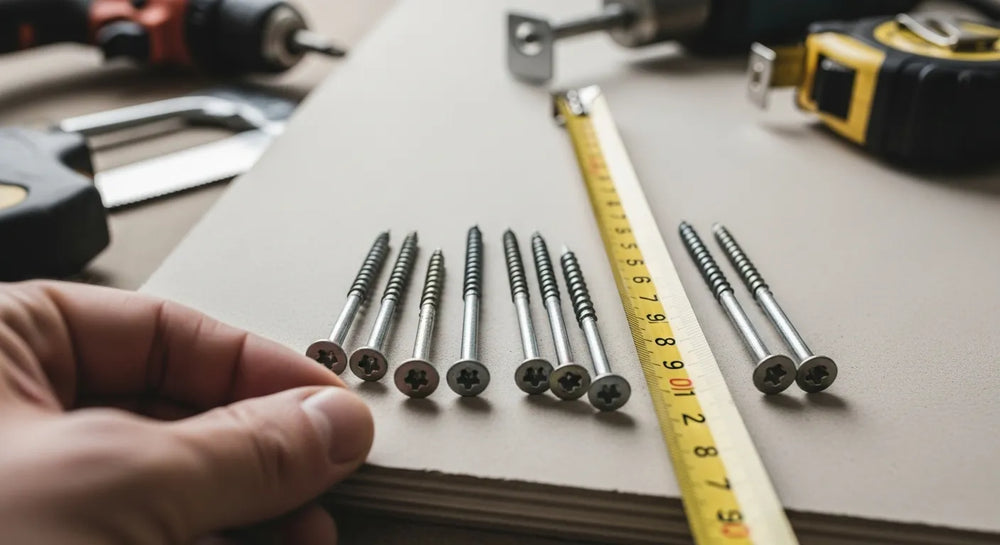
How to Use Anchor Screws in Drywall Securely
Table of Contents
- Introduction
- The Challenge of Drywall: Why Anchors Are Non-Negotiable
- Decoding Drywall Anchors: A Typology for Professionals
- The Step-by-Step Installation Process: A Commitment to Precision
- Sourcing for Success: The Maden.co Advantage in Procurement
- Common Mistakes to Avoid for a Flawless Installation
- Conclusion: Building a Stronger Foundation with American Manufacturing
- Frequently Asked Questions (FAQ)
Introduction
Imagine the sound of a newly installed commercial-grade shelf, laden with critical MRO supplies, suddenly giving way and crashing to the floor. The immediate costs are obvious—damaged inventory, a broken shelf, and marred walls. But the hidden costs are far greater: operational downtime, safety hazards for personnel, and the urgent, costly scramble to source replacement parts and perform repairs. This scenario, all too common in industrial and commercial settings, often stems from a fundamental misunderstanding of one of the most ubiquitous materials in modern construction: drywall.
Drywall, or gypsum board, is a marvel of cost-effective construction, but its inherent weakness presents a significant challenge for mounting anything of substance. A standard screw driven directly into its chalky core has virtually no holding power. This is where the drywall anchor becomes not just a piece of hardware, but a critical component for ensuring safety, stability, and operational integrity. This article serves as an authoritative guide for procurement managers, MRO buyers, and engineers on how to use anchor screws in drywall correctly. We will explore the physics behind why anchors are essential, detail the various types of anchors and their specific applications, provide a meticulous step-by-step installation process, and discuss common pitfalls to avoid. Most importantly, we will frame this technical knowledge within the larger context of building resilient, reliable, and American-made supply chains, which is the foundational mission here at Maden.co. Mastering this simple task is a direct reflection of a commitment to industrial excellence and a refusal to compromise on the small details that ensure a project's long-term success.
The Challenge of Drywall: Why Anchors Are Non-Negotiable
To understand why anchors are indispensable, one must first appreciate the composition and structural limitations of drywall itself. A standard sheet of drywall consists of a core of compressed gypsum—essentially a soft, chalk-like mineral—sandwiched between two thick sheets of paper. While it provides excellent surface finish, fire resistance, and insulation, it possesses very little tensile or shear strength.
When you drive a standard wood or metal screw into this material, the threads have nothing substantial to bite into. The gypsum crumbles around the screw, creating a loose, unstable connection. Any significant weight or even minor vibration will cause the screw to pull out, often taking a chunk of the wall with it.
Studs vs. Hollow Cavities
The ideal scenario for mounting any object to a wall is to locate a wooden or metal stud—the vertical framing members of the wall—and drive a fastener directly into it. A screw anchored in a solid piece of wood can support a tremendous amount of weight. However, studs are typically spaced 16 or 24 inches apart on-center, meaning that the vast majority of your wall surface is a hollow cavity. For a maintenance manager installing safety signage according to specific placement regulations, or an engineer mounting a control panel in a precise location, relying on stud placement is often not a viable option.
This is the problem the drywall anchor is engineered to solve. An anchor is a device that is inserted into the drywall first, creating a secure interface that a screw can then thread into. It works by expanding behind the wall, gripping the back of the drywall panel, or biting aggressively into the gypsum, distributing the load over a much wider surface area than a screw alone ever could. Using an anchor transforms a weak, crumbly point of contact into a robust and reliable mounting point. For any professional application, from hanging tools in a maintenance shop to securing conduit clamps in a data center, skipping the anchor is an unacceptable risk.
Decoding Drywall Anchors: A Typology for Professionals
The market is filled with a vast array of drywall anchors, each designed for specific load capacities and applications. Selecting the correct one is the first and most critical step in the installation process. A procurement manager who understands these distinctions can optimize for both cost and performance, ensuring that a light-duty anchor isn't used for a heavy-duty job, and a more expensive heavy-duty anchor isn't wasted on a simple task. At Maden.co, we believe in empowering our customers with knowledge, and our platform is built on the principle of providing access to the right components for the job. Our entire business model is built on this principle; you can learn more about our mission to champion American manufacturing here.
Let's break down the primary categories of anchors available from our network of over 800 verified U.S. manufacturers.
Expansion Anchors (Plastic/Nylon)
This is the most common and recognizable type of drywall anchor. They are typically made from plastic or, for higher quality and durability, nylon.
- How They Work: A pilot hole is drilled into the drywall, and the anchor, which often has ribbed or finned sides to prevent spinning, is lightly tapped into the hole until it is flush with the wall surface. As a screw is driven into the anchor, the anchor's body splits and expands, pressing firmly against the inside of the gypsum core and the back of the wall.
- Best For: Light-duty to medium-duty applications. This includes hanging pictures, clocks, lightweight signage, smoke detectors, and small organizational tools.
- Pro Tip: Pay attention to the material. While cheap plastic anchors are common, nylon anchors offer superior strength, flexibility, and resistance to becoming brittle over time. For general-purpose tasks where reliability is key, a classic like the U.S.-made Ribbed Plastic Anchor is a staple in any MRO toolkit. For applications requiring a bit more holding power without a significant jump in complexity, the Medium Duty Nylon Wall Anchor #8 for Drywall provides a robust and dependable solution, ensuring a secure expansion every time.
Self-Drilling Anchors (Threaded Anchors)
These anchors are designed to streamline the installation process, making them a favorite for projects where time is a critical factor.
- How They Work: These anchors feature a sharp, drill-like tip and aggressive, wide threads. They are driven directly into the drywall using a screwdriver or a drill set to a low speed, simultaneously creating their own hole and threading themselves securely into the wall. Once the anchor is flush, a screw is then driven into the center of the anchor to mount the object.
- Best For: Medium-duty applications. They are excellent for quickly installing brackets, lightweight shelving, thermostats, and other fixtures where a pilot hole would add unnecessary time.
- Pro Tip: For procurement managers focused on reducing installation time and labor costs, the Medium Duty Nylon Wall Anchor #6 Self-Drilling Drywall Zip-It® is an outstanding choice. Its self-drilling design eliminates a step in the process, boosting efficiency without sacrificing holding power. These are available in both nylon and zinc alloy versions; the zinc provides higher shear strength for heavier applications.
Hollow-Wall Anchors (Molly Bolts)
When you move beyond light-duty applications, you need an anchor that provides a more mechanical and robust connection to the wall. This is where hollow-wall anchors, often called "Molly bolts," excel.
- How They Work: A Molly bolt consists of a metal sleeve with a screw running through it. After drilling a pilot hole, the entire assembly is inserted into the wall. As you turn the screw, the metal sleeve behind the drywall collapses and expands outwards, much like a rivet, creating strong metal legs that clamp onto the back of the wall. Once the anchor is "set," you can remove the screw, position your fixture, and re-insert the screw to secure it.
- Best For: Medium to heavy-duty applications. They are the go-to choice for towel bars, small wall cabinets, heavy mirrors, and wall-mounted dispensers in commercial restrooms.
- Pro Tip: Ensure you purchase the correct length of Molly bolt for your wall's thickness. Standard drywall is 1/2-inch thick, but 5/8-inch fire-rated drywall is common in commercial buildings. An anchor designed for 1/2-inch drywall will not set correctly in a thicker wall.
Toggle Bolts & Strap Toggles
For the heaviest applications where a stud is not an option, toggle bolts provide the highest load-bearing capacity.
- How They Work: The classic toggle bolt has a pair of spring-loaded "wings" attached to a long machine screw. To install, you must drill a relatively large hole in the wall. The wings are then compressed, pushed through the hole, and they spring open inside the wall cavity. As you tighten the screw, the wings are pulled tight against the back of the drywall, distributing the load over a very large area. Newer strap-toggle designs use a plastic strap and a metal toggle bar, which allows for a smaller installation hole and the ability to remove and re-insert the bolt, a major advantage over traditional toggles.
- Best For: Heavy-duty applications. This is the only acceptable choice for things like grab bars, heavy shelving units, wall-mounted sinks (in some cases), and certain types of industrial equipment.
- Pro Tip: The biggest drawback of a traditional toggle bolt is that if you ever remove the screw completely, the winged toggle will fall down inside the wall cavity, lost forever. This is why strap-toggles have become increasingly popular in professional settings.
The Step-by-Step Installation Process: A Commitment to Precision
Knowing the types of anchors is only half the battle. Executing a perfect installation requires precision and adherence to a clear process. Rushing this stage is what leads to failed mounts and costly rework.
-
Plan and Mark: First, determine the exact location for your mounting point. Use a pencil to make a small, precise mark. Use a stud finder to confirm that you are not drilling into a stud. More importantly, use a non-contact voltage tester or a more advanced wall scanner to check for hidden electrical wires or plumbing pipes behind your mark. This safety check is non-negotiable in any professional environment.
-
Select the Right Anchor and Screw: Based on the weight of the object you are mounting, select the appropriate anchor type using the guide above. Always consult the manufacturer's packaging for the anchor's maximum weight rating and factor in a significant safety margin. Ensure the screw you plan to use is the correct diameter and length for the anchor. Most anchor kits come with the properly matched screws.
-
Drill the Pilot Hole (If Required): For expansion and hollow-wall anchors, a pilot hole is required. The anchor's packaging will specify the exact drill bit size to use. This is one of the most common points of failure.
- Too small: The anchor will not fit, and forcing it will damage the drywall.
- Too large: The anchor will be loose and will spin in the hole when you try to drive the screw, providing no holding power. Use a sharp drill bit and drill a clean, straight hole.
-
Install the Anchor:
- Expansion Anchor: Gently tap the anchor into the pilot hole with a hammer until its head is flush with the wall surface.
- Self-Drilling Anchor: Use a Phillips head driver bit in a drill set to low speed and low torque. Drive the anchor in slowly until it is flush with the wall. Do not over-tighten, as this can strip the drywall.
- Molly Bolt: Insert the entire anchor assembly into the hole until the head is flush.
- Toggle Bolt: Drill the required (and often large) hole. Unscrew the wings from the bolt, pass the bolt through your fixture's mounting hole, re-thread the wings onto the bolt, pinch them flat, and insert them through the hole in the wall.
-
Set the Anchor:
- Expansion/Self-Drilling: This happens automatically when the screw is inserted.
- Molly Bolt: Turn the screw clockwise. You will feel resistance as the sleeve begins to expand. Keep turning until the screw is tight. This "sets" the anchor. You can now remove the screw to place your fixture.
- Toggle Bolt: Pull the bolt back towards you to ensure the wings are flat against the back of the wall, then tighten the screw until the fixture is secure.
-
Fasten the Fixture: Position your item over the installed anchor and drive the screw in. Tighten until it is snug. Again, avoid over-tightening, which can strip the anchor's internal threads or crack the surrounding drywall, compromising the entire installation.
Sourcing for Success: The Maden.co Advantage in Procurement
A successful project isn't just about technical know-how; it's about the quality and reliability of the components used. For a procurement manager under pressure to keep an assembly line running, a design engineer needing certified components for a new product, or an MRO buyer facing an unexpected equipment breakdown, the ability to quickly find and finance a verified, U.S.-made part is a game-changer. This is where we come in.
At Maden.co, our mission is to democratize access to American manufacturing, proving that American-made components are as accessible and convenient as any global alternative. We are driving America's manufacturing revival.
When you source seemingly simple items like drywall anchors through our platform, you are making a strategic business decision with tangible benefits:
- Supply Chain Transparency and Resilience: The risk associated with low-cost, unverified overseas fasteners is immense. Inconsistent material quality, poor tolerances, and unreliable load ratings can lead to catastrophic failures. By sourcing from our catalog of over 2.5 million products from verified U.S. manufacturers, you gain supply chain transparency and reduce the risk of component failure.
- Improved Total Cost of Ownership (TCO): The initial price of a drywall anchor is negligible. The TCO of a failed anchor, however, can be substantial. It includes the cost of labor for rework, potential damage to equipment or property, and operational downtime. Investing in high-quality, American-made components from the start is a far more cost-effective strategy in the long run. Are you a U.S. manufacturer producing high-quality fasteners and other industrial components? Register as a vendor and join the movement.
- Streamlined Procurement and Financing: Our platform is designed to reduce procurement friction. For larger projects or bulk MRO orders requiring a significant quantity of fasteners, managing cash flow is paramount. That's why we offer a streamlined solution. You can apply for Instant Financing at checkout to manage your capital-intensive projects, allowing you to procure the necessary components without delaying critical work. If you have specific sourcing questions for a large project, our team is ready to help.
Common Mistakes to Avoid for a Flawless Installation
Even with the right knowledge, simple mistakes can lead to a weak installation. Here are the most common errors to guard against:
- Underestimating the Load: Always be conservative. If your object weighs 20 lbs, don't use an anchor rated for exactly 20 lbs. Choose one rated for 30 lbs or more to build in a safety factor.
- Drilling the Wrong Size Pilot Hole: As mentioned, this is a critical error. Always double-check the manufacturer's specification for the required drill bit size.
- Over-tightening the Screw: This is the fastest way to strip an anchor or crack the drywall around it. Tighten until the fixture is snug against the wall, and then stop.
- Reusing Old Holes: Never try to put a new anchor into a hole left by an old one. The drywall in that area is already compromised. Drill a new hole at least a few inches away.
- Ignoring Wall Thickness: Using a hollow-wall anchor designed for 1/2-inch drywall in a 5/8-inch wall will prevent it from setting correctly, resulting in a completely insecure mount.
- Hitting a Stud... and Proceeding: If your drill bit hits solid wood, you've found a stud. Stop. This is good news! Abandon the anchor, and use an appropriate length wood screw to mount your object directly to the stud for a far superior hold.
Conclusion: Building a Stronger Foundation with American Manufacturing
The process of installing an anchor screw in drywall is more than just a simple maintenance task. It is a microcosm of a larger principle: a commitment to doing things the right way, with the right components, to achieve a reliable and lasting result. The integrity of your project, the safety of your facility, and the efficiency of your operations can depend on the strength of a single mounting point. Understanding the limitations of drywall, selecting the appropriate American-made anchor, and following a precise installation process are fundamental skills for any industrial professional.
This commitment to quality and reliability is at the core of everything we do. We believe that building a stronger America starts with building with better, more accessible American-made parts. Don't let a small component compromise your project's integrity. Explore our extensive catalog of American-made fasteners on Maden.co today. Find the precise anchors and screws you need for your next project, and remember to leverage our Instant Financing option at checkout to keep your operations moving forward without delay.
Frequently Asked Questions (FAQ)
What is the strongest type of drywall anchor?
For mounting very heavy objects in hollow drywall, toggle bolts (both traditional and strap-toggle designs) offer the highest weight-bearing capacity. Their design spreads the load across a large surface area on the back of the drywall, providing a significantly stronger hold than expansion or threaded anchors.
Can I reuse a drywall anchor?
It is strongly recommended not to reuse drywall anchors, especially plastic expansion anchors. The process of installing the screw and then removing it deforms the anchor and compromises its ability to expand and grip properly a second time. It is always safer and more effective to use a new anchor for each installation.
How do I know what size screw to use with my anchor?
The anchor's manufacturer will always specify the correct screw size (both diameter and length). In most cases, high-quality anchor kits are sold with the correctly matched screws included, which eliminates any guesswork and ensures optimal performance and holding power.
What if I hit a stud when drilling for an anchor?
If you hit a stud, you should stop the anchor installation process immediately. This is a positive outcome, as mounting directly to a stud is far stronger than using any drywall anchor. Remove any part of the anchor you've installed, patch the small hole if necessary, and use a standard wood screw of appropriate length to fasten your object directly into the stud.


