
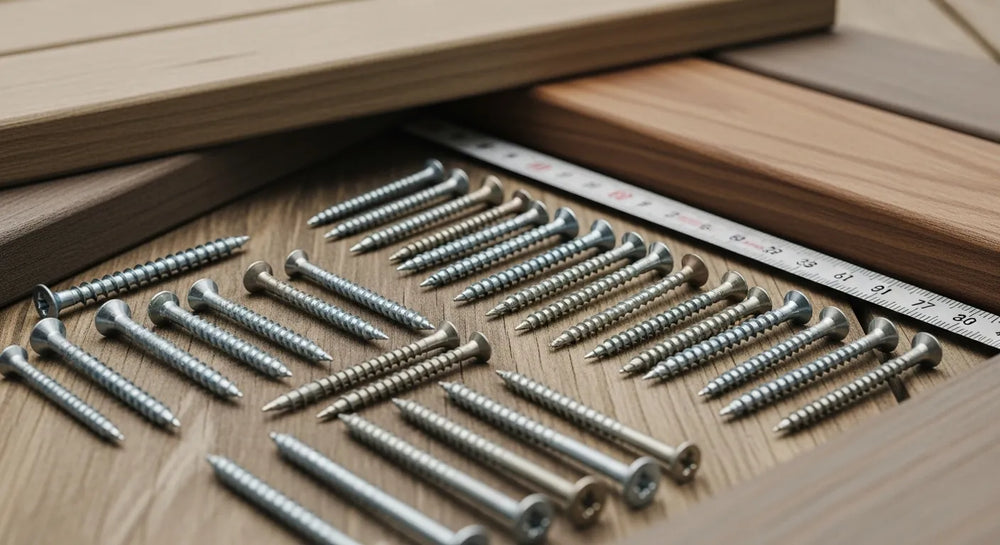
How to Use Drywall Anchor Screws for Secure Mounting
Table of Contents
- Introduction
- Why Drywall Needs Anchors: Understanding the Material
- Types of Drywall Anchors: Choosing the Right Tool for the Job
- Step-by-Step Installation Guide: A Process for Precision
- Common Mistakes and How to Avoid Them
- The Maden.co Advantage: Sourcing Quality American-Made Fasteners
- Conclusion
- Frequently Asked Questions
Introduction
Imagine the sound of a newly installed shelf crashing to the floor, or the sight of a critical piece of equipment slowly pulling away from the wall. This common and costly problem often stems not from a major structural failure, but from the misuse of a single, small component: the screw. In modern construction, drywall is ubiquitous, but its composition of soft gypsum makes it notoriously unreliable for holding the weight of anything more than the lightest picture frame. For procurement managers, MRO (Maintenance, Repair, and Operations) buyers, and engineers, understanding how to properly secure fixtures to drywall is not just a matter of convenience; it’s a matter of safety, operational integrity, and protecting assets. A failed fastener can lead to damaged inventory, broken equipment, or even workplace injuries.
This article serves as an authoritative guide on how to use drywall anchor screws correctly and effectively. We will move beyond simple DIY tips to provide a professional framework for selecting the right type of anchor for any application, from light-duty office fixtures to heavy-duty industrial components. We will cover the mechanics of why anchors are necessary, detail the different categories of anchors available, provide a precise step-by-step installation process, and highlight common mistakes that can compromise an installation's strength. The goal is to empower you with the technical knowledge to ensure every mounting application is secure, reliable, and built to last, reinforcing the principle that excellence in any project, big or small, starts with the quality of its foundational components.
Why Drywall Needs Anchors: Understanding the Material
To appreciate the function of a drywall anchor, it's essential to first understand the material it's designed to work with. Drywall, also known as plasterboard or gypsum board, consists of a layer of gypsum plaster pressed between two thick sheets of paper. While it offers excellent fire resistance and is easy to install and finish, its core material is fundamentally soft and brittle.
When a standard screw is driven directly into drywall, its threads have very little solid material to grip. The gypsum around the screw threads easily pulverizes and crumbles under load or vibration. This results in a weak connection that can fail under even minimal weight, a phenomenon known as "pull-out."
For a professional in an industrial, commercial, or operational setting, the consequences of pull-out failure can be significant:
- An MRO manager installing safety signage finds the signs sagging or falling, creating a compliance and safety hazard.
- A facilities contractor fitting out a new office space discovers that wall-mounted shelving for supplies cannot bear the specified load, leading to rework and project delays.
- A design engineer mounting a control panel or a sensor array finds the equipment is not securely fastened, risking damage to expensive electronics and compromising data accuracy.
A drywall anchor solves this problem by creating a secure bracing point. Instead of relying on the weak grip of screw threads in gypsum, the anchor expands or braces itself against the back or inside of the drywall panel. The screw then threads into the anchor, not the drywall itself. This mechanism distributes the load over a much wider surface area, dramatically increasing the holding power and creating a stable, long-lasting mount. Sourcing these critical components from a reliable domestic supply chain, like the one we've built at Maden.co, ensures you have access to consistently manufactured hardware that performs as expected every time.
Types of Drywall Anchors: Choosing the Right Tool for the Job
Selecting the appropriate drywall anchor is the most critical step in the process. The choice depends primarily on the weight of the object being mounted and the type of load it will exert (shear vs. tensile). Here’s a breakdown of common anchor types, categorized by their load-bearing capabilities.
Light-Duty Anchors: For Everyday Applications
These anchors are designed for lightweight items and are common in office and light commercial settings. They are cost-effective and easy to install for applications where the load is minimal.
Expansion Anchors (Plastic/Ribbed Anchors)
- Mechanism: These are the most common type of drywall anchor. A plastic or nylon sleeve is inserted into a pre-drilled hole. As a screw is driven into the sleeve, the sides of the anchor expand, pressing firmly against the inside of the gypsum hole to create a friction-based hold. The ribs on the outside prevent the anchor from spinning during installation.
- Best Use Cases: Lightweight picture frames, smoke detectors, thermostats, small clocks, and other items generally weighing under 20 pounds.
- Product Spotlight: For these frequent, low-stakes tasks, reliability and consistency are key. A U.S.-manufactured Ribbed Plastic Anchor from our catalog provides a secure and economical solution for facility-wide installations.
Medium-Duty Anchors: The Versatile Workhorses
This category represents a significant step up in holding power and is suitable for a wide range of common fixtures found in both commercial and industrial environments.
Self-Drilling/Threaded Anchors
- Mechanism: Often made from nylon or a zinc alloy, these anchors feature a sharp, self-tapping point and very coarse threads. This design allows them to be screwed directly into the drywall without a pilot hole, significantly speeding up installation. The screw for the fixture is then driven into the center of the anchor.
- Best Use Cases: Towel bars, heavy mirrors, curtain rods, shelving units, coat racks, and wall-mounted whiteboards. Their load capacity typically ranges from 25 to 75 pounds, depending on the specific design and size.
- Product Spotlight: For procurement managers and MRO professionals tasked with facility upgrades or repairs under tight deadlines, efficiency is paramount. The Medium Duty Nylon Wall Anchor #6 Self-Drilling Drywall Zip-It® is an outstanding choice that eliminates the need for pre-drilling, reducing labor time while delivering a robust hold.
Sleeve-Type Anchors
- Mechanism: These function similarly to light-duty expansion anchors but are built with a more robust design. After being inserted into a pilot hole, the sleeve is designed to split and expand in a specific way as the screw is tightened, creating a wider and more secure brace against the back of the drywall.
- Best Use Cases: Handrails, small wall-mounted cabinets, heavier shelving, and fixtures that may experience some dynamic load.
- Product Spotlight: When the application demands a more dependable grip for substantial fixtures, the American-made Medium Duty Nylon Wall Anchor #8 for Drywall offers superior holding power through its engineered expansion mechanism, ensuring fixtures remain securely in place.
Heavy-Duty Anchors: For Critical Loads
For applications involving significant weight, safety concerns, or expensive equipment, only heavy-duty anchors should be considered. These provide the highest level of security by creating a substantial bracing point behind the drywall.
Toggle Bolts
- Mechanism: A toggle bolt consists of a machine bolt and a spring-loaded, wing-like toggle. To install, a hole large enough for the collapsed toggle is drilled. The toggle is then inserted through the hole, where it springs open in the hollow cavity behind the wall. As the bolt is tightened, it pulls the toggle wings flat against the interior surface of the drywall, distributing the load over a very large area.
- Best Use Cases: Wall-mounting televisions, heavy-duty shelving for inventory, grab bars, large cabinets, and ceiling-mounted projectors. They offer some of the highest load ratings, often exceeding 100 pounds.
- Limitations: They require a relatively large installation hole, and if the bolt is ever fully removed, the toggle wing will fall down inside the wall cavity.
Molly Bolts (Sleeve-Type Hollow Wall Anchors)
- Mechanism: Molly bolts are an all-metal anchor consisting of a screw and a sleeve with slits. The entire unit is inserted into a pre-drilled hole. As the screw is turned, it pulls the end of the sleeve toward the front, causing the slitted section to collapse and expand like an umbrella behind the drywall. This creates a set of strong, permanent metal legs bracing against the wall.
- Best Use Cases: Similar applications to toggle bolts, especially where the fixture might need to be removed and reinstalled. Once a Molly bolt is set, the screw can be taken out and put back in without losing the anchor.
- Advantages: This reusability makes them ideal for equipment that may require periodic servicing or maintenance.
Step-by-Step Installation Guide: A Process for Precision
Proper installation is just as important as selecting the right anchor. A rushed or incorrect installation can compromise the strength of even the best heavy-duty anchor. The following steps outline a professional process for a standard expansion-style anchor that requires a pilot hole.
-
Mark the Exact Location: Use a sharp pencil to mark the precise spot for the anchor. For items requiring multiple fasteners, like a shelf or cabinet, use a bubble level to ensure your marks are perfectly aligned horizontally or vertically.
-
Inspect for Obstructions: This step is non-negotiable. Use a high-quality electronic stud finder to scan the area behind your mark. You are checking for three things:
- Wall Studs: If you find a stud directly behind your mark, you don't need a drywall anchor. You can secure your item with an appropriate-length wood screw driven directly into the stud for a much stronger hold.
- Electrical Wiring: Most stud finders have an AC detection mode. Never drill into an area where live wiring is indicated.
- Plumbing Pipes: While harder to detect, avoid drilling in wall cavities directly above or below sinks, toilets, or other plumbing fixtures.
-
Drill the Pilot Hole (If Required): For anchors that are not self-drilling, a pilot hole is required. The correct drill bit size is critical. It is usually stamped on the side of the anchor or listed on the packaging.
- Too Small: A hole that is too small will require excessive force to insert the anchor, potentially crushing the anchor or cracking the drywall.
- Too Large: A hole that is too large will allow the anchor to spin when you try to tighten the screw, preventing it from expanding correctly and providing no holding power.
- Drill the hole straight into the wall, ensuring it is deep enough to accommodate the full length of the anchor.
-
Insert the Anchor: Gently tap the anchor into the pilot hole using a hammer or a rubber mallet. The goal is to seat it until the head of the anchor is flush with the surface of the drywall. If it requires significant force, your hole is likely too small.
-
Set the Anchor: Drive the provided screw into the anchor with a screwdriver or a drill on a low-torque setting. You should feel the resistance increase as the screw bottoms out and the anchor's expansion mechanism engages. For a Molly bolt, you will continue to turn the screw until you feel a significant increase in resistance, which indicates the sleeve has fully collapsed and set behind the wall.
-
Mount Your Fixture: For most anchors, you can now remove the screw, position your item's mounting bracket over the hole, and re-insert the screw, tightening it until it is snug. Do not over-tighten, as this can strip the anchor's internal threads or damage the drywall.
Common Mistakes and How to Avoid Them
Even with the right anchor, simple mistakes can lead to failure. Awareness of these common pitfalls is key to a successful installation.
- Ignoring the Load Type: An anchor's weight rating is usually for shear load (pulling straight down, parallel to the wall). An object that pulls straight out from the wall, like a deep shelf, exerts a tensile load, which the anchor is much weaker against. Always factor in the leverage an object might create.
- Using the Wrong Drill Bit: As mentioned, this is one of the most frequent causes of failure. Always double-check the required bit size. When in doubt, it’s better to start with a slightly smaller bit and widen the hole if necessary.
- Over-Tightening with a Power Drill: A high-torque impact driver can easily over-tighten a screw, stripping the anchor or cracking the surrounding gypsum. Use a power drill to drive the screw most of the way, but switch to a hand screwdriver for the final, snug tightening.
- Reusing Single-Use Anchors: Most plastic expansion anchors are designed for one-time use. Removing the screw and trying to reuse them in a new location can lead to a weak connection, as their expansion properties may be compromised.
- Placing Anchors Too Close Together: For heavy items requiring multiple mounting points, space the anchors several inches apart. Placing them too close together can weaken a single section of drywall and lead to a large piece breaking out.
The Maden.co Advantage: Sourcing Quality American-Made Fasteners
In a professional environment, procurement is about more than just finding the lowest-priced part; it's about building a resilient and reliable supply chain. This philosophy is at the heart of everything we do. At Maden.co, our mission is to democratize access to American manufacturing, connecting industrial buyers with over 2.5 million U.S.-made products from a network of more than 800 verified domestic manufacturers. We believe that American-made components should be as accessible and convenient as any global alternative, and our platform is built to prove it.
This commitment to domestic sourcing directly addresses the challenges faced by today's procurement professionals:
Supply Chain Transparency and Resilience: Project delays caused by overseas shipping disruptions or inconsistent product quality can derail timelines and inflate budgets. By sourcing fasteners and other MRO components through our platform, you gain the supply chain transparency needed to plan with confidence. Our vision is to become the definitive platform that powers America's manufacturing revival.
Industrial Excellence: Our core values include a deep respect for American Manufacturing Pride and Industrial Excellence. The fasteners available in our catalog are produced by manufacturers who adhere to rigorous quality control standards, ensuring dimensional accuracy and material integrity. An inferior, brittle plastic anchor can fail unpredictably, but a well-made American component provides peace of mind. You can learn more about our mission to champion American manufacturing here.
Customer Empowerment: For an MRO buyer managing a large facility or a contractor outfitting multiple commercial spaces, sourcing efficiency is a strategic advantage. Our platform is designed to reduce procurement friction, allowing you to quickly find, compare, and purchase the exact components you need. For larger, capital-intensive projects, you can apply for Instant Financing at checkout to streamline your purchases. This powerful tool helps you manage cash flow effectively without delaying critical work.
We are constantly growing our network to better serve the needs of American industry. If you are a U.S. manufacturer producing high-quality components and want to reach a wider audience of professional buyers, we encourage you to partner with us. Are you a U.S. manufacturer? Register as a vendor and join the American manufacturing revival. If you have specific sourcing needs or questions about our platform, our team is ready to help.
Conclusion
Mastering how to use drywall anchor screws is a fundamental skill that elevates the quality and safety of any installation. It begins with understanding the inherent weakness of drywall and recognizing that an anchor is not just an accessory but an essential structural component. By carefully matching the anchor type to the object's weight and load characteristics—from light-duty plastic anchors for simple fixtures to heavy-duty toggle bolts for critical equipment—you can ensure a secure and lasting mount. Following a precise installation process and avoiding common mistakes like using the wrong drill bit or over-tightening the screw will guarantee the anchor performs to its full potential.
Ultimately, a commitment to professional-grade work means a commitment to using high-quality components. A failed anchor can cause damage and downtime that far outweigh any initial cost savings from using a subpar part. Don't let a simple component compromise your project's integrity. Explore our extensive catalog of U.S.-made drywall anchors and other essential fasteners on Maden.co today. Find the precise hardware you need, sourced from verified American manufacturers, and leverage our Instant Financing option at checkout to keep your projects moving forward without delay.
Frequently Asked Questions
1. Can I use a drywall anchor in plaster walls? While some drywall anchors can work in plaster, it's often not the ideal solution. Plaster is much harder and more brittle than drywall and can crack or shatter during drilling. It’s generally better to use anchors specifically designed for plaster or opt for a robust solution like a toggle bolt that only requires a clean hole and braces against the lath behind the plaster. Always drill plaster on a slow speed and test the anchor's hold carefully.
2. What should I do if my drywall anchor is spinning in the hole? A spinning anchor is a clear sign that the pilot hole is too large. This is a common problem that renders the anchor useless. The best solution is to remove the anchor, fill the oversized hole with spackle or a wall-patching compound, and let it dry completely. Once dry, you can sand it smooth and drill a new, correctly sized pilot hole in the same location.
3. How much weight can a drywall anchor actually hold? The holding capacity of a drywall anchor varies dramatically based on its type, size, the thickness and condition of the drywall (e.g., 1/2" vs. 5/8"), and the direction of the force. A light-duty plastic anchor might only be rated for 10-20 pounds in shear, while a heavy-duty toggle or molly bolt can hold over 100 pounds under the right conditions. Always refer to the manufacturer's technical specifications for the specific anchor you are using and treat those ratings as the maximum possible load in ideal conditions.
4. Do I need a special tool to install drywall anchors? For the vast majority of common anchors, such as plastic expansion anchors and self-drilling anchors, you do not need any special tools. A standard toolkit with a power drill, a set of drill bits, a hammer, and a screwdriver is all that is required. For installing a large number of metal Molly bolts quickly and consistently, a special "setting tool" can be used. This tool is designed to collapse and set the anchor sleeve with a simple squeeze, but it is not essential for installation.


