
How to Use Drywall Anchors to Hang Pictures Safely
Table of Contents
- Introduction
- Why a Simple Nail or Screw Fails: Understanding Drywall's Limitations
- The Anatomy of a Secure Installation: Critical Factors to Consider
- A Catalog of Solutions: Common Drywall Anchor Types and Their Applications
- Professional Installation: A Universal Step-by-Step Process
- Sourcing with Confidence: The Maden.co Advantage
- Conclusion
- Frequently Asked Questions
Introduction
It is a scenario familiar to many: the sharp, sudden crash of a framed picture falling from the wall, leaving behind a shattered frame, broken glass, and an ugly, gaping hole in the drywall. This common failure is more than just a minor annoyance; it’s a tangible result of misunderstanding the fundamental properties of modern construction materials. In a commercial or industrial setting, such a failure can escalate from an inconvenience to a significant safety hazard and liability. Hanging objects securely isn't about guesswork; it's about engineering, precision, and using the right component for the job.
This article moves beyond simple home-improvement tips to provide a detailed, professional-grade understanding of how to use drywall anchors effectively. We will explore the structural limitations of drywall, dissect the various types of anchors available, and provide a systematic, step-by-step process for a secure and lasting installation. For procurement managers, MRO (Maintenance, Repair, and Operations) buyers, and facilities managers, this guide serves as a foundational resource for specifying and sourcing the correct hardware to ensure safety and quality across all projects.
Ultimately, mastering this seemingly simple task reflects a core principle of Industrial Excellence: a commitment to using the right tool and the right component to achieve a reliable outcome. It is this commitment that drives American manufacturing and underpins our entire mission at Maden.co.
Why a Simple Nail or Screw Fails: Understanding Drywall's Limitations
Before you can properly anchor anything, it is crucial to understand the material you are working with. Drywall, also known as gypsum board or sheetrock, is the default interior wall surface in North America. It consists of a soft, chalk-like core of gypsum plaster pressed between two thick sheets of paper. While it is excellent for creating smooth, paintable surfaces quickly and affordably, it has very poor structural integrity on its own.
Think of drywall as a brittle cracker. You can easily push a thumbtack into it, but if you try to hang any significant weight from that thumbtack, it will tear through the paper and gypsum, pulling out a chunk of the wall with it. A nail or screw driven directly into a hollow section of drywall behaves the same way. The threads of the screw have nothing substantial to bite into. Any downward or outward force, known as shear and tension force, will cause the soft gypsum to crumble, and the fastener will inevitably fail.
The only structurally sound points within a drywall wall are the vertical wooden or metal studs that form the wall's frame, typically spaced 16 or 24 inches apart. Whenever possible, the best practice is to drive your fastener directly into a stud. However, your desired hanging location rarely aligns perfectly with a stud.
This is where drywall anchors become essential. They are engineered devices designed to create a secure mounting point in a hollow wall by distributing the load over a wider surface area. An anchor functions by either expanding within the wall or bracing against the back of it, preventing the fastener from pulling out. In professional contexts—be it an office, a hotel, a manufacturing facility, or a retail space—using the correct anchor isn't just a suggestion; it is a fundamental requirement for a safe and durable installation.
The Anatomy of a Secure Installation: Critical Factors to Consider
Selecting the right drywall anchor is not a one-size-fits-all decision. A successful installation depends on a careful assessment of several key variables. For a procurement specialist sourcing components in bulk or an MRO buyer responding to a maintenance request, getting these details right is crucial for efficiency and safety.
The Weight of the Object
This is the single most important factor. Anchors are rated by the manufacturer to hold a specific maximum weight. This rating should always be treated as the absolute limit under ideal conditions. It is a best practice to choose an anchor with a weight rating that is at least double, and preferably four times, the actual weight of the object you are hanging. This creates a significant safety margin to account for unexpected vibrations, accidental bumps, or degradation of the wall material over time.
- Light Duty (Up to 20 lbs): Small picture frames, smoke detectors, lightweight clocks, thermostats.
- Medium Duty (20 to 50 lbs): Large pictures, mirrors, coat hooks, small shelves, bulletin boards.
- Heavy Duty (50+ lbs): Heavy mirrors, shelving units, small cabinets, grab bars, television mounts (though these should ideally be secured to studs).
A facilities manager tasked with installing new artwork throughout a corporate headquarters must ensure the chosen anchors are properly rated. This isn't just about preventing damage; it is about due diligence and mitigating liability. Sourcing a reliable component like a Ribbed Plastic Anchor for light applications requires verifying that its load-bearing capacity fits the project's specifications.
Drywall Thickness
The thickness of the drywall directly impacts how certain anchors function. The most common residential thickness is 1/2-inch, while 5/8-inch drywall (Type X) is often used in commercial buildings and on ceilings for its increased fire resistance. Some anchors, particularly toggle bolts, require a specific amount of hollow space behind the wall to deploy their wings correctly. An anchor designed for 1/2-inch drywall may not work properly in 5/8-inch board, and vice versa. Always check the anchor's packaging for its compatible drywall thickness range.
Anchor Material and Design
The material composition of an anchor affects its strength, durability, and cost.
- Plastic/Nylon: Ideal for light to medium-duty applications. Nylon is generally superior to cheaper plastics as it is more durable and less prone to becoming brittle over time.
- Zinc Alloy/Steel: Used for medium to heavy-duty anchors like self-drilling types, molly bolts, and toggle bolts. Metal provides significantly higher shear and tensile strength.
At Maden.co, we believe in Supply Chain Transparency. Knowing that your components are made from high-grade, verified materials is a cornerstone of building reliable systems. This commitment to American Manufacturing Pride ensures that when you source an anchor from our platform, you are getting a product built to exacting standards.
A Catalog of Solutions: Common Drywall Anchor Types and Their Applications
The market offers a wide variety of anchor designs, each with a specific mechanism and ideal use case. Understanding the differences is key to making the right choice. Below are the most common types, along with their installation processes.
1. Expansion Anchors
These are typically the small, ribbed plastic sleeves that come included in kits with shelves or fixtures.
- How They Work: You drill a pilot hole, insert the plastic sleeve, and as you drive a screw into it, the sleeve expands and presses firmly against the inside of the drilled hole. The ribs help prevent the anchor from spinning during installation.
- Best For: Very light-duty tasks like hanging small photo frames or calendars. They are the weakest type of anchor and should not be used for anything of significant value or weight.
-
Installation Steps:
- Select a drill bit that matches the diameter of the anchor sleeve. This is critical; a hole that is too large will allow the anchor to spin.
- Drill the pilot hole at your desired location.
- Gently tap the Ribbed Plastic Anchor into the hole with a hammer or rubber mallet until the head is flush with the wall surface.
- Align your item's hanger with the anchor and drive the screw in. You will feel the resistance increase as the anchor expands. Do not overtighten.
2. Threaded / Self-Drilling Anchors
Often called "zip-it" or "E-Z" anchors, these are a significant step up in strength and convenience. They are a favorite among professionals for their speed of installation.
- How They Work: These anchors feature very wide, coarse threads and a sharp tip that allows them to drill their own hole directly into the drywall. The wide threads provide a much larger surface area to grip the soft gypsum core, offering good holding power.
- Best For: Light to medium-duty applications. They are excellent for hanging medium-sized pictures, smoke detectors, and lightweight shelving.
-
Installation Steps:
- Place the sharp tip of the anchor against the wall at your mark.
- Using a Phillips head screwdriver or a drill on a low-speed setting, apply firm, steady pressure and drive the anchor into the drywall. The anchor will tap its own hole and thread itself into the wall.
- Stop when the head of the anchor is flush with the wall surface. Be careful not to overdrive it, as this can strip the drywall and compromise the hold.
- Drive your screw into the center of the anchor.
For MRO buyers who need to stock their maintenance teams with reliable, efficient hardware, a quality self-drilling anchor is indispensable. A U.S.-made product like the Medium-Duty Nylon Wall Anchor #6 Self-Drilling Drywall Zip-It® ensures consistent performance and reduces installation time, directly improving operational efficiency.
3. Sleeve-Type Anchors (Molly Bolts)
Molly bolts, or "mollies," are a type of metal hollow-wall anchor that provides excellent holding power.
- How They Work: A molly bolt consists of a screw inside a metal sleeve with slits. When inserted into a pilot hole, turning the screw causes the sleeve to crumple and expand, creating metal legs that brace against the back of the drywall.
- Best For: Medium to heavy-duty applications, such as towel bars, curtain rods, and heavy mirrors.
-
Installation Steps:
- Drill a pilot hole sized to the anchor's sleeve diameter.
- Tap the entire anchor assembly into the hole until the head is flush. The small spikes on the underside of the head will bite into the wall paper to prevent it from spinning.
- Turn the screw clockwise. This will draw the end of the sleeve forward, causing the middle to expand and grip the back of the wall. Keep turning until you feel significant resistance.
- Once the anchor is "set," you can remove the screw, position your object, and then re-insert the screw to hang it. This makes it more versatile than a toggle bolt.
4. Toggle Bolts
For heavy-duty applications where you cannot hit a stud, the toggle bolt is the traditional gold standard.
- How They Work: A toggle bolt consists of a machine bolt and a pair of spring-loaded metal wings (the "toggle"). You drill a large hole, pinch the wings together, and push them through the hole. Once clear, the wings spring open behind the wall. Tightening the bolt clamps the wings against the back of the drywall, distributing the load over a very wide area.
- Best For: Heavy items like large mirrors, shelving units intended to hold significant weight, and some television mounts.
-
Installation Steps:
- Drill a pilot hole large enough for the collapsed wings to pass through. This is the main drawback, as it requires a large, conspicuous hole.
- Remove the wings from the bolt. Pass the bolt through the mounting bracket of the item you are hanging.
- Re-thread the wings onto the end of the bolt.
- Pinch the wings together and push them through the hole in the wall.
- Once you hear or feel the wings spring open, pull back on the bolt to create tension and begin tightening it until secure. You must maintain this outward tension to prevent the toggle from spinning freely.
A more modern variation, the snap toggle, uses a plastic strap and a swiveling metal bar, which can be installed before hanging the object and allows the bolt to be removed and reinserted.
For general purpose, medium-duty tasks that require more strength than a simple plastic anchor, a robust nylon sleeve anchor is an excellent choice. The Medium-Duty Nylon Wall Anchor #8 for Drywall is a workhorse component that should be in every maintenance professional's toolkit, offering a balance of strength and ease of installation.
Professional Installation: A Universal Step-by-Step Process
Regardless of the anchor type you choose, following a precise installation process is paramount. This systematic approach embodies the principle of Industrial Excellence and ensures a safe, professional result every time.
Step 1: Plan, Measure, and Mark Before you touch a drill, plan your layout. Use a high-quality tape measure and a level to mark your precise hanging point with a pencil. Double-check all measurements. The old carpenter’s adage, "measure twice, cut once," is equally applicable here.
Step 2: Locate the Studs Always begin by using an electronic stud finder to scan the area. If a stud exists at your desired location, your job is simple: use a wood screw of appropriate length and forget the anchor. If not, proceed with selecting an anchor.
Step 3: Select the Correct Anchor Based on the weight of your object and the analysis in the previous section, choose the appropriate anchor. Do not be tempted to use a light-duty anchor for a medium-duty job to save a few cents. The cost of failure is always higher than the cost of the correct component.
Step 4: Drill a Clean Pilot Hole The pilot hole is the foundation of your installation. Refer to the anchor’s instructions for the exact drill bit size required. Using a bit that is too small will make it impossible to insert the anchor without damaging it or the wall. A bit that is too large will result in a loose fit, completely compromising the anchor's holding power. Drill straight into the wall with steady pressure.
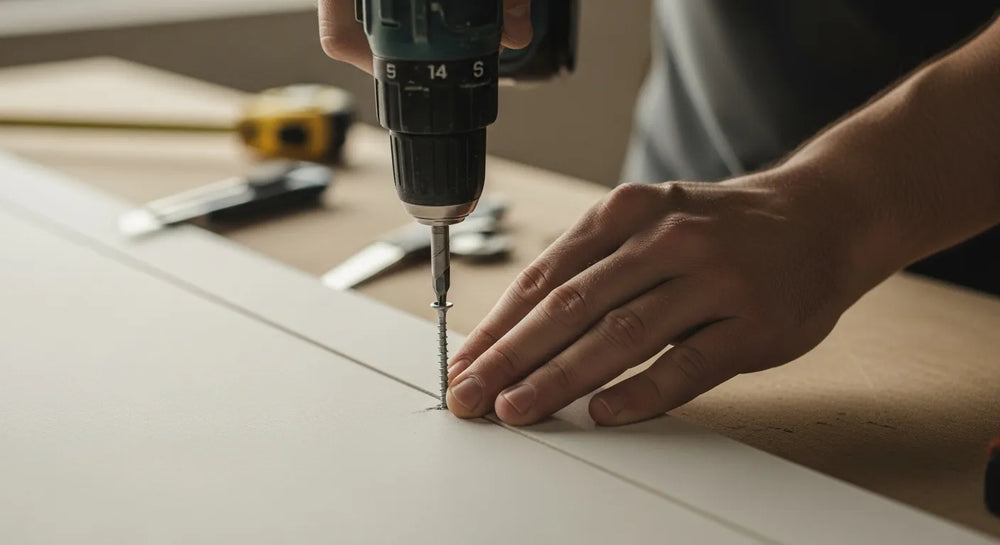
Step 5: Install the Anchor Flush Insert the anchor into the pilot hole. For expansion anchors, you may need to tap it gently with a rubber mallet. For self-drilling anchors, drive it in carefully. The head of the anchor should sit perfectly flush with the surface of the drywall. If it is recessed or sticking out, it is not installed correctly.
Step 6: Secure the Object and Fastener Drive the screw through your object's mounting bracket and into the anchor. Tighten until it is snug. The goal is to be firm, not forceful. Over-tightening the screw can strip the anchor's internal threads or damage the drywall, causing the entire installation to fail.
Sourcing with Confidence: The Maden.co Advantage
For businesses, the process of sourcing even simple components like drywall anchors can be fraught with challenges. Fragmented supply chains, questions about material quality, and long lead times can disrupt projects and impact the bottom line. This is precisely the problem we built Maden.co to solve. Our mission is to democratize access to American manufacturing, providing a single, definitive platform where industrial buyers can connect with over 2.5 million products from our network of 800+ verified U.S. manufacturers.
When a design engineer is specifying hardware for a new commercial building or an MRO manager needs to restock their maintenance supplies, they need more than just a product; they need assurance. They need supply chain transparency, verifiable quality, and the confidence that comes from partnering with domestic suppliers. Our platform delivers on these needs, embodying our core values of Customer Empowerment and Digital Innovation. You can find detailed specifications for everything from a simple plastic anchor to complex industrial components, reducing procurement friction and allowing you to buy with certainty.
We believe that America's manufacturing revival is here, and we are proud to be the engine driving it. If you are a U.S. manufacturer producing high-quality components, we invite you to join our network. Register as a vendor and connect with thousands of buyers looking for American-made excellence. For any specific sourcing needs or questions about our platform, our team is ready to help you find the exact part you need. You can learn more about our mission to champion American manufacturing here.
Conclusion
Successfully hanging a picture on drywall is a microcosm of a larger industrial principle: success is built on a foundation of understanding your materials, selecting the correct components, and executing with precision. The humble drywall anchor is a piece of brilliant, simple engineering that, when used correctly, provides a safe and durable solution. By taking the time to assess the weight of the object, choose the right type of anchor, and follow a meticulous installation process, you ensure a professional outcome that will last for years.
This commitment to quality and reliability is the hallmark of American manufacturing. Elevate your projects, from simple office updates to complex commercial installations, by sourcing the highest quality, U.S.-made hardware. Explore our extensive catalog of fasteners and anchors today. For larger procurement needs, you can apply for Instant Financing at checkout to streamline your capital-intensive projects and ensure your operations never miss a beat.
Frequently Asked Questions
1. Can I reuse a drywall anchor? Generally, it is not recommended to reuse most drywall anchors. Expansion-style and self-drilling anchors work by deforming or cutting into the drywall material. Once removed, they cannot create the same tight, secure fit a second time. It is always safer and more effective to use a new anchor for a new installation.
2. What should I do if my anchor is just spinning in the hole? If an anchor spins freely when you try to drive in the screw, it means the pilot hole is too large or the drywall around it has crumbled. The anchor has no material to grip. The best solution is to remove the spinning anchor and use a larger anchor, often a toggle bolt, which has wings that can bridge the oversized hole and brace against the solid drywall behind it.
3. How much weight can a drywall anchor actually hold? The weight capacity varies dramatically depending on the anchor's type, size, and material. A simple, light-duty plastic anchor might only be rated for 10-15 pounds, while a heavy-duty steel toggle bolt can hold 100 pounds or more in 1/2-inch drywall. Always refer to the manufacturer's weight rating printed on the product packaging and apply a generous safety margin.
4. Why is sourcing U.S.-made anchors important for my business? Sourcing U.S.-made anchors and other components through a trusted B2B marketplace like Maden.co offers significant strategic advantages. It ensures verifiable quality control, material traceability, and a more resilient, shorter supply chain. This reduces the risk of project delays caused by shipping issues and eliminates the uncertainty associated with parts of unknown origin, protecting your company’s reputation and bottom line.


