
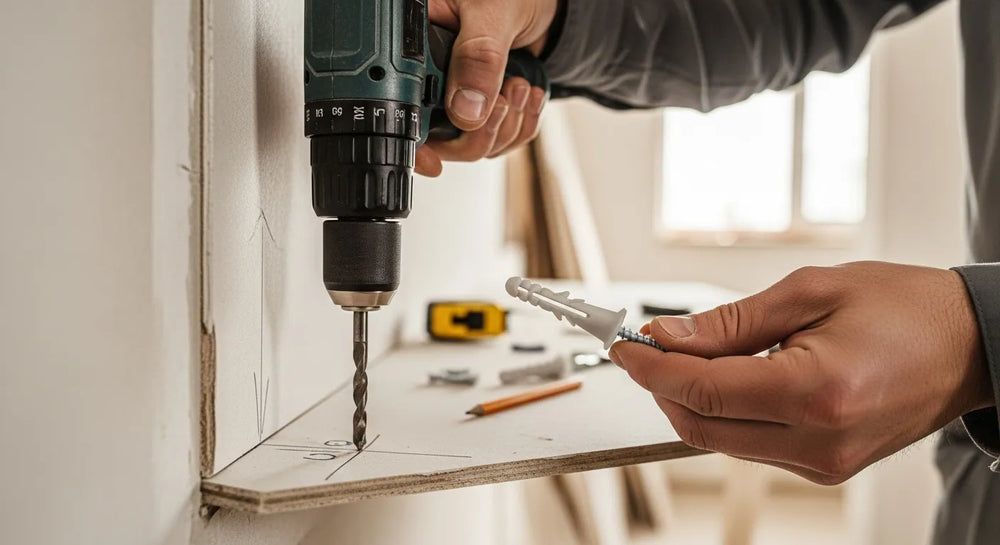
Mastering Drywall: How Many Screws to Hang Drywall Effectively
Table of Contents
- Introduction
- Understanding Drywall Installation Fundamentals
- The Crucial Role of Fasteners in Drywall Installation
- Factors Influencing Drywall Screw Count
- Calculating Your Drywall Screw Needs
- Types of Drywall Screws: Choosing the Right Fastener
- Best Practices for Drywall Fastening
- The Broader Impact of Quality Fasteners on Projects
- Strategic Sourcing for Industrial Buyers: Beyond the Screw Count
- Enhancing Procurement with Digital Tools and Financing
- Conclusion
- FAQ
Introduction
Imagine a critical construction project grinding to a halt, not because of a major material shortage, but due to an oversight as fundamental as miscalculating the number of drywall screws. This seemingly minor detail can cascade into significant delays, budget overruns, and ultimately, compromised structural integrity. For procurement managers, MRO buyers, and design engineers, such unforeseen obstacles underscore the immense value of meticulous planning and reliable sourcing. In the realm of industrial procurement, every component, no matter how small, plays a pivotal role in a project's success. This post will serve as an authoritative guide to accurately determine how many screws to hang drywall, exploring not just the numbers, but also the critical factors, best practices, and strategic sourcing insights that ensure a flawless finish and a resilient supply chain. We’ll delve into the specifics of screw types, spacing requirements, and the broader implications of quality fastening, ultimately demonstrating how precision in planning, coupled with strategic sourcing through platforms like Maden.co, is indispensable for industrial excellence.
Understanding Drywall Installation Fundamentals
Before we can accurately answer "how many screws to hang drywall," it's essential to grasp the foundational principles of drywall installation. Drywall, also known as plasterboard or gypsum board, is a panel made of gypsum plaster pressed between two thick sheets of paper. It is widely used in construction to create interior walls and ceilings. Its popularity stems from its ease of installation, fire resistance, sound dampening properties, and smooth finish ready for paint or texture.
Types of Drywall and Their Applications
Different types of drywall exist to meet various project requirements:
- Standard Drywall (Regular): Typically 1/2-inch or 5/8-inch thick, it's the most common type for walls and ceilings in residential and commercial buildings.
- Moisture-Resistant Drywall (Green Board): Features a water-resistant paper facing and a treated core, suitable for areas with high humidity like bathrooms, kitchens, and utility rooms, though it's not waterproof.
- Fire-Resistant Drywall (Type X): Contains special non-combustible fibers within the gypsum core, offering enhanced fire resistance. It's often required by building codes for garages, multi-family dwellings, and commercial spaces, commonly available in 5/8-inch thickness.
- Soundproof Drywall: A laminated product designed with polymers between gypsum layers to reduce sound transmission, ideal for home theaters, studios, or adjacent office spaces.
- Impact-Resistant Drywall: Features a denser core or fiberglass mesh for increased durability in high-traffic areas.
Understanding the specific type of drywall being installed is crucial, as it can influence not only the thickness but also the required screw spacing, directly impacting how many screws you'll need.
Framing Materials: Wood vs. Metal Studs
The type of framing material—wood or metal—also dictates the choice of screws and influences the fastening process.
- Wood Studs: The most traditional framing material. Wood offers a forgiving substrate, but requires coarse-thread screws for maximum grip. The density and condition of the wood can affect screw penetration and holding power.
- Metal Studs: Increasingly common in commercial and modern residential construction due to their light weight, consistency, and resistance to rot and insects. Metal studs require fine-thread or self-drilling screws designed to tap into the metal without pre-drilling.
The distinction between these framing types is critical for selecting the appropriate fasteners, which we’ll discuss in more detail when we examine screw types.
The Crucial Role of Fasteners in Drywall Installation
While it might seem intuitive, the choice of fastener is paramount in drywall installation. Historically, nails were used, but modern construction overwhelmingly favors drywall screws. The reasons are numerous and speak directly to structural integrity and project longevity.
Why Screws, Not Nails?
- Superior Holding Power: Screws create a stronger mechanical bond by threading into the framing, significantly reducing the likelihood of "nail pops" or "screw pops" where the fastener head breaks through the finish layer. Nail pops are a common aesthetic issue and a source of rework.
- Enhanced Structural Integrity: Screws distribute stress more effectively across the drywall panel and into the framing, contributing to a more stable and resilient wall or ceiling assembly. This is particularly important for areas subject to movement, vibration, or seismic activity.
- Ease of Repair and Adjustment: Screws can be easily removed and reinserted if adjustments are needed during installation, without damaging the surrounding drywall or framing. Nails, once driven, are much harder to remove cleanly.
- Code Compliance: Many modern building codes specify the use of screws for drywall installation, especially for fire-rated assemblies and shear walls, due to their superior performance characteristics.
For procurement managers and design engineers, understanding this fundamental shift from nails to screws is key to specifying the correct materials and ensuring compliance with industry standards. Sourcing the right screws from a reliable supplier is not merely a purchasing decision; it's a critical engineering and quality assurance measure.
Factors Influencing Drywall Screw Count
Calculating "how many screws to hang drywall" is not a one-size-fits-all formula. Several variables must be carefully considered to ensure a secure installation that meets building codes and delivers a lasting finish. Failing to account for these can lead to compromised structural integrity, costly repairs, and project delays.
Drywall Thickness
The thickness of the drywall panel is a primary determinant of screw length and, indirectly, screw count due to specific holding requirements.
- 1/4-inch Drywall: Often used for curved surfaces or as an overlay. Requires shorter screws, typically 1-inch or 1-1/8-inch, and potentially closer spacing due to its flexibility.
- 3/8-inch Drywall: Less common for new construction, but still seen in repairs or as a base layer. Usually requires 1-1/4-inch screws.
- 1/2-inch Drywall: The most common thickness for interior walls. Typically requires 1-1/4-inch screws to penetrate adequately into wood studs (at least 5/8-inch beyond the drywall) or to engage metal studs effectively. For a versatile and reliable option, consider these 6 x 1-1/4 Coarse Thread Drywall Screws for your next project.
- 5/8-inch Drywall (Type X and Standard): Often used for ceilings, fire-rated assemblies, or where greater durability is needed. Requires longer screws, typically 1-5/8-inch, to ensure sufficient penetration into the framing. The increased thickness demands a more robust fastening system.
Screw Spacing Requirements: Walls vs. Ceilings
Building codes, particularly the International Residential Code (IRC), provide guidelines for screw spacing. These vary significantly depending on whether the drywall is installed on walls or ceilings, primarily due to the added gravitational stress on ceiling panels.
For Walls:
- Standard Wood Framing: Screws are typically spaced 16 inches on center (o.c.) along the studs in the field of the panel and 8 inches o.c. along the edges (where panels meet). Some codes allow 12 inches o.c. in the field if using specific drywall thicknesses and orientations.
- Fire-Rated Assemblies: May require tighter spacing, often 7 inches o.c. on edges and 12 inches o.c. in the field, or even denser, depending on the specific assembly rating. Always consult local fire codes and assembly specifications.
- Shear Walls: For structural integrity in seismic zones, shear walls may demand even stricter spacing, often 6 inches o.c. on all edges and 12 inches o.c. in the field, sometimes using multiple layers of drywall with staggered fasteners.
For Ceilings:
- Standard Wood Framing: Ceilings bear more weight and stress, so screw spacing is generally tighter. Typically, screws are spaced 12 inches o.c. in the field and 8 inches o.c. along the edges. For 5/8-inch drywall, this spacing may be slightly relaxed but should still prioritize stability.
- Two-Layer Ceilings: If a second layer of drywall is applied, the first layer usually follows standard ceiling spacing, and the second layer is fastened with longer screws (e.g., 2-1/4-inch or 2-1/2-inch) at a wider spacing, often 12 inches o.c. or more, with screws penetrating into the framing through both layers.
It's critical for procurement managers to ensure that the chosen screws meet length requirements for the combined drywall thickness and adequate penetration into the framing.
Panel Size
Standard drywall panels come in various sizes, with 4x8 feet (32 sq ft) being the most common, followed by 4x12 feet (48 sq ft) and 4x10 feet (40 sq ft). Larger panels can reduce the total number of linear feet of edges, potentially slightly reducing the overall screw count per square foot, but the primary impact is on installation efficiency rather than a dramatic change in screw density. However, larger panels are heavier and require more careful handling and often necessitate a two-person crew.
Local Building Codes and Manufacturer Specifications
Always, always consult local building codes. These codes are the ultimate authority for construction practices and often vary by jurisdiction. They specify minimum fastener types, lengths, and spacing for different applications. Furthermore, some drywall manufacturers provide specific installation guidelines for their products, especially for specialized types like soundproof or abuse-resistant panels. Adhering to these specifications is not just about compliance; it's about ensuring the warranty and intended performance of the product.
For procurement managers overseeing projects in various regions, understanding these localized requirements is paramount. Sourcing through a platform like Maden.co, where product specifications are clear and often comply with industry standards, helps in meeting these diverse needs. Our mission at Maden.co is to democratize access to American manufacturing, ensuring that buyers can easily find products that meet stringent U.S. quality and regulatory standards.
Calculating Your Drywall Screw Needs
Now that we understand the influencing factors, let's get into the practical calculation of how many screws to hang drywall. This systematic approach helps prevent both shortages and excessive waste.
Step-by-Step Calculation Guide
-
Determine the Total Square Footage of Drywall Needed:
- Measure the length and height of each wall. Multiply these to get the square footage of each wall.
- Measure the length and width of the ceiling. Multiply these to get the square footage of the ceiling.
- Sum all square footages to get the total area.
-
Example: A room is 10 ft wide by 12 ft long with 8 ft high walls.
- Walls: (10 ft + 12 ft + 10 ft + 12 ft) * 8 ft = 44 ft * 8 ft = 352 sq ft
- Ceiling: 10 ft * 12 ft = 120 sq ft
- Total Drywall Area = 352 sq ft + 120 sq ft = 472 sq ft
-
Estimate Panels Needed:
- Divide the total square footage by the area of one drywall sheet.
- Example (using 4x8 ft sheets = 32 sq ft/sheet): 472 sq ft / 32 sq ft/sheet = 14.75 sheets. Round up to 15 sheets.
- Note: Always factor in waste for cuts, mistakes, and odd shapes, typically adding 5-15% extra to the panel count. For 15 sheets, adding 10% waste means needing 16-17 sheets.
-
Calculate Screws Per Panel (Based on Spacing):
- This is the most critical step. Let's use common spacing for 4x8 sheets on walls (16" o.c. field, 8" o.c. edges) and ceilings (12" o.c. field, 8" o.c. edges).
For a 4x8 foot Drywall Panel on Walls:
- Lengthwise Edges (8 feet long): Each 8-foot edge (top and bottom) will have screws every 8 inches. 96 inches / 8 inches/screw = 12 screws per edge. Since there are two 8-foot edges per panel, that's 24 screws.
- Widthwise Edges (4 feet long): Each 4-foot edge (sides) will have screws every 8 inches. 48 inches / 8 inches/screw = 6 screws per edge. Since there are two 4-foot edges per panel, that's 12 screws.
- Field Screws (16 inches o.c.): A 4x8 panel has studs running vertically. If studs are 16 inches o.c., there will be three "field" studs (excluding the edge studs that already have screws) running across the 8-foot length. Each field stud will have screws every 16 inches. 96 inches / 16 inches/screw = 6 screws per stud. With three field studs, that's 18 screws.
-
Total for one 4x8 wall panel: 24 (long edges) + 12 (short edges) + 18 (field) = 54 screws per 4x8 wall panel.
- Simplified rule of thumb for walls: Approximately 40-50 screws per 4x8 sheet for 1/2" drywall on 16" o.c. studs, allowing for some overlap and potential for a stud near an edge. Our detailed calculation of 54 provides a safer estimate.
For a 4x8 foot Drywall Panel on Ceilings:
- Lengthwise Edges (8 feet long): Screws every 8 inches. 96 inches / 8 inches/screw = 12 screws per edge. Two edges = 24 screws.
- Widthwise Edges (4 feet long): Screws every 8 inches. 48 inches / 8 inches/screw = 6 screws per edge. Two edges = 12 screws.
- Field Screws (12 inches o.c.): For a 4x8 panel, assuming joists are 16 or 24 inches o.c., you'd typically aim for screws every 12 inches along each joist covered by the panel. If joists are 16" o.c., there will be three field joists within the 4ft width. 96 inches (length) / 12 inches/screw = 8 screws per joist. Three field joists = 24 screws.
-
Total for one 4x8 ceiling panel: 24 (long edges) + 12 (short edges) + 24 (field) = 60 screws per 4x8 ceiling panel.
- Simplified rule of thumb for ceilings: Approximately 50-70 screws per 4x8 sheet for 1/2" or 5/8" drywall on 16" or 24" o.c. joists. Our detailed calculation of 60 is a good baseline.
-
Calculate Total Screws Needed:
- Multiply the number of panels by the screws per panel, then add a waste factor.
-
Example (using our 15 sheets total, assuming a mix of wall and ceiling, let's average to 57 screws/sheet):
- 15 sheets * 57 screws/sheet = 855 screws.
- Add 10-20% for waste, dropped screws, stripped heads, and unforeseen needs. For 855 screws, 15% waste is about 128 screws.
- Total estimated screws: 855 + 128 = 983 screws.
- Always round up to the nearest full box of screws. If screws come in boxes of 1000, you'd order one box.
General Rules of Thumb and Simplified Calculations
While the detailed calculation is best for accuracy, here are some widely accepted rules of thumb:
- Walls: Estimate 30-40 screws per 4x8 sheet for typical 1/2-inch drywall on 16-inch o.c. studs.
- Ceilings: Estimate 40-50 screws per 4x8 sheet for typical 1/2-inch or 5/8-inch drywall on 16-inch or 24-inch o.c. joists due to tighter spacing.
- For the entire project: A common rough estimate is about 1 pound of screws for every 300-400 square feet of drywall. (A pound of 1-1/4" screws contains roughly 200-220 screws). This converts to approximately 0.5-0.7 screws per square foot.
Using our example of 472 sq ft total area:
- Using the 0.7 screws/sq ft high estimate: 472 sq ft * 0.7 screws/sq ft = 330 screws. This is significantly lower than our detailed calculation, highlighting why rules of thumb can be dangerous.
- Why the discrepancy? Rules of thumb often neglect edge fastening density, which significantly impacts the screw count, especially for smaller rooms with more linear feet of edges relative to field area. Our detailed calculation is much more robust.
Maden.co's Recommendation: Always perform the detailed calculation, especially for large-scale industrial or commercial projects where precision is paramount and the cost of re-ordering or project delays is high. For materials like these, procurement managers need clear, reliable sourcing. For a reliable, high-volume fastening solution, consider this 8 x 4 Drywall Screw for your larger projects.
Types of Drywall Screws: Choosing the Right Fastener
The type of drywall screw is as important as the quantity. Using the wrong screw can lead to poor adhesion, damage to the drywall or framing, and even structural failure over time. At Maden.co, we emphasize industrial excellence, and that extends to selecting the precisely engineered fasteners for every application.
Thread Type: Coarse vs. Fine
This is the most critical distinction in drywall screws:
- Coarse-Thread Screws: Designed for wood framing. Their aggressive, wide threads bite deeply into wood fibers, providing maximum grip and pull-out resistance. These are the most common type for residential construction. For projects requiring consistent performance with wood studs, you can find specific solutions like these 6 x 1 Fine Thread Drywall Screws that also come in coarse-thread varieties designed for wood.
- Fine-Thread Screws: Engineered for metal framing. Their narrower, self-tapping threads are designed to cut cleanly into light-gauge steel studs (typically 25-gauge to 20-gauge) without stripping the metal. Using coarse-thread screws on metal studs will result in poor adhesion and stripped holes.
Screw Length
The length of the screw is determined by the drywall thickness and the required penetration into the framing:
- 1 inch (25 mm): For 1/4-inch drywall, often used for overlays or curved surfaces.
- 1-1/4 inch (32 mm): Standard for 1/2-inch drywall on wood studs. Ensures at least 5/8-inch penetration into the stud.
- 1-5/8 inch (41 mm): Standard for 5/8-inch drywall on wood studs, or for attaching two layers of 1/2-inch drywall.
- 2-1/4 inch to 2-1/2 inch (57-64 mm): Used for attaching two layers of 5/8-inch drywall or for thicker applications where significant penetration is required.
Crucially, the screw must penetrate the framing by at least 5/8-inch (16 mm) for wood and 3/8-inch (10 mm) for metal to ensure adequate holding power.
Head Type: Bugle Head
Almost all drywall screws feature a bugle head. This conical shape allows the screw head to dimple the paper face of the drywall without tearing it, creating a slight depression that can be easily filled with joint compound, resulting in a smooth finish. Flat-head screws, for example, would rip the paper and sit proud of the surface, making finishing difficult.
Drive Type
- Phillips Head: The most common drive type for drywall screws, typically a #2 Phillips. While effective, it's prone to cam-out if the driver isn't perfectly aligned or if too much torque is applied.
- Square Drive (Robertson): Less common for drywall screws but offers superior cam-out resistance.
Specialty Screws
- Self-Drilling/Self-Tapping Screws: Often fine-thread screws with a small drill bit tip, designed for attaching drywall to heavier gauge metal studs without pre-drilling.
- High-Low Thread Screws: Feature alternating high and low threads, providing excellent grip in both wood and light gauge metal, making them versatile.
- Corrosion-Resistant Screws: Coated or made from stainless steel for exterior applications or areas with high moisture, preventing rust stains from bleeding through the finished surface.
For design engineers, specifying the correct screw type, length, and material is an engineering decision that impacts the entire project's durability and compliance. Our platform at Maden.co connects you with a vast network of 800+ verified U.S. manufacturers, ensuring you find the exact specifications you need, whether it's a standard coarse-thread screw or a specialized corrosion-resistant fastener. We value supply chain transparency and industrial excellence in every product we offer.
Best Practices for Drywall Fastening
Beyond knowing how many screws to hang drywall, proper installation techniques are essential for achieving a professional, durable finish. Even the highest quality screws, if installed incorrectly, can compromise the integrity of the wall or ceiling.
Proper Tool Usage
- Drywall Screw Gun: This specialized power tool is a game-changer. It features an adjustable clutch or depth-setting nose cone that automatically stops the screw when its head is flush with the drywall surface or slightly dimpled, without breaking the paper facing. This precision prevents over-driving (which strips the gypsum and compromises holding power) and under-driving (which leaves proud screw heads).
- Cordless Drill/Driver with Depth Setter Bit: For smaller projects, a standard cordless drill can be used with a magnetic bit holder and a drywall dimpler bit. This bit has a collar that limits penetration, preventing over-driving.
Dimpling and Avoiding Tearing
The goal is to drive the screw head just below the surface of the paper, creating a slight dimple. This recess allows the joint compound to cover the screw head smoothly. It's critical not to break the paper facing, as this significantly reduces the screw's holding power. If the paper tears, remove the screw, move an inch or two away, and drive a new screw. Never try to cover a torn paper surface with joint compound without proper fastening.
Edge Fastening vs. Field Fastening
- Edge Fastening: Screws along the perimeter of the drywall panel (where it meets another panel or the end of a wall) should be driven first. These screws define the panel's position and provide critical support. Maintain the specified edge spacing (typically 8 inches o.c.). Ensure screws are at least 3/8-inch from the edge of the panel to prevent blow-outs.
- Field Fastening: Once the edges are secured, fill in the field of the panel with screws along the studs/joists, maintaining the specified field spacing (typically 16 inches o.c. for walls, 12 inches o.c. for ceilings). Start from the center and work your way out to each edge.
Corner and Joint Considerations
- Inside Corners: Drywall panels should meet at inside corners but should not be rigidly fastened to both framing members. One side of the corner should be "floating," meaning screws are driven only into the stud/joist on one side, allowing for some movement and reducing cracking. The other side will have its edge screws on the adjacent stud.
- Outside Corners: These require a sturdy backing. Often, a combination of blocking and corner bead is used. Screws will go through the drywall into the backing, ensuring a solid base for the corner bead.
- Butt Joints: Where the non-tapered ends of drywall panels meet, they typically create a slight hump. To minimize this, fasteners should be driven about 3/8-inch to 1/2-inch from the edge, but not directly into the very edge, helping to "float" the joint slightly. Backing strips or special framing techniques can also minimize butt joint visibility.
Avoiding Common Mistakes
- Over-driving Screws: The most common mistake. This strips the gypsum, rendering the screw ineffective. Always use a drywall screw gun or depth-setter bit.
- Under-driving Screws: Leaves proud screw heads, which will show through the finish.
- Skipping Screws: Tempting to save time, but compromises structural integrity and increases the risk of screw pops and cracks.
- Driving Screws at Angles: Reduces holding power. Screws should always be driven perpendicular to the drywall surface.
- Ignoring Local Codes: Leads to non-compliance and potential inspection failures.
By adhering to these best practices, procurement managers can be confident that the fasteners they procure are being utilized to their full potential, contributing to the overall quality and longevity of the construction project. At Maden.co, our commitment to industrial excellence means we not only provide access to high-quality U.S.-made products but also support the knowledge base needed for their optimal application.
The Broader Impact of Quality Fasteners on Projects
The "how many screws to hang drywall" question, while seemingly tactical, opens up a strategic discussion about the overarching impact of component quality on industrial projects. For procurement professionals, this extends far beyond the immediate installation.
Structural Integrity and Long-Term Durability
Quality fasteners, properly installed, are fundamental to the structural integrity of a drywall system. They prevent panels from bowing, sagging, or detaching over time. In commercial spaces, this translates to fewer maintenance issues, prolonged asset life, and reduced liability. Imagine a high-traffic corridor in a hospital or school; the durability of its walls is paramount for safety and continuous operation. Investing in verified, U.S.-made fasteners ensures a level of quality control that supports this long-term durability.
Finish Quality and Aesthetic Appeal
Screw pops and cracks are not just cosmetic flaws; they are indicators of underlying installation or material issues. High-quality screws, correctly spaced and driven, minimize these imperfections, leading to a superior finish that requires less rework. For a business owner, this means a professional appearance that reflects well on their brand and minimizes future touch-ups, reducing overall maintenance costs.
Reducing Callbacks and Rework
In the construction and MRO sectors, callbacks are costly. They consume valuable labor hours, disrupt schedules, and damage a company's reputation. A procurement strategy that prioritizes quality fasteners and adheres to best practices significantly reduces the likelihood of these issues. This directly impacts the Total Cost of Ownership (TCO) for a project, moving beyond initial purchase price to consider the full lifecycle costs of a component. Choosing U.S.-made products through Maden.co is a proactive step in this direction, as our network of 800+ verified U.S. manufacturers consistently delivers products that meet stringent quality controls.
Strategic Sourcing for Industrial Buyers: Beyond the Screw Count
Understanding how many screws to hang drywall is a foundational step, but for procurement managers and business owners, the real strategic advantage lies in where and how these critical components are sourced. In today's dynamic global market, the value of reliable, transparent, and resilient supply chains cannot be overstated.
Reliability, Consistency, and Compliance
In industrial procurement, unpredictability is the enemy. Buyers need to know that the products they order will arrive on time, meet precise specifications, and adhere to all relevant industry standards (e.g., DIN, NPT). This consistency is particularly vital for projects requiring certifications or operating under strict regulatory frameworks. Sourcing from verified manufacturers, particularly those within the United States, offers a layer of assurance regarding material quality, manufacturing processes, and adherence to labor and environmental standards.
The Value of U.S.-Made Products
At Maden.co, our core mission is to democratize access to American manufacturing. We believe that choosing U.S.-made isn't just a patriotic sentiment; it's a strategic business decision.
- Superior Quality Control: American manufacturers are often subject to rigorous quality standards and regulations, leading to more consistent and reliable products.
- Reduced Lead Times: Shorter geographical distances and streamlined logistics translate to faster delivery, crucial for just-in-time inventory management and urgent MRO needs.
- Enhanced Supply Chain Visibility: Knowing the origin of your components provides greater transparency and reduces the risk of counterfeit or sub-standard products entering your supply chain.
- Support for the Domestic Economy: Investing in U.S.-made products strengthens the national manufacturing base, creating jobs and fostering innovation. Our vision is to become the definitive platform that proves American-made components are as accessible and convenient as any global alternative, driving the manufacturing revival with our tagline: "America's manufacturing revival is here."
Supply Chain Resilience
Recent global events have underscored the fragility of extended international supply chains. Sourcing closer to home, from a robust network of domestic suppliers, inherently builds resilience. It mitigates risks associated with geopolitical instability, shipping delays, customs complexities, and fluctuating international exchange rates. By connecting industrial buyers with over 2.5 million American-made products from our network of 800+ verified U.S. manufacturers, Maden.co serves as a critical partner in building more robust and predictable supply chains. Our values of American Manufacturing Pride, Digital Innovation, Supply Chain Transparency, Industrial Excellence, and Customer Empowerment are woven into every aspect of our platform. You can learn more about our commitment to these principles on our About Us page.
Maden.co's Unique Value Proposition
For procurement managers seeking to enhance supply chain resilience, reduce procurement friction, and improve Total Cost of Ownership, Maden.co offers a compelling solution:
- Vast Catalog: Access to millions of U.S.-made industrial components, from fasteners like the ones discussed to complex machinery parts.
- Verified Manufacturers: Every manufacturer on our platform is vetted, ensuring quality and reliability.
- Simplified Procurement: Our user-friendly digital marketplace streamlines the search, selection, and purchase process, saving valuable time and resources.
- Strategic Partnership: We go beyond transactional relationships, aiming to be a strategic partner in building more reliable and efficient procurement processes for your business. We empower customers by providing them with the tools and access to make informed, impactful sourcing decisions.
Are you a qualified U.S. manufacturer looking to expand your reach and connect with industrial buyers across the nation? Register as a vendor and join the American manufacturing revival.
Enhancing Procurement with Digital Tools and Financing
In the modern industrial landscape, efficiency is gained not just through smart calculations like "how many screws to hang drywall," but also through leveraging digital platforms and innovative financial tools. Maden.co is designed to facilitate both.
How Maden.co Streamlines the Procurement Process
Our platform is built with the industrial buyer in mind. We understand the challenges: the need to find highly specific components, the demands of compliance, and the pressure to manage budgets and timelines effectively.
- Intuitive Search and Filtering: Quickly locate the exact U.S.-made products you need from our extensive catalog of 2.5 million+ items. Whether you need specific dimensions, material grades, or compliance certifications, our search tools are designed for precision.
- Transparent Product Information: Detailed specifications, technical drawings, and manufacturer data are readily available, empowering design engineers and MRO buyers to make informed decisions without guesswork.
- Consolidated Sourcing: Instead of managing multiple vendors and fragmented supply chains, Maden.co offers a centralized hub for all your U.S.-made industrial product needs, reducing administrative overhead and procurement friction.
The Role of Instant Financing for Businesses
A key differentiator on our platform is our "Instant Financing" option. This isn't just another payment method; it's a strategic tool designed to empower businesses, particularly those undertaking large-scale projects or managing complex inventory needs.
- Effective Cash Flow Management: Instant Financing allows procurement managers and business owners to acquire necessary materials without immediately impacting their working capital. This flexibility is crucial for managing project costs, optimizing cash flow, and sustaining operations, especially when dealing with capital-intensive purchases.
- Facilitating Larger-Volume Purchases: For projects requiring significant quantities of materials, such as thousands of drywall screws or large structural components, Instant Financing makes it feasible to make larger, more economical bulk purchases. This can unlock better pricing opportunities and ensure uninterrupted project progress.
- Streamlined Capital-Intensive Projects: When a critical piece of equipment fails or a large construction phase begins, speed of acquisition is paramount. Instant Financing removes a potential barrier to rapid procurement, allowing projects to proceed without unnecessary delays due to payment cycles.
You can apply for Instant Financing directly at checkout to streamline your capital-intensive projects and maintain financial agility. This feature underscores our commitment to Customer Empowerment, ensuring our buyers have the resources they need to succeed. If you have specific questions about product sourcing, our financing options, or any other aspect of your procurement needs, our dedicated team is ready to help. Please don't hesitate to Contact Us directly.
Conclusion
Calculating "how many screws to hang drywall" is more than a simple numerical exercise; it's a foundational element of effective project planning, directly impacting structural integrity, finish quality, and long-term durability. By understanding drywall thickness, screw types, spacing requirements for walls and ceilings, and the critical role of local building codes, procurement managers and project leaders can ensure precise material acquisition and flawless execution. The choice of fasteners, though seemingly minor, holds significant implications for reducing rework, minimizing costly callbacks, and ultimately, improving the Total Cost of Ownership for any industrial or commercial construction project.
At Maden.co, we stand as your strategic partner in this endeavor. We champion American manufacturing, providing unparalleled access to over 2.5 million U.S.-made products from a network of 800+ verified manufacturers. Our platform is engineered to enhance supply chain resilience, foster transparency, and drive industrial excellence through digital innovation and customer empowerment. From essential fasteners like these 6 x 1-1/4 Coarse Thread Drywall Screws to specialized components, we offer the quality and reliability your projects demand.
Don't let procurement complexities hinder your progress. Explore our comprehensive catalog today and discover the strategic advantage of sourcing U.S.-made. Visit Maden.co and experience the efficiency, quality, and support that are defining America's manufacturing revival. Remember, for larger capital expenditures or to optimize your cash flow, you can apply for Instant Financing directly at checkout, ensuring your projects stay on track and within budget.
FAQ
Q1: What is the most common screw spacing for drywall on walls?
A1: For standard 1/2-inch or 5/8-inch drywall on wood studs, screws are typically spaced 16 inches on center (o.c.) in the field of the panel and 8 inches o.c. along the edges where panels meet. However, always consult local building codes for specific project requirements, as these can vary, especially for fire-rated or shear wall assemblies.
Q2: Why are fine-thread screws used for metal studs and coarse-thread for wood?
A2: Fine-thread screws are designed with sharper, smaller threads that effectively cut into and hold securely in light-gauge metal studs without stripping the material. Coarse-thread screws have larger, more aggressive threads that bite deeply into the fibers of wood studs, providing superior grip and pull-out resistance in that material. Using the wrong thread type for the framing material will result in poor holding power and compromised installation.
Q3: How do I prevent screw pops in drywall?
A3: Screw pops are often caused by improper fastening or framing movement. To prevent them, ensure screws are driven to the correct depth (just dimpling the paper without tearing it), use appropriate screw length for drywall thickness and framing material, maintain proper screw spacing according to codes, and ensure framing is stable and properly dried before drywall installation. Using a drywall screw gun with a depth setter is highly recommended for consistent results.
Q4: Can I use longer screws for extra holding power?
A4: While longer screws might seem to offer more grip, there's a point of diminishing returns. The key is to ensure the screw penetrates the framing by at least 5/8-inch for wood or 3/8-inch for metal. Excessively long screws beyond this requirement don't significantly increase holding power and can potentially lead to issues like hitting electrical wires or plumbing within the wall cavity. Always match screw length to drywall thickness and required penetration as per code and manufacturer guidelines.


