
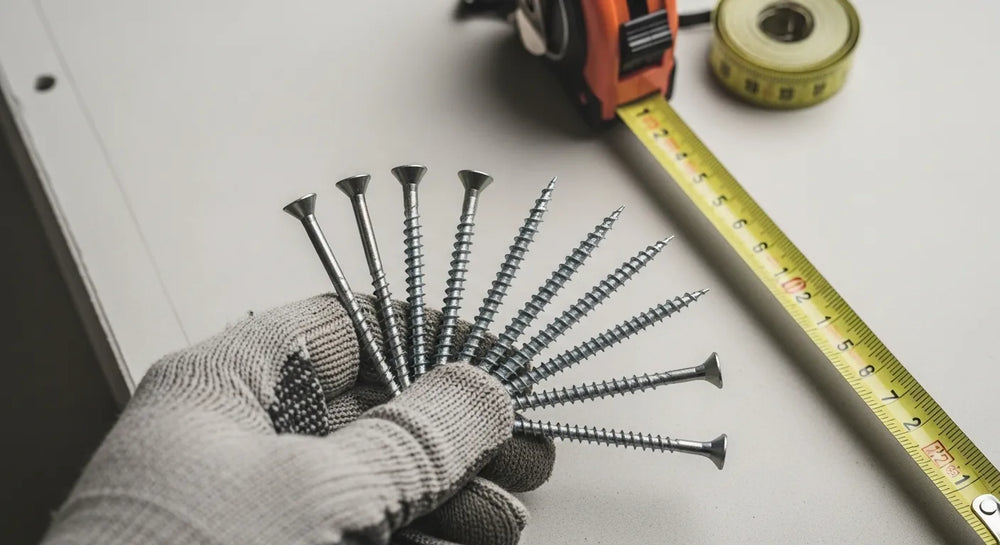
Optimal Screw Selection for 3/4-Inch Wood: A Strategic Procurement Guide
Table of Contents
- Introduction
- The Anatomy of a Wood Screw: Understanding Each Critical Part
- Understanding "3/4-Inch Wood": Implications for Fastener Selection
- The Crucial Calculation: Screw Length for 3/4-Inch Wood
- The Significance of Diameter (Gauge) and its Impact
- Thread Design: Grip, Speed, and Material Integrity
- Material Science: Choosing the Right Screw Alloy
- The Critical Role of Pilot and Shank Holes
- Driving Techniques for Optimal Fastening
- Strategic Sourcing for Industrial Excellence: Beyond the Hardware Store
- Conclusion
- FAQ
Imagine a crucial assembly line halted, not by a major mechanical failure, but by a fastener that failed prematurely. Or a design engineer meticulously crafting a prototype, only to find the chosen screw material compromises structural integrity under unforeseen conditions. These scenarios, all too common in industrial settings, underscore a fundamental truth: the seemingly simple task of selecting the right screw can have profound implications for project success, product longevity, and ultimately, a company’s bottom line. For components as ubiquitous as wood screws, the details truly matter, especially when working with common material dimensions like 3/4-inch wood.
This comprehensive guide is engineered for procurement managers, MRO buyers, and design engineers who demand precision and reliability in every component. We will dissect the science and art of selecting the perfect screw for 3/4-inch wood applications, exploring everything from crucial length and diameter calculations to head types, material considerations, and the critical role of pilot holes. Beyond the technical specifics, we’ll illuminate how strategic sourcing through platforms like Maden.co, America's premier B2B marketplace for U.S.-manufactured products, empowers businesses to secure high-quality, compliant fasteners, ensuring robust designs and resilient supply chains. Our goal is to equip you with the knowledge to make informed decisions that prevent costly failures, optimize performance, and drive industrial excellence.
Introduction
In the intricate world of manufacturing and maintenance, even the smallest component holds immense significance. A fastener, though often overlooked, is the silent workhorse that holds complex structures and critical machinery together. Choosing the incorrect size or type can lead to structural compromise, premature wear, and expensive project delays. Specifically, when working with 3/4-inch wood, a common dimension in everything from cabinetry and furniture to prototyping and light construction, the nuances of screw selection become paramount. This article aims to demystify this critical decision-making process, providing a robust framework for selecting the ideal screw. We will delve into the technical specifications, practical considerations, and strategic procurement advantages that ensure every joint is secure, every assembly is sound, and every project meets its stringent standards.
The Anatomy of a Wood Screw: Understanding Each Critical Part
Before diving into specific recommendations for 3/4-inch wood, a foundational understanding of wood screw anatomy is essential. Each part plays a vital role in the screw's ability to create a strong, lasting joint.
Head Type: Beyond Aesthetics
The head of a screw is the part that engages with the driving tool and bears against the material surface. Its design dictates how the screw sits in the wood, the required driving tool, and the load distribution.
- Flat Head (Countersunk): Designed to sit flush with or slightly below the surface of the wood. This creates a smooth, snag-free finish, ideal for applications where aesthetics or an unencumbered surface is critical. They require a countersink for proper seating. For a classic, flush finish in brass, consider options like the Flat Slot Drive Brass Wood Screw.
- Round Head: Sits proud of the surface, providing a finished, decorative look and a larger bearing surface. This can be beneficial in softer woods or when slight compression is acceptable. An excellent example of a robust, decorative option is the Round Slot Drive Brass Wood Screw, often chosen for its aesthetic appeal and strength.
- Oval Head: A hybrid between flat and round heads, featuring a countersunk bottom and a slightly domed top. It offers a semi-decorative appearance and often pairs well with finished hardware. For applications demanding both strength and a refined aesthetic, the Oval Slot Drive Silicon Bronze Wood Screw provides exceptional corrosion resistance and a distinguished look.
- Pan Head: Features a slightly rounded, low-profile head that sits on the surface. It offers a broad bearing surface and is common in many applications where a flush finish isn't strictly necessary.
- Hex Head: Typically found on heavier-duty lag screws, providing maximum torque transfer with a wrench or socket, though less common for standard wood screws.
Drive Type: The Interface of Power
The drive type dictates the tool required to install the screw and, crucially, how efficiently and reliably torque can be transferred without stripping.
- Slotted: The oldest and simplest drive type. Prone to cam-out, making it less ideal for power driving or high-torque applications. Still used for aesthetic or historical accuracy.
- Phillips: The most common drive, designed to cam-out at a certain torque to prevent over-tightening. This can be a drawback for high-torque applications.
- Pozi-drive: An improved version of Phillips, with additional slots for better grip and reduced cam-out.
- Square (Robertson): Offers excellent grip and resistance to cam-out, making it popular in professional woodworking.
- Torx (Star): Provides superior torque transfer and virtually eliminates cam-out, ideal for demanding applications.
Shank: The Unthreaded Body
The shank is the smooth, unthreaded portion of the screw directly beneath the head. Its diameter is critical for creating a clearance hole in the top piece of wood, allowing the screw to pull the two pieces tightly together without "jacking" them apart. Without a proper shank hole, the threads in the top piece can prevent full engagement, leaving a gap.
Threads: The Grip that Holds
The threads are the spiral ridges that cut into the wood, creating the holding power.
- Coarse Threads: Ideal for wood, providing strong engagement in the relatively soft and fibrous material.
- Fine Threads: Generally used for metal, where a shallower, more numerous thread provides better grip in harder, denser materials.
-
Full Thread vs. Partial Thread:
- Full-thread screws have threads running the entire length of the shaft. They are often used for general-purpose fastening where maximum grip is needed throughout the entire penetration depth.
- Partial-thread screws have a smooth shank near the head. This allows the screw to pull two pieces of material together tightly as the threads only engage the bottom piece, and the shank passes through a clearance hole in the top piece. This design is crucial for preventing "jacking" and achieving a tight joint. For joining two pieces of wood, a partial-thread screw with a clearance hole in the top piece is often preferred.
Tip: The Entry Point
The tip influences ease of starting and the need for pilot holes.
- Gimlet Point (Sharp): A traditional sharp point for easier starting.
- Type 17 / Self-Tapping: Features a notched or fluted tip that helps to clear wood fibers as the screw is driven, often reducing the need for a pilot hole in softer woods and minimizing splitting.
Understanding "3/4-Inch Wood": Implications for Fastener Selection
"3/4-inch wood" is a ubiquitous dimension in many industrial and commercial applications. It refers to a nominal thickness of 0.75 inches, though actual thickness can vary slightly depending on milling and material. This thickness impacts screw selection significantly, primarily concerning length and the propensity for splitting.
Common applications of 3/4-inch wood include:
- Cabinetry and Furniture: Carcasses, shelves, drawer boxes.
- Fixtures and Displays: Retail displays, workshop organizers.
- Prototypes and Models: For design validation and testing.
- Interior Trim and Paneling: Wall accents, decorative elements.
- Jigs and Templates: Manufacturing aids for precision work.
In all these scenarios, the chosen screw must provide adequate holding power without compromising the integrity of the 3/4-inch stock or protruding unintentionally.
The Crucial Calculation: Screw Length for 3/4-Inch Wood
The most common question when working with 3/4-inch wood is "how long should the screw be?" The answer depends fundamentally on what you are joining. The primary goal is to achieve maximum holding power without the screw tip protruding through the second piece of material.
General Principles for Screw Length
A widely accepted rule of thumb is that a screw should penetrate the second piece of material by at least half its thickness, or ideally two-thirds, to achieve optimal pull-out resistance. However, this rule needs careful application based on the total material thickness.
Specific Scenarios for 3/4-Inch Wood
-
Joining Two Pieces of 3/4-Inch Wood (Butt Joint or Edge Joining):
- Here, you are fastening one 3/4-inch piece to another 3/4-inch piece.
- The screw must pass through the first 3/4-inch piece and penetrate the second 3/4-inch piece.
-
Calculation:
- Length in first piece: 3/4 inch.
- Desired penetration into second piece (e.g., 2/3 of 3/4 inch): (2/3) * (3/4) = 1/2 inch.
- Total ideal length: 3/4 inch + 1/2 inch = 1 1/4 inches.
- Recommendation: A 1 1/4-inch (1.25") screw is often ideal for joining two pieces of 3/4-inch wood. This provides excellent grip in the second piece without the risk of penetration. In some situations where slightly more grip is desired, a 1 1/2-inch (1.5") screw might be used, but extreme care must be taken to avoid the tip breaking through, especially if the wood is precisely 3/4" thick and there's no allowance for error.
-
Attaching a 3/4-Inch Piece to a Thicker Base (e.g., 2x4, Solid Block):
- The screw passes through the 3/4-inch piece and into a substantially thicker base.
- The goal is to ensure sufficient penetration into the base for strength, without being excessively long.
-
Calculation:
- Length in first piece: 3/4 inch.
- Desired penetration into base (e.g., 1 inch for good bite, or 2x the thickness of the top piece for robust applications):
- Using 1 inch penetration: 3/4 inch + 1 inch = 1 3/4 inches.
- Using 2x top piece rule: 2 * (3/4 inch) = 1 1/2 inches.
- Recommendation: For attaching 3/4-inch wood to a thicker base, 1 1/2-inch (1.5") to 1 3/4-inch (1.75") screws are generally appropriate. The 1 3/4-inch length provides significant holding power, especially for structural or load-bearing applications.
-
Attaching a Thinner Piece to 3/4-Inch Wood (e.g., 1/4" Plywood to 3/4" Substrate):
- The screw passes through the thinner piece and into the 3/4-inch piece.
-
Calculation:
- Length in first piece (thinner): e.g., 1/4 inch.
- Desired penetration into 3/4-inch base (e.g., 2/3 of the 3/4 inch base, but adjusted to not exceed 2x the thin piece's thickness in total for balanced strength): (2/3) * (3/4) = 1/2 inch.
- Total ideal length: 1/4 inch + 1/2 inch = 3/4 inch.
- Recommendation: A 3/4-inch or 1-inch screw would be suitable, ensuring enough penetration into the 3/4-inch base without risk of bottoming out if the base is not fully pierced.
Crucial Caveat: Preventing Blow-Through Always err on the side of caution with screw length. If the screw is even slightly too long, it can protrude through the back of the material, creating an unsightly and potentially hazardous sharp point. Measure your material precisely and, if in doubt, choose a slightly shorter screw or consider alternative fastening methods.
The Significance of Diameter (Gauge) and its Impact
While length determines how deeply a screw penetrates, the diameter (or gauge) dictates its strength and how much material it displaces. Wood screws are typically measured by a gauge number, ranging from #4 (small) to #14 (large), with common sizes for general woodworking being #6, #8, and #10.
Choosing Gauge Based on Application
- #6 Gauge: Suitable for light-duty applications, small trim, or when joining thinner wood where a smaller hole is desired to prevent splitting.
- #8 Gauge: The most common and versatile size for 3/4-inch wood applications. It offers a good balance of strength and resistance to splitting. Ideal for general cabinet construction, furniture, and many fixtures.
- #10 Gauge: Provides increased shear strength and pull-out resistance, suitable for more demanding applications, structural joints, or joining hardwoods. When working with #10 screws in 3/4-inch wood, careful pilot drilling is essential to prevent splitting.
Relationship to Shear Strength and Pull-Out Resistance
- Shear Strength: Refers to the screw's ability to resist forces applied perpendicular to its shaft (i.e., sideways). A larger diameter screw generally has higher shear strength.
- Pull-Out Resistance: Measures the force required to pull a screw straight out of the material. This is influenced by the screw's diameter, thread design, and depth of penetration, as well as the density of the wood. A larger diameter and deeper penetration into dense wood will provide greater pull-out resistance.
For most 3/4-inch wood applications, a #8 gauge screw strikes an optimal balance, providing sufficient strength without excessive material displacement.
Thread Design: Grip, Speed, and Material Integrity
The design of a screw's threads is critical to its performance, impacting how effectively it grips the wood, how easily it drives, and its resistance to loosening.
Coarse vs. Fine Threads
- Coarse Threads: Wood screws universally feature coarse threads. These wider, deeper threads are specifically designed to cut into and grip the relatively soft and fibrous structure of wood, providing maximum holding power. Fine threads, in contrast, are generally unsuitable for wood as they would strip out easily.
Full vs. Partial Threads: A Critical Distinction
- Full-Thread Screws: These screws have threads running the entire length from tip to head. While they offer maximum threaded surface area for grip, they can sometimes cause "jacking." If threads engage both the top and bottom pieces of wood, they can prevent the two pieces from pulling tightly together, leaving a small gap.
- Partial-Thread Screws (with a smooth shank): This design features a smooth, unthreaded shank directly beneath the head, followed by threads. When using a screw with a partial thread and a correctly sized clearance hole in the top piece of wood (matching the shank diameter), the threads only engage the bottom piece. This allows the smooth shank to freely pass through the top piece, effectively pulling the two pieces together for a tight, gap-free joint. For joining two pieces of wood, partial-thread screws are almost always the superior choice.
Self-Tapping Features
Many modern wood screws incorporate self-tapping features, such as specialized tips or cutting flutes. These designs allow the screw to create its own threads as it's driven, reducing the need for extensive pre-drilling and minimizing splitting. While not always eliminating the need for a pilot hole in hardwoods, they greatly improve efficiency and consistency.
Material Science: Choosing the Right Screw Alloy
The material of a wood screw is as important as its dimensions, dictating its strength, corrosion resistance, and suitability for specific environments. Selecting the wrong material can lead to premature failure, staining of the wood, or even structural collapse.
Common Materials and Their Applications:
-
Steel (Plated/Coated):
- Zinc-Plated Steel: Common and inexpensive, offering moderate corrosion resistance suitable for interior, dry applications. The zinc coating provides a sacrificial layer against rust.
- Black Phosphate/Oxide Steel: Offers a black finish, often used for aesthetic purposes or reduced reflectivity, with very limited corrosion resistance.
- Ceramic Coated Steel: Modern coatings provide excellent corrosion resistance, often outperforming zinc, making them suitable for exterior use. They also reduce driving friction.
- Pros: High strength, economical.
- Cons: Prone to rust if coating is compromised or in wet environments.
-
Stainless Steel (304 & 316):
- 304 Stainless Steel: Offers good corrosion resistance, making it suitable for exterior applications and environments with moderate moisture. It's often used in decking and general outdoor construction.
- 316 Stainless Steel: Provides superior corrosion resistance, especially in saltwater or chemically corrosive environments. It's the preferred choice for marine applications or areas exposed to harsh chemicals.
- Pros: Excellent corrosion resistance, good strength.
- Cons: More expensive than plated steel, slightly softer than hardened steel (requiring care when driving).
-
Brass:
- Pros: Highly aesthetic, excellent corrosion resistance (does not rust, though it can tarnish), non-magnetic. Often chosen for fine woodworking, antique restoration, or visible fasteners where appearance is key. The Flat Slot Drive Brass Wood Screw and Round Slot Drive Brass Wood Screw exemplify the classic appeal and utility of brass for specialized applications.
- Cons: Softer than steel, less shear strength, more prone to stripping if over-torqued. Requires pre-drilling in almost all wood types.
-
Silicon Bronze:
- Pros: Exceptional corrosion resistance, surpassing even 304 stainless steel in many environments. Stronger than brass. Often used in marine applications, high-end outdoor furniture, and historic restorations where both strength and extreme durability are required. The Oval Slot Drive Silicon Bronze Wood Screw is a prime example of a fastener chosen for its blend of strength, beauty, and resilience in challenging conditions.
- Cons: Most expensive option, can be harder to source.
Compatibility with Wood Type
Certain wood types, particularly hardwoods like oak, cedar, or redwood, contain tannins and other chemicals that can react with certain metals, leading to staining or accelerated corrosion of the fastener.
- For woods with high tannin content (e.g., oak), or for outdoor applications where moisture is present (e.g., cedar, redwood), stainless steel or silicon bronze screws are highly recommended to prevent unsightly black stains (iron bleed) and ensure the longevity of both the fastener and the wood.
- When using brass, ensure proper sealing of the wood if it will be exposed to significant moisture, as brass can still oxidize and leave a green stain.
The Critical Role of Pilot and Shank Holes
Proper drilling of pilot holes and, in some cases, shank clearance holes, is paramount for successful wood screw installation, especially when working with 3/4-inch wood. Neglecting this step often leads to frustrating issues like stripped screws, cracked wood, or loose joints.
Why Pilot Holes Are Non-Negotiable
A pilot hole is a pre-drilled hole that guides the screw and creates space for the threads, preventing the screw from splitting the wood, especially near edges or in hardwoods.
- Preventing Splitting: As a screw drives into wood, its threads displace material. Without a pilot hole, this displacement can exert enough outward pressure to split the wood, compromising the joint's integrity and aesthetics. This is particularly crucial for 3/4-inch wood, where the material thickness may not offer substantial buffer against splitting.
- Ensuring Straight Driving: A pilot hole acts as a guide, ensuring the screw drives in straight and true, preventing it from wandering off course.
- Reducing Driving Torque: A pilot hole reduces the friction and resistance encountered by the screw, making it easier to drive and less likely to strip the screw head or driver bit.
- Achieving Stronger Joints: By preventing splitting, the pilot hole allows the screw threads to fully engage with intact wood fibers, leading to a stronger, more reliable joint.
Accurate Pilot Hole Sizing
The size of the pilot hole is critical:
- For Hardwoods: The pilot hole should match the diameter of the screw's root (the solid core of the screw, not including the threads). This allows the threads to cut into the wood and form a strong bond without undue stress on the wood.
- For Softwoods: The pilot hole can be slightly smaller than the screw's root diameter. The softer wood will compress more easily around the threads.
Many drill bit sets include charts for common screw gauges, but a good rule of thumb is to hold the screw up to various drill bits. The correct pilot bit for hardwood will be just slightly smaller than the screw's threaded shaft, such that the threads are visible on either side of the bit. For softwoods, you might choose a bit that matches the screw's root diameter.
Shank Clearance Holes (Counter-bore/Countersink)
In addition to pilot holes, a shank clearance hole (sometimes called a counter-bore) is often necessary, especially when using partial-thread screws to join two pieces of wood.
- Purpose: The shank clearance hole is drilled through the top piece of wood and matches the outside diameter of the screw's shank (the unthreaded part). This allows the smooth shank to pass freely through the top piece without the threads engaging it.
- Preventing Jacking: If the threads engage both pieces of wood, the screw can "jack" the two pieces apart as it's driven, preventing a tight, flush joint. A properly sized shank hole ensures that only the threads in the bottom piece of wood do the work of pulling the pieces together, resulting in a strong, gap-free connection.
- Countersinking: For flat-head or oval-head screws, a countersink bit is used after drilling the pilot and shank holes to create a conical recess for the screw head to sit flush with or slightly below the surface. Combination bits are available that drill the pilot hole, shank clearance, and countersink in one pass, greatly improving efficiency and accuracy.
Driving Techniques for Optimal Fastening
Even with the correct screw and perfectly drilled holes, poor driving technique can compromise the joint.
-
Manual vs. Power Driving:
- Manual Driving: Offers precise control over torque, reducing the risk of stripping or over-driving. Ideal for delicate work, softwoods, or when aesthetic perfection is paramount.
- Power Driving: Essential for efficiency in industrial and large-scale projects. However, it requires careful management of torque.
- Clutch Settings and Torque Control: When using a power driver, always start with a lower clutch setting. Increase it gradually until the screw drives in without stripping the head but stops before over-driving or damaging the wood. Impact drivers offer high torque but require even greater care to avoid stripping.
- Avoiding Cam-Out and Stripping: Use the correct driver bit that fits snugly into the screw head. Apply firm, consistent pressure along the axis of the screw to prevent the bit from "camming out" (slipping out of the head) or stripping the screw.
- Over-Driving: Sinking a screw too far into the wood can weaken the fibers around the head, reducing holding power. For flat-head screws, aim for flush or slightly below the surface.
Strategic Sourcing for Industrial Excellence: Beyond the Hardware Store
For procurement managers, MRO buyers, and design engineers, the process of selecting and acquiring fasteners extends far beyond simply knowing what size screw for 3/4-inch wood. It encompasses a holistic approach to supply chain resilience, quality assurance, compliance, and cost-efficiency. In today's dynamic industrial landscape, relying on unreliable or inconsistent sources for critical components can lead to costly delays, product recalls, and reputational damage.
Consider the challenges: a procurement manager under pressure to source a specific DIN 931 compliant hex cap screw with precise material certifications; a design engineer needing specific dimensions for a new prototype that demands rigorous quality; or an MRO buyer facing an unexpected equipment breakdown, where every minute counts in finding a verified, U.S.-made replacement part. In these scenarios, the ability to quickly find, vet, and procure high-quality, American-made components is not just a convenience—it's a strategic imperative.
This is precisely where Maden.co distinguishes itself. At Maden.co, our mission is to democratize access to American manufacturing. We believe that securing top-tier, U.S.-made industrial components should be as accessible and convenient as any global alternative, without compromising on quality or transparency.
Maden.co's Solution for Streamlined Procurement
We achieve our mission by connecting industrial buyers like you with an expansive network of over 800+ verified U.S. manufacturers, offering access to more than 2.5 million American-made products. Our platform is built on core values that resonate with the needs of modern industrial buyers:
- American Manufacturing Pride: We champion U.S. production, ensuring that every product listed on our site meets stringent American quality standards, fostering reliability and supporting domestic industries. You can learn more about our mission to champion American manufacturing here.
- Digital Innovation: Our B2B marketplace is designed for intuitive navigation and efficient sourcing, transforming a traditionally complex process into a seamless digital experience.
- Supply Chain Transparency: We provide clear visibility into product origins and manufacturer details, empowering you to make informed decisions and build a more resilient, predictable supply chain.
- Industrial Excellence: By facilitating access to high-quality U.S. components, we help our customers achieve superior product performance and operational efficiency.
- Customer Empowerment: We put the tools and information directly into your hands, enabling you to take control of your procurement process.
Choosing to source through Maden.co offers tangible benefits that extend beyond the immediate purchase price, significantly improving your Total Cost of Ownership (TCO). This includes:
- Reduced Risk: By partnering with verified U.S. manufacturers, you minimize risks associated with quality control issues, lead time variability, and geopolitical uncertainties often found in global supply chains.
- Enhanced Supply Chain Resilience: Direct access to a vast network of domestic suppliers provides stability and reduces reliance on single points of failure.
- Ensured Compliance: Many of our U.S.-manufactured products adhere to critical industry standards (e.g., DIN, NPT, ANSI), ensuring your projects meet regulatory and engineering specifications without compromise.
- Reduced Procurement Friction: Our streamlined platform simplifies the search, comparison, and purchase process, saving valuable time for your procurement teams.
- Access to Hard-to-Find Components: With over 2.5 million products, the likelihood of finding even specialized or custom U.S.-made parts is significantly increased.
For qualified U.S. manufacturers seeking to expand their reach and connect with industrial buyers who value American quality and reliability, we invite you to register as a vendor with Maden.co and join our growing network. Together, "America's manufacturing revival is here."
Streamlining Capital-Intensive Projects with Instant Financing
Recognizing that large-volume or specialized component purchases can impact cash flow, Maden.co offers a key differentiator: Instant Financing. This feature is available directly at checkout and is designed as a strategic tool for businesses. It empowers procurement managers and business owners to manage their capital effectively, enabling them to make larger, more critical purchases without immediate strain on their operational budget. This isn't just a payment option; it's a financial lever to ensure your projects stay on schedule and your operations remain uninterrupted. You can apply for Instant Financing at checkout to streamline your capital-intensive projects and maintain robust inventory levels.
Explore our extensive catalog of U.S.-made components and experience the difference in quality and reliability. Visit Maden.co today to discover how we can be your strategic partner in building a more reliable and efficient procurement process. If you have specific sourcing questions, or need assistance navigating our vast product offerings, our team is ready to help.
Conclusion
The seemingly straightforward task of selecting the correct screw for 3/4-inch wood is, in reality, a multi-faceted decision requiring careful consideration of length, diameter, head type, drive, material, and proper installation techniques. From preventing wood splitting to ensuring structural integrity and aesthetic appeal, each choice plays a vital role in the success and longevity of your projects. For industrial buyers, the implications extend even further, influencing supply chain resilience, compliance, and overall project costs.
By understanding the technical nuances and strategically partnering with reliable sources, businesses can transform fastener procurement from a logistical challenge into a competitive advantage. At Maden.co, we are committed to being that strategic partner, offering unparalleled access to a vast array of high-quality, American-made industrial components. We empower procurement managers, MRO buyers, and design engineers to make confident, informed decisions that drive industrial excellence and reinforce the strength of American manufacturing.
Don't let the details of component selection jeopardize your projects. Take control of your procurement process, enhance your supply chain's resilience, and ensure the consistent quality that only U.S.-made products can provide. We encourage you to explore our comprehensive catalog, discover the specific fasteners your projects demand, and leverage our Instant Financing option at checkout to streamline your capital-intensive purchases. Join us in building a stronger, more efficient future for American industry—because "America's manufacturing revival is here."
FAQ
Q1: What is the most common screw length for joining two pieces of 3/4-inch wood?
A1: For joining two pieces of 3/4-inch wood, a 1 1/4-inch (1.25") screw is generally recommended. This length allows the screw to pass through the first 3/4-inch piece and penetrate the second piece by approximately 1/2 inch, providing excellent holding power without the risk of the tip protruding.
Q2: What screw gauge (diameter) is best for general use with 3/4-inch wood?
A2: A #8 gauge screw is typically the most versatile and recommended diameter for general applications involving 3/4-inch wood. It offers a good balance of strength and resistance to splitting, especially when used with appropriately sized pilot holes. For heavier duty applications or hardwoods, a #10 gauge might be considered, while lighter duty tasks could use a #6.
Q3: Why are pilot holes so important when screwing into 3/4-inch wood?
A3: Pilot holes are crucial for preventing the wood from splitting, especially when screwing near edges or into denser hardwoods like oak. They guide the screw for straight driving, reduce the torque required for installation, and ensure the screw's threads properly engage with the wood fibers for a strong, reliable joint. Without a pilot hole, the pressure from the screw displacing wood can easily cause cracks.
Q4: How can Maden.co help with sourcing specific wood screws for industrial applications?
A4: Maden.co provides industrial buyers with access to over 2.5 million American-made products from 800+ verified U.S. manufacturers, including a wide range of wood screws in various materials, sizes, and head types. Our platform simplifies the search for high-quality, compliant fasteners, enhancing supply chain resilience and reducing procurement friction. Additionally, we offer Instant Financing at checkout to help manage cash flow for large-volume purchases, ensuring you can quickly secure the components your projects demand.


