
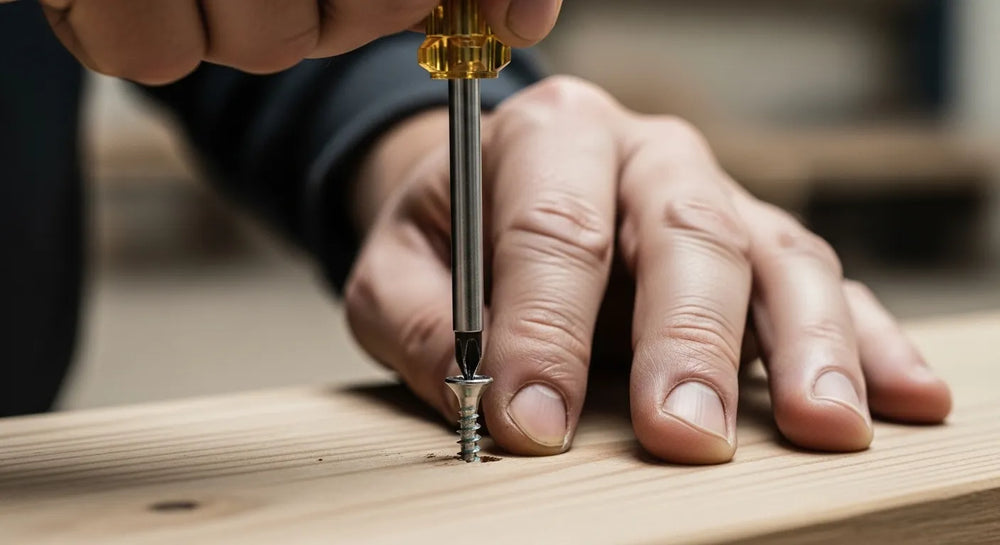
Optimizing Fastener Performance: What Size Drill Bit for a #14 Sheet Metal Screw?
Table of Contents
- Introduction
- Understanding the #14 Sheet Metal Screw
- The Critical Role of Pilot Holes: Why Precision Matters
- Determining the Right Drill Bit Size for a #14 Sheet Metal Screw
- Advanced Considerations for Pilot Hole Drilling
- The Maden.co Advantage: Sourcing American-Made #14 Sheet Metal Screws
- Conclusion
- FAQ
In the intricate world of industrial manufacturing and MRO, the smallest detail can have the most significant impact on project integrity, operational efficiency, and long-term cost. Imagine a critical assembly line grinding to a halt because a batch of fasteners failed, or a newly designed product experiencing structural issues due to improper installation. These aren't hypothetical scenarios; they are daily challenges for procurement managers, MRO buyers, and design engineers who understand that precision in selection and application is paramount. One such foundational detail, often overlooked but critically important, is selecting the correct pilot hole for sheet metal screws. Specifically, when working with a robust #14 sheet metal screw, knowing "what size drill bit for 14 sheet metal screw" isn't just a technical specification; it's a fundamental requirement for ensuring secure, durable connections and preventing costly rework.
This comprehensive guide is designed to demystify the science behind pilot hole selection for #14 sheet metal screws. We will delve into the anatomy of these common fasteners, explore why precise pilot holes are non-negotiable, and provide clear, actionable recommendations for various materials and applications. Furthermore, we will highlight how sourcing high-quality, American-made fasteners through a trusted platform like Maden.co can fundamentally enhance your supply chain resilience, ensure product integrity, and drive industrial excellence. Our mission at Maden.co is to democratize access to American manufacturing, proving that U.S.-made components are not only superior in quality but also as accessible and convenient as any global alternative.
Introduction
In an era where supply chain stability and product reliability are under constant scrutiny, the foundational elements of manufacturing and repair demand renewed attention. Procurement professionals and engineers often grapple with the complexities of material compatibility, load-bearing requirements, and the sheer volume of choices available for even the simplest components. When it comes to fastening sheet metal, the choice of screw is only half the battle; the other, equally critical half, lies in preparing the material for that screw. An incorrectly sized pilot hole can lead to stripped threads, material distortion, weakened joints, or even premature fastener failure—all of which translate directly into increased costs, project delays, and compromised product quality.
This post will meticulously detail the methodology for determining the ideal drill bit size for a #14 sheet metal screw, exploring the underlying principles that govern proper thread engagement and material integrity. We will provide practical guidance for various industrial applications, drawing on our expertise in industrial supply chains and American manufacturing. Ultimately, this article aims to equip you with the knowledge to make informed decisions, ensuring optimal fastener performance and contributing to the robust quality of your American-made products.
Understanding the #14 Sheet Metal Screw
Before we can discuss pilot holes, it's essential to understand the fastener itself. The #14 sheet metal screw is a robust and versatile fastener widely used in heavier gauge sheet metal applications, HVAC systems, automotive repairs, and general construction where a strong, secure connection is required. Unlike machine screws, sheet metal screws are designed to tap their own threads into the material as they are driven, creating a tight, interference fit.
Anatomy and Characteristics of a Sheet Metal Screw
- Major Diameter: This is the measurement across the widest part of the screw's threads, which for a #14 screw is approximately 0.242 inches (just under 1/4 inch). This is the nominal size you refer to when you say "#14."
- Minor Diameter (Root Diameter): This is the measurement of the screw shank, without the threads. It's the core diameter that will pass through the pilot hole. For a #14 screw, this typically ranges from 0.180 to 0.190 inches, depending on the manufacturer and specific thread profile. This is the critical dimension for pilot hole selection.
- Thread Pitch/Count: The number of threads per inch or the distance between threads. A finer pitch provides more threads for engagement but requires more turns.
- Thread Profile: Sheet metal screws often feature sharp, widely spaced threads optimized for forming threads in thin metals. Variations like Hi-Lo threads (e.g., our Hi-Lo Double Lead Thread Self-Tapping Sheet Metal Screw) offer improved pull-out resistance and reduced driving torque.
- Point Type: Self-tapping screws come with different point types (Type A, B, AB, C, G) designed for specific material thicknesses and pre-drilling requirements. Type A, for instance, has a gimlet point suitable for light gauge sheet metal, often used with a pilot hole. Our Steel Zinc Plated Type A Pan Slot Drive Self-Tapping Sheet Metal Screw is a prime example of a common Type A screw for reliable fastening.
- Head and Drive Types: These vary widely (pan head, truss head, hex head; Phillips, slot, square, Torx drives) to suit different aesthetic, torque, and tooling requirements. For instance, our Steel Zinc Plated Type A Truss Square Drive Self-Tapping Sheet Metal Screw offers a broad bearing surface with its truss head and a high-torque square drive.
The #14 designation indicates a screw with a larger diameter and more substantial thread profile than smaller gauges, providing greater shear strength and pull-out resistance. This makes it ideal for applications requiring robust fastening in materials like heavy-gauge steel, aluminum, and certain plastics.
The Critical Role of Pilot Holes: Why Precision Matters
Many assume that a self-tapping screw can simply be driven into sheet metal without preparation. While this might be true for very thin gauges and specific self-drilling (Tek) screws, for standard self-tapping sheet metal screws, particularly a #14, a pilot hole is not just recommended—it's essential.
Consequences of Incorrect Pilot Hole Size
An incorrectly sized pilot hole can lead to a cascade of problems, impacting structural integrity, material longevity, and the overall efficiency of your operations.
-
Pilot Hole Too Small:
- Stripped Threads: The most common issue. If the pilot hole is too small, the screw's threads will struggle to cut into the material, leading to excessive torque, which can strip the threads in the material or even sheer off the screw head.
- Material Distortion/Splitting: High driving torque can deform or bulge the sheet metal around the fastener, compromising the joint's flatness and strength. In thicker materials, it can cause splitting.
- Increased Installation Time and Effort: Overcoming resistance from a small pilot hole requires more force and time, slowing down assembly.
- Screw Breakage: Excessive stress can cause the screw itself to snap, especially with harder materials or lower-quality fasteners.
-
Pilot Hole Too Large:
- Poor Thread Engagement: If the pilot hole is too large, the screw's threads won't have enough material to engage properly, resulting in a loose connection with minimal pull-out resistance.
- Reduced Holding Power: The joint will lack the necessary strength to withstand vibrations, shear forces, or tension, leading to premature failure.
- Vibration Loosening: Loose connections are highly susceptible to loosening over time due to operational vibrations, potentially leading to equipment malfunction or structural failure.
- Water Ingress: A loose fit can create pathways for moisture, leading to corrosion and material degradation, particularly in outdoor or humid environments.
For a procurement manager under pressure to source a specific DIN 931 compliant hex cap screw, a design engineer needing specific material certifications for a new prototype, or an MRO buyer facing an unexpected equipment breakdown, the ability to quickly find and finance a verified, U.S.-made part is a game-changer. Ensuring the correct installation of that part, starting with the right pilot hole, is equally critical for project success and operational continuity.
Determining the Right Drill Bit Size for a #14 Sheet Metal Screw
The fundamental principle for selecting the correct pilot hole size for a self-tapping screw is to match the pilot hole diameter to the minor diameter (or root diameter) of the screw. This allows the screw threads to cut into the material effectively, creating a strong, secure engagement without over-stressing the material or the fastener.
General Recommendations for #14 Sheet Metal Screws
While material thickness and type will always introduce slight variations, here are the general guidelines for a #14 sheet metal screw:
- Standard Recommendation: For most common applications in typical sheet metal gauges (18-24 gauge steel), a 3/16-inch drill bit (0.1875 inches) is a widely accepted starting point.
- Alternative: A #12 drill bit (0.1890 inches) is also an excellent choice and offers a very slightly larger clearance, which can be beneficial in harder metals or where minimizing driving torque is a priority.
It's important to understand that these recommendations align closely with the typical minor diameter range of #14 sheet metal screws, which, as mentioned, is usually between 0.180 and 0.190 inches.
The Impact of Material Thickness and Type
The ideal pilot hole size isn't a one-size-fits-all solution. The specific material you are fastening into plays a crucial role.
1. Metal Thickness (Gauge)
- Thinner Gauge Metals (24-20 gauge): While a 3/16" or #12 bit is generally suitable, for very thin materials, you might occasionally consider a drill bit at the lower end of the minor diameter range to ensure maximum thread engagement. However, going too small increases the risk of material distortion.
- Medium Gauge Metals (18-16 gauge): This is the sweet spot for the 3/16" or #12 drill bit. It provides an optimal balance between thread engagement and ease of driving.
- Heavier Gauge Metals (14 gauge and thicker): For thicker sheet metal, a slightly larger pilot hole (e.g., #12 drill bit) might be beneficial. This reduces the amount of material the screw has to displace, making driving easier and reducing the chance of stripping the screw or material, especially with harder alloys. The larger pilot hole allows for easier screw penetration while still providing ample material for thread formation across the thickness of the metal.
2. Material Hardness and Type
- Soft Metals (Aluminum, Soft Brass, Copper): These materials are easier to tap, and you might get away with a slightly smaller pilot hole to maximize thread engagement. However, be cautious, as softer metals are also more prone to stripping if the pilot is too small and too much torque is applied. A 3/16" or #12 bit remains a safe and effective choice.
- Standard Steel (Mild Steel, Galvanized Steel): The 3/16" or #12 bit is ideal here. These materials offer good resistance for thread forming.
- Harder Steels (Stainless Steel, High-Strength Alloys): These materials are more challenging to tap. Using a pilot hole closer to the upper end of the minor diameter range (e.g., #12 drill bit) is often recommended to reduce driving torque, prevent screw breakage, and extend the life of your power tools. Additionally, using a high-quality drill bit (HSS-Cobalt or Carbide-tipped) and appropriate cutting fluid is crucial.
- Plastics (ABS, PVC, Polycarbonate): When fastening into plastics, the material's elastic properties need to be considered. For harder plastics, a pilot hole similar to metal might work. For softer or more brittle plastics, a slightly larger pilot hole can prevent cracking or splitting. Testing on scrap material is always advisable. For our Hi-Lo Double Lead Thread Self-Tapping Sheet Metal Screw, its unique thread design is particularly effective in plastics and softer materials, often requiring careful pilot hole selection to prevent material fatigue or cracking.
Practical Scenario: Sourcing and Applying #14 Screws
Consider an MRO buyer needing to replace fasteners in an aging HVAC system. They require several hundred #14 sheet metal screws to secure new ductwork made of 18-gauge galvanized steel. The previous fasteners failed due to corrosion and stripped pilot holes. This MRO buyer understands that merely replacing the screws isn't enough; they need a reliable, corrosion-resistant option and the correct installation method.
Our buyer turns to Maden.co, knowing they can find U.S.-made, zinc-plated #14 sheet metal screws for enhanced corrosion resistance, such as the Steel Zinc Plated Type A Pan Slot Drive Self-Tapping Sheet Metal Screw or the Steel Zinc Plated Type A Truss Square Drive Self-Tapping Sheet Metal Screw. For 18-gauge galvanized steel, the buyer selects a 3/16-inch drill bit. They also ensure their team uses proper drilling techniques, including consistent pressure and appropriate drill speed, to create clean, burr-free pilot holes. This meticulous approach, combining quality fasteners with correct installation, ensures the new ductwork will hold securely for years, minimizing future maintenance needs and demonstrating industrial excellence.
Advanced Considerations for Pilot Hole Drilling
Beyond just the size, several other factors contribute to successful pilot hole drilling and robust fastener performance.
1. Drill Bit Quality and Type
Using the right drill bit is as important as using the right size.
- High-Speed Steel (HSS): Standard for general-purpose drilling in softer metals.
- Cobalt (HSS-Co): Recommended for harder metals like stainless steel due to increased heat resistance and hardness.
- Carbide-Tipped: Excellent for very hard materials, offering superior wear resistance, though more brittle.
A sharp, high-quality drill bit will create a clean hole with minimal burring, facilitating easier screw installation and better thread engagement. A dull bit will generate excessive heat, potentially work-hardening the material, and producing an irregular hole.
2. Drilling Technique
- Proper Speed: Use a slower speed for harder metals and larger drill bits to prevent overheating and premature wear. Faster speeds are suitable for softer materials and smaller bits.
- Consistent Pressure: Apply steady, even pressure. Too little pressure causes the bit to "walk" or burnish the surface; too much pressure can break the bit or deform the material.
- Lubrication/Cutting Fluid: Essential when drilling into harder metals like stainless steel. It reduces friction, dissipates heat, and extends tool life, resulting in a cleaner hole.
- Deburring: After drilling, especially in thicker metals, use a deburring tool or a larger drill bit to remove any sharp edges around the hole. Burrs can interfere with the screw's head seating properly or even cut into the material as the screw is driven, leading to a weaker connection.
3. Testing and Verification
When in doubt, especially with new materials or critical applications, always perform a test drill and screw installation on a piece of scrap material. This allows you to assess thread engagement, driving torque, and the final joint strength before proceeding with the main project. This iterative approach is a hallmark of industrial excellence and a practice we champion at Maden.co.
The Maden.co Advantage: Sourcing American-Made #14 Sheet Metal Screws
In an increasingly complex global supply chain, the decision to source components domestically is not merely patriotic; it's a strategic imperative for businesses prioritizing quality, reliability, and security. At Maden.co, our vision is to become the definitive platform that proves American-made components are as accessible and convenient as any global alternative, driving the manufacturing revival. We connect industrial buyers with over 2.5 million American-made products from our network of 800+ verified U.S. manufacturers.
Uncompromising Quality and Consistency
When you select a #14 sheet metal screw from Maden.co, you are investing in American Manufacturing Pride and Industrial Excellence. U.S. manufacturers adhere to stringent quality control standards, ensuring consistency in dimensions, material composition, and finish. This means:
- Accurate Minor Diameters: Critical for precise pilot hole matching.
- Superior Material Grades: Screws are manufactured from specified alloys, guaranteeing tensile strength, shear strength, and corrosion resistance.
- Consistent Thread Profiles: Ensuring optimal thread formation and pull-out resistance.
- Reliable Coatings: Zinc plating, for example, is applied consistently to provide the advertised level of corrosion protection.
For a design engineer needing specific material certifications for a new prototype, sourcing through Maden.co provides the transparency and assurance that components meet exacting standards, preventing costly redesigns or field failures.
Enhanced Supply Chain Resilience
Recent global events have underscored the fragility of extended supply chains. Sourcing American-made fasteners through Maden.co significantly mitigates risks:
- Reduced Lead Times: Shorter shipping distances mean faster delivery and less uncertainty.
- Greater Transparency: Direct access to verified U.S. manufacturers means clear communication and understanding of production processes. Our entire business model is built on this principle; you can learn more about our mission to champion American manufacturing here: About Us.
- Stable Pricing: Less exposure to geopolitical disruptions, currency fluctuations, and unexpected tariffs.
- Ethical Sourcing: Knowing your components are produced under fair labor and environmental standards.
This proactive approach to Supply Chain Transparency empowers procurement managers to build more robust and predictable supply lines, allowing them to focus on innovation rather than mitigating disruptions.
A Vast Catalog of Hard-to-Find, U.S.-Made Components
Our platform offers an unparalleled selection of American-made industrial components. Beyond standard #14 sheet metal screws, you’ll find specialized fasteners with unique head types, drive styles, materials, and finishes to meet virtually any application requirement. Whether you need a Hi-Lo Double Lead Thread Self-Tapping Sheet Metal Screw for improved performance in plastics and softer materials, a Steel Zinc Plated Type A Pan Slot Drive Self-Tapping Sheet Metal Screw for general purpose applications, or a Steel Zinc Plated Type A Truss Square Drive Self-Tapping Sheet Metal Screw for a broad bearing surface, our comprehensive marketplace provides the solutions you need. Explore the diverse range of components on our platform, where America's manufacturing revival is here.
This extensive catalog, coupled with Digital Innovation in our platform design, dramatically reduces procurement friction. You can efficiently search, compare, and purchase precisely what you need, streamlining your capital-intensive projects.
Streamlined Procurement with Instant Financing
Recognizing that large-volume industrial purchases require flexible financial solutions, Maden.co offers Instant Financing at checkout. This isn't merely a payment option; it's a strategic tool designed to empower procurement managers and business owners to manage cash flow effectively and make larger, necessary purchases without immediate capital strain.
- Improved Cash Flow Management: Maintain liquidity by spreading out payments for significant orders.
- Seize Opportunities: React quickly to urgent needs or advantageous bulk pricing without waiting for traditional financing approvals.
- Simplify Budgeting: Integrate fastener costs into your operational budget more smoothly.
You can apply for Instant Financing at checkout to streamline your capital-intensive projects, ensuring you always have access to the U.S.-made components critical for your operations.
Partnering for Success
Our commitment at Maden.co extends beyond providing products. We are a strategic partner in building a more reliable and efficient procurement process. We stand for Customer Empowerment, ensuring you have the resources and support to make the best decisions for your business. If you have specific sourcing questions, our team is ready to help; you can easily Contact Us for personalized assistance.
Are you a qualified U.S. manufacturer? Our network is constantly growing. We invite you to Register as a vendor and join the American manufacturing revival, connecting with industrial buyers who value quality, transparency, and domestic sourcing.
Conclusion
The seemingly simple act of selecting a drill bit for a #14 sheet metal screw is, in fact, a foundational element of industrial excellence. Precision in this step ensures the longevity and reliability of your assemblies, prevents costly failures, and contributes directly to the overall quality of your manufactured products. By understanding the intricacies of pilot hole selection—considering the screw's minor diameter, the material's thickness and hardness, and employing proper drilling techniques—you empower your team to build stronger, more resilient connections.
Furthermore, by choosing to source your #14 sheet metal screws and other industrial components through Maden.co, you are making a strategic investment in quality, supply chain resilience, and American manufacturing. Our platform not only connects you with millions of verified U.S.-made products but also offers innovative solutions like Instant Financing to streamline your procurement process and manage cash flow effectively.
Don't let an oversight in a seemingly small detail compromise your project's success. Explore the vast catalog of U.S.-made fasteners and industrial components on Maden.co today. Find the exact #14 sheet metal screws you need, leverage our Instant Financing option at checkout for your bulk purchases, and build with the confidence that comes from using superior American craftsmanship. America's manufacturing revival is here, and you are an integral part of it.
FAQ
Q1: Why is the pilot hole size so critical for sheet metal screws?
A1: An accurately sized pilot hole is crucial because it allows the self-tapping screw to form strong threads in the material without causing damage. If the hole is too small, it can strip the screw threads or deform the material. If it's too large, the screw won't achieve proper thread engagement, leading to a loose connection with poor holding power and pull-out resistance. Matching the pilot hole to the screw's minor diameter ensures optimal performance.
Q2: Can I use the same pilot hole size for #14 screws in different materials?
A2: While a general recommendation like 3/16" or a #12 drill bit serves as a good starting point for a #14 sheet metal screw, the ideal pilot hole size can vary slightly depending on the material's hardness and thickness. Harder or thicker materials might benefit from a slightly larger pilot hole to reduce driving torque and prevent screw breakage, while softer materials might tolerate a slightly smaller pilot for maximum thread engagement. Always test on scrap material for critical applications.
Q3: What are the benefits of sourcing #14 sheet metal screws from Maden.co?
A3: Sourcing from Maden.co offers several strategic advantages:
- Uncompromising Quality: Access to over 2.5 million verified, U.S.-made products ensures consistent quality, dimensional accuracy, and adherence to specifications.
- Supply Chain Resilience: Reduced lead times, greater transparency, and stable pricing due to domestic sourcing.
- Vast Selection: A comprehensive catalog of American-made components, including various #14 sheet metal screw types (e.g., Hi-Lo, pan head, truss head) to meet diverse needs.
- Customer Empowerment: A platform designed for efficient procurement, backed by our commitment to industrial excellence and support.
Q4: How does Maden.co's Instant Financing work?
A4: Maden.co's Instant Financing is a convenient feature available directly at checkout. It allows businesses to manage cash flow effectively by providing flexible payment options for larger-volume purchases. Instead of requiring immediate upfront payment, you can apply for financing during the checkout process, making it easier to acquire necessary U.S.-made components without impacting your immediate capital.


