
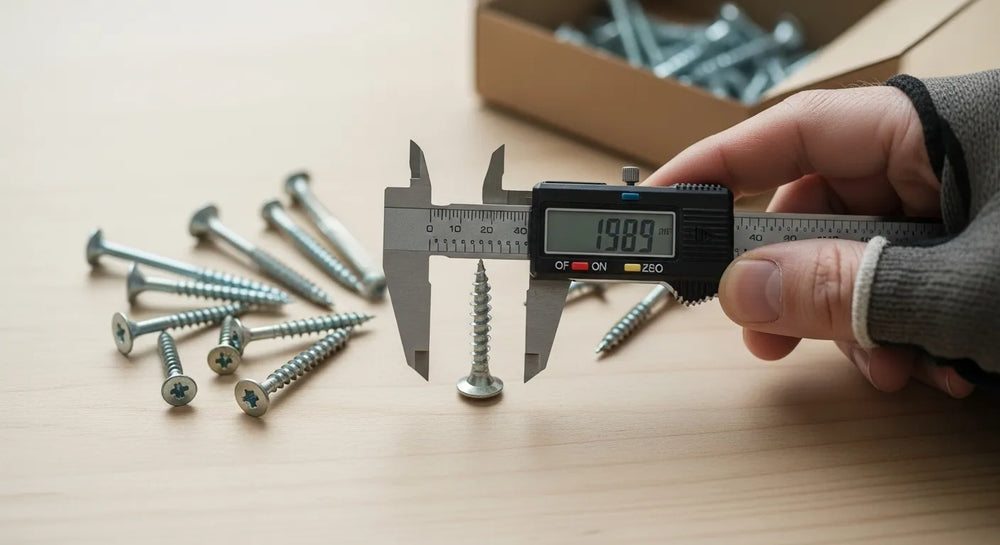
Precision Drilling: How to Drill Drywall Screws
Table of Contents
- Introduction
- Understanding Drywall Screws: Types, Materials, and Applications
- Essential Tools for Drilling Drywall Screws
- Preparing for the Job: Pre-Drilling and Markings
- Step-by-Step Guide: How to Drill Drywall Screws Like a Pro
- Advanced Techniques and Considerations for Industrial Applications
- The Maden.co Advantage: Sourcing American-Made Fasteners
- Streamlining Your Procurement with Maden.co
- Conclusion
- Frequently Asked Questions (FAQ)
Project delays, material failures, and compromised structural integrity often trace back to seemingly minor details: the fasteners used and how they are installed. For procurement managers overseeing large-scale construction, MRO buyers tackling critical repairs, or design engineers specifying materials, understanding the nuances of how to drill drywall screws correctly isn't just about technique—it's about ensuring project timelines, safety, and the long-term reliability of an entire installation. In industrial and commercial settings, where the stakes are significantly higher than in a residential DIY project, precision, material quality, and adherence to best practices become non-negotiable.
This comprehensive guide delves into the essential knowledge and techniques required to master the art of drilling drywall screws, transforming a simple task into a strategic component of your project's success. We will explore the different types of drywall screws, the specialized tools and preparation necessary, and a step-by-step methodology for flawless installation. Furthermore, we will highlight critical considerations for industrial applications, where the robustness and consistency of every component—especially those proudly American-made—are paramount. Our aim is to provide an authoritative resource that not only guides you through the process but also underscores the immense value of sourcing high-quality, reliable components from trusted partners.
Introduction
The humble drywall screw might seem like a simple commodity, yet its proper application underpins the stability and finish of countless commercial and industrial structures. From hospital renovations and factory floor partitions to office build-outs and retail spaces, the secure fastening of gypsum board is a critical step that, if executed poorly, can lead to costly rework, schedule overruns, and even structural compromise. Consider a procurement manager tasked with acquiring hundreds of thousands of fasteners for a new manufacturing facility: a batch of substandard screws or a workforce unfamiliar with best practices for installation could translate into weeks of delays and substantial budget overruns. The integrity of the fastening system directly impacts the longevity and safety of the built environment.
This guide is designed to empower procurement professionals, MRO buyers, and design engineers with the detailed insights needed to ensure every drywall screw installed meets the highest standards. We'll demystify the process, from selecting the right American-made screw for the job to executing perfect fastening techniques that adhere to industry best practices. By understanding these principles, you can significantly enhance project outcomes, minimize risks, and reinforce the structural integrity of your installations, all while leveraging the unparalleled quality and reliability of U.S.-manufactured components.
Understanding Drywall Screws: Types, Materials, and Applications
Before a single screw is driven, a thorough understanding of drywall screws themselves is essential. These aren't generic fasteners; they are engineered for specific applications and materials, with distinct characteristics that differentiate them from standard wood or metal screws.
Anatomy of a Drywall Screw
A typical drywall screw is characterized by several key features:
- Sharp Point: Designed for quick penetration into drywall and studs without the need for pre-drilling in most cases. Self-drilling (Type S or Type W) points are common.
- Bugle Head: This conical-shaped head is designed to create a slight indentation (dimple) in the drywall surface without tearing the paper facing. This dimple allows for easy concealment with joint compound, resulting in a smooth finish.
- Thread Design: Optimized for strong gripping power in either wood or metal studs, minimizing pull-out.
- Length and Gauge: Drywall screws come in various lengths (typically 1 inch to 3 inches) and gauges (diameters, e.g., #6, #8), selected based on drywall thickness and stud type.
- Material and Coating: Most drywall screws are made from hardened steel and coated, often with a black phosphate finish, to resist corrosion and reduce friction during installation.
Coarse Thread vs. Fine Thread: The Fundamental Difference
The most critical distinction for drywall screws lies in their thread pattern, which dictates their intended use:
- Coarse Thread Drywall Screws: These screws feature widely spaced, aggressive threads. They are specifically designed for fastening drywall to wood studs. The coarse threads bite firmly into the wood fibers, providing excellent pull-out resistance. Using a coarse thread screw in metal studs will result in stripping the metal and poor holding power. For procurement managers, accurately specifying this type is crucial for projects involving traditional wood framing. An excellent example of such a fastener, ideal for these applications, is the 6 x 1-1/4 Coarse Thread Drywall Screw, readily available from our verified U.S. manufacturers.
- Fine Thread Drywall Screws: In contrast, fine thread screws have tighter, more numerous threads. These are engineered for use with metal studs, which are increasingly common in commercial and industrial construction. The finer threads create a more secure grip in the thinner gauge steel of metal studs, preventing stripping that would occur with coarse threads. For precise fastening into metal framing, considering a reliable option like the 6 x 1 Fine Thread Drywall Screw ensures optimal performance and structural integrity.
Other Specialized Drywall Screws
Beyond the basic coarse and fine threads, other types cater to specific needs:
- Self-Drilling (Tek) Screws: These screws have a drill bit-like tip that eliminates the need for pre-drilling in light-gauge metal studs. They are highly efficient for high-volume installations.
- High-Low Thread Screws: Featuring alternating high and low threads, these are versatile for use in various materials, including some plastics and wood.
- Corrosion-Resistant Screws: For exterior applications or environments with high humidity (e.g., bathrooms, basements), screws with enhanced corrosion resistance (e.g., zinc-plated, ceramic coated) are vital.
- Longer Screws: For multiple layers of drywall or fastening through furring strips, longer screws are necessary. An example of a robust, versatile option suitable for a range of heavier-duty drywall applications is the 8 x 4 Drywall Screw, which offers substantial holding power.
Why U.S.-Made Quality Matters for Fasteners
For procurement managers, MRO buyers, and design engineers, the source and quality of fasteners are not trivial considerations. Sourcing U.S.-manufactured drywall screws offers distinct advantages:
- Consistent Quality: American manufacturers adhere to stringent quality control standards, ensuring uniformity in hardening, thread consistency, and coating application. This translates to fewer stripped heads, snapped screws, and failed installations, significantly reducing rework and material waste.
- Compliance with Standards: U.S.-made fasteners are typically produced in accordance with industry standards such as ASTM C1002 (Standard Specification for Steel Self-Piercing Tapping Screws for the Application of Gypsum Panel Products or Metal Lath to Wood or Steel Studs), ensuring they meet the required performance specifications for critical projects.
- Supply Chain Resilience: Relying on domestic manufacturers inherently reduces lead times and insulates projects from the volatility of international supply chains. This means greater predictability for project scheduling and material availability.
- Reduced Total Cost of Ownership (TCO): While the per-unit cost might sometimes seem higher for U.S.-made products compared to global alternatives, the TCO is often significantly lower. This is due to reduced failure rates, less rework, faster project completion, and fewer logistical headaches.
At Maden.co, our mission is to democratize access to American manufacturing, ensuring that industrial buyers can easily connect with the highest quality U.S.-made products. We proudly offer over 2.5 million American-made products from our network of 800+ verified U.S. manufacturers, embodying our core values of American Manufacturing Pride and Industrial Excellence. Our entire business model is built on this principle; you can learn more about our mission to champion American manufacturing here on our About us page.
Essential Tools for Drilling Drywall Screws
Having the right tools is just as important as selecting the correct screws. Using inappropriate tools can lead to damaged drywall, stripped screw heads, or inefficient installation.
Power Tools: Drills vs. Screw Guns
- Cordless Drill/Driver: A standard cordless drill/driver can certainly install drywall screws. Look for models with adjustable clutch settings to prevent over-driving the screws. However, drills are generally slower and require more finesse to consistently set screws to the correct depth.
- Impact Driver: An impact driver offers more torque and speed, which can be beneficial for high-volume work or fastening into tougher materials. However, its immense power makes it easier to over-drive and tear the drywall paper if not used with extreme care and a depth-setting bit.
-
Drywall Screw Gun (Dedicated): For professional and industrial applications, a dedicated drywall screw gun is the ultimate tool. These tools feature:
- Adjustable Depth Setting: This is their defining feature. A clutch mechanism automatically disengages once the screw head reaches the predetermined depth, ensuring the screw is perfectly recessed without tearing the paper. This delivers consistent, professional results and prevents blow-outs.
- High RPM: Designed for rapid installation.
- Ergonomics: Often lighter and more comfortable for extended use.
- Optional Auto-Feed: Some models accept collated screws, significantly speeding up high-volume installations.
Driver Bits: The Key to Engagement
The type of driver bit is crucial for proper engagement with the screw head and preventing cam-out (the bit slipping out of the screw head).
- Phillips Head (#2): This is the most common drive type for drywall screws. Ensure you use a #2 Phillips bit, as using a #1 or #3 will lead to stripping.
- Square Drive (Robertson): Less common for standard drywall screws but offers superior grip, reducing cam-out. If using square-drive screws, ensure the corresponding bit (#2 or #3) is used.
- Torx (Star Drive): Offers the best resistance to cam-out and is becoming more prevalent in certain specialty fasteners.
Regardless of the drive type, use a bit specifically designed for drywall screw guns or at least one with a depth-stop feature if using a standard drill. Magnetic bit holders are also helpful for single-screw feeding.
Essential Safety Gear
Even with seemingly simple tasks, safety should never be overlooked, especially in a professional setting.
- Safety Glasses: Eye protection is non-negotiable to guard against flying debris or screw shards.
- Gloves: Protect hands from splinters, sharp edges, and repetitive strain.
- Hearing Protection: Recommended for prolonged use of power tools, particularly impact drivers or screw guns in enclosed spaces.
- Dust Mask: Important when cutting or sanding drywall, as drywall dust can be an irritant.
Preparing for the Job: Pre-Drilling and Markings
Proper preparation saves time and prevents errors. For professional installers, MRO technicians, and procurement managers ensuring project efficiency, these steps are foundational.
Locating and Marking Studs
Accurate stud location is paramount. Drywall screws must securely fasten into the framing members (studs) to provide structural integrity.
- Stud Finder: A reliable electronic stud finder is the fastest and most accurate method. Mark both edges of the stud, then draw a center line.
- Traditional Methods: Measuring 16 or 24 inches on center from a corner, or tapping along the wall to listen for solid resistance, can also work but are less precise.
- Chalk Line/Pencil: Once studs are located, use a chalk line or long level and pencil to mark vertical lines down the center of each stud. This provides a clear guide for screw placement.
When to Consider Pre-Drilling (And When Not To)
For standard drywall installation, pre-drilling is rarely necessary or recommended. Drywall screws are designed to be self-piercing. However, there are exceptions in more specialized scenarios:
- Dense Materials: If fastening drywall to extremely hard wood studs or specialty metal studs that resist the screw's point, a small pilot hole (slightly smaller than the screw's diameter) can prevent screw breakage or stripping.
- Fragile Surfaces: In some delicate or brittle materials, pre-drilling can prevent cracking or splitting.
- Avoiding Blow-Outs: When fastening close to the edge of a stud, pre-drilling can mitigate the risk of the wood splitting.
- Never Pre-Drill the Drywall: Pre-drilling the gypsum board itself is counterproductive as it compromises the material's integrity around the fastener, reducing holding power and increasing the risk of screw pull-through.
Material Considerations: Wood vs. Metal Studs
Understanding the stud material is critical for screw selection:
- Wood Studs: These are typically 2x4s or 2x6s. Coarse thread drywall screws are the correct choice.
- Metal Studs: Common in commercial construction, these are typically light-gauge steel (e.g., 25-gauge, 20-gauge). Fine thread drywall screws are essential. Using coarse threads will strip the metal, resulting in a loose connection. For a procurement manager under pressure to source a specific fastener for a new commercial build, quickly identifying and procuring the right fine thread screws from a verified U.S. manufacturer is a game-changer for project continuity.
Step-by-Step Guide: How to Drill Drywall Screws Like a Pro
Achieving a professional finish and secure installation requires a methodical approach. Follow these steps for optimal results:
1. Choose the Right Screw for the Job
This is the foundational step. Based on the thickness of your drywall (e.g., 1/2 inch, 5/8 inch) and the type of stud (wood or metal), select the appropriate length and thread type.
- For Wood Studs: Opt for coarse thread screws. For standard 1/2-inch drywall, a 1-1/4 inch length is common. For instance, our 6 x 1-1/4 Coarse Thread Drywall Screws are a prime choice for reliable fastening into wood framing, manufactured to stringent U.S. quality standards.
- For Metal Studs: Select fine thread screws. A 1-inch or 1-1/4 inch length works well for single-layer drywall. For example, the 6 x 1 Fine Thread Drywall Screw ensures a secure, non-stripping connection into light-gauge metal studs, vital for commercial installations.
- Versatile or Heavier Duty: When project specifications require a more robust fastening solution or a slightly longer reach, a product like the 8 x 4 Drywall Screw can offer the necessary strength and versatility, reducing procurement friction for various applications.
2. Prepare Your Tool
- Insert the Correct Bit: Ensure your drywall screw gun or drill is fitted with the appropriate #2 Phillips bit (or square/Torx if your screws demand it).
- Set Depth (Crucial for Screw Guns): If using a dedicated drywall screw gun, adjust the depth setting. The goal is for the screw head to break the paper surface of the drywall but not tear it, creating a slight "dimple" or recess just below the surface. This allows for easy concealment with joint compound. Test on a scrap piece of drywall first.
- Set Clutch (for Drills): If using a standard drill, set the clutch to a lower torque setting and gradually increase it until you achieve the desired depth without over-driving. This requires practice.
3. Positioning the Screw
- Hold the Screw: Place the screw tip onto the driver bit, ensuring it's seated firmly.
- Position on Drywall: Align the screw tip with the marked center line of the stud. Position screws approximately 1/2 inch to 3/4 inch from the edge of the drywall panel.
- Spacing: Follow recommended spacing guidelines, typically 8 inches along the perimeter and 12 inches in the field for walls, and 7 inches along the perimeter and 12 inches in the field for ceilings. Stagger screws on adjoining panels.
4. Driving the Screw
- Apply Firm, Consistent Pressure: Lean into the drill/screw gun, applying enough forward pressure to keep the bit engaged with the screw head and prevent cam-out. This also helps the screw penetrate the drywall quickly.
- Maintain Control: Keep the tool perpendicular to the drywall surface. Angled screws weaken the connection and can cause bulging.
- Full Speed (for Screw Guns): With a screw gun, engage the trigger to full speed. The depth-setting clutch will stop the screw at the perfect depth.
- Controlled Speed (for Drills): With a standard drill, use a controlled, steady speed. As the screw head approaches the surface, ease off the trigger to avoid over-driving.
5. Inspect and Adjust
- Check Depth: Each screw head should be slightly recessed, creating a dimple without breaking the paper face. No part of the screw head should protrude.
- Avoid Over-Driving: If the paper is torn, the screw's holding power is significantly reduced. This screw must be removed and a new one installed nearby (at least 1 inch away).
- Avoid Under-Driving: If the screw head protrudes, it will create a bump in the finished wall. Drive it in further until the correct dimple is achieved.
- Verify Security: Gently tug on the drywall panel near the screw. It should feel firmly attached with no movement.
By adhering to these steps, industrial buyers can ensure that every U.S.-made drywall screw sourced through Maden.co contributes to a durable, compliant, and professionally finished installation.
Advanced Techniques and Considerations for Industrial Applications
In the realm of commercial construction and industrial MRO, "how to drill drywall screws" transcends basic technique, evolving into a strategic element of project management and operational efficiency.
High-Volume Installation and Efficiency
For large-scale projects, speed and consistency are paramount.
- Collated Screw Systems: These systems use strips or coils of screws, automatically feeding them into specialized screw guns. This eliminates the need to load individual screws, dramatically increasing installation speed and reducing operator fatigue.
- Production Line Mindset: In large commercial builds, drywall installation often becomes a highly organized process, with teams specializing in hanging, fastening, and finishing. The choice of fasteners and tools is integrated into this workflow for maximum efficiency.
- Ergonomics and Durability: Tools chosen for industrial applications must be robust, reliable, and ergonomically designed to withstand continuous use over long periods, minimizing downtime for equipment failure.
Material Compatibility Beyond Standard Drywall
While this guide focuses on gypsum board, drywall screws, or similar fasteners, are often used in conjunction with other materials in industrial settings.
- Cement Board: For wet areas (bathrooms, utility rooms), cement board is used. While some drywall screws can work, specialized cement board screws with corrosion-resistant coatings and modified thread designs are usually preferred for superior holding power and durability in high-moisture environments.
- Exterior Sheathing: When fastening exterior sheathing (e.g., gypsum sheathing, plywood) to metal studs, specialized corrosion-resistant screws with specific thread patterns for denser materials are necessary.
- Fire-Rated Assemblies: In fire-rated wall assemblies, not only the drywall but also the fasteners must meet specific fire-resistance ratings. This often involves specifying screw type, length, and spacing according to strict building codes and UL-listed assemblies.
Compliance Standards and Certifications
For design engineers and procurement managers, compliance is non-negotiable.
- ASTM Standards: Fasteners used in drywall construction must often comply with ASTM standards such as ASTM C1002 (Standard Specification for Steel Self-Piercing Tapping Screws for the Application of Gypsum Panel Products or Metal Lath to Wood or Steel Studs). These standards specify dimensions, mechanical properties, and corrosion resistance.
- Building Codes: Local, state, and national building codes dictate fastener types, spacing, and installation methods for various applications, especially in fire-rated or structural assemblies.
- Material Safety Data Sheets (MSDS/SDS): For any chemical coatings or treatments on screws, ensuring access to Safety Data Sheets is important for workplace safety and regulatory compliance.
Sourcing through a platform like Maden.co, which emphasizes Supply Chain Transparency and Industrial Excellence, helps ensure that the components you procure meet or exceed these critical industry standards. Our verified U.S. manufacturers understand these requirements, providing peace of mind for projects where compliance is paramount.
The Role of Quality Components in Project Timelines and TCO
In large-scale industrial or commercial projects, the perceived small cost of a fastener can have a disproportionately large impact on overall project success.
- Reduced Rework: High-quality, consistently manufactured screws lead to fewer stripped heads, fewer snapped screws, and less cam-out. This directly translates to less time spent removing failed fasteners and installing new ones, significantly impacting labor costs and project timelines.
- Enhanced Durability: Properly installed, high-quality fasteners contribute to the long-term durability and structural integrity of the installation, reducing future maintenance costs and avoiding premature failures.
- Predictable Performance: When sourcing from verified U.S. manufacturers, procurement teams can rely on the predictable performance of each batch of screws, minimizing the risk of receiving substandard materials that could derail a project. For a design engineer needing specific material certifications for a new prototype, or an MRO buyer facing an unexpected equipment breakdown, the ability to quickly find and finance a verified, U.S.-made part is a game-changer. This reinforces our commitment to Customer Empowerment through reliable procurement.
The Maden.co Advantage: Sourcing American-Made Fasteners
In an era of unpredictable global supply chains and fluctuating material costs, the strategic decision to source American-made fasteners and industrial components has never been more critical. At Maden.co, we are committed to being America's premier B2B marketplace, directly addressing the core challenges faced by procurement managers, MRO buyers, and design engineers.
Our vision is simple yet profound: to become the definitive platform that proves American-made components are as accessible and convenient as any global alternative. We are actively driving the manufacturing revival with our tagline: "America's manufacturing revival is here." This isn't just a slogan; it's a commitment woven into the fabric of our platform and our network.
Unparalleled Access to American Manufacturing
Imagine the complexity of sourcing specific industrial parts for a new factory build or a critical MRO overhaul. You need reliability, compliance, and swift delivery. Maden.co provides exactly that by connecting you with:
- Over 2.5 Million American-Made Products: Our extensive catalog spans a vast array of industrial components, including the very drywall screws we've discussed, along with countless other fasteners, fittings, tools, and raw materials. This comprehensive selection drastically reduces the time and effort required for sourcing.
- 800+ Verified U.S. Manufacturers: We don't just list products; we vet our manufacturers. Our network comprises reputable American companies committed to quality and innovation, embodying our core value of American Manufacturing Pride. This verification process ensures that when you source through us, you're partnering with trusted suppliers.
Building Supply Chain Resilience and Transparency
The past few years have highlighted the vulnerabilities of extended supply chains. Sourcing locally, through Maden.co, provides:
- Reduced Lead Times: Products manufactured in the U.S. generally face shorter shipping distances and fewer logistical hurdles, meaning your orders arrive faster and more predictably.
- Greater Control and Visibility: With domestic sourcing, you gain enhanced visibility into the manufacturing process and supply chain, reducing uncertainties and enabling quicker responses to any unforeseen issues. Our platform champions Supply Chain Transparency, giving you confidence in every purchase.
- Quality Assurance: By dealing directly with U.S. manufacturers, you mitigate risks associated with varying international quality standards and intellectual property concerns.
Procurement Friction Reduction Through Digital Innovation
Finding the right part, verifying its specifications, and managing the purchasing process can be incredibly time-consuming. Maden.co streamlines this with Digital Innovation:
- Intuitive Search and Filtering: Our platform is designed for industrial buyers, allowing you to quickly narrow down vast product catalogs by critical specifications, materials, and compliance standards. This means less time searching and more time building.
- Streamlined Ordering: Once you find the components you need, our platform facilitates a smooth and efficient ordering process, reducing administrative burdens and accelerating project timelines.
- Expert Support: If you have specific sourcing questions, our team is ready to help; just contact our team for personalized assistance.
We understand that for business owners and procurement managers, the strategic value of such a platform goes beyond mere transactions. It's about empowering your team, strengthening your supply chain, and ensuring that every project benefits from the unmatched quality of American manufacturing. Discover our full range of offerings and experience the future of industrial procurement on the Maden.co homepage. Are you a qualified U.S. manufacturer looking to expand your reach and connect with industrial buyers across the nation? Join our growing network and Register as a vendor to become a part of America's manufacturing revival.
Streamlining Your Procurement with Maden.co
The journey from understanding the intricacies of drilling drywall screws to actually executing large-scale installations highlights a larger truth: every component, every tool, and every procurement decision contributes to the overarching success or failure of industrial projects. Maden.co is not just a marketplace; it is a strategic partner in building a more reliable, efficient, and resilient procurement process. We empower you to make informed decisions and secure the best U.S.-made industrial supplies, whether it's the specialized fasteners that ensure structural integrity or the high-performance tools that guarantee efficient installation.
Our platform is engineered to address the specific challenges of industrial buying, fostering customer empowerment through ease of access and unparalleled selection. We focus on delivering tangible benefits: improving your Total Cost of Ownership (TCO) by providing durable, compliant, U.S.-made products; enhancing supply chain resilience through domestic sourcing; and significantly reducing procurement friction by connecting you directly with verified manufacturers.
For projects requiring substantial capital outlay or large-volume purchases, managing cash flow effectively is key. That's why Maden.co offers Instant Financing. This feature is not merely a payment option; it's a strategic tool designed to provide businesses with the flexibility to acquire essential materials without immediate upfront capital expenditure. You can apply for Instant Financing at checkout to streamline your capital-intensive projects, ensuring that vital operations and new constructions proceed without financial bottlenecks.
Conclusion
Mastering how to drill drywall screws correctly is a foundational skill that yields profound impacts on the quality, durability, and cost-effectiveness of industrial and commercial construction projects. From selecting the precise thread type—coarse for wood, fine for metal—to utilizing the right depth-setting tools and adhering to meticulous installation techniques, every step is critical. The long-term integrity of a structure, the safety of its occupants, and the financial success of a project hinge on these seemingly minor details.
By prioritizing high-quality, American-made fasteners and understanding their proper application, procurement managers, MRO buyers, and design engineers not only ensure compliance and reduce rework but also contribute to a more robust and predictable supply chain. Maden.co stands at the forefront of this movement, dedicated to democratizing access to superior U.S.-manufactured products.
We invite you to explore the extensive catalog of American-made industrial components on Maden.co. Whether you need reliable 6 x 1-1/4 Coarse Thread Drywall Screws for wood framing, precise 6 x 1 Fine Thread Drywall Screw for metal studs, or a versatile 8 x 4 Drywall Screw for more demanding applications, our platform connects you directly with verified U.S. manufacturers. Embrace the confidence that comes with sourcing quality, ensuring efficiency, and supporting America's manufacturing revival. Leverage our Instant Financing option at checkout to manage your capital and keep your critical projects moving forward. Your next successful project starts with the right components, easily sourced from Maden.co.
Frequently Asked Questions (FAQ)
Q1: What is the main difference between coarse thread and fine thread drywall screws, and when should I use each?
A1: The main difference lies in their thread pattern and intended use. Coarse thread drywall screws have wider, more aggressive threads and are designed for securely fastening drywall to wood studs. Fine thread drywall screws have tighter, more numerous threads and are specifically engineered for use with light-gauge metal studs. Using the wrong thread type for the stud material can lead to stripping and poor holding power. For projects requiring coarse thread solutions for wood, consider options like the 6 x 1-1/4 Coarse Thread Drywall Screws. For metal studs, a reliable choice would be the 6 x 1 Fine Thread Drywall Screw.
Q2: Why is using a drywall screw gun with an adjustable depth setting recommended over a standard drill?
A2: A dedicated drywall screw gun with an adjustable depth setting is highly recommended for professional and industrial applications because it ensures consistent, perfect screw depth every time. The clutch mechanism automatically disengages once the screw head creates a slight "dimple" in the drywall surface without tearing the paper facing. This prevents both over-driving (which compromises holding power) and under-driving (which leaves protruding screw heads) and significantly speeds up installation while ensuring a smooth, finish-ready surface.
Q3: What are the key advantages of sourcing U.S.-made drywall screws for commercial or industrial projects?
A3: Sourcing U.S.-made drywall screws offers several critical advantages for B2B buyers. These include consistent quality due to stringent manufacturing standards, guaranteed compliance with relevant industry specifications like ASTM C1002, enhanced supply chain resilience with reduced lead times and greater predictability, and often a lower Total Cost of Ownership (TCO) from reduced rework and increased project efficiency. Maden.co, for example, connects buyers with over 800+ verified U.S. manufacturers, ensuring access to high-quality, American-made products that meet these exacting standards.
Q4: How can Maden.co's "Instant Financing" option benefit my procurement process for large-volume fastener orders?
A4: Maden.co's Instant Financing is a strategic tool designed to help businesses manage cash flow effectively, especially for large-volume or capital-intensive projects. Instead of requiring immediate upfront payment, Instant Financing allows procurement managers and business owners to acquire necessary materials, like bulk orders of drywall screws, while preserving working capital. This helps streamline project timelines and ensures you can access the U.S.-made components you need without financial bottlenecks. You can apply for this convenient feature during the checkout process on our platform.


