
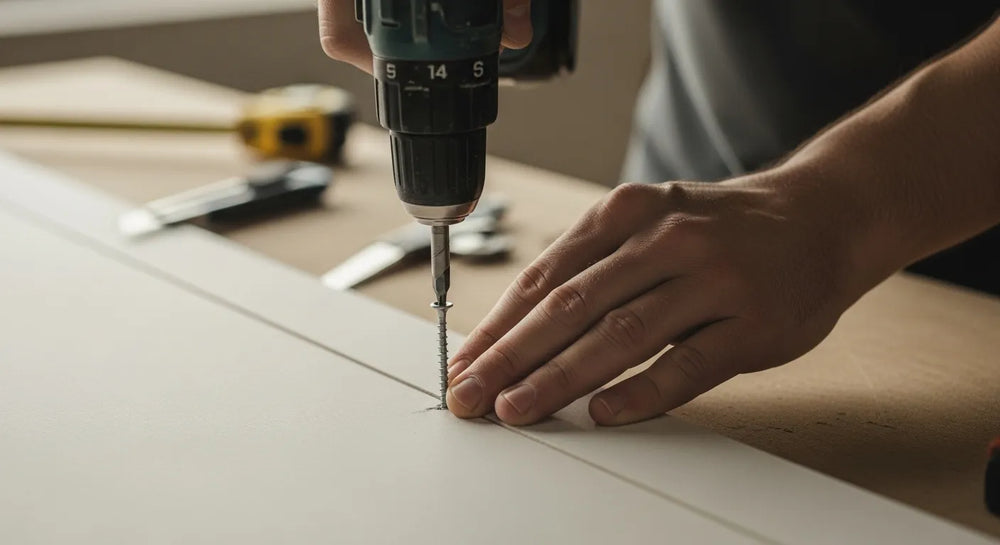
Repairing Stripped Wood Screw Holes: A Professional's Guide
Table of Contents
- Understanding the Anatomy of a Stripped Hole
- Essential Tools and Materials for Repair
- Comprehensive Repair Methods: Step-by-Step Guides
- Preventing Stripped Screws: Best Practices for Longevity
- The Maden.co Difference: Beyond the Repair
- Conclusion
- Frequently Asked Questions (FAQ)
Imagine a critical assembly halted, not by a major component failure, but by something as seemingly trivial as a stripped wood screw. This common frustration can quickly escalate from a minor annoyance into a significant delay, compromising structural integrity, project timelines, and ultimately, your bottom line. For procurement managers, MRO buyers, and design engineers, the ability to address and prevent such issues isn't just about a quick fix; it's about ensuring the longevity and reliability of industrial applications and maintaining efficient operations. This guide delves deep into the causes, prevention, and comprehensive repair techniques for stripped wood screw holes, offering authoritative insights to empower your projects and maintenance efforts. Our purpose is to equip you with the knowledge and methods to tackle this persistent challenge, transforming potential setbacks into opportunities for robust and lasting solutions. The core message is clear: understanding and mastering these repair techniques are essential for upholding quality, safety, and operational efficiency in any manufacturing or maintenance environment.
Understanding the Anatomy of a Stripped Hole
Before we can effectively repair a stripped wood screw hole, it's crucial to understand why they occur. This isn't just about a screw spinning freely; it's about a fundamental failure in the wood's ability to hold the screw's threads, often indicating underlying issues that, if left unaddressed, can lead to further structural compromises.
The Mechanisms Behind Stripping
Several factors contribute to the stripping of a wood screw hole, each with its own implications for repair and prevention. Recognizing these can inform both your immediate fix and your long-term procurement strategies.
- Over-tightening: This is arguably the most common culprit. When a screw is driven too far, the rotational force exceeds the wood's compressive strength, causing the threads in the wood to shear and expand, losing their grip on the screw. This is particularly prevalent with power tools that lack adequate torque control.
- Incorrect Pilot Hole Size: A pilot hole that is too large will not give the screw threads enough material to bite into, resulting in a weak connection from the start. Conversely, a pilot hole that is too small can cause excessive friction, leading to the wood splitting or the screw head stripping (a separate issue but often related to inadequate preparation). The ideal pilot hole diameter should be slightly smaller than the screw's root diameter (the solid core of the screw, not including the threads).
- Material Fatigue and Degradation: Wood, particularly softer varieties, can degrade over time, losing its density and ability to hold fasteners securely. Repeated removal and re-insertion of a screw into the same hole will also gradually wear down the wood fibers, widening the hole and reducing its grip. This is a common challenge in MRO scenarios where components undergo regular servicing.
- Wrong Screw Type for the Application: Not all wood screws are created equal. Using a screw with an inappropriate thread pitch, shank diameter, or material for the specific wood type can lead to stripping. For instance, using a coarse-threaded screw in a dense hardwood without proper pre-drilling can be detrimental, just as a fine-threaded screw in soft wood might not provide sufficient holding power.
- Environmental Factors: Fluctuations in humidity and temperature can cause wood to expand and contract. Over time, these movements can weaken the wood fibers around a screw, contributing to a stripped hole. Exposure to moisture can also accelerate wood decay, further compromising fastener integrity.
The Consequences of Neglect
A stripped screw hole isn't merely an aesthetic flaw; it carries tangible operational and structural risks:
- Compromised Structural Integrity: The most obvious risk. A stripped screw means a weakened joint. In applications where fasteners bear load or provide stability, this can lead to component failure, equipment malfunction, or even safety hazards. For design engineers, this translates to failing to meet specifications.
- Operational Downtime and Delays: In industrial settings, a stripped screw in a critical piece of machinery can lead to unexpected downtime, impacting production schedules and profitability. MRO buyers understand the urgency of quick, reliable fixes to minimize these disruptions.
- Increased Maintenance Costs: Repeated repairs due to poorly fixed stripped holes, or the need to replace entire components prematurely, drive up maintenance expenditures. This directly impacts the Total Cost of Ownership (TCO) for equipment and infrastructure.
- Safety Hazards: In certain applications, particularly those involving machinery, structural elements, or fixtures, a loose or compromised fastener can lead to dangerous situations, posing risks to personnel and property.
Understanding these foundational aspects provides the necessary context for approaching repairs not just as isolated fixes, but as integral components of a robust maintenance and manufacturing strategy.
Essential Tools and Materials for Repair
Approaching a stripped wood screw hole repair requires more than just ingenuity; it demands the right tools and materials. The choice of repair method will dictate the specific items you need, but a well-equipped workshop or maintenance kit will typically include:
- Drill and Drill Bits: Essential for preparing holes, whether for removing old material, enlarging for dowels, or re-drilling pilot holes. A variety of sizes will be necessary.
- Screwdrivers/Impact Drivers: For removing and re-driving screws. Torque control on impact drivers is crucial to prevent future stripping.
- Wood Glue: High-quality wood glue (PVA-based) is a staple for most wood-based repairs, providing strong bonds for dowels, toothpicks, or wood splinters.
- Wood Filler/Putty: Ideal for minor repairs and cosmetic finishes. Available in various colors to match wood types.
- Two-Part Epoxy Resin: For maximum strength and permanent repairs, especially in high-stress applications.
- Dowels or Solid Wood Plugs: Available in various diameters, these are critical for filling larger holes.
- Toothpicks, Wood Splinters, or Wood Matchsticks: Perfect for quickly filling smaller stripped holes.
- Sandpaper: Various grits (e.g., 100-220 grit) for smoothing repaired surfaces.
- Utility Knife or Chisel: For trimming excess material.
- Clamps: To hold pieces securely during drying times.
- Clean Rags/Wipes: For cleanup.
- Measuring Tools: Calipers or rulers for accurate pilot hole sizing.
- Safety Glasses: Always wear appropriate personal protective equipment.
Having these items readily available ensures that you can address a stripped screw hole efficiently and effectively, minimizing downtime and ensuring a durable repair.
Comprehensive Repair Methods: Step-by-Step Guides
The method you choose for repairing a stripped wood screw hole depends on the extent of the damage, the type of wood, and the required strength of the repair. Here, we outline the most effective techniques, from quick fixes to industrial-grade solutions.
Method 1: The Toothpick or Wood Splinter Method (Light Damage)
This is a classic, quick, and effective solution for slightly stripped holes where the wood fibers are still mostly intact but have lost their grip. It's ideal for non-load-bearing applications or where a fast turnaround is critical.
When to Use:
- Minor stripping where the screw still has some purchase but wiggles.
- Softwoods or particleboard where minimal material has been lost.
- Applications where cosmetic appearance is not paramount, or the repair will be hidden.
Materials Needed:
- Wooden toothpicks, wood matchsticks, or thin wood splinters (e.g., from balsa wood or cedar shims).
- Wood glue (PVA-based).
- Utility knife or flush-cutters.
Step-by-Step Process:
- Clean the Hole: Ensure the stripped hole is free of debris, sawdust, and any loose wood fibers. A blast of compressed air can be helpful.
- Apply Glue: Dip one end of a toothpick (or splinter) into wood glue, ensuring it’s thoroughly coated. The glue will expand the wood fibers slightly and create a strong bond when dry.
- Insert Toothpicks: Push the glued toothpick into the stripped hole. Continue adding more glued toothpicks until the hole is tightly packed. You want to create a dense core of wood and glue that the screw can bite into. For a standard wood screw, this might mean 3-6 toothpicks, depending on the hole size.
- Break Off Excess: Using a utility knife, flush-cutters, or even just snapping them off by hand, break the toothpicks flush with the surface of the wood. The goal is to leave a clean, flat surface.
- Allow to Dry: Let the glue dry completely. This is crucial for maximum strength. Depending on the glue and humidity, this could take 30 minutes to several hours. Refer to the glue manufacturer's instructions.
- Re-drive the Screw: Once the glue is fully cured, carefully re-drive the original screw. The packed and glued wood fibers will now provide a fresh, tight grip for the screw threads. Be mindful not to overtighten, which could cause a repeat of the stripping.
Procurement Perspective: While simple, this method highlights the importance of having readily available, quality fasteners. For applications where you might use a round slot drive brass wood screw for its aesthetic appeal or corrosion resistance, ensuring the underlying wood structure is sound prevents repeated repairs.
Method 2: The Dowel or Wood Plug Method (Moderate to Severe Damage)
This method provides a significantly stronger and more durable repair than the toothpick method, making it suitable for more critical applications or when the stripped hole is substantially larger. It involves essentially replacing the damaged wood with new, solid material.
When to Use:
- When the hole is badly stripped and enlarged.
- For load-bearing applications where high strength is required.
- In hardwoods where toothpicks might not provide adequate grip.
- When repeated use of the fastener is anticipated.
Materials Needed:
- Dowel rod (matching the diameter of the drill bit you'll use to clean out the hole).
- Wood glue.
- Drill and drill bit (matching dowel diameter).
- Flush-cut saw or chisel.
- Sandpaper (100-220 grit).
- Clamps (optional, but helpful for stability).
Step-by-Step Process:
- Remove Old Screw: Carefully extract the stripped screw.
- Drill Out the Damaged Wood: Using a drill bit that is slightly larger than the stripped hole and matches the diameter of your dowel, drill out the entire damaged section. Drill straight and perpendicular to the surface to ensure a clean, uniform hole. Ensure you drill deep enough to remove all compromised wood.
- Prepare the Dowel: Cut a piece of dowel rod slightly longer than the depth of the drilled hole. Apply wood glue generously around the dowel.
- Insert the Dowel: Tap the glued dowel into the newly drilled hole. It should be a snug fit. Use a hammer or mallet if necessary, ensuring not to damage the surrounding wood.
- Allow to Dry: Allow the glue to cure completely. This is paramount for achieving maximum strength. Depending on the glue, this can take several hours or even overnight. Clamping the surrounding area can help ensure a strong bond.
- Trim and Sand: Once dry, use a flush-cut saw or a sharp chisel to trim the protruding dowel flush with the wood surface. Be careful not to score the surrounding wood. Finish by sanding the repaired area smooth with sandpaper.
- Drill New Pilot Hole: Precisely measure the diameter of your original screw. Drill a new pilot hole directly through the center of the inserted dowel. The pilot hole must be the correct size to prevent re-stripping.
- Re-drive the Screw: Drive the original screw into the newly created pilot hole. The dowel will provide a fresh, solid foundation, resulting in a significantly stronger joint.
Industrial Application Insight: This method is often employed in MRO scenarios for repairing equipment enclosures, furniture components, or jig fixtures. When sourcing replacement fasteners, considering options like a flat slot drive brass wood screw could be appropriate for specific aesthetics or flush finishes, ensuring the repair is not only strong but also fits the original design intent.
Method 3: The Wood Filler or Putty Method (Cosmetic & Minor Structural)
Wood filler is primarily a cosmetic solution, but it can provide enough structural integrity for very lightly loaded or decorative applications where appearance is important. It's generally not recommended for high-stress areas.
When to Use:
- Small, shallow stripped holes where minimal structural strength is required.
- When the repair needs to be paintable or stainable to match the surrounding wood.
- Furniture repair, trim work, or other decorative applications.
Materials Needed:
- Wood filler (e.g., Bondo, DAP Plastic Wood, or a similar product).
- Putty knife or small spatula.
- Sandpaper (120-220 grit).
- Optional: Wood stain or paint.
Step-by-Step Process:
- Clean the Hole: Remove all loose debris and dust from the stripped hole.
- Apply Wood Filler: Using a putty knife, firmly press the wood filler into the stripped hole, overfilling it slightly. Ensure there are no air pockets.
- Allow to Dry: Let the wood filler dry completely according to the manufacturer's instructions. Drying times can vary significantly depending on the product and thickness of application (from 15 minutes to several hours).
- Sand Smooth: Once dry, sand the excess filler flush with the wood surface. Start with a coarser grit (120) if needed, then finish with a finer grit (220) for a smooth finish.
- Drill New Pilot Hole: If you intend to re-drive a screw, drill a new pilot hole through the cured filler. Be gentle, as some fillers can be brittle.
- Finish (Optional): If desired, stain or paint the repaired area to match the surrounding wood.
- Re-drive the Screw: Carefully re-drive the screw. Understand that the holding power will be significantly less than solid wood or an epoxy repair.
Practical Application: While not industrial-strength, this method is useful in MRO for non-critical repairs on cabinetry or interior finishes. For a project requiring a specific fastener type, such as an oval slot drive silicon bronze wood screw for its unique head profile and corrosion resistance, ensuring the surrounding material is sound and aesthetically pleasing is key, even if the filler isn't providing the primary structural support.
Method 4: The Epoxy Resin Method (High Strength, Permanent Fix)
Epoxy resin offers the strongest and most durable repair for stripped screw holes, making it the preferred choice for critical applications, hardwoods, or situations where the repair must withstand significant stress and repeated use.
When to Use:
- Heavily stripped holes in high-stress applications.
- When maximum holding power is essential.
- In dense hardwoods where traditional wood glue might struggle.
- For marine applications or areas exposed to moisture, as epoxy is waterproof.
Materials Needed:
- Two-part epoxy resin (e.g., West System, JB Weld for wood, or similar brands).
- Mixing stick and small mixing surface (e.g., cardboard).
- Applicator (e.g., toothpick, small syringe, or putty knife).
- Drill and drill bits.
- Safety gloves.
Step-by-Step Process:
- Prepare the Hole: Clean out all debris, sawdust, and loose wood fibers from the stripped hole. For best adhesion, lightly rough up the inside of the hole if possible, or even drill it out slightly larger to ensure a fresh, clean surface for the epoxy to bond to.
- Mix the Epoxy: Following the manufacturer's instructions, accurately mix the two parts of the epoxy resin on your mixing surface. Pay close attention to the ratio and mixing time, as incorrect mixing can compromise the cure and strength.
- Fill the Hole: Carefully fill the stripped hole with the mixed epoxy. Use an applicator to ensure the epoxy penetrates deeply and completely fills the void. Overfill slightly to allow for shrinkage and to provide material for sanding.
- Allow to Cure: Let the epoxy cure completely. This is the most critical step for strength. Cure times can range from a few hours to 24 hours or more, depending on the product and temperature. Do not attempt to re-drill or re-drive the screw before full cure.
- Sand and Finish: Once fully cured, the epoxy will be rock hard. Use sandpaper (starting with a coarser grit like 80-100, then finishing with 180-220) to sand the excess epoxy flush with the wood surface. Epoxy can be painted or stained, though staining may require a primer for best results.
- Drill New Pilot Hole: Very carefully drill a new pilot hole directly through the center of the cured epoxy. Start with a smaller bit and gradually increase to the correct pilot hole size for your screw. The cured epoxy is extremely hard, so go slow and use sharp drill bits.
- Re-drive the Screw: Drive the original screw (or a new, appropriate screw) into the epoxy. The result will be a connection that is often stronger than the original wood itself.
Strategic Procurement: For projects requiring extreme durability and adherence to stringent industry standards (like certain DIN or NPT applications where fasteners are critical), using epoxy for repairs and then pairing it with high-quality, verified U.S.-made fasteners from our catalog is a robust strategy. Maden.co connects industrial buyers with over 2.5 million American-made products from our network of 800+ verified U.S. manufacturers, ensuring you have access to the superior components needed for such resilient repairs. Our mission is to democratize access to American manufacturing, making it easier to find reliable solutions.
Method 5: Using a Larger Diameter Screw (Situational Quick Fix)
Sometimes, the quickest solution is simply to use a screw with a slightly larger diameter. This method relies on the principle of finding new, undamaged wood fibers for the threads to bite into.
When to Use:
- When the stripped hole is only slightly enlarged, and the surrounding wood is sound.
- For non-critical applications where increasing the screw diameter won't negatively impact the assembly or aesthetics.
- As a temporary fix or when time is extremely limited.
- When a new, larger pilot hole can be drilled without compromising the material.
Considerations:
- This is not a long-term solution for severely damaged holes.
- Ensure the material can accommodate a larger screw without splitting.
- The head of the larger screw must be compatible with the application (e.g., countersink vs. pan head).
Step-by-Step Process:
- Assess Hole Size: Carefully remove the original stripped screw. Determine the diameter of the existing hole.
- Select Larger Screw: Choose a new wood screw that has a slightly larger diameter than the original, but not so large that it will split the wood.
- Drill New Pilot Hole (Optional but Recommended): Even if the existing hole seems large enough, drilling a proper pilot hole for the new, larger screw is always recommended to prevent further stripping or splitting. Ensure the pilot hole matches the root diameter of the new screw.
- Drive the New Screw: Carefully drive the larger screw into the prepared hole. Ensure it grabs firmly and provides the necessary holding power.
Maden.co Advantage: For a procurement manager needing to quickly source a larger, specific U.S.-made fastener to get an assembly back online, or an MRO buyer replacing a component, the ability to quickly find the right size and type of screw is invaluable. Our platform at Maden.co provides immediate access to a vast catalog, ensuring you can identify and procure the exact fit for your repair needs without delay. You can find detailed specifications for various U.S.-Made wood screws, including options like the oval slot drive silicon bronze wood screw that offers excellent corrosion resistance and a unique aesthetic profile for specific applications.
Method 6: Threaded Inserts (Industrial Strength, Repeated Assembly)
For industrial applications requiring exceptional strength, durability, and the ability for repeated assembly and disassembly without stripping, threaded inserts are the ultimate solution. These are typically metal inserts that provide a machine-thread recipient for a bolt or machine screw, effectively converting a wood screw application to a metal fastener application.
When to Use:
- High-load applications where fasteners undergo significant stress.
- Components that require frequent disassembly and reassembly (e.g., inspection panels, adjustable fixtures).
- In softwoods or particle board where the inherent strength for wood screws is low.
- When a machine screw or bolt is preferred over a wood screw for reliability.
Types of Threaded Inserts:
- Knurled Inserts: Designed to be pressed or threaded into a pre-drilled hole, their knurled exterior bites into the wood.
- Flanged Inserts (T-nuts): Hammered into the back of a piece of wood, with prongs that embed into the wood to prevent rotation.
- Self-Tapping Inserts: Have external threads that cut into the wood as they are driven in.
Materials Needed:
- Appropriate threaded insert (matching the thread size of your desired machine screw/bolt).
- Drill and drill bit (matching the outer diameter of the insert body).
- Driver for the insert (often an Allen key or specialized tool).
- Machine screw or bolt for the insert.
- Wood glue or epoxy (optional, for extra security).
Step-by-Step Process:
- Remove Old Screw: Extract the stripped wood screw.
- Drill Pilot Hole for Insert: Carefully drill a precise pilot hole for the threaded insert. The diameter and depth must match the insert manufacturer's specifications. This is critical for preventing splitting and ensuring a secure fit.
-
Install the Insert:
- For Knurled/Self-Tapping Inserts: Either thread the insert into the pilot hole using an Allen wrench or specialized driver, or gently tap/press it in if designed for that method. Ensure it sits flush or slightly recessed. A dab of wood glue or epoxy around the exterior can enhance hold.
- For T-nuts: Drill a clearance hole for the barrel of the T-nut. Place the T-nut on the back side of the wood, aligning the barrel with the hole. Hammer it into place, ensuring the prongs fully embed into the wood surface.
- Allow Adhesives to Cure (if used): If using glue or epoxy, allow it to cure fully before driving the machine screw.
- Fasten Component: Drive the machine screw or bolt into the newly installed threaded insert. This creates a highly durable, metal-on-metal threaded connection that can withstand repeated cycles without stripping the wood.
Maden.co's Strategic Partnership: For design engineers specifying new assemblies or MRO buyers upgrading existing equipment, integrating U.S.-made threaded inserts significantly enhances component longevity and maintainability. Our core value of Industrial Excellence means we understand the critical importance of such robust solutions. We facilitate access to the highest quality American manufacturing, reducing procurement friction and strengthening supply chain resilience. If you are a U.S. manufacturer producing such advanced fasteners or threaded inserts, we encourage you to register as a vendor and join the American manufacturing revival to expand your market reach through our platform.
Preventing Stripped Screws: Best Practices for Longevity
While effective repair methods are crucial, the best strategy is always prevention. Implementing best practices in design, procurement, and assembly can significantly reduce the occurrence of stripped wood screw holes, leading to improved product quality, reduced maintenance, and a lower Total Cost of Ownership (TCO).
1. Correct Pilot Hole Sizing: The Foundation of Strength
This is the single most important preventative measure. A correctly sized pilot hole allows the screw threads to bite into the wood without excessive force, creating a strong, secure connection without stripping.
- For Hardwoods: The pilot hole should be slightly smaller than the root diameter (shank) of the screw. This allows the threads to cut into the dense wood without splitting it.
- For Softwoods: The pilot hole can be slightly smaller than the screw's major diameter (including threads) to maximize grip, but still ensuring the core of the screw is supported.
- Using a Pilot Hole Gauge: Invest in a screw gauge or drill bit gauge to accurately match drill bits to screw sizes.
- Tapered Drill Bits: For traditional wood screws, a tapered drill bit creates a pilot hole that matches the screw's tapered profile, improving strength and preventing splitting, especially in hardwoods.
2. Choosing the Right Screw for the Job
The type of screw selected is paramount. Different woods and applications demand specific fastener characteristics. Maden.co emphasizes sourcing the right U.S.-made components for the longevity of your projects.
- Material: Ensure the screw material is appropriate for the environment (e.g., brass for corrosion resistance, silicon bronze for marine applications, hardened steel for strength).
- Thread Type: Wood screws typically have coarse, sharp threads designed to cut into wood. Machine screws, with their finer, blunt threads, are unsuitable for direct wood applications without a threaded insert.
- Head Type: Consider the application—round slot drive brass wood screw for decorative or non-flush applications, flat slot drive brass wood screw for flush finishes, and oval slot drive silicon bronze wood screw for a semi-decorative, semi-flush look with added durability.
3. Proper Driving Technique
Even with the correct screw and pilot hole, improper driving can lead to stripping.
- Manual Driving: Use appropriate leverage and consistent downward pressure. Avoid excessive force at the end of the drive.
- Power Driving: Crucially, use a drill/driver with adjustable clutch settings or torque control. Start with a lower torque setting and gradually increase until the screw is snug, but not over-tightened. Stop as soon as the screw is seated. Avoid impact drivers for initial wood screw driving unless experienced and using appropriate depth/torque settings.
- Start Slowly: Begin driving slowly to ensure the threads properly engage the pilot hole.
4. Lubrication for Screws
For very dense hardwoods, a small amount of lubrication can significantly reduce friction and prevent splitting or stripping.
- Wax: Rubbing the screw threads with paraffin wax or beeswax is a traditional and effective method.
- Soap: A bar of soap can also work, but be cautious with certain wood types as it may leave residue.
- Avoid Oils: Do not use oils or grease, as these can stain the wood or affect the glue if future repairs are needed.
5. Pre-Drilling and Countersinking
- Pre-drilling: Always pre-drill in hardwoods to prevent splitting. Even in some softwoods, it's a good practice.
- Countersinking: If using a flat-head or oval-head screw, countersink the hole so the screw head sits flush or slightly below the surface. This prevents splitting around the head and ensures a professional finish.
6. Sourcing Quality, U.S.-Made Components
The quality of the fastener itself plays a significant role in preventing issues. Inferior screws can have poorly formed threads, brittle materials, or inconsistent dimensions, making them prone to stripping or breakage.
At Maden.co, our commitment to American Manufacturing Pride and Industrial Excellence ensures that all products in our marketplace come from verified U.S. manufacturers. This commitment translates directly into higher quality, more consistent fasteners that reduce the likelihood of issues like stripped holes. For a procurement manager under pressure to source a specific component, or a design engineer needing material certifications for a new prototype, the ability to quickly find and finance a verified, U.S.-made part is a game-changer. We believe in Supply Chain Transparency, allowing you to trace the origin and quality of your components, thereby enhancing your overall supply chain resilience. Our entire business model is built on this principle; you can learn more about our mission to champion American manufacturing here: About Us.
The Maden.co Difference: Beyond the Repair
Repairing a stripped wood screw hole is a tangible example of a broader challenge in industrial procurement: ensuring the availability and quality of critical components. At Maden.co, we understand these challenges intimately and offer solutions that go beyond the immediate fix, focusing on long-term operational efficiency and strategic value.
Democratizing Access to American Manufacturing
Our mission is to democratize access to American manufacturing. We connect industrial buyers – procurement managers, MRO buyers, design engineers, and business owners – with an unparalleled network of over 800+ verified U.S. manufacturers, offering access to more than 2.5 million American-made products. This vast selection ensures that whether you need a specialized fastener for a complex assembly or a standard replacement part for routine maintenance, you can find it quickly and reliably. Our vision is to become the definitive platform that proves American-made components are as accessible and convenient as any global alternative, driving the manufacturing revival with our tagline: "America's manufacturing revival is here."
Enhancing Supply Chain Resilience and Reducing Friction
Sourcing through Maden.co significantly enhances your supply chain resilience. By partnering with verified U.S. manufacturers, you mitigate risks associated with international shipping delays, geopolitical instability, and inconsistent quality standards. This localized sourcing reduces procurement friction, allowing you to focus on your core operations rather than navigating complex logistics or unreliable suppliers. Our digital innovation streamlines the entire procurement process, from discovery to delivery.
Instant Financing: A Strategic Advantage
We recognize that large-volume purchases or unexpected equipment breakdowns can strain cash flow. That's why a key differentiator for Maden.co is our Instant Financing option. This isn't just a payment method; it's a strategic tool designed to empower procurement managers and business owners. It allows you to manage capital flow effectively, make larger volume purchases without upfront strain, and ensure that critical projects are never delayed due to financial constraints. You can apply for Instant Financing at checkout to streamline your capital-intensive projects, providing the flexibility needed to keep your operations running smoothly.
For procurement professionals, partnering with Maden.co is about more than just buying parts; it's about building a more reliable, efficient, and strategically advantageous procurement process. If you have specific sourcing questions, our team is ready to help: Contact Us.
Conclusion
The nuisance of a stripped wood screw hole, while common, holds significant implications for the integrity and longevity of any wooden assembly. From minor repairs using toothpicks and glue to robust solutions involving epoxy or threaded inserts, the ability to effectively remedy these issues is a crucial skill for anyone involved in manufacturing, maintenance, or design. More importantly, understanding the root causes and implementing preventative measures—such as proper pilot hole sizing, selecting the right U.S.-made fasteners, and using correct driving techniques—will drastically reduce future occurrences and contribute to the overall quality and durability of your projects.
At Maden.co, we champion the principles of Industrial Excellence and Customer Empowerment by providing a comprehensive marketplace for verified American-made products. We believe that by democratizing access to superior U.S. manufacturing, we empower businesses to build more resilient supply chains, reduce procurement friction, and enhance their Total Cost of Ownership. We offer more than just parts; we offer a strategic partnership dedicated to bolstering American manufacturing.
We invite you to explore the extensive catalog of high-quality, American-made components on Maden.co today. Discover everything from standard fasteners to specialized industrial components, all sourced from trusted U.S. manufacturers. Take advantage of our Instant Financing option at checkout to manage your cash flow effectively and ensure your projects proceed without interruption. Empower your operations with the reliability and quality of American manufacturing—because America's manufacturing revival is here, and we're building it together.
Frequently Asked Questions (FAQ)
Q1: Can I use super glue instead of wood glue for toothpick repairs?
A1: While super glue (cyanoacrylate) can create a fast bond, it generally doesn't offer the same flexibility or gap-filling properties as wood glue (PVA-based). Wood glue expands slightly as it dries, creating a tighter fit with the toothpicks and forming a more robust, long-lasting repair that can withstand some stress and moisture. Super glue can become brittle over time, especially in wood, making the repair less durable.
Q2: How do I know the correct pilot hole size for my screw?
A2: The correct pilot hole size is crucial for preventing stripped screws and splitting wood. Generally, for hardwoods, the pilot hole should be roughly the same diameter as the screw's shank (the non-threaded part), or slightly smaller than the root diameter (the solid core of the screw). For softwoods, the pilot hole can be slightly larger than the shank, allowing the threads to bite more aggressively without splitting. It's best practice to use a screw gauge or consult a drill bit chart specific to screw sizes. Always test on a scrap piece of the same material first if unsure.
Q3: What should I do if the wood around the stripped hole is also damaged or split?
A3: If the wood around the stripped hole is split or extensively damaged, a simple fill might not suffice. In such cases, the dowel or epoxy methods are most effective, as they replace the damaged material with a new, solid foundation. For splits, you may need to apply wood glue into the split itself, clamp the wood together, and allow it to dry before proceeding with the dowel or epoxy repair of the screw hole. For severe damage, replacing the entire wooden component might be the most reliable and safest option, highlighting the importance of readily available, quality parts from platforms like Maden.co.
Q4: Is it better to use the original screw or a new one after a repair?
A4: After repairing a stripped wood screw hole, it's generally best to use the original screw if it's in good condition. Reusing the original screw ensures it still fits the design specifications of the assembly. However, if the original screw's threads are damaged, bent, or corroded, it's crucial to replace it with a new, high-quality screw of the same type and size. Sourcing a new U.S.-made screw from a trusted platform like Maden.co ensures that the integrity of your repair is maintained with a reliable fastener.


