
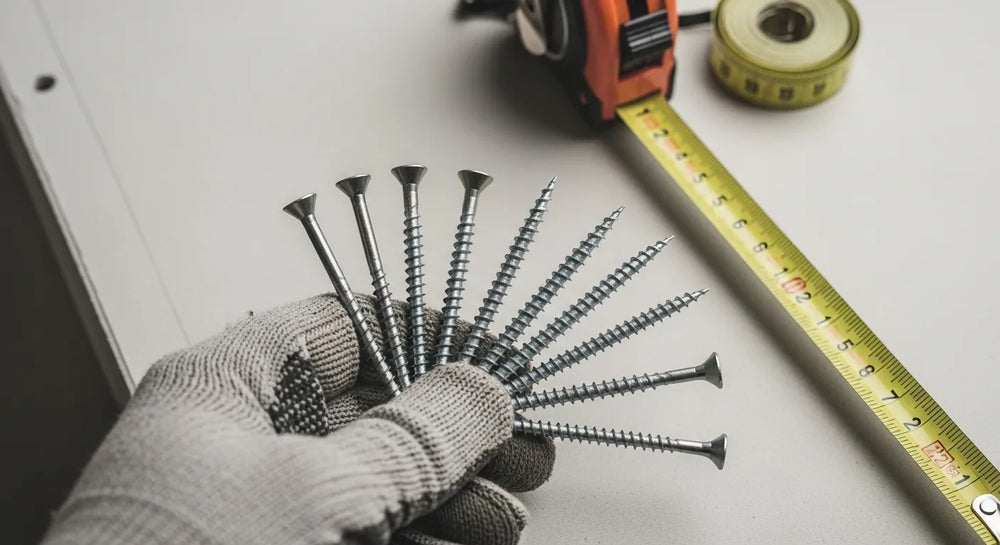
Rescrewing Stripped Wood: Professional Fastener Techniques
Table of Contents
- The Silent Threat of Stripped Screw Holes in Industrial Settings
- Understanding Why Screws Strip Wood
- Preparing for the Repair: A Professional's Toolkit and Mindset
- Core Repair Techniques for Stripped Wood Screw Holes (Industrial Grade)
- Beyond the Fix: Preventing Future Stripping with Superior Fasteners
- Strategic Procurement: Enhancing Your MRO and Project Efficiency with Maden.co
- Conclusion
- FAQ
A persistent challenge in maintenance, repair, and operations (MRO), manufacturing, and construction settings is the stripped screw hole in wood. It’s more than just a minor annoyance; a compromised fastener connection can lead to equipment malfunction, structural instability, costly downtime, and even safety hazards. Imagine a critical piece of machinery vibrating loose due to a stripped mounting screw, or a structural component losing its integrity because a key fastener can no longer hold. These aren't just inconveniences; they represent tangible threats to operational efficiency and safety protocols.
This common issue, often overlooked as a simple DIY fix, demands a professional approach to ensure longevity, reliability, and adherence to industrial standards. This post will delve into the root causes of stripped wood screws, explore a range of professional-grade repair techniques from the practical to the advanced, and, crucially, highlight how the selection of high-quality, American-made fasteners and strategic procurement practices can prevent these issues from recurring. At Maden.co, we understand that for procurement managers, MRO buyers, and design engineers, the integrity of every component is paramount. Our mission is to democratize access to American manufacturing, ensuring you have the right components to not just fix, but to fortify.
The Silent Threat of Stripped Screw Holes in Industrial Settings
While a stripped screw in a household shelf might be a minor inconvenience, the implications in an industrial or commercial environment are far more severe. In MRO contexts, a stripped screw can mean a control panel cover coming loose, exposing sensitive electronics, or a critical guard failing on a production line. For design engineers, specifying the wrong fastener or failing to account for material degradation can lead to warranty issues or product recalls. Business owners face the financial repercussions of slowed production, emergency repairs, and potential liabilities from safety incidents.
The integrity of a screw joint is fundamental to the reliability and safety of countless industrial applications. When a screw no longer bites effectively into wood, the connection weakens, leading to:
- Equipment Downtime: Loose components can cause vibrations, misalignment, and ultimately, machine failure. This translates directly to lost productivity and revenue.
- Safety Hazards: Failing fasteners in structural elements, safety guards, or heavy equipment mounts pose significant risks to personnel.
- Structural Compromise: Over time, repeated stress on a weakened joint can lead to cracks, material fatigue, and complete structural failure in wooden frameworks or assemblies.
- Increased Rework Costs: Repeated, temporary fixes are inefficient and costly. A proper repair the first time saves resources in the long run.
- Material Damage: The act of stripping a screw often damages the surrounding wood, necessitating more extensive repairs than initially anticipated.
Understanding the gravity of this issue moves it beyond a simple handyman task into the realm of precise engineering and strategic material selection.
Understanding Why Screws Strip Wood
To effectively repair a stripped screw hole, one must first understand the mechanisms behind its failure. Stripping typically occurs when the threads of the screw no longer engage adequately with the wood fibers, causing the screw to spin freely without tightening. Several factors contribute to this:
Material Degradation
Wood is an organic material subject to various forms of degradation:
- Age and Drying: As wood ages, it naturally dries out and loses moisture, becoming more brittle. This can cause the wood fibers around a screw hole to become less resilient and more prone to crumbling or breaking under stress. Older, drier wood provides less friction and grip for screw threads.
- Moisture Exposure: Conversely, excessive moisture can lead to wood rot, swelling, and softening. Rotting wood completely loses its structural integrity, making it incapable of holding a screw. Even prolonged exposure to humidity can weaken wood fibers.
- Vibration and Stress: In industrial applications, wood components are often subjected to constant vibration, dynamic loads, or repetitive stress cycles. These forces can gradually widen the screw hole as the screw subtly shifts, abrading the wood fibers over time.
- Chemical Exposure: Certain chemicals, solvents, or cleaning agents can degrade wood, weakening its structure and reducing its ability to hold fasteners.
Improper Installation Techniques
Many stripped screws are a result of poor installation practices:
- Over-tightening: This is perhaps the most common cause. Applying too much torque to a screw forces the threads to tear through the wood fibers, essentially reaming out the hole beyond the point of proper engagement. Modern power tools, while efficient, make over-tightening easier if not handled with care and appropriate torque settings.
- Lack of Pilot Hole: Screws are designed to displace wood as they enter, but without a properly sized pilot hole, the wood can split or the screw can force its way through, creating an irregular, oversized, and weakened hole. The pilot hole should be slightly smaller than the screw's root diameter, allowing the threads to bite firmly without excessive strain on the wood.
- Incorrect Pilot Hole Size: A pilot hole that is too small can lead to excessive friction, making the screw difficult to drive and increasing the risk of stripping as the wood fibers are overly compressed or fractured. A hole that is too large offers insufficient material for the screw threads to engage.
- Angled Driving: Driving a screw at an angle to the wood surface, rather than perpendicularly, can create uneven pressure on the wood fibers, leading to a weak, eccentric hole more prone to stripping.
Wrong Fastener Choice for the Material
The interaction between the fastener and the wood is critical:
- Screw Diameter: Using a screw that is too small for the intended load or the existing hole will result in insufficient holding power. Conversely, a screw that is too large for the wood thickness or density can cause splitting.
- Thread Type: Wood screws are designed with coarse, sharp threads to grip wood fibers effectively. Using a machine screw or a sheet metal screw, which have finer threads, in wood will provide inadequate holding power and is likely to strip.
- Screw Length: A screw that is too short will not penetrate deeply enough into the wood to achieve maximum holding power, making it susceptible to pulling out or stripping under load. A screw that is too long can punch through the material.
- Material of the Screw: While less common for stripping, softer screws (e.g., cheap, low-grade steel) can have their threads deform under stress, reducing their grip on the wood. Harder, more durable fasteners sourced from verified manufacturers offer superior performance.
Repeated Disassembly and Assembly
In MRO and assembly operations, components are often removed and reinstalled for maintenance, inspections, or upgrades. Each time a screw is removed and reinserted into the same hole, the wood fibers are slightly compressed and abraded. Over multiple cycles, this gradual wear can enlarge the hole to the point where the screw can no longer achieve a secure grip. This is a common issue for access panels, covers, and modular components.
Preparing for the Repair: A Professional's Toolkit and Mindset
Before attempting any repair, a systematic approach is essential. This includes gathering the right tools, prioritizing safety, and thoroughly assessing the damage. For an MRO buyer, a design engineer, or a procurement manager, understanding this preparatory phase is as important as the repair itself, as it informs the choice of materials and fasteners needed.
Importance of Proper Tools
Having the correct tools on hand not only makes the job easier but also ensures a more effective and durable repair:
- Drills and Drivers: A variable-speed drill/driver is crucial. For pilot holes, precision is key. For driving screws, adjustable clutch settings prevent over-tightening. Consider impact drivers for high-torque applications where appropriate, but with careful control.
- Drill Bit Sets: A comprehensive set of twist drills is necessary for creating pilot holes and for drilling out damaged wood for dowels or inserts. Remember to select bits appropriate for wood.
- Countersink Bits: For screws with conical heads (like flat heads), a countersink bit creates a neat, flush finish, ensuring the screw head sits correctly without damaging the surrounding wood or leaving protrusions. You can find high-quality fasteners like our Flat Slot Drive Brass Wood Screw that benefit from a well-prepared countersink.
- Clamps: Essential for securing components during drilling, gluing, or assembly. They ensure stability and accuracy, especially when working with larger or heavier pieces.
- Measuring Tools: Calipers, rules, and tape measures are vital for accurately sizing pilot holes, dowels, or inserts, and for determining the appropriate screw length and diameter.
- Screwdrivers and Bits: A good set of manual screwdrivers or power bit sets matching various drive types (slot, Phillips, Torx, square) ensures proper engagement with the screw head, preventing cam-out and further damage to the fastener or material. Our Round Slot Drive Brass Wood Screw and Oval Slot Drive Silicon Bronze Wood Screw both utilize slot drives, emphasizing the need for appropriate tooling.
- Adhesives: High-strength wood glues (PVA), epoxy resins, and construction adhesives are indispensable for securing dowels, fillers, and some types of threaded inserts.
Safety Considerations (PPE)
Safety is paramount in any industrial or workshop setting:
- Eye Protection: Always wear safety glasses or goggles to protect against flying debris from drilling or sanding.
- Gloves: Protect hands from splinters, sharp edges, and chemicals (adhesives).
- Dust Masks/Respirators: When drilling, sanding, or working with wood fillers, dust can be a respiratory irritant. A dust mask or respirator is recommended.
- Hearing Protection: If using loud power tools for extended periods, earplugs or earmuffs are advisable.
Assessing the Damage: Can it be Fixed?
Before committing to a repair method, a thorough assessment of the stripped hole and surrounding wood is critical:
- Size of the Stripped Hole: Is it slightly enlarged, or is it a gaping cavity? The degree of damage will dictate the repair strategy.
- Integrity of Surrounding Wood: Is the wood around the hole sound, or is it soft, crumbly, or rotting? If the wood itself is severely compromised, a simple repair might not suffice, and a more extensive patch or even replacement of the wooden component might be necessary.
- Load Requirements: How much stress will the fastener joint need to bear? A low-stress application (e.g., a decorative panel) can tolerate a simpler repair than a high-load, structural component (e.g., a machine mount).
- Frequency of Future Removal: If the component will need to be frequently removed for maintenance, a repair method that offers high reusability (like threaded inserts) will be preferred over one that relies on glue and new wood fibers.
- Aesthetic Considerations: In visible applications, the repair should be as discreet as possible. For internal structural components, function takes precedence over form.
By systematically preparing and assessing, you can select the most appropriate and durable repair method, ensuring long-term reliability and reducing the likelihood of future failures.
Core Repair Techniques for Stripped Wood Screw Holes (Industrial Grade)
Repairing a stripped screw hole effectively requires choosing the right technique for the level of damage and the application's demands. Moving beyond quick fixes, these methods offer lasting solutions for industrial reliability.
Method 1: The Oversized Screw (Strategic Application)
This is the simplest method and is suitable for minor stripping where the original hole is only slightly enlarged, and the surrounding wood remains largely intact. It’s a quick fix but should be used judiciously, primarily in low-stress applications or as a temporary measure until a more robust repair can be implemented.
When to Use:
- Slightly enlarged screw holes where the original screw just barely spins.
- Non-critical applications where minimal load is applied.
- When speed of repair is a priority and aesthetics are not a major concern (as the larger screw head might be visible).
Considerations:
- Material Integrity: Ensure the surrounding wood is solid and capable of holding the larger screw. If the wood is soft or crumbly, an oversized screw will only strip again.
- Aesthetics: A larger screw might not be visually pleasing if the application is visible.
- Future Repairs: This method consumes more wood, making subsequent repairs (e.g., using a dowel) potentially more challenging.
- Pilot Hole: Even with an oversized screw, a slightly larger pilot hole appropriate for the new screw's diameter is crucial to prevent splitting the wood and ensure proper thread engagement.
Application:
Select a screw that is one or two gauge sizes larger than the original, or slightly longer. For a reliable, U.S.-made option for general woodworking and repairs where aesthetics are a consideration, consider our Round Slot Drive Brass Wood Screw. These robust fasteners provide excellent holding power and corrosion resistance, suitable for a variety of wooden components. Carefully drill a pilot hole suitable for the new, larger screw diameter, then drive the screw slowly and deliberately, stopping as soon as resistance is felt to avoid over-tightening.
Method 2: Wood Plugs and Dowels (The Foundation of a Stronger Fix)
This is a highly effective and structurally sound method for repairing significantly stripped holes, restoring the wood to near-original integrity. It involves creating a fresh, solid piece of wood within the damaged hole, allowing for a new, strong connection using the original screw size.
Detailed Steps:
- Drill Out the Damaged Area: Using a drill bit slightly larger than the stripped hole (e.g., 1/4 inch or 3/8 inch, depending on the hole size), carefully drill out the damaged wood. The goal is to create a clean, uniformly sized hole that removes all compromised wood. Ensure the drill is held perfectly perpendicular to the surface.
-
Prepare the Dowel or Plug:
- Dowel: Cut a section of hardwood dowel (maple, oak, poplar work well) to a length slightly longer than the depth of the drilled hole. The dowel's diameter must match the drilled hole precisely.
- Wood Plug: Alternatively, use a specialized wood plug cutter to create a tapered plug from a piece of matching wood. This offers excellent aesthetic blending if desired.
- Apply Adhesive: Apply a generous amount of high-quality wood glue (PVA glue) or two-part epoxy to the inside of the drilled hole and thoroughly coat the dowel or plug. For critical industrial applications, epoxy might offer superior strength and moisture resistance.
- Insert the Dowel/Plug: Drive the glue-coated dowel or plug firmly into the drilled hole. Use a mallet or clamp to ensure it's fully seated and flush (or slightly proud).
- Cure Time: Allow the adhesive to cure completely according to the manufacturer's instructions. This is a critical step; rushing it will compromise the repair.
- Trim and Sand: Once cured, trim any excess dowel or plug flush with the wood surface using a flush-cut saw or chisel. Sand the area smooth.
- Drill New Pilot Hole: Precisely drill a new pilot hole into the center of the inserted dowel/plug, ensuring it's the correct size for the original screw that will be used.
- Reinsert Screw: Drive the original screw back into the newly created, solid wood.
Advantages:
- Restores Integrity: This method effectively restores the structural integrity of the wood, providing a solid foundation for the screw.
- Allows Original Screw Size: You can reuse the original screw, which is often important for consistency or specific design requirements.
- Strong and Durable: When done correctly with quality materials, this repair is exceptionally strong and long-lasting.
Material Considerations for Dowels/Plugs:
For maximum strength and compatibility, use hardwood dowels or plugs. Hardwoods like oak, maple, or birch offer superior density and screw-holding power compared to softer woods. In industrial environments, where specific performance might be required, sourcing dowels made from dense, stable engineered wood products could also be an option.
Method 3: Wood Fillers and Epoxy (For Structural Gaps)
Wood fillers and epoxy are excellent for repairing larger, irregularly shaped holes, splinters, or areas of rot where a dowel might not fit perfectly. While some wood fillers are primarily cosmetic, industrial-grade epoxy fillers can provide significant structural strength.
Types of Fillers:
- Wood Putty: Best for small holes and cosmetic repairs. Not generally recommended for structural screw holes.
- Two-Part Epoxy Wood Filler: These are much stronger, offering excellent adhesion and hardness once cured. They can be sanded, stained, and painted. Ideal for screw holes requiring some structural integrity.
- Construction Adhesives/Epoxies: Can be used, sometimes mixed with sawdust, to create a custom filler for very large or complex voids.
Application Techniques:
- Clean the Hole: Ensure the stripped hole is free of loose wood fibers, dust, and debris. For epoxy, a slightly rough surface provides better adhesion.
- Mix Filler (if applicable): For two-part epoxy fillers, mix the components precisely according to the manufacturer's instructions. Inaccurate mixing can lead to improper curing.
- Apply Filler: Generously apply the filler into the stripped hole, ensuring it's completely filled and slightly mounded above the surface. For deeper holes, apply in layers, allowing partial curing between layers to prevent sagging and ensure full cure.
- Cure Time: Allow ample time for the filler to fully cure. This can range from minutes for fast-setting epoxies to hours or even overnight for some wood fillers.
- Sand Smooth: Once completely cured and hard, sand the filled area flush with the surrounding wood.
- Drill Pilot Hole: Precisely drill a new pilot hole into the cured filler, sized for the original screw. The filler should hold the threads firmly.
- Reinsert Screw: Drive the original screw into the newly drilled pilot hole. For applications requiring a clean, flush finish where a filler might be used to repair a surface imperfection, a Flat Slot Drive Brass Wood Screw can be ideal due to its ability to sit flush when properly countersunk.
Limitations:
- Strength: While epoxy fillers are strong, they may not match the shear strength of solid wood or a properly installed dowel, especially in very high-load applications.
- Flexibility: Some fillers are more brittle than wood, which could be an issue in applications subject to constant vibration or flexing.
- Reusability: Repeated removal and reinsertion of the screw into a filler might eventually compromise its integrity.
Method 4: Threaded Inserts (The Ultimate Industrial Solution)
For high-load applications, components that require frequent disassembly and reassembly, or when repairing expensive machinery where a traditional wood repair might not offer sufficient durability, threaded inserts are the gold standard. They provide a robust, machine-thread connection within wood.
Types of Inserts:
- Helical (Coil) Inserts (e.g., Helicoil): These are wire-form inserts that require a tap to create new threads in the wood (or metal). They are exceptionally strong and are often used for repairing stripped metal threads, but specialized versions exist for wood.
- Knife-Thread Inserts: These feature sharp, external threads designed to cut into wood as they are screwed in. They often have internal machine threads for a bolt.
- Press-in Inserts: These inserts are pressed into a pre-drilled hole and often have barbs or splines on the exterior to grip the wood. Some require epoxy to secure.
- Expansion Inserts: These expand as a screw is driven into them, creating a tighter grip.
Installation Process:
- Drill Pilot Hole: Accurately drill a pilot hole for the insert. The size of this hole is critical and must match the insert manufacturer's specifications precisely. Too small, and the wood might split; too large, and the insert won't grip.
- Clean Hole: Remove all sawdust and debris from the pilot hole.
-
Install Insert:
- Knife-Thread: Use a screwdriver, Allen key, or a specialized driving tool to screw the insert into the pilot hole. Drive it until it is flush with the surface.
- Press-in: Press the insert into the hole, often with a hammer or specialized tool. Some require epoxy for added security.
- Helical: Tap the hole with the appropriate tap, then coil the insert into the tapped hole.
- Insert Bolt/Screw: Once the insert is securely installed, you can use a machine screw or bolt of the corresponding thread size into the insert. This provides a durable, reusable connection.
When to Choose Inserts:
- High-Load Applications: Where significant weight or force will be applied to the fastener.
- Frequent Disassembly: Ideal for access panels, modular components, or any part that needs to be regularly removed and reinstalled without degrading the connection.
- Repairing Critical Components: When repairing expensive machinery or safety-critical structures, inserts offer superior reliability.
- Material Repair: Especially effective in softer woods or engineered wood products that might not hold traditional screws well.
Material of Inserts:
Inserts are available in various materials, including brass, steel, and stainless steel. The choice depends on the application's environment (e.g., corrosion resistance needed for outdoor or marine use) and strength requirements. For instance, if you're working with components that require superior corrosion resistance in potentially harsh environments, an insert paired with a fastener like our Oval Slot Drive Silicon Bronze Wood Screw could provide an exceptionally durable and long-lasting connection. Silicon bronze is an excellent choice for marine applications, outdoor structures, and electrical components where its unique properties shine.
Beyond the Fix: Preventing Future Stripping with Superior Fasteners
Repairing a stripped screw hole is essential, but preventing future occurrences is a hallmark of industrial excellence. This begins with strategic fastener selection and procurement.
The Maden.co Advantage: Sourcing U.S.-Made Excellence
At Maden.co, we believe that the best way to prevent fastener failures is to start with the best fasteners. Our entire business model is built on this principle; you can learn more about our mission to champion American manufacturing here: About Maden.co.
For a procurement manager under pressure to source a specific DIN 931 compliant hex cap screw, a design engineer needing specific material certifications for a new prototype, or an MRO buyer facing an unexpected equipment breakdown, the ability to quickly find and finance a verified, U.S.-made part is a game-changer. Our vision is to become the definitive platform that proves American-made components are as accessible and convenient as any global alternative, driving the manufacturing revival with our tagline: "America's manufacturing revival is here."
We are democratizing access to American manufacturing, connecting industrial buyers with over 2.5 million American-made products from our network of 800+ verified U.S. manufacturers. Our core values reflect our commitment:
- American Manufacturing Pride: We believe in the quality and innovation of U.S. production.
- Digital Innovation: Our platform leverages technology to simplify complex procurement.
- Supply Chain Transparency: We connect you directly with verified manufacturers.
- Industrial Excellence: We provide access to components that meet the highest standards.
- Customer Empowerment: We equip you with the tools and products for success.
Choosing U.S.-made fasteners from Maden.co offers distinct advantages:
- Quality and Consistency: American manufacturers adhere to stringent quality control standards, resulting in fasteners with precise dimensions, consistent threading, and reliable material properties. This consistency directly translates to fewer installation issues and better long-term performance, significantly reducing the likelihood of stripping.
- Adherence to Standards: U.S. manufacturers commonly meet or exceed critical industry standards (e.g., ANSI, ASTM, ISO), ensuring that fasteners perform as expected in demanding industrial applications.
- Supply Chain Resilience: Sourcing domestically reduces reliance on complex global supply chains, mitigating risks associated with geopolitical instability, shipping delays, and fluctuating international trade policies. This enhances your overall supply chain resilience.
- Support for the Domestic Economy: Investing in American-made products strengthens local economies and supports skilled labor.
A better screw from the outset drastically reduces the likelihood of future stripping, saving time, money, and headaches. You can explore our vast catalog of U.S.-made industrial fasteners and components at Maden.co.
Material Selection: Matching the Fastener to the Application
The material of the screw is just as important as its physical dimensions. Different applications demand different material properties.
- Brass: Known for its excellent corrosion resistance and attractive appearance. While softer than steel, brass screws are ideal for decorative applications, marine environments, and certain electrical components where non-magnetic properties are beneficial. Our Round Slot Drive Brass Wood Screw is a prime example of a fastener offering both aesthetic appeal and practical corrosion resistance for such uses. Similarly, the Flat Slot Drive Brass Wood Screw provides a flush finish and the same material benefits.
- Steel: The most common fastener material, offering high strength and durability. Available in various grades, from low carbon steel for general use to hardened alloy steels for structural applications.
- Stainless Steel: Offers superior corrosion resistance compared to plain steel, making it ideal for outdoor, marine, and chemical environments. Different grades (e.g., 304, 316) provide varying levels of resistance.
- Silicon Bronze: An alloy prized for its exceptional corrosion resistance, particularly in saltwater and harsh chemical environments, often outperforming stainless steel in specific conditions. It also offers good strength. The Oval Slot Drive Silicon Bronze Wood Screw is an excellent choice for boat building, outdoor architectural elements, or historical restoration projects where both durability and aesthetics are critical.
- Alloys: Specialty alloys like titanium or inconel are used in extreme environments (high temperature, aggressive chemicals) where standard materials would fail.
Drive Types and Head Styles
The design of the screw head and drive type impacts ease of installation and resistance to cam-out (when the driver slips out of the screw head).
- Slot Drive: Traditional and aesthetically pleasing, but requires careful alignment and torque control to prevent cam-out. This is a common drive type for many brass and silicon bronze screws, demanding a precise fit with the screwdriver.
- Phillips Drive: More resistant to cam-out than slot drives, making them easier to drive with power tools.
- Torx (Star) Drive: Offers superior cam-out resistance and allows for greater torque application, ideal for high-production environments.
- Square (Robertson) Drive: Very good cam-out resistance and easy to use, especially for overhead work or in tight spaces.
Head styles determine how the screw sits in the material:
- Flat Head: Designed to be countersunk, sitting flush with the surface for a smooth finish.
- Round Head: Sits proud of the surface, offering a decorative look or providing a larger bearing surface.
- Oval Head: A decorative variation of the flat head, with a slightly rounded top that sits partially proud, often used with finishing washers.
Thread Design and Pitch
The effectiveness of a screw in wood largely depends on its thread design.
- Coarse Threads: Wood screws typically have coarse, sharp threads with a wide spacing, designed to cut into and grip wood fibers effectively without stripping the material.
- Fine Threads: More common for machine screws used in metals or plastics. Using fine-threaded screws in wood will provide inadequate holding power.
- Self-Tapping vs. Pre-drilling: While some wood screws are "self-tapping" in the sense they don't require pre-threading the hole, nearly all wood screws benefit from a pilot hole to prevent splitting and ensure optimal thread engagement.
- Importance of Pilot Holes: As discussed, a correctly sized pilot hole is paramount. It allows the screw to enter smoothly, creates space for the core of the screw, and allows the threads to bite into the remaining wood fibers firmly.
Coatings and Finishes
Fastener coatings provide additional protection against corrosion and can improve driving performance.
- Zinc Plating: A common, inexpensive coating that offers good corrosion resistance in dry environments.
- Black Oxide: Provides a mild corrosion resistance and a decorative, non-reflective finish.
- Galvanization (Hot-Dip Galvanized): A thick zinc coating that offers excellent corrosion resistance for outdoor and marine applications. Typically used for larger fasteners.
- Proprietary Coatings: Many manufacturers offer specialized coatings for enhanced corrosion resistance, lubrication, or specific aesthetic requirements.
By carefully considering all these factors and leveraging Maden.co's extensive catalog of American-made components, procurement managers and engineers can specify and acquire fasteners that not only perform reliably but also actively prevent the very issues, like stripped wood holes, that lead to costly repairs and downtime.
Strategic Procurement: Enhancing Your MRO and Project Efficiency with Maden.co
Sourcing the right fasteners and components is a strategic decision that directly impacts operational efficiency, project timelines, and overall profitability. Maden.co offers a comprehensive solution to enhance your procurement process.
Reducing Procurement Friction
Finding niche, U.S.-made industrial components can often be a time-consuming and fragmented process involving multiple suppliers and lengthy lead times. Maden.co streamlines this. Our platform offers a centralized marketplace where you can quickly locate specific fasteners, hardware, and other industrial products from hundreds of verified American manufacturers. This digital innovation minimizes the "procurement friction" that often plagues MRO and project purchasing, allowing your team to focus on core tasks rather than supplier searches.
Ensuring Compliance
In many industries, compliance with specific standards (e.g., DIN, NPT, ASTM) is non-negotiable. Our network of verified U.S. manufacturers is committed to producing components that meet rigorous specifications. When you source through Maden.co, you gain confidence that the products you receive will conform to the necessary industry standards, helping you avoid costly non-compliance issues and ensuring product integrity. This is particularly vital for design engineers who must specify components with certified performance.
Enhancing Supply Chain Resilience
The past few years have underscored the critical importance of supply chain resilience. By connecting you with a vast network of domestic manufacturers, Maden.co significantly reduces your reliance on overseas supply chains. This localized sourcing strategy translates to:
- Shorter Lead Times: Less time waiting for international shipping.
- Reduced Geopolitical Risk: Less exposure to tariffs, trade disputes, and international shipping disruptions.
- Greater Visibility and Control: Easier communication and quicker problem-solving with domestic suppliers.
- Access to Quality: Consistent access to high-quality, U.S.-made products.
This strategic approach to sourcing fortifies your supply chain against unforeseen disruptions, ensuring continuity of operations.
Improving Total Cost of Ownership (TCO)
While the initial purchase price is a factor, smart procurement focuses on Total Cost of Ownership (TCO). High-quality, U.S.-made fasteners, though potentially having a slightly higher upfront cost than cheap imported alternatives, offer significant long-term savings by:
- Reducing Rework and Failures: Superior quality minimizes stripping, breakage, and premature wear, lowering repair and replacement costs.
- Extending Asset Lifespan: Reliable fasteners contribute to the longevity and performance of machinery and structures.
- Lowering Labor Costs: Easier installation and fewer maintenance interventions mean more efficient use of skilled labor.
- Mitigating Risk: Avoiding downtime, safety incidents, and compliance failures protects your business from costly penalties and reputational damage.
Maden.co empowers you to make procurement decisions that deliver strategic business value, improving your TCO over the operational lifespan of your assets.
Instant Financing for Capital-Intensive Projects
We understand that managing cash flow is critical for businesses of all sizes, especially when making larger-volume purchases for essential MRO inventory or capital projects. That's why Maden.co offers Instant Financing as a key differentiator. This isn't just a payment method; it's a strategic tool designed to empower procurement managers and business owners to:
- Optimize Cash Flow: Acquire necessary components without immediately impacting working capital.
- Seize Opportunities: Make larger, more cost-effective bulk purchases without budgetary delays.
- Streamline Project Execution: Ensure critical materials are on hand when needed, keeping projects on schedule.
You can apply for Instant Financing at checkout to streamline your capital-intensive projects, ensuring your operations never miss a beat due to financing constraints.
For U.S. Manufacturers: Join the Movement
Our commitment to American manufacturing extends beyond just sourcing. We actively invite qualified U.S. manufacturers to join our growing network. If you produce high-quality, industrial-grade products, we offer a powerful platform to expand your reach and connect with thousands of industrial buyers across the nation. Are you a U.S. manufacturer looking to expand your reach? Register as a vendor and join the American manufacturing revival. We provide the digital tools and marketplace to showcase your excellence and contribute to a stronger domestic supply chain: Vendor Registration.
Conclusion
Stripped screw holes in wood represent a common but critical challenge across industrial sectors, demanding more than a simple workaround. From the subtle degradation of wood fibers to the profound implications for operational safety and equipment longevity, addressing this issue with professional techniques and superior components is paramount. We've explored a spectrum of solutions, from the fundamental oversized screw approach to the robust and enduring application of threaded inserts, emphasizing that each repair method's success hinges on meticulous preparation, precise execution, and, most importantly, the quality of the fasteners used.
At Maden.co, we are not just a marketplace; we are a strategic partner in building a more reliable and efficient procurement process for your business. By democratizing access to over 2.5 million American-made products from 800+ verified U.S. manufacturers, we empower procurement managers, MRO buyers, and design engineers to overcome challenges like stripped wood screws with confidence. We provide the tools to not only repair but to prevent, ensuring your operations benefit from enhanced supply chain resilience, improved Total Cost of Ownership, and unwavering compliance with critical industry standards.
Don't let a stripped screw compromise your project's integrity or your operational efficiency. Take proactive steps toward lasting solutions. We encourage you to explore the extensive catalog of high-quality, American-made industrial fasteners and components available on Maden.co. Discover how readily available U.S.-made products can elevate your projects and strengthen your supply chain. For larger investments, remember that you can apply for Instant Financing at checkout to streamline your capital-intensive projects. If you have specific sourcing questions, our team is ready to help: Contact Maden.co. America's manufacturing revival is here, and Maden.co is your gateway to its unparalleled quality and reliability.
FAQ
Q1: What is the most durable method for repairing a stripped wood screw hole in a high-stress application?
A1: For high-stress applications or components requiring frequent disassembly, threaded inserts are the most durable and reliable solution. They provide a robust, machine-thread connection within the wood, which is far stronger and more reusable than relying on wood fibers alone.
Q2: Can I use wood putty or wood filler for a stripped screw hole in structural wood?
A2: While wood putty can fill small cosmetic holes, it is generally not suitable for repairing stripped screw holes in structural wood due to its limited strength. Two-part epoxy wood fillers offer significantly more strength and can be effective for moderate structural repairs, but for maximum integrity in critical applications, a wood dowel repair or a threaded insert is preferable.
Q3: Why is sourcing U.S.-made fasteners important for preventing stripped screw holes?
A3: U.S.-made fasteners from verified manufacturers adhere to stringent quality control standards, ensuring consistent dimensions, precise threading, and reliable material properties. This consistency means better fit, optimal thread engagement, and reduced likelihood of material failures or stripping during installation and use, contributing to long-term reliability and lower Total Cost of Ownership.
Q4: How can Maden.co's Instant Financing help with my procurement needs when repairing or upgrading equipment?
A4: Maden.co's Instant Financing option allows procurement managers and business owners to manage cash flow effectively by enabling larger-volume purchases of critical components without immediate strain on working capital. This strategic tool helps ensure you can acquire the necessary high-quality, U.S.-made fasteners and materials for repairs or upgrades promptly, keeping your projects on schedule and optimizing your budget. You can apply for this feature directly at checkout.


