
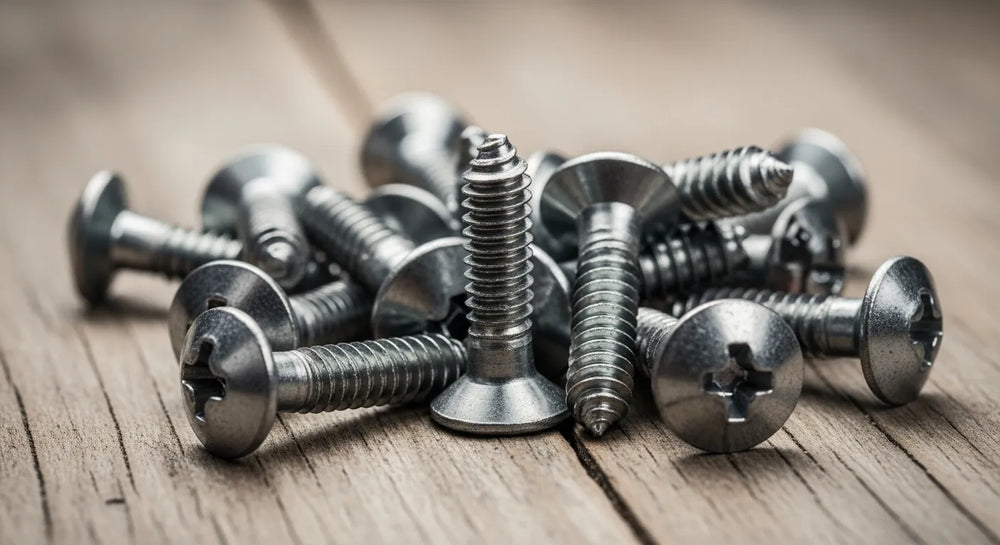
Screwing into Wood Glue: Best Practices for Durable Joints
Table of Contents
- Understanding the Fundamentals: Glue, Wood, and Screws
- Can You Screw into Cured Wood Glue? The Nuance Explained
- Best Practices: Combining Glues and Screws Effectively
- The Strategic Value of Sourcing American-Made Components
- Overcoming Procurement Friction with Digital Innovation
- Conclusion: Building Stronger Joints and a Stronger America
- Frequently Asked Questions (FAQ)
Picture a critical assembly line where a minor structural flaw could halt production, or a precision engineering project where a single failing joint compromises an entire system. In such scenarios, the integrity of every connection point is paramount. This often leads industrial buyers, design engineers, and MRO professionals to ponder a seemingly simple yet profoundly important question: can I screw into wood glue? The answer isn't a straightforward yes or no; it delves into the intricate mechanics of adhesion, material science, and the synergistic relationship between chemical bonds and mechanical fasteners.
This post will meticulously explore the science behind wood glues and screws, dissecting their individual strengths and how they interact within a joint. We will uncover best practices for achieving maximum durability, discuss various glue types and their implications, and illuminate scenarios where screwing into glue is beneficial versus detrimental. Our goal is to equip you with the knowledge to make informed decisions, ensuring the longevity and reliability of your projects. By understanding these fundamental principles, you can optimize your material selection and assembly processes, ultimately reducing the total cost of ownership (TCO) for your operations. At Maden.co, we believe that informed decisions, coupled with access to the highest quality American-made components, are the bedrock of industrial excellence.
Understanding the Fundamentals: Glue, Wood, and Screws
To properly address whether one can screw into wood glue, we must first understand the individual properties and functions of each element involved: the wood substrate, the adhesive, and the mechanical fastener. Each plays a distinct role in creating a robust joint, and their interaction dictates the ultimate strength and longevity of the assembly.
The Nature of Wood and Its Fibers
Wood is a complex, anisotropic material, meaning its properties vary depending on the direction of measurement. Its strength primarily comes from long cellulose fibers bound together by lignin. Screws work by displacing and compressing these fibers, creating threads that interlock with the wood's structure. The holding power of a screw depends heavily on:
- Wood Density: Denser woods offer more material for the screw threads to grip, leading to higher pull-out resistance. Softer woods are more prone to stripping.
- Grain Direction: Screws hold much better when driven into the end grain, perpendicular to the wood fibers, rather than parallel to them (which can cause splitting).
- Moisture Content: Wood expands and contracts with changes in moisture, which can loosen screws over time. Proper conditioning is vital.
For a design engineer specifying materials for a high-stress wooden component, understanding these nuances is critical. The right fastener in the wrong wood, or without proper preparation, can lead to premature failure, impacting product reliability and potentially requiring costly MRO interventions down the line.
The Science of Adhesion: How Wood Glues Work
Wood glues primarily work by creating a strong chemical and mechanical bond with the wood fibers. They penetrate the porous surface, solidify, and essentially become part of the wood structure itself. Different types of wood glues offer varying properties:
- PVA (Polyvinyl Acetate) Glues (e.g., common yellow wood glue): These are perhaps the most ubiquitous. They cure by evaporation of water, forming a strong, rigid bond. While strong, cured PVA glue itself doesn't offer threads for a screw to bite into in the same way wood fibers do.
- Polyurethane Glues: These glues react with moisture to cure, forming extremely strong, often somewhat flexible, waterproof bonds. They expand slightly during curing, which can fill small gaps.
- Epoxy Resins: Two-part epoxies create exceptionally strong, rigid, and often waterproof bonds. They excel at filling voids and bonding disparate materials. Their cured state is very hard.
- Hide Glues: Traditional animal-based glues that cure by water evaporation. They are reversible with heat and moisture but generally offer less structural strength than modern synthetics.
- Cyanoacrylate (CA) Glues (Super Glue): These cure almost instantly by reacting with surface moisture. They create a brittle bond, not ideal for structural wood joints.
The key takeaway for procurement managers and MRO buyers is that the type of glue significantly influences its suitability for receiving a screw. A hard, brittle glue might crack, while a flexible one might deform, neither providing ideal screw retention.
The Role of Screws as Mechanical Fasteners
Screws provide mechanical clamping force and shear resistance. They are designed to draw pieces of material tightly together and resist forces that try to pull them apart or slide them past each other. The threads of a screw create a mechanical interlock with the substrate. When driven into wood, the threads carve into the fibers, providing grip.
The selection of the right screw is paramount. Factors include:
- Material: Steel, brass, silicon bronze, stainless steel. Each offers different strength, corrosion resistance, and aesthetic properties. For example, for classic applications requiring both strength and an aesthetically pleasing finish, our selection includes Round Slot Drive Brass Wood Screws designed for reliable performance.
- Head Type: Flat, round, oval, hex. This dictates flushness and driving method. When a flush fit is critical for your design, consider the precision of Flat Slot Drive Brass Wood Screws, ideal for joinery where a smooth surface is paramount.
- Drive Type: Slotted, Phillips, Torx, square.
- Thread Type: Coarse threads for wood, fine threads for metal.
- Length and Gauge: Appropriate size for the application. For environments demanding superior corrosion resistance, especially in marine or outdoor applications, explore our Oval Slot Drive Silicon Bronze Wood Screws, engineered for lasting durability.
Can You Screw into Cured Wood Glue? The Nuance Explained
The core question "can I screw into wood glue?" needs to be addressed with a clear understanding of its implications. The simple answer is: yes, you technically can, but it is rarely the optimal or intended application, and often comes with significant caveats.
The primary purpose of wood glue is to create a bond between wood fibers, forming a joint that is often stronger than the wood itself. Screws, on the other hand, derive their holding power from mechanically interlocking with the wood fibers. When you drive a screw into cured wood glue, you are not primarily engaging with wood fibers but rather with a solidified adhesive mass.
When it Might Work (with Caution)
In certain specific situations, screwing into cured glue might offer some degree of holding power, but it's crucial to understand the limitations:
- Thin Glue Lines: If the glue line is extremely thin and the screw passes predominantly through solid wood, with only minimal contact with the cured adhesive, the effect might be negligible. The screw is still primarily gripping the wood.
- Dense, Hard Cured Glues (e.g., Epoxy): Certain high-density, brittle glues like epoxy, once fully cured, can offer some resistance to a screw, much like a very dense wood. However, this is still not ideal. The screw creates its own threads by crushing the epoxy, which can be prone to cracking or stripping if overloaded. It's an imperfect substitute for a true wood matrix.
- Temporary Fastening: For very light-duty applications or as a temporary clamp while glue cures, a screw might be driven into an already glued joint. However, this is more about providing initial clamping pressure than relying on the glue to hold the screw long-term.
- Pre-Drilled Pilot Holes: If a pilot hole is precisely drilled through the cured glue and into the wood, a screw might be driven without major issues. The pilot hole guides the screw and reduces the chance of cracking brittle glue.
When it is Not Recommended
In most structural or high-stress applications, screwing directly into a thick, cured wood glue line is generally not recommended for several reasons:
- Lack of Fiber Interlock: Unlike wood, cured glue does not have fibers that the screw threads can effectively grab and compress. Instead, the screw relies on simply displacing and compressing the solid mass of the glue. This results in significantly reduced pull-out strength compared to screwing into solid wood.
- Brittle Failure: Many cured glues, especially PVA and epoxy, are quite brittle. Driving a screw into them can cause the glue to crack, crumble, or "strip out" easily, leaving little to no holding power.
- Reduced Shear Strength: A screw driven through a glue line relies on the glue to transmit shear forces to the wood. If the glue fails around the screw, the joint's shear strength is compromised.
- Adhesion Compromise: Driving a screw into a still curing glue line can disrupt the adhesive bond as it forms, weakening both the glue joint and the screw's potential holding power. It’s a double detriment.
- Long-Term Reliability: Over time, thermal expansion/contraction, vibrations, or stress can degrade the bond between the screw and the glue, leading to loosening and joint failure.
For a procurement manager under pressure to source a specific DIN 931 compliant hex cap screw or a design engineer needing specific material certifications for a new prototype, the ability to quickly find and finance a verified, U.S.-made part is a game-changer. Ensuring that these fasteners are used in optimal conditions, rather than relying on compromised joints, is fundamental to the integrity of the final product. Our mission at Maden.co is to democratize access to American manufacturing, connecting industrial buyers with over 2.5 million American-made products from our network of 800+ verified U.S. manufacturers. This means you have the resources to build components correctly from the start.
Best Practices: Combining Glues and Screws Effectively
The optimal approach is not to use screws instead of glue, or glue instead of screws, but to understand how they can work together synergistically to create joints that are stronger and more durable than either could achieve alone.
1. Let the Glue Cure Fully
This is perhaps the most critical rule. If you plan to use screws in a joint that also uses glue, ensure the glue is fully cured and dried before driving screws.
- Why? Driving a screw into wet or partially cured glue disrupts the chemical bonding process. It can also trap moisture, preventing proper curing and significantly weakening the adhesive bond. Furthermore, a wet glue line offers no resistance to the screw, leading to poor thread formation and weak holding power.
- Practical Tip: Always refer to the manufacturer's recommendations for clamping and full cure times. While many glues achieve initial grab within minutes, full strength can take 24-72 hours, especially in cooler, humid conditions.
2. Pre-Drill Pilot Holes
Pilot holes are essential when working with wood, and even more so when glue is involved.
- Why? Pilot holes prevent splitting of the wood (and potentially cracking of cured glue) by providing a clear path for the screw. They ensure the screw goes in straight, and they allow the screw threads to properly engage with the wood fibers, maximizing holding power.
- Through Cured Glue: If you must drive a screw through a section with cured glue, a pilot hole sized correctly for the screw's shank (the unthreaded part) and root diameter (the core of the threaded part) is imperative. This minimizes stress on the cured adhesive and guides the screw into the wood beyond.
3. Use Screws as Clamps During Curing
One of the most effective ways to combine glue and screws is to use screws as temporary clamping devices while the glue cures.
- Process: Apply glue to the joint, bring the pieces together, and then drive screws to hold the pieces firmly in place while the adhesive sets. Once the glue is fully cured, the screws have served their primary purpose. In many cases, the screws can remain in place, adding extra mechanical reinforcement to the now very strong glued joint.
- Benefit: This method ensures optimal glue bond strength by providing consistent clamping pressure, while the screws offer immediate mechanical stability. For industrial applications where rapid assembly is crucial, this combined approach ensures both speed and long-term integrity.
4. Strategic Placement of Fasteners
Consider the primary function of both the glue and the screws in your design.
- Glue for Shear and Surface Area: Glue excels at distributing loads over a wide surface area and resisting shear forces (forces trying to slide pieces apart).
- Screws for Pull-Out and Clamping: Screws are excellent for resisting pull-out forces and for drawing components together tightly.
- Combined Strength: In a well-designed joint, the glue provides the majority of the long-term structural integrity against shear and tension, while the screws contribute immediate clamping, additional pull-out resistance, and redundancy. For example, in a butt joint, glue provides shear strength, while screws prevent the joint from separating.
5. Choosing the Right Fastener and Adhesive
The specific application will dictate the best combination.
- High-Stress Applications: For structural components, use high-strength glues (like polyurethane or epoxy) combined with robust, appropriately sized U.S.-made screws from a trusted supplier. Consider specialized screws, such as those made of silicon bronze for superior corrosion resistance in outdoor or marine environments. Maden.co offers a vast catalog where you can find exactly what you need.
- Aesthetic Considerations: For visible joints, consider fasteners that complement the wood or project design. Brass screws offer both functionality and a classic look. Our platform, Maden.co, offers a diverse selection of fasteners, ensuring you find the perfect match for both performance and visual appeal.
- Material Compatibility: Always ensure the glue and screw materials are compatible with the wood species and the intended environment (e.g., rust-resistant screws for outdoor use).
The Strategic Value of Sourcing American-Made Components
For procurement managers, MRO buyers, and design engineers, the ability to source high-quality, reliable components is not just about product specifications; it's about strategic advantage. When we discuss combining glues and screws for durable joints, the quality of those fasteners is paramount. Sourcing American-made screws through Maden.co offers distinct benefits that extend beyond the immediate purchase.
Enhancing Supply Chain Resilience
In an era of global supply chain volatility, relying on overseas components can introduce unpredictable lead times, quality inconsistencies, and logistical nightmares. By choosing U.S.-manufactured fasteners, you directly contribute to a more robust and resilient supply chain. This means:
- Reduced Lead Times: Shorter shipping distances and domestic production mean faster access to critical parts, minimizing downtime and accelerating project completion.
- Greater Transparency: You know exactly where your products come from and can trust the manufacturing processes. This aligns perfectly with Maden.co’s core value of Supply Chain Transparency.
- Predictable Availability: Less exposure to geopolitical disruptions, port congestion, or international trade disputes.
Ensuring Compliance and Quality Control
American-made products often adhere to stringent quality control standards and material specifications. For design engineers, this translates to:
- Guaranteed Specifications: Confidence that the fasteners meet exact dimensions, material composition, and performance requirements (e.g., tensile strength, shear strength). When specifying a particular grade of steel or a corrosion-resistant alloy, you need assurance that the product delivered matches your engineering drawings.
- Easier Certifications: Simplifying the process of obtaining material certifications and compliance documentation, crucial for industries with strict regulatory requirements.
- Reduced Risk of Failure: Higher quality components translate to more reliable joints, reducing the likelihood of product recalls, warranty claims, or costly field repairs. Our commitment to Industrial Excellence ensures that every product on our platform meets rigorous standards.
Driving American Manufacturing Revival
At Maden.co, our vision is to become the definitive platform that proves American-made components are as accessible and convenient as any global alternative. We believe America's manufacturing revival is here, and you, as industrial buyers, are key drivers of this resurgence. By choosing Maden.co, you are not just making a purchase; you are investing in:
- Job Creation: Supporting skilled labor and manufacturing jobs across the United States.
- Innovation: Fostering continued investment in R&D and advanced manufacturing technologies domestically.
- Economic Growth: Strengthening the U.S. industrial base and contributing to national economic stability.
Our core value of American Manufacturing Pride isn't just a tagline; it's a commitment to building a stronger industrial future for our nation. You can learn more about our mission to champion American manufacturing here: About Us.
Overcoming Procurement Friction with Digital Innovation
Beyond the quality of the components themselves, the efficiency of the procurement process is a critical factor for business success. Maden.co leverages Digital Innovation to streamline the buying experience for industrial professionals.
Vast Catalog and Verified Manufacturers
Finding the exact U.S.-made part you need, especially specialized fasteners, can be a time-consuming challenge. Our platform simplifies this by offering:
- Extensive Selection: Access to over 2.5 million American-made products. Whether you need standard wood screws, specialized machine screws, or custom-engineered parts, our comprehensive catalog is designed to meet diverse industrial needs.
- Network of Verified Manufacturers: We partner with over 800+ verified U.S. manufacturers, ensuring that every product listed meets our high standards for quality and authenticity. This commitment to Customer Empowerment means you can buy with confidence, knowing you're getting genuine American-made goods.
For an MRO buyer facing an unexpected equipment breakdown, or a procurement manager needing to rapidly source a specific type of fastener to keep production running, the ability to quickly search, identify, and purchase the exact U.S.-made part is invaluable. It drastically reduces procurement friction and allows teams to focus on core operations rather than endless sourcing challenges.
Instant Financing for Strategic Purchases
We understand that industrial purchases often involve significant capital outlay. That's why a key differentiator for Maden.co is our Instant Financing option. This isn't merely a payment method; it's a strategic tool designed to empower businesses:
- Effective Cash Flow Management: It allows procurement managers and business owners to acquire necessary materials without immediately impacting working capital. This flexibility is crucial for managing project budgets and maintaining liquidity.
- Facilitating Larger-Volume Purchases: Instant Financing enables you to make larger, more efficient bulk purchases, often leading to better pricing and ensuring sufficient inventory for ongoing projects. This can significantly improve your TCO by reducing per-unit costs and minimizing stock-outs.
- Streamlined Procurement: The application for Instant Financing is seamlessly integrated into the checkout process, making it convenient and quick. There’s no lengthy external approval process; simply apply when you're ready to complete your order.
You can apply for Instant Financing at checkout to streamline your capital-intensive projects. This feature helps ensure that budget constraints don't delay critical procurement needs, reinforcing our commitment to Customer Empowerment and making American manufacturing more accessible.
Are you a U.S. manufacturer producing high-quality industrial components? Expand your reach and connect with thousands of industrial buyers across the nation. Register as a vendor and join the American manufacturing revival: Vendor Registration.
Conclusion: Building Stronger Joints and a Stronger America
The question "can I screw into wood glue?" leads us down a path of understanding material science, joint design, and strategic sourcing. While technically possible to drive a screw into cured wood glue, it is rarely the optimal approach for creating truly durable, high-strength joints. The best practice lies in understanding the distinct roles of adhesives and mechanical fasteners, and leveraging their combined strengths. Always allow glue to cure fully, use pilot holes, and consider screws as valuable clamping tools that provide supplementary mechanical reinforcement to a strong adhesive bond.
For industrial buyers, design engineers, and MRO professionals, the integrity of every component directly impacts operational efficiency, product reliability, and long-term cost. By prioritizing quality materials and smart assembly techniques, you build not just better products, but more resilient businesses.
At Maden.co, we are committed to being your strategic partner in this endeavor. We offer unparalleled access to over 2.5 million high-quality, American-made products from a network of 800+ verified U.S. manufacturers. Our platform is designed to reduce procurement friction, enhance supply chain resilience, and ensure compliance with the highest industry standards. From specialized wood screws like our Round Slot Drive Brass Wood Screws, Flat Slot Drive Brass Wood Screws, and Oval Slot Drive Silicon Bronze Wood Screws to countless other industrial components, we provide the reliable parts you need to build with confidence.
Don't let sourcing challenges compromise your projects. Explore the vast catalog of American-made excellence on Maden.co today. And remember, for capital-intensive projects, you can apply for Instant Financing at checkout to streamline your capital-intensive projects. Our team is always ready to help if you have specific sourcing questions: Contact Us.
Frequently Asked Questions (FAQ)
Q1: Does glue strengthen the holding power of screws in wood?
A1: While glue alone doesn't directly strengthen a screw's holding power in the same way wood fibers do, a properly glued joint itself can be stronger than the surrounding wood. When screws are used in conjunction with glue (e.g., for clamping during curing or as supplemental fasteners in a fully cured, glued joint), they provide additional mechanical strength and pull-out resistance to an already robust adhesive bond. The strongest joints often combine both methods, with the glue handling shear forces and the screws providing clamping and tensile resistance.
Q2: What type of glue is best if I intend to use screws?
A2: If screws will be used primarily for clamping while the glue cures, most common wood glues like PVA (yellow wood glue) or polyurethane work well. The key is to ensure the glue is fully cured before relying on the screw for its primary holding power, or for the screws to remain as supplementary mechanical fasteners once the glue bond has fully developed. For maximum joint strength, choose a glue known for high bond strength, such as polyurethane or epoxy, and allow it to fully cure according to manufacturer specifications.
Q3: Should I drill a pilot hole if I'm screwing into a glued joint?
A3: Absolutely. Drilling a pilot hole is crucial when screwing into any wooden joint, especially one that contains cured glue. A pilot hole prevents the wood from splitting and significantly reduces the risk of the cured glue cracking or crumbling around the screw. It also ensures the screw enters straight and allows its threads to properly engage with the wood fibers beyond the glue line, maximizing its holding power and the overall integrity of the joint.
Q4: Can I use wood glue to fill a stripped screw hole before re-inserting a screw?
A4: Yes, this is a common and effective repair technique. To fix a stripped screw hole, fill the hole completely with wood glue (PVA or epoxy are good choices). You can also insert wooden matchsticks or toothpicks coated in glue into the hole for added bulk. Allow the glue to cure completely (24 hours minimum, ideally). Once dry, you can then drill a new pilot hole (sized appropriately for your screw) directly through the cured glue and wood, and re-insert the screw. The cured glue provides new material for the screw threads to bite into, restoring the joint's holding power.


