
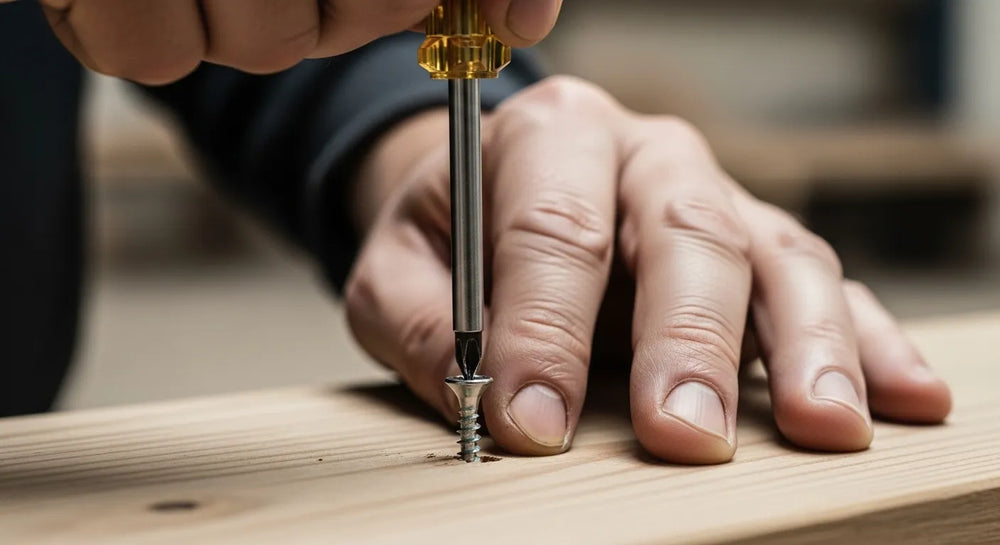
Screwing Wood to Concrete: A Professional Guide
Table of Contents
- Introduction
- Understanding the Materials: Why a Direct Connection Fails
- The Superior Solution: The Concrete Screw
- Step-by-Step Installation: A Guide to a Secure Connection
- Alternative Anchoring Methods
- The Strategic Advantage of Sourcing American-Made Fasteners
- Streamlining Procurement for Complex Projects
- Conclusion
- Frequently Asked Questions
Introduction
A project grinds to a halt. The framing crew is ready, the materials are on site, but the critical connection point—securing wood sole plates to the new concrete slab—is failing. Standard screws are snapping, the wood is splitting, and the connection feels flimsy. This scenario is more than a minor delay; it's a symptom of a fundamental misunderstanding of materials, and it represents a risk to the project's structural integrity, timeline, and budget. The question isn't just academic; it's a practical challenge faced daily on job sites and in manufacturing facilities across the country. So, can you screw wood into concrete?
The short answer is yes, but absolutely not with a standard wood screw. Attempting to force a fastener designed for fibrous wood into brittle, aggregate-filled concrete is a recipe for failure. The task requires a specific methodology and, more importantly, a specialized fastener engineered for the unique demands of masonry. At Maden.co, we believe that building with excellence starts with sourcing the right components, and that means understanding the engineering behind them.
This article provides a definitive, technical guide for procurement managers, MRO buyers, and engineers on the proper methods for fastening wood to concrete. We will move beyond the simple "yes" or "no" to explore the mechanics of the connection, detail the step-by-step installation process for concrete screws, and analyze alternative anchoring methods. Crucially, we will discuss the strategic importance of sourcing high-quality, American-made fasteners to ensure project success and supply chain resilience. The goal is to empower you with the knowledge to make secure connections, prevent costly rework, and build with confidence.
Understanding the Materials: Why a Direct Connection Fails
Before diving into the solution, it is essential to understand why the intuitive approach of using a standard screw is destined to fail. Wood and concrete are fundamentally different materials at a microscopic level, and their unique properties dictate how they interact with fasteners.
The Nature of Wood
Wood is a fibrous, anisotropic material, meaning its properties differ along different grain directions. When a wood screw is driven in, its sharp threads act like a wedge, parting the wood fibers and cutting a path. The displaced fibers then press back against the threads, creating immense friction and clamping force. This is what gives a wood screw its powerful grip. The screw becomes an integral part of the wood structure, held in place by a matrix of interlocking fibers.
The Nature of Concrete
Concrete, in contrast, is a composite material made of aggregate (sand, gravel) and a cement binder. It is incredibly strong under compression but relatively weak under tension. It has no fibrous structure for a screw thread to grip. When you attempt to drive a wood screw into concrete, one of two things will happen:
- The Screw Breaks: The torque required to displace the hard aggregate and cement is far greater than what the screw is designed for, leading to shearing.
- A Powdered Hole is Created: The screw acts like a blunt drill bit, pulverizing the concrete into dust. The threads have nothing to engage with, so the screw will spin freely in the hole with zero holding power.
This fundamental incompatibility means a specialized intermediary or a fastener designed specifically to interact with a brittle, non-fibrous material is required. Simply put, you cannot treat concrete like a piece of lumber. This principle of using the right tool for the job is a cornerstone of industrial excellence, a value we champion by connecting professionals with precisely engineered, American-made components.
The Superior Solution: The Concrete Screw
For the vast majority of applications involving fastening wood to concrete—from installing furring strips and subfloors to securing machinery base plates—the concrete screw is the most efficient, reliable, and professional solution. Also known by various trade names, these fasteners are engineered specifically to tap threads into a pre-drilled hole in masonry, creating a secure mechanical interlock.
A concrete screw is easily identifiable by its unique thread design. It typically features a high-low or serrated thread pattern that is hardened to withstand the abrasion of cutting into concrete and brick. This design allows the screw to work-harden the concrete at the thread interface, creating a surprisingly strong connection without the need for expansion sleeves or chemical adhesives.
Types of Concrete Screws and Their Applications
Choosing the correct concrete screw involves considering the head style, material, and protective coating, all of which are dictated by the specific application.
Head Styles
- Flat Head (Countersunk): This style is designed to sit flush with or slightly below the surface of the wood. It is the ideal choice for applications where a smooth finish is required, such as attaching subflooring, wall paneling, or furring strips before drywall installation. A project requiring a clean, non-obstructive finish would benefit from the precise engineering of U.S.-made 1/4" x 2-3/4" Flat Head Concrete Screws, ensuring no interference with subsequent layers of material.
- Hex Washer Head: This is the most common style for structural connections. The integrated washer provides a large bearing surface to distribute the clamping force, preventing the screw head from pulling through the wood. The hex head allows for high installation torque using a socket or impact driver, making it perfect for securing wall sole plates, sill plates, and machinery mounts. For these robust applications, American-made Hex Head Concrete Screws provide the reliable grip and torque resistance needed for critical structural elements.
Materials and Coatings
The environment in which the fastener will exist is a critical factor in its selection. Sourcing domestically allows for greater transparency into the materials and coatings used, a key tenet of our mission at Maden.co.
- Standard Blue Coating: Most concrete screws feature a distinct blue coating. This is typically a polymer or ceramic-based finish that provides a good level of corrosion resistance for interior or dry applications. It also acts as a lubricant to ease installation.
- Ruspert and Ceramic Coatings: For exterior applications or environments with exposure to moisture, chemicals, or salt, a more advanced coating is necessary. Ruspert is a high-grade, multi-layer ceramic coating that offers exceptional corrosion protection, often exceeding 1,000 hours in salt spray tests. When a project demands the highest level of durability against the elements, specifying a fastener like the Steel Blue Ruspert Ceramic Coating Flat Phillips® Drive Concrete Screw is not just a choice; it's a long-term investment in the asset's integrity.
- Stainless Steel: For the most demanding environments, such as marine applications, chemical processing plants, or food-grade facilities, stainless steel (typically 304 or 316 grade) offers the ultimate in corrosion resistance.
Step-by-Step Installation: A Guide to a Secure Connection
Achieving the full holding power of a concrete screw is entirely dependent on following the correct installation procedure. Cutting corners, particularly in drilling and cleaning the pilot hole, can reduce the fastener's capacity by more than 50%.
Step 1: Gather the Right Tools and Personal Protective Equipment (PPE)
- Hammer Drill: A standard rotary drill is insufficient for concrete. A hammer drill provides rapid concussive blows that pulverize the concrete while the bit's flutes clear the debris.
- Carbide-Tipped Masonry Drill Bit: Use a high-quality bit that is the exact diameter specified by the screw manufacturer. This is not a place for guesswork; the bit-to-screw tolerance is critical.
- Impact Driver or Drill with Socket/Driver Bit: For driving the screw. An impact driver is preferred as it provides rotational impacts that drive the screw efficiently without over-torquing.
- Hole Cleaning Equipment: A vacuum with a narrow nozzle, a can of compressed air, or a manual blow-out bulb.
- PPE: Safety glasses are non-negotiable to protect from flying concrete dust and chips. A dust mask and hearing protection are also highly recommended.
Step 2: Position and Mark
Place the piece of wood in its final position against the concrete. Using the appropriately sized drill bit, drill through the wood just enough to mark the concrete surface underneath. Alternatively, you can pre-drill the wood and then use a transfer punch to mark the concrete.
Step 3: Drill the Pilot Hole
Remove the wood and, using your hammer drill and the correct masonry bit, drill the pilot hole into the concrete at your marked locations. Pay close attention to two critical details:
- Diameter: The pilot hole diameter must be precise. A hole that is too large will result in no thread engagement. A hole that is too small will cause the screw to bind and potentially break during installation. Always refer to the manufacturer's specifications.
- Depth: The hole must be drilled deeper than the intended embedment of the screw. A good rule of thumb is to drill at least 1/2 inch deeper. This extra space provides a void for any residual dust to collect so it doesn't prevent the screw from reaching its full depth.
Professional Tip: Many hammer drills come with an adjustable depth stop. Use it to ensure all your holes are drilled to a consistent and correct depth, which is crucial for production-level work.
Step 4: Clean the Hole Thoroughly
This is the most frequently skipped and most critical step. Concrete dust left in the pilot hole acts like a lubricant and a spacer, drastically reducing the friction and interlock between the screw threads and the concrete.
- Use a shop vacuum to remove the bulk of the debris.
- Follow up with a blast of compressed air or a blow-out bulb to remove any fine particles clinging to the sides of the hole.
- Repeat if necessary. The hole should be completely free of dust and debris before you proceed.
Step 5: Drive the Screw
Position the wood back over the now-clean pilot hole. Insert the tip of the concrete screw and begin driving it through the wood and into the concrete. Drive the screw until the head is seated firmly against the wood.
- Do Not Over-Torque: There is a fine line between snug and stripped. Over-driving the screw can strip the threads it has just cut into the concrete, completely compromising its holding power. Use the clutch setting on your drill or develop a feel for when the screw is fully seated.
Alternative Anchoring Methods
While concrete screws are the preferred method for most wood-to-concrete applications, it is valuable for procurement professionals and engineers to be aware of other options, especially for heavy-duty requirements.
- Sleeve Anchors: These consist of a threaded bolt surrounded by an expansion sleeve. As the bolt is tightened, it pulls up a conical wedge, forcing the sleeve to expand against the walls of the hole. They offer significant holding power but require a much larger hole and are not easily removable.
- Wedge Anchors: Used for extremely heavy-duty structural applications, like anchoring large machinery or structural steel posts. They are installed by hammering them into a pilot hole and then tightening a nut, which pulls the stud up and expands a wedge at the base. This is typically overkill for attaching wood framing.
- Powder-Actuated Fasteners: These use a gunpowder charge to drive a hardened nail directly through wood and into concrete. They are extremely fast for production work (e.g., framing bottom plates in large buildings) but require specialized tools, licenses to operate, and are only suitable for static, light-duty loads.
For most MRO, construction, and outfitting tasks, the balance of strength, ease of installation, and removability makes the concrete screw the superior and most versatile choice.
The Strategic Advantage of Sourcing American-Made Fasteners
In a globalized economy, the temptation to source the lowest-priced component is strong. However, for critical components like fasteners, this approach often ignores the Total Cost of Ownership (TCO) and introduces significant supply chain risks. At Maden.co, our entire business model is built on proving the strategic value of domestic manufacturing. You can learn more about our mission to champion American manufacturing here.
Supply Chain Resilience and Transparency
A project's timeline is only as strong as its weakest link. Waiting six weeks for a container of specialized fasteners to cross an ocean can cause catastrophic delays and cost overruns. For a procurement manager under pressure, the ability to source a DIN- or ASTM-compliant fastener from a verified U.S. manufacturer and have it ship within days is a massive competitive advantage. Our platform provides this supply chain transparency, connecting you directly to a network of over 800 American manufacturers and their 2.5 million products.
Unwavering Quality and Compliance
U.S. manufacturers operate under some of the most stringent quality control standards in the world. When you source an American-made concrete screw, you are getting a product with verifiable material traceability, precise heat treatment, and accurate dimensional tolerances. For a design engineer specifying components for a critical assembly, this assurance is invaluable. It eliminates the risk of using counterfeit or sub-standard materials that could lead to catastrophic failure.
Empowering the American Manufacturing Revival
Every purchase of a U.S.-made component is an investment in our domestic industrial base. It supports skilled jobs, fosters innovation, and strengthens our national economic security. We believe that America's manufacturing revival is here, and our platform is designed to be its engine. If you are a U.S. manufacturer producing high-quality industrial components, we invite you to join our mission. Register as a vendor and connect with a nationwide audience of professional buyers.
Streamlining Procurement for Complex Projects
We understand the challenges procurement professionals face. Sourcing the exact fastener—with the right head, material, coating, and certifications—can involve hours of searching catalogs, making calls, and vetting suppliers. Maden.co was built to eliminate this friction.
Our digital marketplace is an exercise in customer empowerment. You can filter our vast catalog by technical specifications to find the exact component you need in minutes, not days. For MRO buyers facing an unexpected equipment breakdown or a project manager needing to order fasteners for a new build, this speed and efficiency is a game-changer.
Furthermore, we recognize that capital-intensive projects require flexible financial solutions. A large order of high-performance fasteners can represent a significant outlay. To support your business's cash flow, we offer a powerful tool directly within our platform. You can apply for Instant Financing at checkout to streamline your capital-intensive projects, allowing you to acquire all the necessary materials upfront without disrupting your operating budget. If you have specific sourcing questions or need assistance with a large-volume order, our team is ready to help.
Conclusion
So, can you screw wood into concrete? The answer is a resounding yes—provided you use the correct component and the proper technique. The engineered concrete screw, when installed correctly, creates a powerful and lasting mechanical bond that is ideal for a wide range of construction and industrial applications.
Choosing the right fastener goes beyond the immediate application. It's a strategic decision that impacts project timelines, safety, long-term durability, and supply chain security. By prioritizing high-quality, American-made concrete screws, you are not just making a secure connection; you are investing in reliability and mitigating risk.
We invite you to explore the extensive catalog of U.S.-made concrete screws and other industrial components on Maden.co. Equip your next project with the strength and reliability of American manufacturing, and leverage powerful tools like Instant Financing at checkout to make procurement seamless and efficient.
Frequently Asked Questions
1. What size pilot hole do I need for a concrete screw? The pilot hole diameter is critical and is determined by the diameter of the screw. Always follow the manufacturer's specific recommendations. As a general rule, a 1/4" diameter concrete screw typically requires a 3/16" pilot hole, and a 3/16" diameter screw usually requires a 5/32" pilot hole. Using the wrong size bit will severely compromise the fastener's holding power.
2. Can I reuse concrete screws? It is strongly recommended not to reuse concrete screws. The process of driving the screw cuts threads into the abrasive concrete, which dulls and wears the screw's own hardened threads. A reused screw will have significantly reduced holding power and an increased risk of breaking during a second installation.
3. How deep should a concrete screw go into the concrete? Minimum embedment depth is typically 1 inch, with a maximum of 1-3/4 inches. Deeper embedment does not necessarily increase pull-out strength and can make installation more difficult. Always consult the technical data sheet for the specific screw you are using, as embedment depth is a critical factor in the screw's load-bearing capacity.
4. Do I need a special drill for concrete? Yes. A standard rotary drill is not effective for drilling into concrete. You must use a hammer drill, which combines rotation with a rapid hammering action to pulverize the concrete as it drills. For larger diameter or frequent drilling, a more powerful SDS rotary hammer is the professional tool of choice.


