
Screws in Drywall: Industrial Fastening Best Practices
Table of Contents
- Understanding Drywall: More Than Just Plasterboard
- The Right Fastener for the Job: An Industrial Perspective
- Installation Best Practices for Durability and Compliance
- Common Pitfalls and How to Avoid Them in Industrial Settings
- The Strategic Advantage of Sourcing U.S.-Made Fasteners Through Maden.co
- Partnering for Success: Maden.co's Commitment to American Industry
- Conclusion
- Frequently Asked Questions (FAQ)
When faced with the task of securing components, equipment, or fixtures to interior walls, the ubiquitous drywall often presents a unique set of challenges and considerations. For procurement managers, MRO buyers, and design engineers, the seemingly simple act of putting a screw in drywall extends far beyond a basic DIY task. It involves critical decisions about material compatibility, load-bearing capacity, regulatory compliance, and ultimately, the long-term integrity and safety of an industrial facility or product. A misstep can lead to costly rework, structural failure, or even safety hazards, underlining the need for a precise, informed approach to industrial fastening.
This comprehensive guide delves into the nuances of using screws in drywall within an industrial context. We will explore the different types of drywall and fasteners, critical installation techniques, common pitfalls to avoid, and the strategic advantages of sourcing high-quality, U.S.-made components. Our goal is to equip you with the knowledge to make informed decisions that enhance project reliability, optimize costs, and bolster supply chain resilience. Through understanding the specific requirements of industrial environments, you’ll discover how the right American-made fasteners, coupled with strategic procurement, are paramount for achieving durable and compliant outcomes.
Understanding Drywall: More Than Just Plasterboard
Drywall, also known as plasterboard, gypsum board, or wallboard, is a construction material made of gypsum plaster pressed between two sheets of thick paper. It's widely used in interior wall and ceiling construction for its ease of installation, fire resistance, sound attenuation properties, and cost-effectiveness. In industrial and commercial settings, drywall partitions are common in offices, control rooms, laboratories, and other non-load-bearing structural applications. However, its seemingly straightforward nature belies the specific considerations required for secure fastening.
What is Drywall?
At its core, drywall consists of a gypsum plaster core, which is naturally fire-resistant and somewhat brittle, encased in paper. This composition gives it desirable properties for interior finishes, but also dictates how it interacts with fasteners. Unlike solid wood or metal, gypsum provides limited direct holding power, making the choice of fastener and the presence of a structural support (like a stud) critically important. The widespread use of drywall in industrial and commercial construction, from new facility builds to retrofits and maintenance, means that procurement professionals and MRO teams constantly encounter its fastening challenges.
Types of Drywall and Their Properties
Not all drywall is created equal, and understanding the different types is fundamental to selecting the appropriate fasteners and installation methods for specific industrial applications.
- Standard Drywall (White Board): This is the most common and least expensive type, typically 1/2-inch or 5/8-inch thick. It's suitable for general interior walls and ceilings in areas not exposed to moisture or extreme conditions. For many standard office partitions or non-critical wall sections in an industrial plant, this is the default.
- Moisture-Resistant Drywall (Green Board): Distinguished by its green paper facing, this type has a special wax-based coating that provides enhanced resistance to moisture and humidity. It's often specified for washrooms, utility closets, and other damp areas within industrial facilities where water exposure might be a concern, but it is not waterproof. Fasteners for green board often need additional corrosion resistance.
- Fire-Resistant Drywall (Type X): Thicker and denser than standard drywall, Type X contains special non-combustible fibers (usually glass fibers) within its gypsum core, significantly increasing its fire rating. This is a critical material in many commercial and industrial buildings, especially in areas requiring higher fire-safety standards, such as around furnace rooms, electrical panels, or egress corridors. Using the correct length and type of screw is essential to maintain its fire rating.
- Soundproof Drywall (QuietRock): Engineered with viscoelastic polymers laminated between gypsum layers, soundproof drywall is designed to reduce sound transmission between rooms. It's often used in control rooms, noise-sensitive laboratories, or office spaces adjacent to manufacturing floors. The increased density and layered construction may influence fastener selection and penetration depth.
- Impact-Resistant Drywall (Abuse-Resistant/High-Impact): Featuring a denser core and often a fiberglass mesh embedded in the gypsum, this drywall is designed to withstand greater impacts and abrasions. It's ideal for high-traffic areas, warehouses, or production zones where walls are susceptible to bumps from equipment, carts, or personnel. Fasteners must securely engage this tougher material without compromising its integrity.
The diverse properties of these drywall types mean that procurement decisions regarding fasteners must go beyond simple aesthetics to consider performance, safety, and compliance with building codes and industrial standards. Choosing the correct, high-quality, U.S.-made fastener ensures that the integrity of these specialized wall systems is maintained, a principle deeply valued at Maden.co.
The Right Fastener for the Job: An Industrial Perspective
Selecting the correct fastener is paramount when working with drywall in industrial and commercial environments. While many common fasteners might superficially appear similar, the specific design of a drywall screw makes it uniquely suited for securely attaching drywall to framing materials, and its application in industrial settings demands a nuanced understanding.
Why Drywall Screws Are Different
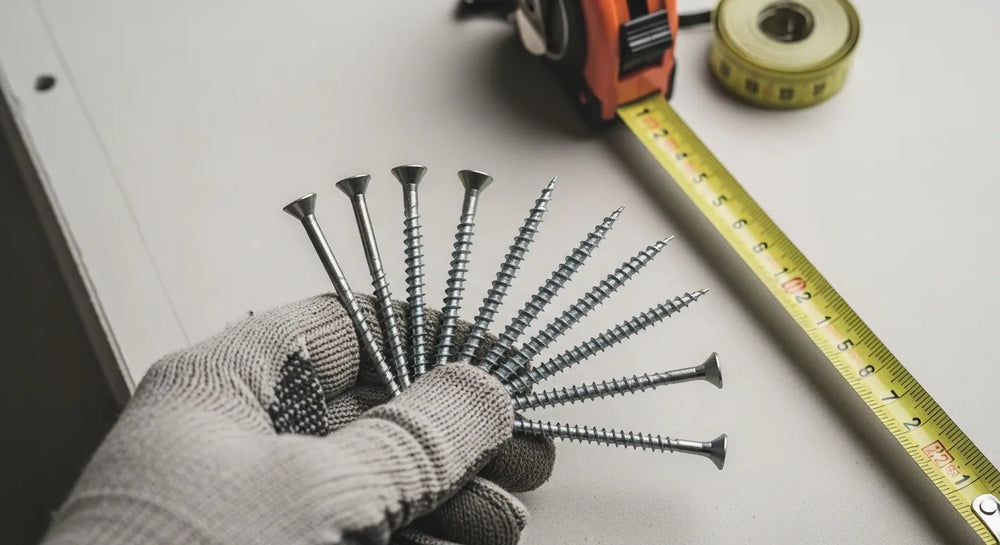
Drywall screws are purpose-built for their material. Unlike wood screws, which have coarser threads and a sharper point for biting into wood, or metal screws with finer, shallower threads, drywall screws feature:
- Sharp, Self-Tapping Points: These allow for quick penetration without pre-drilling into drywall and light-gauge metal studs.
- Coarse or Fine Threads: Depending on the application, these threads are designed to grip the gypsum core effectively or bite into metal studs.
- Bugle Head: This distinctive conical shape allows the screw head to countersink flush with or slightly below the drywall surface without tearing the paper face excessively, providing a smooth finish for taping and mudding.
- Hardened Steel Construction: Drywall screws are typically made from hardened steel, which provides the necessary strength to drive them without stripping or breaking, especially when dealing with tough materials or power tools.
For standard installations requiring reliability and consistent performance, a general-purpose, high-quality fastener is essential. For instance, our 6 x 1-1/4 coarse thread drywall screws are engineered for strong engagement with gypsum and wood studs, offering a robust solution for a wide range of applications. When facing thicker panels, denser drywall, or demanding greater shear strength for fixtures, a more substantial option like the 8 x 4 drywall screw provides the necessary grip and enhanced durability. For applications requiring a finer finish, specific material density, or attachment to light-gauge metal studs, our 6 x 1 fine thread drywall screws deliver precise, secure fastening. These U.S.-made options underscore our commitment to providing industrial buyers with the exact specifications needed for optimal performance.
Key Characteristics of Industrial Drywall Screws
The industrial application of drywall screws necessitates attention to specific characteristics that ensure optimal performance and compliance.
- Material and Coatings: While typically hardened steel, the coating is critical for specific environments. Black phosphate coatings offer basic corrosion resistance and a good surface for joint compound adhesion. Zinc coatings provide better protection against moisture and are often preferred in areas where humidity might be slightly elevated. For highly corrosive industrial environments, specialized coatings or stainless steel screws (though less common for drywall) might be considered, emphasizing the importance of material specifications from verified U.S. manufacturers.
-
Thread Type:
- Coarse-Thread Screws: Ideal for attaching drywall to wood studs. Their aggressive threads create a strong bond with the wood fibers.
- Fine-Thread Screws: Best suited for attaching drywall to light-gauge metal studs. Their finer threads are designed to tap into the metal without stripping easily.
- Head Type: The bugle head is standard, ensuring a flush finish without tearing the paper. Some specialized screws might have modified heads for specific tools or aesthetic requirements.
- Length: Screw length is paramount. For attaching 1/2-inch drywall to wood studs, a 1 1/4-inch screw is typical, ensuring sufficient penetration into the stud (at least 5/8 inch). For 5/8-inch drywall, 1 5/8-inch screws are generally recommended. For double-layer drywall applications, longer screws are required to penetrate both layers and secure firmly into the stud. Choosing the correct length prevents "screw pops" and ensures structural integrity.
Beyond Drywall Screws: Anchors and Specialized Fasteners
While drywall screws are excellent for their primary purpose, they are designed for attaching drywall to a stud. When it comes to mounting objects to the drywall itself where no stud is present, or for supporting heavier loads, drywall screws are insufficient and unsafe. This is where specialized anchors become critical for industrial applications:
- Plastic Expansion Anchors: Suitable for very light loads (e.g., small signs, lightweight conduit clips). They expand behind the drywall as a screw is driven into them, providing a minimal grip.
- Self-Drilling/Self-Tapping Anchors: Often made of plastic or metal, these anchors can be screwed directly into the drywall. A separate screw is then driven into the anchor. They are convenient for light to moderate loads but should not be used for anything substantial.
- Toggle Bolts and Molly Bolts: These are the workhorses for medium to heavy loads in cavity walls. Toggle bolts have spring-loaded wings that open behind the drywall, distributing weight over a larger area. Molly bolts (or expansion anchors) collapse and expand behind the drywall as they are tightened. Both offer significantly more holding power than simple plastic anchors and are indispensable for mounting heavy shelving, monitors, electrical boxes, or other equipment where direct stud attachment isn't feasible.
For an MRO buyer needing a specific type of drywall screw for a critical facility repair, or a design engineer specifying fasteners for a new modular office build, the ability to quickly source and receive a verified, U.S.-made product is paramount. Maden.co provides access to a vast network of manufacturers, ensuring that whether you need standard coarse-thread screws or specialized anchors, you can find components that meet stringent industrial requirements.
Installation Best Practices for Durability and Compliance
Proper installation is as crucial as selecting the right fastener. In industrial environments, where safety and longevity are paramount, cutting corners during installation can lead to catastrophic failures, costly repairs, and compliance issues. Adhering to best practices ensures a secure, durable, and compliant installation for any component mounted to or through drywall.
Pre-Installation Checks
Before driving the first screw, thorough preparation is essential:
- Locating Studs: This is the most critical step for any load-bearing application. Relying solely on the gypsum board for support is a recipe for failure. Studs (wood or metal) provide the structural backing necessary for secure fastening. Use a reliable stud finder to locate the center of the studs and mark them clearly. For metal studs, ensure you are using fine-thread drywall screws.
- Marking and Spacing: Plan your fastener pattern. For drywall panels, screws are typically spaced every 12-16 inches along studs and every 8 inches along edges to prevent bowing or loosening. For mounted objects, ensure even distribution of fasteners to avoid concentrating stress in one area. Proper spacing prevents overtightening, which can damage the drywall, and ensures an even load distribution.
-
Drill Selection and Settings: Use a cordless drill or a dedicated drywall screw gun with adjustable torque settings. The clutch setting is vital:
- Low Torque for Drywall: Start with a low torque setting and gradually increase until the screw head just recesses below the drywall surface without tearing the paper.
- Drywall Screw Guns: These tools feature a depth-setting nosepiece that automatically stops the screw at the correct depth, preventing overdriving. This is invaluable for high-volume industrial installations.
Driving the Screw
The technique for driving screws into drywall and studs is precise, aiming for optimal hold without damage:
- Perpendicular Drive: Always drive the screw straight into the surface, perpendicular to the drywall. Angled screws can strip out more easily or fail to fully engage the stud.
- Proper Depth: The bugle head of the screw should just break the paper surface of the drywall, creating a slight indentation that can be easily concealed with joint compound. The goal is to recess the screw head approximately 1/32 to 1/16 inch below the surface without tearing the paper.
- Avoid Overdriving: This is one of the most common mistakes. Overdriving tears the paper facing of the drywall, which is essential for the screw's holding power. Once the paper is torn, the screw's grip on the gypsum core is significantly weakened, leading to "screw pops" or complete failure.
- Avoid Underdriving: If the screw head protrudes, it will create a bump that is difficult to conceal and can interfere with the finish. It also indicates the screw may not be fully engaged with the stud.
Load-Bearing Considerations: The Industrial Imperative
In industrial settings, understanding the load-bearing capacity of drywall fasteners is not just important—it's critical for safety and operational continuity.
- Gypsum Alone: A screw driven only into gypsum offers minimal holding power, typically less than 20 pounds, and is highly susceptible to pull-out. This should never be relied upon for anything but the lightest, non-critical items.
- Stud Attachment: When a screw penetrates entirely into a wood or metal stud, its holding capacity increases dramatically, often hundreds of pounds in shear strength. Always aim for stud attachment for any significant load.
-
Specialized Anchors: For heavy items where a stud is unavailable, specialized anchors are indispensable.
- Toggle Bolts: Depending on their size and the drywall thickness, these can support 50-100 pounds or more.
- Molly Bolts: Typically support 25-50 pounds, varying by size.
- Static vs. Dynamic Loads: Consider whether the load will be static (e.g., a mounted panel) or dynamic (e.g., a frequently opened access door, equipment with vibrations). Dynamic loads require even more robust fastening solutions and often additional reinforcement.
- Blocking and Reinforcement: For very heavy items (e.g., large monitors, heavy shelving, machinery components, electrical panels), internal blocking (wood or metal cross-pieces installed between studs) or external reinforcement plates are often necessary. This distributes the load over a larger area of the wall structure, not just the drywall itself.
For design engineers, specifying the correct fasteners and installation methods, coupled with a clear understanding of load limits, ensures compliance with critical industry standards (e.g., ASTM, UL) and prevents failures that could impact production or safety. At Maden.co, we understand the stakes involved, which is why we connect industrial buyers with verified U.S. manufacturers who produce fasteners meeting these rigorous performance criteria. Our platform ensures that procurement managers can easily source reliable components, contributing to the overall Industrial Excellence of their operations.
Common Pitfalls and How to Avoid Them in Industrial Settings
Even with the best intentions, several common mistakes can compromise the integrity of fasteners in drywall. In an industrial context, these pitfalls can escalate from minor inconveniences to significant safety risks and costly operational delays. Proactive avoidance strategies are key to robust procurement and installation.
Using the Wrong Screw Type
One of the most frequent errors is substituting a standard wood or metal screw for a drywall screw.
-
Consequences: Wood screws, with their aggressive threads and often pointed tips, can over-penetrate and damage the gypsum core or shred the paper facing, reducing holding power. They also don't seat flush due to their head design. Metal screws might not grip wood studs effectively. Using the incorrect screw can lead to:
- Poor Hold: The fastener may loosen over time.
- Screw Pops: The screw head protrudes as the drywall flexes or shifts.
- Structural Failure: In industrial applications, this could mean mounted equipment falling, conduit loosening, or partitions destabilizing.
- Avoidance: Always use dedicated drywall screws for attaching drywall panels. Ensure the thread type (coarse for wood, fine for metal) matches the stud material. For specialized mounting tasks, carefully select the appropriate anchor or fastener designed for the specific load and drywall type. Our extensive catalog at Maden.co offers a clear path to sourcing the correct, application-specific fasteners, such as our 6 x 1-1/4 coarse thread drywall screws for wood studs or 6 x 1 fine thread drywall screws for metal, all from verified U.S. manufacturers.
Ignoring Studs or Adequate Anchoring
The gypsum core of drywall is weak in tension and shear. Attaching anything of significant weight directly to it without hitting a stud or using an appropriate anchor is a critical error.
- The Danger: Objects mounted directly to drywall without proper support are highly prone to pulling out, potentially causing damage to the wall, the mounted item, or personnel below. This is particularly hazardous for industrial fixtures, heavy signage, or conduit runs.
-
Avoidance:
- Always Locate Studs: Use a reliable stud finder or other methods to identify studs for any load-bearing application.
- Select Appropriate Anchors: For loads where a stud isn't available, assess the weight and type of item, and choose a robust anchor (e.g., toggle bolts, molly bolts) that is rated for the specific load and drywall thickness. Never guess or assume a small plastic anchor will suffice for anything beyond the lightest items.
- Reinforcement: For very heavy equipment, plan for internal blocking or external support structures that distribute weight across multiple studs or the building's structural frame.
Overdriving or Underdriving
The delicate balance of driving a screw to the perfect depth is often overlooked.
- Overdriving: Driving a screw too deep tears the paper facing, which is critical for the screw's holding power. Once this paper is compromised, the screw loses much of its grip on the soft gypsum, making it susceptible to pull-out. This is a common cause of "screw pops" where the screw head protrudes later as the drywall shifts.
- Underdriving: A screw that isn't driven deep enough will protrude from the surface, creating an uneven finish, making it difficult to mud and tape, and potentially snagging objects. It also indicates the screw may not be fully engaged with the stud.
- Avoidance: Use a drywall screw gun with a depth-setting nosepiece or a cordless drill with an adjustable clutch. Practice on a scrap piece of drywall to find the ideal setting that recesses the screw head just below the surface without tearing the paper. Consistency is key, especially in large-scale installations.
Material Compatibility Issues
In industrial settings, where diverse materials and environmental conditions are common, ignoring material compatibility can lead to accelerated corrosion and fastener failure.
- Galvanic Corrosion: When two dissimilar metals are in contact in the presence of an electrolyte (like moisture), an electrochemical reaction can occur, leading to the corrosion of the less noble metal. For instance, using untreated steel screws with aluminum fixtures in a humid environment could cause problems.
- Chemical Exposure: In certain manufacturing or laboratory environments, drywall and fasteners might be exposed to specific chemicals or fumes. Standard fasteners may degrade rapidly under such conditions.
- Avoidance: Always consider the environmental conditions and the materials of both the fastener and the components it's connecting. Specify appropriate coatings (e.g., zinc, specialized polymer coatings) or materials (e.g., stainless steel, though rare for drywall screws) for enhanced corrosion resistance. Refer to industry standards and manufacturer specifications for material compatibility. Our network of verified U.S. manufacturers at Maden.co adheres to rigorous standards, ensuring you get fasteners with reliable material properties and appropriate coatings for your specific industrial application. We pride ourselves on Supply Chain Transparency, allowing you to trust the origins and specifications of every component you source.
The Strategic Advantage of Sourcing U.S.-Made Fasteners Through Maden.co
In the complex world of industrial procurement, sourcing fasteners might seem like a minor detail, but its strategic importance cannot be overstated. The choice of where and how these components are acquired profoundly impacts everything from project timelines and product quality to overall supply chain resilience and Total Cost of Ownership (TCO). This is where Maden.co offers a distinct advantage, fundamentally changing how industrial buyers access critical, American-made components.
Enhancing Supply Chain Resilience
The past few years have highlighted the fragility of global supply chains. Relying heavily on overseas suppliers for critical components can lead to unpredictable lead times, shipping delays, and vulnerability to geopolitical disruptions. Sourcing domestically mitigates these risks.
- Reduced Lead Times: Shorter distances mean faster delivery, keeping projects on schedule and reducing inventory holding costs.
- Mitigated Disruptions: Domestic sourcing insulates your operations from international shipping crises, port congestions, and overseas factory shutdowns.
- Direct Communication: Easier communication and faster problem resolution with local suppliers.
At Maden.co, our mission is to democratize access to American manufacturing. We achieve this by connecting industrial buyers with over 2.5 million American-made products from our network of 800+ verified U.S. manufacturers. Our vision is to become the definitive platform that proves American-made components are as accessible and convenient as any global alternative, driving the manufacturing revival with our tagline: "America's manufacturing revival is here." When you choose Maden.co, you're not just buying a fastener; you're investing in a more resilient and responsive supply chain.
Ensuring Quality and Compliance
Quality is non-negotiable in industrial applications. Fasteners must meet precise specifications and often adhere to stringent industry standards to ensure structural integrity and safety.
- Adherence to Standards: U.S. manufacturers are typically subject to rigorous quality control processes and often comply with globally recognized standards such as ASTM, ANSI, DIN, and NPT. This guarantees consistency in material composition, dimensional accuracy, and performance.
- Traceability and Consistency: Sourcing from verified U.S. manufacturers through Maden.co ensures better traceability of materials and manufacturing processes. This is vital for industries with strict regulatory requirements, allowing for detailed documentation and certification.
- Superior Performance: High-quality, U.S.-made fasteners, like our 8 x 4 drywall screw, are engineered for durability, reducing the risk of premature failure, stripped heads, or corrosion.
Maden.co embodies values of American Manufacturing Pride and Industrial Excellence. We carefully vet our network of suppliers to ensure they meet the highest standards, providing you with confidence in every purchase. This focus on quality and compliance is essential for design engineers who specify components and MRO buyers who need reliable parts to keep operations running smoothly.
Improving Total Cost of Ownership (TCO)
While domestic products might sometimes have a higher upfront unit cost, focusing solely on purchase price overlooks the broader financial picture. High-quality, domestically sourced fasteners often lead to a lower TCO.
- Reduced Failure Rates: Fewer defective parts mean less rework, fewer repairs, and reduced downtime, directly saving labor and material costs.
- Streamlined Logistics: Lower shipping costs, reduced customs duties, and fewer handling fees contribute to overall savings.
- Extended Lifespan: Durable fasteners contribute to the longevity of the entire assembly or installation, deferring replacement costs.
- Faster Project Completion: Reliable delivery and readily available stock enable projects to stay on schedule, avoiding expensive delays.
For a procurement manager under pressure to source critical components, or an MRO buyer facing an unexpected equipment breakdown, the ability to quickly find and finance a verified, U.S.-made part is a game-changer. Sourcing through Maden.co saves time, reduces risk, and provides access to a vast catalog of hard-to-find, U.S.-made components. Our platform is designed to improve your TCO by providing a more reliable and efficient procurement process.
Streamlined Procurement with Digital Innovation
The modern industrial buyer needs efficiency and transparency. Maden.co leverages digital innovation to transform the procurement experience.
- User-Friendly Platform: Our intuitive marketplace simplifies the process of finding, comparing, and purchasing industrial products. No more sifting through fragmented catalogs or dealing with opaque sourcing channels.
- Comprehensive Product Information: Detailed specifications, material certifications, and availability information are readily accessible, empowering buyers to make informed decisions quickly.
- Reduced Procurement Friction: From search to checkout, Maden.co minimizes the administrative burden associated with sourcing, allowing procurement teams to focus on strategic initiatives rather than transactional hassles.
We are committed to Customer Empowerment, putting control back into the hands of buyers by providing a seamless, transparent, and efficient digital platform.
Strategic Financing for Industrial Purchases
A significant differentiator on Maden.co is our "Instant Financing" option. This isn't just a payment method; it's a strategic tool designed to help businesses manage cash flow effectively and make larger-volume purchases without immediate capital strain.
- Flexible Capital Management: Instant Financing allows procurement managers and business owners to acquire necessary materials and components when needed, aligning expenses with project revenue cycles.
- Enabling Large Orders: For capital-intensive projects or bulk purchases of items like specific drywall screws or anchors, Instant Financing removes upfront financial barriers, enabling you to secure the quantities required without delay. This ensures your operations can proceed without interruption.
You can apply for Instant Financing at checkout to streamline your capital-intensive projects, ensuring your operations never miss a beat due to funding delays. This feature, combined with access to U.S.-made quality, underscores our commitment to being a strategic partner in your success.
Partnering for Success: Maden.co's Commitment to American Industry
Successfully navigating the complexities of industrial procurement demands more than just finding a supplier; it requires a strategic partner dedicated to your operational excellence. At Maden.co, we are that partner. Our entire business model is built on this principle; you can learn more about our mission to champion American manufacturing here: About Us.
We believe that the future of American industry is rooted in accessible, high-quality domestic manufacturing. By connecting industrial buyers with an expansive network of verified U.S. manufacturers, we not only simplify procurement but also strengthen the national supply chain, foster innovation, and create economic opportunities. Our commitment to Supply Chain Transparency and Industrial Excellence ensures that every product, from the smallest fastener to complex machinery components, meets the highest standards.
Are you a U.S. manufacturer producing high-quality industrial fasteners, components, or other essential supplies? Register as a vendor and join the American manufacturing revival. Together, we can build a stronger, more resilient industrial landscape.
If you have specific sourcing questions about drywall screws, anchors, or any other industrial component, our team of experts is ready to help you navigate your procurement needs: Contact Us. To explore our extensive catalog of U.S.-made industrial products and begin transforming your procurement process, visit Maden.co.
Conclusion
The act of putting screws in drywall, when approached from an industrial perspective, is a critical task demanding precision, knowledge, and high-quality materials. From understanding the specific properties of different drywall types to selecting the correct fasteners and implementing meticulous installation techniques, every decision impacts the safety, durability, and cost-efficiency of industrial projects. Avoiding common pitfalls and prioritizing robust, compliant fastening solutions are paramount for any facility manager, MRO buyer, or design engineer.
By leveraging the strategic advantages of sourcing U.S.-made fasteners, industrial businesses can significantly enhance supply chain resilience, guarantee adherence to stringent quality standards, and ultimately improve their Total Cost of Ownership. Maden.co stands at the forefront of this industrial revival, providing an innovative digital marketplace that democratizes access to millions of American-made products from verified manufacturers. We empower you to make informed, efficient, and financially strategic procurement decisions.
Don't compromise on the integrity of your projects. Explore Maden.co's vast selection of American-made industrial fasteners today. Find the precise U.S.-made drywall screws you need, from coarse thread options to heavy-duty variants and fine thread alternatives, and leverage Instant Financing at checkout to keep your projects on schedule and within budget. Partner with Maden.co to build a more reliable, efficient, and proudly American future for your operations.
Frequently Asked Questions (FAQ)
Q1: Can I use regular wood screws in drywall?
A: While you technically can drive a wood screw into drywall, it is strongly advised against for any application beyond the most trivial, non-load-bearing uses. Drywall screws are specifically designed with a bugle head to countersink cleanly and coarse or fine threads optimized to grip gypsum or light-gauge metal studs effectively without tearing the paper. Wood screws tend to have sharper points and different thread patterns that can shred the drywall's paper facing, significantly reducing holding power and leading to screw pops or outright failure, especially in industrial settings where reliability is critical. Always use dedicated drywall screws for attaching drywall panels or appropriate anchors for mounting items.
Q2: How much weight can a screw in drywall hold?
A: The weight a screw can hold in drywall varies drastically based on whether it's solely in the gypsum, attached to a stud, or supported by a specialized anchor.
- Into Gypsum Alone: A screw driven only into the drywall's gypsum core has very little holding power, typically 5-20 pounds for static loads, and is highly prone to pull-out. This method should never be used for anything beyond very light decorative items.
- Into a Stud: When a drywall screw fully penetrates a wood or metal stud, its holding capacity increases dramatically, often supporting hundreds of pounds in shear (sideways) load, depending on the screw size, material, and stud type. Always aim for stud attachment for any significant weight.
- With Specialized Anchors: For heavy loads where a stud is unavailable, specialized anchors are necessary. Toggle bolts can typically hold 50-100+ pounds, while molly bolts might hold 25-50 pounds, depending on their size and the drywall thickness. For industrial applications, always consult the anchor manufacturer's load ratings and factor in a safety margin.
Q3: What's the difference between coarse and fine thread drywall screws?
A: The primary difference lies in their intended application based on the framing material:
- Coarse-Thread Drywall Screws: These have wider, more aggressive threads designed to bite strongly and securely into wood studs. They are the standard choice for attaching drywall to traditional wood framing. Our 6 x 1-1/4 coarse thread drywall screws are an example of this type, providing robust engagement with wood.
- Fine-Thread Drywall Screws: These have narrower, shallower threads that are better suited for tapping into and holding securely in light-gauge metal studs without stripping. They create a clean, consistent connection with the thinner metal. Our 6 x 1 fine thread drywall screws are engineered for this purpose.
Choosing the correct thread type ensures optimal holding power and prevents damage to the framing material or fastener itself.
Q4: How can Maden.co ensure the quality of U.S.-made fasteners?
A: At Maden.co, ensuring the quality of U.S.-made fasteners is central to our mission of Industrial Excellence and Supply Chain Transparency. We achieve this through several key mechanisms:
- Verified U.S. Manufacturers: We meticulously vet and partner with over 800 U.S. manufacturers, ensuring they meet our stringent criteria for production quality, ethical practices, and domestic origin.
- Adherence to Industry Standards: Our platform emphasizes products that comply with critical industry standards such as ASTM, ANSI, DIN, and NPT. Manufacturers on our platform are expected to provide products meeting these specifications, giving buyers confidence in their performance.
- Digital Innovation and Transparency: Our platform is designed for clarity, providing comprehensive product specifications, material data, and, where applicable, certifications. This allows procurement managers and engineers to make informed decisions based on verified information.
- Focus on Industrial-Grade Products: Unlike consumer-focused marketplaces, Maden.co is dedicated exclusively to B2B industrial supplies, meaning our product listings are inherently geared towards the durability and performance required by professional applications.


